What are the benefits of olive oil?
Authorised claims, topics still under research and unproven claims kept apart — including the EFSA claim and PREDIMED.
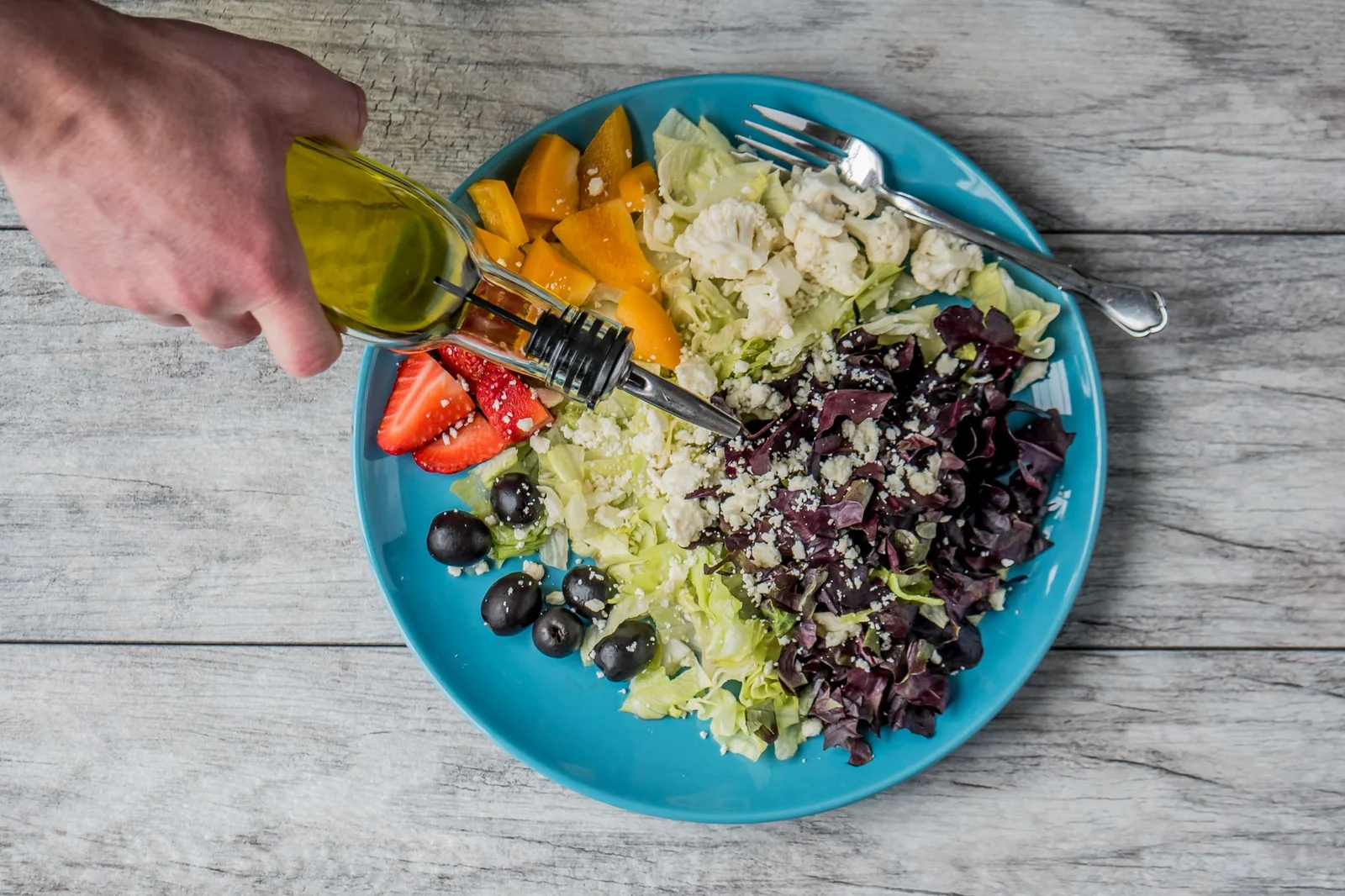
Some of what is written about the benefits of olive oil is officially authorised, some is still under research, and some is unproven. This page keeps the three apart.
t; This is general information, not treatment advice. If you have a chronic condition or take medication, consult your doctor.
1. The only officially authorised claim
The European Food Safety Authority (EFSA) has authorised a single health claim for olive oil:
t; "Olive oil polyphenols contribute to the protection of blood lipids from oxidative stress."
Two conditions apply before the claim can be used:
- The oil must contain at least 5 mg of hydroxytyrosol and its derivatives per 20 g (roughly 250 mg/kg)
- The consumer must be told the effect is obtained with a daily intake of 20 g (about two tablespoons)
So what is authorised is not "protects the heart" but protection of blood lipids from oxidation. An oil low in polyphenols cannot carry the claim — refining removes most of them.
2. Strong evidence with a contested history: cardiovascular
The largest study of the Mediterranean diet and olive oil on cardiovascular disease is PREDIMED (Spain).
To be honest about it — and most sources aren't:
- Published in 2013, it reported a clear reduction in cardiovascular events
- Retracted in 2018 — randomisation had not been carried out properly at some centres
- Republished the same year after correction; the results stayed broadly the same (hazard ratio 0.70 → 0.69)
So the finding stands, but it should not be presented as settled proof. The trial also tested olive oil as part of a Mediterranean diet, not on its own. Detail: olive oil and heart health.
3. Researched but not settled
There is work on the following, but not at the level that would earn an EFSA authorisation:
- Blood sugar and insulin sensitivity — promising, evidence limited
- Digestion and the gut — studies ongoing
- Inflammatory markers — reductions observed in some studies
These are at the "may help" level; not "treats".
4. Unproven or wrong claims
Some phrases common online have no adequate science behind them:
- "It detoxifies." Detox is not a medical concept. The liver and kidneys already do this work.
- "It cures rheumatism." There is work on inflammatory markers, but no evidence it treats the disease.
- "It prevents cancer." Some observational studies report an association; association is not causation.
- "Taking it on an empty stomach is healing." There is no reliable evidence that empty-stomach intake adds any benefit.
We don't write these, because there is no source for them. Our approach: Editorial Desk.
Nutrition
| Value | Amount |
|---|---|
| Energy | ≈120 kcal |
| Total fat | ≈13.5 g |
| Monounsaturated fat (oleic acid) | ≈70–80% of the oil |
| Vitamin E | significant source |
| Polyphenols | high in extra virgin, low in refined |
It is calorie dense: being "beneficial" does not mean it can be used without limit.
Which oils are high in polyphenols?
Because the EFSA claim rests on polyphenols, the grade matters:
- Extra virgin: polyphenols preserved — the only grade that can carry the claim
- Refined / blends: most of the polyphenols are lost in processing
Early-harvest and fresh oils are higher in polyphenols; the bitterness and peppery catch in the throat are the sign. Detail: how to tell good olive oil.
Sources
- EFSA / Commission Regulation (EU) 432/2012 — health claim on olive oil polyphenols
- PREDIMED trial, New England Journal of Medicine (2013; retraction and republication 2018)
- International Olive Council (IOC) — composition and grading criteria
One rating per visitor; you can change yours at any time. Ratings are real reader votes — no seeded or default scores.
Related
 Article
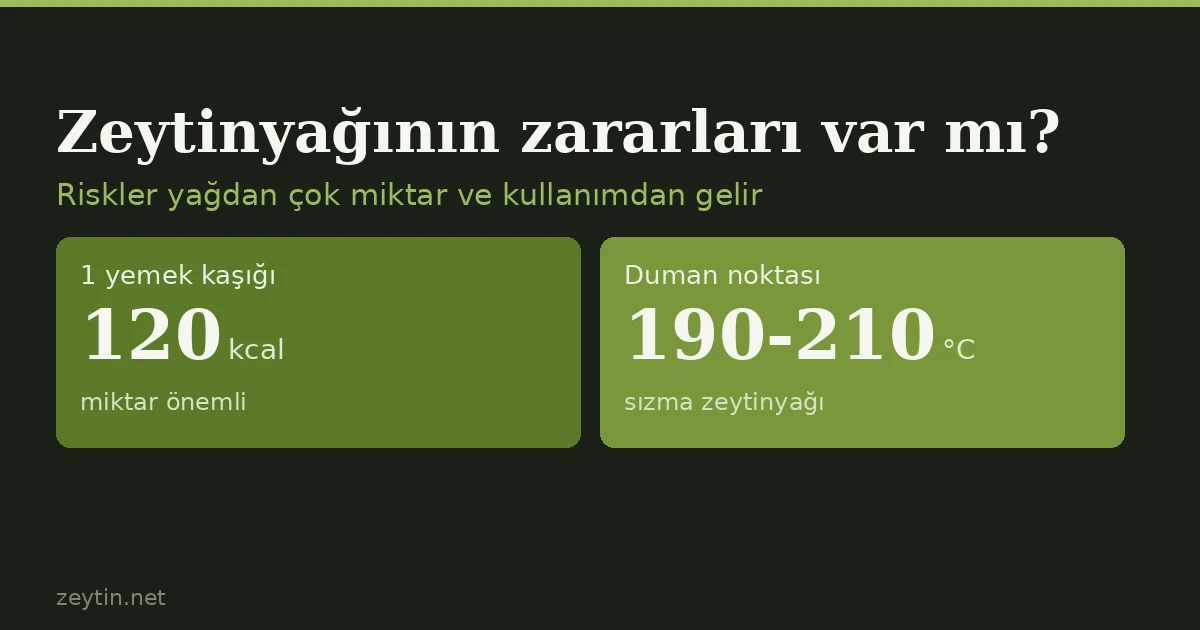
Does olive oil have downsides? Calories, the gallbladder, old oil and fraud
In normal kitchen amounts olive oil is a safe food; its downsides mostly come not from the oil itself but from quantity, misuse and poor products. High calories, discomfort after fatty meals in people with gallstones, the habit of drinking it on an empty stomach as a "cure", repeatedly reused frying oil and adulterated products are the main risks.
Article
Does olive oil have downsides? Calories, the gallbladder, old oil and fraud
In normal kitchen amounts olive oil is a safe food; its downsides mostly come not from the oil itself but from quantity, misuse and poor products. High calories, discomfort after fatty meals in people with gallstones, the habit of drinking it on an empty stomach as a "cure", repeatedly reused frying oil and adulterated products are the main risks.
 Article
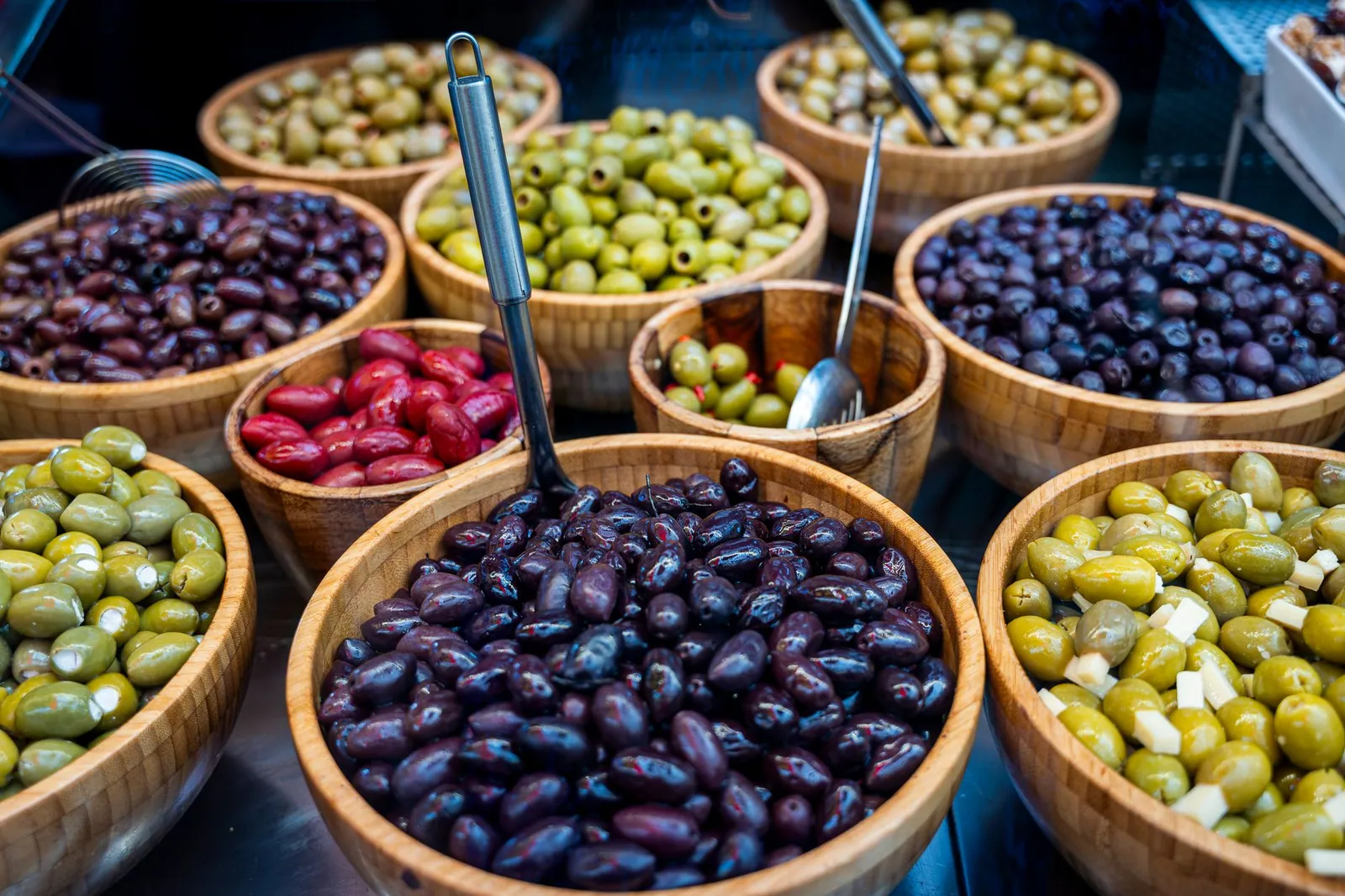
Benefits of Olive
The nutritional profile of olives, polyphenols and salt content. No unauthorised health claims — only verifiable information, with sources.
Article
Benefits of Olive
The nutritional profile of olives, polyphenols and salt content. No unauthorised health claims — only verifiable information, with sources.
 Article
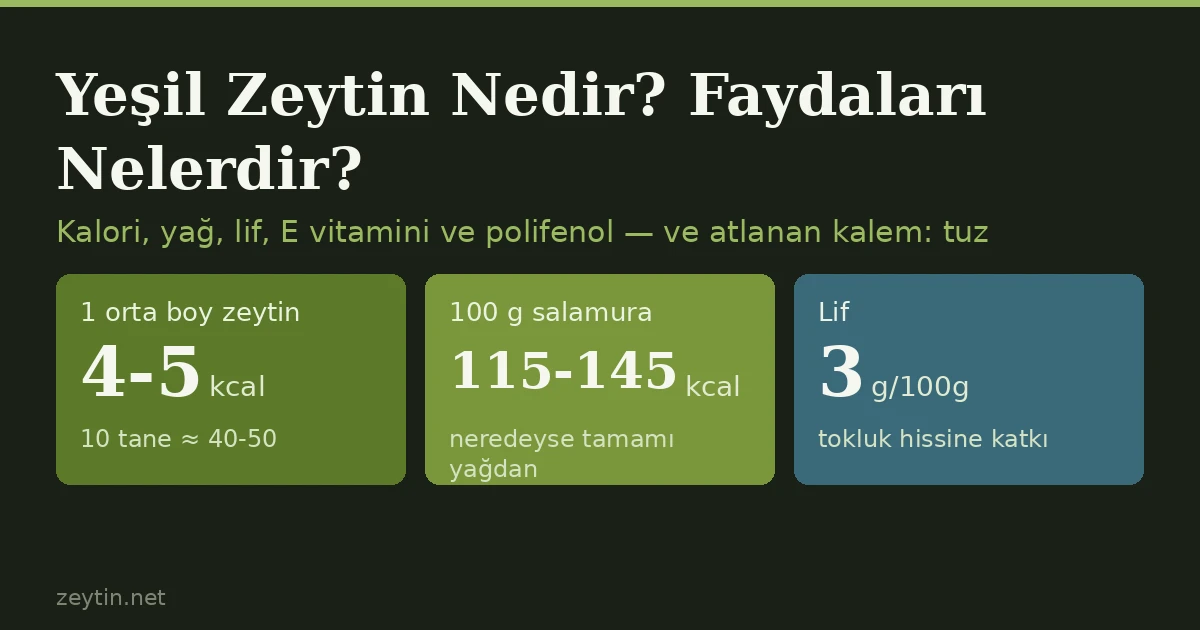
What Are Green Olives? What Are Their Benefits?
What green olives are, what they contain and how many calories. Fat, fibre, vitamin E and polyphenols — and the salt that portion talk must not skip.
Article
What Are Green Olives? What Are Their Benefits?
What green olives are, what they contain and how many calories. Fat, fibre, vitamin E and polyphenols — and the salt that portion talk must not skip.
 Article
How Much Olive Oil a Day?
Olive oil being healthy does not make it unlimited. A practical look at portions, calories and the logic of replacement.
Article
How Much Olive Oil a Day?
Olive oil being healthy does not make it unlimited. A practical look at portions, calories and the logic of replacement.