Nizip Olive Oil: a registration that sets a floor for its raw material
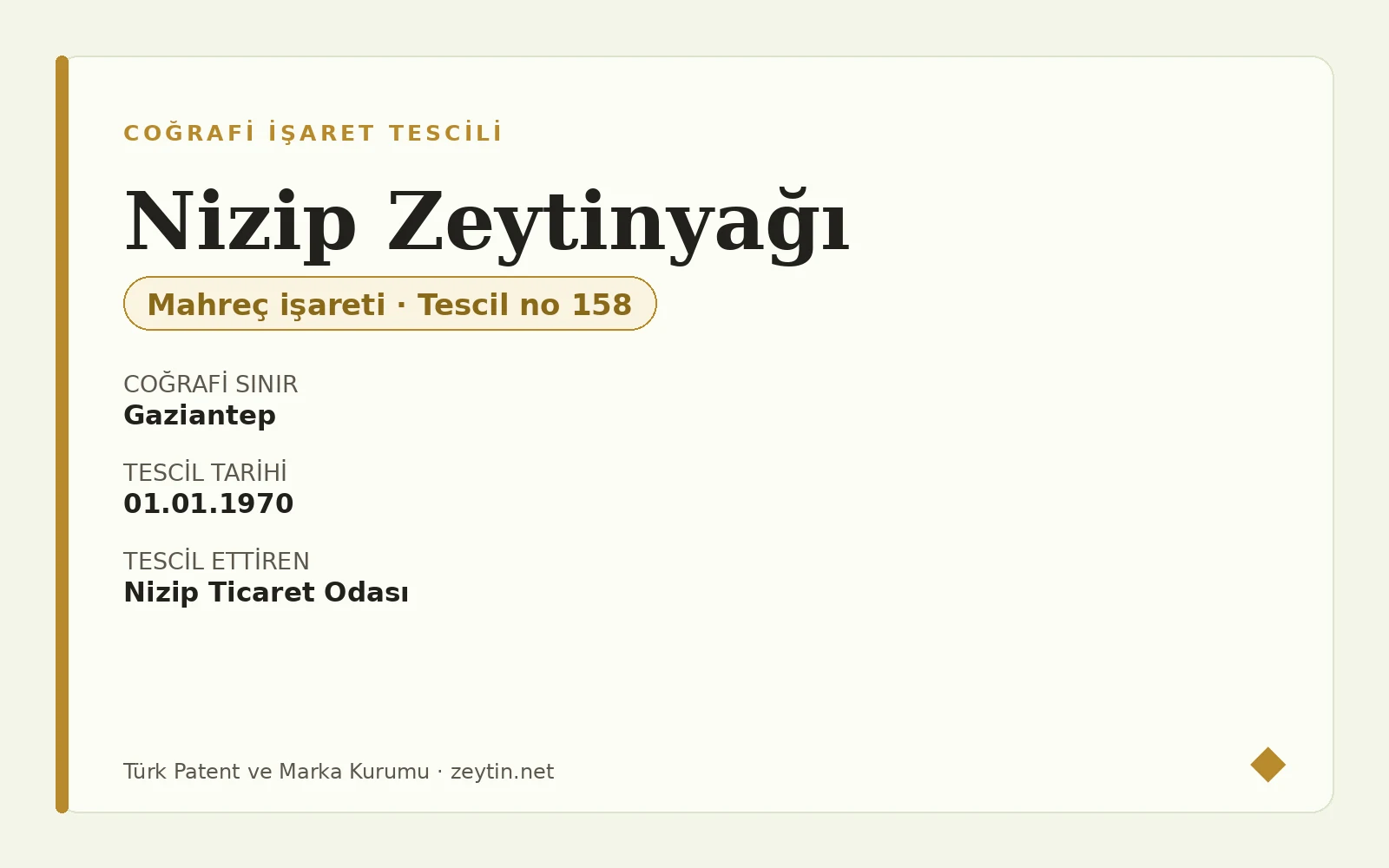
Registered in 2011. The certificate sets conditions on the fruit, not just the oil: 15-17 mm wide, 19-20 mm long, at least 25% oil. Fruit outside that cannot be used.
Olive oil registrations usually define the chemistry of the finished product. The certificate for Nizip Olive Oil steps back a stage and sets conditions on the raw material.
The record
| Registration no | 158 |
| Official notice | 03.09.2011 · Official Gazette 28043 |
| Type | Geographical indication |
| Registered by | Nizip Chamber of Commerce |
| Area | The province of Gaziantep |
| Cultivar | Nizip Yağlık |
The cultivar originates in Gaziantep's Nizip district, from which it takes its name, and is widely grown within the boundary.
The condition on the fruit
The certificate states what dimensions the olives used must have:
| Requirement | Value |
|---|---|
| Fruit width | 15 – 17 mm |
| Fruit length | 19 – 20 mm |
| Flesh-to-stone ratio | 2 – 4 |
| Oil content | at least 25% |
This is an unusual provision. Most registrations say “made from this cultivar” and stop; here there is a threshold within the cultivar too. Fruit falling below 25% oil cannot enter Nizip Olive Oil even if it is the right cultivar.
The oil is obtained mechanically from ripe fruit — no chemical solvents.
Composition of the oil
| Fatty acid | Range (%) |
|---|---|
| Oleic acid (C18:1) | 63.03 – 70.70 |
| Palmitic acid (C16:0) | 13.70 – 16.94 |
| Linoleic acid (C18:2) | 8.07 – 14.19 |
| Stearic acid (C18:0) | 3.48 – 4.50 |
| Palmitoleic acid (C16:1) | 0.73 – 1.98 |
| Linolenic acid (C18:3) | 0.34 – 1.00 |
The peroxide value is capped at 16.3 meq/kg, narrower than the codex ceiling of 20.
In sensory terms the median fruitiness is high. At room temperature the colour runs from clear green to yellow.
The south-eastern oil belt
Nizip, with Gaziantep and Kilis, forms Türkiye's south-eastern oil belt. Kilis Olive Oil is registered in the same region; both cultivars are native and distinguished by high oil content.
The criteria the document binds
The registration does not only protect a name; it defines the product numerically:
| Criterion | Value in the document |
|---|---|
| Peroxide value | 0.8 meq O₂/kg (max) |
| Total phenolic content | 100 mg/kg min |
That the document sets a floor for total phenolic content is notable — most registrations never define phenol levels, although bitterness, pungency and shelf-life behaviour largely depend on them.
Inspection. The inspection body convenes with at least 3 kişi, at least once a year. Members: Nizip Ticaret Odası, Gaziantep Üniversitesi, Nizip İlçe Tarım ve Orman Müdürlüğü, Nizip Ticaret Borsası.
Its place in Gaziantep's olive production
| Item | Value |
|---|---|
| Fruit production | 112,240 t |
| — for oil | 110,921 t |
| — for the table | 1,319 t |
| Olive oil production | 20,457 t |
| Trees | 9,234 thousand |
| Yield per tree | 12.2 kg |
99% of the province's fruit goes to oil. An oil-based registration matches how the province actually produces.
Does the 25% threshold filter the cultivar, or a bad year?
The minimum 25% oil content the document requires of the raw material looks at first like a definition of the cultivar. Measured values show the purpose is different.
In the literature, the oil content of the Nizip Yağlık cultivar is given as 34.84% in a comparison reported by Bozdoğan Konuşkan and Canbaş (2008). Other cultivars in the same compilation:
| Cultivar | Oil content |
|---|---|
| Nizip Yağlık | 34.84% |
| Tarsus Yağlık | 29.88% |
| Memeli | 25.57% |
| Sivri | 17.70% |
The cultivar sits roughly ten points above the threshold the registration sets. The 25% condition therefore does not define the cultivar — the cultivar clears it comfortably.
So what does the threshold filter? A bad year, a neglected grove, and fruit picked too early. Oil content rises with ripeness and falls in dry or disease-affected years. Fruit of the same cultivar may reach 34% one year and stop at 22% the next. The threshold stops that fruit from using the registered name.
This turns the registration into a year-independent commitment: a bottle reading "Nizip Zeytinyağı" was made, in any year, from fruit above a defined floor. Setting a threshold on the raw material is rare among geographical indications, and a strong choice.
Grove structure
Nizip's groves are described as planted in rows on fertile red soils and flat land, with narrow spacing between trees. The cultivar begins bearing about two years after planting — early for an olive.
Flat ground, close planting and early bearing together describe a production model different from hillside olive growing: one suited to mechanisation and denser establishment. We set out that model's requirements in our hedgerow orchard guide.
Wider context: UNESCO
Gaziantep, the province Nizip belongs to, was named a UNESCO Creative Cities Network "City of Gastronomy" in 2015. The more directly relevant entry came in December 2023: Türkiye's traditional olive cultivation was inscribed on UNESCO's List of Intangible Cultural Heritage in Need of Urgent Safeguarding.
The phrase "in need of urgent safeguarding" matters here — that list is for living practices whose continuity is under threat. Geographical indication registrations form the legal leg of that protection: UNESCO recognises the practice as cultural heritage, while the registration binds the name and the method commercially.
Further sources
- Bozdoğan Konuşkan, D. & Canbaş, A. (2008). Determination of some physical properties and oil yields of the Halhalı, Sarı Haşebi and Gemlik olive varieties grown in Hatay. Çukurova University Journal of the Institute of Natural and Applied Sciences, 19(2) — cultivar oil contents are reported there from the literature.
- Alpay, T. (2024). Nizip Zeytinyağı. In: Kozak, N. (ed.), Online Encyclopedia of Turkish Tourism.
One rating per visitor; you can change yours at any time. Ratings are real reader votes — no seeded or default scores.
Related
 Article
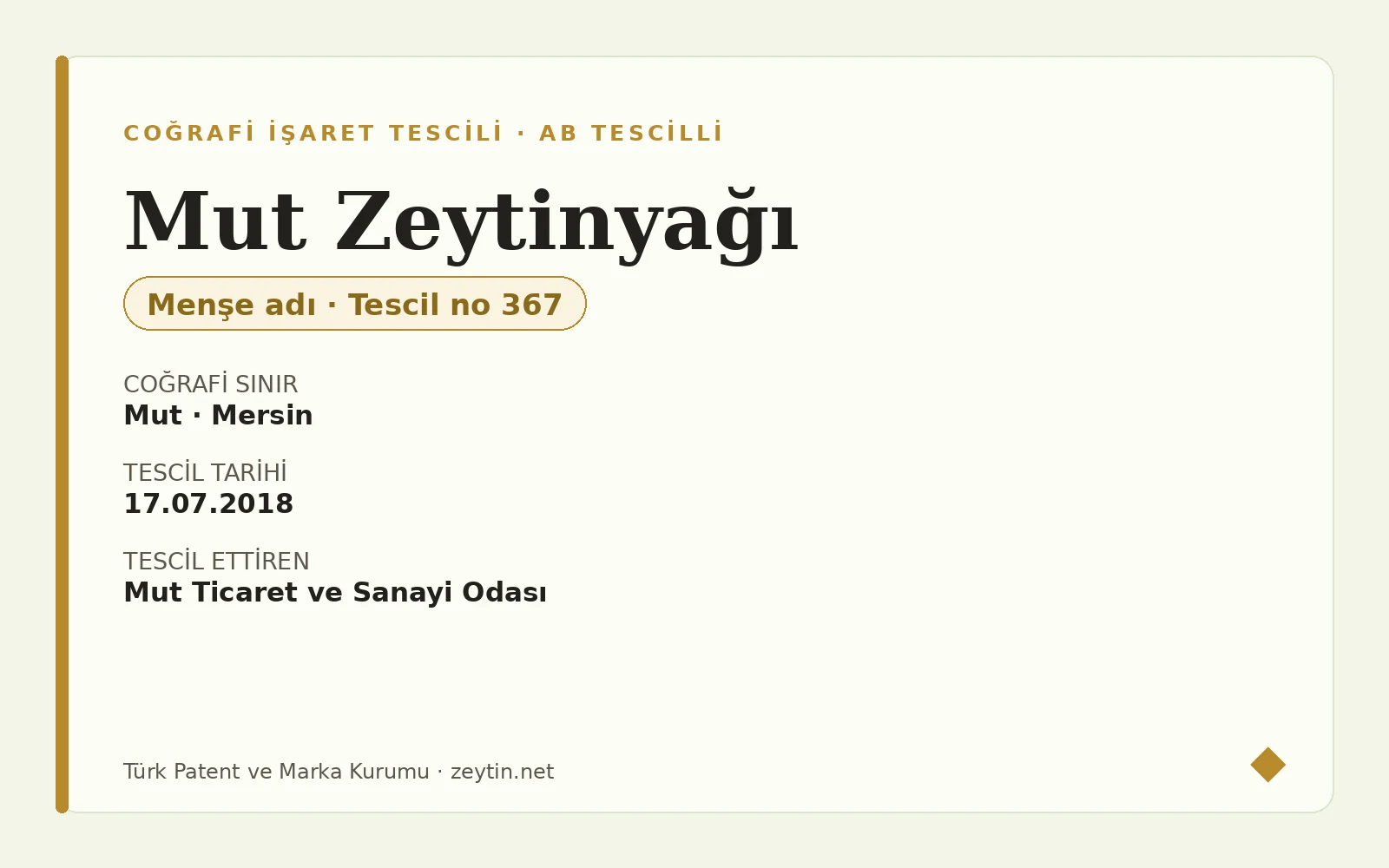
Mut Olive Oil: a landscape that needs no pesticide
The certificate's real claim rests on altitude and humidity: 10-40% relative humidity keeps out both the olive fly and peacock spot. That is why organic production is straightforward here.
 Article
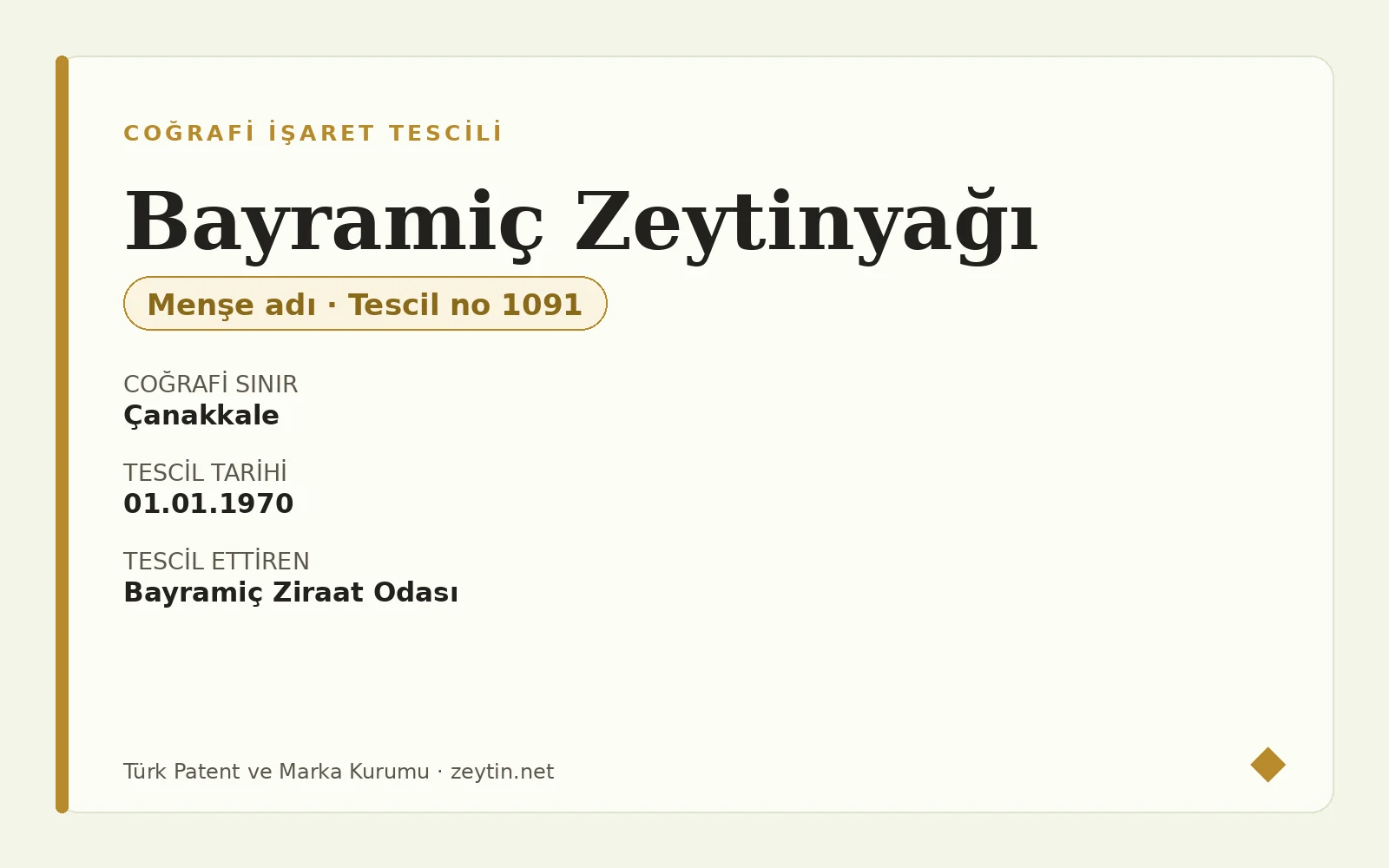
Bayramiç Olive Oil: aroma compounds defined as percentages
Registered in 2022. The certificate defines aroma by compound rather than adjective: hexanal 36.15%, E-2-hexenal 26.14%. Iodine value 80-93.
 Article
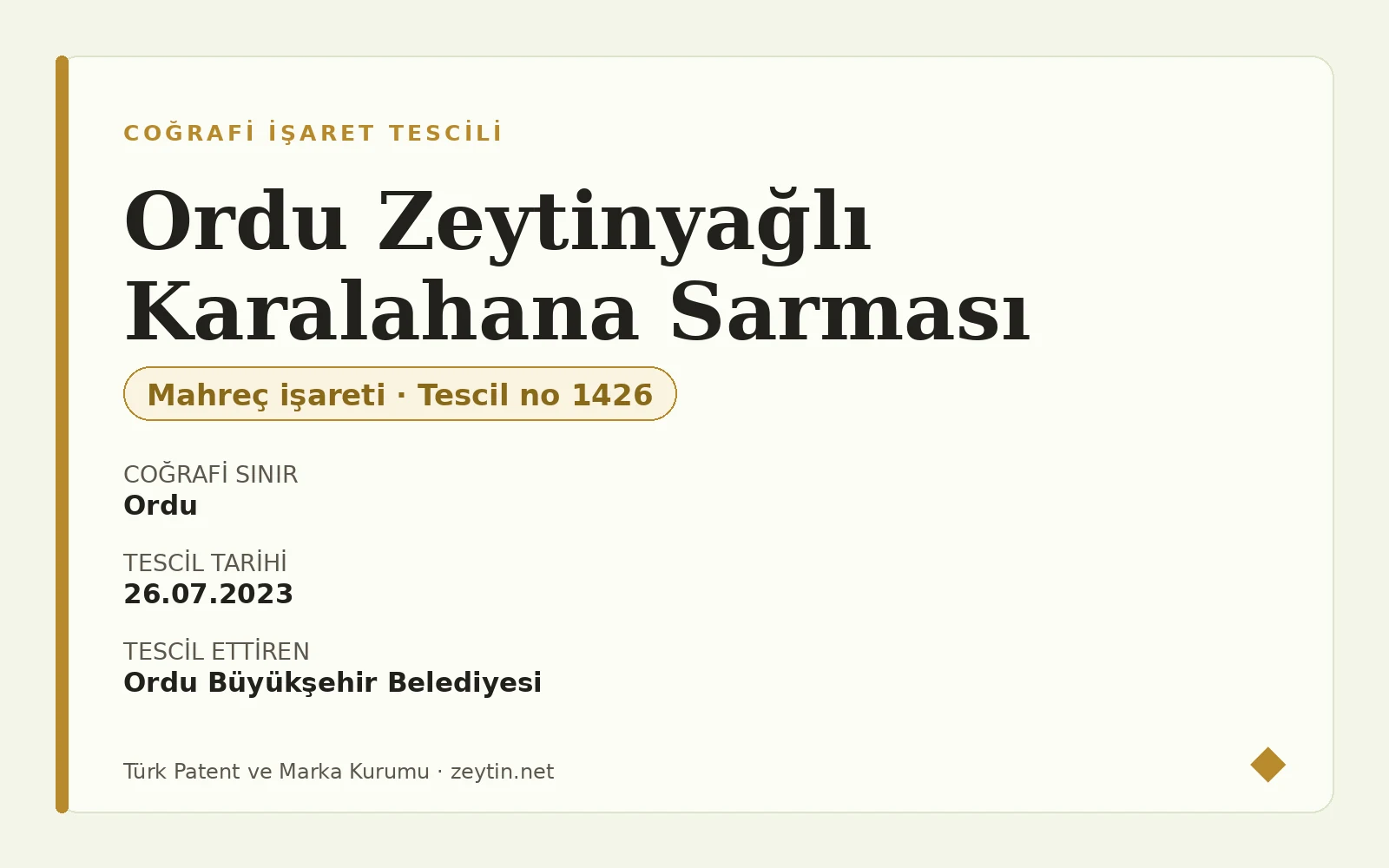
Ordu Collard Rolls in Olive Oil: the name says olive oil, the document says 'oil'
Registered in 2023. An "olive oil" dish from a Black Sea province with no recorded olive harvest; the document lists the fat simply as "oil".
 Article
What is riviera olive oil? Extra virgin, virgin and riviera compared
Riviera is a blend of refined and virgin olive oil: acidity at most 1%, peroxide 15. How it differs from extra virgin, virgin and pomace oil, in one table.