Ordu Collard Rolls in Olive Oil: the name says olive oil, the document says 'oil'
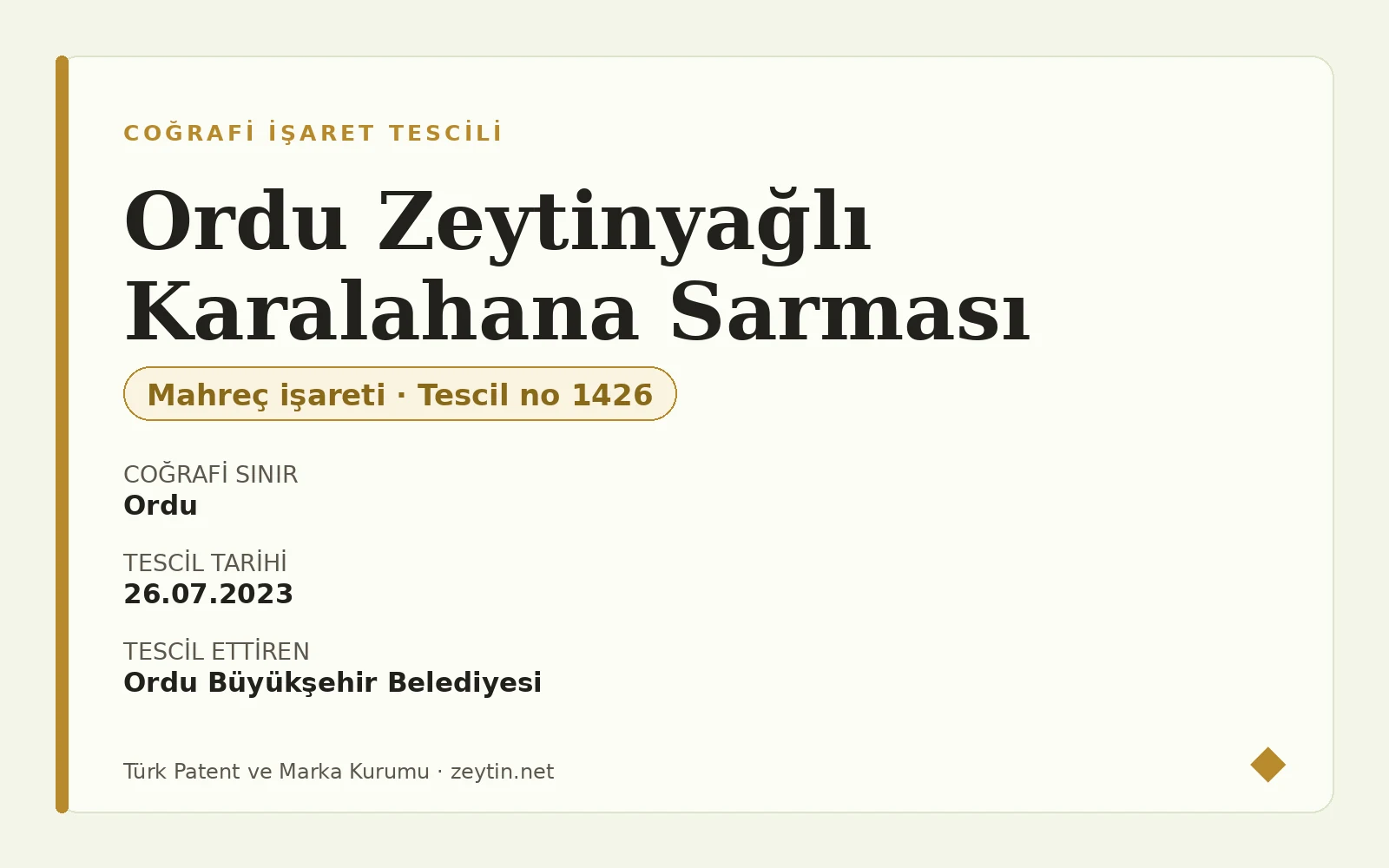
Registered in 2023. An "olive oil" dish from a Black Sea province with no recorded olive harvest; the document lists the fat simply as "oil".
Most registrations with "olive" in their name protect the home region of an olive or an olive oil. Ordu Collard Rolls in Olive Oil makes the list by its name alone. Ordu has no recorded olive harvest, and the registration document's ingredient list gives the fat, in both places it appears, not as "olive oil" but as "sıvıyağ" — simply "oil". What the name carries is not a raw material but a Turkish cooking style: the olive oil dish (zeytinyağlı), vegetables cooked in oil and usually eaten cold or lukewarm.
Reference details
| Registration no. | 1426 |
| Registration date | 26.07.2023 |
| Application | C2022/000421 · 28.11.2022 |
| Type | Geographical indication (mahreç işareti) |
| Registered by | Ordu Metropolitan Municipality |
| Geographical area | Ordu province |
| Product group | Dish / Dishes and soups |
The registration protects two names together: Ordu Zeytinyağlı Karalahana Sarması and Ordu Zeytinyağlı Pancar Sarması. According to the document, collard greens (Brassica oleracea) are also known locally as "pancar" or "kara pancar"; the two names are two local ways of saying the same dish.
Ingredients in the document
| Ingredient | Quantity |
|---|---|
| Collard greens | 2 bunches (about 1-1.5 kg) |
| Rice or bulgur (or a mix) | 300-350 g |
| Onion | 2 |
| Parsley | 1 bunch |
| Paste (tomato or pepper) | 15-20 g |
| Garlic | 1-2 cloves |
| Red pepper flakes | 5-6 g |
| Black pepper | 2-3 g |
| Oil (filling) | 80-100 ml |
| Oil (cooking) | 10-15 ml |
| Salt (filling + cooking) | 10-20 g |
The document does not specify the type of oil; "sıvıyağ" is the general Turkish word for vegetable oil. The registration therefore does not require the rolls to be made with olive oil. The inspection body checks conformity with the ingredient list, and the list names no oil type; making the rolls with olive oil is allowed, but not required.
The preparation order in the document
The collards can be used fresh, or kept frozen or brined. The leaves are cleaned and separated from the stalks, blanched in boiling water for 5-10 minutes until the ribs soften, then put into cold water.
For the filling, onion, garlic and paste are fried in oil until the onion turns pale pink; washed rice or bulgur is added, then parsley, red pepper flakes, black pepper and salt. 200 ml of water is added and the mixture is cooked until the water is absorbed, then rested like a pilaf. The filling is therefore half cooked before it is rolled.
The ribs are removed from the leaves, the filling is added and the leaves are rolled tightly to the thickness of a little finger. The rolls are packed into a pot, covered with hot water, a little oil and salt are added, and a flat plate is placed on top so they hold their shape while they cook on low heat for 20-25 minutes. They are served hot or cold, with lemon if liked.
How it differs from classic cabbage rolls
The cabbage rolls in olive oil recipe on this site follows the classic zeytinyağlı style: white cabbage, pine nuts, currants, allspice and dill, with a sweetened filling and extra virgin olive oil. Ordu's registered rolls come from somewhere else:
| Item | Ordu registration | Classic cabbage rolls in olive oil |
|---|---|---|
| Leaf | Collard greens (pancar) | White cabbage |
| Grain | Rice or bulgur | Rice |
| Flavour | Paste, red pepper flakes, garlic | Pine nuts, currants, allspice, dill |
| Fat | "Oil" (type not specified) | Extra virgin olive oil |
| Cooking in the pot | 20-25 minutes | 55-60 minutes |
The thick, ribbed collard leaf and the filling with paste and chilli tie the dish to the Black Sea tradition of winter greens.
Do olives grow in Ordu?
Ordu has no recorded olive harvest in the provincial data; see olive growing in Ordu. Why olives remain limited on the Black Sea coast is explained in do olive trees grow on the Black Sea coast. This registration shows the word "zeytinyağlı" living on as the name of a type of dish even in the kitchen of a province that grows no olives.
Why mahreç, with every stage in Ordu?
The type is mahreç işareti, which normally requires at least one stage of production to take place in the defined area. The document, however, states that the dish has a deep-rooted place in Ordu's food culture, that it is served at home, in local restaurants, at weddings, holidays and festivals, and that making it takes skill, and requires all production stages to take place within the province. The collard greens must also be grown within the area.
Inspection
Inspection is coordinated by Ordu Metropolitan Municipality and carried out by a body of at least three people from the Municipality and the Ordu Provincial Directorate of Agriculture and Forestry, at least once a year and at any time after a complaint or when deemed necessary. The body checks three things: the use of the name and emblem, conformity with the ingredient list, and conformity with the production method. If the product is sold unpackaged, the name and emblem must be displayed visibly at the business.
In short
Ordu Collard Rolls in Olive Oil is a dish registration that joins the olive list through the cooking style in its name. What the document teaches is that it does not turn the word "zeytinyağlı" into a raw-material requirement: the fat is "oil", the leaf is collard, the filling is bulgur or rice.
One rating per visitor; you can change yours at any time. Ratings are real reader votes — no seeded or default scores.
Related
 Article
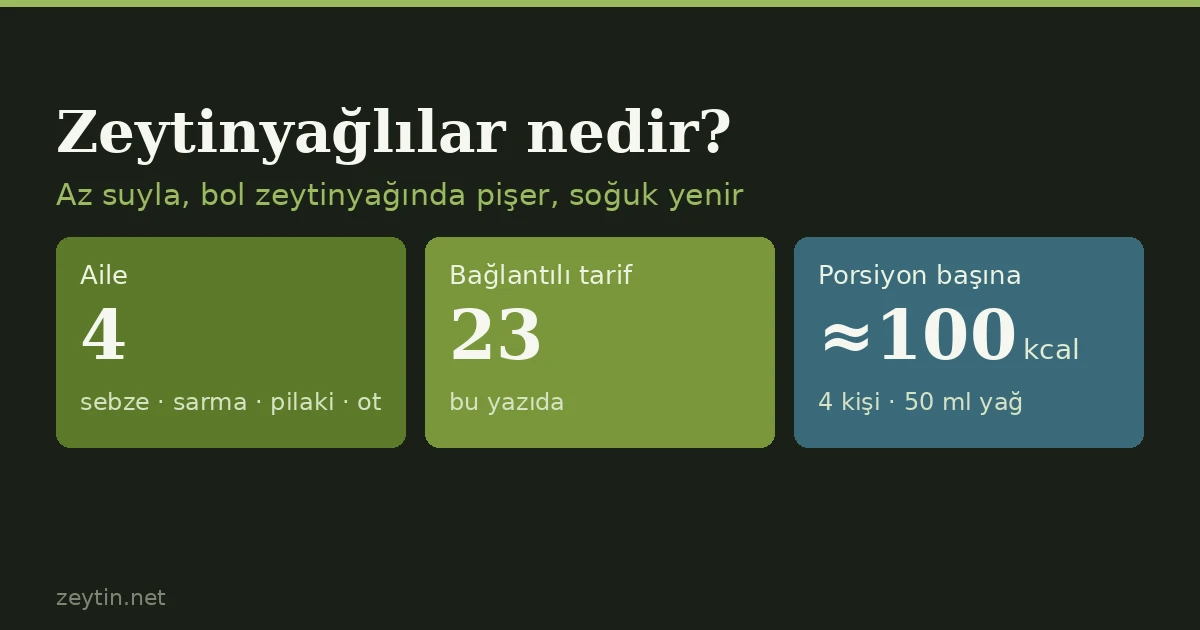
What are zeytinyağlılar? The logic of Turkish dishes cooked in olive oil
Zeytinyağlılar are Turkish dishes in which vegetables or pulses are cooked with little water in plenty of olive oil until they absorb their own juices, then eaten cold at room temperature. They contain no meat, can be made a day ahead and taste better the next day. Vegetable dishes, stuffed leaves and vegetables, pilaki beans and Aegean wild greens are the four main families.
 Article
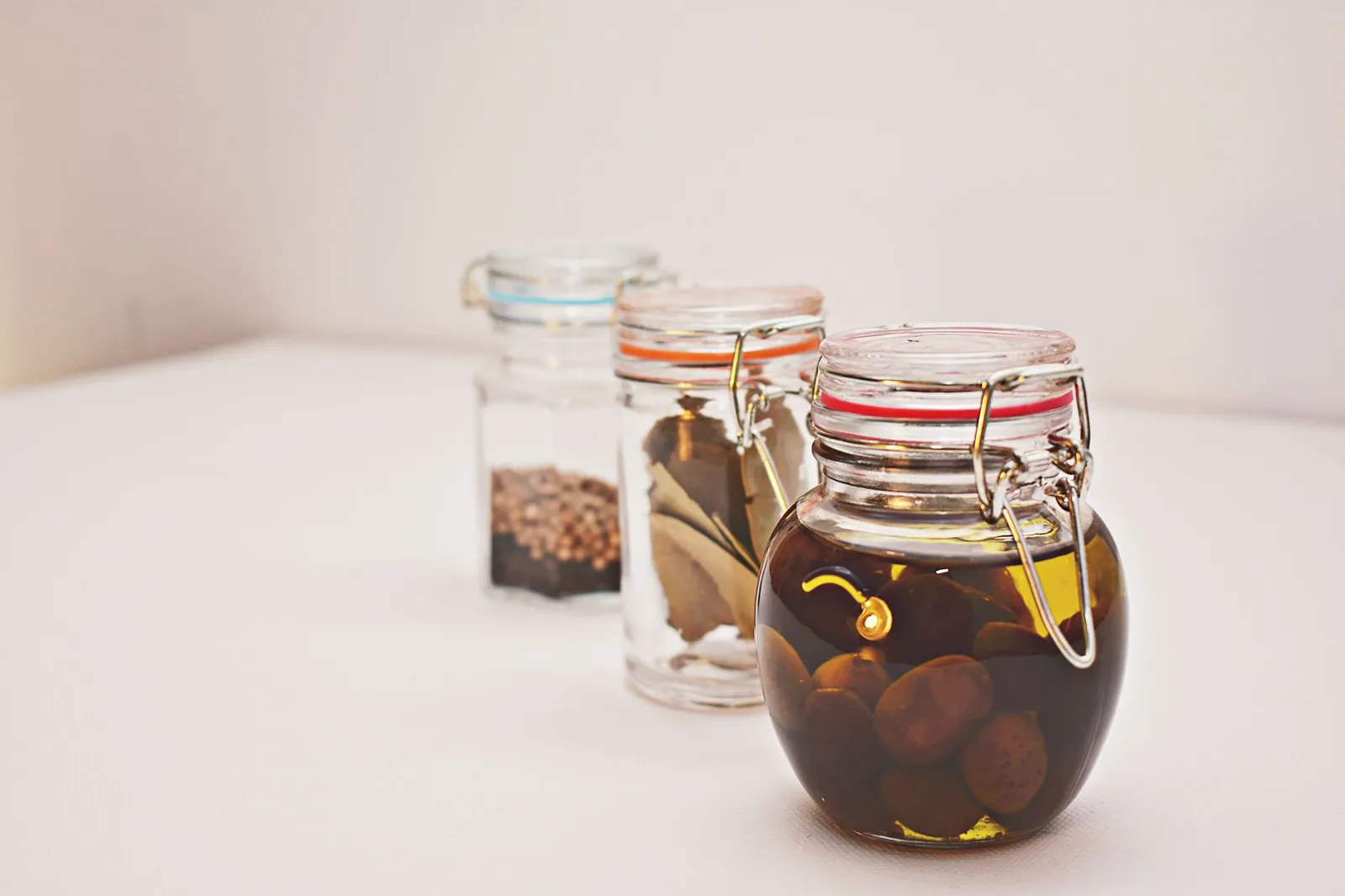
How to Store Olive Oil
Light, heat, air and time — the four enemies of olive oil. Why the bottle next to your stove is in the worst possible place.
 Article
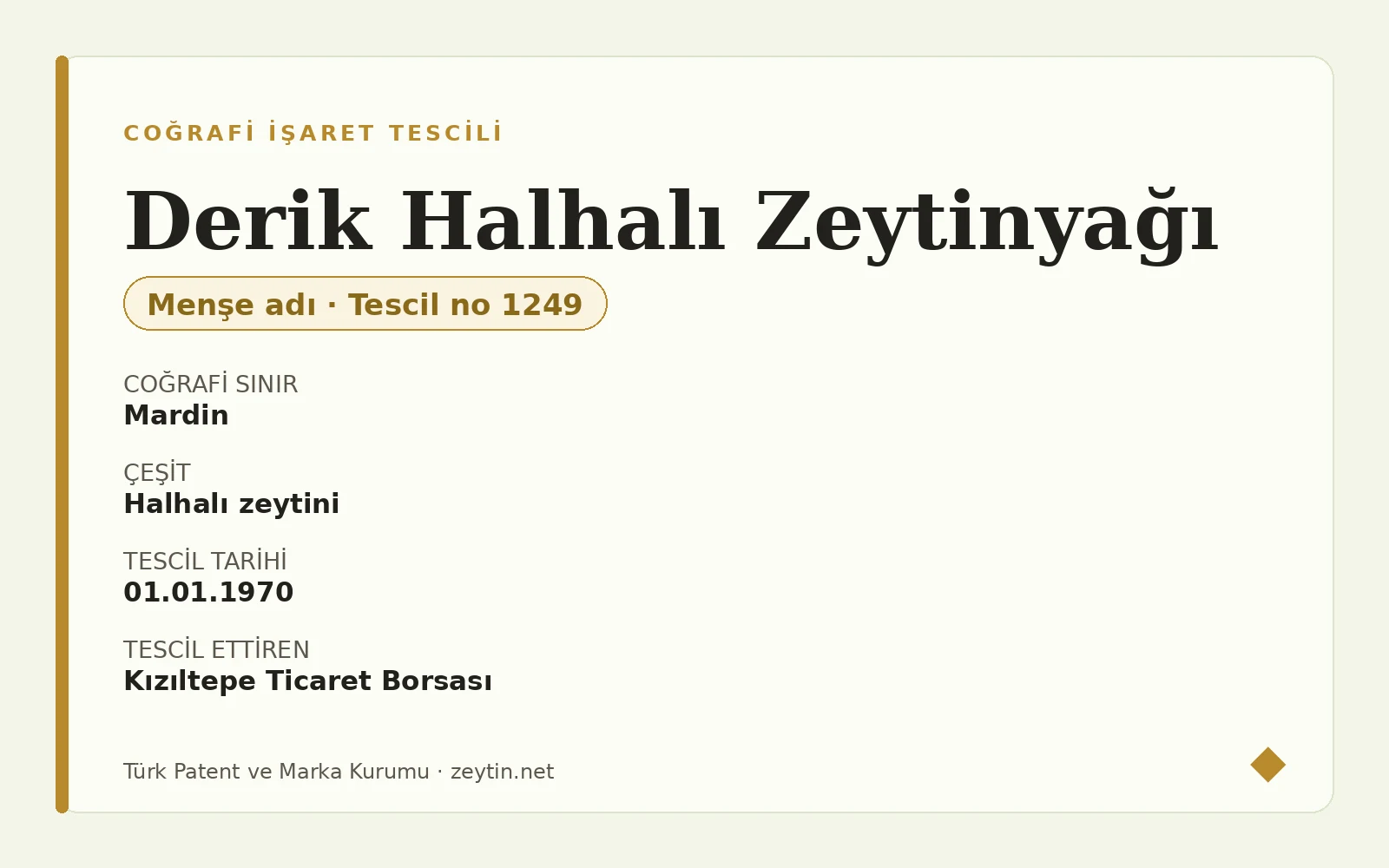
Derik Halhalı Olive Oil: a burn reminiscent of red pepper
Registered in 2022. Low acidity (0.29-0.60%) and high phenols; the certificate describes the pungency directly — a lasting burn spreading over tongue and lips.
 Article
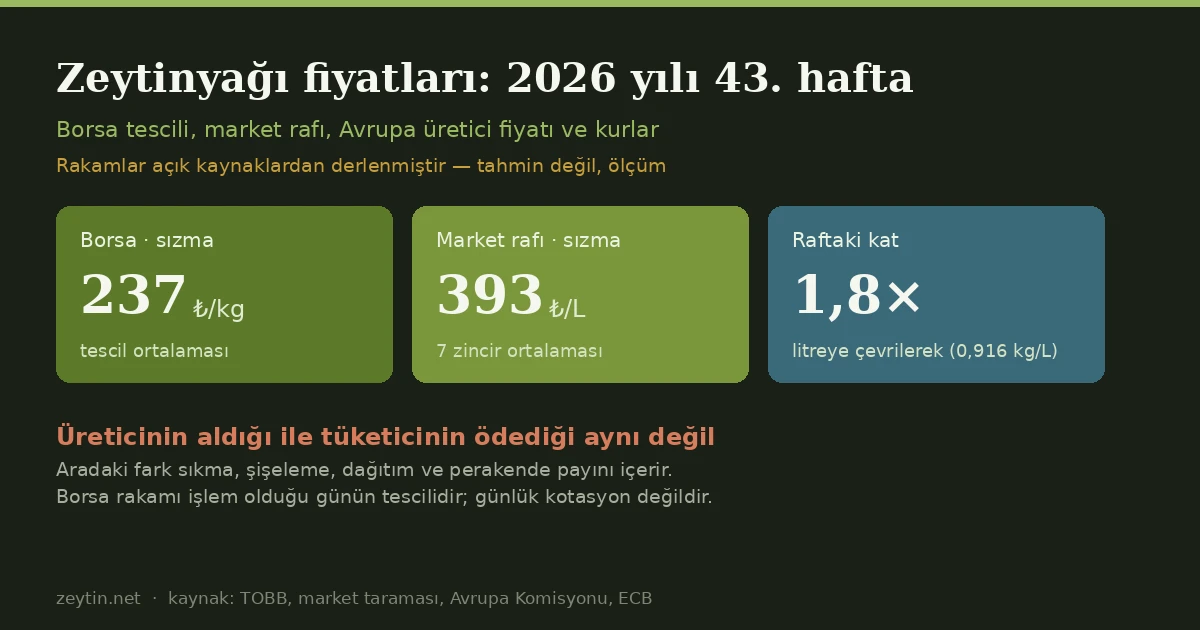
Olive Oil Prices: Week 43 of 2026
Week 43 of 2026: Turkish exchange prices, European producer prices and exchange rates side by side.