Calls to pause the olive harvest: a temporary halt requested at the İzmir Exchange Assembly, a 3-5 day pause proposed for oil olives in Salihli
At the İzmir Exchange Assembly, Mümin Yavuz asked for a temporary pause in the harvest, and Salihli Commodity Exchange chairman Yetiş Aksoy proposed a 3-5 day pause for oil olives. The reason: the mills are full. The Salihli crop figures in the report print the same 2025 number for two items.
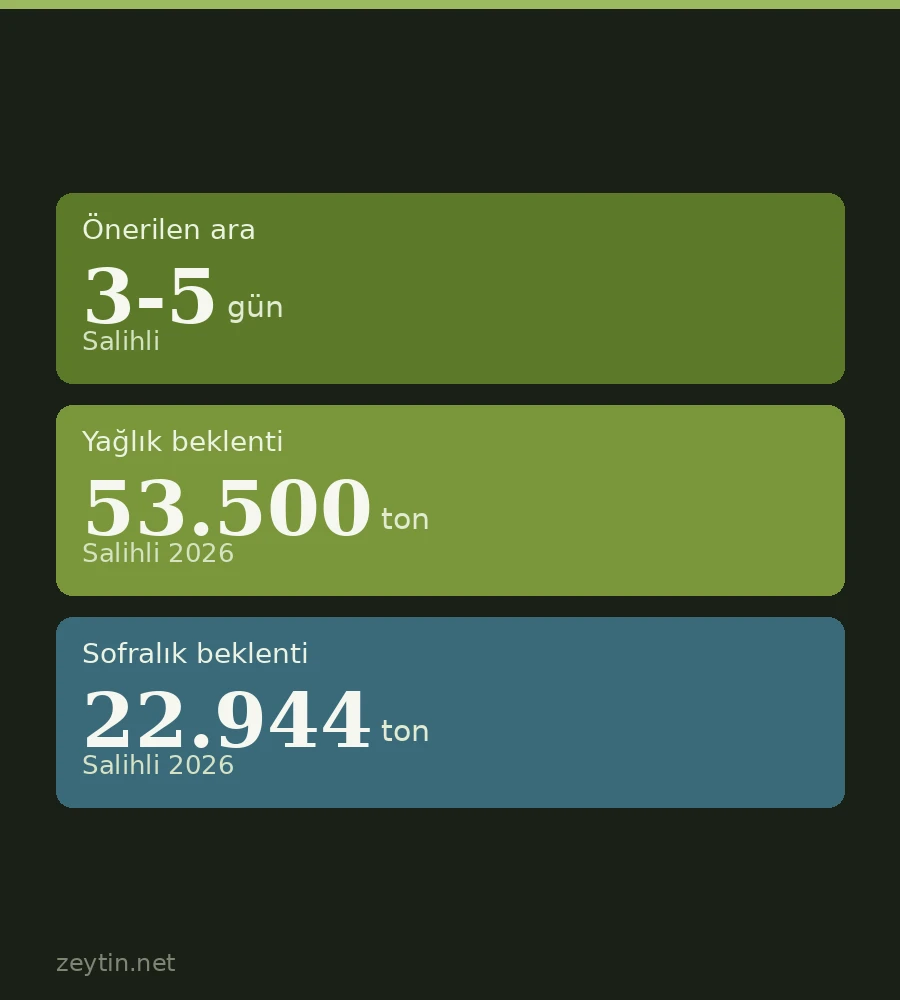
According to news items dated 24 November 2026, calls to pause the olive harvest came from two separate places. At the November meeting of the İzmir Commodity Exchange (İTB) Assembly, assembly member Mümin Yavuz asked for a temporary pause in the harvest. In Salihli, in Manisa province, Salihli Commodity Exchange chairman Yetiş Aksoy proposed a pause of 3 to 5 days in the harvest of oil olives. Both give the same reason: the mills are full and olives are waiting.
What the reports say
| Item | What the reports say |
|---|---|
| İzmir | İTB Assembly November meeting; Mümin Yavuz asked for "a temporary pause" |
| Salihli | Salihli Commodity Exchange chairman Yetiş Aksoy: a 3-5 day pause in the oil olive harvest |
| Salihli, table olives | Table olives can still be picked during the pause |
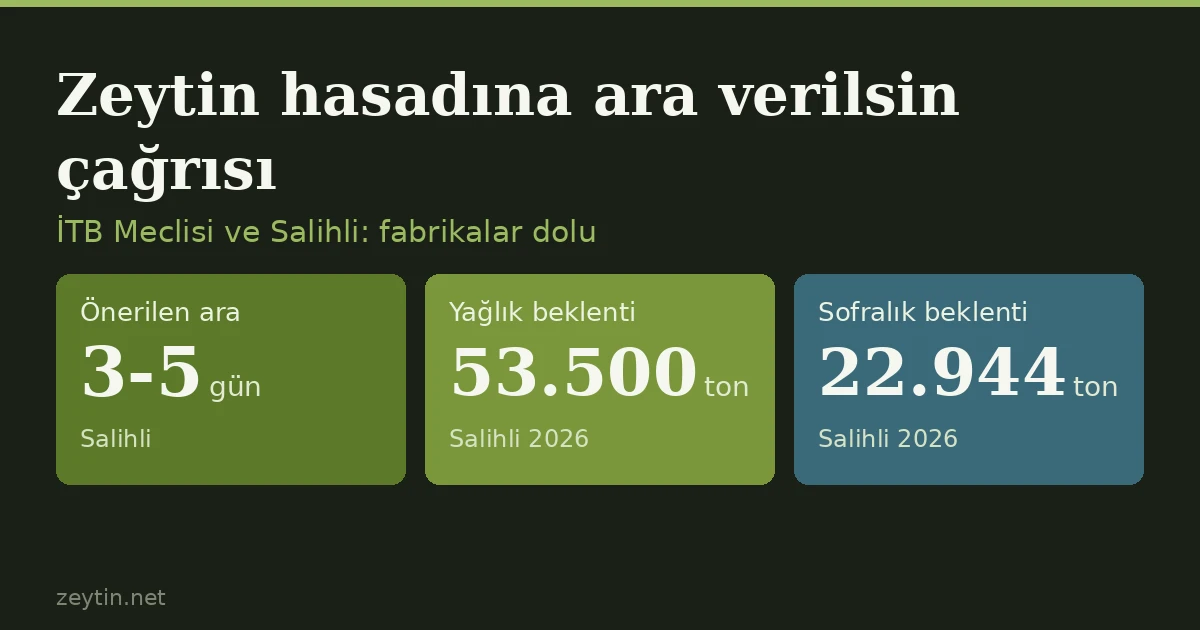
| Salihli, expected oil olive crop | 14,696 tonnes in 2025, 53,500 tonnes in 2026 |
| Salihli, expected table olive crop | 14,696 tonnes in 2025 (printed as the same figure as oil olives), 22,944 tonnes in 2026 |
| Olive trees in the area | About 4 million (Salihli Chamber of Commerce and Industry chairman İbrahim Yüksel) |
What was said in the İTB Assembly
The problems of the olive and olive oil sector were discussed at the İTB Assembly's November meeting. Mümin Yavuz said: "We are asking for a temporary pause. We are spoiling our own product ourselves." The topics he drew attention to were problems with storage tanks and the oil that will remain in stock; he also said that a similar practice had been successful in the Ayvalık area. The report does not explain what the practice was or when it took place.
Kahraman Akdoğan, the İzmir Provincial Director of Agriculture and Forestry, said that stopping the harvest is not the directorate's primary task, but that the district directorates had made announcements on social media. Akdoğan added that agricultural staff stand with the producers and that they had met with criticism because of these announcements. The content of the announcements, that is how many days of pause were suggested, is not in the report.
Mills in Salihli are over capacity
The processing capacity of the olive oil mills in Salihli is full. According to Yetiş Aksoy, the mills are running day and night and olives have piled up in the mill yards. Aksoy pointed out that olives waiting a long time at the mills could harm both quality and producers, and proposed a 3-5 day pause in the oil olive harvest, during which producers could keep picking table olives.
İbrahim Yüksel, chairman of the Salihli Chamber of Commerce and Industry, said the abundance of crop is hitting prices and that producers are not satisfied with the price.
Putting the crop figures side by side
The expectations reported for Salihli show a large jump. Using the figures in the report and our own calculation: oil olives rising from 14,696 to 53,500 tonnes is about 3.6 times (an increase of 264 per cent), while table olives rising from 14,696 to 22,944 tonnes is about 1.56 times (an increase of 56 per cent). The point to watch is that the report prints the same figure, 14,696 tonnes, in the 2025 column for both items. This may be a typing error; it cannot be told from the report which item the real 2025 figure belongs to. Both rates of increase should therefore be read as values calculated from the figures printed, not as certain.
What had happened before
The idea of pausing the harvest is not new this season, but its direction has changed. In October producers in Akhisar stopped the harvest for a week to protest low purchase prices; we described it in our article on the Akhisar harvest halt. The current calls are not a price protest but concern mill capacity: the crop cannot be pressed fast enough. A similar picture appeared in Serik, Antalya, where queues reached 24-35 hours and a mill owner asked producers to slow the harvest a little (see our article on the queue at the Serik mills).
Quality while waiting
For how long picked olives can wait before pressing, see our article on how soon harvested olives must be pressed. The reports do not say how long olives have been waiting in the mill yards or whether quality was measured; Aksoy's warning points to a possibility and does not report a measured quality loss. We collected what to check when taking olives to a mill in our article on what to check when having olives pressed at a mill.
What the reports do not say
- The number of mills in Salihli and their daily processing capacity.
- How many hours or days olives wait in the mill yard on average.
- The length of pause suggested by the İzmir district directorates.
- Details of the practice said to have been used in Ayvalık.
- How far producers have followed the calls.
What to watch
Whether producers follow the call for a pause, whether waits at the mills shorten, and whether the call spreads to other districts are points to watch in the coming days of the season.
One rating per visitor; you can change yours at any time. Ratings are real reader votes — no seeded or default scores.
Related
 Article
Manavgat olive oil falls from 250-300 to 200 lira: the queue at the Chamber of Agriculture's mill spills onto the D-400 highway
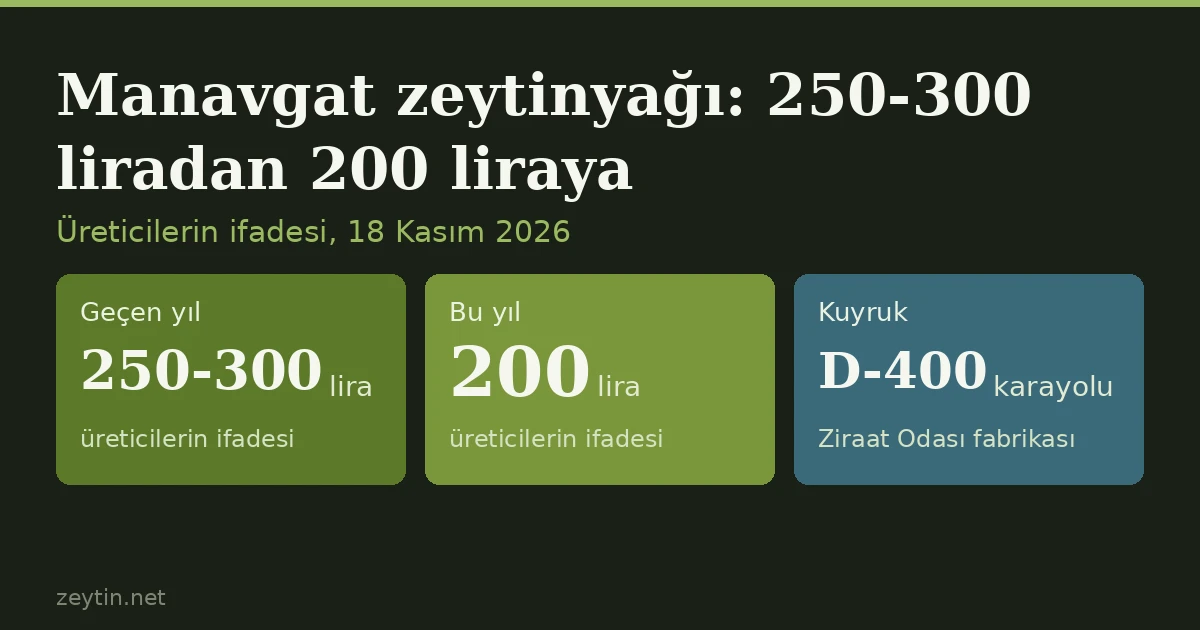
In Manavgat, Antalya, growers wait for hours at the olive oil mill after a larger harvest; the queue at the Manavgat Chamber of Agriculture's plant reached the D-400 highway. Growers say oil that sold for 250-300 lira last year has fallen to 200 lira. The reports do not say whether the price is per litre or per kilogram.
 Article
Olive oil falls to 200 lira a litre in Mersin: the report cites high yields and old stock
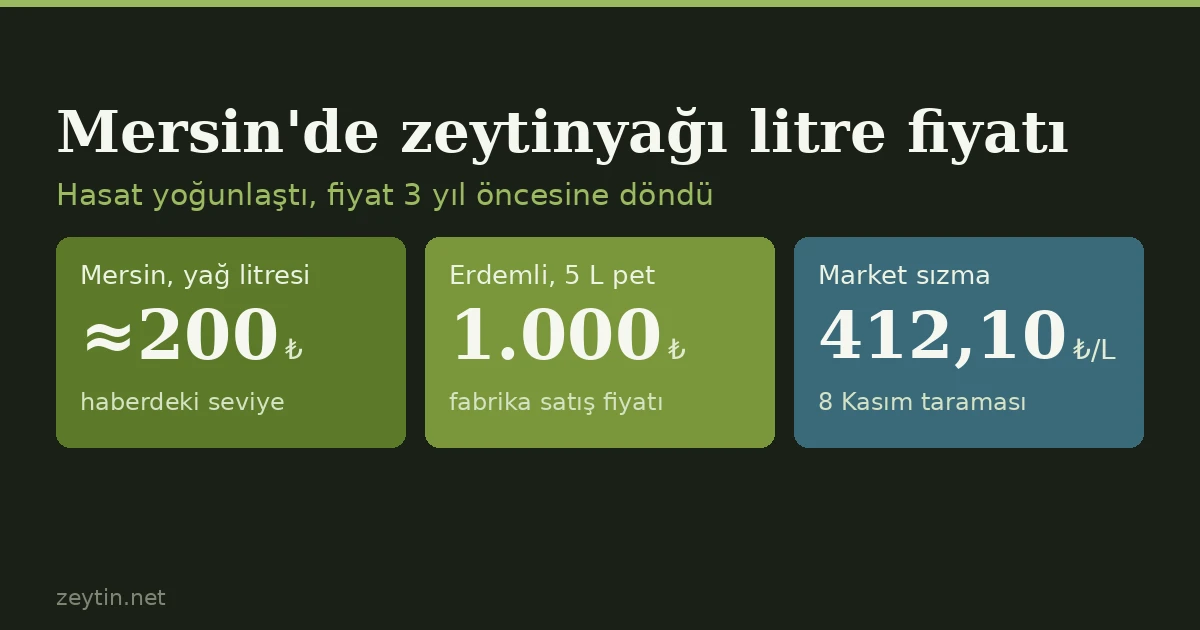
As the harvest picks up in Mersin, a litre of olive oil has fallen to about 200 lira, the level of three years ago; in Erdemli a 5-litre container sells for 1,000 lira. The report cites high yields and stock left from last year. The figure is set beside the site's exchange and supermarket measurements.
 Article
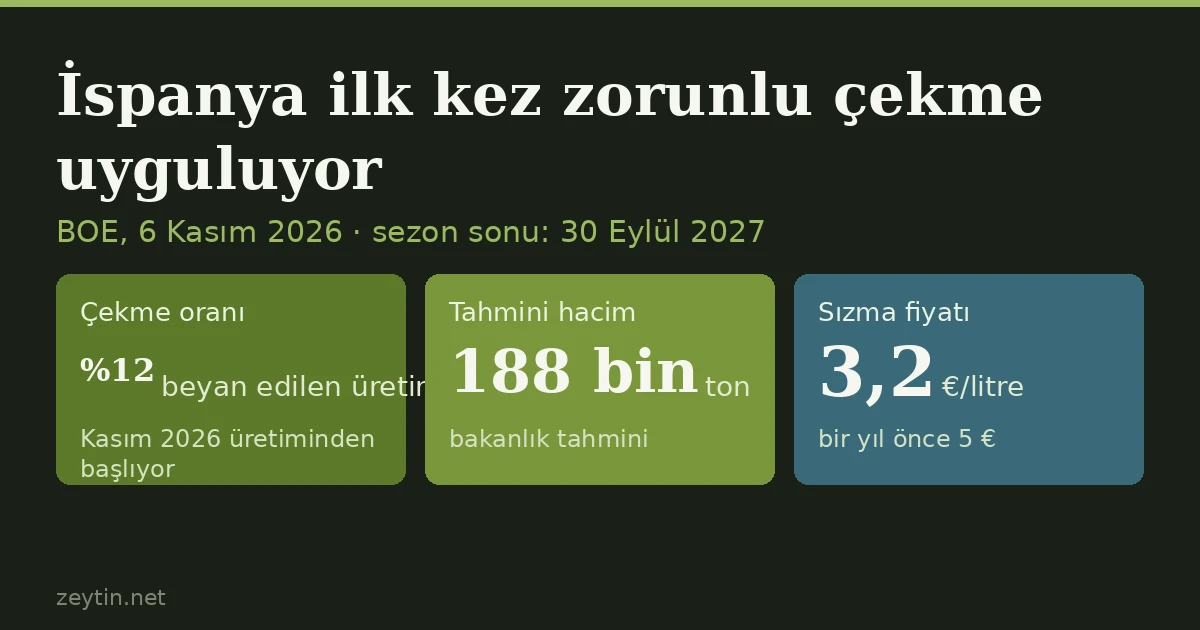
Spain activates mandatory olive oil withdrawal for the first time: 12% of output, about 188,000 tonnes held until September 2027
Spain's agriculture ministry published its decision in the BOE on 6 November: from November, mills must keep 12% of declared output in storage until 30 September 2027. The ministry estimates about 188,000 tonnes will be withdrawn; October early-harvest oils are exempt and mills receive no compensation.
 Article
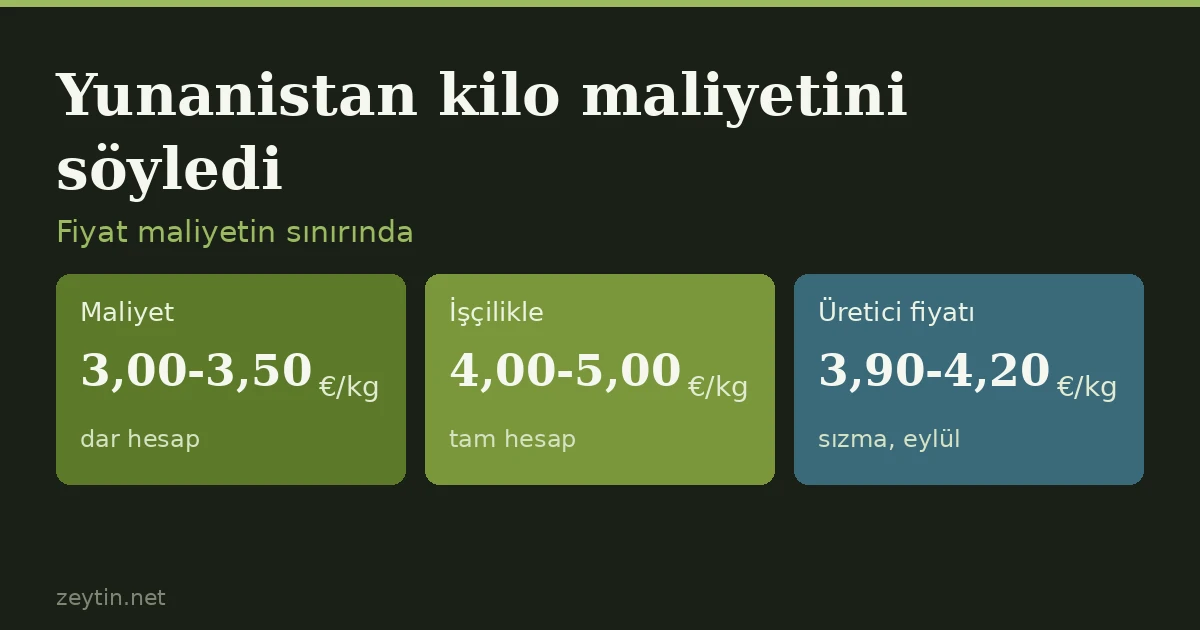
Greece finally puts a number on its cost: €3-3.5 a kilo, up to €5 with labour
For the first time Greece has put a per-kilo figure on its olive oil production cost: €3.00-3.50, rising to €4.00-5.00 once labour is fully counted. The producer price stands at €3.90-4.20, at or below that cost. Spain's €1.70-2.00 for the same item shows where the competitive gap actually sits. Greek output for 2026/27 is estimated at 280,000-330,000 tonnes.