Olive oil falls to 200 lira a litre in Mersin: the report cites high yields and old stock
As the harvest picks up in Mersin, a litre of olive oil has fallen to about 200 lira, the level of three years ago; in Erdemli a 5-litre container sells for 1,000 lira. The report cites high yields and stock left from last year. The figure is set beside the site's exchange and supermarket measurements.
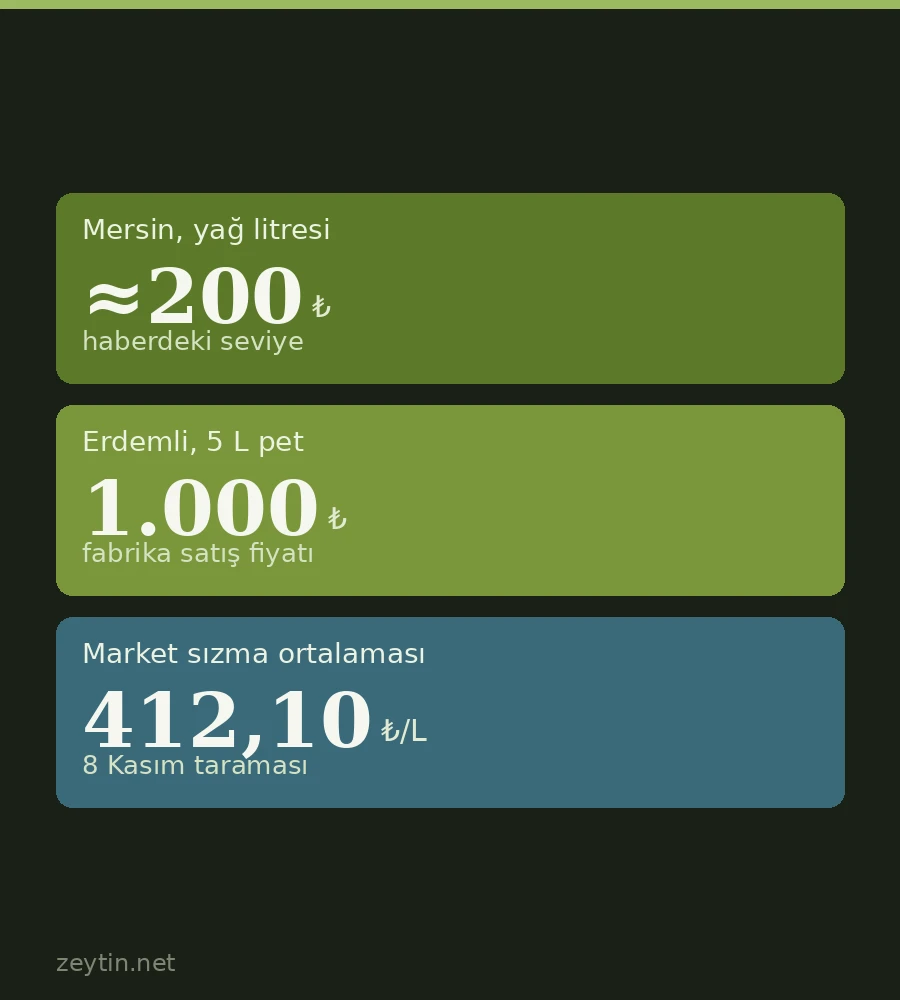
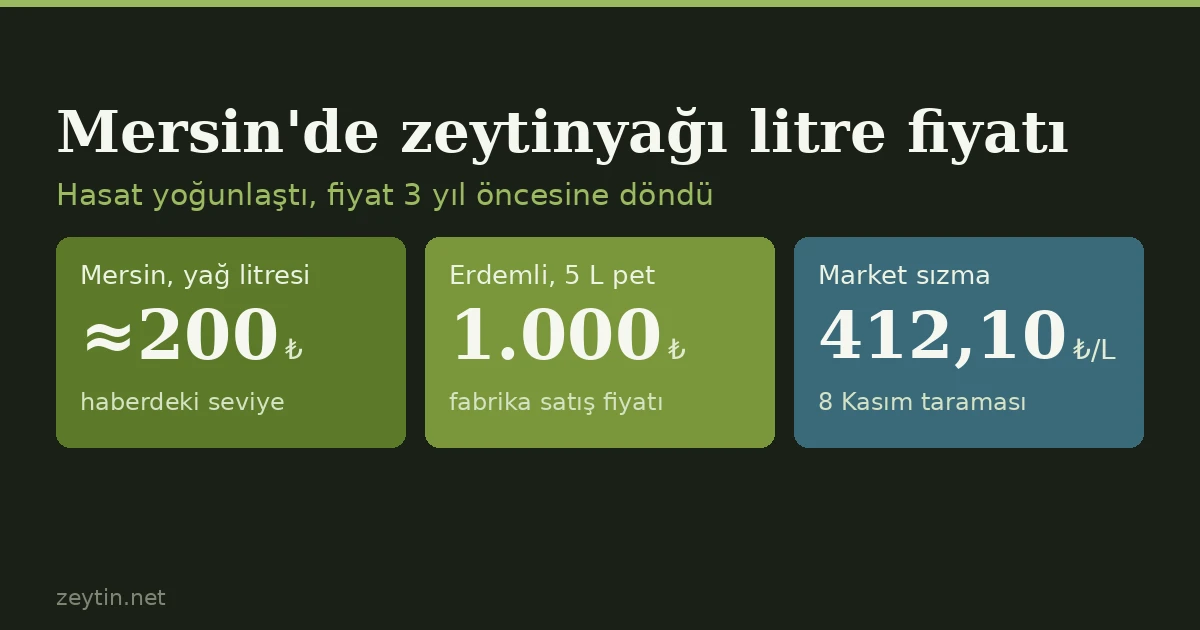
As the olive harvest picks up in Mersin, the figure that stands out in local reports is that the price of olive oil has fallen to around 200 lira a litre. The report describes that level as almost the same as three years ago. It gives high yields and the fact that stocks from last year have not run out as the reasons. According to a report dated 3 November 2026, the operator of an olive oil factory in Erdemli also says they have put oil on sale this season in 5-litre plastic containers for 1,000 lira; that works out at 200 lira a litre (our calculation).
What does the report say?
According to the report, olives in the province grow in many areas from sea level up to 800 metres. Mersin is counted among the top four provinces for olive production; the largest number of trees is in the Mut district, and in Tarsus, Silifke and Erdemli many farmers also grow olives both for home use and for income. The harvested olives are sieved and taken to oil factories, where they are washed, passed through a crusher, kneaded, and the oil and water separated. The report says the process takes about two hours.
The Erdemli operator says the harvest began with "an incredible yield". He explains the fall in price this way: because there is so much oil in stock, everyone's prices have started to fall. The producers who spoke to the report describe plentiful, well-timed rain, say that olives in the area are generally irrigated, and that because the trees are planted along the edges of gardens, most bear a crop most years; one says that if oil comes out of it, that is the best outcome for them.
Where does 200 lira sit against our own measurements?
The table below puts the figure in the report beside zeytin.net's own measurements. The figures are of different kinds and units: the price in the report is one factory's sale price for a container, the exchange rows are single registered trades, and the supermarket figures are a survey of shelf prices.
| Measurement | Date | Price |
|---|---|---|
| Erdemli, 5-litre plastic container (report) | 3 November | 1,000 TL (200 TL/L) |
| Nazilli Commodity Exchange, extra virgin registration | 2 November | 195.07 TL/kg |
| Edremit Commodity Exchange, extra virgin registration | 6 November | 273.92 TL/kg |
| Supermarket shelf, extra virgin, cheapest | 8 November | 249.00 TL/L |
| Supermarket shelf, extra virgin, average (6 chains) | 8 November | 412.10 TL/L |
| Spain producer price (3.17 €/kg) | Week of 1 November | ≈177.5 TL/kg |
When comparing litres with kilograms, the density of the oil comes into play: a litre of olive oil weighs about 0.92 kg. At that ratio 200 TL/L comes to about 218 TL per kilogram (our calculation). That figure sits between the 195.07 TL/kg in Nazilli and the 273.92 TL/kg in Edremit. It is about 20 percent below the cheapest extra virgin shelf price in supermarkets (249.00 TL/L) and about 51 percent below the average (412.10 TL/L) (our calculation). The gap may also include bottling, distribution and the retail margin between a container leaving the factory and a bottle on the shelf. For comparison: the lira equivalent of Spain's producer price is about 177.5 TL/kg, and 218 TL/kg is about 23 percent above that (our calculation). The report does not mention Spain; that comparison is ours.
Reading it alongside earlier reports on the site
This report is not a stand-alone price fall but part of the season's general line. On 30 September we wrote that the harvest had begun in Mut: according to information relayed from officials of the district agriculture directorate, 300 thousand tonnes of produce were expected in the district and prices in the orchard opened between 10 and 60 lira depending on sieve size; so the picture of "plenty of crop, low price" was already there in those days. We covered the first exchange registrations of October and their comparison with past seasons in how olive oil prices opened the 2026-27 season. What is new in today's report is that a level of 200 lira on the oil side is stated as a factory sale price, and that stock left from last year is named openly as one of the causes.
What the report leaves out
- The type and acidity of the oil: whether 200 lira applies to extra virgin, or to crude or cooking oil, the report does not say.
- A yield figure: "incredible yield" is one operator's phrase; there is no estimate of the province's or Mut's output in the report (for Mut, the district directorate's 300-thousand-tonne expectation is in the earlier report above).
- Which date and which oil the "three years ago" price refers to.
- At what price the producer sold the olives or the oil: the 1,000-lira container is the factory's own sale price.
Why it matters
A fall in price in a high-yield year looks normal at first sight, but the report names two causes together: this year's yield and stock left over from last year. Stock comes back into view as a factor setting the price of the new season. One of the farmers in the report says that if oil comes out of the olives they harvested, that is the best outcome for them; in other words, the producer who grows olives for home use cares more about yield than about the lower price.
Two things are worth watching: Mersin's official yield estimate, and whether extra virgin registrations on the exchanges the site tracks come close to the 200-lira level.
One rating per visitor; you can change yours at any time. Ratings are real reader votes — no seeded or default scores.
Related
 Article
Syria's crop doubles to 954,000 tonnes — and the oil still only feeds itself
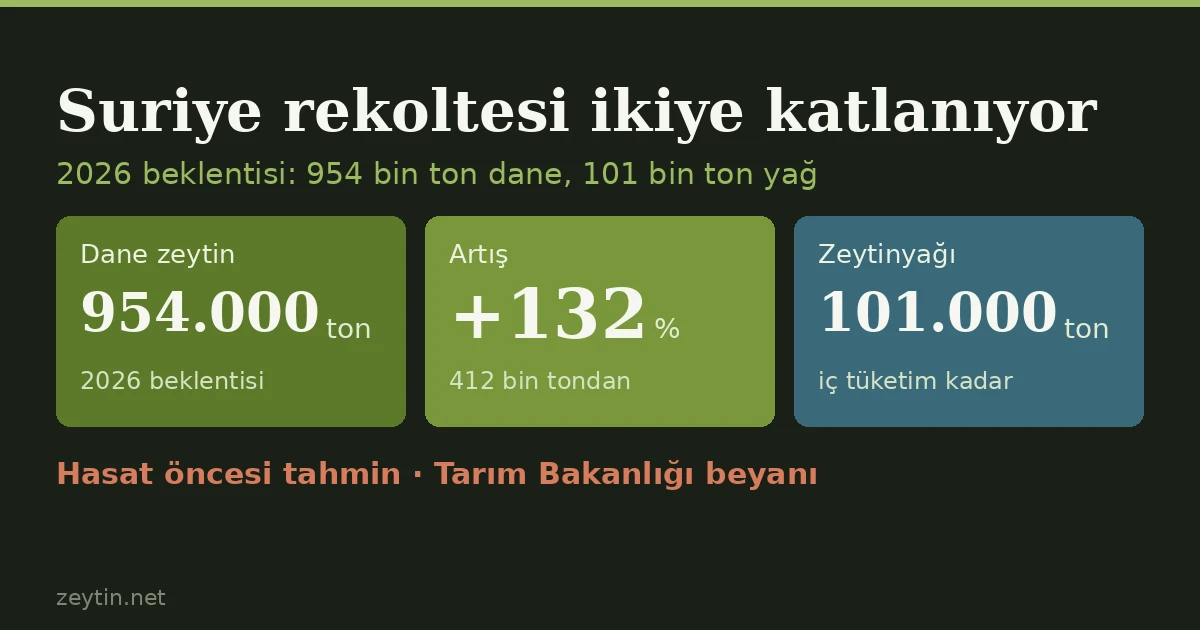
Syria's Ministry of Agriculture expects 954,000 tonnes of olives in 2026, up from 412,000 last season. The 101,000 tonnes of oil that implies barely covers domestic consumption — a doubled crop that still produces no export surplus.
 Article
Adulterated olive oil costs more than the real thing: price is no longer a sign of authenticity
Diker, president of the Edremit Chamber of Agriculture, says adulterated oils sold online now exceed the wholesale price of genuine oil: wholesale starts at 240 lira, the fake sells above 300. Our exchange data complicates the picture — genuine extra virgin in Aydın is already 307.60 lira.
 Article
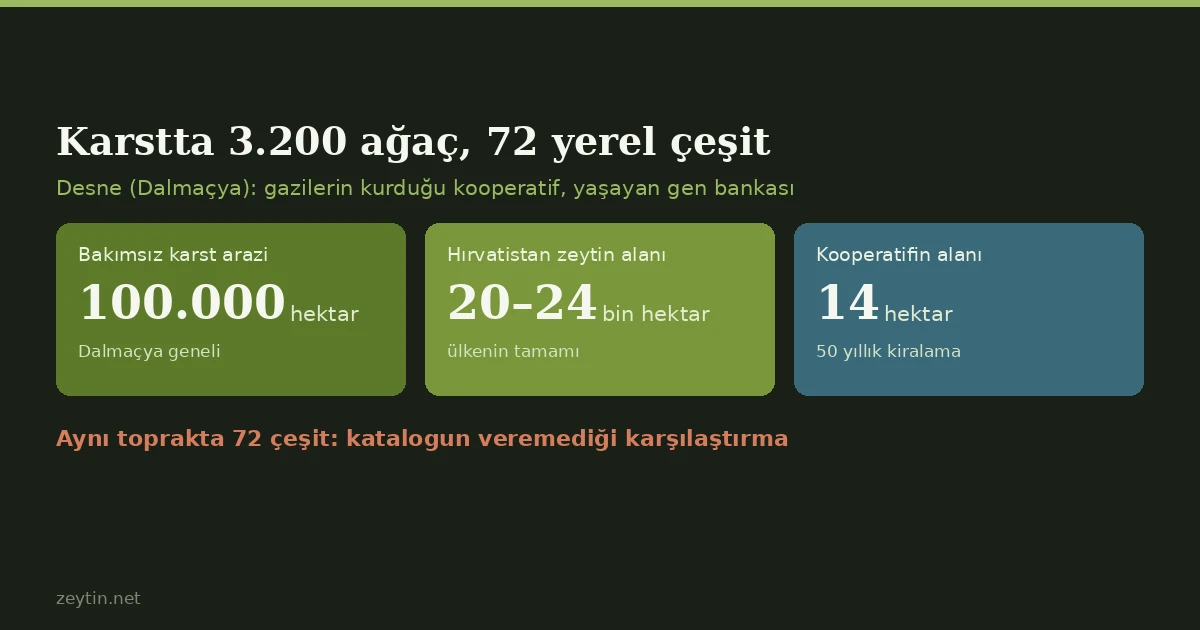
3,200 trees and 72 varieties on 14 hectares of stone: the cooperative turning Dalmatian karst into groves
Some 100,000 hectares of karst lie neglected in Dalmatia while all of Croatia has 20,000–24,000 hectares under olives. In Desne a veterans' cooperative has grown 3,200 trees of 72 native varieties on 14 hectares of rock — a grove that doubles as a natural laboratory for climate resilience.
 Article
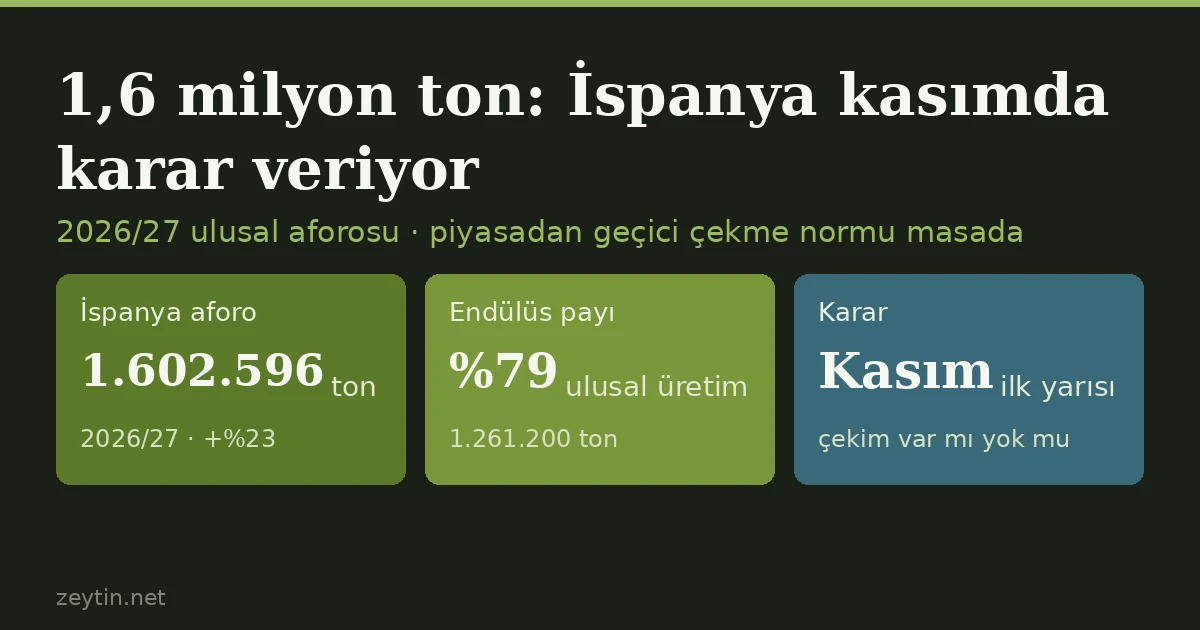
Spain decides in November: will part of a 1.6 million tonne crop be withdrawn from the market?
Spain's first national aforo for 2026/27 was presented in Jaén on 1 October: 1,602,596 tonnes of olive oil, 23% above last harvest. With carry-over stock, total availability approaches two million tonnes, and the Ministry of Agriculture will decide in the first half of November whether to activate a temporary withdrawal mechanism that has never been used. The ceiling on the world price Turkish exporters will face is being set here.