Turkey's 23 September fraud list: 21 olive oils, 11 from a single seller
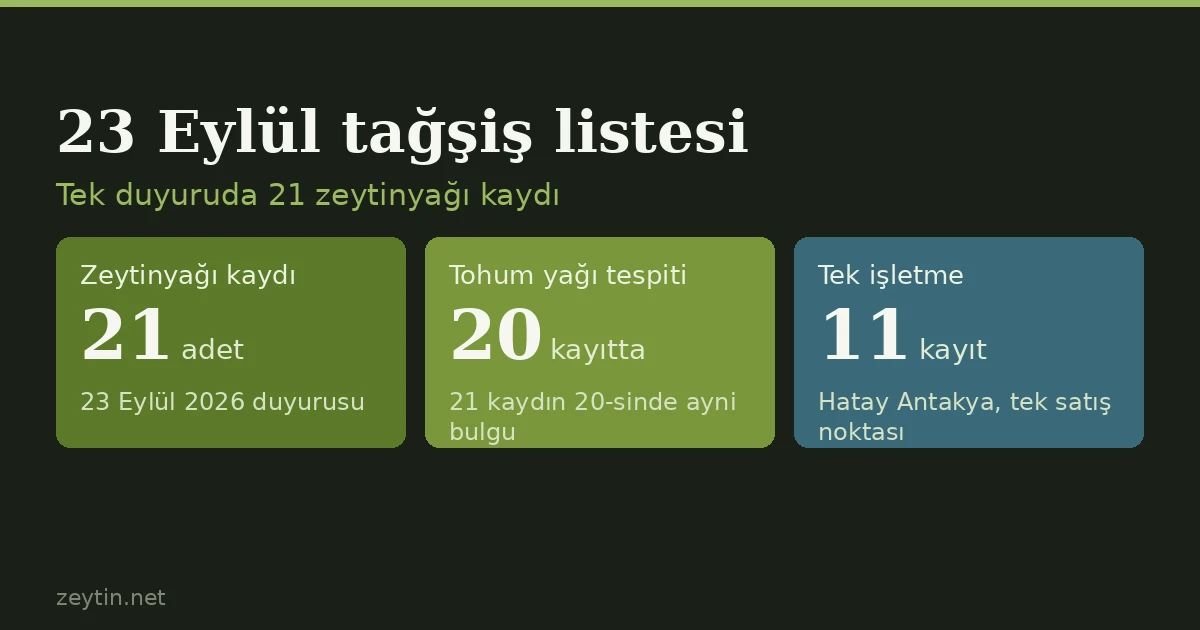
Twenty-one olive oil entries joined Turkey's public food-fraud register on 23 September 2026 — two-thirds of what the other eleven announcements since April produced combined. In twenty of them the finding is identical: seed oil adulteration.

Turkey's Ministry of Agriculture and Forestry added 40 new entries to its public food-fraud register on 23 September 2026. Of those, 21 fall under the vegetable oils group, and every one of them is a product sold as olive oil. The rest of the announcement covers 16 meat products, two beekeeping products and one seasoning.
What makes the number matter is not the figure itself but where it lands. It was published weeks before the new harvest begins, during the interval when everything on the shelf is still last season's oil.
The heaviest single announcement of the year
The register currently in force on the Ministry's Güvenilir Gıda portal starts on 2 April 2026 and holds 275 entries in total. Fifty-four of those are vegetable oils. The 23 September announcement alone accounts for 21 of that 54.
Put differently: the other eleven announcements published between April and September produced 33 oil entries combined, while a single day delivered 21. The previous high for one announcement was six entries, recorded on 2 April and again on 1 June. Nothing on the oil side of the register's six-month history comes close to this concentration.
Across the register as a whole, vegetable oils sit second behind meat and meat products, which dominate with 147 entries. Dairy follows with 30, beekeeping products with 20.
The violation has almost one name
In 20 of the 21 olive oil entries the finding is identical: seed oils mixed in. The remaining entry reads lower-grade olive oil mixed in.
That ratio holds across the wider register. Of the 54 vegetable oil entries in force, 48 are seed oil adulteration, four are lower-grade olive oil adulteration, and two are both at once. The economics of the fraud become visible here. Selling cheap seed oil under an extra virgin label leaves a far wider margin than cutting high-grade olive oil with low-grade olive oil. Once you look at how narrow the wholesale gap between the two olive oil classes has become, it becomes clear why the diluting agent is seed oil rather than olive oil.
Twenty-one entries does not mean twenty-one producers
Reading the register by entry count is misleading. Eleven of the 21 entries belong to a single business in the Antakya district of Hatay — products carrying different brand names, but leaving from the same point.
| Province | Entries | Where |
|---|---|---|
| Hatay | 11 | All from one business in Antakya |
| Aydın | 4 | Köşk (2), Efeler, Koçarlı |
| İzmir | 3 | Two firms in Buca |
| Balıkesir | 2 | Both in Havran |
| Artvin | 1 | Kemalpaşa, a shop shelf |
Aydın's four entries confirm the direction of the adulteration operations that ran through the province over the summer. The single Artvin entry shows the far end of the chain: the product was caught on a retail shelf, not where it was made.
Place names carried inside brand names
The striking detail in these entries is the geography embedded in the brand names. The oils gathered at the Hatay retail point carry Kazdağları, Akçay–Altınoluk, Kuzey Ege (North Aegean) and Trilye (Zeytinbağı) in their names. The products from the two firms in İzmir's Buca district carry Ayvalık and Edremit.
None of this is registered geographical indication use. These are place names slotted into a commercial brand. The function, however, is identical: they offer the buyer a sense of guaranteed origin. Where a genuine designation of origin such as Ayvalık Olive Oil carries real inspection and analysis obligations, the word "Ayvalık" attached to a brand name binds no one to anything.
This matters for the regions whose names are being borrowed. The reputation built over decades in Edremit, Ayvalık and the North Aegean is being spent by products that have no demonstrated connection to those areas — and the cost of that spending lands on the producers who actually farm there.
Packaging: the problem is the tin
Sixteen of the entries are in five-litre containers. One is 18 litres, one is two litres, two are one litre, and one lists no volume. A further entry is recorded simply as "unlabelled" — found on a market stall in Havran.
The distribution shows that adulteration travels in tins and drums, not in small glass bottles. The format preferred by households buying a year's supply at once is also the point where label enforcement is weakest. A five-litre tin bought directly from a stall or a roadside seller rarely passes through the checks a supermarket bottle does.
The legal basis of the register
The announcements rest on Article 31, paragraph 6 of Law No. 5996 on Veterinary Services, Plant Health, Food and Feed, together with Article 8 of the Regulation on Official Controls of Food and Feed dated 17 December 2011. The threshold is explicit: only products where imitation or adulteration has been conclusively established by laboratory analysis enter the list. These are not suspicion records — they are completed analyses.
The portal also maintains a second register, titled "content deficiency affecting an essential characteristic", holding 93 entries. It contains no olive oil entry dated 23 September; 91 of its records concern dairy products.
How to check
The current register is published at `guvenilirgida.tarimorman.gov.tr` under the Food Public Announcement section, listing company name, brand, product name, batch or serial number and the type of violation for each entry. The same data is available through the "Current Food Public Announcement" service on Turkey's e-Devlet state portal.
Checking the register is not the only way to judge the oil already in your kitchen, though. How olive oil adulteration is actually carried out, and how it can be detected is a separate question — as is the fact that most of the kitchen tests people rely on do far less than they are believed to.
One rating per visitor; you can change yours at any time. Ratings are real reader votes — no seeded or default scores.
Related
 Article
Xylella has left Puglia: seven olive trees test positive in Calabria
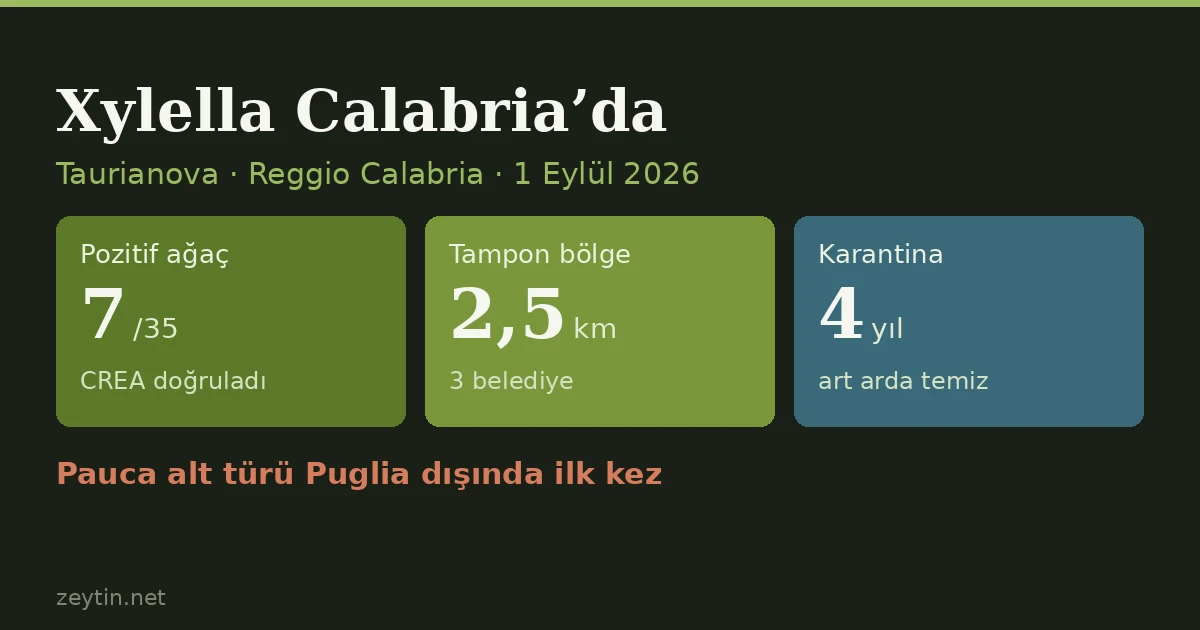
The pauca subspecies of Xylella fastidiosa, which dries out olive trees, had been confined to Puglia since 2013. In Taurianova, Calabria, 7 of 35 samples tested positive; the region issued a quarantine decree on 1 September with a 2.5 km buffer zone.
Article
Xylella has left Puglia: seven olive trees test positive in Calabria
The pauca subspecies of Xylella fastidiosa, which dries out olive trees, had been confined to Puglia since 2013. In Taurianova, Calabria, 7 of 35 samples tested positive; the region issued a quarantine decree on 1 September with a 2.5 km buffer zone.
 Article
In Spain the cost sits above the price: €5.31 in a traditional grove, €3.46 at the gate
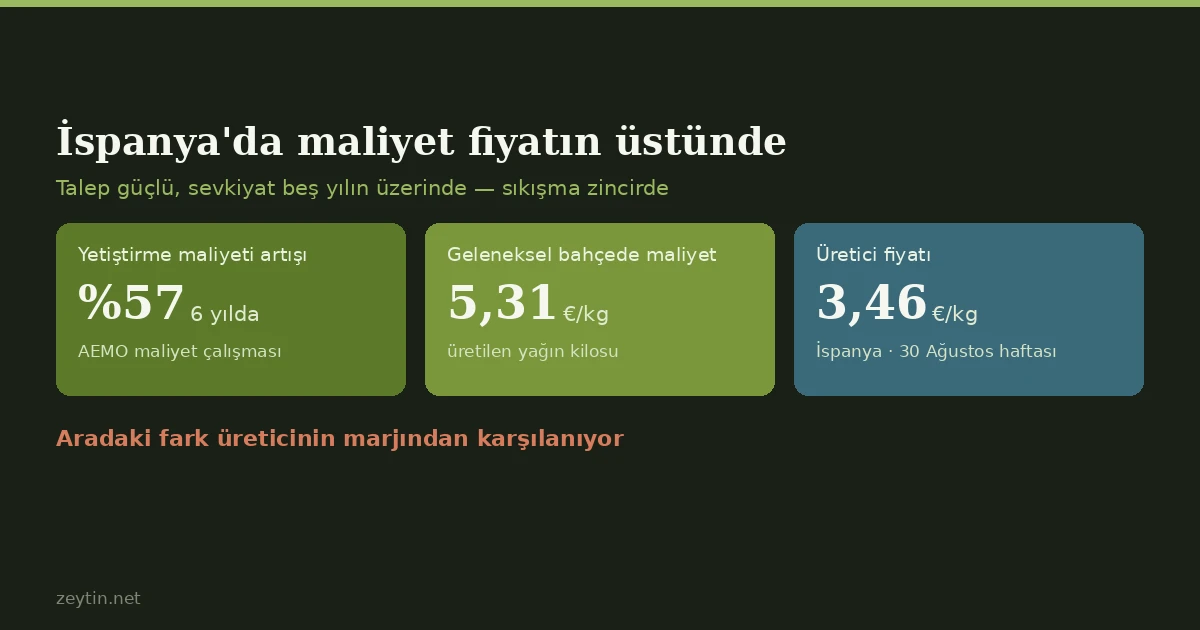
Olive cultivation costs have risen 57% in six years and reach €5.31 per kilogram in the most traditional groves, according to an AEMO study. The same week, Spain's producer price was €3.46. The Andalusian cooperative federation, with 342,000 members, is asking not for aid but for a change to the Food Chain Law.
Article
In Spain the cost sits above the price: €5.31 in a traditional grove, €3.46 at the gate
Olive cultivation costs have risen 57% in six years and reach €5.31 per kilogram in the most traditional groves, according to an AEMO study. The same week, Spain's producer price was €3.46. The Andalusian cooperative federation, with 342,000 members, is asking not for aid but for a change to the Food Chain Law.
 Article
Olive oil got cheaper in the UK and Filippo Berio lifted its share to 15%
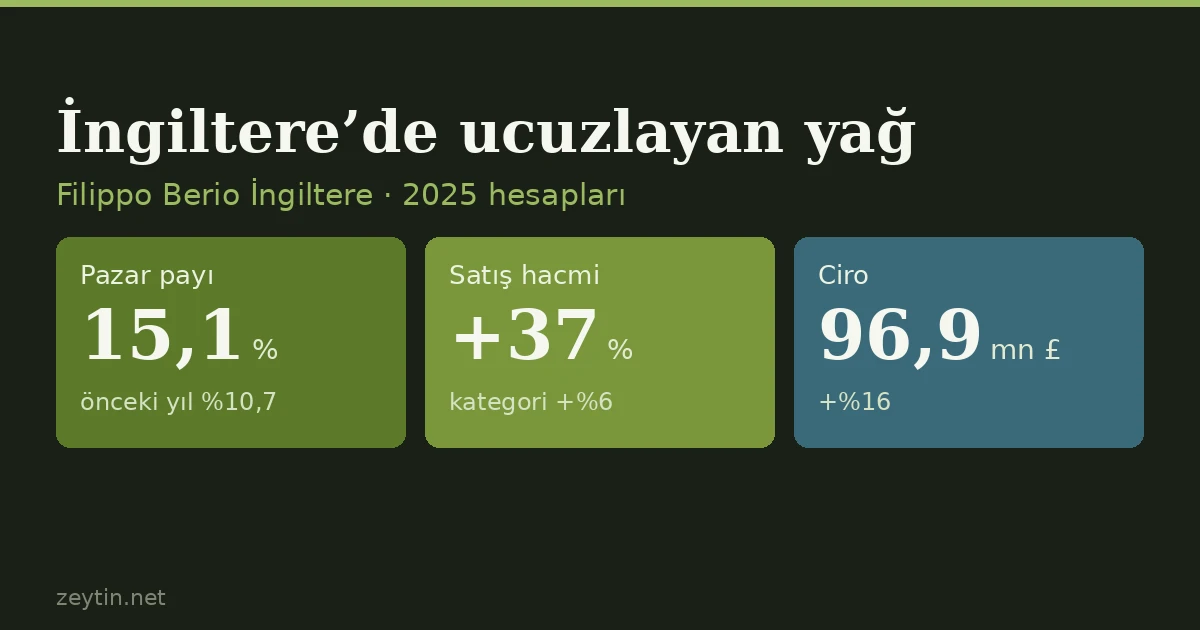
The 2025 accounts of Filippo Berio's UK company show how falling prices reached the shelf: volumes up 37%, revenue up 16%, market share from 10.7% to 15.1%. The category grew 6% and lower wholesale costs were passed on to shoppers.
Article
Olive oil got cheaper in the UK and Filippo Berio lifted its share to 15%
The 2025 accounts of Filippo Berio's UK company show how falling prices reached the shelf: volumes up 37%, revenue up 16%, market share from 10.7% to 15.1%. The category grew 6% and lower wholesale costs were passed on to shoppers.
 Article
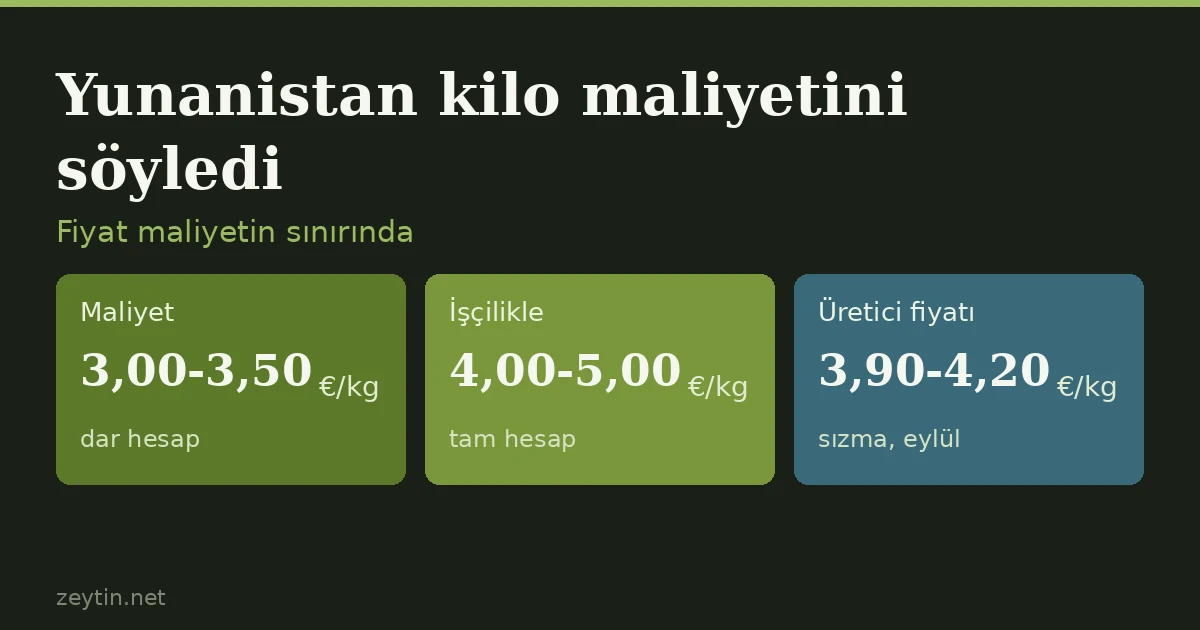
Greece finally puts a number on its cost: €3-3.5 a kilo, up to €5 with labour
For the first time Greece has put a per-kilo figure on its olive oil production cost: €3.00-3.50, rising to €4.00-5.00 once labour is fully counted. The producer price stands at €3.90-4.20, at or below that cost. Spain's €1.70-2.00 for the same item shows where the competitive gap actually sits. Greek output for 2026/27 is estimated at 280,000-330,000 tonnes.
Article
Greece finally puts a number on its cost: €3-3.5 a kilo, up to €5 with labour
For the first time Greece has put a per-kilo figure on its olive oil production cost: €3.00-3.50, rising to €4.00-5.00 once labour is fully counted. The producer price stands at €3.90-4.20, at or below that cost. Spain's €1.70-2.00 for the same item shows where the competitive gap actually sits. Greek output for 2026/27 is estimated at 280,000-330,000 tonnes.