The EU's newest olive oil registration is in northern Italy: Olio dei Colli di Bologna gets PGI status
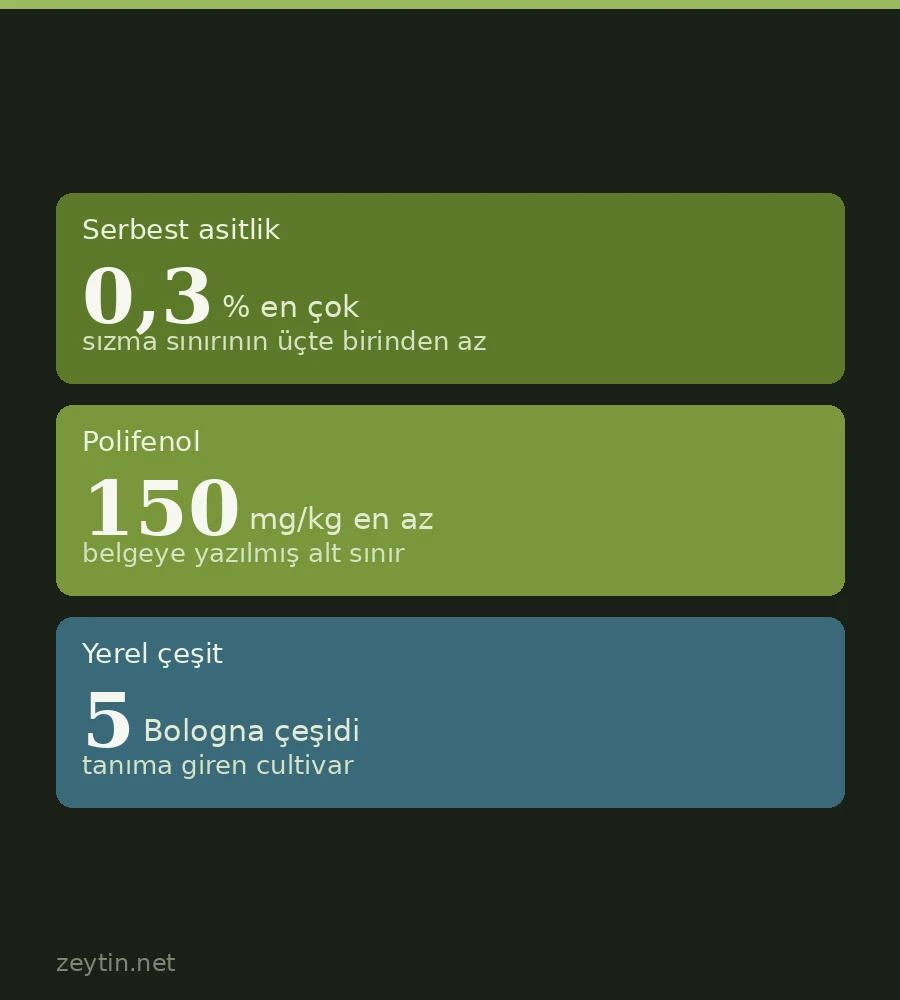
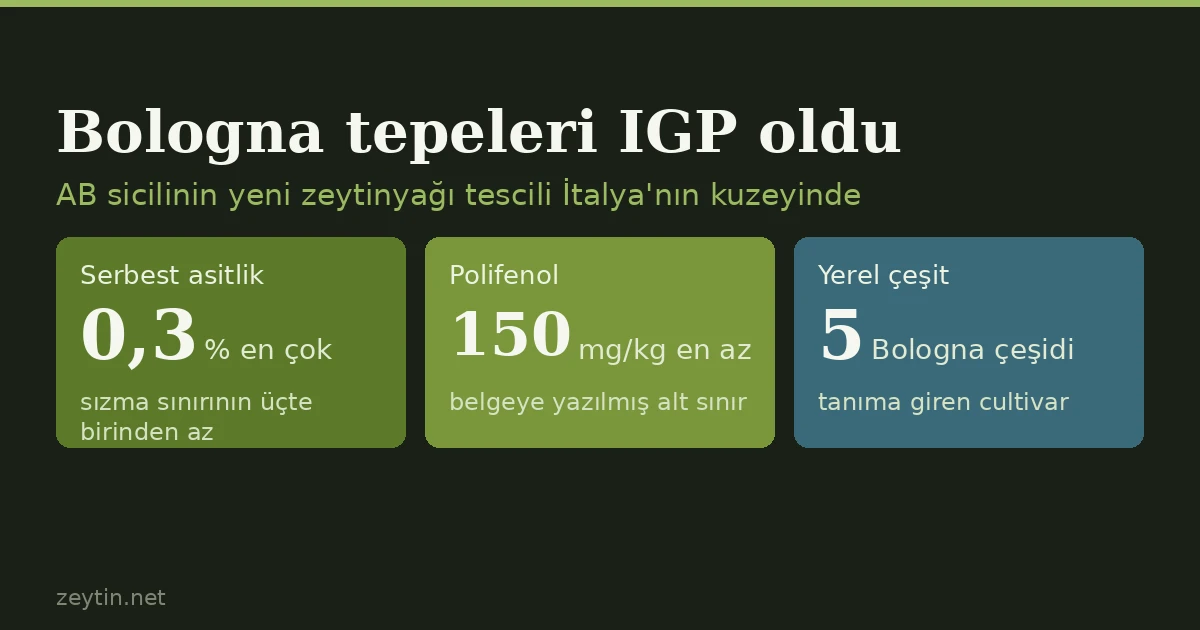
The European Commission has entered olive oil from the hills of Bologna into the Union register of geographical indications. The specification caps free acidity at 0.3 percent, well under a third of the legal limit for extra virgin, and writes five local Bolognese cultivars into the definition.
The northern edge of the olive map is being redrawn. With Implementing Regulation (EU) 2026/2078 of 9 September 2026, the European Commission entered the name "Olio dei Colli di Bologna" into the Union register as a protected geographical indication. The decision was published in the Official Journal of the European Union on 16 September 2026 and took effect the same day.
Bologna is not a city Italy associates with olives. Emilia-Romagna brings to mind the butter-based cooking of the Po valley, cured pork and fresh pasta; olive oil is understood to be the business of the south. That is precisely what makes this registration worth reading. It puts on paper the return of an olive culture that had almost entirely disappeared over the centuries.
Why PGI and not PDO
The European system runs two separate protections, and the difference between them is the first thing readers skip. Under a protected designation of origin (PDO), every production step must take place inside the defined area, and the product's qualities must be essentially due to that geographical environment. Under a protected geographical indication (PGI), it is enough that at least one of the production, processing or preparation steps happens there.
Bologna received the second. That does not make the document loose — the figures below show the opposite — but it does give a region rebuilding its olive growing from a very small base a workable frame. Most of Türkiye's olive oil registrations take the designation-of-origin form instead; the practical difference is visible in documents such as the North Aegean Olive Oils registration.
What the specification actually says
| Criterion | In the specification |
|---|---|
| Type | Protected geographical indication (PGI) |
| Regulation | (EU) 2026/2078 · 9 September 2026 |
| Official Journal | 16 September 2026 |
| Free acidity | max 0.3% |
| Polyphenols | min 150 mg/kg |
| Share in single-cultivar oil | min 85% |
| Share in blended oil | min 80% |
Two of those numbers deserve a second look.
Free acidity at 0.3 percent. The EU legal ceiling for extra virgin olive oil is 0.8 percent. This registration demands less than a third of that. The document is not saying "it should be extra virgin"; it is saying "it should sit at the top band of extra virgin." We have set out where the grades begin and end in extra virgin, virgin and riviera explained.
A polyphenol floor of 150 mg/kg. Setting a lower bound for polyphenols is not common in geographical indication documents. Most registrations describe bitterness and pungency in sensory language and leave it there; putting a measured floor into the text means the oil's phenolic character is not left to chance. What those compounds do is covered in oleocanthal and polyphenols. The northern climate is not a handicap here. In cooler zones ripening slows, and phenolic compounds stay in the fruit longer. Where cold actually becomes the limit, and which cultivars hold up at that limit, is the subject of cold-hardy olive varieties.
The sensory definition points the same way. The specification describes a medium to intense fruitiness with balanced bitterness and pungency, carrying notes of grass, almond and tomato. Ermanno Rocca, who heads the producer network behind the registration, summarised the target as oils with "a good presence of polyphenols, balanced bitterness and pungency, and fresh notes recalling tomato and cut grass."
Five local cultivars written into the definition
The specification also names the trees the oil may come from. The permitted list includes Correggiolo, Frantoio, Nostrana di Brisighella and Ghiacciola, all known in the wider region. The more interesting part is the five local Bolognese cultivars: Farneto, Montebudello, Montecapra, Montecalvo 2 and Oliveto. Leccino and Maurino may also enter blended oils.
This is the most instructive aspect of the whole registration. A local cultivar that is not named in any document is, economically speaking, absent. Nurseries do not propagate it, growers do not plant it, buyers cannot tell it apart, and it survives only in whatever old groves happen to remain. The moment it enters a protected definition, there is a commercial reason to keep it in the ground — and a reason to measure it. Türkiye faces the same question from the other direction: looking at the distribution of Türkiye's olive cultivars, the number of varieties with published, measured values is far smaller than the number of varieties that actually exist in the country's groves.
The area: south of the via Emilia
The geographical area is defined as the hill country of the Metropolitan City of Bologna lying south of the via Emilia, including the hilly part of the municipality of Bologna itself. The Roman road that separates the plain from the hills has been used as the boundary of the registration — a rare case of a two-thousand-year-old road serving as a modern legal line. The zone covers 25 municipalities in full and parts of 7 more.
The producer side is small. The network behind the registration currently has 12 member companies. Bologna's mayor, Matteo Lepore, described the decision as evidence of the city's "ability to rediscover and grow assets that seemed to belong to the past." Michele de Pascale, president of the Emilia-Romagna region, and Alessio Mammi, the regional councillor responsible for agriculture, said certified quality "supports the competitiveness of businesses" and strengthens the supply chain.
A five-year file
The timeline shows how slow this work is. The dossier began to be assembled in 2021. The application was filed in 2023. Publication in the Official Journal of the European Union — the step that opens the name to objections — came only on 19 May 2026. No opposition was lodged, and registration followed on 9 September. Five years from idea to register.
With this entry, Emilia-Romagna now holds 46 protected food designations, and this becomes the region's third European registration in olive oil, after the Brisighella and Colline di Romagna designations of origin. Italy's total in the food category has reached 335. The EU register as a whole now carries more than 3,900 protected names.
The comparison with Türkiye is not uncomfortable so much as clarifying. Türkiye ranks fourth in the world for olive oil geographical indications, so the problem has never been the count. The problem is what the registrations are actually doing — the failure of certified product to turn into price. We have written before about how Italy earns more from trade than from production, exporting more olive oil than it grows. The annual output of twelve companies on the Bologna hills will be invisible in Italy's national figures. But a geographical indication is not a volume instrument. It is a mechanism for lifting a kilo of oil out of commodity pricing, and what it sells is not quantity but the ability to be told apart.
One rating per visitor; you can change yours at any time. Ratings are real reader votes — no seeded or default scores.
Related
 Article
Andalusia moves against North African imports: 76% of what arrives is extra virgin
Andalusia's farm sector objects that more than 76% of the olive oil imported into the region in early 2026 was extra virgin. The regional minister has requested exceptional measures under Article 195 of the EU regulation. Türkiye could meet the same door.
Article
Andalusia moves against North African imports: 76% of what arrives is extra virgin
Andalusia's farm sector objects that more than 76% of the olive oil imported into the region in early 2026 was extra virgin. The regional minister has requested exceptional measures under Article 195 of the EU regulation. Türkiye could meet the same door.
 Article
Recall in Germany: MOSH/MOAH in pomace oil — not olive oil
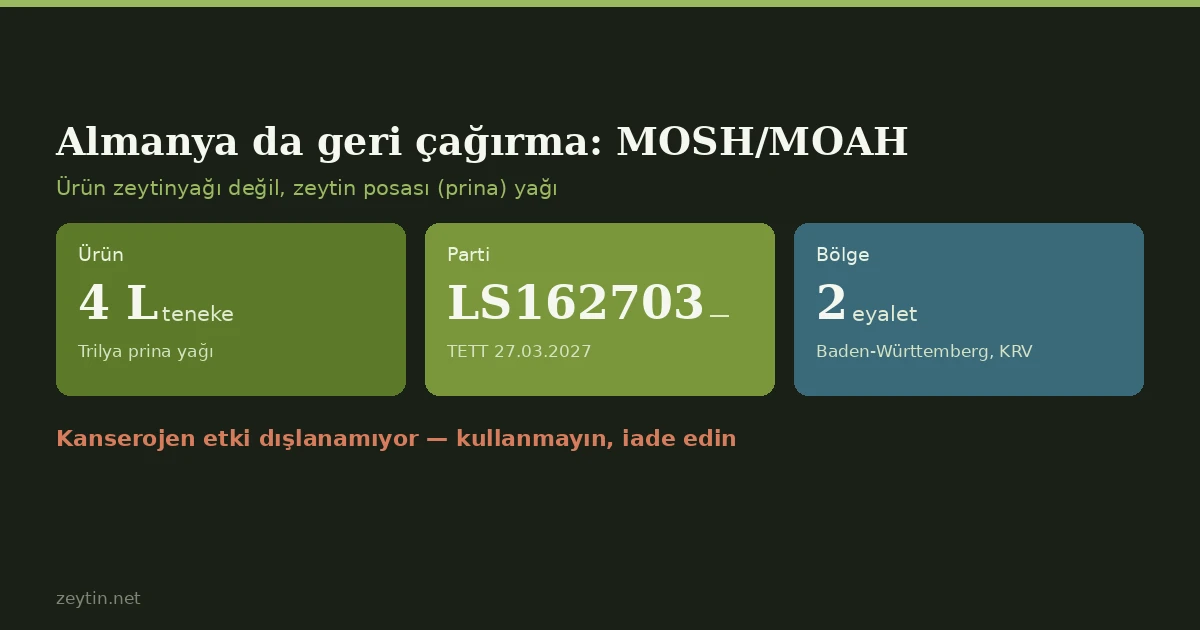
Germany's official food safety portal has recalled a 4-litre pomace oil sold in Turkish shops. The product is not olive oil but olive pomace oil; we explain the difference and what MOSH/MOAH are.
Article
Recall in Germany: MOSH/MOAH in pomace oil — not olive oil
Germany's official food safety portal has recalled a 4-litre pomace oil sold in Turkish shops. The product is not olive oil but olive pomace oil; we explain the difference and what MOSH/MOAH are.
 Article
"Jewels of the Adriatic": four countries choose to compete on quality, not volume
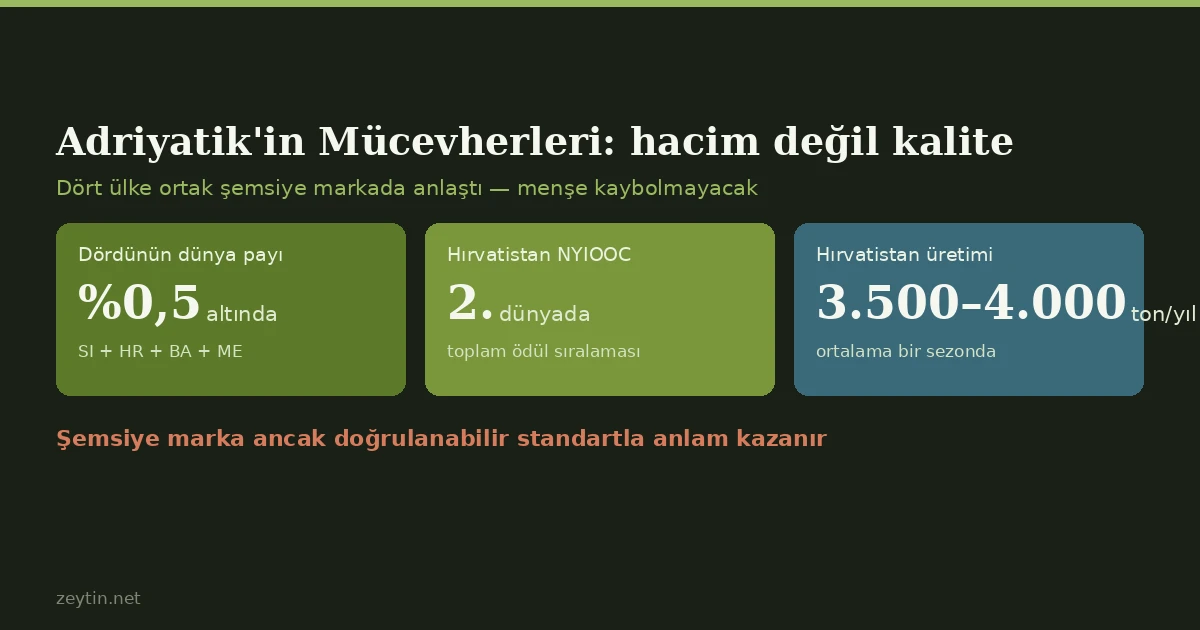
Slovenia, Croatia, Bosnia and Herzegovina and Montenegro together produce under 0.5% of the world's olive oil — yet Croatia finished second worldwide at the NYIOOC. A panel in Mostar proposed a shared umbrella brand: origin stays, common rules are the condition.
Article
"Jewels of the Adriatic": four countries choose to compete on quality, not volume
Slovenia, Croatia, Bosnia and Herzegovina and Montenegro together produce under 0.5% of the world's olive oil — yet Croatia finished second worldwide at the NYIOOC. A panel in Mostar proposed a shared umbrella brand: origin stays, common rules are the condition.
 Article
Olive oil exports still down 62% at the end of August: bulk loses 73%
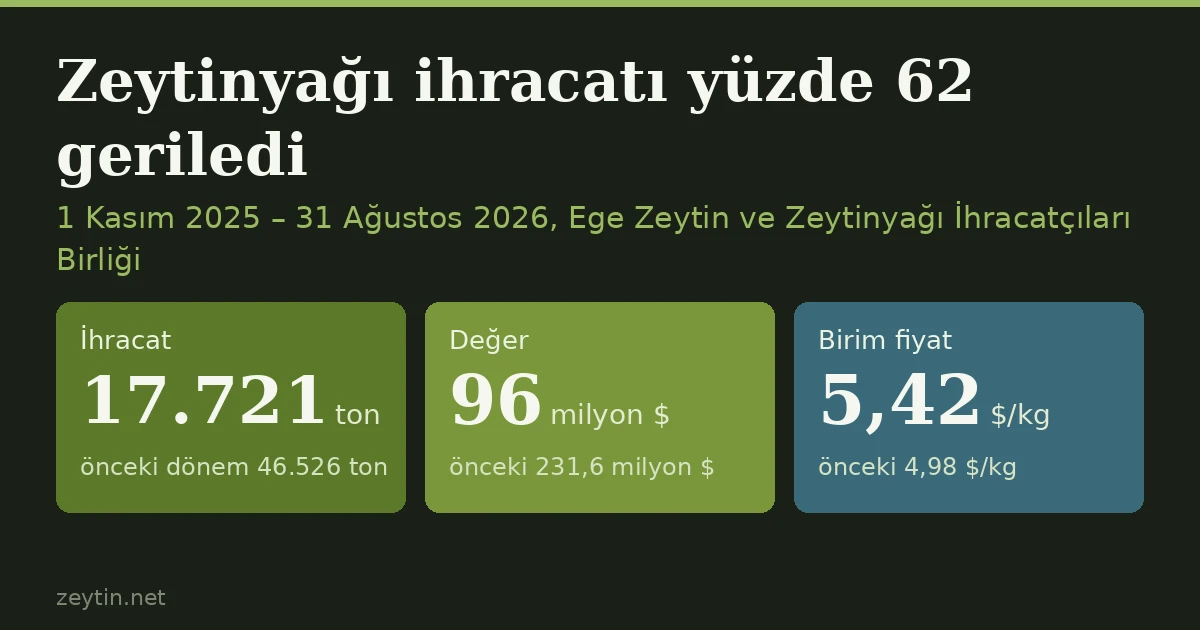
According to the Aegean Olive and Olive Oil Exporters' Association, olive oil exports between 1 November 2025 and 31 August 2026 fell 62% in volume and 59% in value. Bulk sales lost 73%, the US market 70%. Table olives, by contrast, held their ground.
Article
Olive oil exports still down 62% at the end of August: bulk loses 73%
According to the Aegean Olive and Olive Oil Exporters' Association, olive oil exports between 1 November 2025 and 31 August 2026 fell 62% in volume and 59% in value. Bulk sales lost 73%, the US market 70%. Table olives, by contrast, held their ground.