27 October adulteration list: one company, a fourth entry under a fourth brand
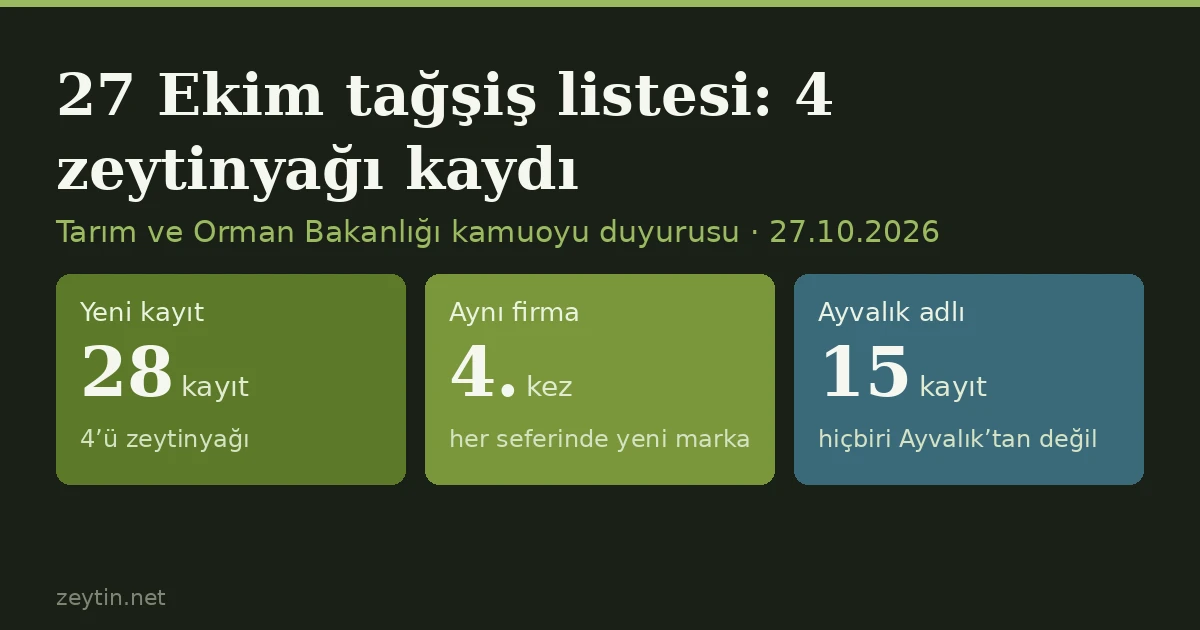
The ministry's 27 October 2026 adulteration notice lists 28 records, four of them olive oils, all with seed oil. One Istanbul company is on the list for the fourth time since June, each time under a new brand; "Ayvalık" appears in 15 records, none of them from Ayvalık.
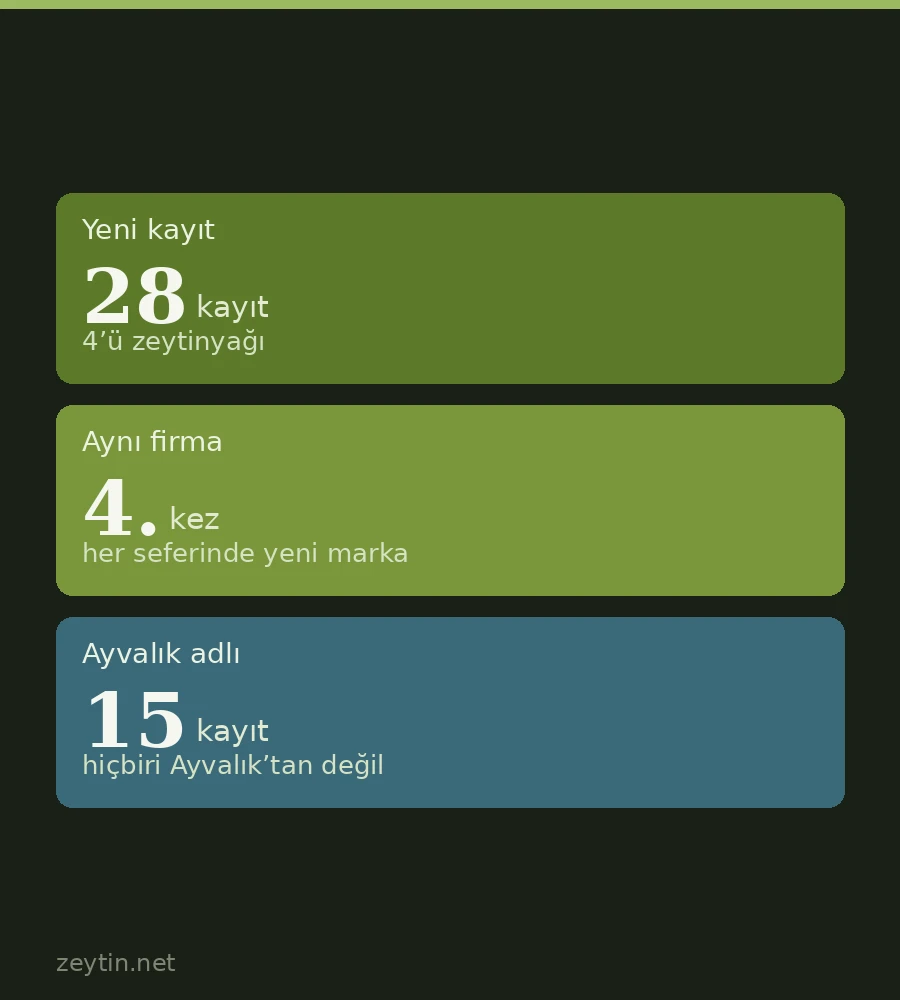
Türkiye's Ministry of Agriculture and Forestry added 28 records to its adulteration and imitation list on 27 October 2026. Four of them are olive oils, and all four carry the same finding: seed oils mixed in. The more telling detail is who sits behind one of them. An oil company in Büyükçekmece, Istanbul, enters the list for the fourth time since the beginning of June — each time under a different brand name.
The list is a public notice published on the ministry's Safe Food (Güvenilir Gıda) portal. Its legal basis is Article 31 of Law No. 5996 on veterinary services, plant health, food and feed, together with Article 8 of the Regulation on Official Controls of Food and Feed of 17 December 2011. Only products whose adulteration or imitation has been confirmed by a laboratory analysis are entered. In other words, the list is not a register of suspicions; every line is a finished test result.
What the notice contains
| Product group | Records |
|---|---|
| Meat and meat products | 18 |
| Vegetable oils | 4 |
| Milk and dairy products | 3 |
| Bee products | 3 |
| Total | 28 |
As in earlier notices, meat dominates: most of the eighteen meat records concern poultry found in minced meat, meatballs and lahmacun fillings sold as beef or lamb. All three dairy records are for vegetable fat detected in a dairy product — two butters and one yoghurt. The vegetable oil group contains four records, and every one of them is a product sold as olive oil.
The four olive oil records
| Brand | Product | Company location |
|---|---|---|
| — | Natural first-grade olive oil, unlabelled | Balıkesir / Havran |
| Bizim Vakıf Köy Koop. | Natural extra virgin olive oil, 5 litres | Mersin / Mut |
| Gurme Ayvalık | Cold-pressed natural extra virgin olive oil, 5 litres | Mersin / Mut |
| Aydın Ege'nin Efesi | Cold-pressed olive oil, 5 litres | Istanbul / Büyükçekmece |
Three of the four are 5-litre packs; the fourth has no label at all. The two records from Mut belong to the same limited company, sold under two different brands — one suggesting a village cooperative ("köy koop."), the other borrowing the name of Ayvalık.
One company, four notices, four brands
The Büyükçekmece record is the fourth entry for Coşkar Yağ Gıda Sanayi Ticaret Ltd. Şti. on the list currently in force. Each of the four entries carries a different brand:
| Notice | Brand | Finding |
|---|---|---|
| 01.06.2026 | Ayvalık Zey-Mar | Lower-grade olive oil mixed in |
| 18.06.2026 | Zeytinovam Ayvalık Serisi | Seed oils mixed in |
| 10.07.2026 | Ayvalık Gurme | Seed oils mixed in |
| 27.10.2026 | Aydın Ege'nin Efesi | Seed oils mixed in |
The first three brands all carry the name Ayvalık, the north Aegean town best known for its olive oil. The fourth switches to Aydın and the Aegean in general. The company itself is registered in Istanbul. The notice does not say who owns these brands or whether they are registered trademarks. What it does show is one company name appearing under four brand names within five months, with seed oil found in three of the four cases.
We saw a similar pattern at the end of September with a business in Köşk, Aydın: there too the brand changed from one notice to the next while the finding stayed the same. A brand name is cheap to change; a company registration is not. That is why reading these lists by company rather than by brand tells a different story.
"Ayvalık" appears in 15 records — none from Ayvalık
Across the whole list the Ayvalık name forms a pattern of its own. Of the 60 vegetable oil records currently in force, 15 have "Ayvalık" in the brand or product name. Seven of those belong to companies in Aydın and three to companies in Istanbul; there is one each from Mersin, Bursa, İzmir, Artvin and Rize. Fourteen of the fifteen were found to contain seed oil.
Not one company on the list is registered in the Ayvalık district. All three records from Balıkesir province, where Ayvalık lies, come from Havran, and none of them uses the Ayvalık name.
This explains why the name is chosen. Ayvalık olive oil has been a registered designation of origin since 2007. Under the registration, only natural extra virgin oil made from the Ayvalık variety grown inside the Ayvalık district may carry the name. The brands on the list use the name as an association rather than a protected designation. The Mut entries are striking for another reason: Mut olive oil is itself a registered designation of origin, yet the company based there sold its product under Ayvalık's name rather than its own region's.
The word "gurme" (gourmet) plays a similar role. It appears in the brand or product name of eight of the vegetable oil records currently in force.
A market stall in Havran, again
The Havran record belongs to a market stall: a "natural first-grade" olive oil with no brand, no batch number and no label. An unlabelled one-litre stall oil from the same district was also on the 23 September notice. The 27 October notice carries a second Havran record as well — unlabelled flower honey, sold at another stall.
Stall sales are exactly where traceability ends. There is no batch to recall, no bottling plant to hold responsible and no analysis history to check. The one-litre and unlabelled formats also show that the problem is not limited to the 5-litre tins that dominate the list.
The window keeps moving
The portal currently shows 321 records from 12 notices, the oldest dated 1 June 2026. On 12 October the list still started in mid-April; the April and May notices have since dropped off. Totals therefore change over time and should always be read with a date attached.
All 60 vegetable oil records now in force are products sold as olive oil. Seed oil was found in 56, lower-grade olive oil in three, and both in one. Aydın leads with 22 records, followed by Hatay with 12 and Istanbul with 5. In 21 records the brand field is empty or a dash, and 14 records have no batch number.
The list does not measure how widespread adulteration is in the market; it shows when analyses were completed. There is a laboratory process between sampling and publication, so the records published on 27 October may reflect samples taken in earlier months rather than oil from the new harvest, which has only just started to leave the mills.
For buyers the practical point has not changed. A place name, or words like "cooperative" and "gourmet", on a label is a claim, not a certificate. The business registration number, batch number and filling date are details you can read on the label, and a product without them gives you nothing to trace. How adulteration is done and what can be checked at home is covered in our piece on olive oil fraud and adulteration.
The figures in this article were calculated from the public notice records live on the ministry's Safe Food portal as of 29 October 2026.
One rating per visitor; you can change yours at any time. Ratings are real reader votes — no seeded or default scores.
Related
 Article
Spain's official estimate: 1.6 million tonnes, and prices have already fallen
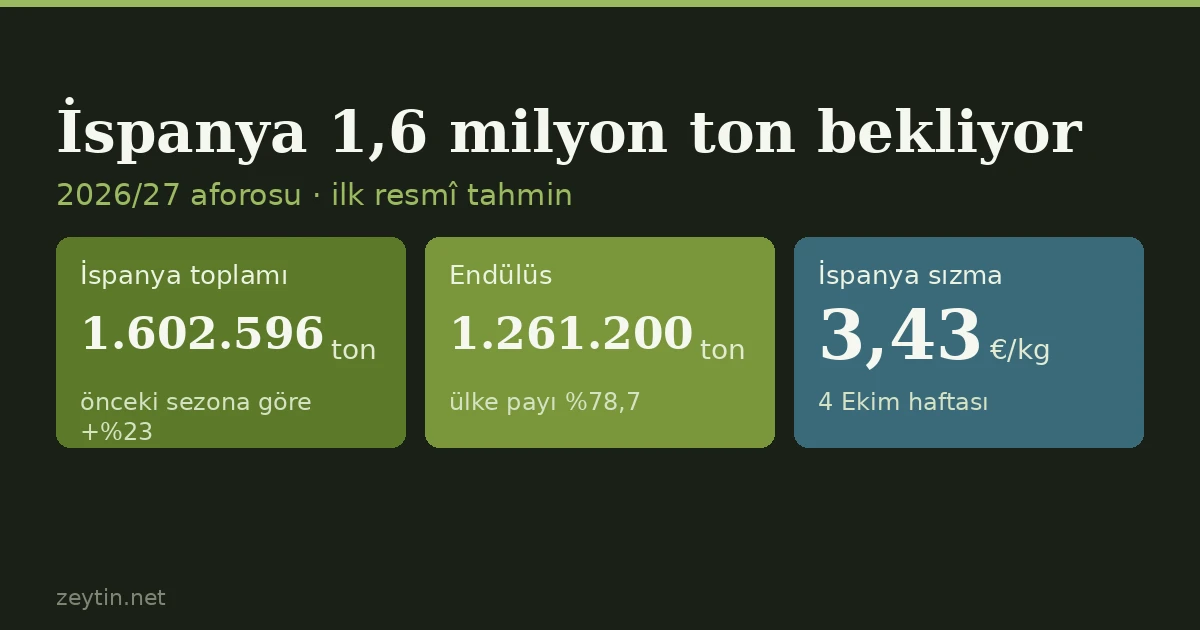
Spain's agriculture ministry has published its first official 2026/27 crop estimate: 1,602,596 tonnes of olive oil, 23% above last season. Andalusia alone expects 1.26 million tonnes. Producer prices did not wait for the estimate — Spanish extra virgin has slipped to 3.43 euros a kilo.
 Article
Olive oil got cheaper in the UK and Filippo Berio lifted its share to 15%
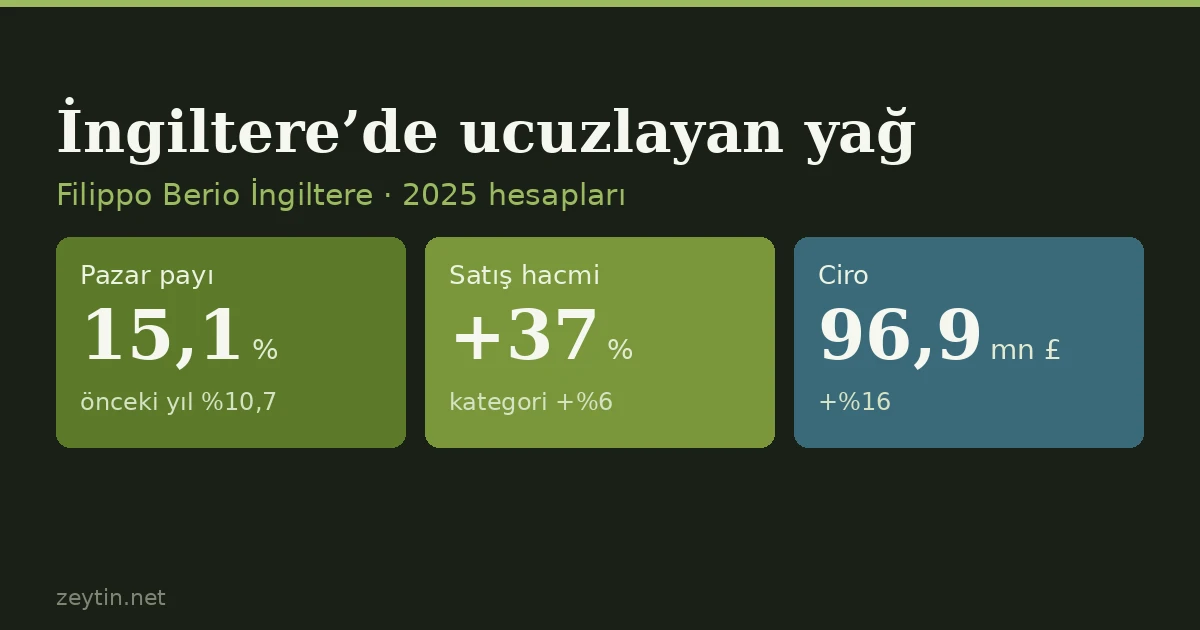
The 2025 accounts of Filippo Berio's UK company show how falling prices reached the shelf: volumes up 37%, revenue up 16%, market share from 10.7% to 15.1%. The category grew 6% and lower wholesale costs were passed on to shoppers.
 Article
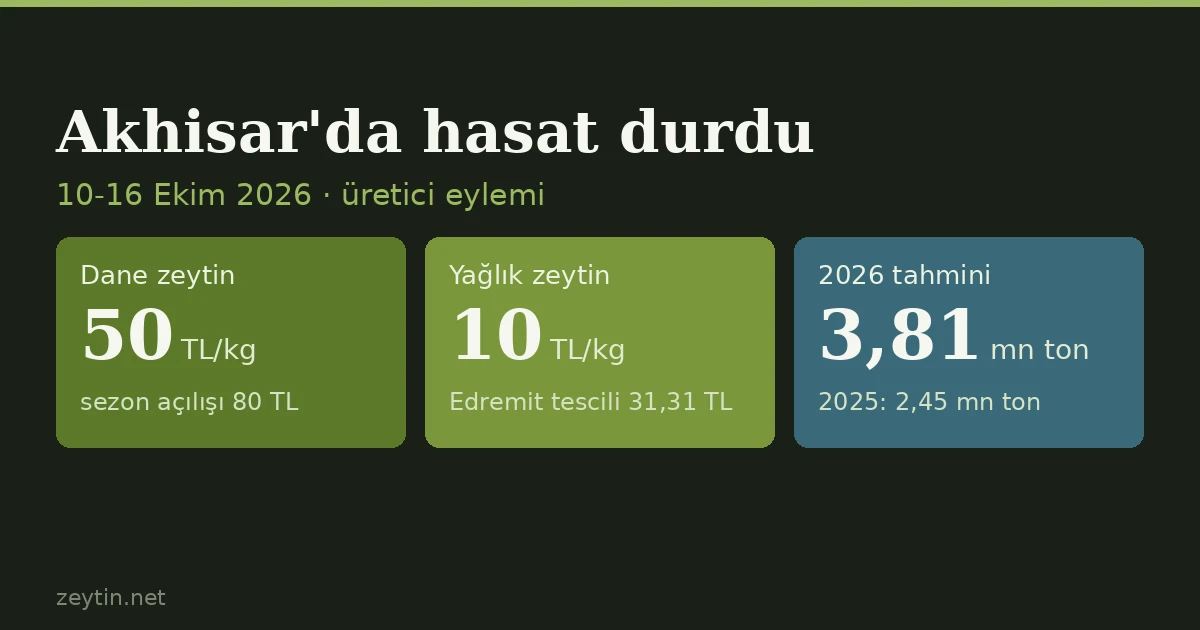
Harvest halted amid a record forecast: 50 lira for table olives in Akhisar, 10 for oil
Growers in Akhisar halted the harvest for a week on 10 October. Table olive prices that opened the season at 80 lira fell to 50, and oil olives to 10 — below last season's table olive floor. In the same days the official first estimate puts production at 3.8 million tonnes.
 Article
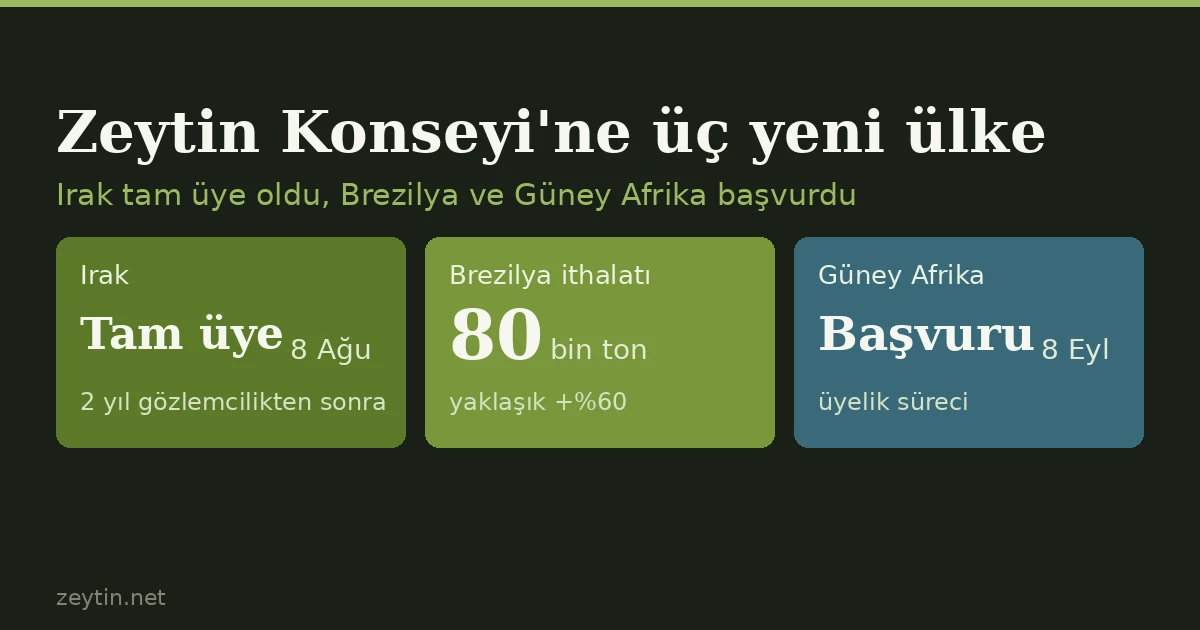
The International Olive Council grows: Iraq joins, Brazil and South Africa apply
The International Olive Council (IOC) saw three developments in a month: Iraq became a full member on 8 August, South Africa submitted its membership request on 8 September and Brazil on 9 September. The expansion reflects olive oil's shift towards production and consumption areas beyond the Mediterranean.