Türkiye's EU olive oil quota is 100 tonnes: exporters ask for at least 60,000
The Aegean Olive and Olive Oil Exporters' Association asked the EU to raise Türkiye's 100-tonne olive oil quota to at least 60,000 tonnes and the US to lift its 12.5 percent surcharge. The out-of-quota duty equals about a third of the Spanish producer price; olive oil export volume fell 53 percent in nine months.
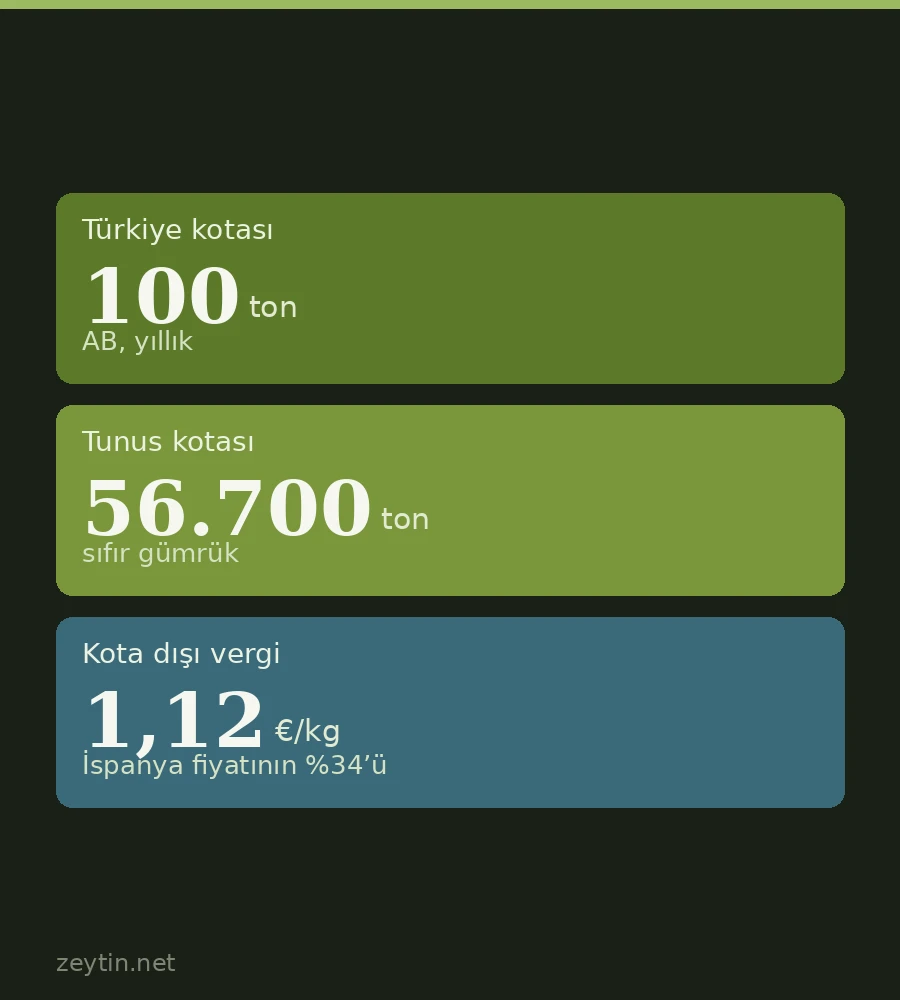
The Aegean Olive and Olive Oil Exporters' Association has put the trade barriers its members face abroad back on the agenda ahead of the new season. According to a statement by the association's chairman, M. Emre Uygun, published on 27 October, the sector has two concrete demands: that the European Union raise the 100-tonne olive oil quota it grants Türkiye to at least 60,000 tonnes, and that the United States lift the additional 12.5 percent tariff it applies to Turkish products. Uygun also said exporters expect olives and olive oil to gain zero-duty access to the British market through the free trade talks under way with the United Kingdom.
The demands come as Türkiye heads into what is expected to be a very large crop. The association says reports from the field point to a high harvest in 2026/27 for both table olives and olive oil. But because Spain, Italy, Greece and Tunisia are also expecting plentiful harvests, the sector has not been able to set an export target for the season. A big crop at home, in other words, does not automatically translate into big sales abroad when every major competitor also has oil to sell.
Why 100 tonnes is a barrier
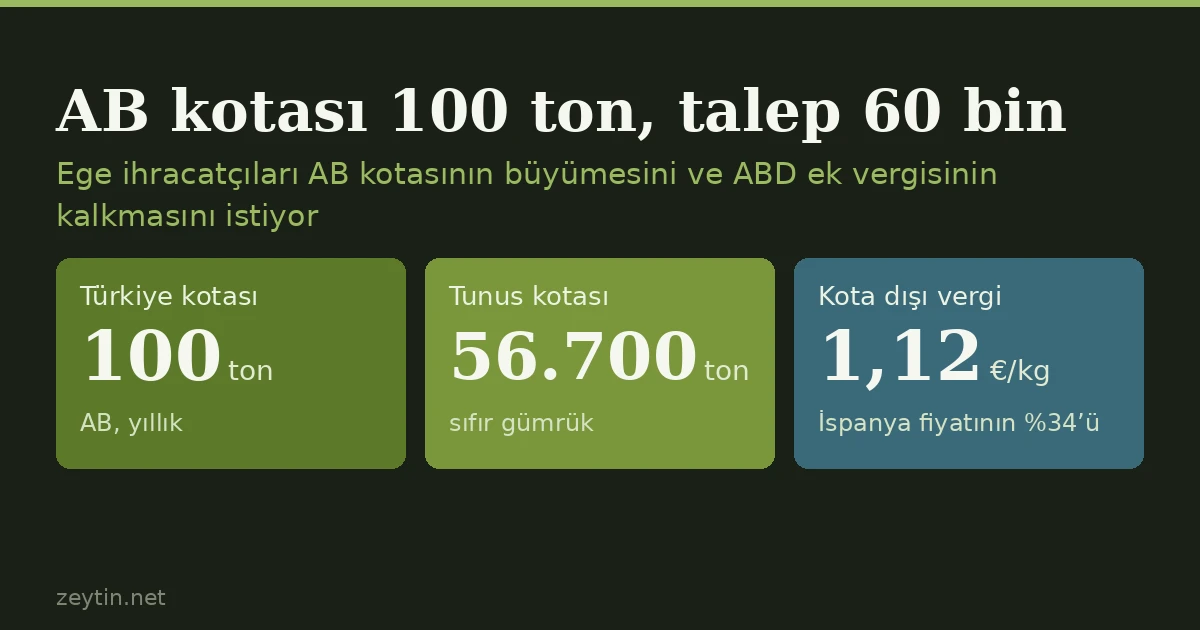
Olive oil entering the EU outside a quota faces a high, fixed duty. In the EU customs tariff, the duty on virgin and extra virgin olive oil from third countries is €124.50 per 100 kilograms. The tariff database lists a preferential rate of €112.05 per 100 kilograms for oil originating in Türkiye, only 10 percent below the general duty. Once the 100-tonne quota is used up, a Turkish exporter therefore pays roughly €1.12 per kilogram in duty.
One of the series this site tracks shows how heavy that is. According to the European Commission's weekly price data, the producer price of extra virgin olive oil in Spain was €3.26 per kilogram in the week to 18 October. A duty of €1.12 is equivalent to about 34 percent of that price. For a buyer in the EU, Turkish oil becomes roughly a third more expensive at the border even if it starts at the same price as its competitor.
The quota is part of the concessions resting on Decision No 1/98 of the EC-Türkiye Association Council, which governs trade in agricultural products between the two sides. Expanding it is therefore not a matter of a unilateral administrative step; it would require both parties to agree on a new concession within that regime. The 60,000 tonnes the exporters are asking for is close in size to the Tunisian quota described below.
Tunisia is the comparison most often drawn. Under a 2005 Council decision, the EU grants Tunisia a duty-free quota of 56,700 tonnes of olive oil every year. That is 567 times Türkiye's quota. Tunisia is today the leading supplier of the olive oil the EU buys from outside the bloc, and much of its bulk oil goes to bottlers in Italy and Spain, where it is often blended and sold under European brands.
The British side is a different story. A free trade agreement between Türkiye and the United Kingdom has been in force since the start of 2021, and Uygun's expectation is that the talks now under way will bring olives and olive oil into the zero-duty scope as well. Since leaving the EU, the United Kingdom applies its own tariff, and among European countries that do not produce olive oil it is a significant market.
Product by product over nine months
The product breakdown in the association's statement shows that olive oil carried most of the decline. Total sector exports fell 28 percent in January-September 2026, from $381 million to $273 million, while volume dropped from 121,000 tonnes to 87,000 tonnes.
| Product | Volume ('000 t) | Change | Value ($ million) | Change |
|---|---|---|---|---|
| Black olives | 48.1 | −14% | 127.0 | −9% |
| Green olives | 14.4 | −19% | 41.3 | −11% |
| Olive oil | 15.7 | −53% | 82.1 | −48% |
| Olive pomace oil | 8.6 | −40% | 22.8 | −40% |
| Total | 87 | −28% | 273 | −28% |
Source: Aegean Olive and Olive Oil Exporters' Association, statement of 27 October 2026. Changes are against the same period of the previous year.
Olive oil volume more than halved: only 15,700 tonnes were sold abroad in nine months. The association attributes this to global price movements and to the export restrictions applied in earlier periods. On these figures, the average export value of olive oil works out at about $5.2 per kilogram, compared with $2.6 for black olives and $2.9 for green olives. Table olives, which held up far better, now account for well over half of the sector's export revenue.
We covered the monthly and country breakdown of the sector total in our nine-month export report, which showed sales to the United States down 45 percent and Germany becoming the largest market. A comparison of the US surcharge with what competing countries pay is in our US tariff article.
The price gap is the other half of the picture
The quota alone does not explain the competitiveness problem. On the Edremit commodity exchange, extra virgin olive oil registered on 26 October traded at 304.73 lira per kilogram. At the European Central Bank's reference rate for the same day (€1 = 55.67 lira), that is about €5.47, or 1.7 times the Spanish producer price. An exchange registration is a single transaction and may reflect a quality difference. Even so, the distance between the two figures suggests that even with a larger quota, Turkish oil would have to compete in Europe on quality and packaging, not on price alone. Add the €1.12 duty to the Edremit price and the gap with Spanish bulk oil widens to around €3.3 per kilogram.
The association is building its strategy in that direction: packaged and value-added products, international fairs, trade delegations and an export development project called OLIVEtoLIVE. Uygun said the aim is to keep exports on their feet in 2027 with these tools and, over the medium term, to lift the sector's exports to $1 billion a year.
Reading notes
⚠ Duty rates are taken from the EU customs tariff. How the quota is split across the year and the in-quota rate are outside the scope of this article.
⚠ The Edremit figure is a single exchange transaction; the Spanish figure is a weekly average producer price. They do not measure the same thing. We explain the reasons for the gap in detail in our Türkiye-Europe price comparison.
⚠ Export values per kilogram are our own calculation from the association's rounded figures.
One rating per visitor; you can change yours at any time. Ratings are real reader votes — no seeded or default scores.
Related
 Article
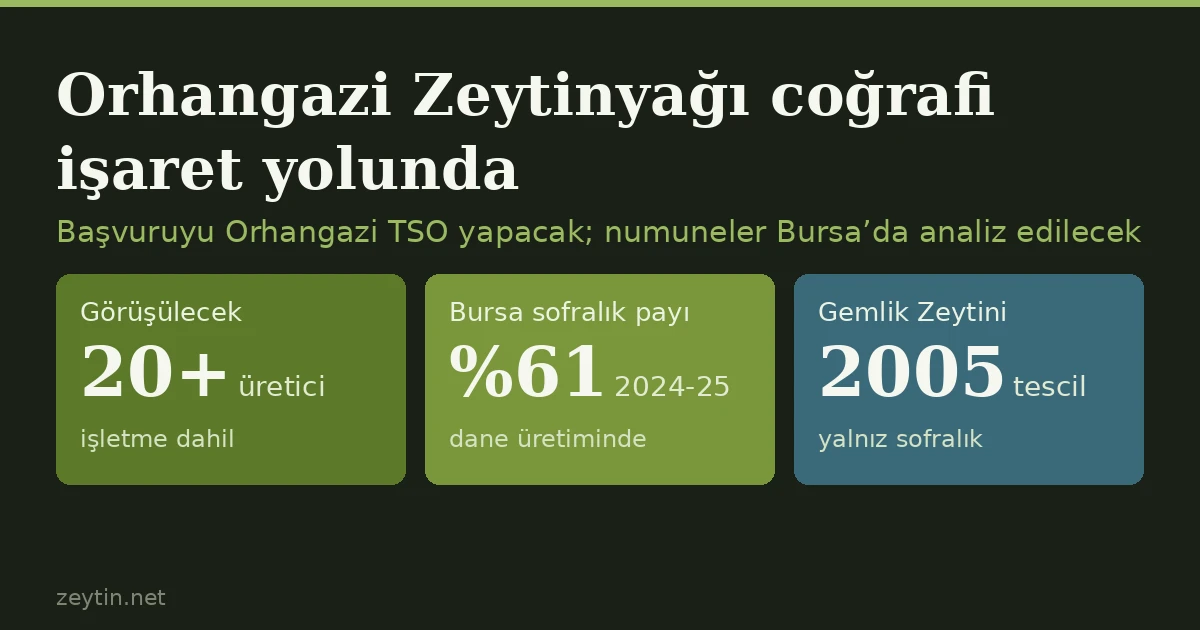
Orhangazi olive oil starts on the road to geographical indication, with samples to be tested for acidity and polyphenols
The Orhangazi Chamber of Commerce and Industry has begun preparing a geographical indication application for "Orhangazi Olive Oil". More than 20 producers will be consulted, samples tested in Bursa and the influence of the Lake İznik basin studied. The area's Gemlik Olive registration covers only table olives.
 Article
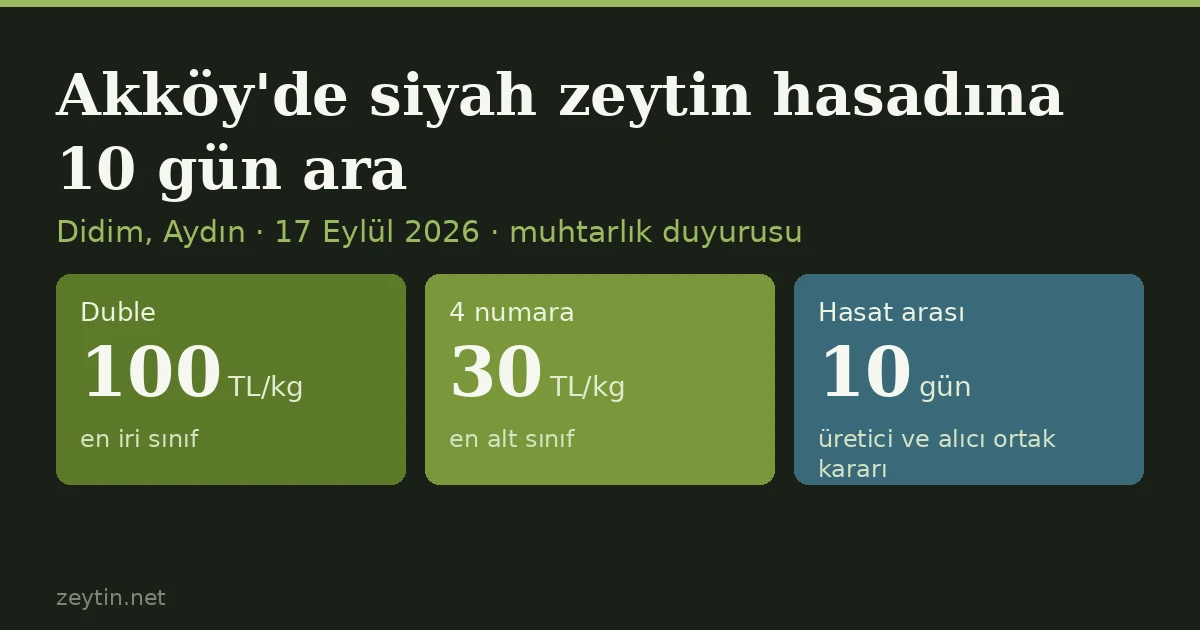
Black olive harvest paused for ten days in Akköy, Didim: a price ladder from 30 to 100 lira
In Akköy, a village in the Didim district of Aydın, growers and olive buyers have jointly agreed to suspend black olive harvesting and buying for ten days, saying announced prices do not cover costs. The price ladder published by the village headman's office runs from 100 lira a kilo for the largest grade down to 30 lira for the smallest. Growers say picking costs alone exceed the price on the lower grades.
 Article
Six jailed for taking produce without paying: the grower's most fragile moment is the start of harvest
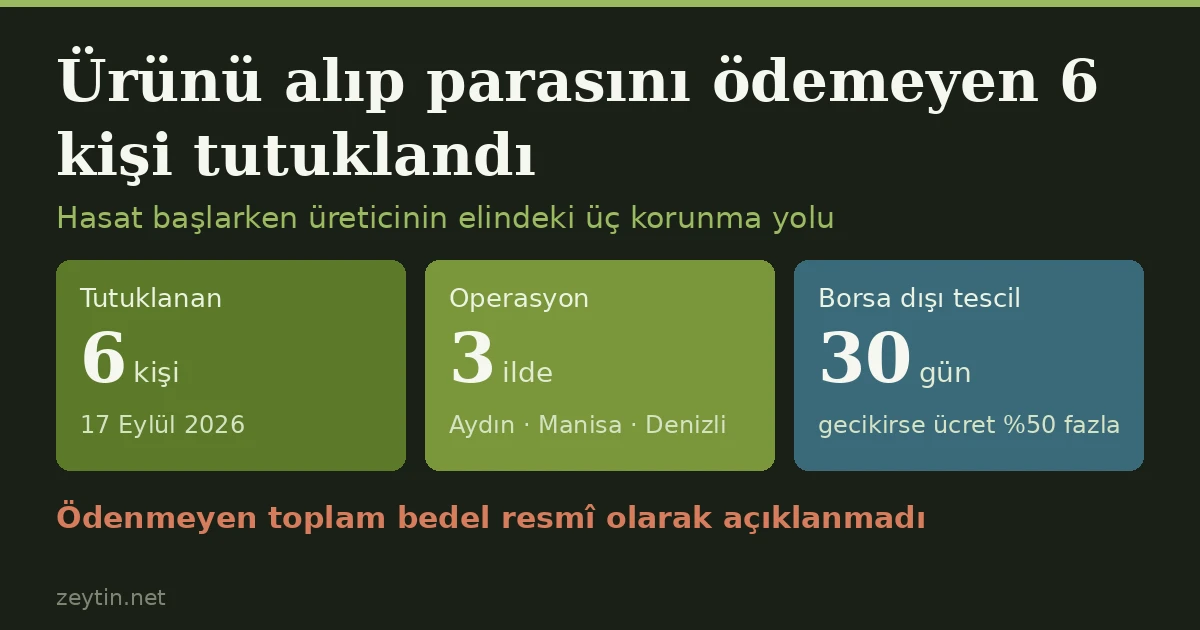
In Bozdoğan, Aydın, six people who bought olive oil, nuts and livestock from growers and failed to pay were caught in a simultaneous operation across three provinces on 15 September and jailed on 17 September. The method is a familiar one: the first purchase is paid in full, and once trust is established the large purchase is not. In the week harvest begins, growers have three concrete protections.
 Article
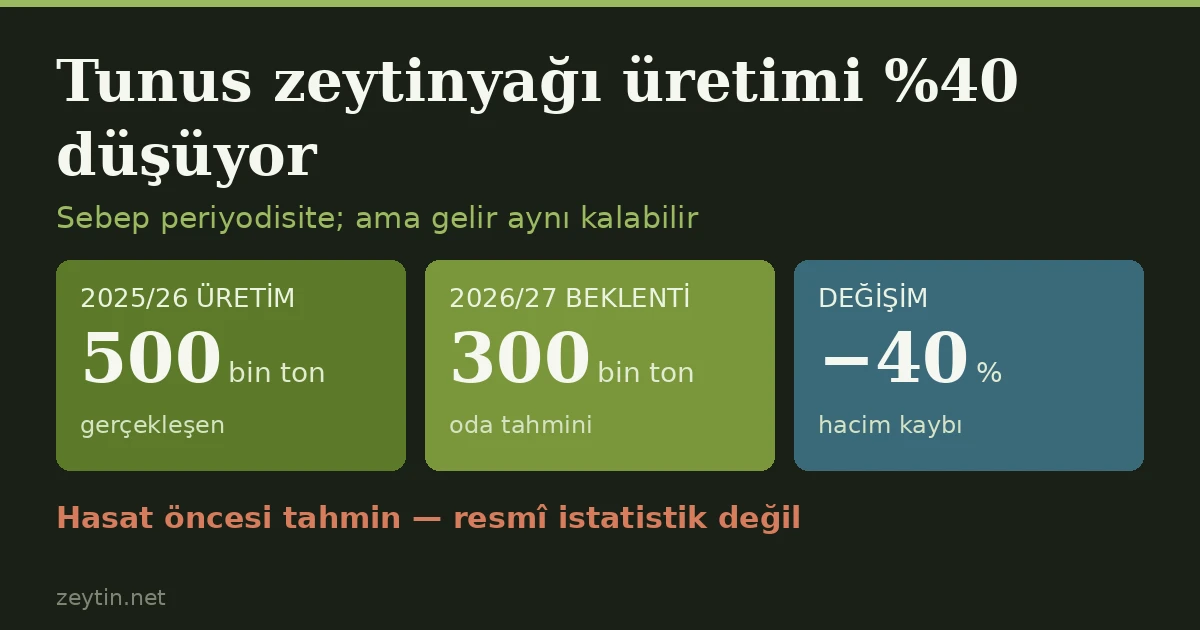
Tunisia's output falls from 500,000 to 300,000 tonnes — revenue may hold
Tunisia's National Chamber of Olive Producers expects olive oil output to fall from 500,000 to 300,000 tonnes in 2026/27, citing alternate bearing. Revenue is still expected to match last season because prices are higher. Türkiye's most direct bulk competitor is shrinking.