Turkish olive exports down 28% in nine months as Germany overtakes the US as top market
TİM data show Turkish olive and olive oil exports fell 28.2 percent to $273.7 million in January-September 2026, the steepest drop of 26 sectors. With US sales down 45 percent, Germany became the largest market with a 16.5 percent share. The September gap narrowed to 12 percent.
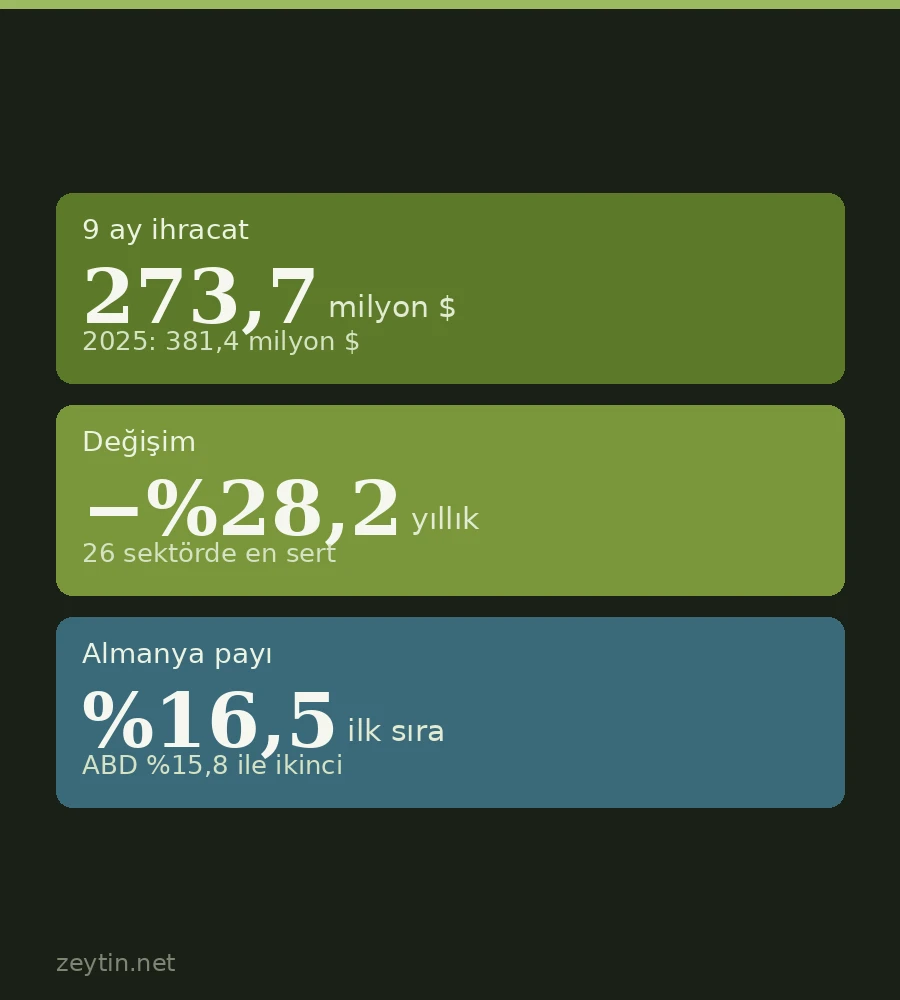
Türkiye's exports of olives and olive oil came to $273.7 million in the first nine months of 2026, according to the sector table published by the Turkish Exporters Assembly (TİM) for the period ending 30 September. In the same period of 2025 the figure was $381.4 million, which puts the decline at 28.2 percent. Of the 26 export sectors TİM tracks, none fell as sharply between January and September.
Two details in the table stand out. The monthly gap narrowed noticeably in September, and the largest buyer of Turkish olive products is no longer the United States but Germany.
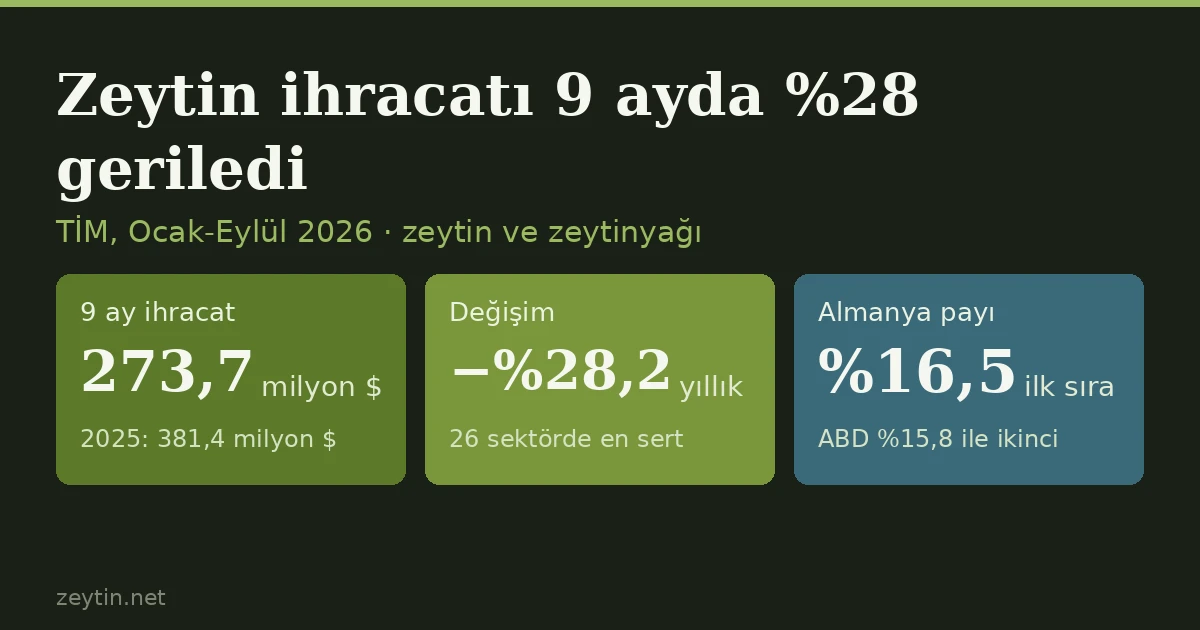
The figures
| Period | 2025 | 2026 | Change |
|---|---|---|---|
| January-March | 144.9 | 88.7 | −38.8% |
| April-June | 121.3 | 98.9 | −18.5% |
| July-September | 115.3 | 86.1 | −25.3% |
| September only | 36.0 | 31.7 | −11.9% |
| January-September | 381.4 | 273.7 | −28.2% |
Source: TİM registered export figures. 2025 quarterly values come from TİM's monthly table dated 31 December 2025, 2026 values from the table dated 30 September 2026; the nine-month totals are TİM's own consolidated comparison. Percentages are our calculation.
These numbers cover table olives and olive oil together. TİM tracks the sector as a single line called "Olives and Olive Oil", so the table does not show how much of the total is oil alone. That matters for reading the headline figure, as explained at the end of this article.
Most of the loss came early in the year
The decline was not spread evenly across the months. In January and March exports were more than 40 percent below the previous year; in March alone they fell from $52.7 million to $29.3 million. April was the only month of the nine in which exports beat the previous year, at $37.4 million against $36.8 million.
By September the gap had narrowed to about 12 percent. A single month cannot tell us whether this is the start of a recovery or simply a reflection of a weak September a year earlier. In 2025, August and September were already among the lowest-export months of the year, so the comparison base was soft.
The quarterly view tells a similar story. The first quarter lost almost 39 percent, the second quarter less than 19 percent, and the third quarter about 25 percent.
Germany moves into first place
The country breakdown shows that a large share of the decline came from a single market.
| Country | 2025 | 2026 | Change | 2026 share |
|---|---|---|---|---|
| Germany | 50.4 | 45.1 | −10.5% | 16.5% |
| United States | 79.1 | 43.1 | −45.4% | 15.8% |
| Iraq | 37.2 | 28.3 | −24.0% | 10.3% |
| Romania | 20.8 | 18.4 | −11.7% | 6.7% |
| Japan | 17.7 | 9.8 | −44.4% | 3.6% |
Source: TİM, consolidated sectoral exports by country, 30 September 2026.
In the first nine months of last year Türkiye sold $79.1 million of olive products to the United States; this year the figure is $43.1 million. That $36 million shortfall is roughly one third of the sector's total loss of $107.7 million. Sales to Germany also fell, but only by 10.5 percent, which was enough to lift Germany to first place with a 16.5 percent share. A year earlier the United States held a 20.7 percent share and Germany 13.2 percent.
The differences between markets are wide. Exports to Canada fell 66 percent, to Australia 58 percent and to Jordan 56 percent. Sales to Bulgaria, on the other hand, barely moved, slipping 2 percent. The two European markets in the top five, Germany and Romania, both held their losses below 12 percent. Because TİM does not break the figures down by product, the table cannot tell us whether these markets mainly bought table olives or oil.
There was also a small sign of movement in the US in September: exports to the United States rose 15.7 percent on the same month of last year, from $5.1 million to $5.8 million. A one-month increase of this size is not enough to change the nine-month picture.
What the sector says
Mehmet Emre Uygun, chairman of the Aegean Olive and Olive Oil Exporters' Association, said the main reason for the fall was the low harvest of the previous season. According to the National Olive and Olive Oil Council, Turkish olive oil output dropped from 475,000 tonnes in 2024/25 to 310,000 tonnes in 2025/26, leaving exporters with much less oil to sell.
Uygun also said the additional 12.5 percent duty the United States applies to Turkish olive oil makes it harder for exporters with weaker price competitiveness to sell in that market. We compared that duty with the treatment of competing origins in our article on the US tariff on Turkish olive exports.
He pointed out that one of the largest harvests in the history of the Republic is expected this season. The sector's expectation of 500,000 to 600,000 tonnes and its calls for export support are covered in our report on the 500,000-tonne crop and export support. A larger crop would give exporters more product to offer, but whether it translates into higher foreign sales depends on how far domestic prices fall relative to competing origins.
Reading the numbers with care
⚠ Calendar year and season are different. TİM figures cover the January-September calendar period. The exporters' association's season data, which starts on 1 November, measures a different window; in its season data to the end of August, olive oil alone was down 59 percent in value. The two percentages cannot be used interchangeably.
⚠ Table olives are included. In the association's season data, table olive exports fell by around 5 percent in value while olive oil fell by 59 percent. The 28 percent drop in the sector total therefore understates the loss in olive oil.
⚠ These are registered exports. The country breakdown shows where goods were shipped, not where they were finally consumed, so re-exports through third countries can shift the picture between markets.
One rating per visitor; you can change yours at any time. Ratings are real reader votes — no seeded or default scores.
Related
 Article
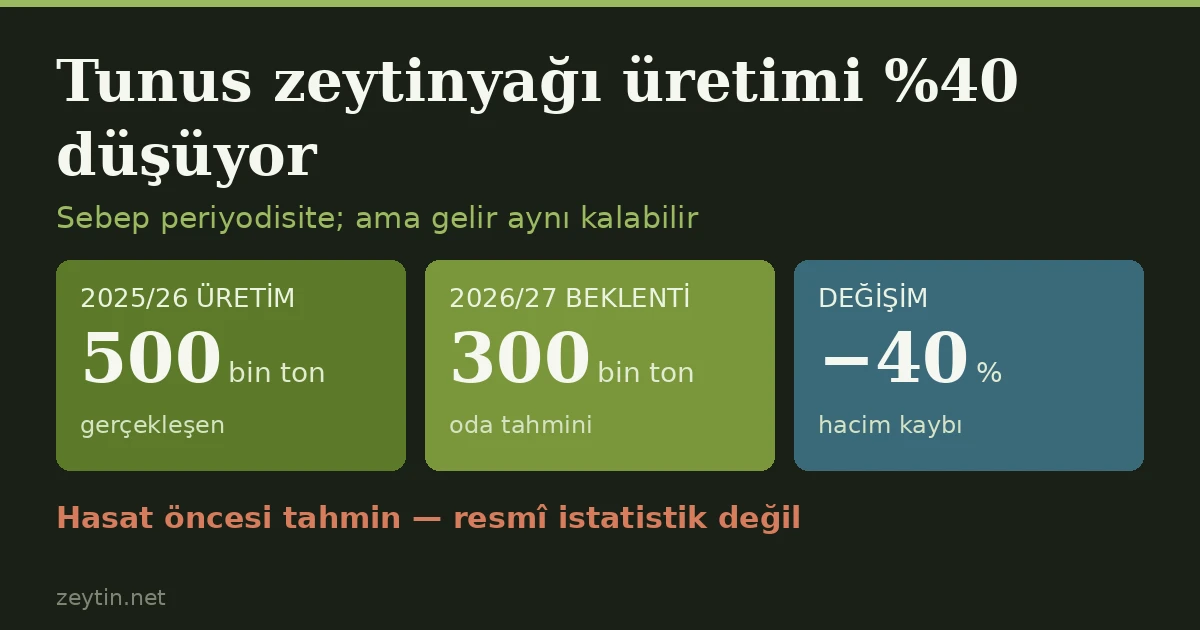
Tunisia's output falls from 500,000 to 300,000 tonnes — revenue may hold
Tunisia's National Chamber of Olive Producers expects olive oil output to fall from 500,000 to 300,000 tonnes in 2026/27, citing alternate bearing. Revenue is still expected to match last season because prices are higher. Türkiye's most direct bulk competitor is shrinking.
 Article
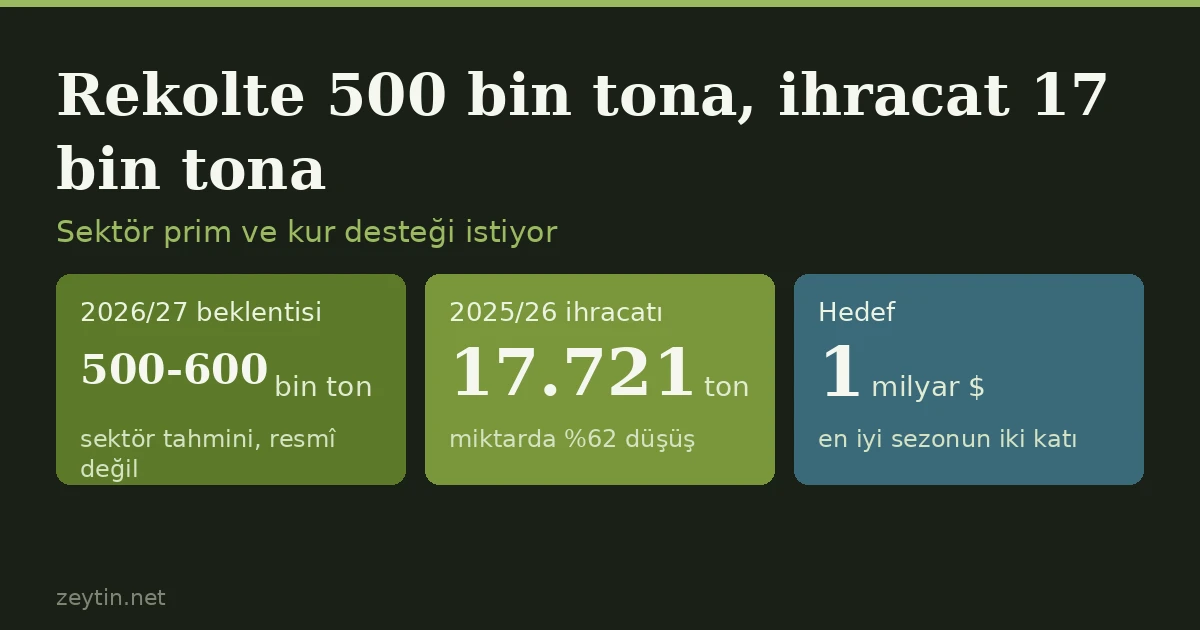
The crop is heading for 500,000 tonnes, exports fell to 17,000: the sector wants a premium and an exchange-rate mechanism
Industrialists and exporters meeting in Izmir put this season's olive oil crop at 500,000-600,000 tonnes. Last season Türkiye shipped 17,721 tonnes of olive oil: down 62% in volume and 59% in value. The crop is not the problem; selling the crop is.
 Article
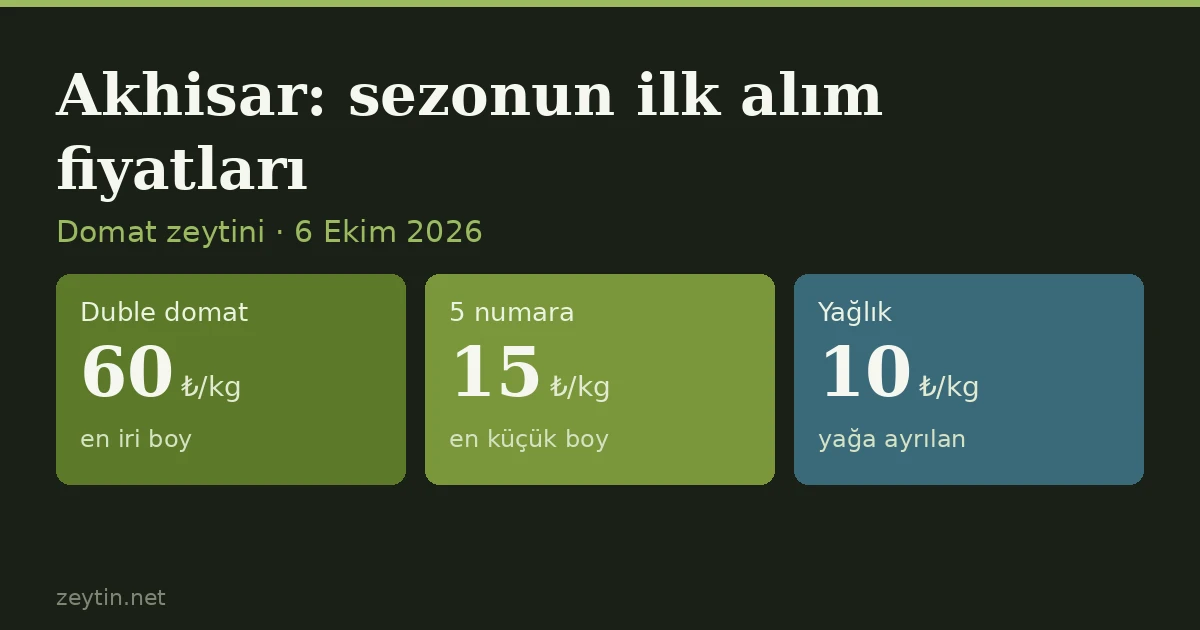
Opening prices in Akhisar: 60 lira for double Domat, 10 lira for milling olives
The season's first purchase prices for Domat olives have formed in Akhisar: 15 to 60 lira a kilo by size, and 10 lira for fruit sold for milling. The local chamber of agriculture says prices are below last year's and has called for a joint table. Farm input costs rose 27.6% over the same period.
 Article
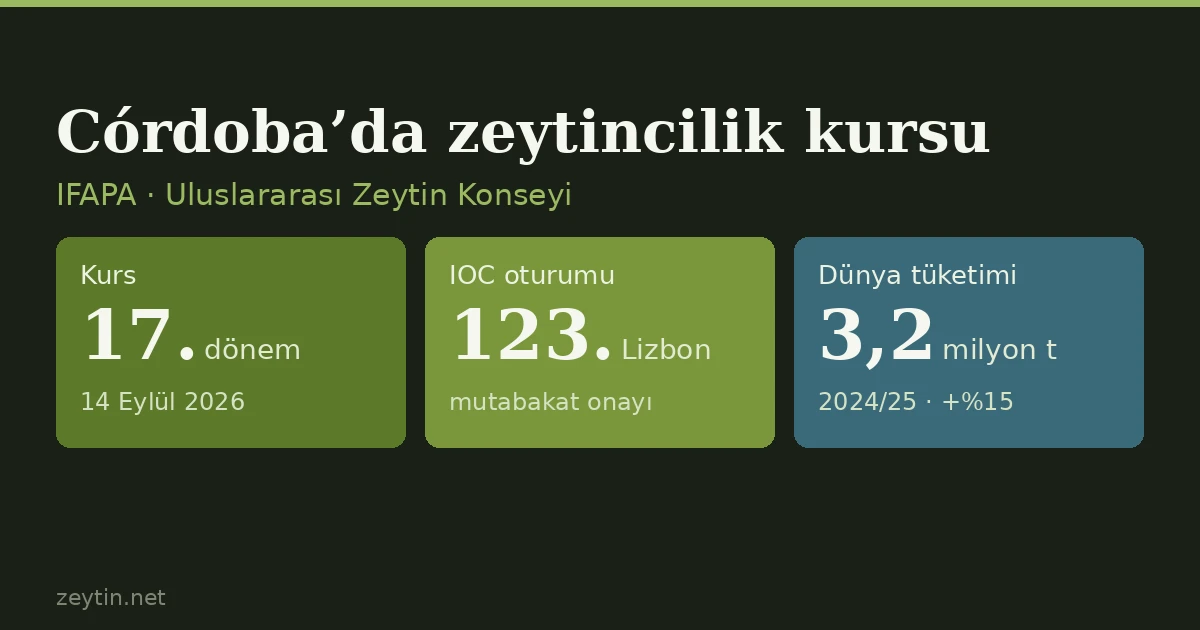
17th Advanced Course in Olive Growing opens in Córdoba as the IOC and IFAPA move towards genetic resources cooperation
Andalusia's Institute of Agricultural and Fisheries Research and Training (IFAPA) opened its 17th Advanced Specialisation Course in Olive Growing in Córdoba on 14 September, with the International Olive Council giving the opening lecture. The Council has approved signing a memorandum of understanding with IFAPA, which hosts one of the world's key olive germplasm collections.