Olive black scale and sooty mould: the H on its back
The olive pest behind sooty mould: a scale with an H on its back. Losses of 60-70%; if parasitism tops 50%, do not spray.
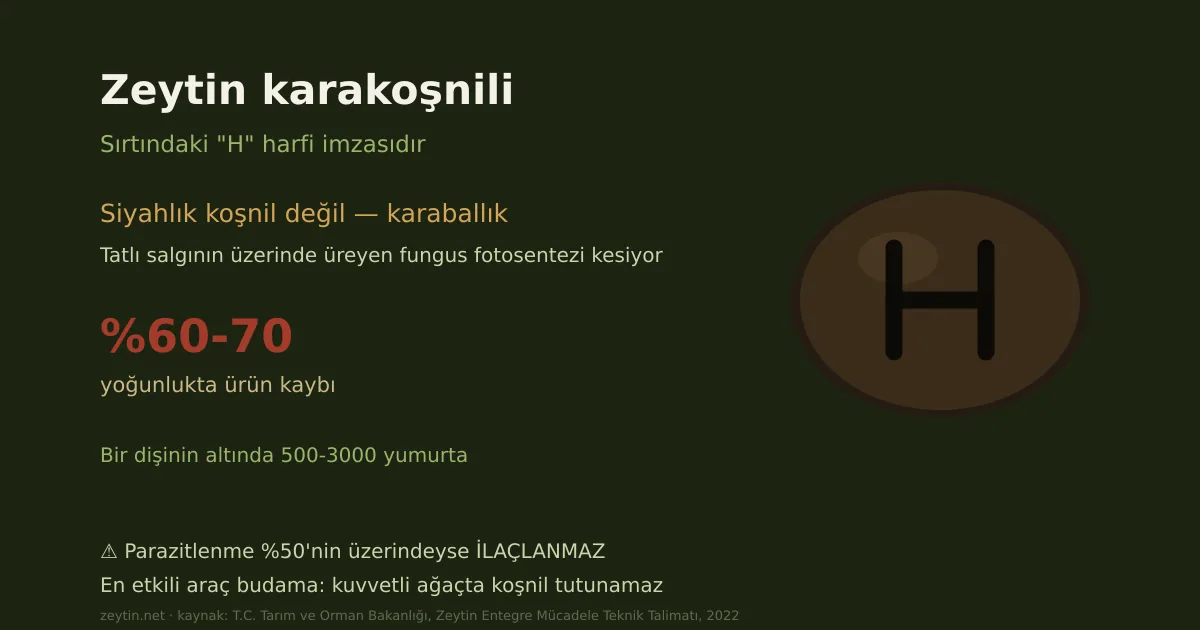
If the leaves and branches of your olive tree are coated in a black, sooty film, the blackness is not the problem. It is only the symptom. The cause is the small, hemispherical scales sitting on the branches, each carrying an "H" on its back: the olive black scale (Saissetia oleae).
At heavy infestations crop losses reach 60-70%; in later years the tree bears nothing at all and turns shrubby.
Where does the sooty mould come from?
As larva and adult the scale feeds by sucking the tree's sap. As it does so it excretes sugary substances that coat the whole tree. Saprophytic fungi grow on that sticky layer and produce sooty mould (fumagine) — the black film over leaves and branches.
The tree is harmed on two fronts at once:
1. Sap is drained — direct loss of vigour
2. Sooty mould blocks photosynthesis — the leaf cannot work
As numbers build, leaves and fruit drop and branches die back.
How to recognise it
| Stage | Appearance |
|---|---|
| Adult female | Dark brown to black; body domed like a hemisphere, with a raised "H" on the upper surface. 4-6 mm long, 3-5.5 mm wide |
| Egg | Elongated oval; bright cream at first, orange as the embryo matures. Beneath the female's shell |
| Crawler | Yellow verging on orange and mobile; a black eye on each side of the head, six-segmented antennae in front |
| 1st instar | Flat and immobile; antennae and legs pressed to the body |
| 2nd instar | Yellowish beige; the H appears on the back, ringed by a dark brown mark |
| 3rd instar | Creamy beige; the H is clearly formed and the body taller |
The "H" on the back is this pest's signature — no other scale insect carries it.
The year's cycle
- Winter: usually passed as 2nd and 3rd instar larvae on the leaves.
- Spring: as the weather warms the larvae migrate to the shoots, develop there and become adults.
- First crawlers: May in the Mediterranean, June elsewhere. The emergence period lasts 1-3 months.
- Summer: crawlers wander over leaves and shoots for 1-7 days, then settle and feed.
- Late summer: they become 2nd and 3rd instars and enter winter in that state.
Some individuals complete development quickly and produce crawlers again in autumn — a partial second generation.
Reproductive capacity is very high: 500-3,000 eggs may be counted beneath a single female's shell.
Nature pushes back, though: if winter temperatures fall below 0°C for five or six days, or if summers bring dry heat, there is substantial natural mortality.
⚠ Spraying manufactures this pest
The instruction is explicit:
t; The olive black scale becomes a problem essentially in groves sprayed heavily against various pests and where cultural management is not carried out regularly.
The reason is the wealth of natural enemies. Studies in Türkiye have identified 8 parasitoids and 9 predators — Chilocorus, Exochomus and Scymnus ladybirds, Metaphycus parasitoids, Chrysoperla carnea.
The instruction sets a specific rule around this:
t; When natural enemies hold the pest above 50% under control, no chemical treatment should be applied.
In other words, before spraying you measure the parasitism rate. Above 50%, no spray.
The cultural measure: pruning
For this pest the most effective tool is not a chemical but pruning. The logic is simple:
t; The olive black scale finds less chance of survival on vigorous trees.
What to do:
- Cut out dead branches
- Prune so air and light reach the inside of the tree
- Fertilise to good practice
- Prune after the last frost and hoar frost — the date varies by region and year
- Use certified nursery stock when establishing a grove
Pruning lowers the population directly and strengthens the tree at the same time.
If spraying is needed: shoot counts
If early-season checks show natural enemies falling short (parasitism below 50%), treatment may be applied. Timing follows crawler emergence:
1. Take a 20-25 cm shoot from each of four sides of a representative number of trees
2. If 80-100 cm of shoot carries 4-6 adult female scales on average, the threshold is crossed
3. From late May, the first spray when 50% of eggs have hatched
4. The second spray when 90% have hatched
⚠ If the grove is being treated against another pest (olive scale, for example) during the 50-90% hatch window, that application also suppresses black scale — one treatment may be enough.
Preference goes to summer white oils, the least harmful to beneficials.
⚠ No product names or doses are given in this article. Plant protection products and doses appear in Annex 4 of the Ministry's instruction and registrations change. Consult the current licensed product list and your Provincial or District Directorate of Agriculture and Forestry before treating.
Hosts
Its main host is the olive. It also damages citrus, plane, quince, pomegranate and bay — such trees around the grove can be a source of infestation.
Summary
- Signature: a hemispherical 4-6 mm scale with an "H" on its back.
- The black film is sooty mould (fumagine), fungus growing on the scale's sugary excretion.
- Damage is twofold: sap loss plus blocked photosynthesis. At heavy infestation, 60-70% crop loss.
- 500-3,000 eggs beneath one female.
- Five or six days below 0°C in winter, or dry summer heat, cause natural mortality.
- ⚠ Heavy spraying manufactures this pest — it has 8 parasitoids and 9 predators.
- ⚠ If parasitism exceeds 50%, do not spray.
- The most effective tool is pruning: black scale cannot hold on a vigorous tree.
- Threshold: 4-6 adult females per 80-100 cm of shoot. Spray at 50% and 90% egg hatch.
- Prefer summer white oils.
Source
t; Republic of Türkiye, Ministry of Agriculture and Forestry, General Directorate of Agricultural Research and Policies, Department of Plant Health Research. Olive Integrated Pest Management Technical Instruction. Ankara, 2022.
Related reading: The olive moth · Olive fruit fly control · Olive knot · Verticillium wilt
One rating per visitor; you can change yours at any time. Ratings are real reader votes — no seeded or default scores.
Related
 Article
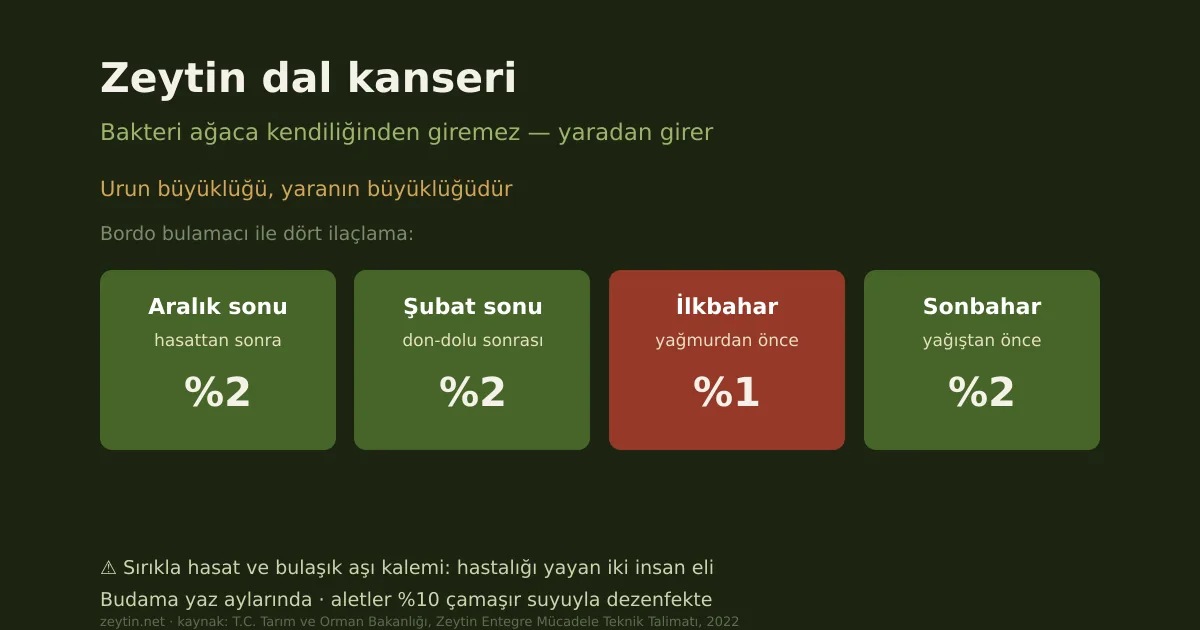
Olive knot: galls, warts and a bacterium that enters through wounds
The bacterial canker among olive tree diseases that enters through wounds: galls and warts. Pole harvest and pruning errors spread it.
Article
Olive knot: galls, warts and a bacterium that enters through wounds
The bacterial canker among olive tree diseases that enters through wounds: galls and warts. Pole harvest and pruning errors spread it.
 Article
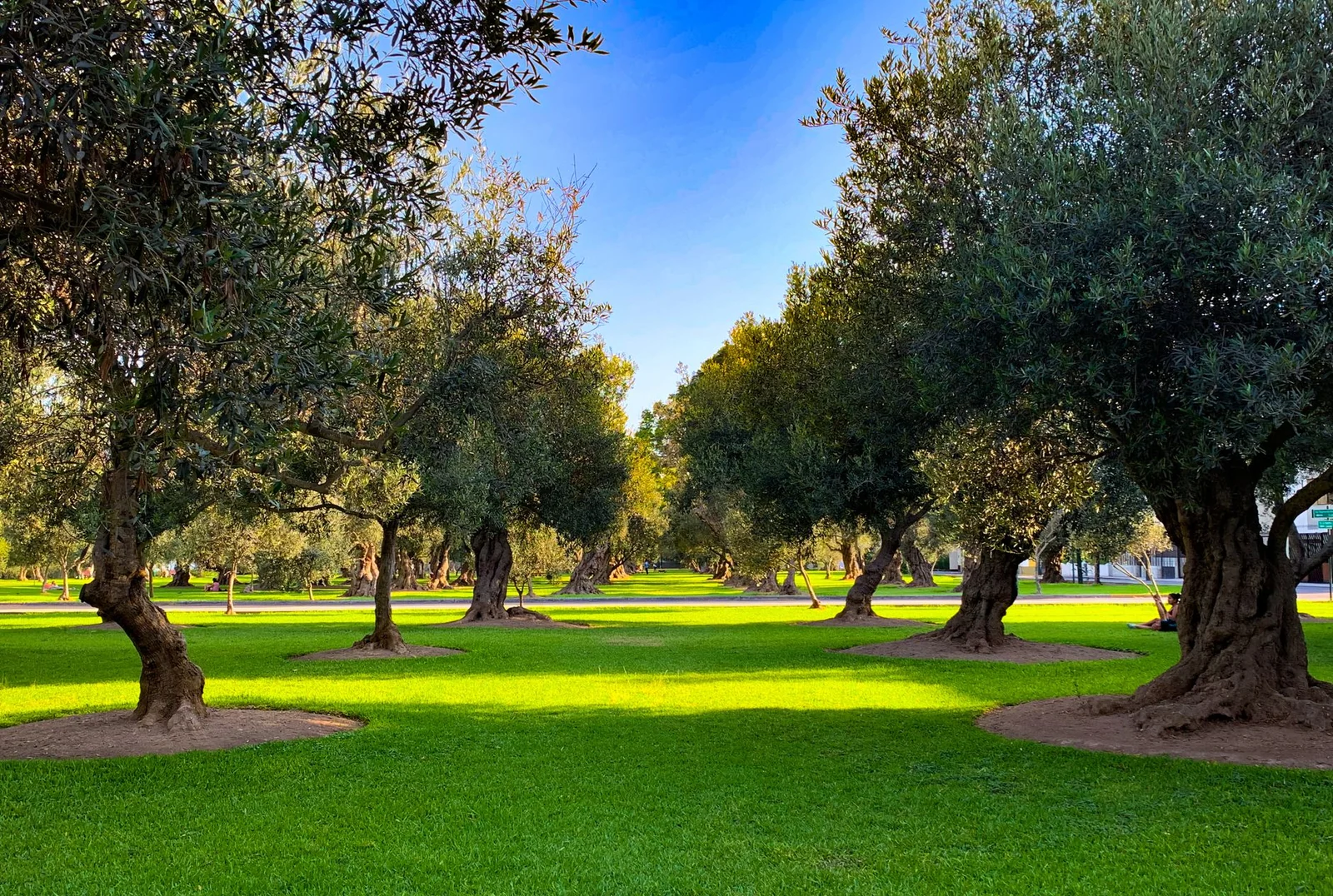
Herbicide-free weed management in olive groves: from cover crops to autonomous robots
Managing weeds rather than eliminating them: cover crops, mulch, grazing, flame weeding and AI-assisted precision farming — five tools and a practical order for combining them.
Article
Herbicide-free weed management in olive groves: from cover crops to autonomous robots
Managing weeds rather than eliminating them: cover crops, mulch, grazing, flame weeding and AI-assisted precision farming — five tools and a practical order for combining them.
 Article
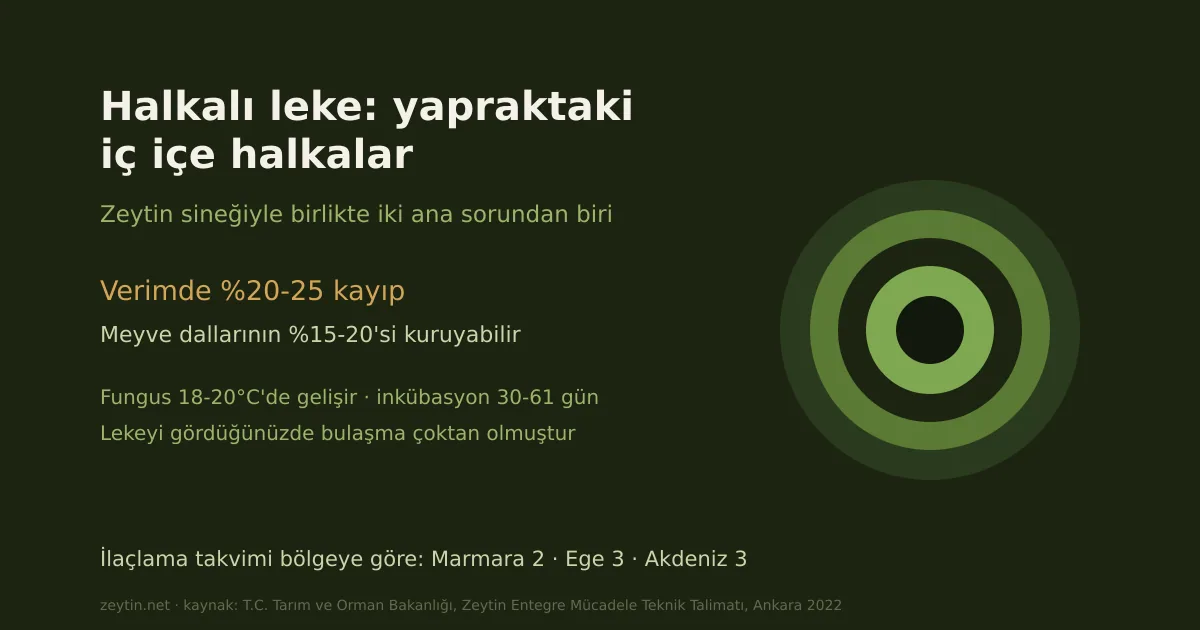
Olive peacock spot: symptoms and a region-by-region spray calendar
The commonest of olive tree diseases: concentric rings on the leaf, shedding, a shrubby tree. Yield falls 20-25%; spray timing varies by region.
Article
Olive peacock spot: symptoms and a region-by-region spray calendar
The commonest of olive tree diseases: concentric rings on the leaf, shedding, a shrubby tree. Yield falls 20-25%; spray timing varies by region.
 Article
Weeds in the olive grove: bare soil is not the goal
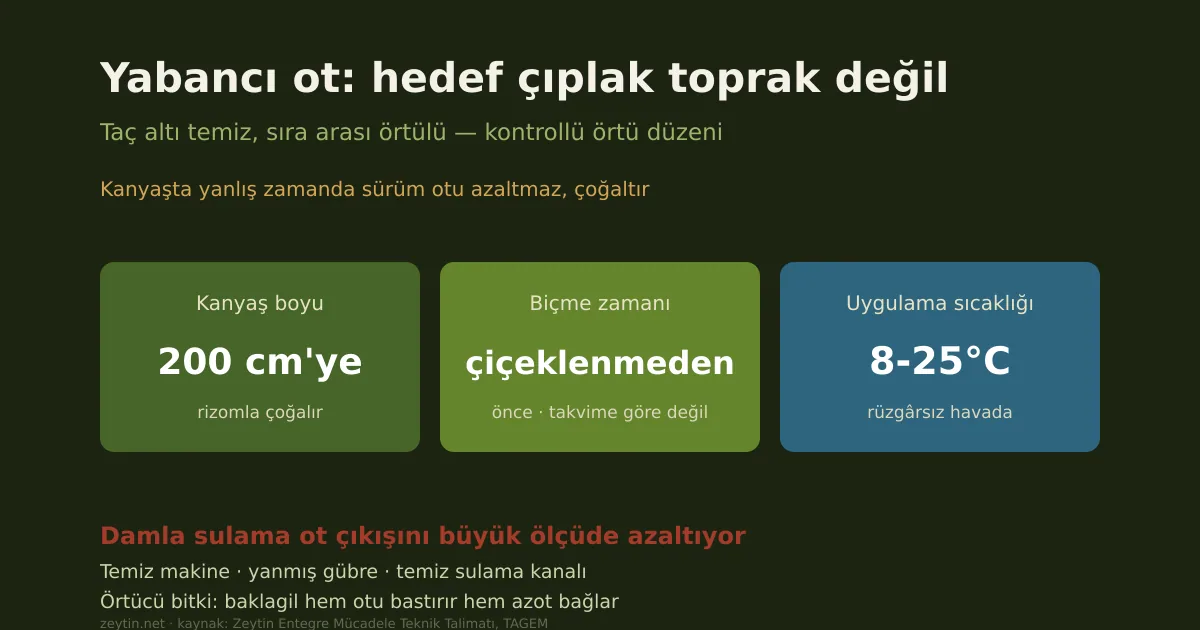
Johnson grass, Bermuda grass and fat hen. With perennials, ill-timed tillage spreads them while mowing stops the seed. Clean under the canopy, covered between rows.
Article
Weeds in the olive grove: bare soil is not the goal
Johnson grass, Bermuda grass and fat hen. With perennials, ill-timed tillage spreads them while mowing stops the seed. Clean under the canopy, covered between rows.