Sieve and scale inspections at Mut's olive buying centres: the instruments that set the price will be monitored all season
In Mut, Mersin, teams from the provincial agriculture and trade directorates and the district agriculture office inspected olive buying centres and sieving plants, checking sieve conformity, scale accuracy and price labels; inspections will continue through the season.
In the Mut district of Mersin, the olive buying centres and sieving plants that operate during the harvest were put through a joint inspection on 13 November 2026. According to the reports, teams from the Mersin Provincial Directorate of Agriculture and Forestry, the Mersin Provincial Directorate of Trade and the Mut District Directorate of Agriculture and Forestry carried it out together. The stated aim was to spare producers losses and to keep trading conditions in the market fair.
What was checked
| Inspection item | What it means |
|---|---|
| Conformity of the sieves to standards | Whether the openings that decide which size class an olive falls into are correct |
| Accuracy of the weighing instruments | Whether the delivered weight is read correctly |
| Price labels | Whether the purchase price is displayed openly |
| Compliance with the relevant legislation | Whether the business follows the rules in general |
One of the reports says the Mersin Provincial Directorate of Trade led the inspection and that the calibration accuracy of sieves and measuring instruments was examined by visiting the businesses one by one. It also says legal action will be taken against instruments that do not meet standards and against calibration deviations. The officials said the inspections would continue throughout the harvest season.
Why a sieve means a price
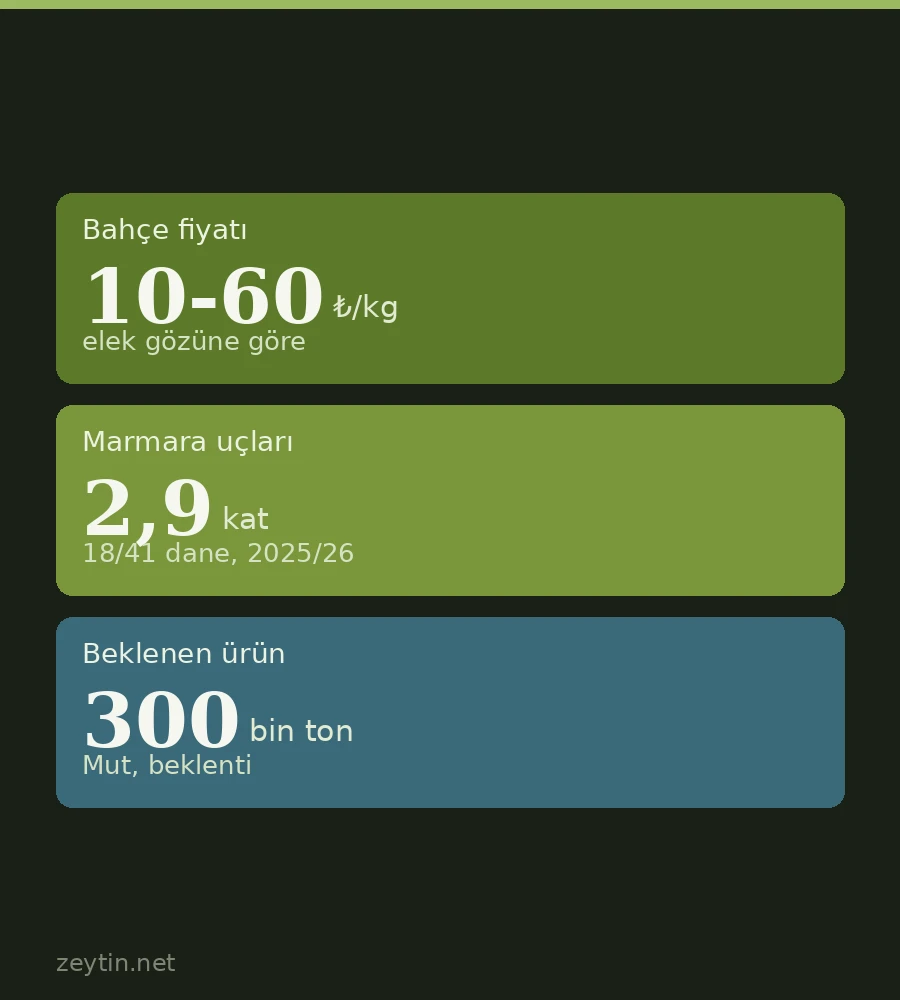
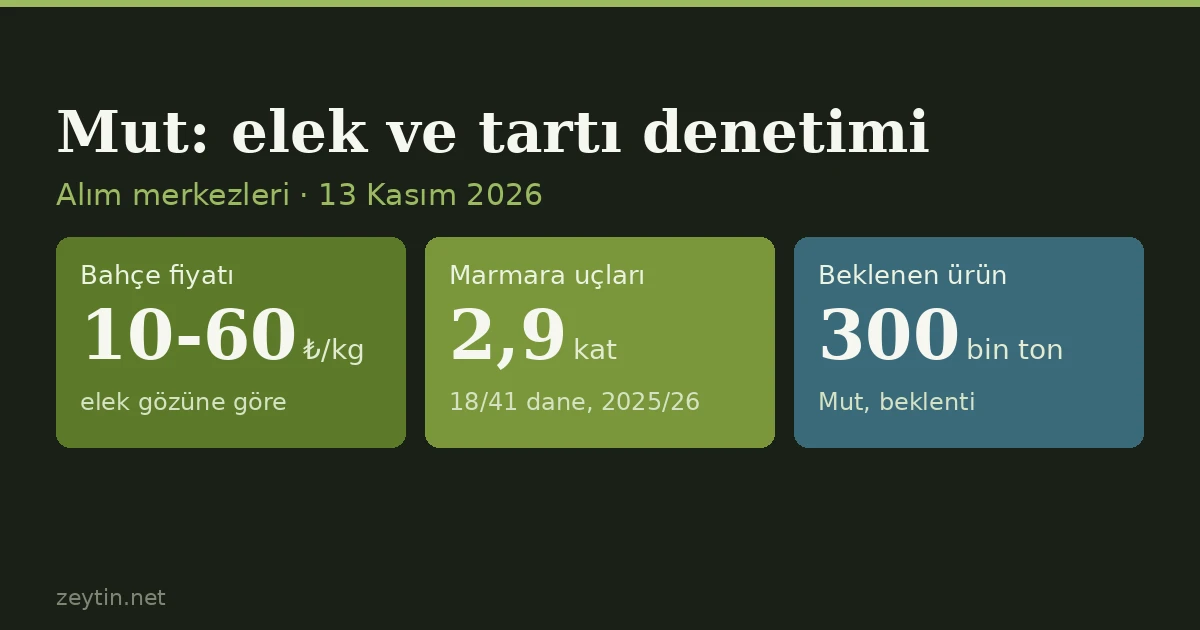
In table olives, the price is set not by the orchard or the variety alone but by fruit size. Olives are passed through a sieve and graded into size classes; the fewer fruits per kilogram, the larger the olive and the higher the price. As this site reported in its story on the Mut harvest, on the first day of the season the orchard price in Mut ranged from 10 to 60 lira depending on the sieve opening: up to a six-fold difference in the same district on the same day.
The Marmara example shows it more clearly. In the cooperative union Marmarabirlik's 2025/2026 purchase prices, the ceiling for table olives was 160 lira for 18 fruits per kilogram and the floor 55 lira for 41 fruits, a gap of about 2.9 times between the ends. Those figures belong to Marmara, not to Mut, but the mechanism is the same: whichever class the olives are written into, that is the price the producer gets. We explained why caliber matters so much in a separate piece on the economics of caliber.
For this reason even a small deviation in sieve calibration can push a batch down a class, however minor it may look at first glance. For the producer, the sieve and the scale are the two referees at the buying centre: one decides which price class the olives enter, the other how many kilograms are counted. Both are measures the producer cannot easily check at the moment of delivery, when the goods are handed over. The price label, in turn, makes visible in advance what will be paid in return for those two measurements.
The scale: why Mut
Mut is one of the districts where the harvest opened first this season. According to information relayed from district agriculture officials, there are 13 million registered olive trees over 269,000 decares and 300,000 tonnes of fruit are expected; that is an expectation, not realised output. In a district where so much produce passes through buying centres in a short time, the accuracy of the instruments affects not one producer but the price records of the whole season. Mut olive oil also carries a geographical indication, and we looked at the district's enterprise structure in our field study.
What has not been disclosed
The reports do not say how many businesses were inspected, how many sieves or scales were found non-compliant, whether any administrative fine was imposed, or which buying centres were covered. "Legal action will be taken" is a warning, not a result: no count of violations has been announced so far. It is therefore too early to judge what the inspection has gained producers; if results are published during the season, this report will need to be completed with them.
For the producer
The reports name no complaint channel for producers. The three inspecting bodies are known and the checks are said to run all season; until an official statement makes clear which body handles which complaint, we do not give a firm referral.
One rating per visitor; you can change yours at any time. Ratings are real reader votes — no seeded or default scores.
Related
 Article
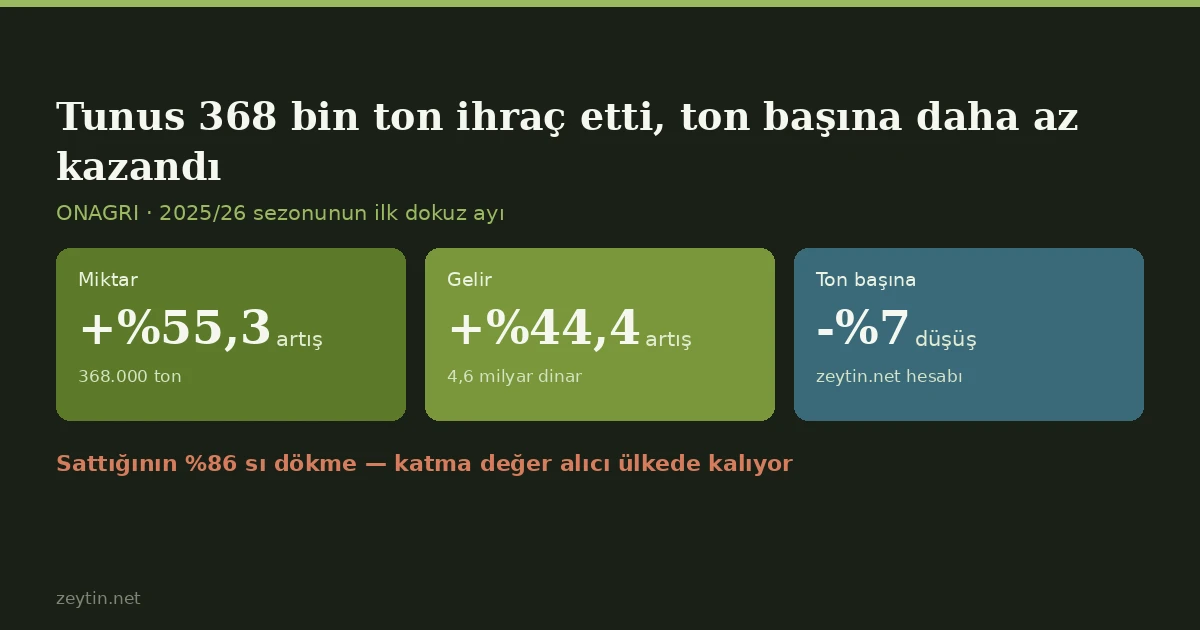
Tunisia exported 368,000 tonnes of olive oil — but earned less per tonne
Tunisia's agriculture observatory ONAGRI reports olive oil exports up 55.3% by volume and 44.4% by value in the first nine months of 2025/26. The gap between the two means about 7% less earned per tonne.
 Article
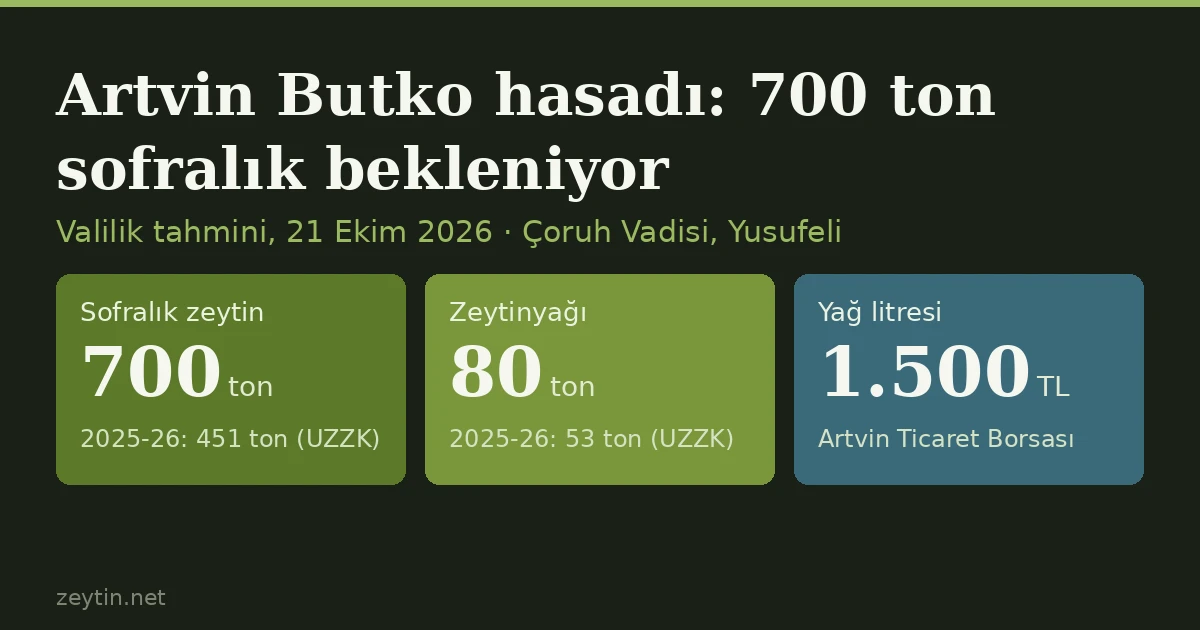
Artvin's Butko olive harvest begins: 700 tonnes of table olives and 80 tonnes of oil expected
Artvin Governorate expects about 700 tonnes of table olives and 80 tonnes of olive oil from the Çoruh Valley's native Butko olive this season, 55 percent more table olives than last season's UZZK figure. The Artvin Commodity Exchange set prices at 400 lira per kilogram of olives and 1,500 lira per litre of oil; the geographical indication application is in its final stage.
 Article
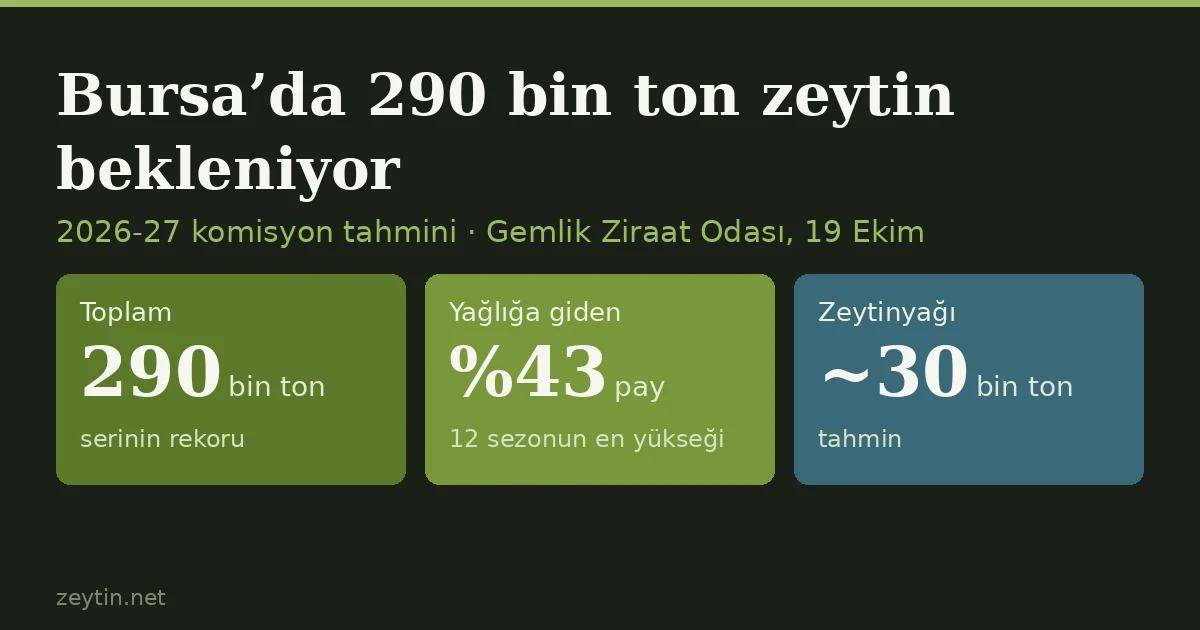
Bursa expects 290,000 tonnes of olives, with the biggest share going to oil in 12 seasons
According to a provincial commission estimate shared by the Gemlik Chamber of Agriculture on 19 October, Bursa expects 290,000 tonnes of olives this season: 165,000 tonnes of table olives, 125,000 tonnes of oil olives and about 30,000 tonnes of olive oil. The crop is a record for the series, and the 43 percent share going to oil is the highest in 12 seasons. Early-harvest olives are fetching 45-60 lira per kilo.
 Article
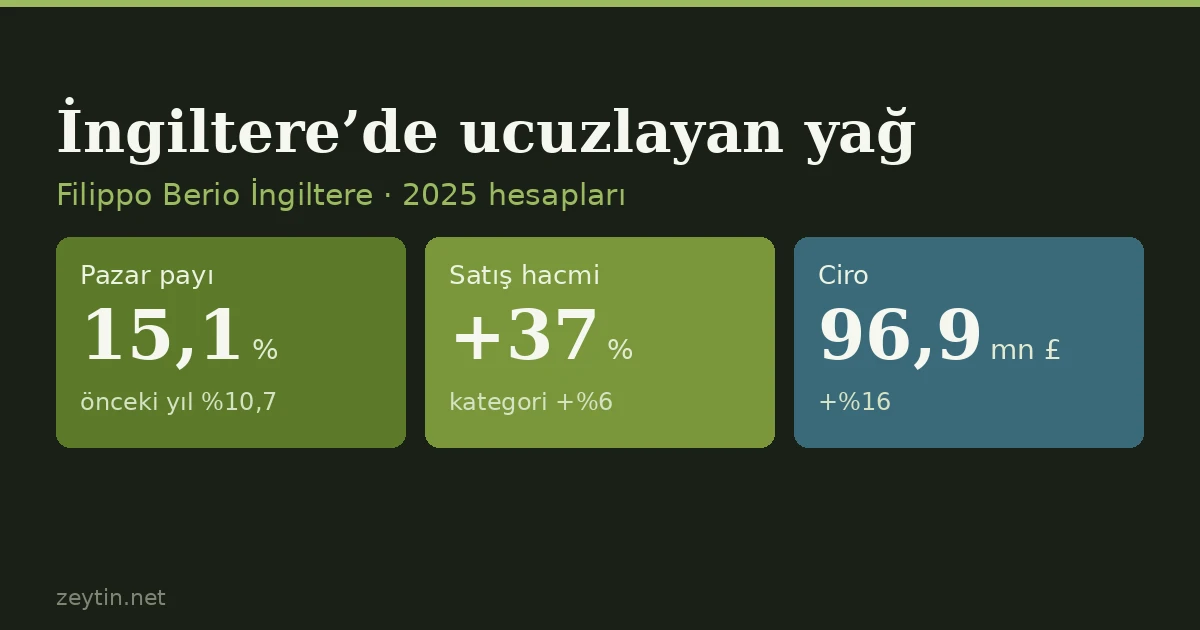
Olive oil got cheaper in the UK and Filippo Berio lifted its share to 15%
The 2025 accounts of Filippo Berio's UK company show how falling prices reached the shelf: volumes up 37%, revenue up 16%, market share from 10.7% to 15.1%. The category grew 6% and lower wholesale costs were passed on to shoppers.