Gemlik growers take to the square: oil olives were 50 lira last year, 25-30 lira is being talked about now
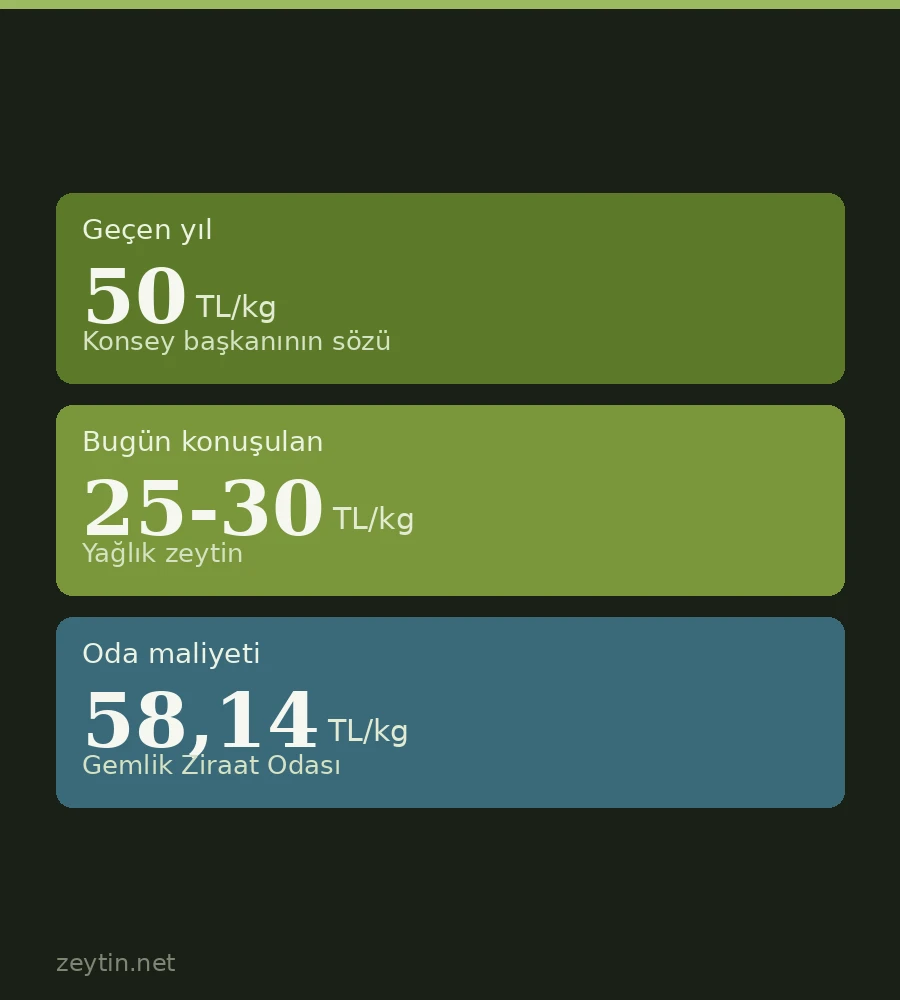
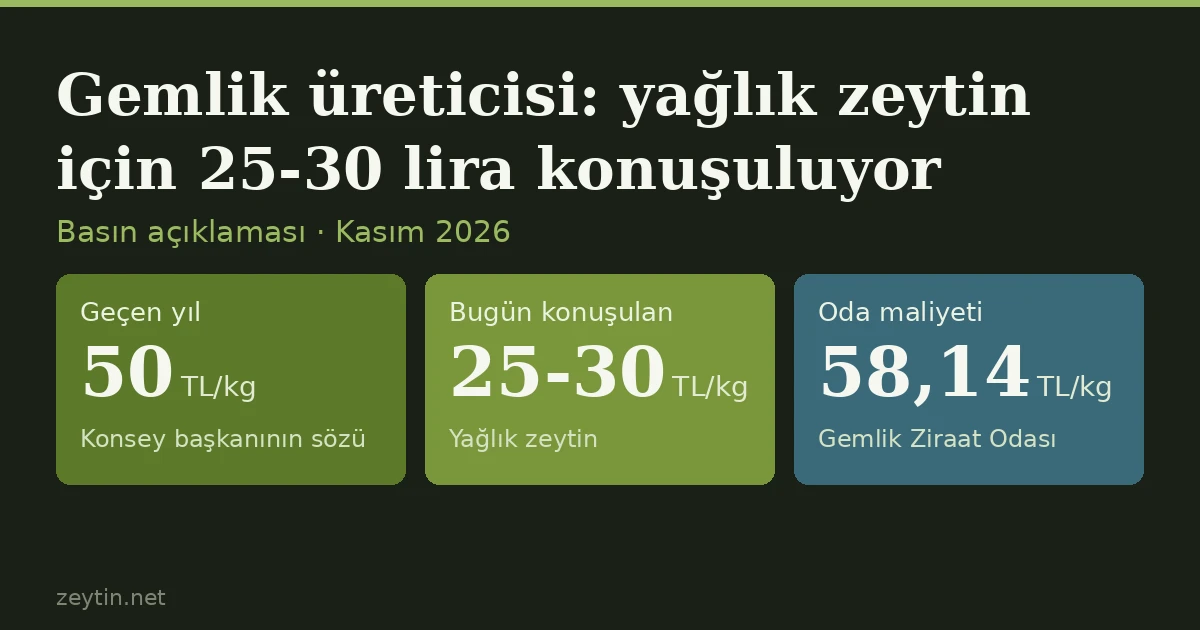
Gemlik City Council and the growers' cooperatives called on Marmarabirlik to announce purchase prices and payment terms. Council chair Sedat Akkuş said oil olives were around 50 lira last year and 25-30 lira is being talked about this year. The Gemlik Chamber of Agriculture's cost estimate of 58.14 lira is far above that.
Olive growers and cooperatives in Gemlik, in Bursa province, led by the Gemlik City Council, used a press statement to call on Marmarabirlik to announce its purchase prices and payment terms as soon as possible. The statement reached the news on 13-14 November 2026; one report dates it 13 November and another places the protest on 14 November. A banner read "Diesel is expensive, fertiliser is expensive, olives are free", a symbolic coffin marked "The olive grower is dead" was set out, and sweet fritters (lokma) were handed to passers-by.
What was said
Council chair Sedat Akkuş, speaking for the cooperatives, said a kilogram of oil olives was about 50 lira last year and that 25-30 lira is being talked about today. "Did diesel get cheaper, did fertiliser get cheaper, did the labourer's daily wage fall?" he asked. He also rejected the big crop as an excuse: "A big harvest is not a disaster, it is abundance. A farmer who produces more must not be punished."
According to Akkuş, Marmarabirlik's taking delivery without stating a price leaves growers in uncertainty; farmers have debts, wages and a household to support and cannot hold the crop for long. The statement also called for inspections against olives grown elsewhere being sold as Gemlik olives.
Prices on the ground
The reports also include prices that the Gemlik Körfez newspaper noted from merchants' purchases in Umurbey before the protest:
| Product | TRY/kg |
|---|---|
| Large table olives (170 per kilogram) | 150 |
| Smaller table olives (290 per kilogram) | 35 |
| Oil olives, earlier purchase price | 30-35 |
| Oil olives, latest | 25 |
The "at least 50 lira" demand raised at the protest concerns oil olives; for table olives the price depends largely on fruit size. The gap between 150 and 35 lira for large and small fruit is the mechanism we described in the economics of caliber showing up in the field.
The figures next to the cost
According to the cost table the Gemlik Chamber of Agriculture published for the 2026 harvest, producing a kilogram of oil olives costs 58.14 lira; 41.63 of that is direct expense and the remaining 16.51 is financing, depreciation and overhead (full breakdown here). On that basis, by our calculation:
- A purchase at 25-30 lira is about 43-52 per cent of the chamber's total cost.
- Against direct expense alone (41.63 lira) the shortfall is about 11.6-16.6 lira per kilogram.
- Going from the 50 lira Akkuş cited to 25-30 lira is a fall of 40-50 per cent.
- The demanded "at least 50 lira" is below the chamber's total cost and above its direct expense.
These compare figures from two separate sources: remarks at a press statement and a chamber of agriculture's estimate. Neither is a final purchase price.
Where Marmarabirlik stands
The union opened its 2026/27 purchase campaign on 4 November: members declared 105,000 tonnes, the purchase target is 64,000 tonnes and small fruit will be bought down to size 41. That announcement carried no purchase price, and according to the reports none has been announced yet. Our latest record is from 2025/26: oil olives 53 lira/kg, the table-olive floor (size 41) 55 and the ceiling (size 18) 160 lira. For the region's season data see our Bursa crop article.
What is not known
The reports contain no reply from Marmarabirlik to the call, and it is unclear when a price will be announced. The full list of demands set out in the statement cannot be read from the published texts either. The Umurbey prices are the observation of a single local newspaper and cannot be said to represent all purchases in the district.
One rating per visitor; you can change yours at any time. Ratings are real reader votes — no seeded or default scores.
Related
 Article
Italy's protest widens: thousands of growers in Bari, mills idle in Sicily, still no crisis status
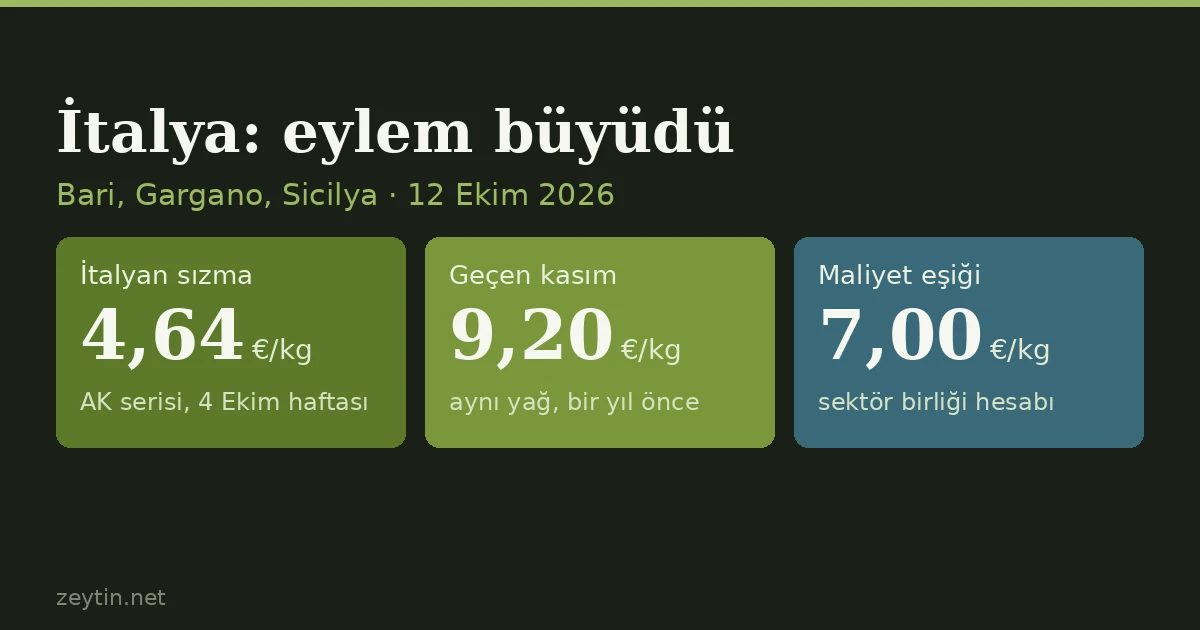
The deadline given in Puglia expired without crisis status being granted: on 12 October thousands of growers gathered in front of the Bari prefecture, hundreds of tractors blocked roads on the Gargano, and harvesting and milling have been suspended since 5 October across nine municipalities in Sicily. Two of the four demands concern anti-fraud controls and an electronic transport document for olives. In the European Commission series, Italian extra virgin stood at 4.64 €/kg in the week of 4 October; the figure quoted in the field is 4 euros, against 9.20 € last November. The next threshold is 15 October.
 Article
Tavşan Yüreği olive crop seen at 10,000 tonnes: output up 67%, but a litre of oil takes 14 kg of fruit
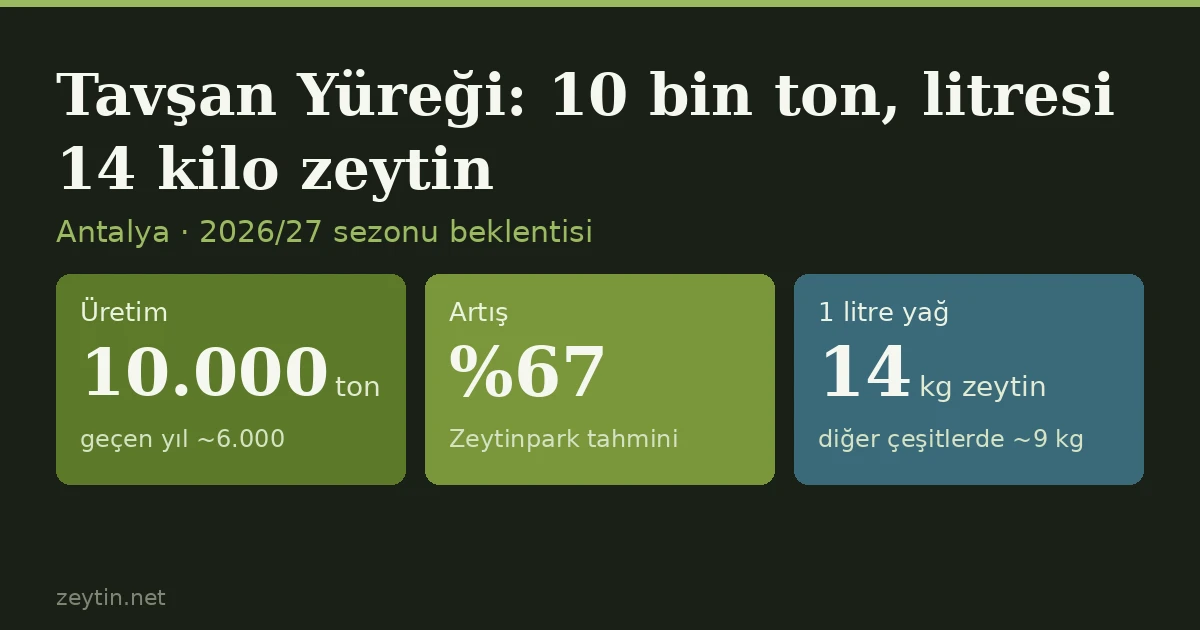
Zeytinpark general manager Bayram Çarkçıgil says output of Antalya's geographically protected Tavşan Yüreği olive will rise from 6,000 to about 10,000 tonnes. Table olives sell at 80-100 lira a kilo. Other varieties give a litre of oil from 9 kg of fruit; Tavşan Yüreği needs 14 kg, a yield of roughly 6.5 per cent.
 Article
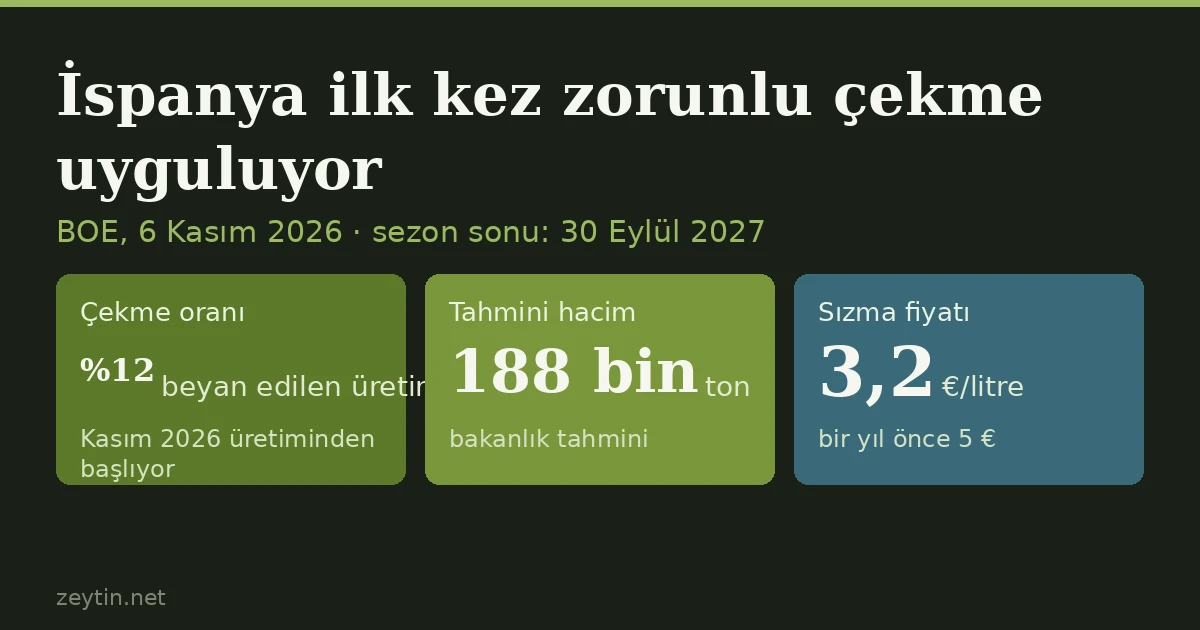
Spain activates mandatory olive oil withdrawal for the first time: 12% of output, about 188,000 tonnes held until September 2027
Spain's agriculture ministry published its decision in the BOE on 6 November: from November, mills must keep 12% of declared output in storage until 30 September 2027. The ministry estimates about 188,000 tonnes will be withdrawn; October early-harvest oils are exempt and mills receive no compensation.
 Article
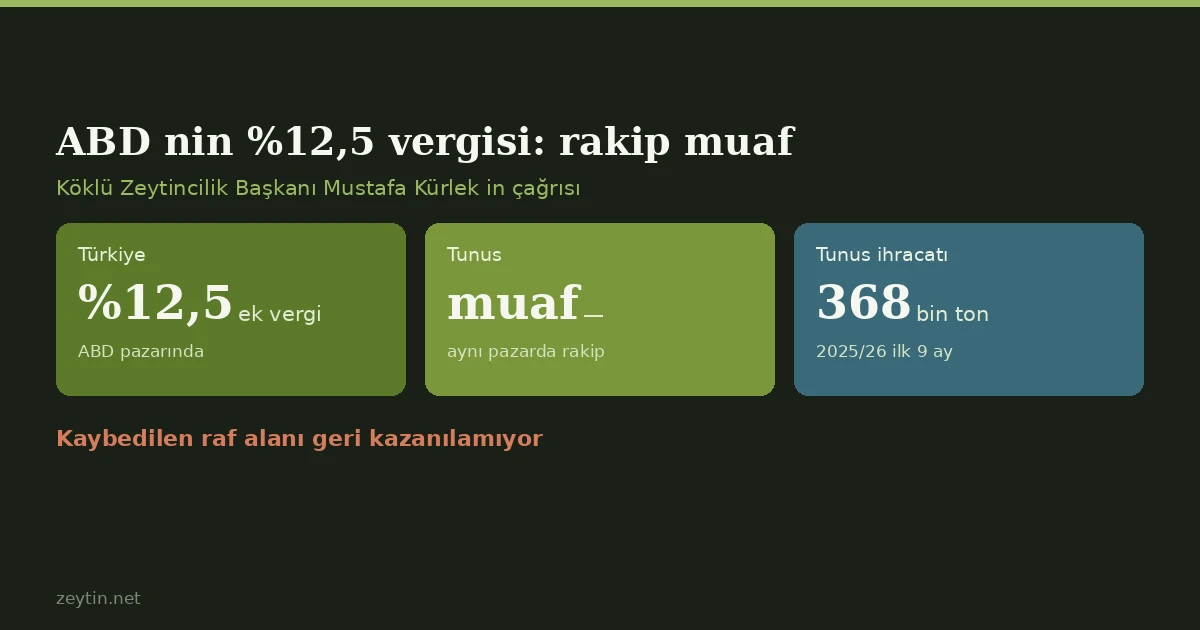
The 12.5% US tariff: the competitor is exempt, the Turkish exporter is not
Mustafa Kürlek notes the 12.5% additional US tariff on Turkish olive products is not applied to competitors such as Tunisia, and calls for DFİF and Eximbank measures.