Tavşan Yüreği olive crop seen at 10,000 tonnes: output up 67%, but a litre of oil takes 14 kg of fruit
Zeytinpark general manager Bayram Çarkçıgil says output of Antalya's geographically protected Tavşan Yüreği olive will rise from 6,000 to about 10,000 tonnes. Table olives sell at 80-100 lira a kilo. Other varieties give a litre of oil from 9 kg of fruit; Tavşan Yüreği needs 14 kg, a yield of roughly 6.5 per cent.
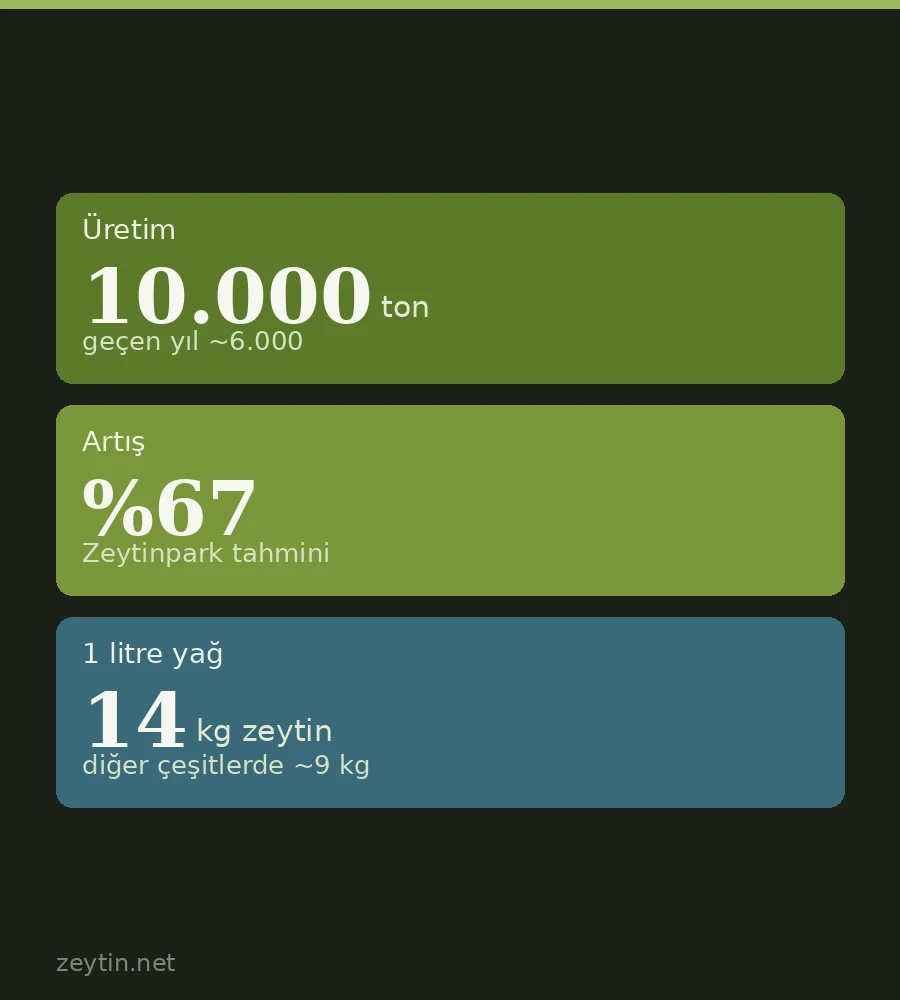
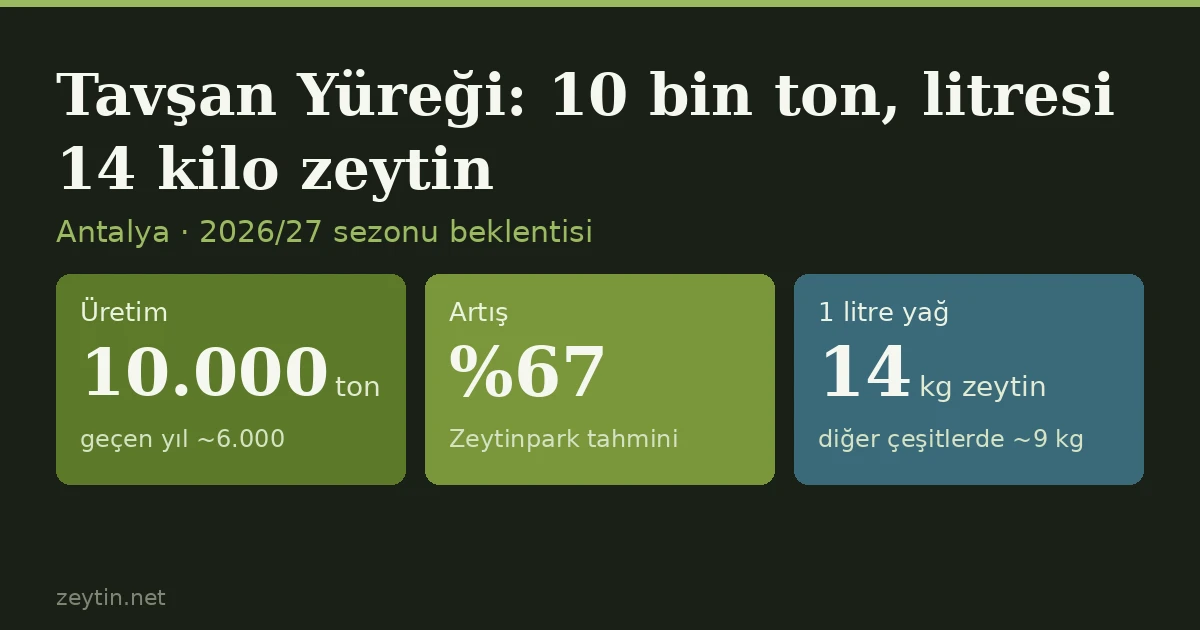
The harvest has begun for Tavşan Yüreği ("rabbit heart"), the olive variety that grows only in the Antalya province on Turkey's Mediterranean coast and carries a registered geographical indication. Output this season is expected to be about two-thirds higher than last year. According to a statement on 30 October by Bayram Çarkçıgil, general manager of Zeytinpark, the olive park in Antalya's Kepez district, Tavşan Yüreği production in Antalya was roughly 6,000 tonnes last year and should reach around 10,000 tonnes this season. Çarkçıgil puts the increase at 67 per cent, and the two figures bear that out (10,000 / 6,000 = 1.67).
The crop figure is not the most instructive part of the statement, though. What stands out is how expensive this variety is to turn into oil.
The figures
| Item | Value |
|---|---|
| Last season's output | ~6,000 t |
| This season's expectation | ~10,000 t |
| Increase | ~67% |
| Table olive retail price | 80-100 TL/kg |
| Other varieties (table) | 50-70 TL/kg |
| Olives per litre of oil (last season) | ~14 kg |
| Olives per litre of oil (other varieties) | ~9 kg |
| Start of oil milling | in about 15 days |
The figures are from the statement by Zeytinpark general manager Bayram Çarkçıgil.
Fourteen kilos for a litre
Put Çarkçıgil's two ratios side by side and the gap is clear. At Zeytinpark, about 9 kg of olives from other varieties yield one litre of oil; for Tavşan Yüreği, last season it took nearly 14 kg. The same litre of oil needs 56 per cent more fruit.
To turn these ratios into an extraction yield, we apply the density we use across this site (one litre of olive oil ≈ 0.913 kg). Nine kilos per litre works out at a yield of roughly 10.1 per cent; fourteen kilos per litre at roughly 6.5 per cent. The arithmetic is set out in our article on how much oil a kilo of olives gives.
The reason lies in the variety itself. The registration document filed with the Turkish Patent and Trademark Office gives Tavşan Yüreği an oil content of 9 to 20.2 per cent at the green stage, rising to 25 per cent at the black stage. That figure describes the total oil in the fruit; what a mill actually recovers — the extraction yield — is always lower. A large, fleshy table variety picked green would be expected to give a low yield. The measured profile of the variety is on our page on the Antalya Tavşan Yüreği geographical indication.
Table olive or oil?
Çarkçıgil explains that the harvested olives are screened and graded by size before being priced; part of the crop is sold as table olives and part is set aside for oil. Retail table olives are selling for 80-100 lira a kilo this season, against 50-70 lira for other varieties.
On the oil side there is only one figure on record: last season a half-litre sold for 1,500 lira. According to Çarkçıgil, this year's cost has not yet been worked out. For a rough comparison: the 14 kg of olives that go into one litre of oil would fetch 1,120-1,400 lira at this year's table olive price, while the litre of oil made from them sold for 3,000 lira at last season's price. The calculation mixes retail prices from two different years and leaves out milling and bottling costs. It is not a profitability calculation; it only shows the order of magnitude between the two routes.
Zeytinpark says it presses its oil cold, to protect the compounds in the oil. Part of the low yield is the price of that choice: when the paste is malaxed at a lower temperature, less oil separates from it, while the volatile aroma compounds are better preserved. The steps of the process are in our guide to how cold-pressed olive oil is made, and the trade-off between yield and quality in early picking in is early harvest expensive or valuable.
191 milligrams of oleocanthal
The statement also referred to an analysis carried out on behalf of the Antalya Commodity Exchange, which holds the geographical indication. The exchange had Tavşan Yüreği oil analysed at the University of Córdoba in Spain. According to Prof. Mücahit Taha Özkaya of Ankara University's Faculty of Agriculture, who took part in the work, samples taken from different locations were examined over two seasons, and one natural extra virgin sample produced under suitable conditions contained 191 milligrams of oleocanthal per kilogram.
That is the value of a single sample, not an average for all Tavşan Yüreği oils. Our articles on oleocanthal and polyphenols and on why high-polyphenol olive oil is expensive explain what the compound is and why some oils score high on it. Dr. Gül Kahraman, the researcher behind laboratory studies mentioned in the statement, had also stressed that cell-culture findings do not amount to a treatment effect in humans and that olive oil is no substitute for medicine.
Its share of Antalya's crop
In September the Antalya Commodity Exchange said the province expected a total of 70,000 tonnes of olives this season (Antalya's crop is up 30 per cent). Setting the two institutions' separate statements side by side, Tavşan Yüreği would account for roughly 14 per cent of the province's olives this season. Against the exchange's 55,000-tonne figure for last year, the share was about 11 per cent. Both numbers are estimates; the final crop will be established by the provincial and district assessment committees.
Tavşan Yüreği was registered on 6 September 2018 under number 384 as a designation of origin in the name of the Antalya Commodity Exchange. The registration document describes the product as a table olive, from hand picking to brining. There is no separate registration for its oil. A general description of the variety is on our Tavşanyüreği olive page.
Why it matters beyond Antalya
Turkey's olive sector is heading into a large crop this season, and much of the discussion is about volume — how many tonnes, how much oil, how quickly the mills can process it. Tavşan Yüreği is a reminder that in a premium niche the arithmetic works differently. A variety that needs 14 kg of fruit per litre cannot compete on oil volume; whatever it earns has to come from the table olive market or from a price premium on the oil. Both depend on the geographical indication and on analyses such as the Córdoba work being communicated accurately, without overstating what a single sample shows.
Oil milling is expected to start within two weeks. Once this season's yield and price are announced, it will become clear whether the 14-kilo ratio holds again this year.
One rating per visitor; you can change yours at any time. Ratings are real reader votes — no seeded or default scores.
Related
 Article
Italy from production giant to trade hub: it exports more olive oil than it produces
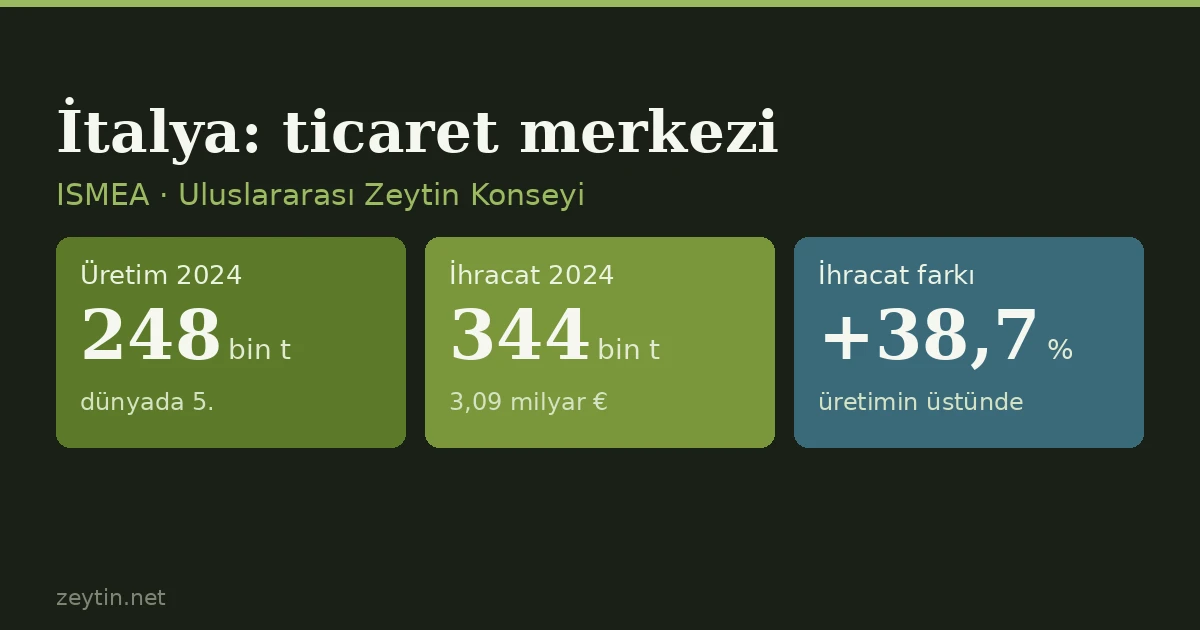
Italy produced 248,000 tonnes of olive oil in 2024 and slipped to fifth place worldwide, yet in the same year it exported 344,000 tonnes worth 3.09 billion euros. The country is now less a production giant than a trade hub that buys oil around the Mediterranean, blends it and sells it to the world.
 Article
3,200 trees and 72 varieties on 14 hectares of stone: the cooperative turning Dalmatian karst into groves
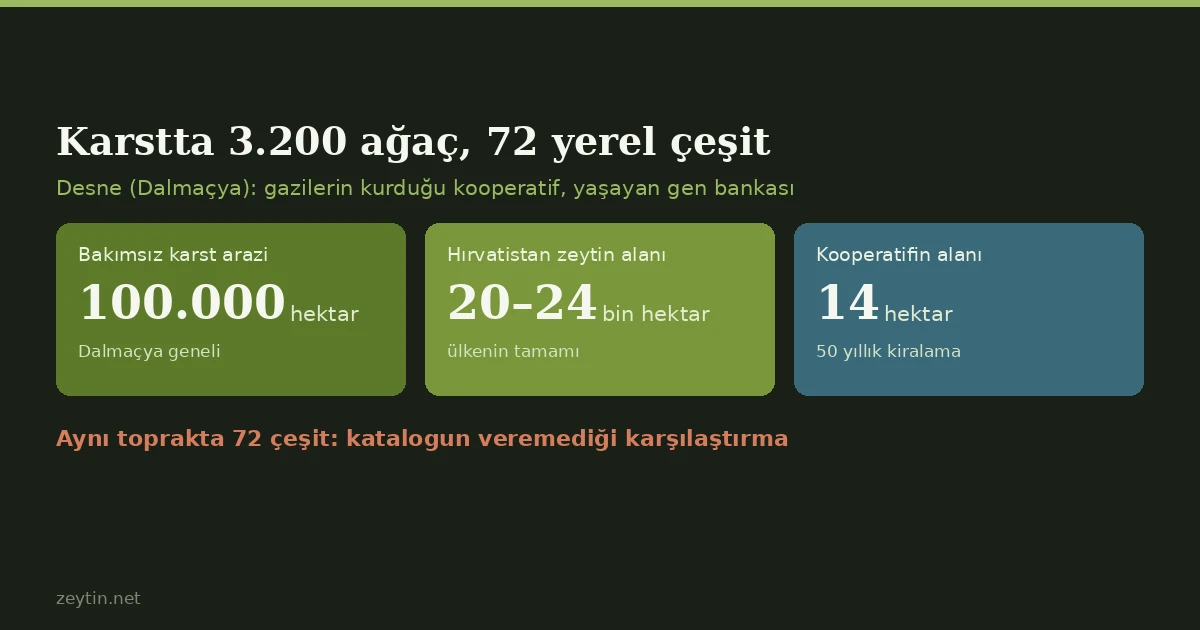
Some 100,000 hectares of karst lie neglected in Dalmatia while all of Croatia has 20,000–24,000 hectares under olives. In Desne a veterans' cooperative has grown 3,200 trees of 72 native varieties on 14 hectares of rock — a grove that doubles as a natural laboratory for climate resilience.
 Article
Cem Zeytin loses 486 million lira in nine months: it sold 9% more olives but earned 19% less per kilo
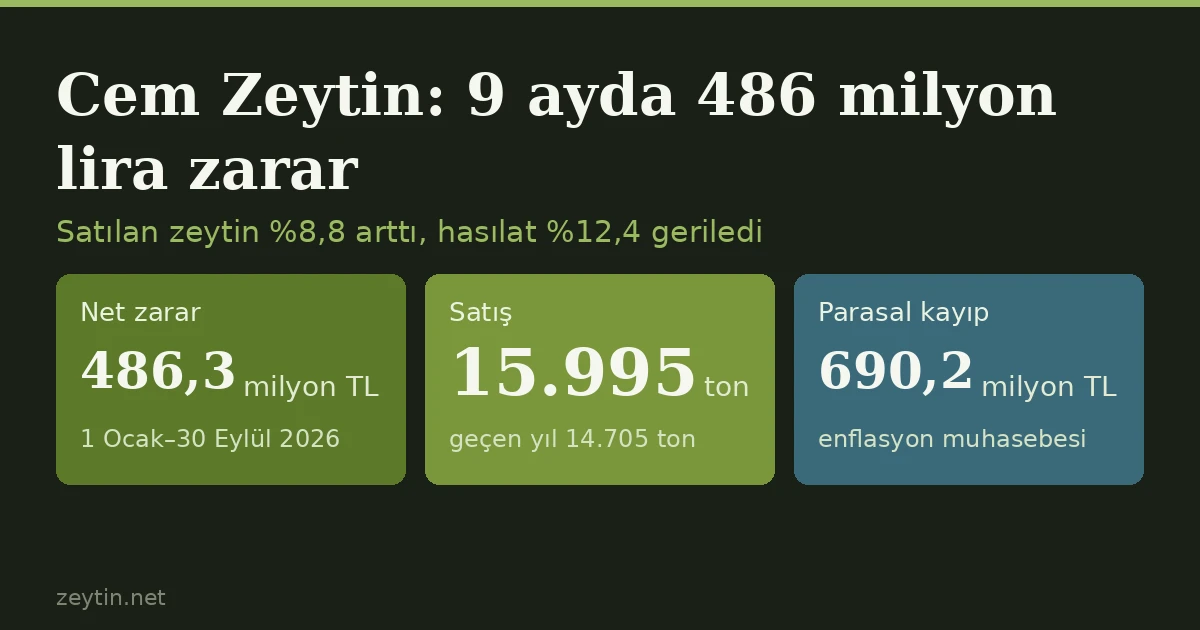
Table olive processor Cem Zeytin, listed in Istanbul, reported a nine-month net loss of 486.3 million lira in its filing to KAP. Sales rose from 14,705 to 15,995 tonnes while revenue fell 12.4%. The loss came not from operations but from a 690 million lira inflation-accounting monetary loss and a swing in tax.
 Article
The world's largest bottler is for sale: a €500 million race for Deoleo
Deoleo, owner of Bertolli and Carbonell, holds 22% of global bottled olive oil sales. Italy's Coricelli leads at €500 million, Spain's Dcoop cooperative at €470 million. The Spanish government regards the company as nationally strategic. Because Deoleo is a major bulk buyer, the outcome matters to Turkish exporters too.