Pressing fees differ across Aydın: 3.50-5 lira per kilogram in Bozdoğan, competition pushes Karacasu down to 3,000 lira a tonne
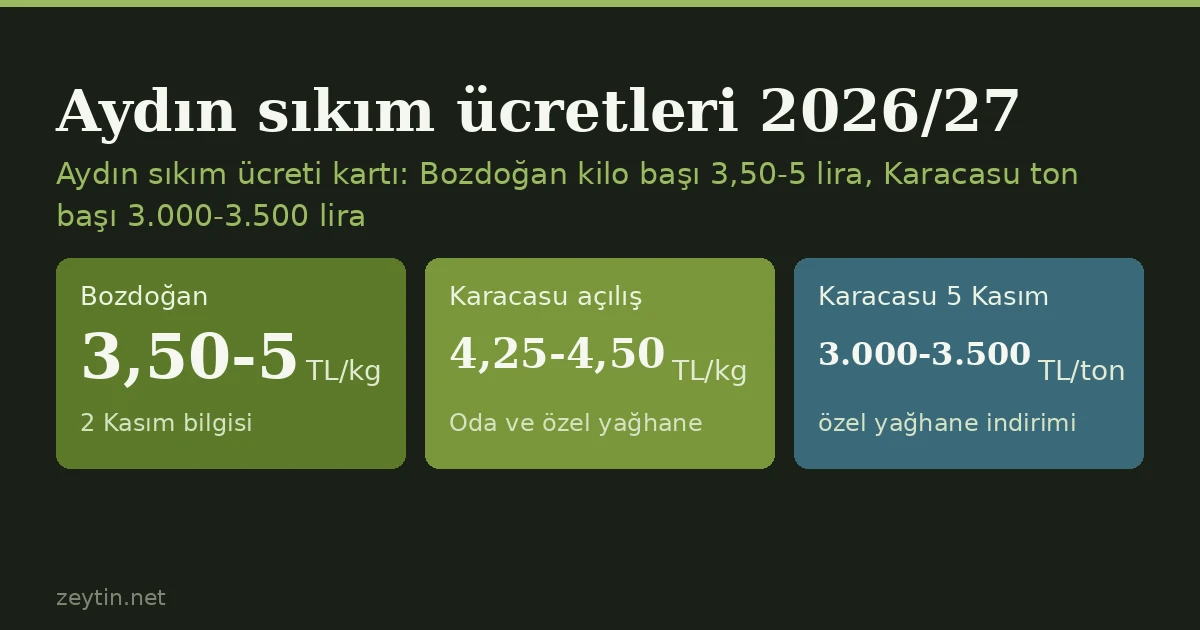
Pressing fees in Aydın for 2026/27 vary by district: 3.50-5 lira per kilogram in Bozdoğan (4.50-6 with home pick-up), while in Karacasu the opening 4.25-4.50 lira fell to 3,000-3,500 lira per tonne at private mills. The Karacasu Chamber of Agriculture will meet to set a new tariff; collection at its mill is suspended meanwhile.
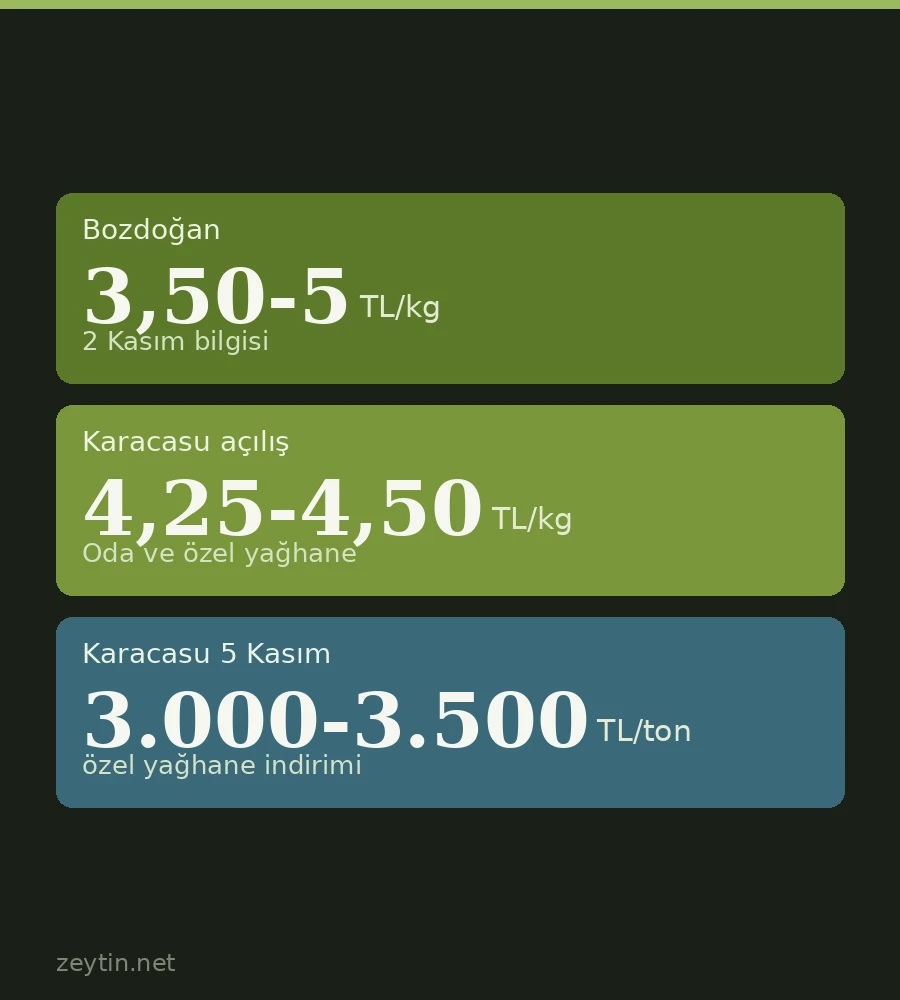
Pressing fees for the 2026/27 season in Aydın have not settled on a single tariff. In Bozdoğan mills are asking 3.50-5 lira per kilogram of olives, while in Karacasu the fee that opened the season at 4.25-4.50 lira has been pushed down by competition between private mills to 3,000-3,500 lira per tonne. The Karacasu Chamber of Agriculture has decided to meet to set a new tariff and, until then, is not collecting a pressing fee at its own mill. The figures appeared in local Aydın press reports (the latest dated 5 November 2026); we could not reach the mills' own price notices.
Bozdoğan: 3.50-5 lira per kilogram
According to the reports, pressing fees at Bozdoğan mills on 2 November 2026 range from 3.50 to 5 lira per kilogram of olives. If the mill collects the olives from the grower's home, a further 1 lira per kilogram is added. Reading the report's breakdown together gives this picture:
| Service | TL/kg | 500 kg of olives | 1 tonne of olives |
|---|---|---|---|
| Grower delivers | 3.50-5.00 | 1,750-2,500 TL | 3,500-5,000 TL |
| Home pick-up included | 4.50-6.00 | 2,250-3,000 TL | 4,500-6,000 TL |
Within the same district the gap between the cheapest and the most expensive mill is 1.50 lira per kilogram, or 1,500 lira per tonne. The report does not explain the gap; it says only that prices vary with the services each mill offers and with each mill's own decisions.
Karacasu: the tariff moved down within two weeks
In Karacasu the Chamber of Agriculture mill opened the season at 4.25 lira per kilogram (4,250 per tonne), while some private mills asked 4.50 lira (4,500 per tonne). A separate local report says that last year the Chamber mill charged 3 lira and private mills mostly 3.50. By our calculation that is an increase of 41.7 percent at the Chamber and 28.6 percent at private mills; the report's "roughly 50 percent" is higher than either figure.
Competition among private mills then began. According to reports dated 5 November, two private mills cut their fee to 3,500 lira per tonne and a third to 3,000 lira. By our calculation:
- A tonne fee of 3,000-3,500 lira is 1,000-1,500 lira (22-33 percent) below the 4,500-lira private tariff in the same district.
- Against the Chamber's 4,250-lira tariff the difference is 750-1,250 lira (18-29 percent).
- On a 500-kilogram batch the fee falls from 2,125-2,250 lira to 1,500-1,750 lira.
After that the Karacasu Chamber of Agriculture decided to meet to set a new tariff. Until the new fee is announced, collection of the pressing fee at the Chamber's mill has been suspended temporarily. The report stresses that this does not mean no fee will be charged: the final amount will be calculated once the new tariff is set.
The grower's side: costs rise while oil prices fall
A report from the same district asks that the pressing fee be read alongside the fall in oil prices. According to it, table olives find buyers at about 20 lira on average; mills began the season buying oil at 180 lira per kilogram, and the price was later pulled down and has fallen below last year's level. The report says input costs have risen by about 50 percent and that growers fear closing the season at a loss. These figures are the report's own account and have not been checked against an independent cost calculation.
The pressing fee is only one item in the total cost. The reports remind readers that picking, labour, packaging and other expenses come on top. For how the fee is charged, in cash or as a share of the oil, and how the oil yield changes the bill, see our guide to pressing fees in 2026.
What remains open
- The Bozdoğan figures date from 2 November and the Karacasu cuts from 5 November; the prices posted today may have changed.
- There is no single tariff or official ceiling for Aydın as a whole; the figures are by district and by mill.
- The Karacasu Chamber's new tariff has not been announced yet.
- The reports do not say whether the mills take the fee in cash or as a share of the oil; every figure is given as lira per kilogram.
One rating per visitor; you can change yours at any time. Ratings are real reader votes — no seeded or default scores.
Related
 Article
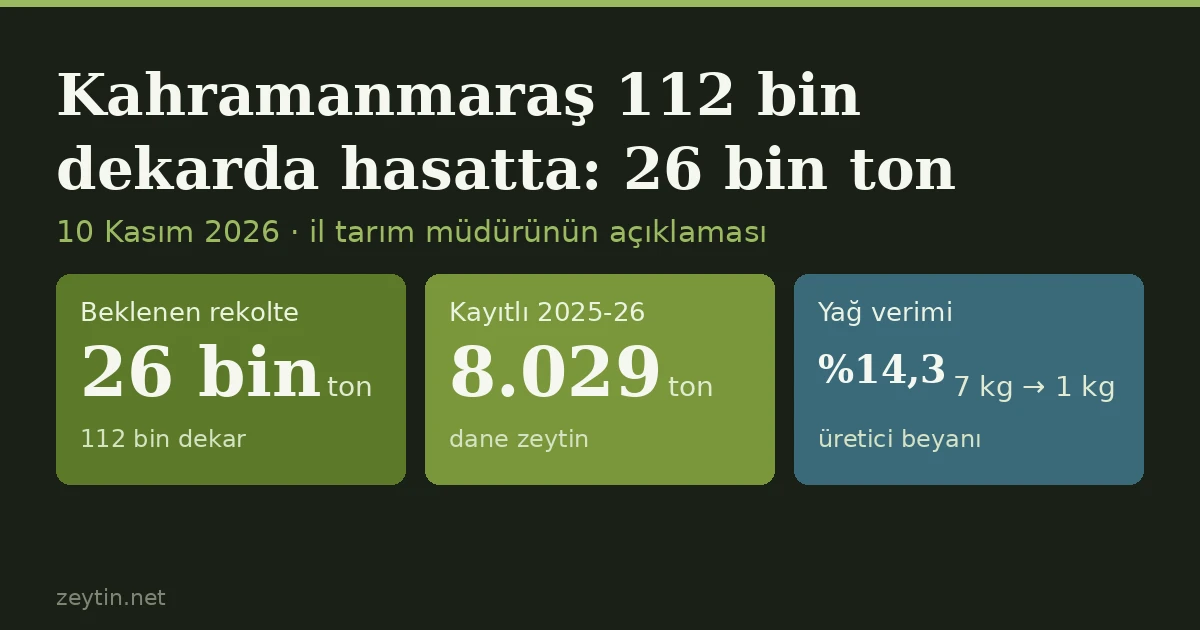
Kahramanmaraş harvests olives on 112,000 decares and expects 26,000 tonnes, with an oil yield of 1 in 7
Kahramanmaraş's provincial agriculture director Ramazan Bilir said olives are being harvested on 112,000 decares this season and about 26,000 tonnes are expected. That is about 3.2 times our 2025-2026 record, while the oil yield a producer quoted, about 14.3 percent, is below the recorded 20 percent.
 Article
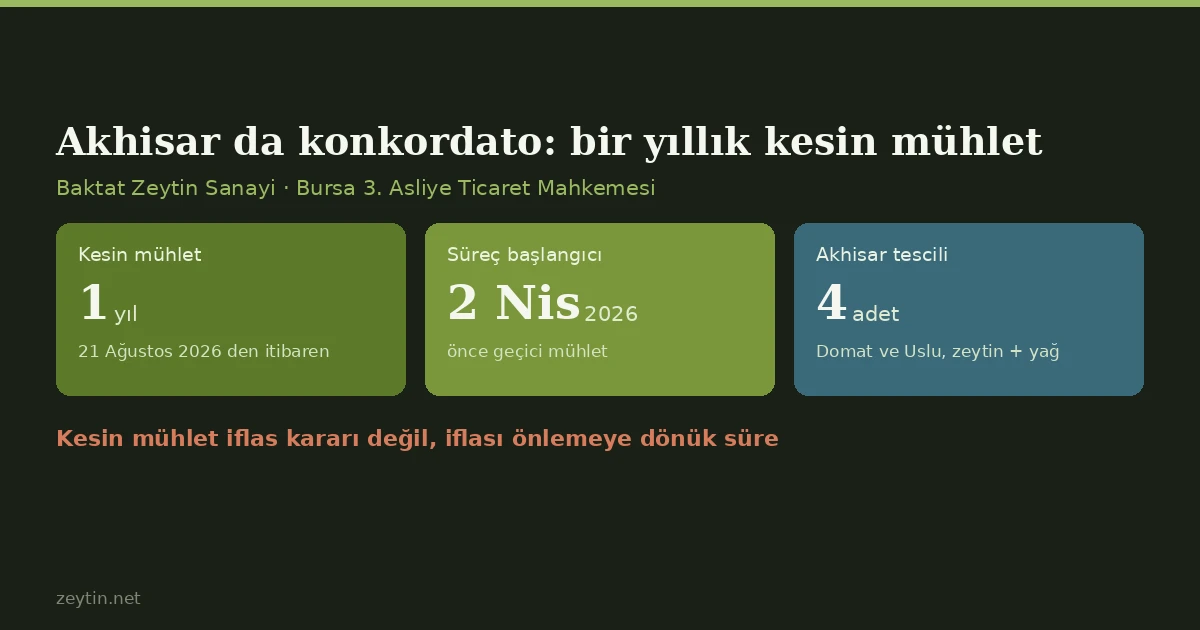
Concordat in Akhisar: a one-year moratorium for Baktat Zeytin
A Turkish commercial court has granted a one-year definitive moratorium to Baktat Zeytin, a table-olive processor in Akhisar. We set out what the ruling means and why it matters for the sector.
 Article
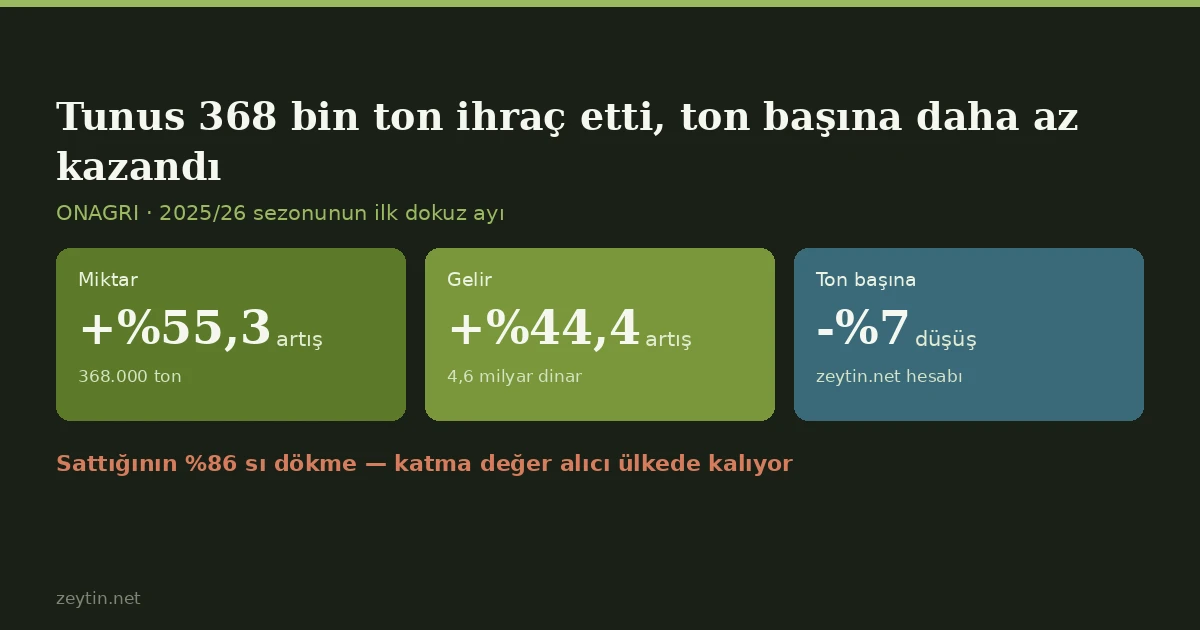
Tunisia exported 368,000 tonnes of olive oil — but earned less per tonne
Tunisia's agriculture observatory ONAGRI reports olive oil exports up 55.3% by volume and 44.4% by value in the first nine months of 2025/26. The gap between the two means about 7% less earned per tonne.
 Article
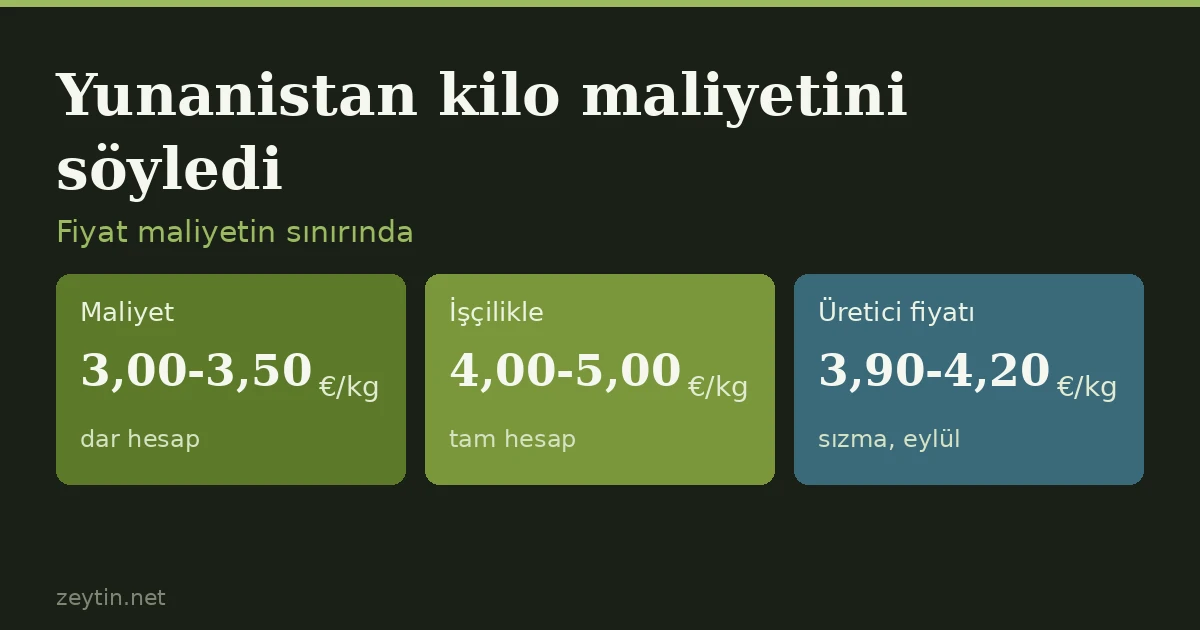
Greece finally puts a number on its cost: €3-3.5 a kilo, up to €5 with labour
For the first time Greece has put a per-kilo figure on its olive oil production cost: €3.00-3.50, rising to €4.00-5.00 once labour is fully counted. The producer price stands at €3.90-4.20, at or below that cost. Spain's €1.70-2.00 for the same item shows where the competitive gap actually sits. Greek output for 2026/27 is estimated at 280,000-330,000 tonnes.