What to do for olive trees after harvest: a November-to-March care guide
The work in the grove does not end with the olive harvest; next year's crop is prepared in exactly these months. From collecting fallen fruit and protecting harvest wounds to region-specific peacock spot sprays, the right pruning time, autumn feeding and winter soil work, here is what needs doing after harvest.
The harvest ends, sacks go to the mill, oil fills the tins and the grove falls quiet. For most growers that closes the olive year. Yet next year's flower buds, the places where diseases overwinter and the soil's nutrient balance all take shape in exactly these quiet months. What you do after harvest is half of next year's crop.
This guide sets out, in order, what needs doing in the grove between the end of the harvest and the awakening of shoots in spring, roughly November to March. The calendar can shift by a few weeks with region: work starts earlier on the Mediterranean coast and in the southern Aegean, later in Marmara.
1. Collect fruit left in the grove
Olives left on the tree or on the ground after harvest are a problem left behind:
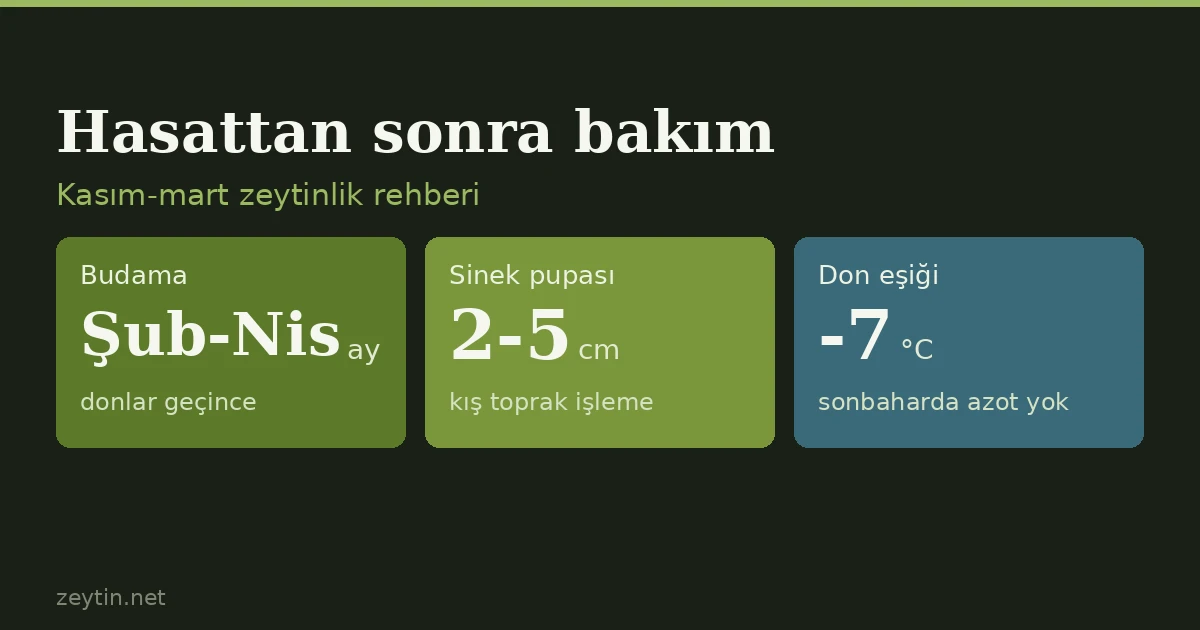
- The olive fruit fly spends the winter as pupae 2-5 cm deep in the soil or in nearby scrub. Infested fruit left underneath directly increases the number of flies emerging in spring.
- Fallen, rotting fruit also creates good conditions for fungal diseases.
- Fruit left on the tree for a long time drains its energy and suppresses the formation of next year's flower buds.
The last point is directly linked to the olive's well-known on-year/off-year cycle. Leaving fruit on the tree is one of the causes that sharpen the yield swings we call alternate bearing.
2. Do not forget harvest wounds
Beating branches with poles opens small wounds on branches and shoots. Especially on damp winter days, these wounds are the gateways through which the olive knot bacterium enters the tree. The disease forms galls on branches, gradually kills them and is carried from tree to tree on pruning tools.
In the post-harvest period:
- Note branches that were badly wounded or broken during harvest; they will be removed first at pruning.
- Harvesting machines and tools used on diseased trees should be disinfected before moving on to healthy trees.
- Follow the copper-based protective spray programme used in your region (see below).
For symptoms and control, see our olive knot disease page.
3. Peacock spot sprays: by region
Peacock spot is a fungal disease that forms ring-shaped spots on leaves, causes leaf drop and therefore yield loss. It becomes active in cool, damp weather, so autumn and winter rains are a critical period. The integrated pest management technical instruction of Türkiye's Ministry of Agriculture and Forestry sets different programmes for peacock spot by region. The part relevant to the post-harvest period is:
| Region | Application in this period |
|---|---|
| Mediterranean | First spray after harvest |
| Aegean | Just before autumn shoots appear; then before spring shoots |
| Marmara | Just before autumn shoots appear |
For the Aegean the instruction also recommends timing sprays just before or just after rainfall. Only products licensed for olives should be used, at the doses and conditions on the label; no product names or doses are given in this article. You will find the full programme and thresholds on our olive pest calendar and intervention thresholds page, and the disease itself on our olive peacock spot page.
4. Do not rush pruning
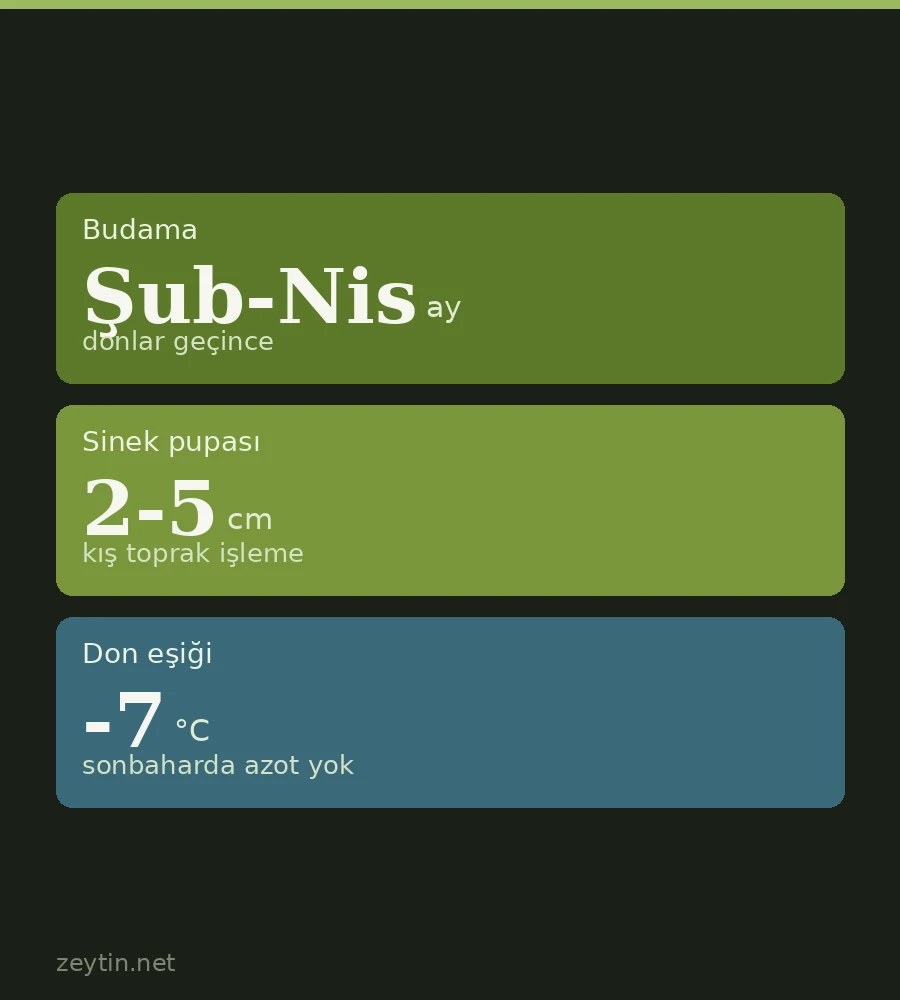
It can be tempting to pick up the shears as soon as harvest ends. But the general rule is: after harvest, once hard frosts have passed, before shoots break. In most of Türkiye's olive regions that falls between late February and early April.
Why wait?
- Early pruning leaves cut surfaces exposed to frost and disease in midwinter.
- In frost-prone areas, pruning before you can see which branches frost has affected may mean leaving branches that will later die and cutting healthy ones.
- Late pruning means cutting after the tree has started to shoot, wasting the energy it has already spent.
The one pruning job for the winter months is removing and taking away galled branches affected by olive knot, disinfecting tools on every tree. We explain how to carry out formative, production and rejuvenation pruning in detail in our guide olive pruning: how and when.
5. Autumn feeding: organic matter, not nitrogen
With the harvest, the tree has removed a significant amount of nutrients from the soil; potassium in particular is the element olives remove most. But not every fertiliser suits the post-harvest period:
- Do not apply nitrogen. Nitrogen given in autumn delays the tree's preparation for winter, lengthens soft shoots and increases frost damage. Most nitrogen is applied in late winter to early spring.
- Time for organic matter. Autumn is a good time for manure, compost and organic matter, which winter rains work into the soil.
- Soil analysis. Winter is a good time to take soil samples so that next year's fertiliser plan rests on measurement rather than guesswork.
If the crop was heavy, next year's programme needs to grow accordingly, because fertiliser needs are not fixed but depend on the crop removed. Details are on our olive fertilisation and soil analysis page.
6. Winter soil work
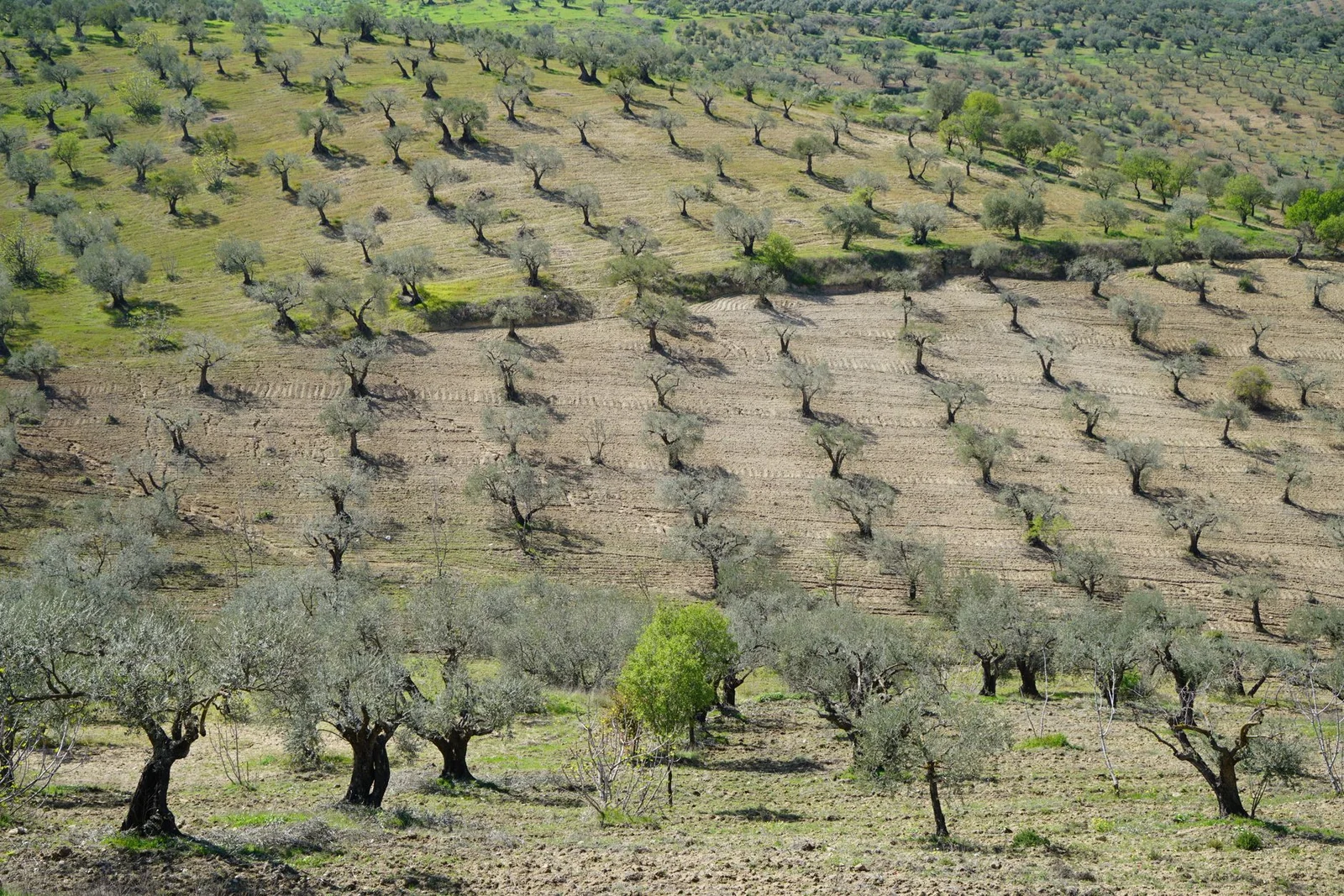
Shallow cultivation in winter does two things: it helps the soil absorb rain better and it kills olive fruit fly pupae overwintering in the soil. In fruit fly control, this is the first and cheapest job to do before any spraying.
The point to watch is that cultivation should not be deep and should not damage the tree's surface roots. On slopes, keeping plant cover rather than leaving the soil bare may be better to avoid increasing erosion. We explain the fly's life cycle in our olive fruit fly control guide.
7. Water and young trees
For mature olive trees winter rain is usually enough. Two situations need attention, though:
- Dry autumns: in years when rain is late, especially in groves with drip irrigation, the soil should not be allowed to dry out completely before winter.
- Young trees: the first two years after planting are the most critical, when the root system is established. Weeds around the trunks of young trees should be cleared and irrigation continued if needed.
You will find when irrigation matters most on our olive irrigation and drip systems page.
8. Preparing for frost
The generally accepted lower limit for olives is around -7 °C. What can be done against frost after harvest is limited but important: no nitrogen in autumn, protecting the trunks of young trees and delaying pruning until frosts have passed. If frost does strike, damaged trees should not be pruned immediately; the extent of the damage should be allowed to show through shoot growth in spring.
Month-by-month summary
| Period | Tasks |
|---|---|
| November-December | Collect remaining and fallen fruit · note harvest wounds · follow your region's peacock spot programme (after harvest on the Mediterranean) · add organic matter, no nitrogen |
| December-February | Shallow soil work · take soil samples for analysis · remove galled (olive knot) branches, disinfect tools · protect young trees |
| Late February-early April | Prune once frosts have passed · late-winter nitrogen and fertiliser plan · in the Aegean, peacock spot spray before spring shoots |
For the calendar covering the whole year, see our olive calendar page.
One rating per visitor; you can change yours at any time. Ratings are real reader votes — no seeded or default scores.
Related
 Article
Irrigating Olives: When, How Much, How
Olive water requirements, critical periods, drip system layout, deficit irrigation and water quality.
Article
Irrigating Olives: When, How Much, How
Olive water requirements, critical periods, drip system layout, deficit irrigation and water quality.
 Article
Cold-hardy olive varieties: Gemlik, Ayvalık and the other candidates in the data
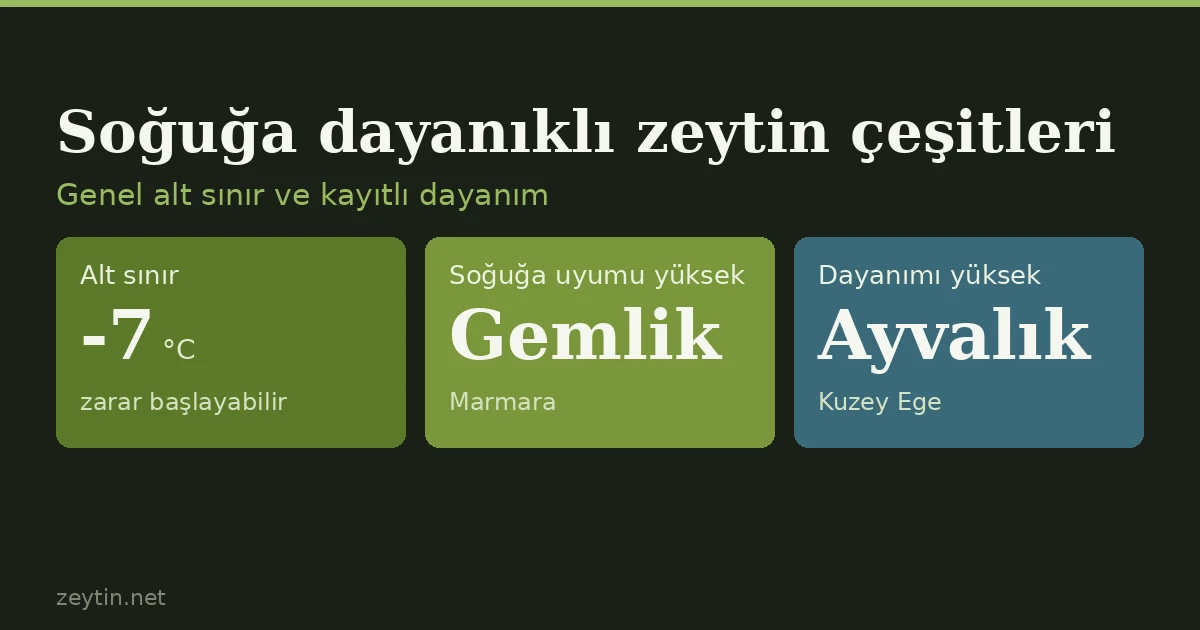
In our variety data, Gemlik, Ayvalık, Coratina, Picual and Hojiblanca are recorded with high cold adaptation or hardiness; Kalamata, Leccino, Memecik and Domat are medium, Frantoio moderately sensitive and Saurani low. But variety alone is not enough: tree age, the duration of the cold and the site of the grove also decide.
Article
Cold-hardy olive varieties: Gemlik, Ayvalık and the other candidates in the data
In our variety data, Gemlik, Ayvalık, Coratina, Picual and Hojiblanca are recorded with high cold adaptation or hardiness; Kalamata, Leccino, Memecik and Domat are medium, Frantoio moderately sensitive and Saurani low. But variety alone is not enough: tree age, the duration of the cold and the site of the grove also decide.
 Article
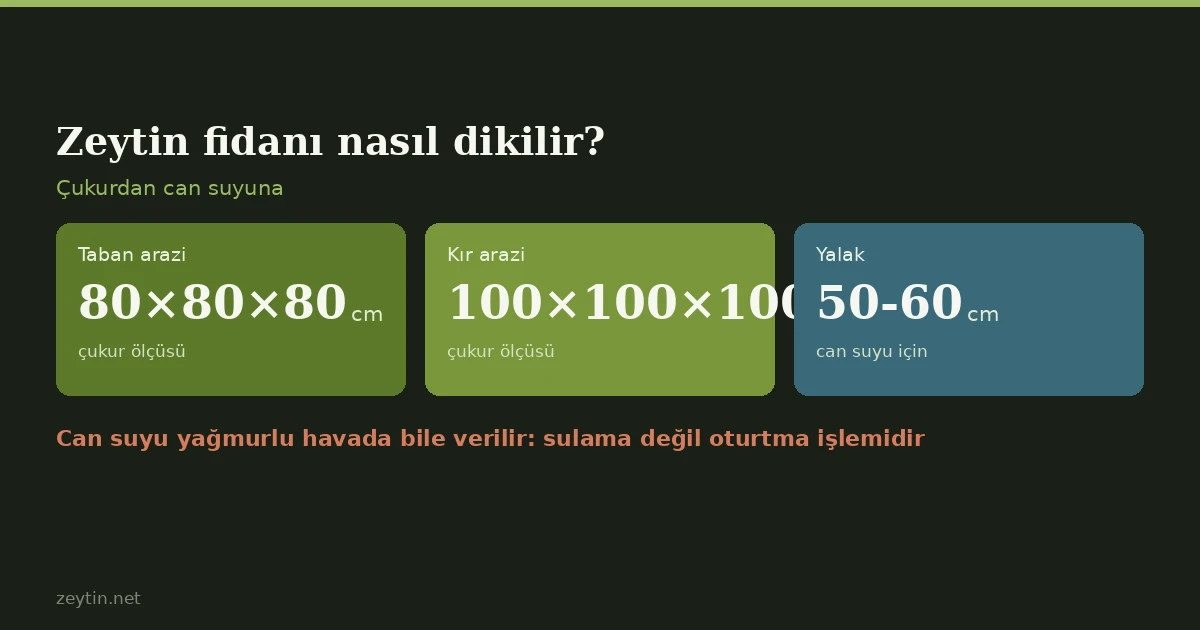
How to plant an olive sapling
Planting season, hole dimensions, removing a potted sapling, planting depth and the graft union, the basin and settling water — why settling water is given even in rain, first-year care and five common mistakes.
Article
How to plant an olive sapling
Planting season, hole dimensions, removing a potted sapling, planting depth and the graft union, the basin and settling water — why settling water is given even in rain, first-year care and five common mistakes.
 Article
Should I switch to organic? A decision guide for olive groves
A four-year trial found no yield difference and put organic 11% ahead economically. But where does the real cost of switching lie, who does it suit, and how do you fight the fly without chemicals?
Article
Should I switch to organic? A decision guide for olive groves
A four-year trial found no yield difference and put organic 11% ahead economically. But where does the real cost of switching lie, who does it suit, and how do you fight the fly without chemicals?