Is olive oil good for PCOS? What a 10-week trial of 72 women showed
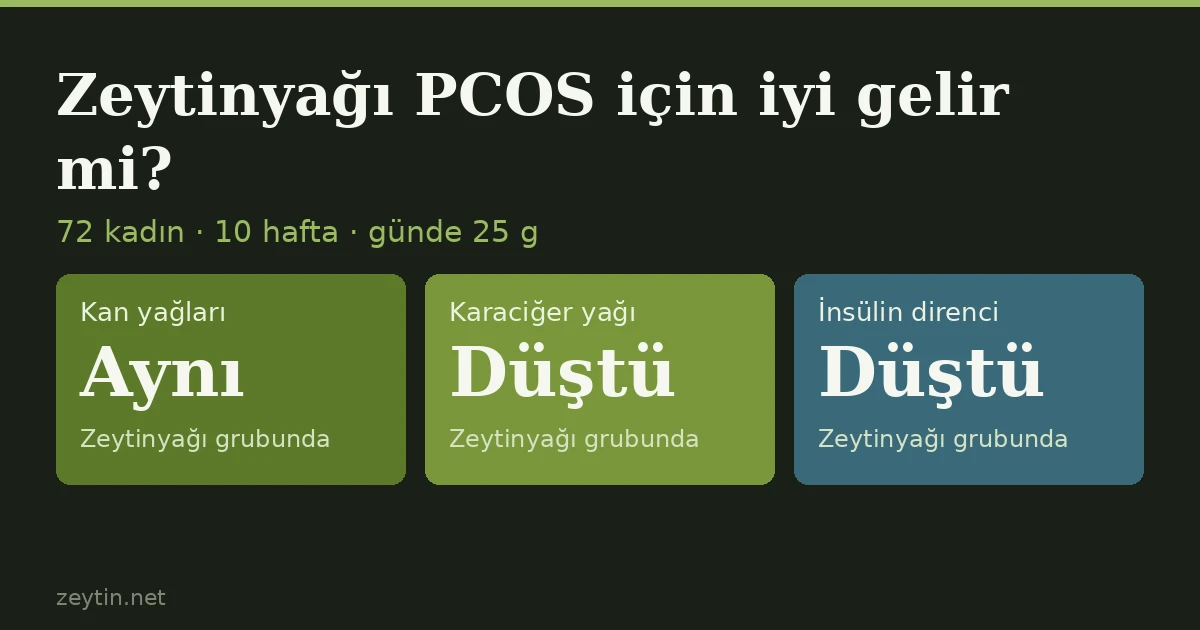
In a 10-week randomised trial of 72 women with polycystic ovary syndrome given 25 grams a day of olive, canola or sunflower oil, olive oil did not significantly change blood lipids but lowered the grade of fatty liver and insulin resistance. Canola oil did better on blood lipids. The article explains the limits of this single trial and what it means.

Polycystic ovary syndrome (PCOS) is one of the most common hormonal and metabolic disorders in women of reproductive age. Its frequent signs include irregular periods, excess hair growth, infertility, weight gain and acne. In many women these come with insulin resistance, and abnormal blood lipids and fatty liver are common too. That is why the choice of fat in the diet is a question, and "is olive oil good for it?" comes up.
The short answer: evidence that measures olive oil directly in PCOS is thin; in the one randomised trial that did, the result was mixed. Below we describe that trial and what it does and does not say.
The trial we have
In a randomised controlled trial (by its registration details a study carried out in Iran), 72 women with PCOS were randomly divided into three groups. Each group took 25 grams of fat a day for 10 weeks: canola oil, olive oil or sunflower oil. The mean age of the participants was 29.3. The primary outcome was blood lipids and the secondary outcome the grade of fatty liver; the study also measured HOMA-IR, an index of insulin resistance.
Twenty-five grams a day is about two tablespoons (a tablespoon of olive oil is about 13.5 grams; that is our calculation).
| Measure | Canola oil | Olive oil | Sunflower oil |
|---|---|---|---|
| Blood lipids (triglycerides, cholesterol ratios) | Significant improvement | No significant change | Comparison group |
| Fatty liver grade | Significant fall | Significant fall | Comparison group |
| Insulin resistance (HOMA-IR) | Significant fall | Significant fall | Comparison group |
According to the study's abstract. The sunflower oil group was the reference against which the other two were compared.
In their conclusion the authors reported that, compared with olive and sunflower oils, canola oil brought clear improvement in blood lipids, liver function and insulin resistance. With olive oil, blood lipids did not fall significantly, while the fatty liver grade and HOMA-IR did.
What this result means
- Olive oil did not come out harmful. Fatty liver grade and insulin resistance fell significantly in the olive oil group. That is a good sign but a single result from a single trial.
- Olive oil did not lower blood lipids. That is a benefit often expected in PCOS and it was not seen in this trial's olive oil group. Ten weeks and 72 people is a short, narrow scale for catching small differences.
- Canola oil did better in this trial. That does not mean olive oil "does not work"; it says only that on these measures and at this dose canola came out ahead.
- There is no long-term result. The study did not measure PCOS's main complaints such as menstrual pattern, ovulation, infertility or hair growth.
Do not confuse it with the Mediterranean diet
Advice on diet in PCOS often cites the Mediterranean diet, with olive oil as its main fat. But the Mediterranean diet is a package: vegetables, pulses, whole grains, fish and olive oil together. The effect of the package cannot be assigned to one component, olive oil. In this article we described only the trial that compared olive oil on its own. For the general framework of the diet see our article on the Mediterranean diet.
Dose and calories
Fats are dense sources of energy; since weight is an important matter in PCOS, it would not be right to take olive oil without limit because it is "healthy". A tablespoon is about 120 calories; we explain how to think about the daily amount in how much olive oil a day and the weight side in does olive oil make you lose weight. Fatty liver is covered separately: fatty liver article. For the blood sugar side see people with diabetes.
Practical summary
- In PCOS olive oil is not a treatment; it is a dietary choice.
- In one trial olive oil lowered fatty liver grade and insulin resistance but not blood lipids.
- Canola oil gave better blood-lipid results in the same trial; this rests on a single study.
- Settle your diet together with your blood tests and medicines with your gynaecologist or endocrinologist.
One rating per visitor; you can change yours at any time. Ratings are real reader votes — no seeded or default scores.
Related
 Article
Olive leaf tea: how to make it and what the evidence says
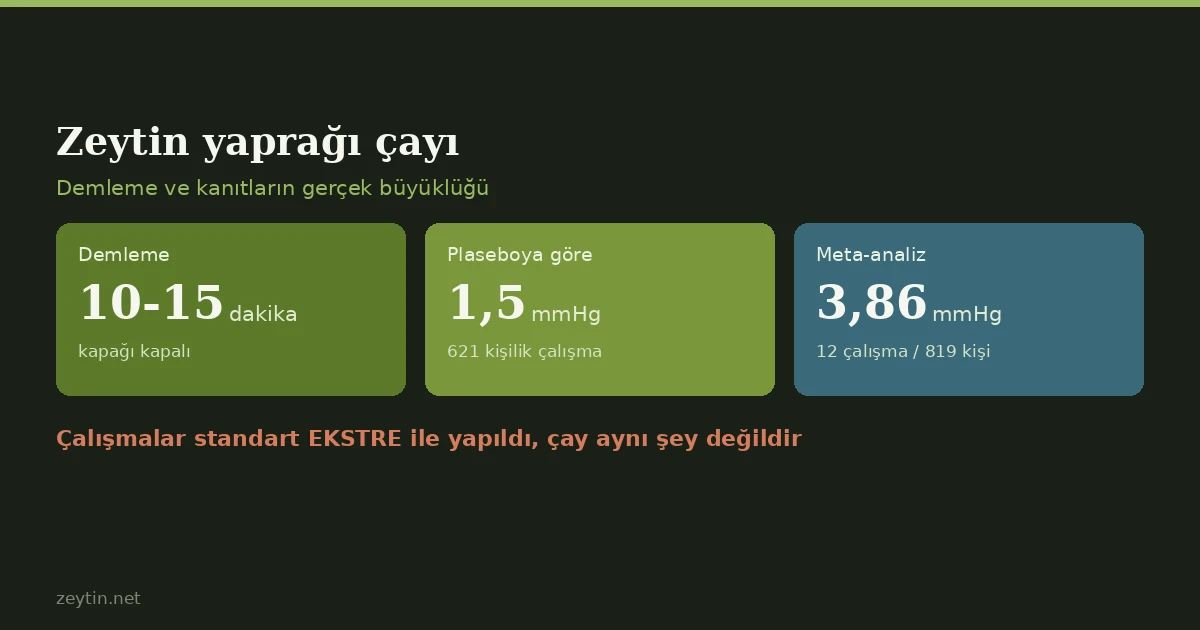
The leaf carries oleuropein and other phenolics. Blood pressure trials show a modest effect, but all used standardised extracts — tea is not the same thing. Steeping, drying and cautions.
 Article
Which olive is healthiest?
In olives the health difference comes from curing and salt, not the variety: nutrition, salt content and green vs black.
 Article
Does oil pulling with olive oil help oral health?
Oil pulling is the practice of swishing oil in the mouth for minutes. A meta-analysis of nine randomised trials reports that bacteria counts in saliva fell but plaque and gum inflammation scores showed no significant difference, and a systematic review rates the quality of evidence as low. The article explains these findings, their limits and the points of safe use.
 Article
Does olive oil affect the gut microbiota? What four human studies and a review show
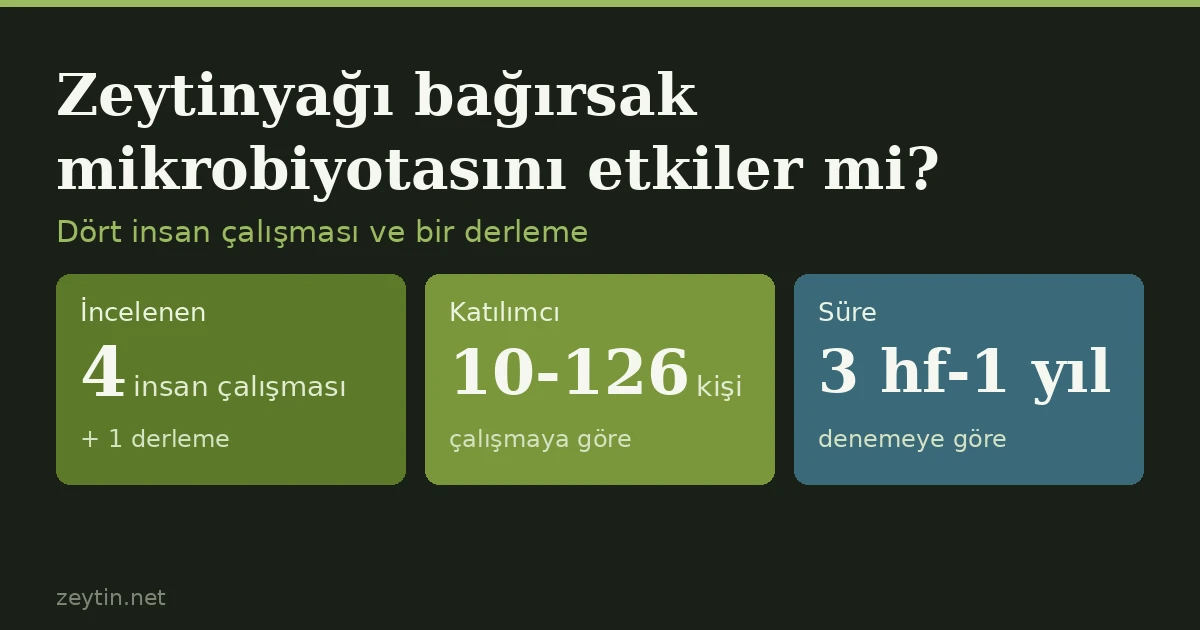
In small human trials, olive oil or olive-oil-based diets shifted the proportions of some gut bacteria, but the findings differ from trial to trial. What did the 20-person year-long, the 12- and 10-person three-week and the 126-person trials show, and what could they not show?