Does olive oil affect the gut microbiota? What four human studies and a review show
In small human trials, olive oil or olive-oil-based diets shifted the proportions of some gut bacteria, but the findings differ from trial to trial. What did the 20-person year-long, the 12- and 10-person three-week and the 126-person trials show, and what could they not show?
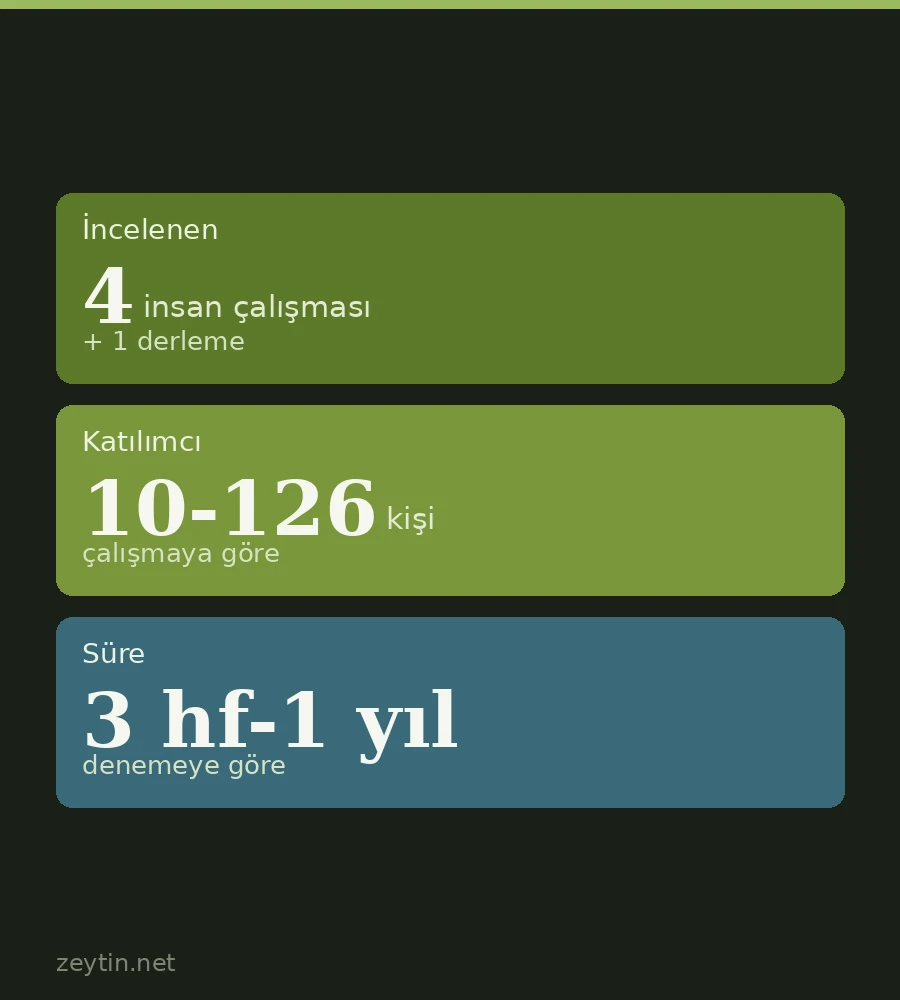
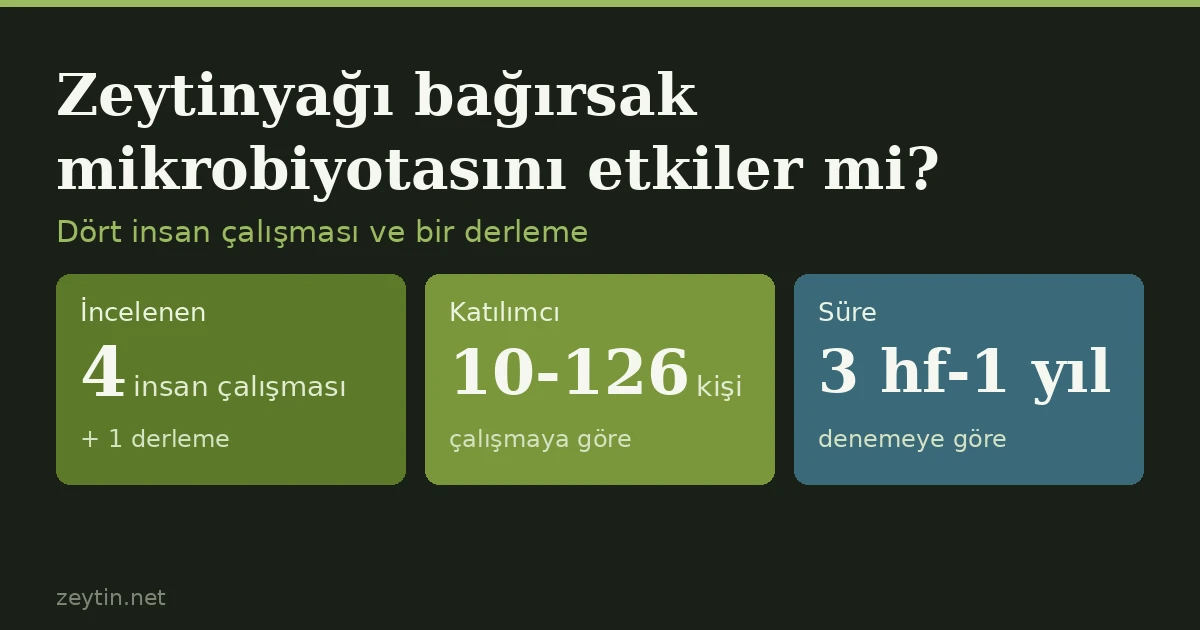
Short answer: In small human trials, olive oil or olive-oil-based diets have shifted the proportions of some gut bacteria, but the findings do not agree from trial to trial: participant numbers range from 10 to 126, durations from three weeks to a year, and none of the trials reports an outcome that lets us say "this change improved health by this much". The sentence "olive oil repairs the microbiota" claims more than today's evidence supports.
This article looks at four studies and one review.
In numbers
| Study | Who, how long | What was given | Finding |
|---|---|---|---|
| Haro et al. 2016, J Clin Endocrinol Metab | 20 obese men with coronary heart disease, 1 year | Mediterranean diet (35% fat, 22% monounsaturated) or a low-fat, high-carbohydrate diet | On the Mediterranean diet Prevotella fell; Roseburia and Oscillospira rose |
| Martín-Peláez et al. 2017, Eur J Nutr | 12 people with high cholesterol, crossover, 3 weeks | 25 mL a day of three virgin oils: natural phenol content, phenol-enriched, and an enriched olive-and-thyme mixture | Only the thyme mixture raised bifidobacteria and lowered oxidised LDL |
| Martín-Peláez et al. 2016, Nutrients | 10 people with high cholesterol, crossover, 3 weeks | The same three oils, 25 mL a day | With the very high-phenol oil, the share of IgA-coated bacteria tended to rise; plasma CRP rose |
| Lim et al. 2022, npj Biofilms Microbiomes | 126 people with borderline high cholesterol, 8 weeks | 30 g a day: one of two blended oils, or refined olive oil | Clostridium leptum rose in all three groups; the blend highest in omega-3 produced a faster response |
A one-year trial: a diet, not an oil
Haro and colleagues examined 20 obese men from CORDIOPREV, an ongoing trial in coronary patients. Participants were randomly assigned to one of two diets, and the bacterial composition of their stool was measured after a year. On the Mediterranean diet the genus Prevotella fell while Roseburia and Oscillospira rose (p values 0.028, 0.002 and 0.016 respectively); Parabacteroides distasonis also rose (p = 0.025). On the low-fat diet, by contrast, Prevotella rose, Roseburia fell and Faecalibacterium prausnitzii rose (p = 0.020). The authors suggest that both diets may protect against the development of type 2 diabetes through different bacterial changes.
There are two limits here. First, what was compared was not olive oil but a whole eating pattern; the share of olive oil cannot be separated out. Second, the sample is only 20 people. And the low-fat diet changed the bacterial composition as well, so a change by itself is not a finding specific to olive oil.
A three-week crossover trial: phenols and thyme
In the second study, 12 volunteers with high cholesterol tried three virgin olive oils with two-week breaks between them: one naturally containing about 80 mg of phenols per kilogram, one enriched to 500 mg/kg with phenols from olives, and a 500 mg/kg mixture in which olive and thyme phenols were split half and half. Each was taken at 25 mL a day for three weeks.
The result: only the thyme mixture lowered oxidised LDL and, compared with the naturally low-phenol oil, raised the number of bifidobacteria. The oil enriched with olive phenols changed neither blood lipids nor the bacterial counts that were measured; faecal hydroxytyrosol and dihydroxyphenylacetic acid levels went up, and coprostanone was higher than with the thyme mixture. The authors say the heart-protective effect could work through the rise in bifidobacteria and through antioxidant microbial products.
Note that what changed was not the oil itself but the mixture with thyme added. Olive phenols alone did not move the bacterial counts. The sample was also 12 people.
Gut immunity in the same oils
Another study by the same team, with 10 people and the same three oils, looked at gut immunity and inflammation markers. The very high-phenol oil tended to raise the share of IgA-coated bacteria and raised plasma CRP; the other two oils had no significant effect. The authors read this as a hint that very high phenol doses may stimulate the immune system and call for more research. CRP rising rather than falling does not fit the pattern "olive oil reduces inflammation", which shows the findings do not all point one way.
A 126-person trial: refined olive oil was in it too
In the eight-week, double-blind trial by Lim and colleagues, 126 volunteers with borderline high cholesterol took 30 grams of oil a day: one of two blended oils rich in omega-3 and plant nutrients, or refined olive oil. Favourable changes in blood lipids were linked to a rise in Clostridia-class bacteria, and Clostridium leptum rose markedly in all three groups. The blend with the most omega-3 increased bacterial diversity and responded faster.
In this trial olive oil was not the winning side but the comparison arm. Because there was no group taking no oil, it is also impossible to say "olive oil changed the bacteria"; the shared rise may come from oil intake or from a general change in diet.
What does the review say?
A 2021 review in Nutrition Reviews on extra virgin olive oil, the microbiota and gut immunity notes that data showing the benefits of extra virgin olive oil may extend to the microbiota are "emerging". That suggests the field is still new (our reading).
What "the microbiota changed" does and does not mean
- A change in the proportion of one bacterial group does not by itself mean health improved. Alongside bacterial proportions, the studies above looked at markers such as oxidised LDL, CRP and insulin sensitivity; disease development or relief of symptoms was not measured.
- None of the four studies has a clean comparison with a group taking no oil that isolates olive oil alone. One compared whole diets, one a thyme mixture, one three different oils.
- The findings do not confirm one another: in one trial bifidobacteria rose, in another Clostridium leptum rose, and in a third no count changed.
What can be done in practice?
Today there is no solid basis for using olive oil to repair the microbiota. The reasons for using olive oil within a Mediterranean-style diet are stronger elsewhere; we cover them in our pages on heart health and brain health. For amounts see how much olive oil a day, and for possible downsides are there harms of olive oil; a tablespoon is about 119 kilocalories, so the amount should be counted in your calories.
Blood in the stool, unexplained weight loss, persistent diarrhoea or constipation, and severe abdominal pain should be assessed by a doctor, not tested with an oil.
Summary
In four small human studies some gut bacteria changed, but the changes differ from trial to trial, the samples are small, and there is no clean comparison that isolates the oil itself. One studied a whole diet, one a thyme mixture, one refined oil; in one, the inflammation marker CRP rose. The most honest summary: olive oil may affect the gut microbiota, but it has not yet been shown that this turns into a health benefit.
t; This article is for general information; consult your doctor for diagnosis and treatment.
One rating per visitor; you can change yours at any time. Ratings are real reader votes — no seeded or default scores.
Related
 Article
Oleocanthal and Polyphenols
Why does a good extra virgin oil sting the throat? That sensation is not a flaw but the mark of a measurable compound.
 Article
Does olive oil make you lose weight? What the meta-analyses and PREDIMED say
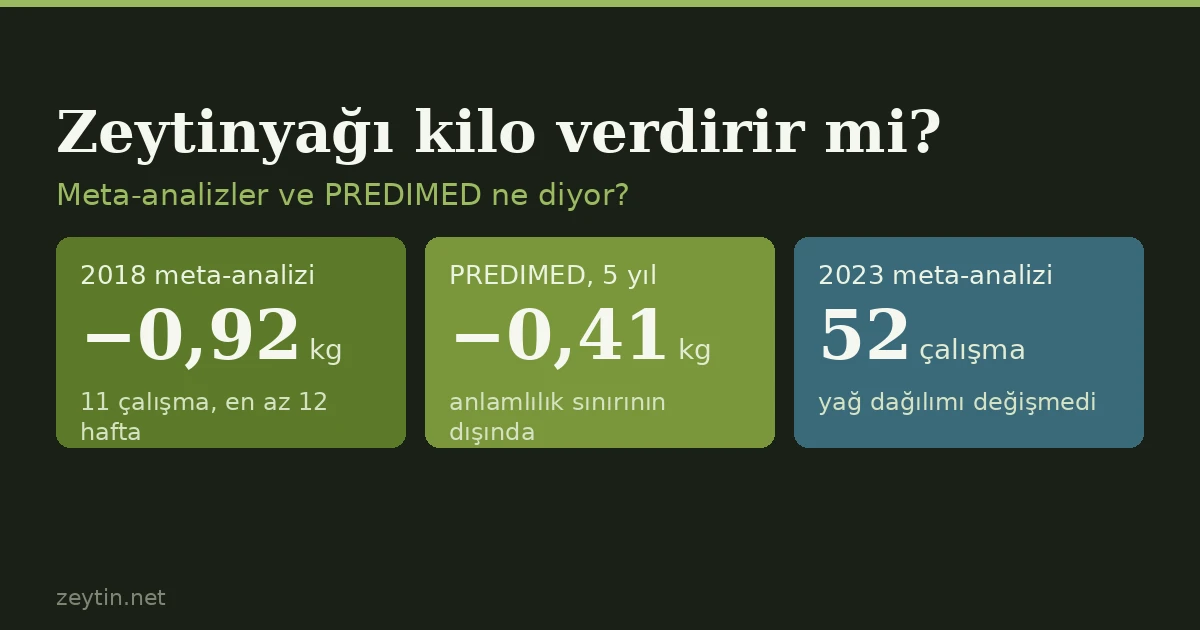
Olive oil does not make you gain weight, but it does not make you lose it on its own either: a 0.92 kg difference in a 2018 meta-analysis, no change in body fat distribution across 52 trials in 2023, and −0.41 kg over 5 years in PREDIMED (not significant). Capsules showed no benefit.
 Article
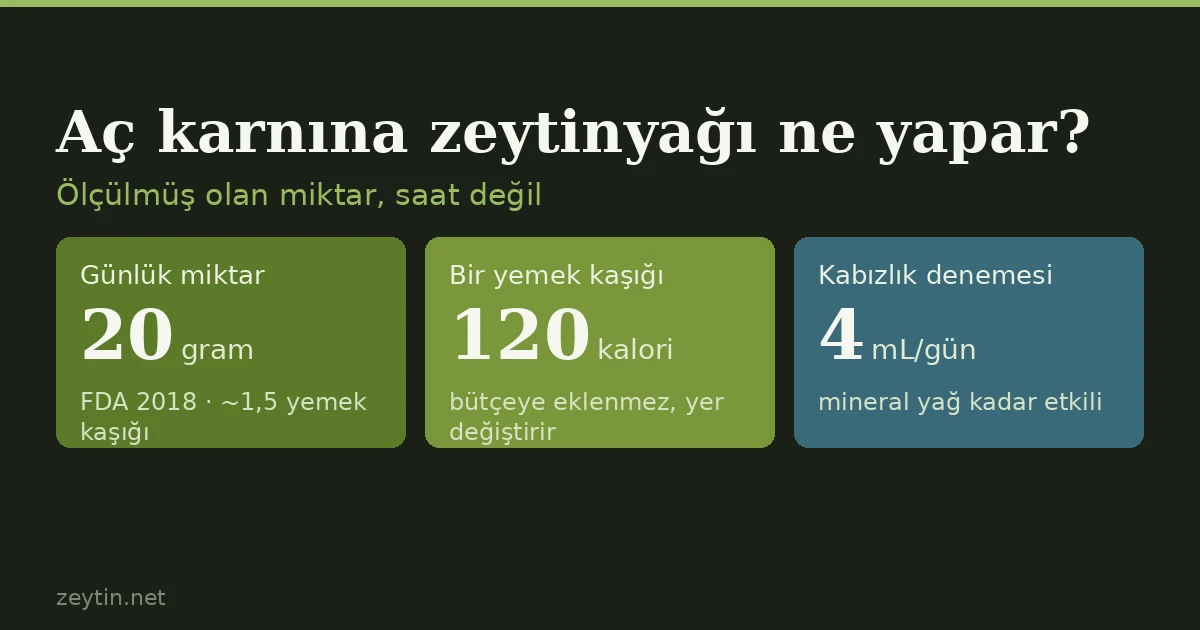
What does drinking olive oil on an empty stomach actually do?
A spoonful of olive oil in the morning is a common habit, but there is no proven separate benefit to taking it on an empty stomach. What actually happens in the body, which claims have been measured and which are myth: the gallbladder, constipation, the calorie arithmetic and the truth about "liver flush" stones.
 Article
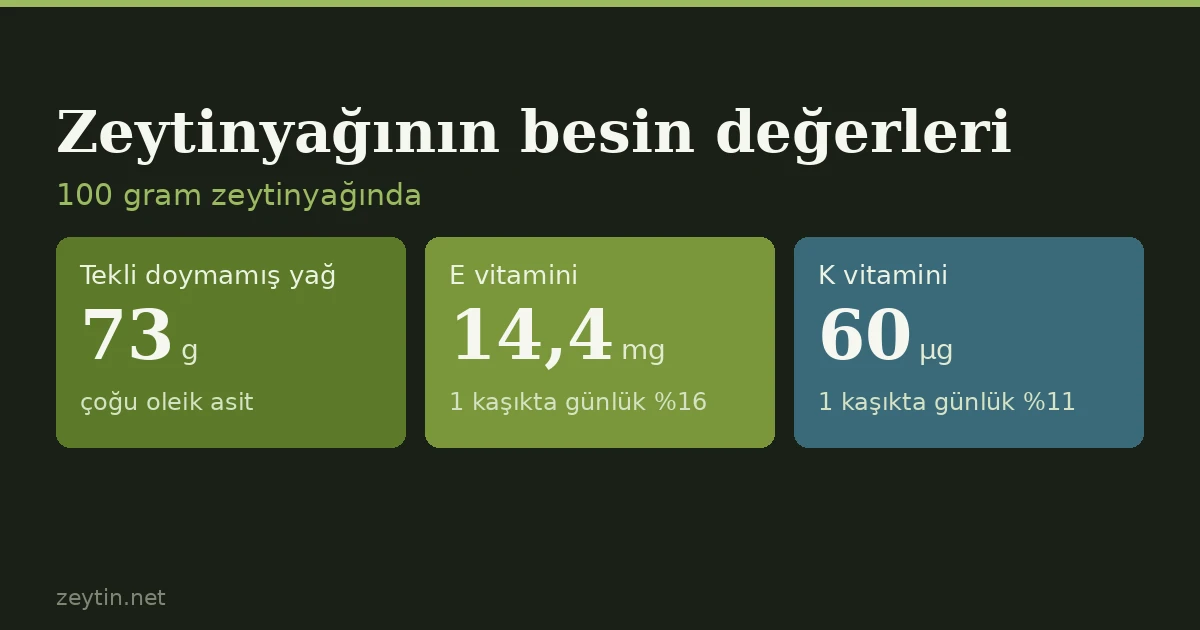
The nutritional profile of olive oil: fatty acids, vitamins E and K, polyphenols
100 grams of olive oil contain 73 grams of monounsaturated fat, 14 mg of vitamin E and 60 micrograms of vitamin K, with no protein, carbohydrate or cholesterol. A per-tablespoon table, and why polyphenols do not appear on the label.