What does drinking olive oil on an empty stomach actually do?
A spoonful of olive oil in the morning is a common habit, but there is no proven separate benefit to taking it on an empty stomach. What actually happens in the body, which claims have been measured and which are myth: the gallbladder, constipation, the calorie arithmetic and the truth about "liver flush" stones.
Taking a spoonful — in some versions a whole cup — of olive oil first thing in the morning is a long-standing habit in Türkiye and across the Mediterranean. The question always arrives in the same shape: does taking it on an empty stomach make a difference?
The honest answer has two parts. Olive oil has measured benefits; but those benefits have nothing to do with the empty stomach. The evidence is built on daily quantity and on the quality of the oil, not on the hour of the day.
What happens when fat meets an empty stomach
The physiology runs like this. When fat passes the stomach and reaches the first part of the small intestine, the duodenum, a hormone called cholecystokinin is released. It does two things: it contracts the gallbladder and empties bile, and it triggers the release of digestive enzymes from the pancreas. A satiety signal comes with it, which is where the appetite-blunting effect of fat comes from.
This process happens whether the stomach is empty or full. Fat entering an empty stomach reaches the duodenum faster, so the effect may feel more abrupt. But "more abrupt" and "more beneficial" are not the same thing. There is no strong study showing that fasting conveys an advantage for the absorption of olive oil's fatty acids or polyphenols.
What has been measured: the daily amount
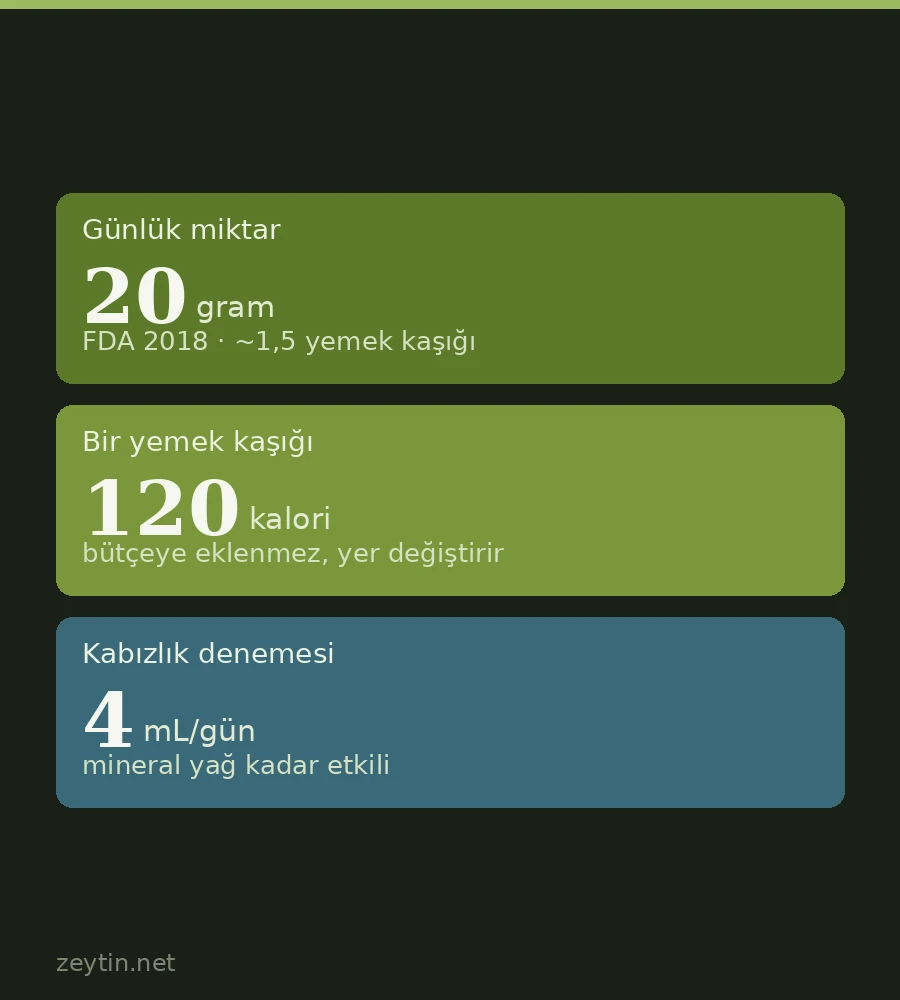
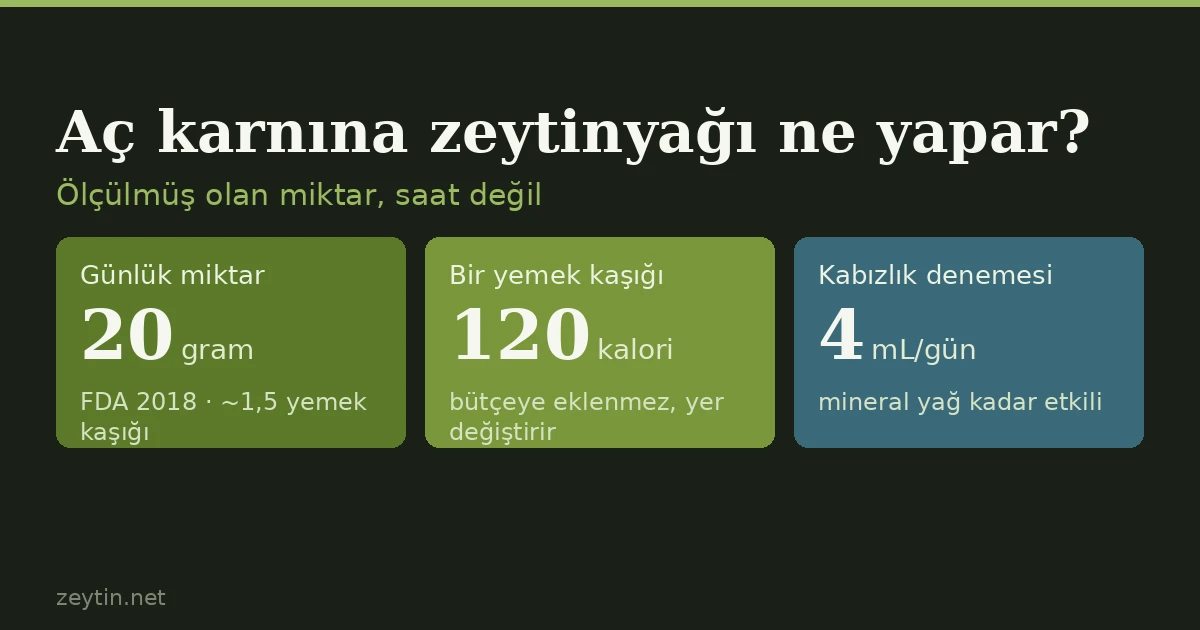
The relationship between olive oil and cardiovascular health is one of the most heavily studied topics in nutrition. Here is how that literature landed on the regulatory side: on 19 November 2018, the US Food and Drug Administration completed its review of a qualified health claim and accepted that consuming about 20 grams a day (roughly 1.5 tablespoons) of oils containing at least 70% oleic acid may reduce the risk of coronary heart disease. The wording of the claim matters: "supportive but not conclusive scientific evidence".
Notice what the claim specifies — an amount and a composition threshold. It says nothing about the time of consumption, or whether the oil arrives by spoon or over a salad. We have written separately on olive oil and heart health and on whether olive oil raises cholesterol.
Do not skip the calorie arithmetic
This is the most commonly overlooked point: one tablespoon of olive oil is about 120 calories. We have set out the full calorie table before.
If the morning spoonful is added to the day's fat budget, the net result is extra calories. Olive oil's benefit is measured when it replaces saturated fat — butter, margarine, frying oil. Sitting on top of them is a different proposition. The "substitution" logic in how much olive oil a day is exactly about this.
Constipation: real evidence, narrow scope
This is the most frequently cited reason for the morning spoonful, and there is a serious study behind it. In a double-blind, randomised, controlled trial, 50 haemodialysis patients diagnosed with constipation received mineral oil, olive oil or flaxseed oil for four weeks. The starting dose was 4 mL a day — less than a teaspoon. Olive oil proved as effective as mineral oil in reducing constipation symptoms; flaxseed oil performed less well.
That result needs to be placed carefully, though. The trial was in a specific patient group, with a small sample, over a short period. There is no comparably strong study showing the same effect in healthy adults. So "olive oil helps constipation" is not groundless, but it cannot be offered as a general prescription either. And note the dose that worked: less than a teaspoon, not a cupful.
A warning for anyone with gallstones
A fat load makes the gallbladder contract. In someone with gallstones, that contraction can push a stone towards the duct and trigger pain — biliary colic. Anyone with gallstones, a removed gallbladder, or a history of pancreatitis would do better to ask their doctor before starting a habit of drinking oil by the spoon.
The same logic applies to reflux: a fatty intake slows gastric emptying and contributes to relaxation of the lower oesophageal sphincter. Someone with reflux symptoms may well notice more burning after taking oil on an empty stomach. We opened these topics up separately in does olive oil have downsides.
The truth about "liver flush" stones
The most persistent companion to the empty-stomach habit is the "liver and gallbladder flush" regime, in which olive oil is drunk together with lemon juice. The story goes: the next day, green semi-solid "stones" come out, so the gallbladder must have been cleaned.
That claim has been examined. A case report published in The Lancet in 2005 analysed the masses passed by a person who had followed a regime of apple and vegetable juice followed by 600 mL of olive oil and 300 mL of lemon juice. The finding: the masses had no crystalline structure and contained no cholesterol, no bilirubin and no calcium — none of the basic constituents of a gallstone. The same report showed that mixing equal volumes of oleic acid (the main fatty acid in olive oil) with lemon juice and adding a small volume of potassium hydroxide produced similar semi-solid white balls.
What comes out, in other words, is not stone but soap: masses formed by partial saponification of the oil and stained by bile. The regime does not clean anything out; it manufactures its own output.
So how should it be taken
Drinking it by the spoon does not change the nature of the oil; in terms of what the body does with it, there is no meaningful difference between a spoonful and the same oil poured over a salad. The difference shows up with heat: consuming it unheated preserves the polyphenols. Bitterness and pungency are the signature of those polyphenols in the first place — the pieces on oleocanthal and polyphenols and why olive oil is bitter and pungent set out that link.
The practical summary:
- There is no measured extra benefit to the empty stomach. If you like the habit, there is no harm in it either.
- Quantity matters: something in the order of 1.5 to 2 tablespoons a day, inside your daily fat budget.
- Replace, do not add. The benefit appears when it takes the place of saturated fat.
- Drinking it by the cup is neither evidence-based nor harmless; 100 mL of oil is over 800 calories.
- If you have gallbladder, pancreatic or reflux problems, do not start without asking your doctor.
Olive oil works because it is a good fat — not because of the hour at which it is drunk.
One rating per visitor; you can change yours at any time. Ratings are real reader votes — no seeded or default scores.
Related
 Article
Does olive oil raise cholesterol? Cholesterol content, LDL and the "clears arteries" claim
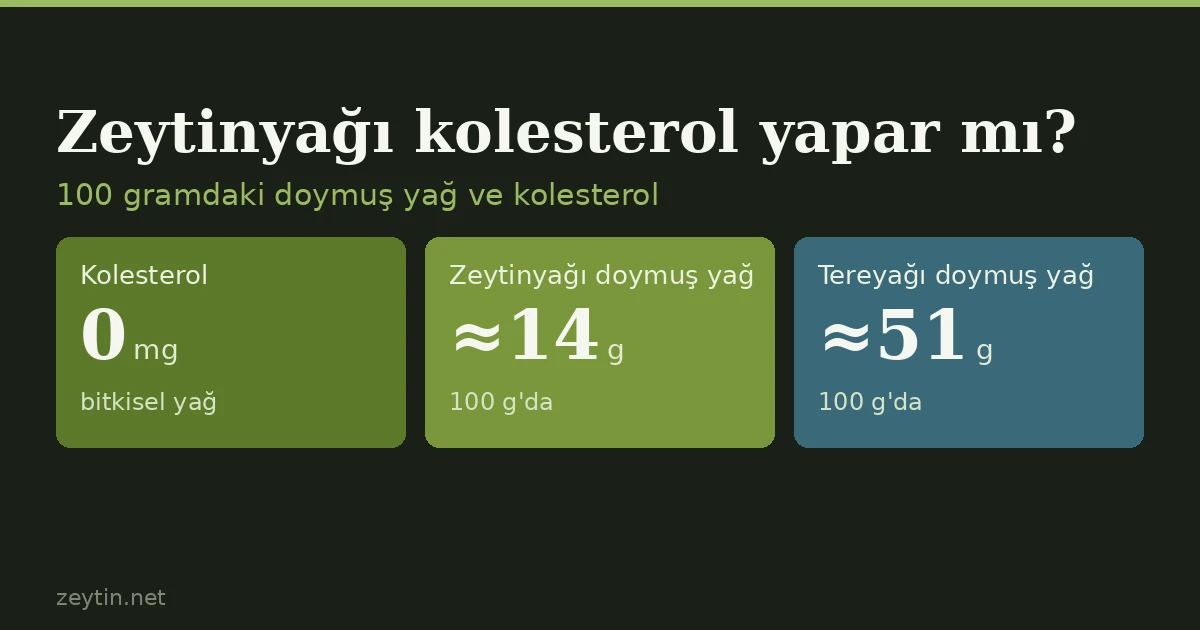
Olive oil contains no cholesterol, and when it replaces saturated fat it helps maintain normal blood cholesterol levels. But every spoonful added to a diet also brings calories, and there is no evidence that olive oil clears arteries. A saturated fat table and the authorised health claims.
Article
Does olive oil raise cholesterol? Cholesterol content, LDL and the "clears arteries" claim
Olive oil contains no cholesterol, and when it replaces saturated fat it helps maintain normal blood cholesterol levels. But every spoonful added to a diet also brings calories, and there is no evidence that olive oil clears arteries. A saturated fat table and the authorised health claims.
 Article
The nutritional profile of olive oil: fatty acids, vitamins E and K, polyphenols
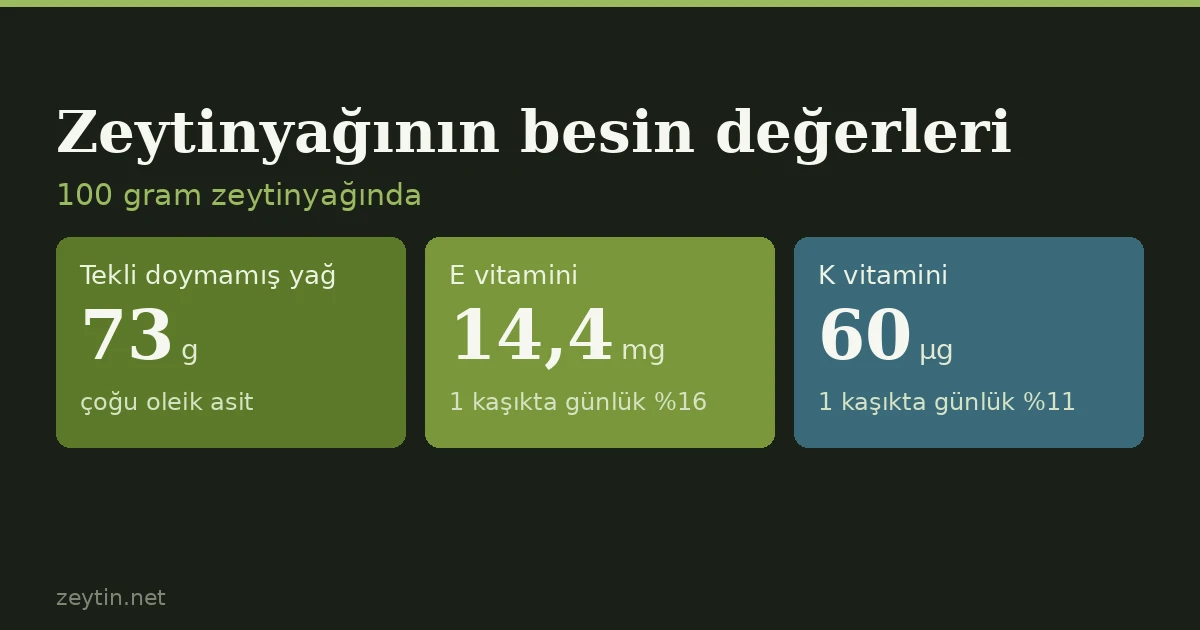
100 grams of olive oil contain 73 grams of monounsaturated fat, 14 mg of vitamin E and 60 micrograms of vitamin K, with no protein, carbohydrate or cholesterol. A per-tablespoon table, and why polyphenols do not appear on the label.
Article
The nutritional profile of olive oil: fatty acids, vitamins E and K, polyphenols
100 grams of olive oil contain 73 grams of monounsaturated fat, 14 mg of vitamin E and 60 micrograms of vitamin K, with no protein, carbohydrate or cholesterol. A per-tablespoon table, and why polyphenols do not appear on the label.
 Article
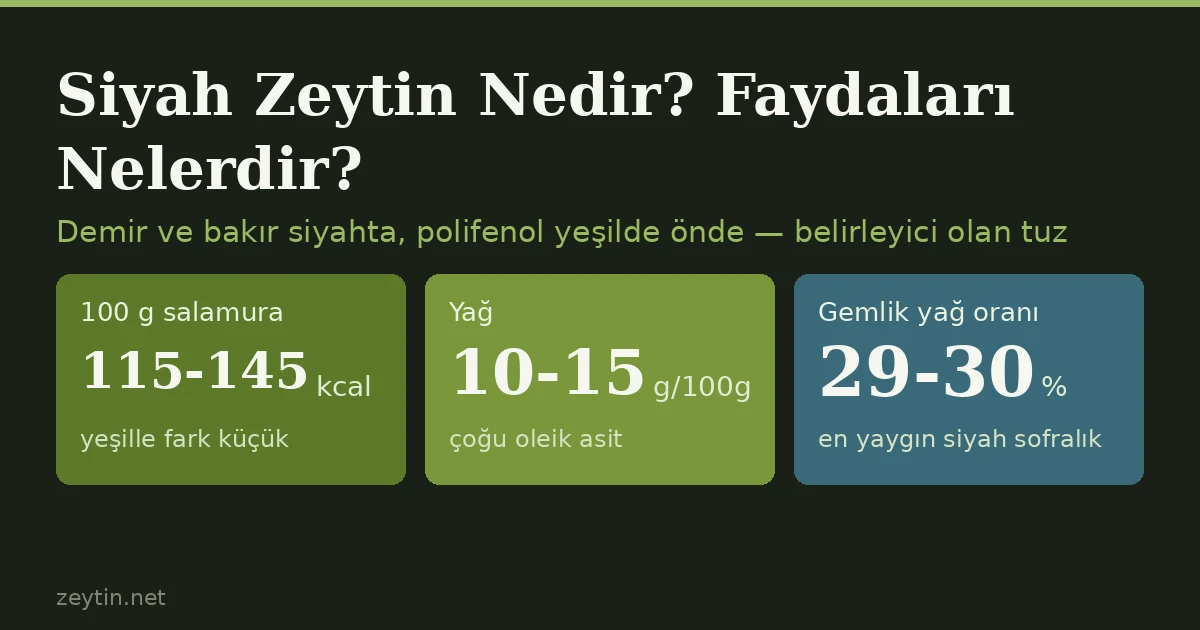
What Are Black Olives? What Are Their Benefits?
What black olives are, how they differ from green, and how many calories. Iron and copper, the polyphenol difference, and the two different black olives on the shelf.
Article
What Are Black Olives? What Are Their Benefits?
What black olives are, how they differ from green, and how many calories. Iron and copper, the polyphenol difference, and the two different black olives on the shelf.
 Article
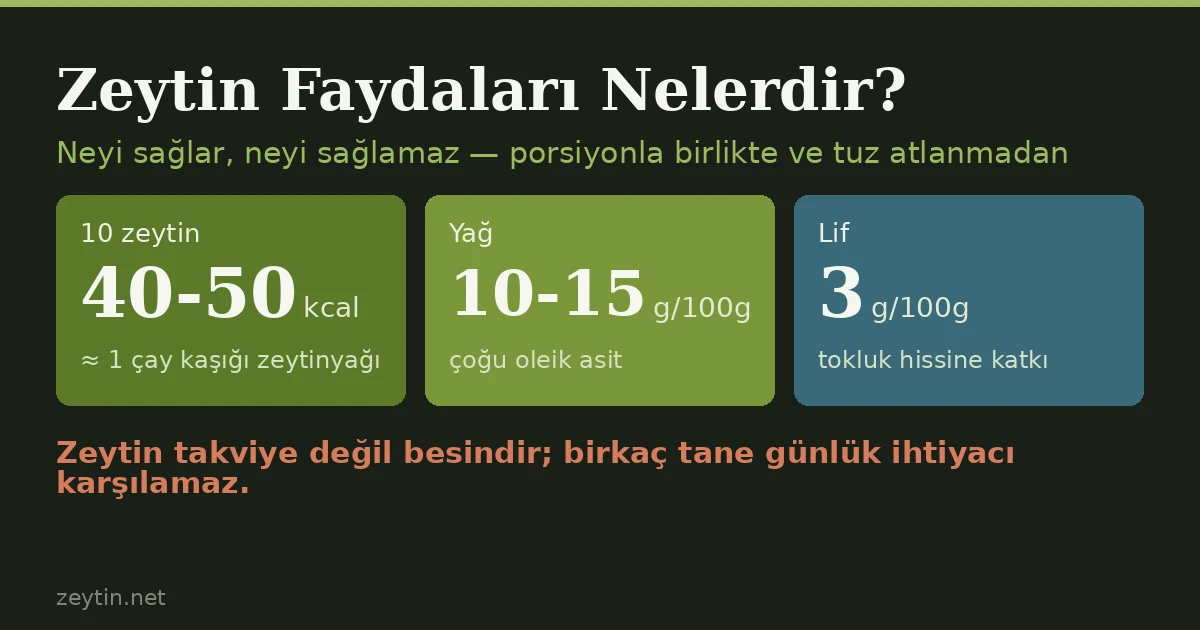
What Are the Benefits of Olives? What Do They Actually Provide?
What olives do and do not provide. Fat, fibre, vitamin E, iron and polyphenols — without overstatement, with portions, and without skipping salt.
Article
What Are the Benefits of Olives? What Do They Actually Provide?
What olives do and do not provide. Fat, fibre, vitamin E, iron and polyphenols — without overstatement, with portions, and without skipping salt.