How many calories are in olives? Nutrition and portion table
What is actually in an olive? Fat, fibre, iron, vitamin E — and the salt you should not ignore.
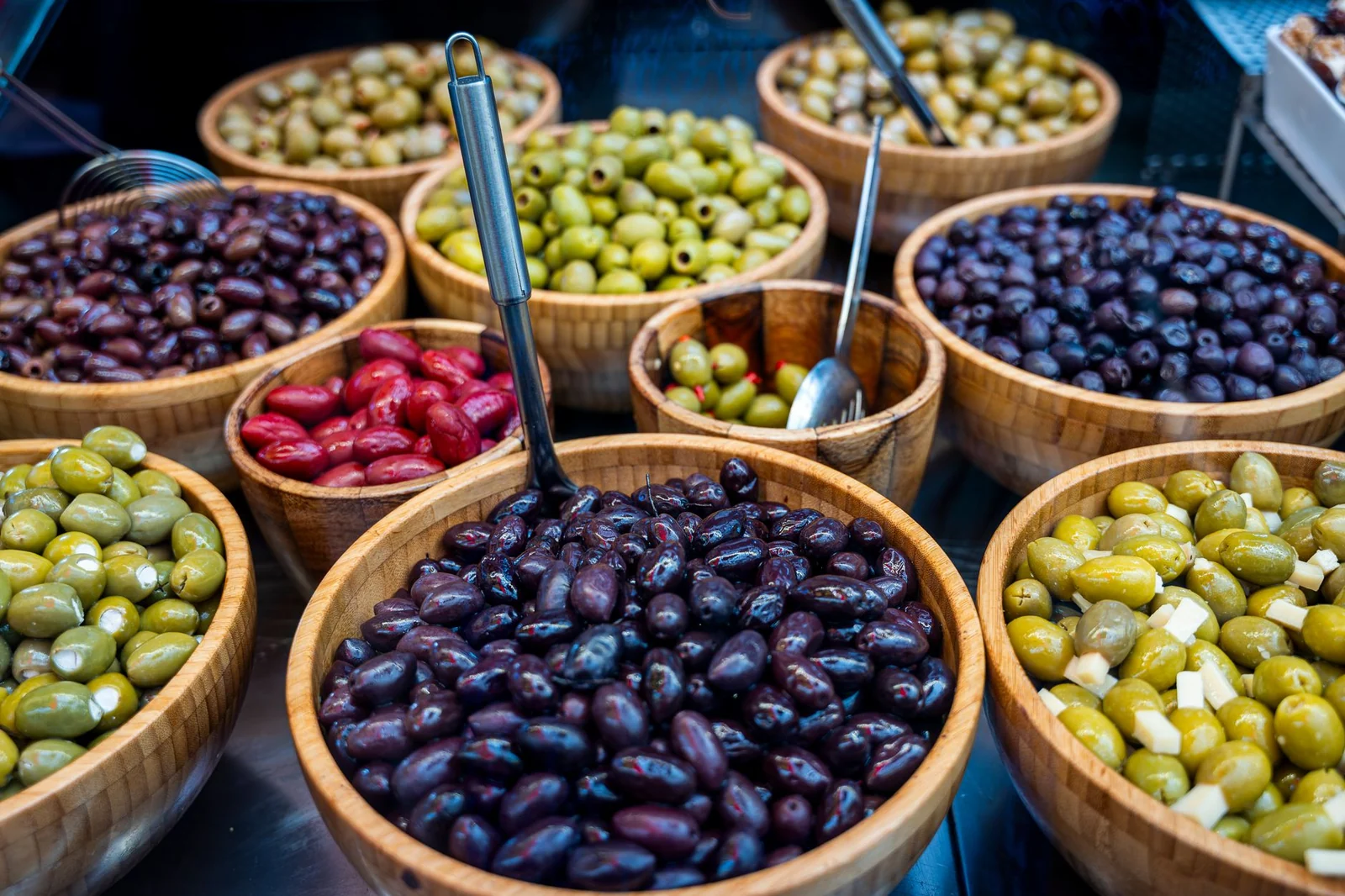
Although olives are treated as a fruit at the table, nutritionally they belong to the fatty foods group. Most of their energy comes from fat, their carbohydrate content is low, and brining makes them high in salt. When talking about portions, all three need to be considered together.
How many calories are in olives and olive oil?
| Portion | Calories |
|---|---|
| 1 medium olive | ~4-5 kcal |
| 5 olives | ~20-25 kcal * |
| 10 olives (breakfast plate) | ~40-50 kcal |
| 100 g brined olives | 115-145 kcal |
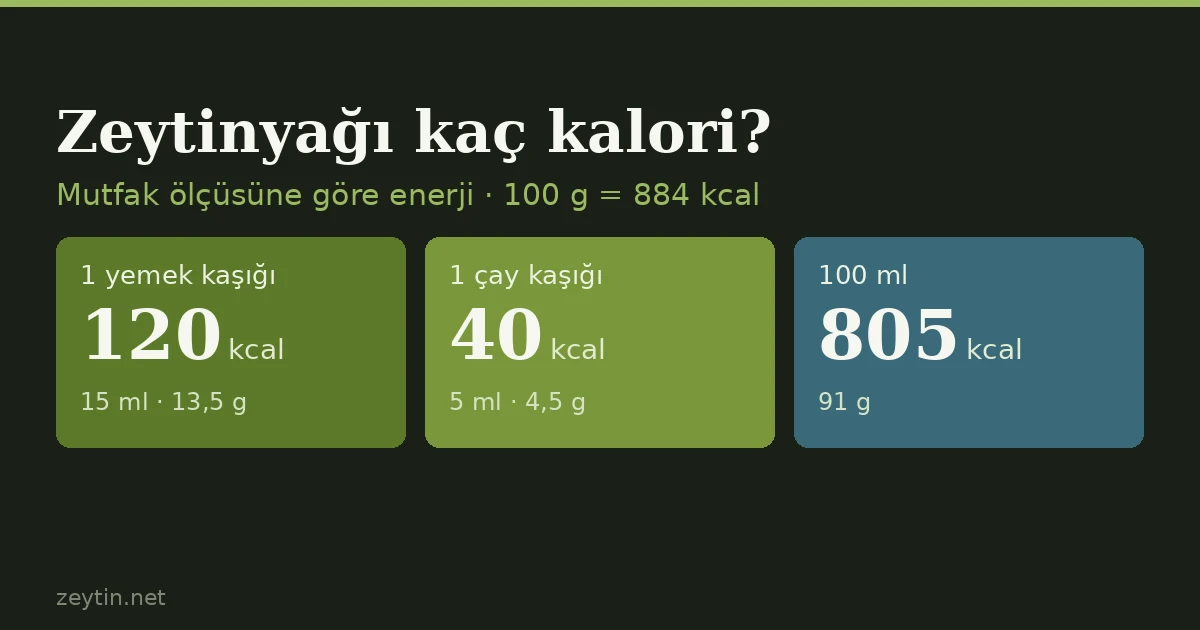
| 1 teaspoon olive oil | ~40 kcal * |
| 1 tablespoon olive oil | ~120 kcal |
\* Derived from the value of a single olive and a single tablespoon.
Nearly all of an olive's calories come from fat, so fruit size and brining method change the figure noticeably. Between a small Koroneiki and a large Karamürsel Su there is up to a tenfold difference per olive. The olive-by-olive calculation by variety is in how many calories in an olive.
Daily amounts of olive oil are a separate topic: how much olive oil a day. The oil's own fatty acid profile, vitamins and polyphenols are covered in the nutritional profile of olive oil.
Green and black olives per 100 grams
The values below are the averages given in food composition databases for brined green olives and ripe black olives. A single brand may differ noticeably.
| Nutrient (100 g) | Green olives | Black olives |
|---|---|---|
| Energy | 145 kcal | 115 kcal |
| Fat | 15.3 g | 10.7 g |
| Carbohydrate | 3.8 g | 6.3 g |
| Fibre | 3.3 g | 3.2 g |
| Protein | 1.0 g | 0.8 g |
| Sodium | ≈1,560 mg | ≈735 mg |
| Vitamin E | 3.8 mg | 1.7 mg |
| Iron | 0.5 mg | 3.3 mg ** |
\\ The black olive figure in databases usually refers to olives darkened by oxidation; because their colour is fixed with ferrous gluconate, their iron value comes out high. Black olives ripened naturally on the tree contain less iron.
What do they roughly contain?
Fat: 10-15 grams per 100 grams. Most of it, as in olive oil, is monounsaturated oleic acid.
Fibre: About 3 grams per 100 grams. For a fruit this is a good level and contributes to a feeling of fullness.
Vitamin E: Olives are a notable source of vitamin E (alpha-tocopherol). Vitamin E contributes to protecting cells from oxidative damage.
Iron and copper: Found especially in black olives. Absorption of plant-based iron increases when eaten with something containing vitamin C (tomato, pepper, lemon); the classic Turkish breakfast plate is no accident.
Polyphenols: Oleuropein, hydroxytyrosol and tyrosol. Oleuropein is why raw olives are bitter; brining and fermentation reduce that bitterness. How the bitterness is removed is explained in how are olives cured.
The salt question
Olives are not eaten in their natural state; they are left in brine to remove their bitterness. The result is sodium. Depending on type, brand and method, 100 grams of brined olives can contain between 700 and 1,600 mg of sodium.
To see what that means in daily life: the World Health Organization recommends that adults keep sodium below 2,000 mg a day. Ten medium green olives weighing about 40 grams carry more than 600 mg of sodium using the database average, close to a third of the daily limit. The same amount of black olives contains roughly half as much sodium.
For someone monitoring blood pressure or on a salt-restricted diet, that is not an amount to ignore. Practical steps:
- Soak the olives in water for a few hours and rinse before eating
- Choose low-salt products
- Read the sodium or salt value on the label
- Count olives together with other salty breakfast foods such as cheese and cured meats
Black or green?
The basic difference is ripeness: green olives are harvested early, black olives at full ripeness. As the table shows, green olives look slightly higher in fat and sodium and black olives in carbohydrate, while polyphenols tend to be higher in green olives. The details are in the difference between black and green olives.
A warning: some cheap black olives were not ripened on the tree but picked green and darkened by oxidation, with the colour fixed using ferrous gluconate. The method is legal but must be stated on the label. The difference between the two routes is explained in how black table olives are made.
Do olives make you gain weight?
Not on their own; quantity and the rest of the plate decide. The energy density of olives is roughly a third of that of nuts such as hazelnuts or walnuts. While 100 grams of walnuts carry more than 650 calories, the same weight of olives has 115-145. On the other hand, olives are often eaten on a breakfast plate with cheese, bread and oil, and hidden calories usually come not from the olives but from what sits beside them. Thanks to their fibre and strong flavour, a small portion can be satisfying. For someone watching their weight, 5-10 olives fit easily into a day's energy budget.
Carbohydrate and blood sugar
100 grams of olives contain around 4-6 grams of carbohydrate, more than half of which is fibre. So olives do not raise blood sugar quickly and often feature in low-carbohydrate eating patterns. For someone with diabetes, the thing to watch in olives is not carbohydrate but salt, because diabetes and high blood pressure often occur together. Even so, a diet plan is individual and should be made with a dietitian.
Stuffed and marinated olives
Olives stuffed with pepper, almond, cheese or garlic, and olives sold in oily, spiced marinades, are counted differently from plain olives. Calories rise noticeably in cheese-stuffed olives or olives kept in olive oil, and salt also goes up in some marinated products. For these products, the nutrition panel on the back of the pack is a more reliable source than the table above.
Which olive is healthiest?
There is no single answer, but three criteria help: olives that are low in salt, free of additives (no darkening agents or preservatives) and produced by natural methods. We compared varieties and production methods in which olive is healthiest.
How many a day?
There is no fixed number. Given their fat and salt content, 5-10 olives a day is widely considered a reasonable range. How that portion changes from person to person is covered in how many olives should you eat a day. A lasting dietary decision needs the advice of a doctor or dietitian; the information on this page is general nutrition information, not medical advice.
One rating per visitor; you can change yours at any time. Ratings are real reader votes — no seeded or default scores.
Related
 Article
When can babies have olive oil?
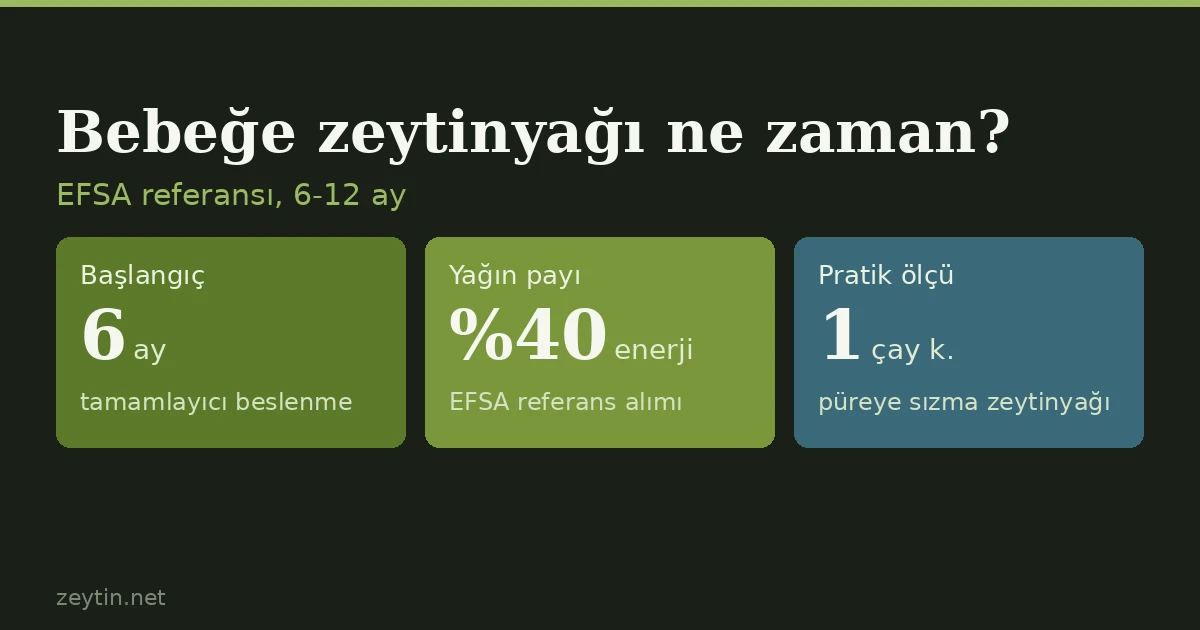
Complementary feeding starts at the end of the sixth month, and olive oil has a place at that table — because a substantial share of an infant's energy has to come from fat. EFSA's reference intake for 6-12 months is 40% of energy. But two separate questions get mixed up: adding oil to a purée is not the same as giving olive oil for constipation, and a table olive is not olive oil as far as a baby is concerned.
Article
When can babies have olive oil?
Complementary feeding starts at the end of the sixth month, and olive oil has a place at that table — because a substantial share of an infant's energy has to come from fat. EFSA's reference intake for 6-12 months is 40% of energy. But two separate questions get mixed up: adding oil to a purée is not the same as giving olive oil for constipation, and a table olive is not olive oil as far as a baby is concerned.
 Article
Does olive oil raise cholesterol? Cholesterol content, LDL and the "clears arteries" claim
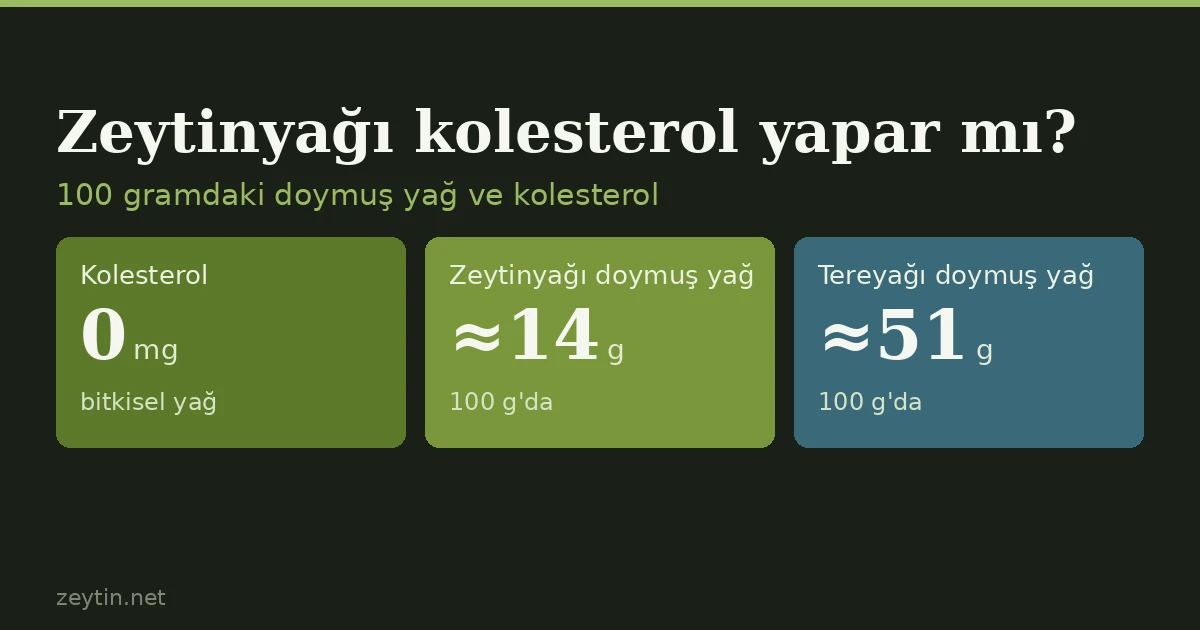
Olive oil contains no cholesterol, and when it replaces saturated fat it helps maintain normal blood cholesterol levels. But every spoonful added to a diet also brings calories, and there is no evidence that olive oil clears arteries. A saturated fat table and the authorised health claims.
Article
Does olive oil raise cholesterol? Cholesterol content, LDL and the "clears arteries" claim
Olive oil contains no cholesterol, and when it replaces saturated fat it helps maintain normal blood cholesterol levels. But every spoonful added to a diet also brings calories, and there is no evidence that olive oil clears arteries. A saturated fat table and the authorised health claims.
 Article
Olive Oil and Heart Health
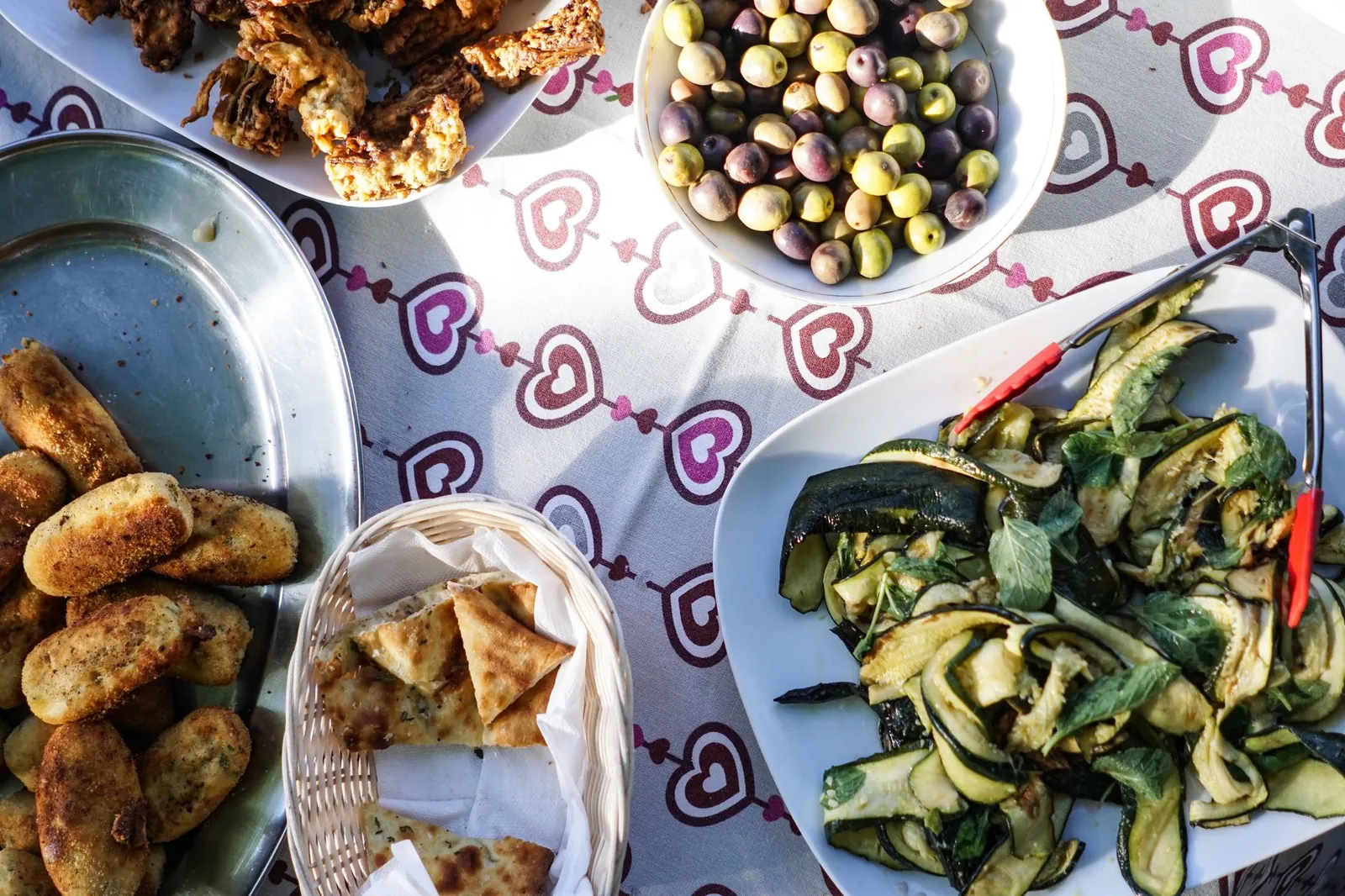
Why is Mediterranean cooking so often linked with cardiovascular health? Unsaturated fats, polyphenols, and replacing saturated fat.
Article
Olive Oil and Heart Health
Why is Mediterranean cooking so often linked with cardiovascular health? Unsaturated fats, polyphenols, and replacing saturated fat.
 Article
How many calories are in olive oil? Tablespoon, teaspoon and 100 ml
One tablespoon of olive oil has about 120 calories and one teaspoon about 40. Extra virgin, refined blends and sunflower oil carry almost the same energy. A measure table, plus how to count it in salads and cooked dishes.
Article
How many calories are in olive oil? Tablespoon, teaspoon and 100 ml
One tablespoon of olive oil has about 120 calories and one teaspoon about 40. Extra virgin, refined blends and sunflower oil carry almost the same energy. A measure table, plus how to count it in salads and cooked dishes.