Does olive oil boost immunity? What a Mediterranean diet trial, a gut study and one pilot COVID-19 trial show
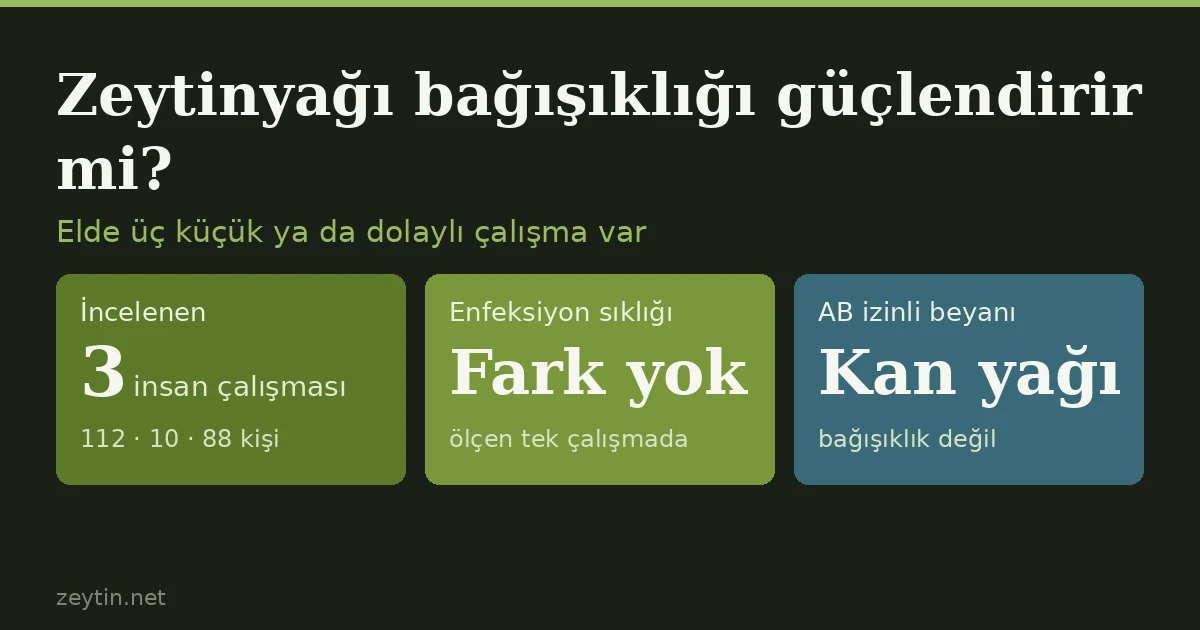
We found no solid human trial showing that olive oil strengthens immunity or protects against infection. What exists is a 112-person Mediterranean diet trial, a 10-person gut study and a single 88-person pilot COVID-19 trial; none shows a lower infection rate.

Short answer: We could not find a solid, large human trial that lets anyone say "olive oil strengthens immunity" or protects against an infection. What we have is three things: a 112-person Mediterranean diet trial that lowered cell and blood markers linked to vascular inflammation in high-risk older adults, a small 10-person study of gut immunity, and a single pilot COVID-19 trial with 88 adults. None of them says "the rate of catching infections fell".
This article looks at what the three studies did, what they showed and what they could not show.
In numbers
| Study | Who, how long | What was done | Finding |
|---|---|---|---|
| Mena et al. 2009, Am J Clin Nutr | 112 older adults (average age 68) with diabetes or at least 3 cardiovascular risk factors, 3 months | Mediterranean diet with virgin olive oil, Mediterranean diet with nuts, or a low-fat diet | In both Mediterranean groups monocyte CD49d and CD40 and serum IL-6 and sICAM-1 fell; sVCAM-1 and CRP fell only in the olive oil group |
| Martín-Peláez et al. 2016, Nutrients | 10 people with high cholesterol, crossover, 3 weeks | 25 mL a day of three virgin oils with different phenol content | With the highest-phenol oil the share of IgA-coated bacteria tended to rise; plasma CRP rose |
| Rodríguez-Argente et al. 2023, Immun Inflamm Dis | 88 adults (84 completed), 3 months | High-phenol olive oil, 2 mL twice a day to the mouth and throat lining, or no treatment | No difference in COVID-19 incidence; median time to symptom resolution 3 days versus 7; no difference in severity |
Can "strengthening immunity" be measured?
The phrase does not correspond to one measurement. Trials usually look at one of two things: a marker in blood or cells (inflammation molecules, antibodies, cell surface signals) or a concrete outcome (how many people fell ill, how many days symptoms lasted). A marker can change while the rate of disease does not, so reading the findings below as "strengthens" would be misleading.
The Mediterranean diet trial: vascular inflammation markers
Mena and colleagues randomly split 112 older adults with diabetes or at least three cardiovascular risk factors into three groups: a Mediterranean diet supplemented with virgin olive oil, a Mediterranean diet supplemented with nuts, and a low-fat diet. A total of 106 people completed the study. After three months, in both Mediterranean groups CD49d, an adhesion molecule important for the homing of white cells, and the pro-inflammatory CD40 fell on the surface of monocytes; serum IL-6 and sICAM-1 fell too. sVCAM-1 and CRP fell only in the Mediterranean group with olive oil. On the low-fat diet, IL-6, sVCAM-1 and sICAM-1 rose.
This should be read as "improvement in inflammation markers". The study's own aim was markers related to atherosclerosis; infection rates and the strength of the immune response were not examined. What was compared was the whole diet, not olive oil, and the participants were older adults at high cardiovascular risk; there is no basis for carrying the results over to a young, healthy person.
The gut trial: CRP rose rather than fell
Martín-Peláez and colleagues gave 10 volunteers with high cholesterol three virgin oils with different phenol content, 25 mL a day for three weeks each. The oil with 500 mg of phenols per kilogram tended to raise the share of IgA-coated bacteria and raised plasma CRP; the oil with 80 mg/kg and the olive-and-thyme mixture showed no significant effect. The authors take this as a sign that very high phenol doses may stimulate the immune system and say more research is needed.
Two notes: the sample is 10 people, and the rise in CRP runs against the expectation "olive oil reduces inflammation". This is the result of a single study and cannot be generalised, but it shows the field is not a one-directional story. We explain why phenol content matters in why high-polyphenol olive oil costs more and oleocanthal and polyphenols.
The single pilot COVID-19 trial
In the study in Talavera de la Reina, Spain, 88 adults were randomly split in two; 84 completed the three-month study. One group had 2 mL of high-phenol olive oil applied twice a day to the lining of the mouth and throat, the other had no treatment. There was no difference in COVID-19 incidence between the groups. The time to resolution of symptoms was a median of 3 days in the olive oil group and 7 days in the untreated group; but the study found no difference in severity, even though duration is directly related to severity.
The limits are plain: a pilot trial, one centre, 84 people and a comparison group that received nothing. What was applied was also not the olive oil we cook with but a special high-phenol oil in a very small quantity, applied to the mucosa. The result cannot be read as "putting olive oil in your food shortens COVID-19". It should also be remembered that a single pilot study proves nothing without a large confirmatory trial.
Laboratory and computer studies
There is a great deal of work on olive oil's bioactive components (oleuropein, oleocanthal, hydroxytyrosol and others). A 2022 review in Current Pharmaceutical Biotechnology reports that in silico (computer) studies have indicated that some plant compounds in olive oil are potential candidates against SARS-CoV-2. A computer model gives a lead, not evidence of an effect in people.
What does the European Union say?
The EU's authorised health claim for olive oil polyphenols is not about immunity but about protecting blood lipids from oxidative stress. The claim may be used for oils containing at least 5 mg of hydroxytyrosol and its derivatives (such as the oleuropein complex and tyrosol) per 20 grams of olive oil; it is listed in EU Regulation 432/2012, and sources describe it as the only authorised claim for olive oil polyphenols. A phrase such as "strengthens immunity" on a label or in an advertisement therefore has no counterpart in this claim.
What can be done in practice?
There is no evidence for using olive oil as an immunity "cure". Using olive oil within a Mediterranean-style diet has stronger grounds for heart and vascular health, which we cover in olive oil and heart health. For amounts see how much olive oil a day, and for possible downsides are there harms of olive oil; a tablespoon is about 119 kilocalories. Vaccination, infections and frequent illness are questions for a doctor; an oil is no substitute.
Summary
The three human studies we have on olive oil and immunity are all small or indirect: one measured vascular inflammation markers, one gut immunity, and one studied COVID-19 by applying a special oil to the mucosa. None shows that the olive oil we eat protects against infections; in one, the inflammation marker CRP rose. The most honest summary: the claim "strengthens immunity" has not been proven today.
t; This article is for general information; consult your doctor for diagnosis and treatment.
One rating per visitor; you can change yours at any time. Ratings are real reader votes — no seeded or default scores.
Related
 Article
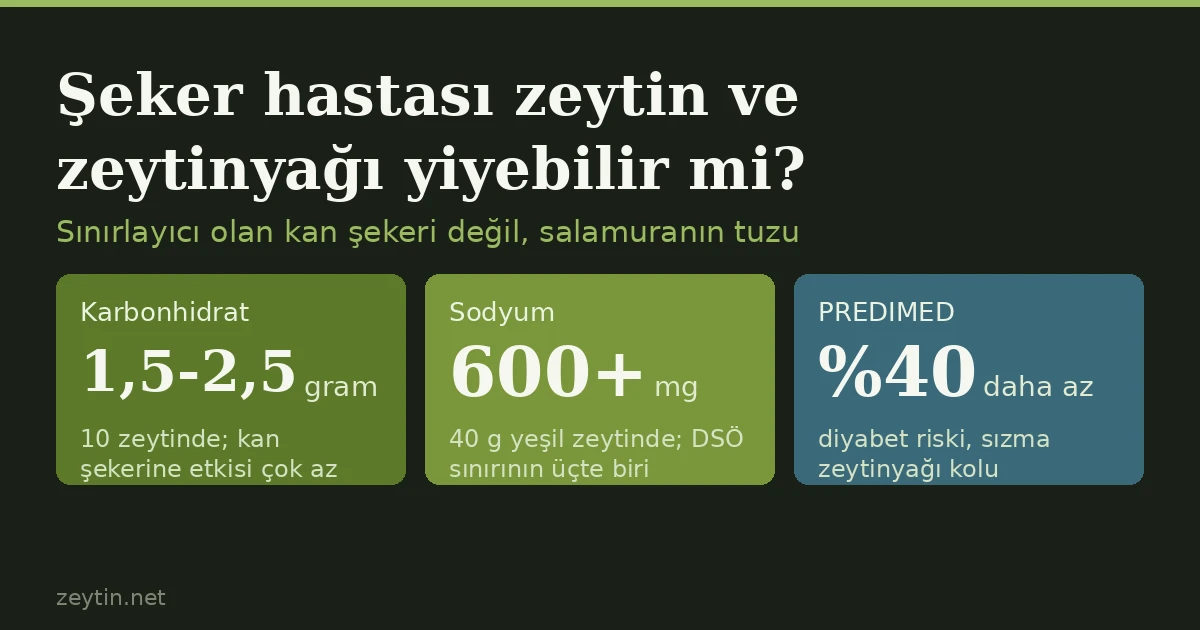
Can people with diabetes eat olives and olive oil?
It looks like one question but contains two: table olives and olive oil. Neither is off limits in type 2 diabetes; olives carry too little carbohydrate to measure a glycaemic index for, and oil carries none. The real limiting factor is not blood sugar but the salt in the brine.
 Article
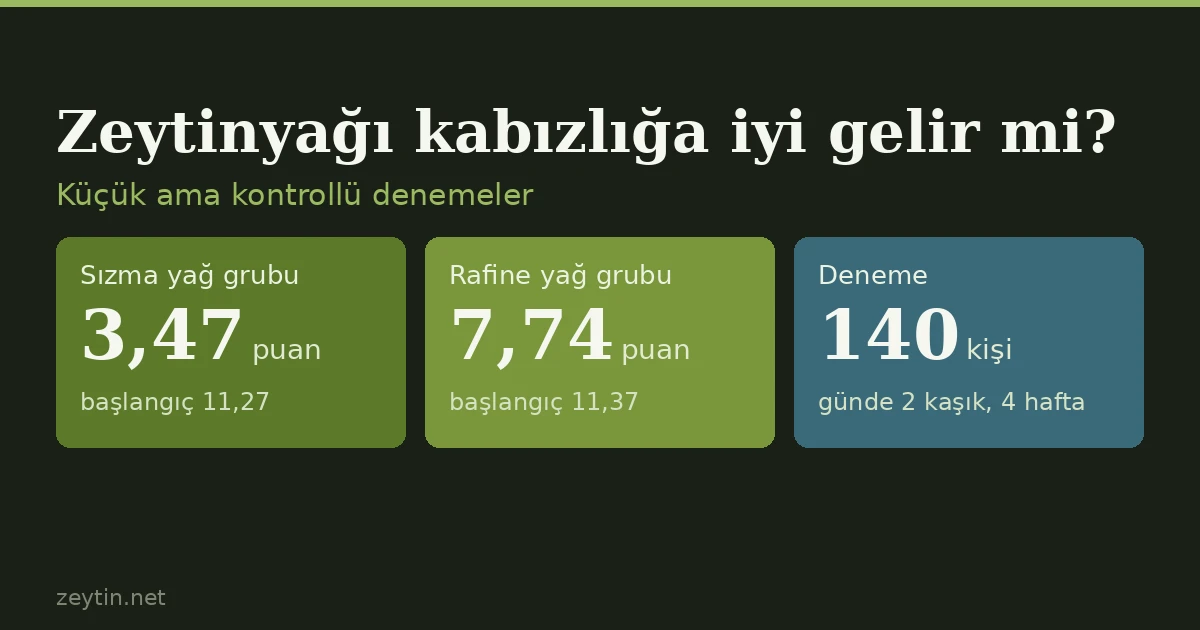
Does olive oil help with constipation? What the small controlled trials show
In a 140-person double-blind trial, two tablespoons a day of extra-virgin olive oil cut the constipation score from 11.27 to 3.47 in four weeks. What four trials did, what they could not show, and when to see a doctor.
 Article
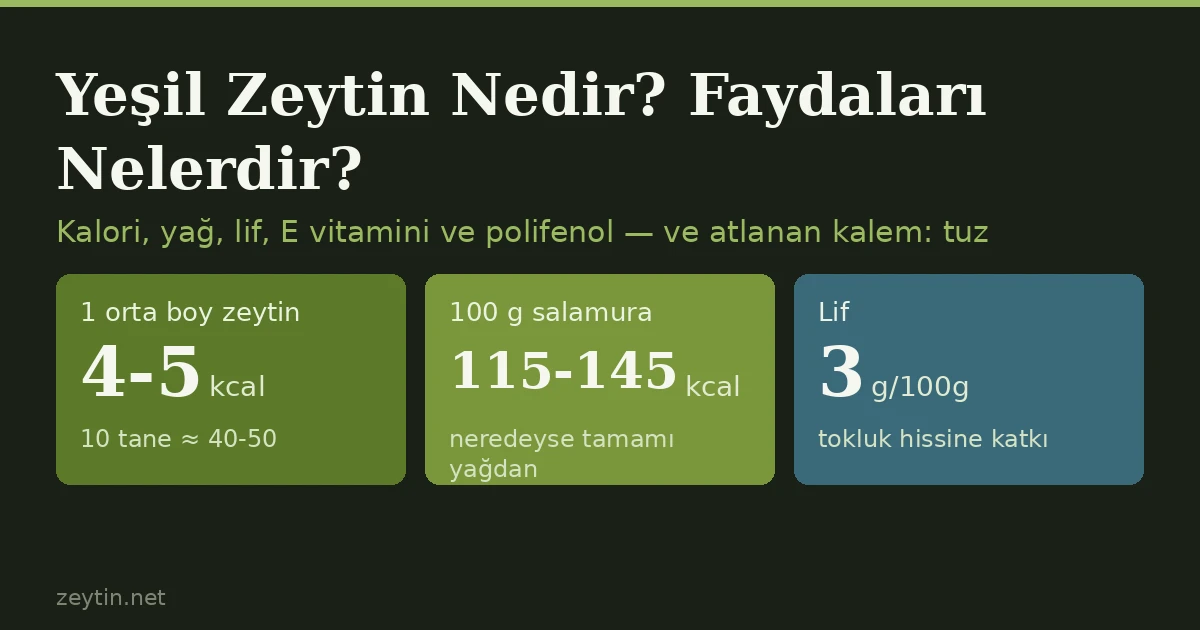
What Are Green Olives? What Are Their Benefits?
What green olives are, what they contain and how many calories. Fat, fibre, vitamin E and polyphenols — and the salt that portion talk must not skip.
 Article
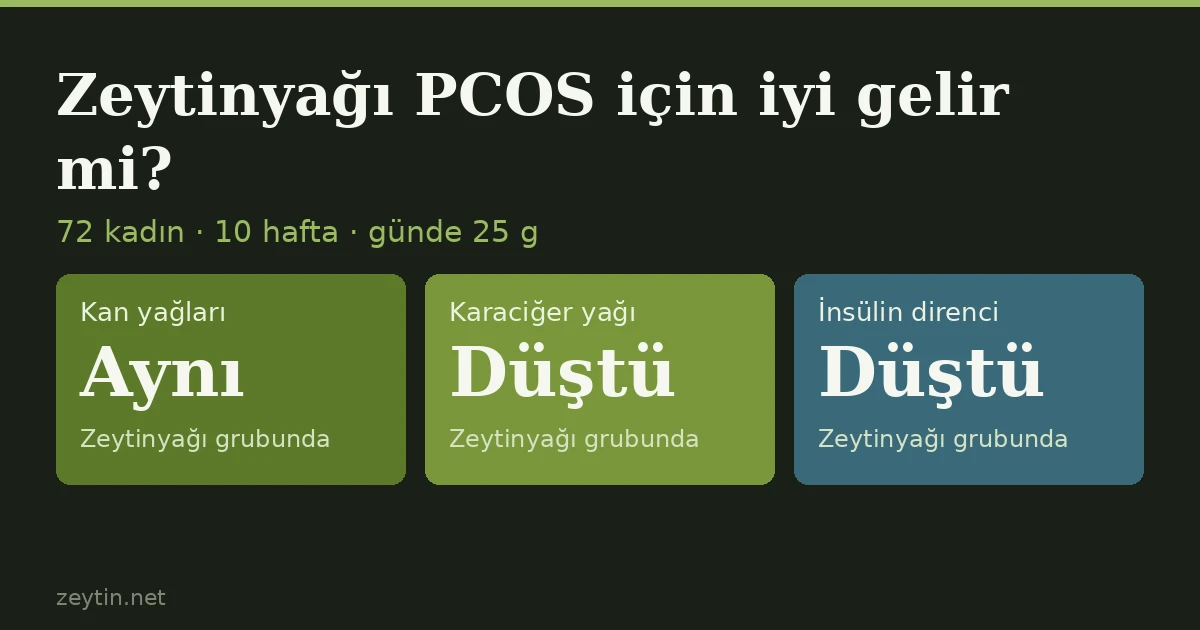
Is olive oil good for PCOS? What a 10-week trial of 72 women showed
In a 10-week randomised trial of 72 women with polycystic ovary syndrome given 25 grams a day of olive, canola or sunflower oil, olive oil did not significantly change blood lipids but lowered the grade of fatty liver and insulin resistance. Canola oil did better on blood lipids. The article explains the limits of this single trial and what it means.