🌱 Cultivation
Olive Cultivation: Establishing, Pruning and Irrigating a Grove
How is an olive grove established, when are trees pruned, and how are irrigation and fertilisation planned? The practical steps of olive growing, from nursery tree to harvest.
The olive tolerates neglect, which is why mistakes in cultivation do not show up immediately — they return a few seasons later as lost yield. This section covers the field side of production, from decisions about establishing a grove to pruning, irrigation and fertilisation.
 Article
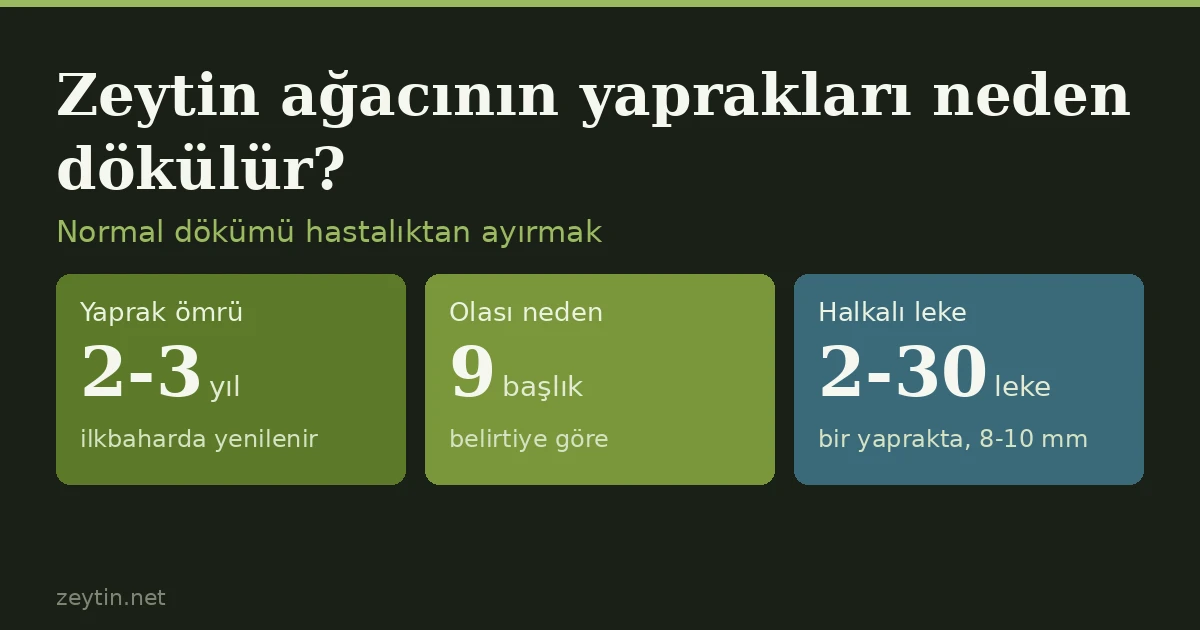
Why is my olive tree dropping its leaves?
An olive leaf lives two to three years and falls in spring along with the new growth; that is normal. The worrying drop is the one whose season, location or amount does not fit. Rings on the upper surface point to peacock spot, grey patches underneath to Cercospora leaf spot, dieback on one branch to Verticillium, one-sided yellowing to root rot. Water, nutrient deficiencies, scale insects, frost and lack of light also make olives shed leaves. How to tell them apart, and what to do.
 Article
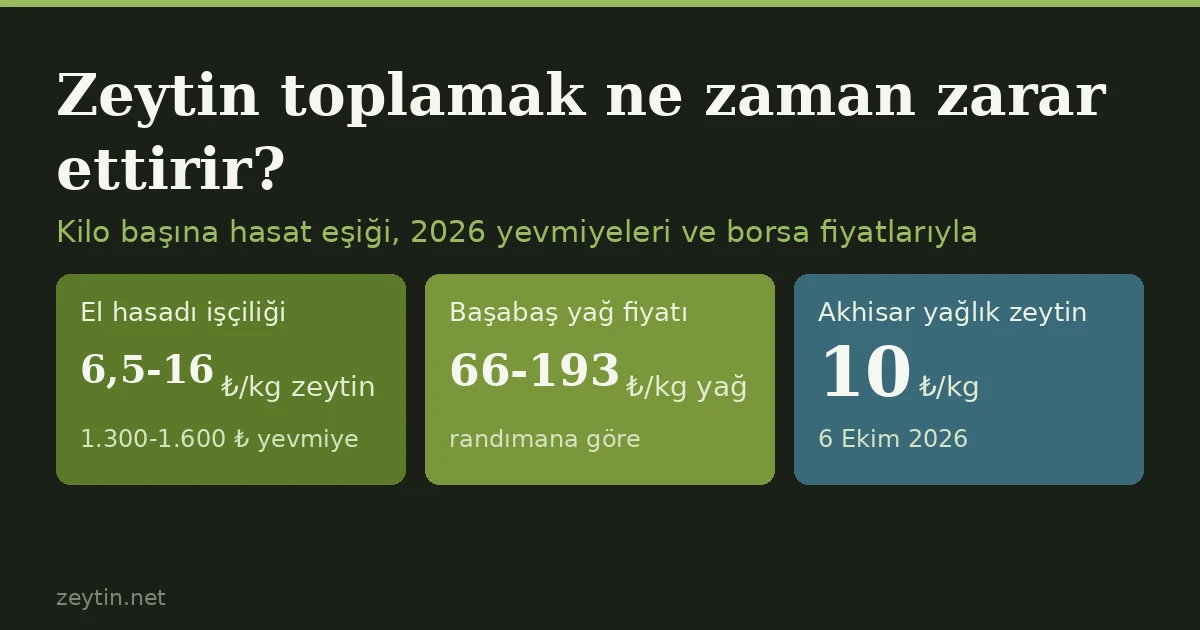
When does picking olives lose money? The per-kilo harvest threshold
Hand-picking labour now costs 6.5-16 TL per kilo of olives. That band is the threshold for growers who sell the fruit; for those who press, break-even oil is 66-193 TL/kg. Built from 2026 wages, milling fees and exchange registrations, with the cost of leaving fruit on the tree.
 Article
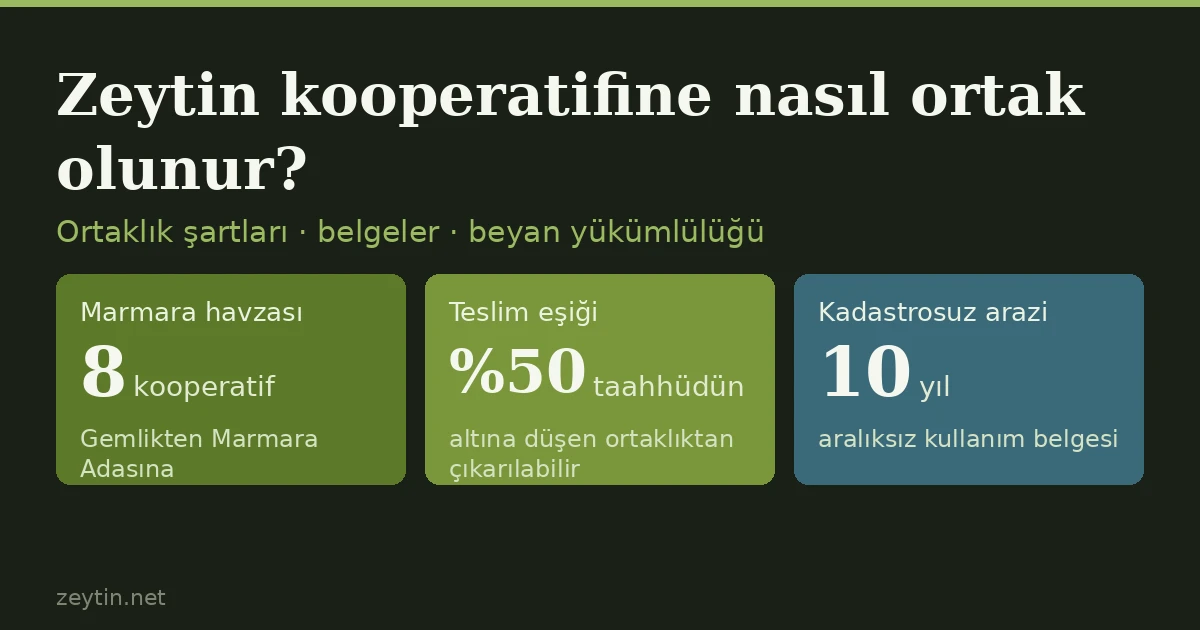
How do you become a member of an olive cooperative?
Joining an agricultural sales cooperative is one of the most asked questions of the harvest season. The conditions are written into the bylaws: you must be a grower, you must not trade in the same products, and you cannot belong to another cooperative in the same region. The real obligation, though, is the crop declaration — because that document is a delivery commitment.
 Article
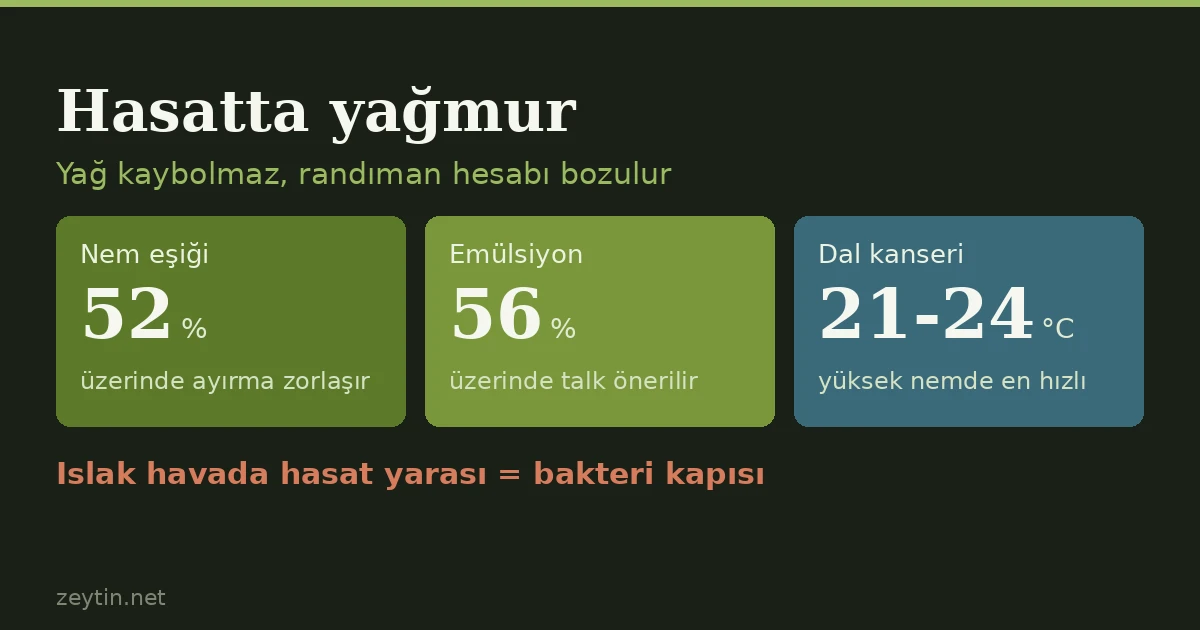
What happens if it rains during the olive harvest? Wait, or pick?
Rain does not destroy the oil; it distorts the yield figure, because fruit oil content is measured on a fresh-weight basis. The real damage shows up as emulsion at the mill, as the "musty-humid-earthy" sensory defect, and as olive knot bacteria entering harvest wounds in wet weather.
 Article
Does a harvesting machine damage the olive tree?
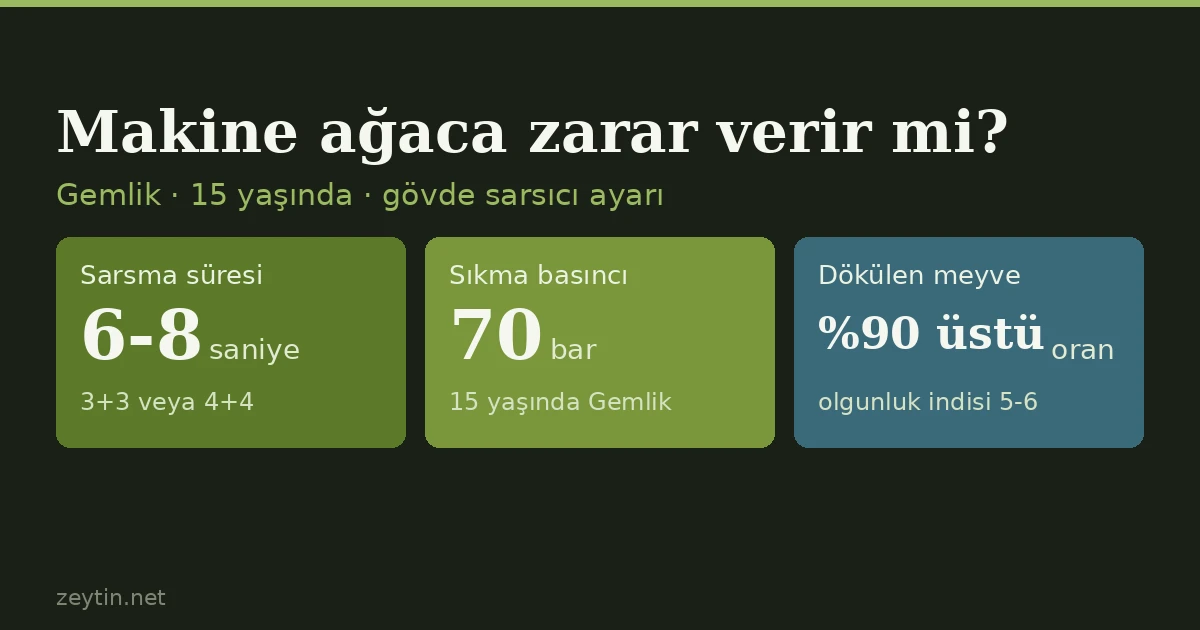
Trunk shakers, branch shakers and hand picking: the damage comes not from the machine itself but from its settings and duration. The figures the Turkish agriculture ministry's research institute gives for the Gemlik variety — 70 bar clamping pressure, 20 Hz, a 6-8 second shake — and what falls off the tree once that window is exceeded. Why grove spacing, slope limits and operator training are technical requirements.
 Article
What is an olive harvest net, and how do you choose one?
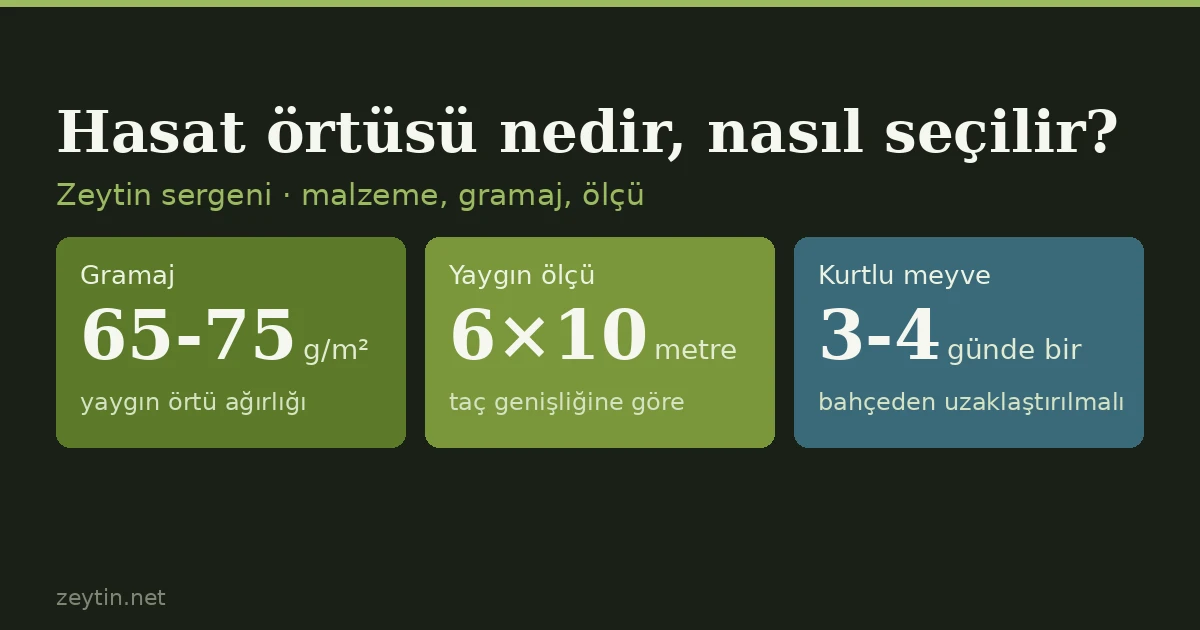
A net spread under the tree does two jobs at once: it keeps the fruit off the soil and it speeds up collection. Olives that touch the ground give higher-acidity oil, and fruit left on the ground feeds the next generation of olive fruit fly. Here is how to choose a net — material, weight, size — and how to lay it.
 Article
Should harvested olives be carried in crates or in sacks?
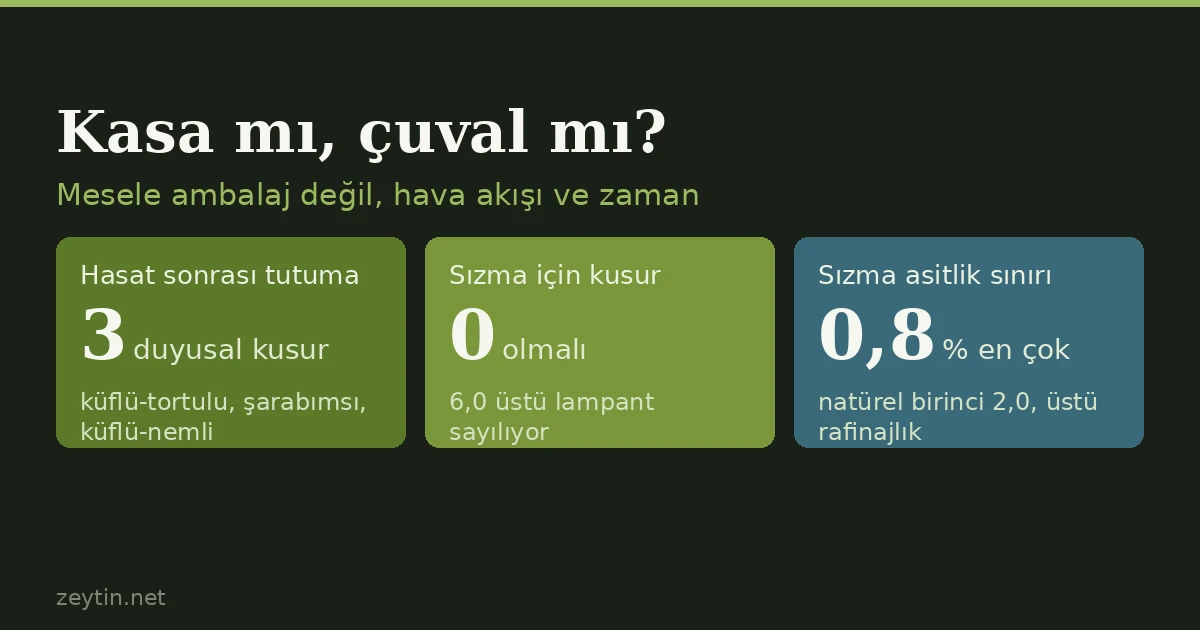
The cheapest decision of the harvest season is also one of the decisions that sets the grade of the oil. Three separate defects in the International Olive Council's vocabulary are defined directly by how the fruit was held after picking — and all three describe what a sack does.
 Article
How many kilos of olives does one tree yield?
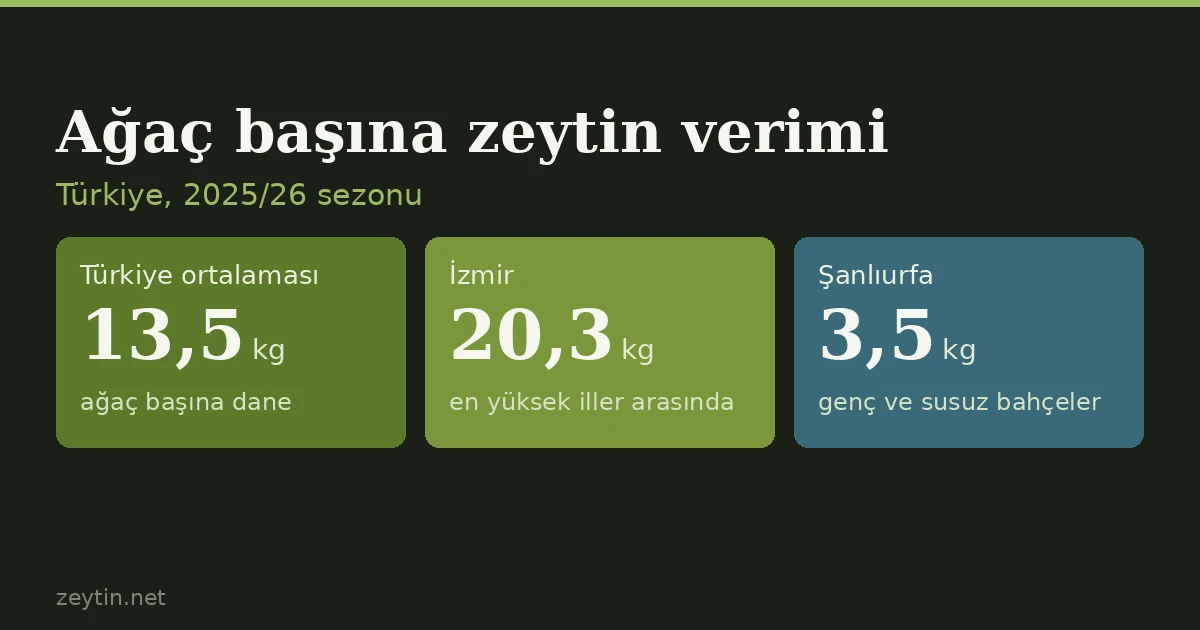
Türkiye averaged 13.5 kilos per tree in the 2025/26 season. But the average describes nobody's grove: 20.3 kilos in İzmir, 3.5 kilos in Şanlıurfa. The same grove does not repeat its own number either — across six major provinces, per-tree yield went from 22.6 kilos one season to 8 kilos the next. Here is what the figure actually depends on, and how to place your own tree against it.
 Article
What does crop insurance cover for olives, and what does it cost?
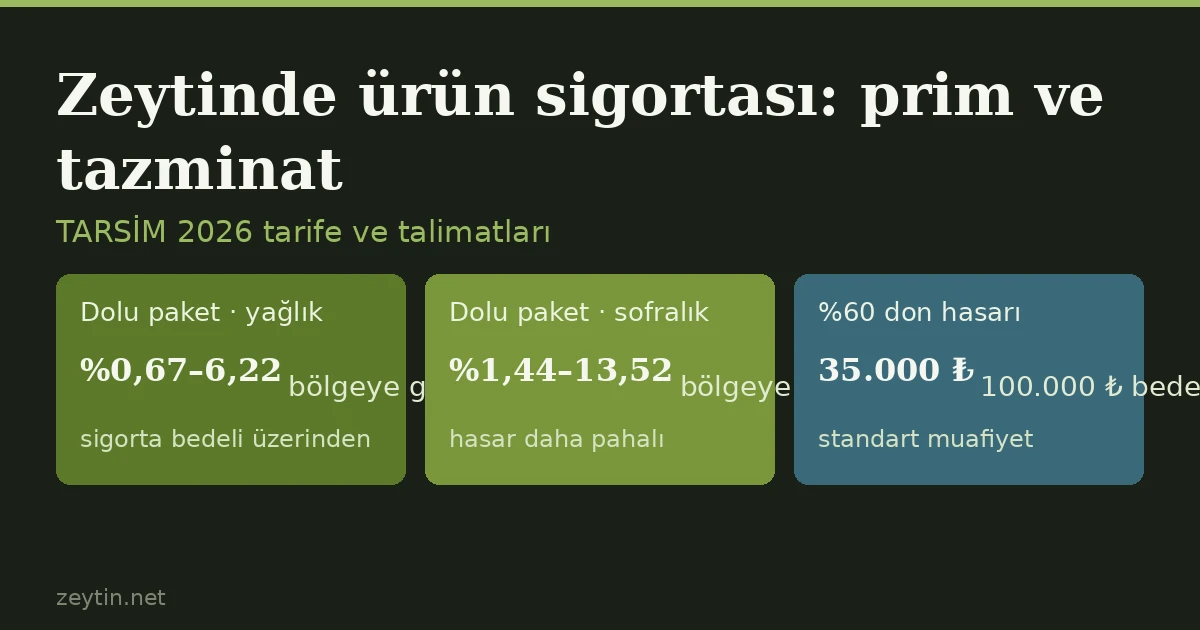
Olives can be insured twice: for the crop and for the tree. Under TARSİM's 2026 tariff the hail package runs from 0.67% to 6.22% for oil olives and 1.44% to 13.52% for table olives, while frost cover sits on its own tariff and is optional. What a claim pays is set by the deductible and coinsurance: 60% frost damage on the standard option pays 35% of the sum insured.
 Article
Can an olive tree be uprooted and moved?
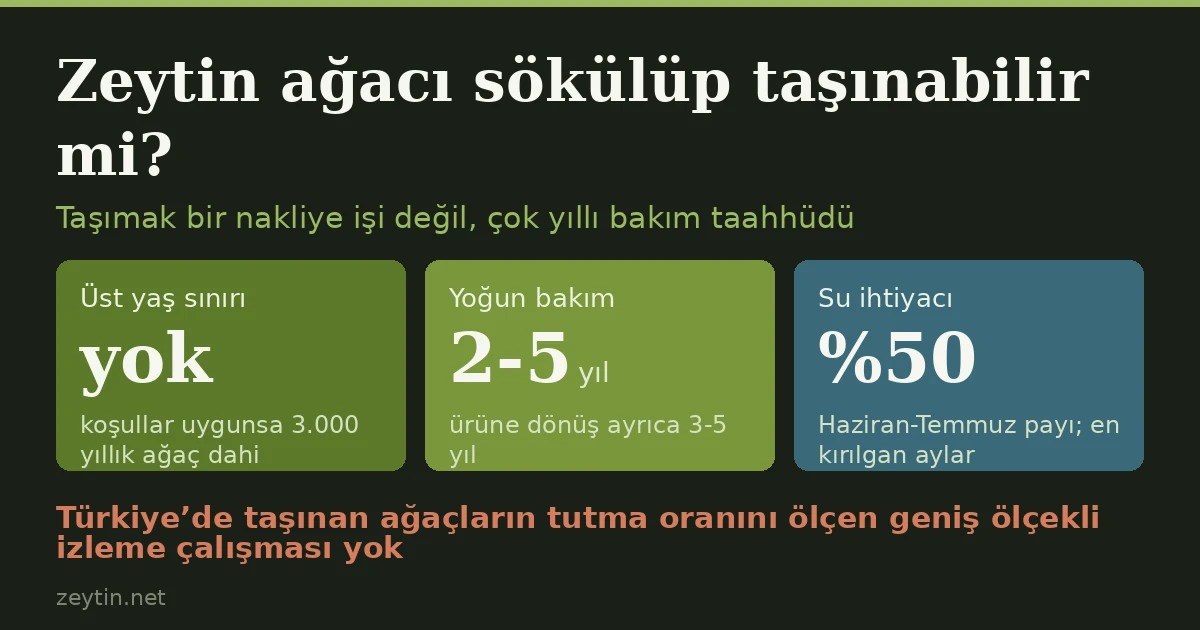
The technical answer is yes: olives can be moved at any age, with no upper limit. But "can be moved" and "is the same tree afterwards" are different questions. Winter timing, root-to-canopy balance, two to five years of care and three to five years without fruit are the real cost — and no large-scale Turkish study measures survival rates.
 Article
When does the olive harvest begin?
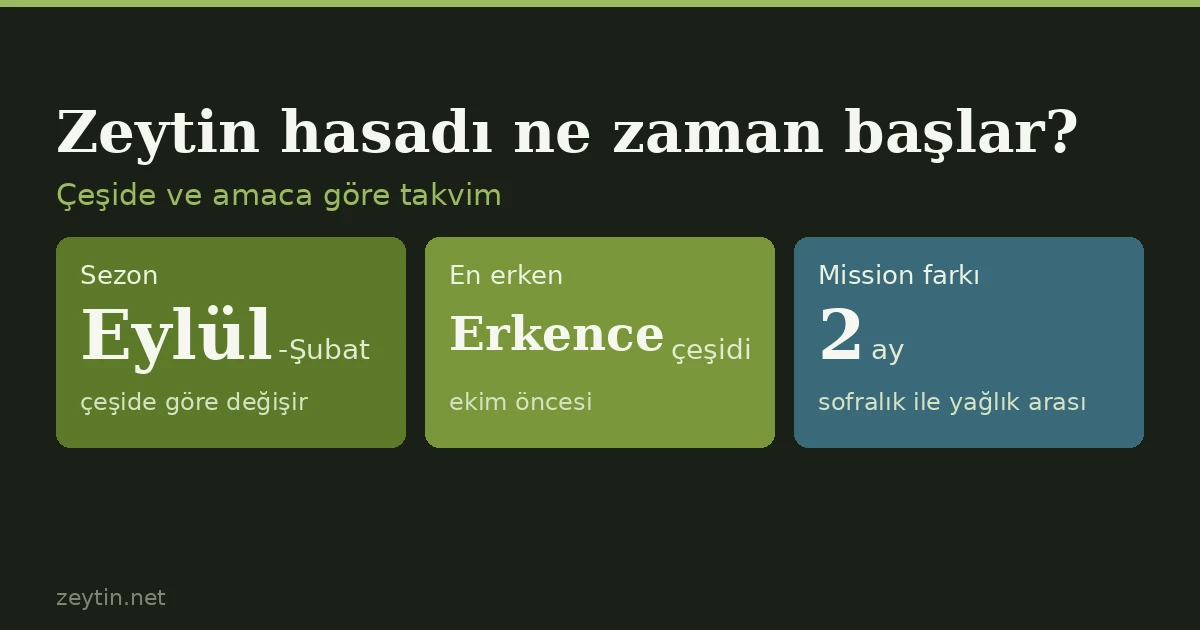
The harvest starts in late September and runs into February. Erkence is earliest, Memecik hangs into mid-December, and Mission's table and oil harvests are two months apart.
 Article
Do olives grow in cold regions?
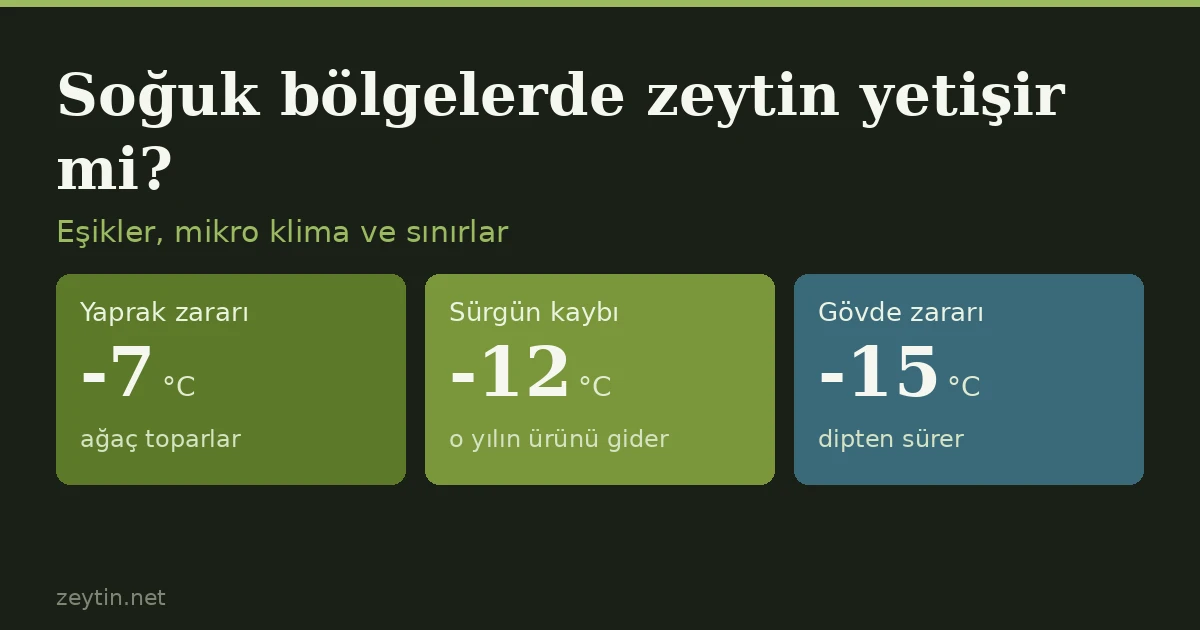
Olives survive -7 °C, lose shoots at -12 °C and the trunk below -15 °C. Yet Artvin delivers Turkey's highest yield per tree: microclimate beats the map.
 Article
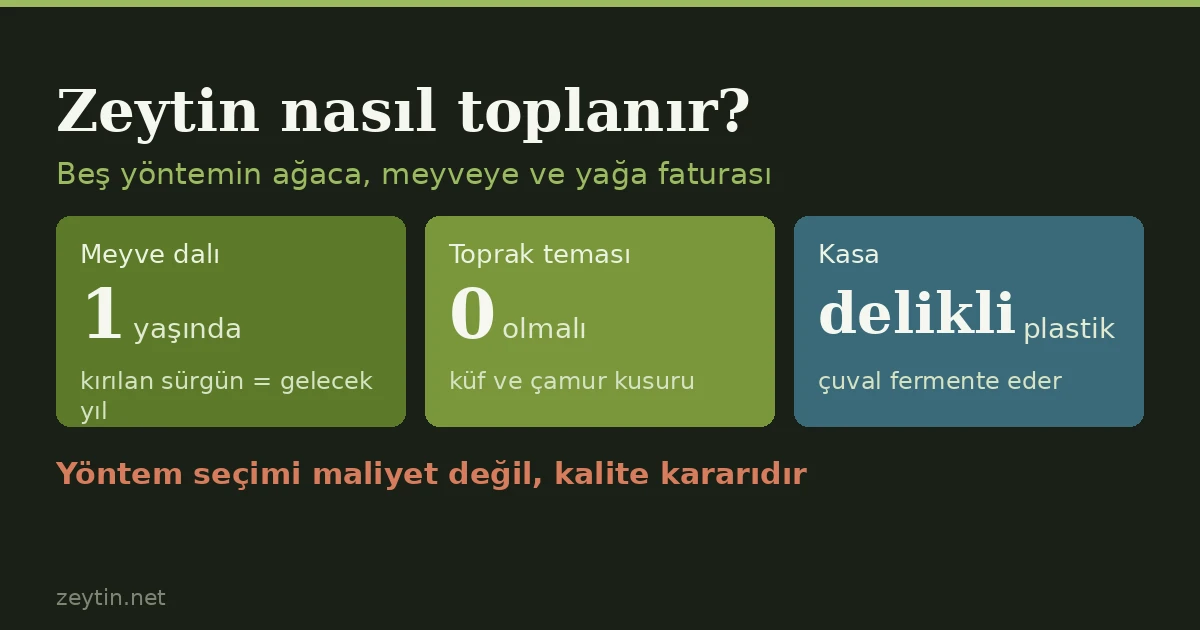
How are olives harvested? What five picking methods cost the tree and the oil
Hand picking, poles, combs, trunk shakers and straddle harvesters each charge a different bill — to the fruit, to the tree and to the acidity of the oil. Which method suits which grove, and what goes wrong on harvest day.
 Article
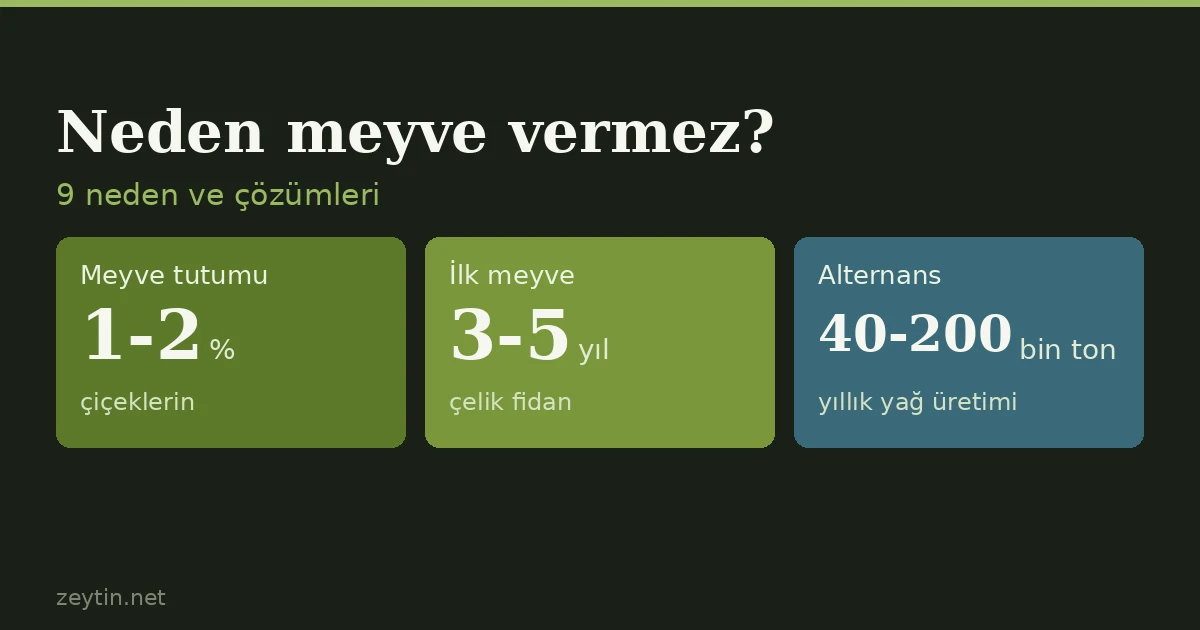
Why is my olive tree not bearing fruit? 9 causes and what to do
Behind an olive tree that flowers but sets no fruit, fills one year and stays empty the next, or has never cropped at all, there is usually more than one cause. From the tree's age and lack of grafting to missing pollinators, insufficient chilling, drought and the wrong fertiliser or pruning, here is how to diagnose by symptom and what to do.
 Article
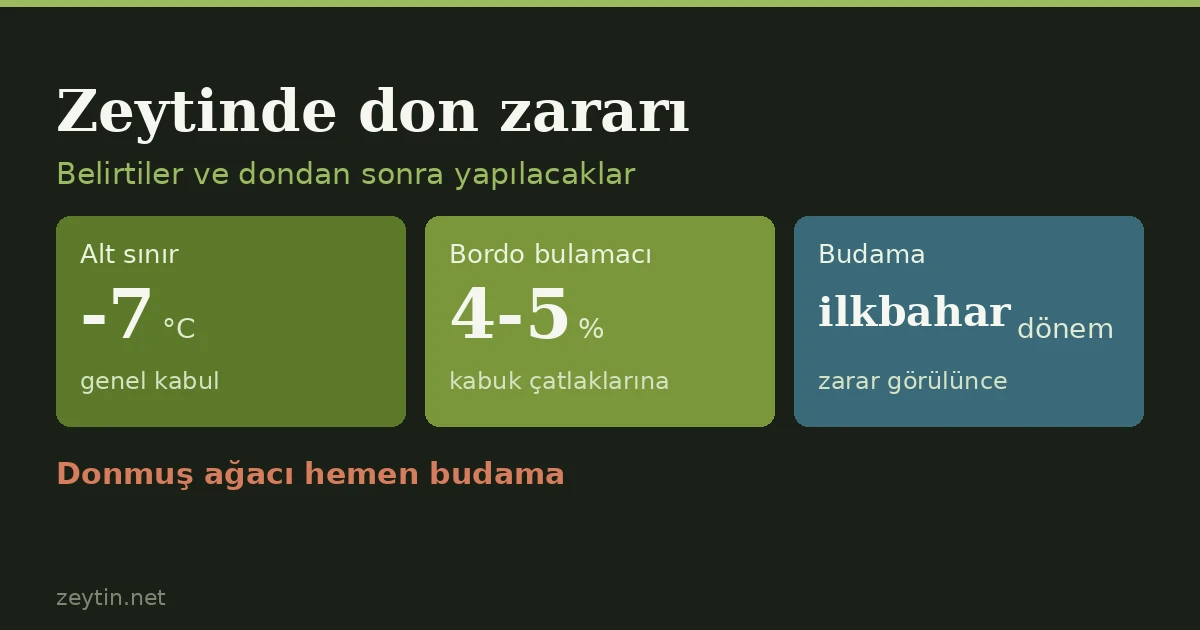
Frost damage in olive trees: signs, risk factors and what to do after a frost
The generally accepted lower limit for olives is around -7 °C, but damage does not depend on the thermometer alone: how long the cold lasts, sudden drops, humidity, tree age and nutrition all matter. Here are the signs of frost damage on leaves, shoots, bark and fruit, ways to reduce the risk and which job to do when after a frost.
 Article
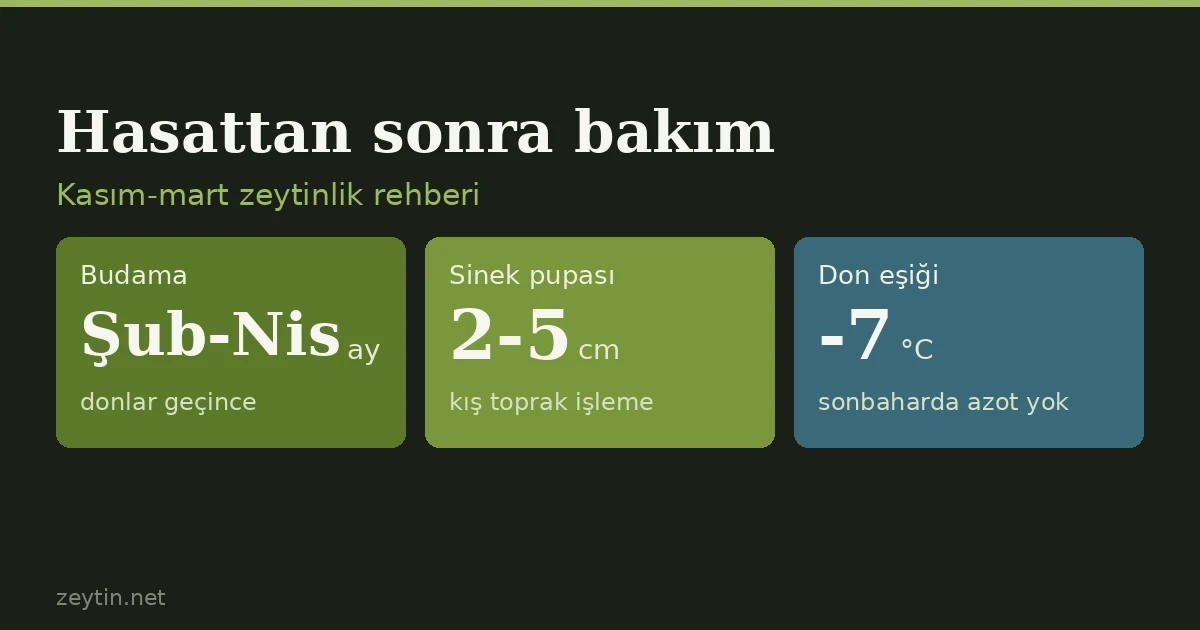
What to do for olive trees after harvest: a November-to-March care guide
The work in the grove does not end with the olive harvest; next year's crop is prepared in exactly these months. From collecting fallen fruit and protecting harvest wounds to region-specific peacock spot sprays, the right pruning time, autumn feeding and winter soil work, here is what needs doing after harvest.
 Article
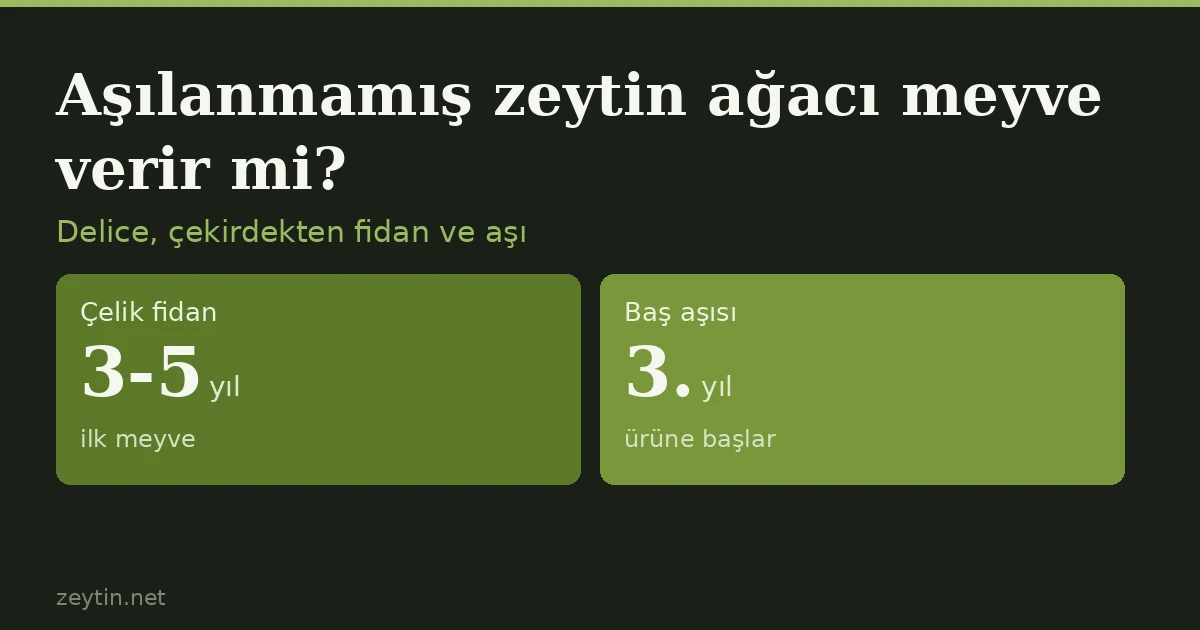
Does an ungrafted olive tree bear fruit? Wild olives, seedlings and grafting
An ungrafted olive tree does bear fruit, but usually small, thin-fleshed and low in oil. Neither the wild trees known in Turkey as delice nor seedlings grown from a stone carry the variety of the parent tree. How to tell, what grafting gains, and why wild olives are still valuable.
 Article
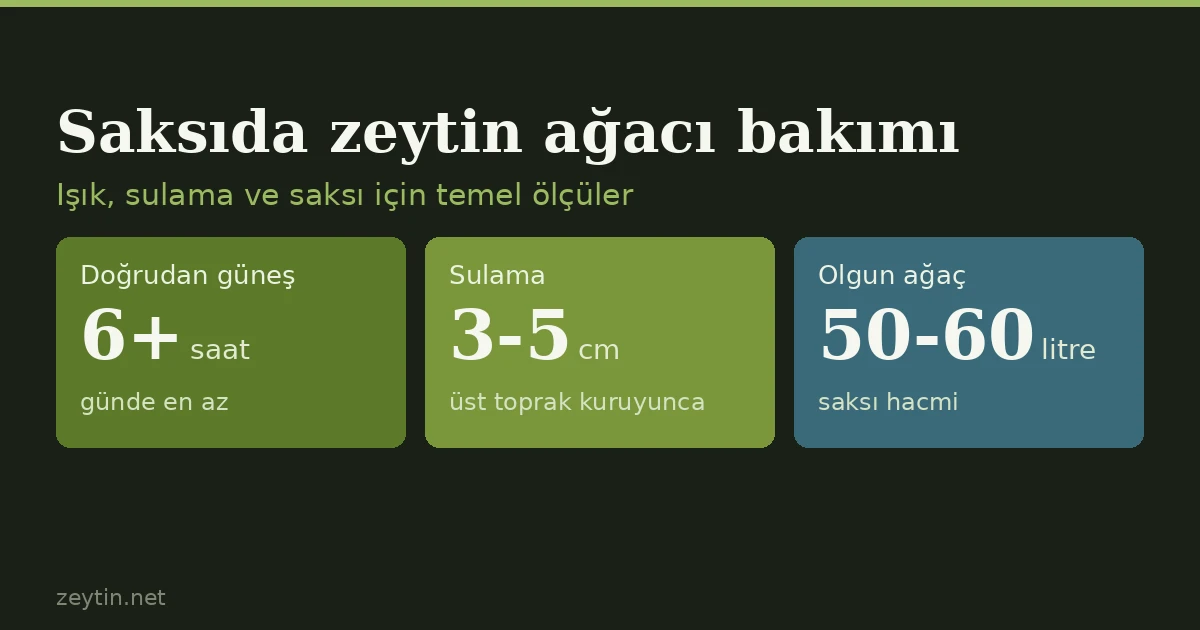
Caring for an olive tree in a pot: container, soil, watering, light and winter
Olive trees can live in pots, but they do not forgive two things: too much water and too little light. A wide pot with drainage holes, a free-draining mix, watering once the top layer dries and at least six hours of direct sun are the basic rules. Expecting fruit indoors is usually pointless without a cool winter.
 Article
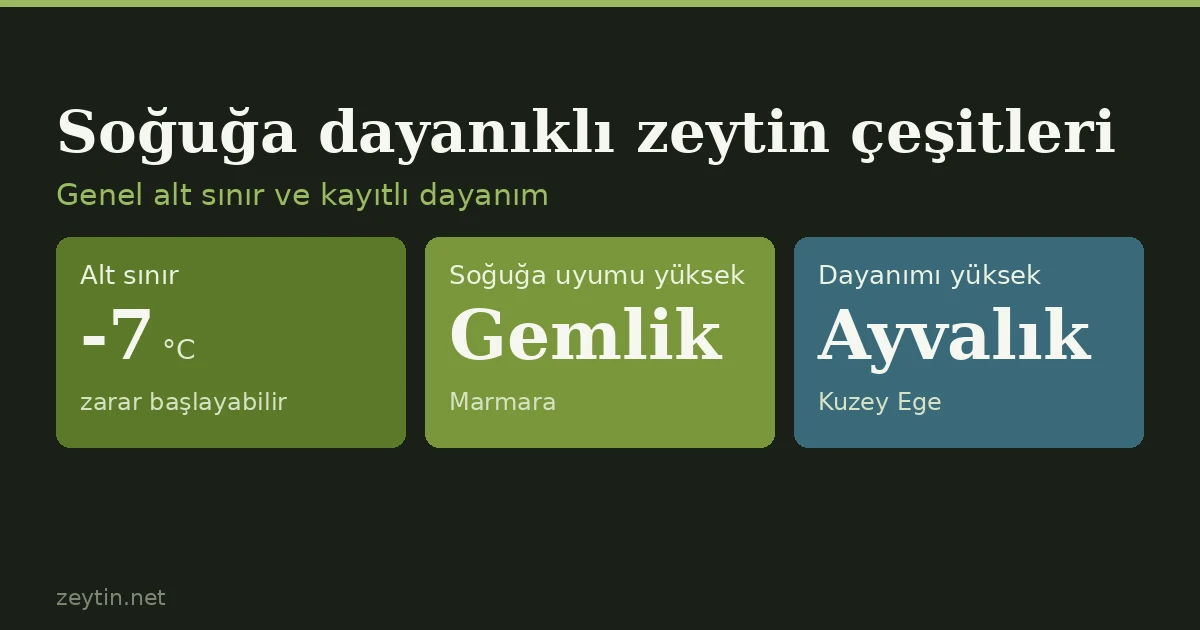
Cold-hardy olive varieties: Gemlik, Ayvalık and the other candidates in the data
In our variety data, Gemlik, Ayvalık, Coratina, Picual and Hojiblanca are recorded with high cold adaptation or hardiness; Kalamata, Leccino, Memecik and Domat are medium, Frantoio moderately sensitive and Saurani low. But variety alone is not enough: tree age, the duration of the cold and the site of the grove also decide.
 Article
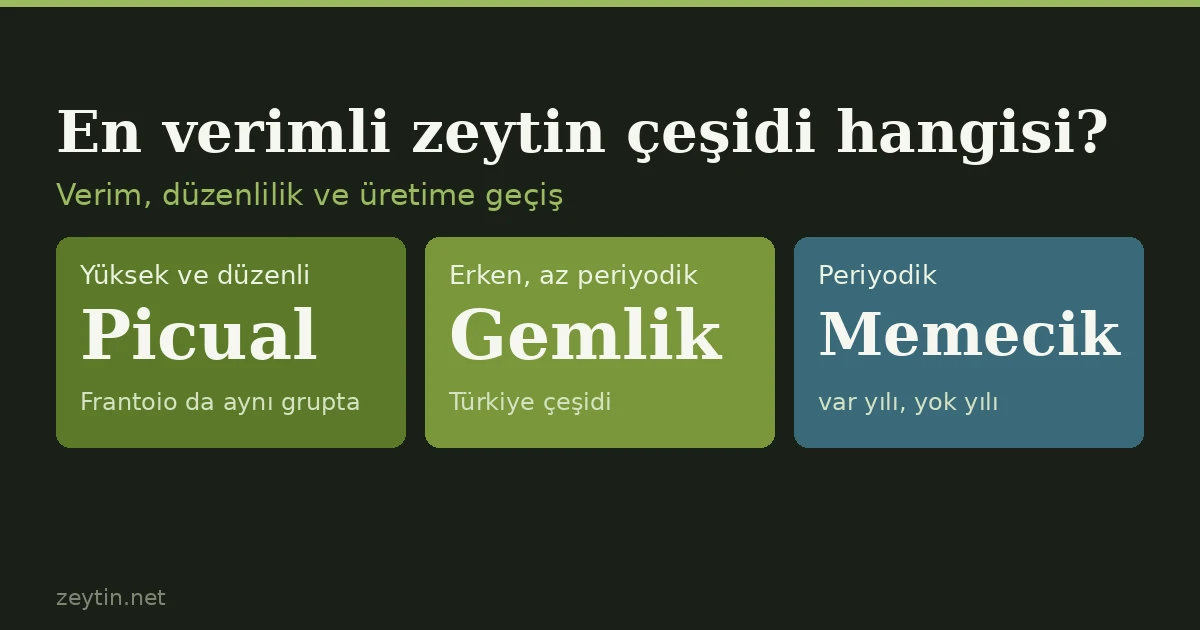
Which olive variety is the most productive? Regular crops, early bearing and alternate bearing
There is no single "most productive olive". Productivity depends on whether a tree bears regularly every year, how early it starts cropping and pollination. In our variety data, Picual and Frantoio are high and regular, Gemlik is early with low alternate bearing, while Kalamata, Hojiblanca and Memecik swing between on and off years.
 Article
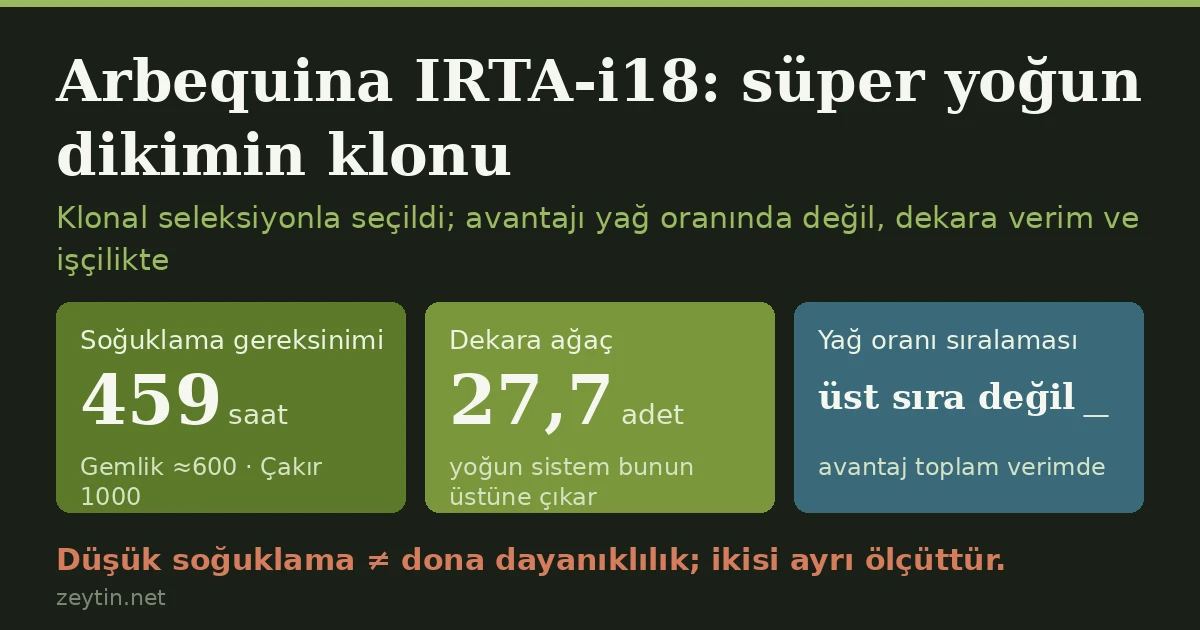
Arbequina IRTA-i18: the clone behind super-high-density olive groves
IRTA-i18, developed from Arbequina by clonal selection, was chosen for super-high-density groves. What early bearing, mechanical harvest and a low 459-hour chilling requirement actually mean.
 Article
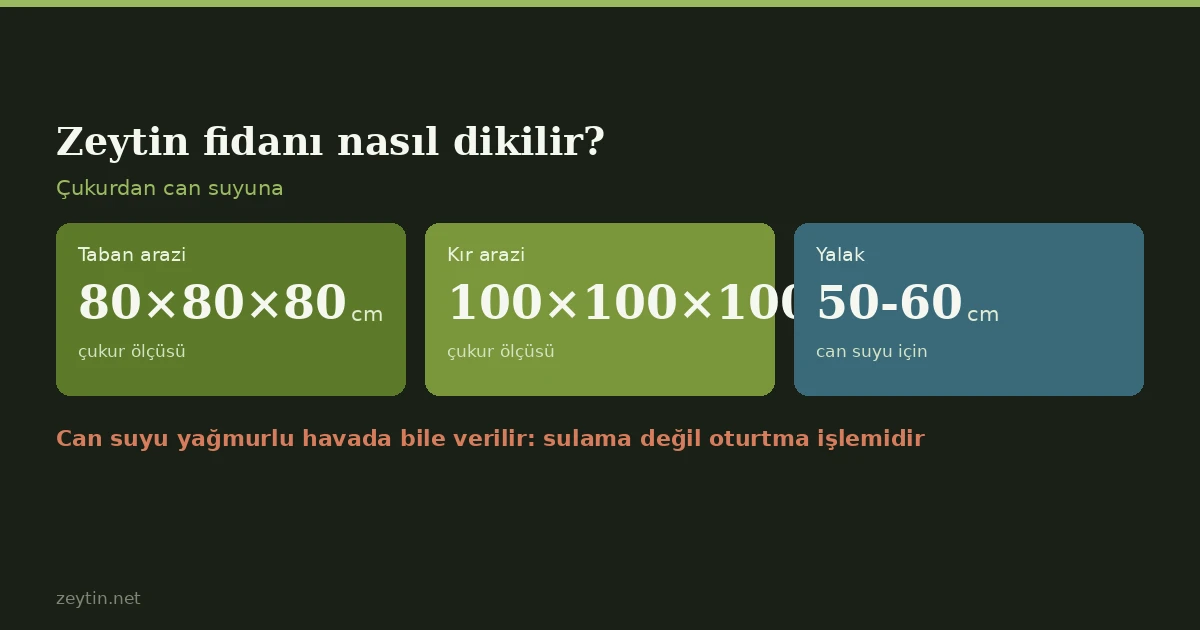
How to plant an olive sapling
Planting season, hole dimensions, removing a potted sapling, planting depth and the graft union, the basin and settling water — why settling water is given even in rain, first-year care and five common mistakes.
 Article
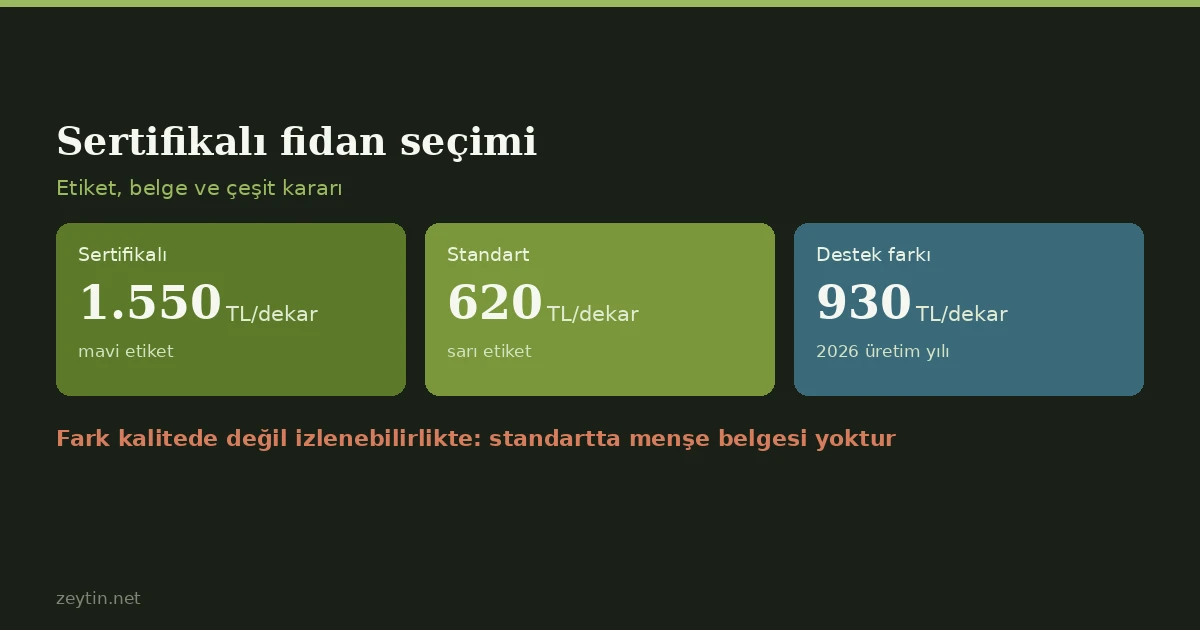
Choosing certified olive saplings: labels, documents and variety
Label colour shows the certificate class: blue certified, yellow standard. The difference is traceability, not quality. The support gap is 930 lira per decare. Four questions that settle variety choice.
 Article
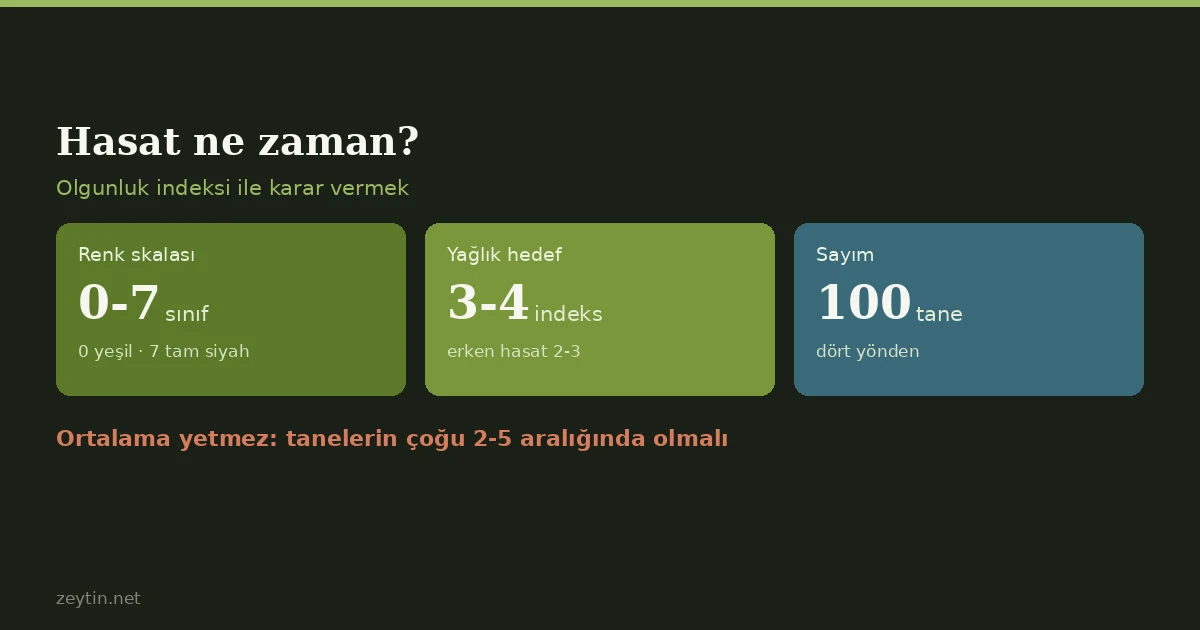
When to harvest olives: deciding with the maturity index
Harvest timing is set by the maturity index, not the calendar. The 0-7 colour scale, how to calculate it from 100 fruits, early versus late harvest compared, and ripening times by variety.
 Article
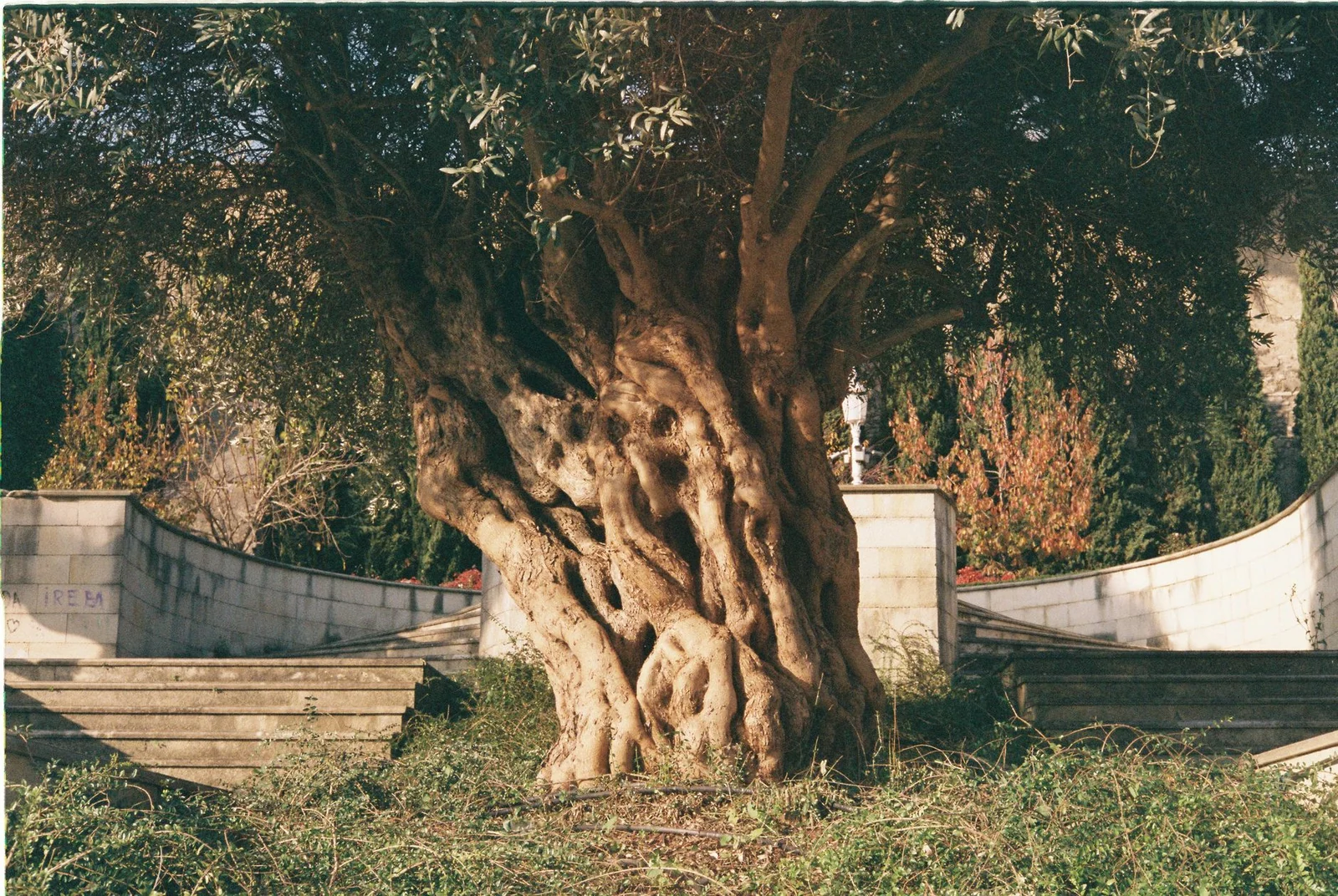
Grafting Olives: Changing Cultivar and Improving Wild Trees
When grafting is needed, taking scion wood, bud and cleft methods, topworking and aftercare.
 Article
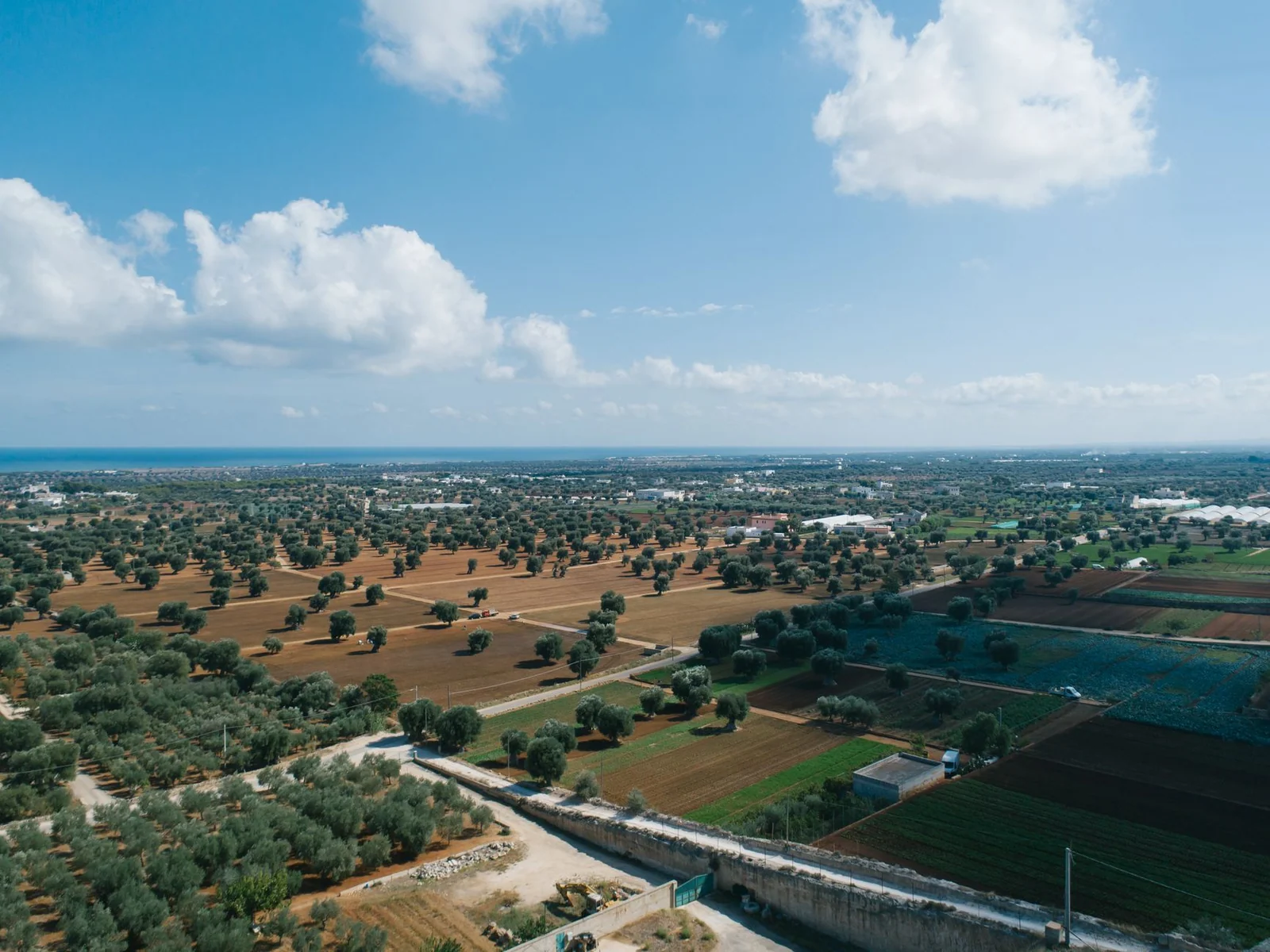
Fertilising Olives: From Soil Analysis to an Annual Programme
How to read a soil test, which nutrients olives need and when, fertigation and organic matter management.
 Article
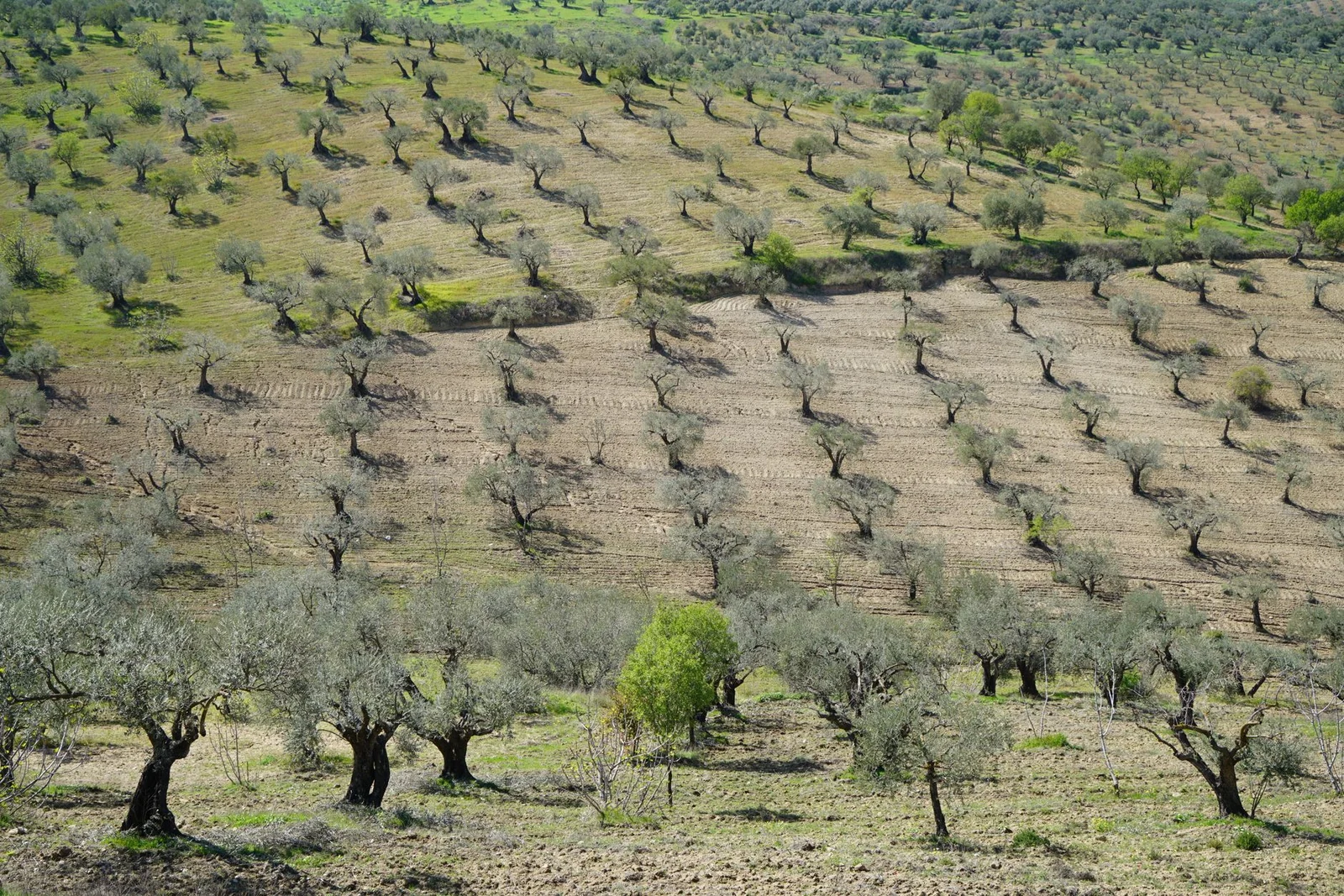
Irrigating Olives: When, How Much, How
Olive water requirements, critical periods, drip system layout, deficit irrigation and water quality.
 Article
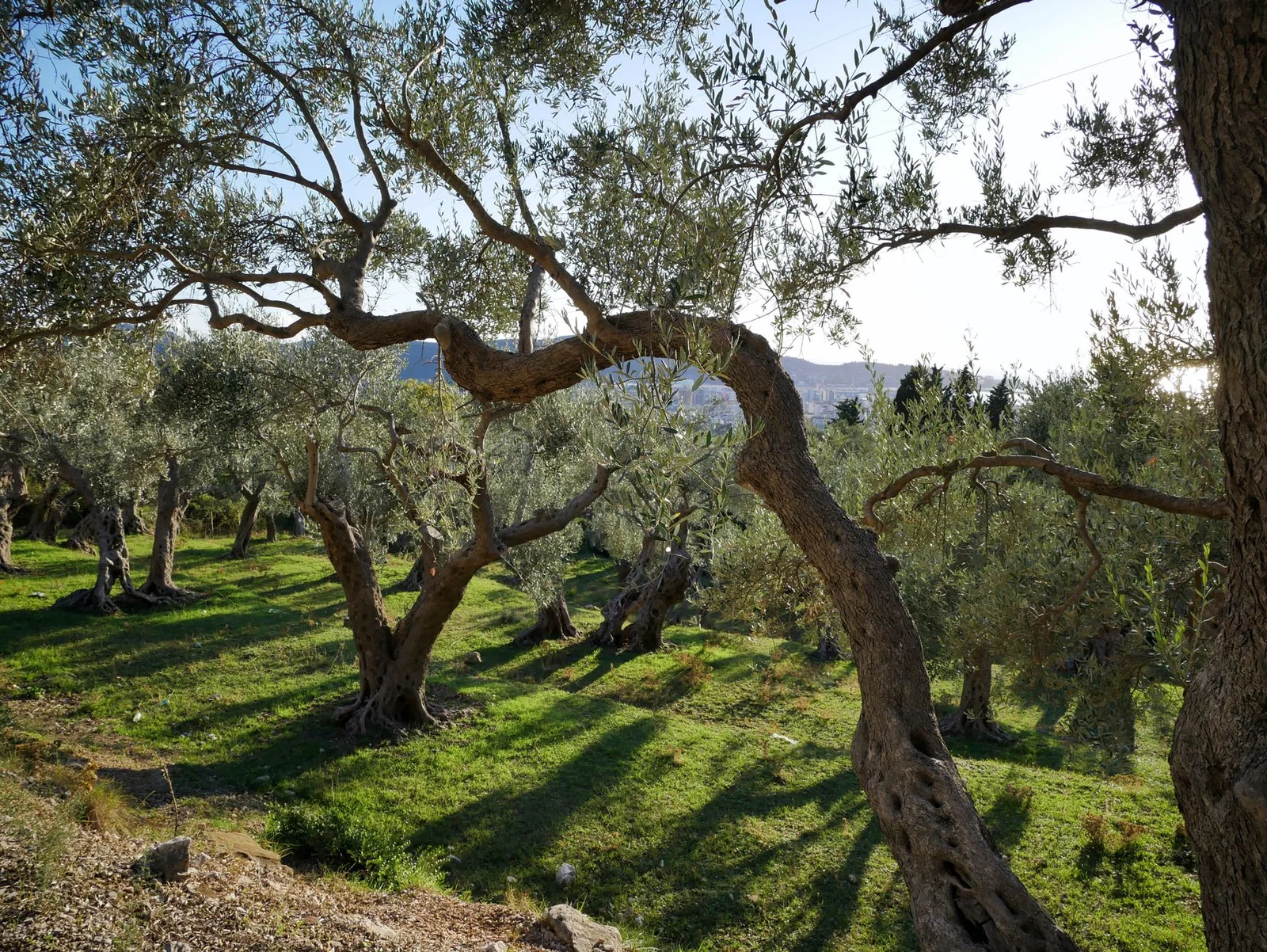
Olive Pruning: Why, When and How
Why olives are pruned, when to do it, formative and production pruning, rejuvenation and high-density systems.
 Article
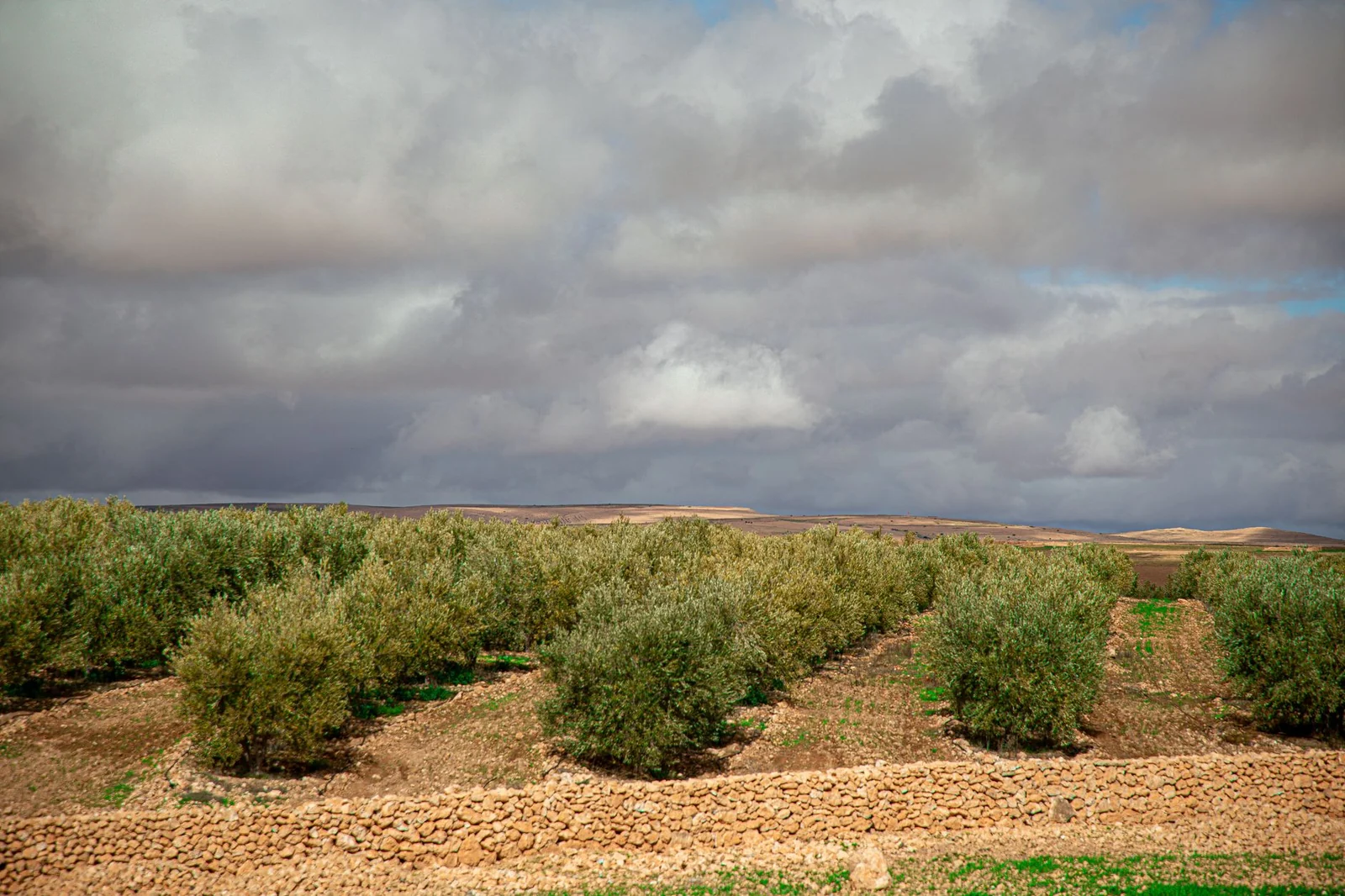
Building a high-density olive grove: five requirements
High-density planting is not a choice of variety but a five-component system — miss one and it performs worse than a traditional grove. Spacing, yields, the overlooked oil-content trade-off, and who it does not suit.
 Article
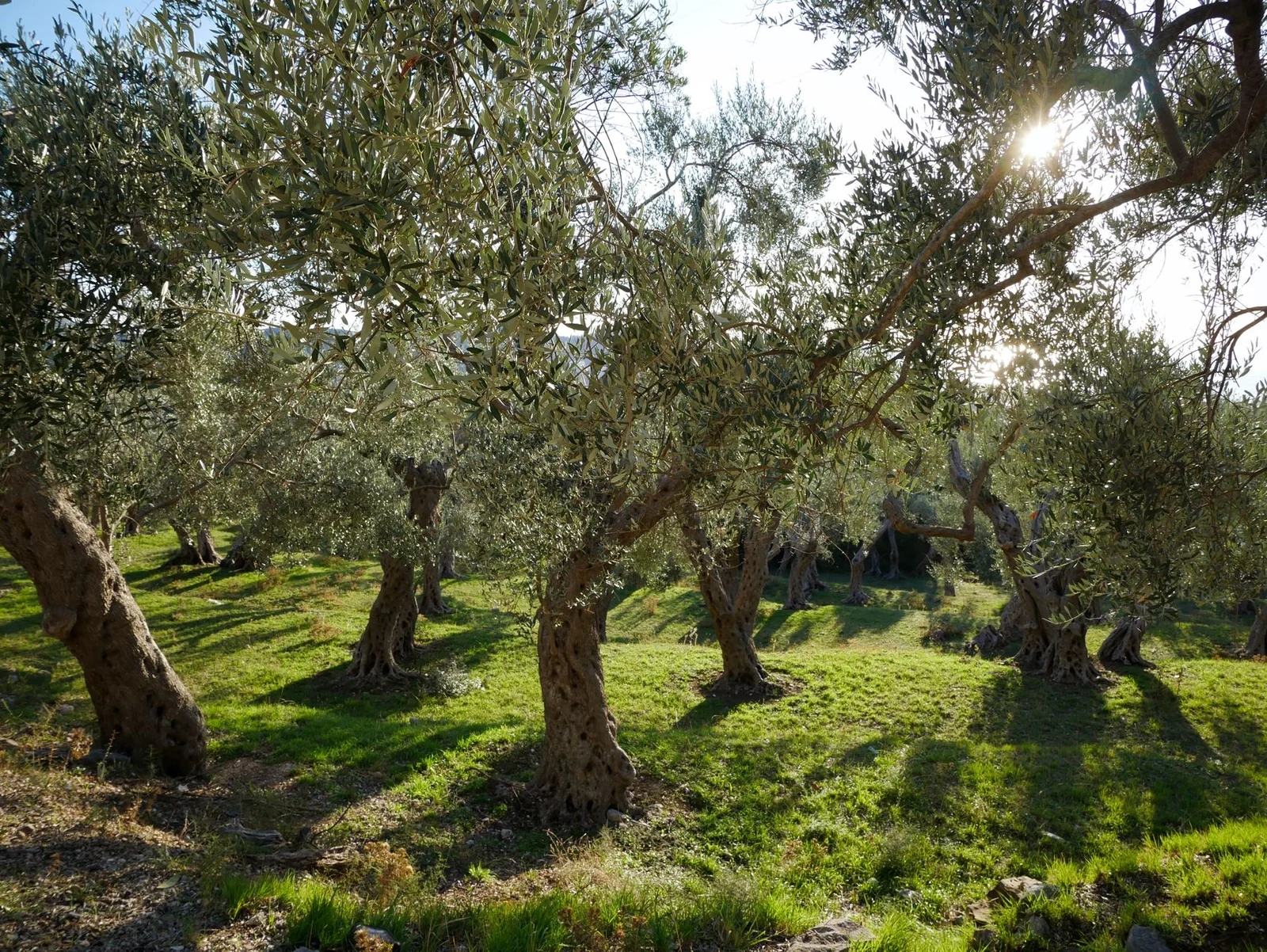
Should I switch to organic? A decision guide for olive groves
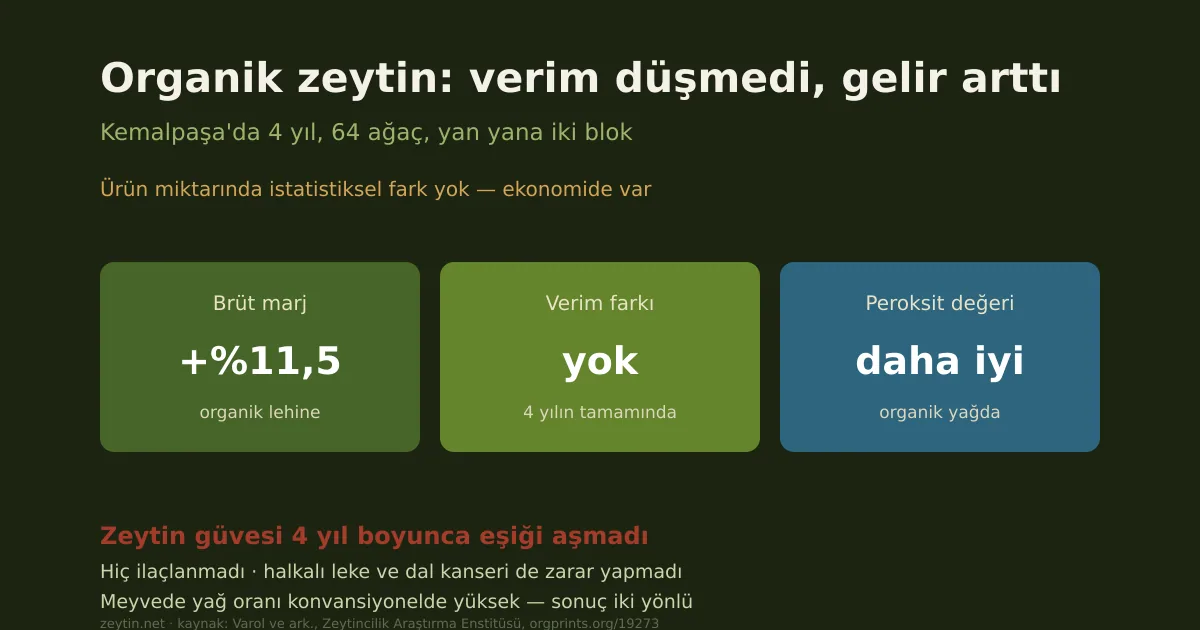
A four-year trial found no yield difference and put organic 11% ahead economically. But where does the real cost of switching lie, who does it suit, and how do you fight the fly without chemicals?
 Article
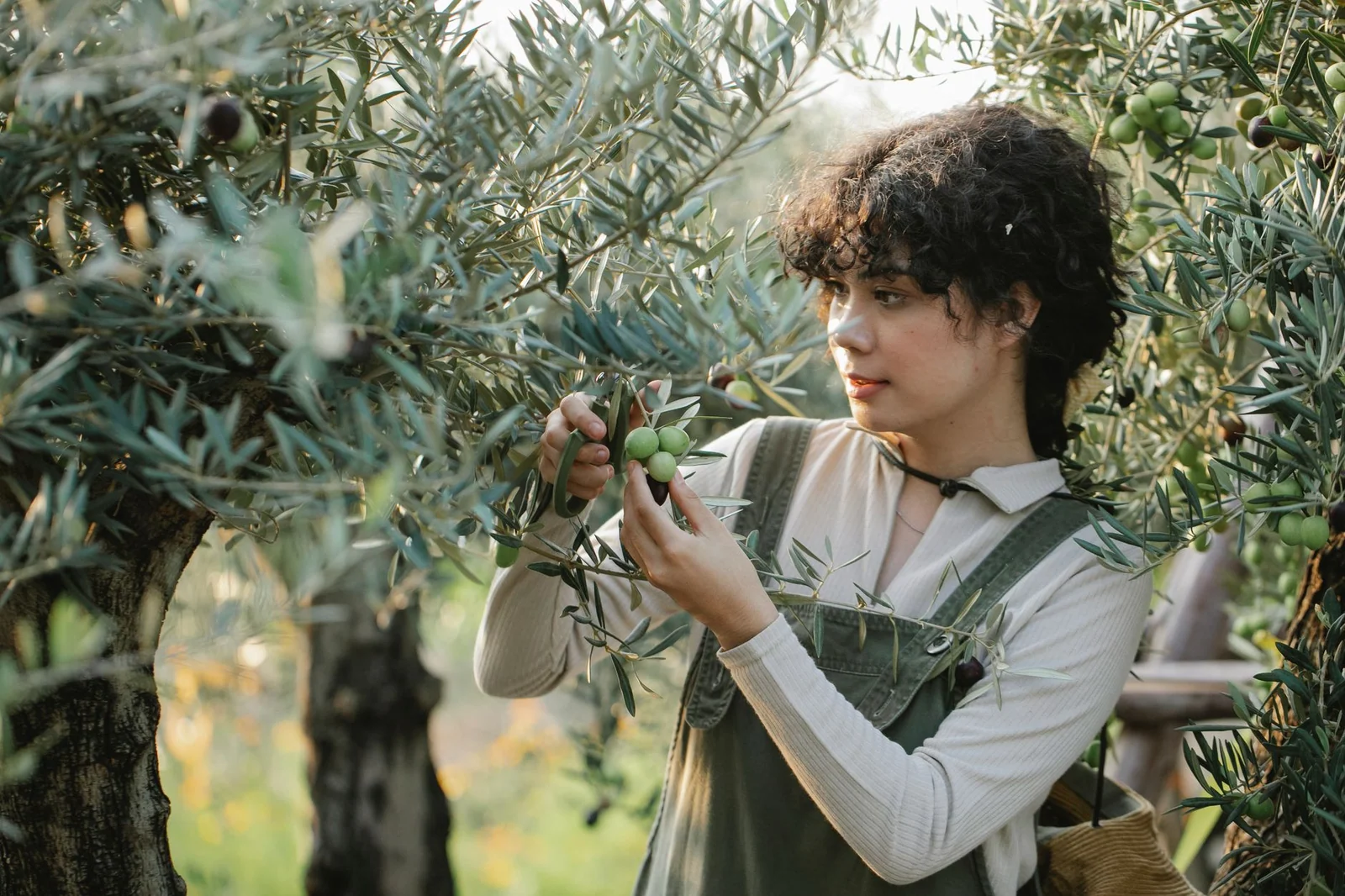
Where does an olive sapling come from? From cutting to laboratory
Most table olive varieties will not root, and those that do are clones of one another — defenceless against disease. Tissue culture reports up to 85% success in vitro, but zeatin is expensive.
 Article
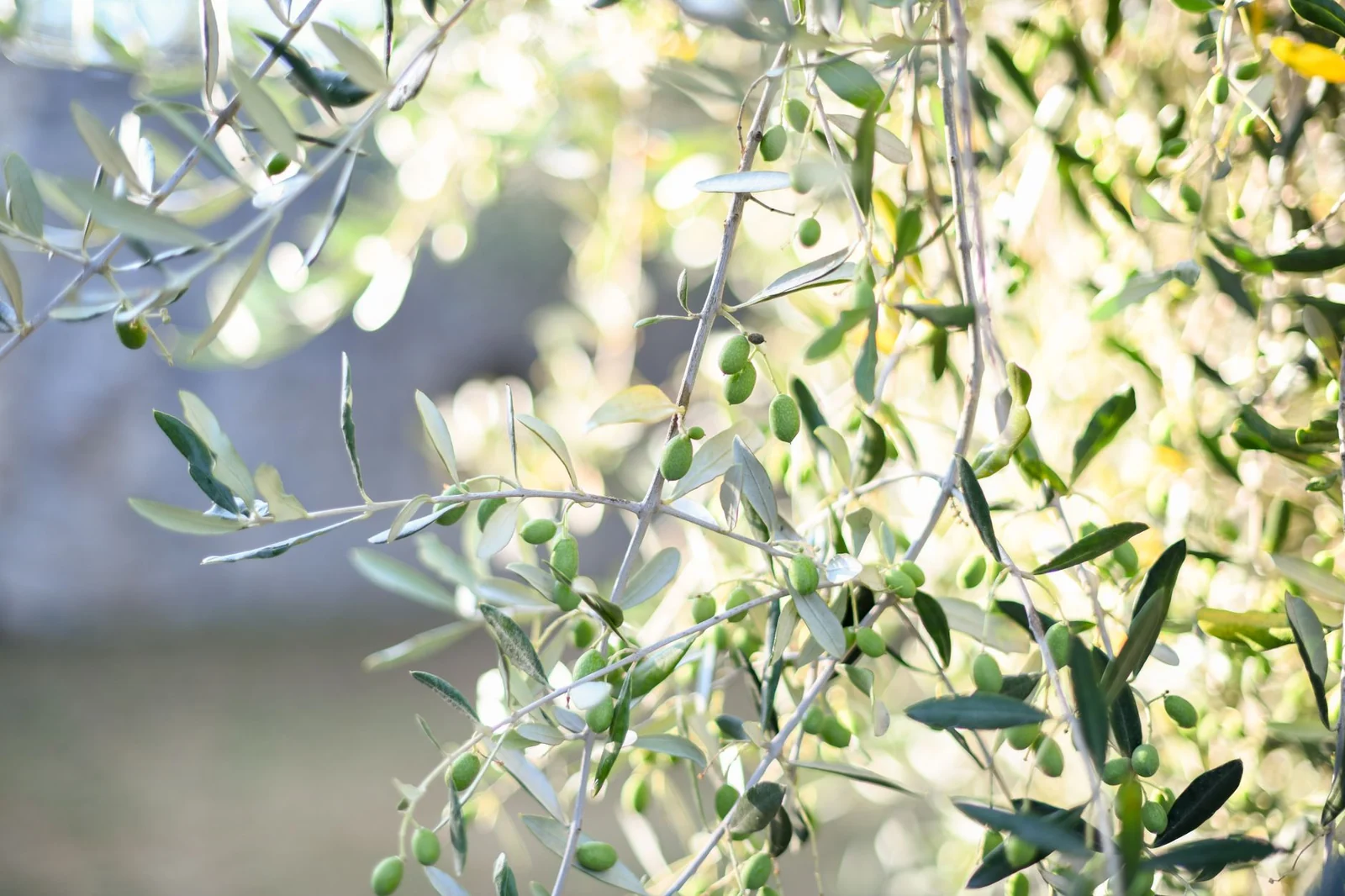
Pollination and pollinator varieties in olive
98% of olive flowers drop. Whether the remaining 1-2% holds depends on having a pollinator in the grove. Gemlik is only partially self-fertile: in a single-variety grove harvest falls to a third.
 Article
Nutrient deficiencies in olive: from symptom to element
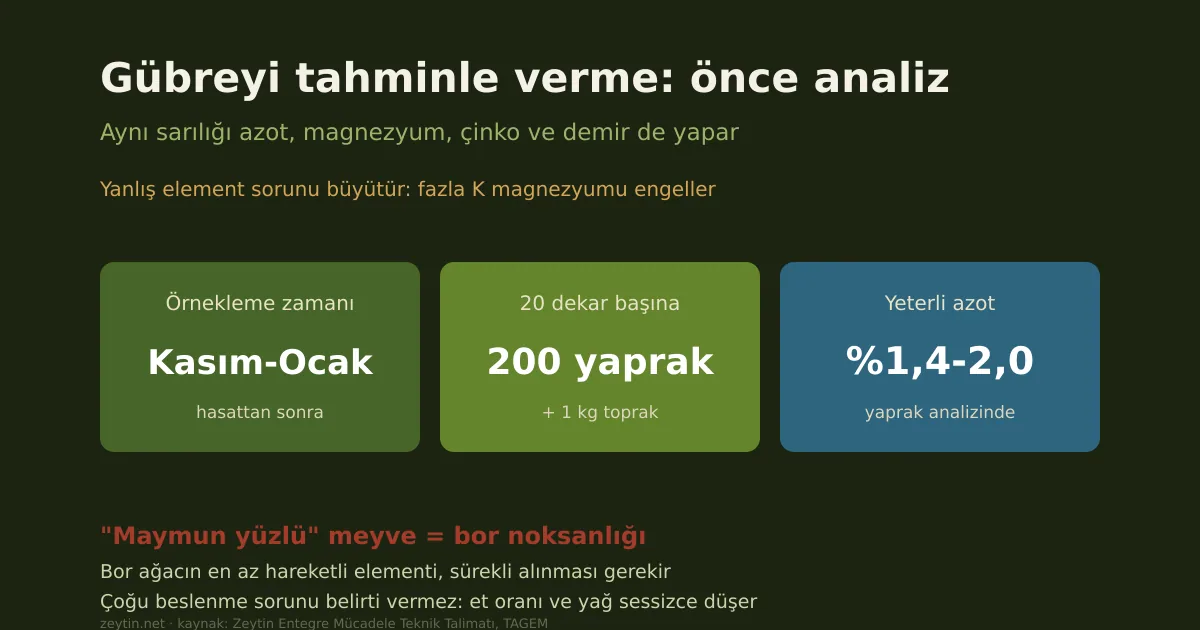
The same yellowing can mean nitrogen, magnesium, zinc or iron, and the wrong element makes it worse. Standard leaf analysis values, symptom-to-element matching and the boron schedule.
 Article
Organic olive growing: what a four-year trial found
A four-year organic vs conventional trial at Kemalpaşa: no yield difference, 11.5% higher gross margin for organic, lower peroxide value, but higher fruit oil content under conventional management.
 Article
How to Grow an Olive Tree
Soil, climate, watering, pruning and patience. A basic care guide for anyone planting an olive tree.