Arbequina IRTA-i18: the clone behind super-high-density olive groves
IRTA-i18, developed from Arbequina by clonal selection, was chosen for super-high-density groves. What early bearing, mechanical harvest and a low 459-hour chilling requirement actually mean.
Arbequina IRTA-i18 is not Arbequina itself but a registered type developed from it by clonal selection. The distinction matters when planting: saying "I planted Arbequina" is not the same as "I planted IRTA-i18", because spacing, time to bearing and harvest method are planned differently.
What clonal selection means
Within a variety, small differences exist from tree to tree. Clonal selection means choosing one tree that carries the wanted traits and propagating it by cuttings. The resulting grove is genetically uniform: trees flower together and ripen together. That uniformity is essential for mechanical harvesting, because a harvester does not judge ripeness tree by tree.
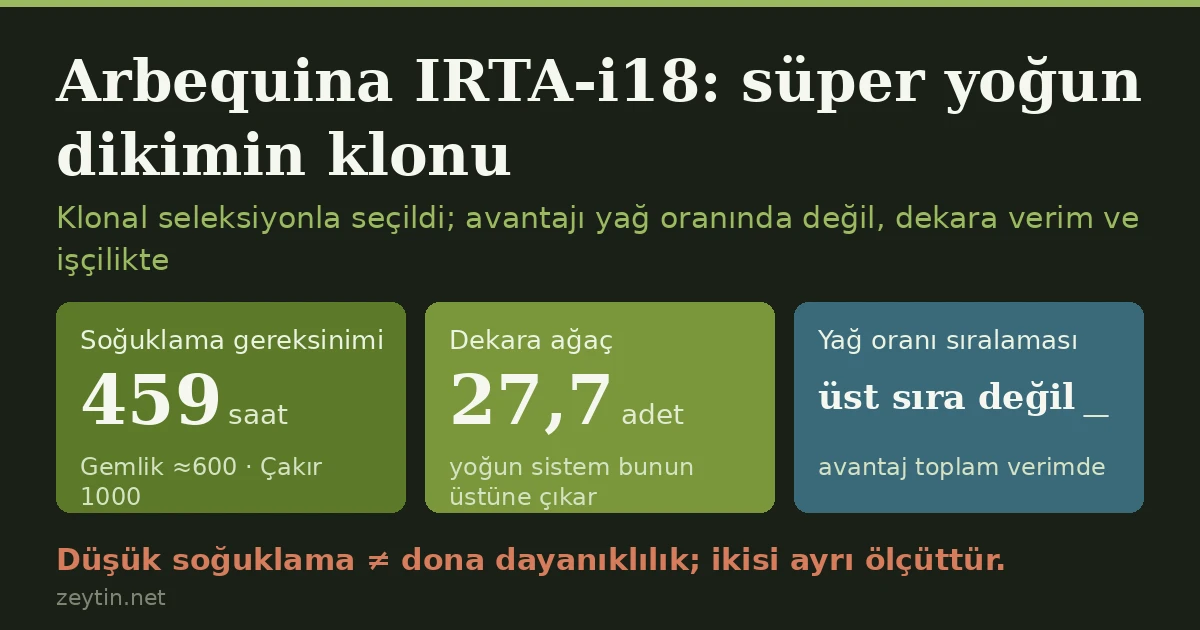
IRTA-i18 was developed this way in Spain and selected for super-high-density (hedgerow) systems. The IRTA in its name is the abbreviation of the Catalan research institute that made the selection.
What super-high-density changes
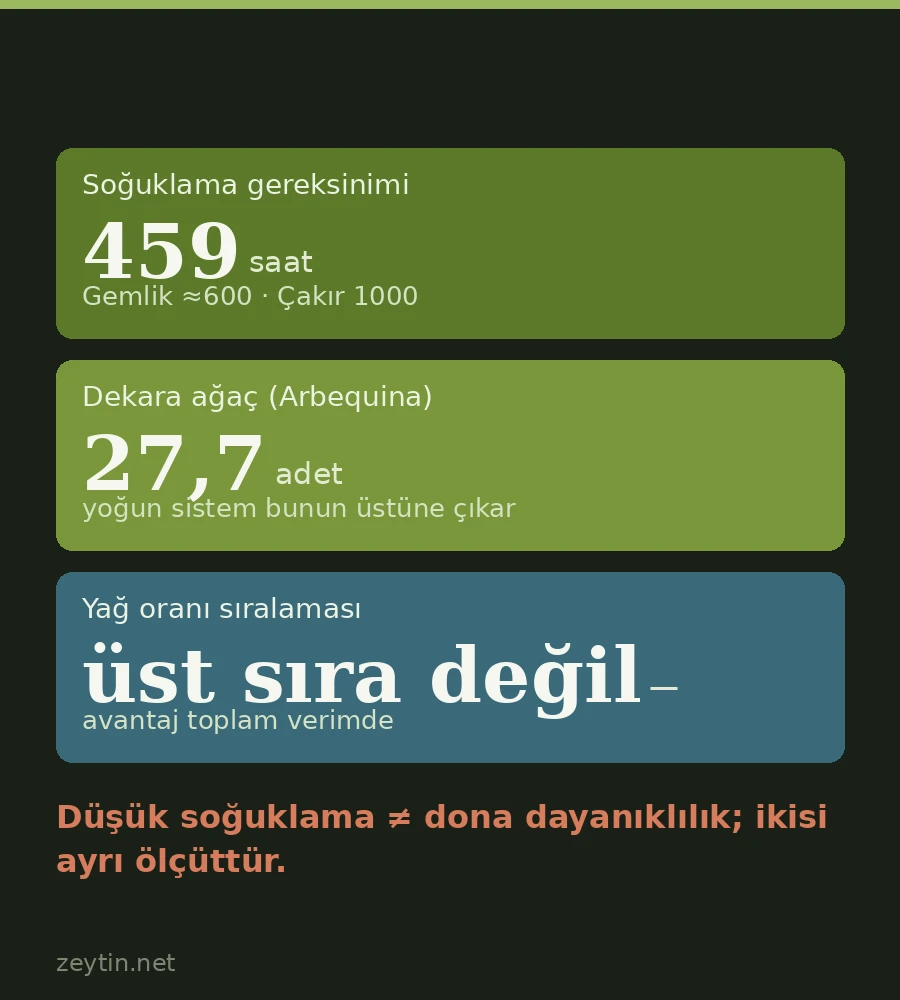
In a traditional grove trees are planted at 6×8 or 7×7 metres, giving 17-27 trees per decare. In a super-high-density system rows are narrowed, the trees form a hedge, and tree count per decare rises many times over. Our measurements record 27.7 trees per decare for Arbequina; super-high-density systems go well beyond that.
The system has three consequences. First, early bearing: because the tree is kept small, investment in root and trunk falls and fruit arrives sooner. Second, mechanical harvest: a machine passing along the row cuts labour cost sharply against hand picking. Third, a shorter life: in a dense system the trees do not last centuries as in a traditional grove but carry a far shorter economic life. The grove is planned as a production facility rather than an inheritance.
Cold tolerance and chilling
Our records give Arbequina's chilling requirement as 289 chilling units (459 hours). That is among the lowest in our comparison: Adana Topağı 346 hours, Karamürsel Su 526, Domat 552, Gemlik about 600, Memecik 624, Çakır 1,000.
A low chilling requirement means the variety can still form flower buds where winters are mild — favourable for southern regions. It should not be confused with frost hardiness; the two are different. Chilling describes how many cool hours winter must provide; frost hardiness describes the temperature at which the tree is damaged.
Self-fertility and pollinators
Arbequina types are considered self-fertile, meaning they can set fruit alone. Even so, a foreign pollinator raises fruit set in self-fertile varieties. In super-high-density groves, Arbosana and Koroneiki are the usual pollinators. The pollinator plan belongs in the planting plan at the sapling selection stage.
Oil content and quality
Arbequina oil gives a fruity, sweet profile with low bitterness; it suits those looking for a mild oil rather than a pungent one. Combined with the early harvest typical of dense systems, it yields an oil with strong sensory attributes but a short life.
For comparison: in our records, the highest oil contents belong to Kalem bezi and Kilis yağlık at 31 percent, with Gemlik at 29-30. Arbequina does not sit at the top of that list; the system's advantage comes not from oil content in the fruit but from total yield per decare and low labour.
What to check before planting in Türkiye
Super-high-density is a capital-intensive choice: sapling numbers are high, a post-and-wire system is needed, irrigation is close to mandatory, and access to a harvester is essential. Without the machine the system's main advantage disappears; hand picking a densely planted grove is harder than a traditional one.
The second question is soil and water. A dense system does not withstand drought as a traditional grove does, because root volume is small. The third is market: the sales channel must be decided, because this system pays by lowering unit cost, not by commanding a premium price.
You can compare measured data for varieties grown in Türkiye on our variety pages.
One rating per visitor; you can change yours at any time. Ratings are real reader votes — no seeded or default scores.
Related
 Article
Cold-hardy olive varieties: Gemlik, Ayvalık and the other candidates in the data
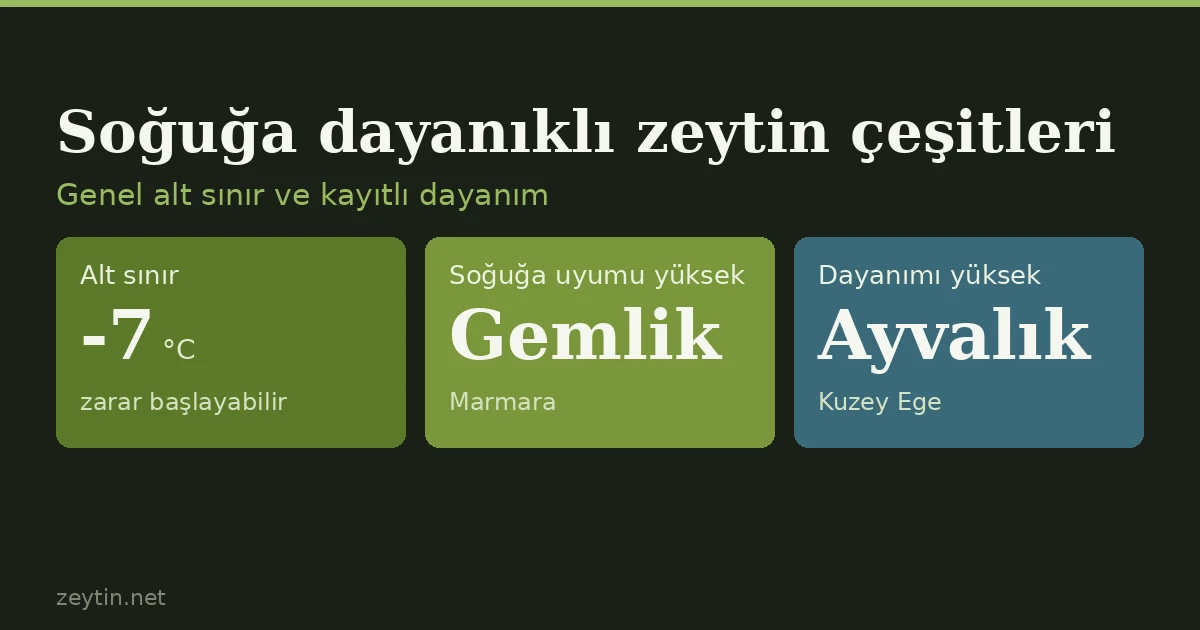
In our variety data, Gemlik, Ayvalık, Coratina, Picual and Hojiblanca are recorded with high cold adaptation or hardiness; Kalamata, Leccino, Memecik and Domat are medium, Frantoio moderately sensitive and Saurani low. But variety alone is not enough: tree age, the duration of the cold and the site of the grove also decide.
Article
Cold-hardy olive varieties: Gemlik, Ayvalık and the other candidates in the data
In our variety data, Gemlik, Ayvalık, Coratina, Picual and Hojiblanca are recorded with high cold adaptation or hardiness; Kalamata, Leccino, Memecik and Domat are medium, Frantoio moderately sensitive and Saurani low. But variety alone is not enough: tree age, the duration of the cold and the site of the grove also decide.
 Article
Nutrient deficiencies in olive: from symptom to element
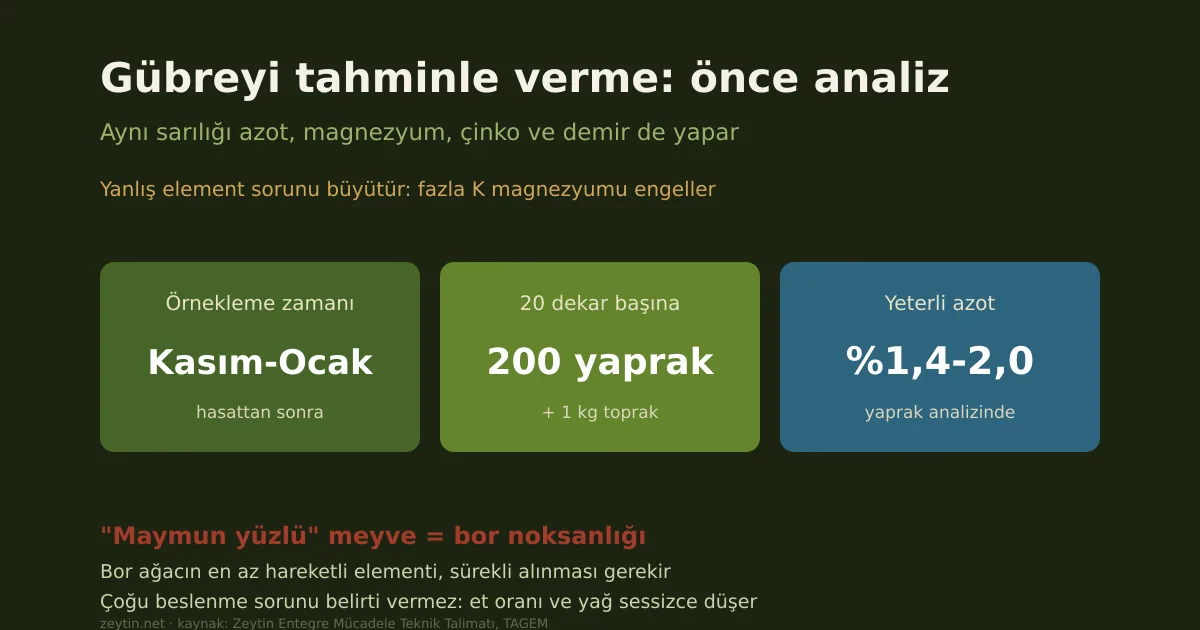
The same yellowing can mean nitrogen, magnesium, zinc or iron, and the wrong element makes it worse. Standard leaf analysis values, symptom-to-element matching and the boron schedule.
Article
Nutrient deficiencies in olive: from symptom to element
The same yellowing can mean nitrogen, magnesium, zinc or iron, and the wrong element makes it worse. Standard leaf analysis values, symptom-to-element matching and the boron schedule.
 Article
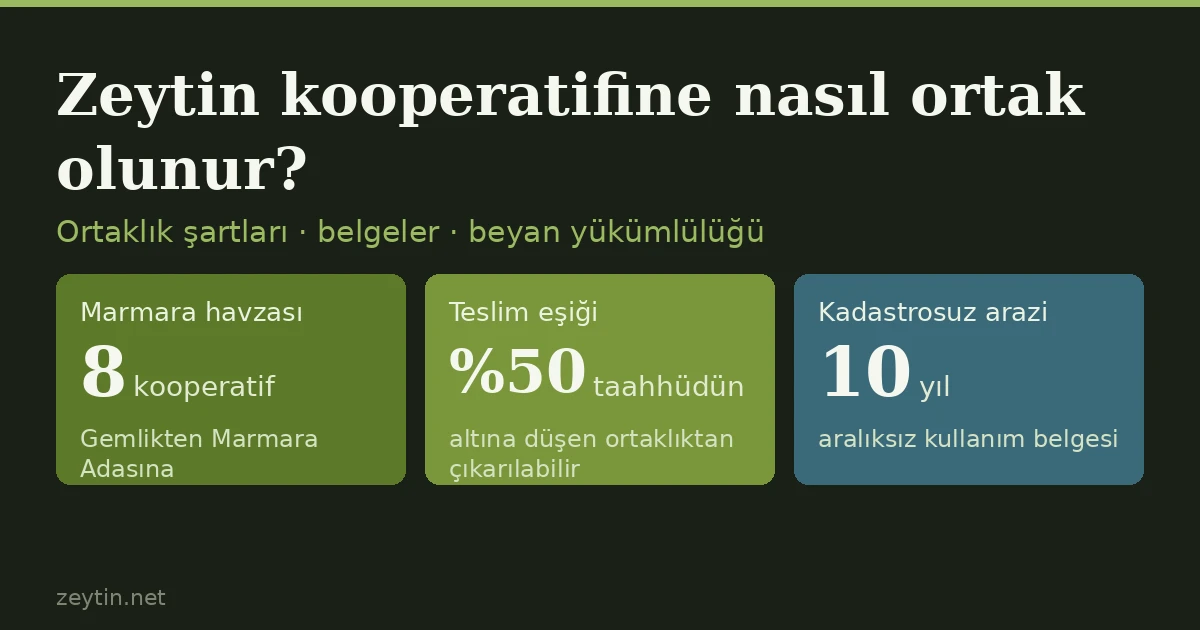
How do you become a member of an olive cooperative?
Joining an agricultural sales cooperative is one of the most asked questions of the harvest season. The conditions are written into the bylaws: you must be a grower, you must not trade in the same products, and you cannot belong to another cooperative in the same region. The real obligation, though, is the crop declaration — because that document is a delivery commitment.
Article
How do you become a member of an olive cooperative?
Joining an agricultural sales cooperative is one of the most asked questions of the harvest season. The conditions are written into the bylaws: you must be a grower, you must not trade in the same products, and you cannot belong to another cooperative in the same region. The real obligation, though, is the crop declaration — because that document is a delivery commitment.
 Article
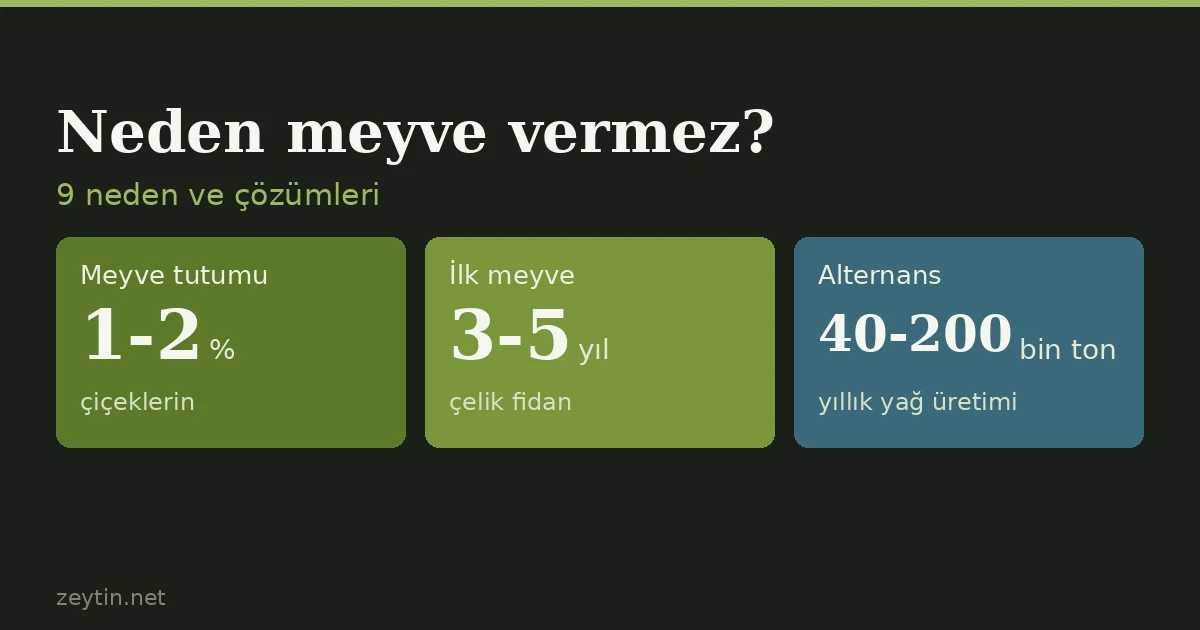
Why is my olive tree not bearing fruit? 9 causes and what to do
Behind an olive tree that flowers but sets no fruit, fills one year and stays empty the next, or has never cropped at all, there is usually more than one cause. From the tree's age and lack of grafting to missing pollinators, insufficient chilling, drought and the wrong fertiliser or pruning, here is how to diagnose by symptom and what to do.
Article
Why is my olive tree not bearing fruit? 9 causes and what to do
Behind an olive tree that flowers but sets no fruit, fills one year and stays empty the next, or has never cropped at all, there is usually more than one cause. From the tree's age and lack of grafting to missing pollinators, insufficient chilling, drought and the wrong fertiliser or pruning, here is how to diagnose by symptom and what to do.