Olive · Olive Oil · Mediterranean
Olive, Olive Oil and Mediterranean Cuisine
Olive varieties, olive oil guide, harvest, storage and recipes from the Mediterranean kitchen.
Producer prices: European Commission Agri-food Data Portal (weekly). Exchange rates: European Central Bank (daily). Each figure carries its own date.
 Article
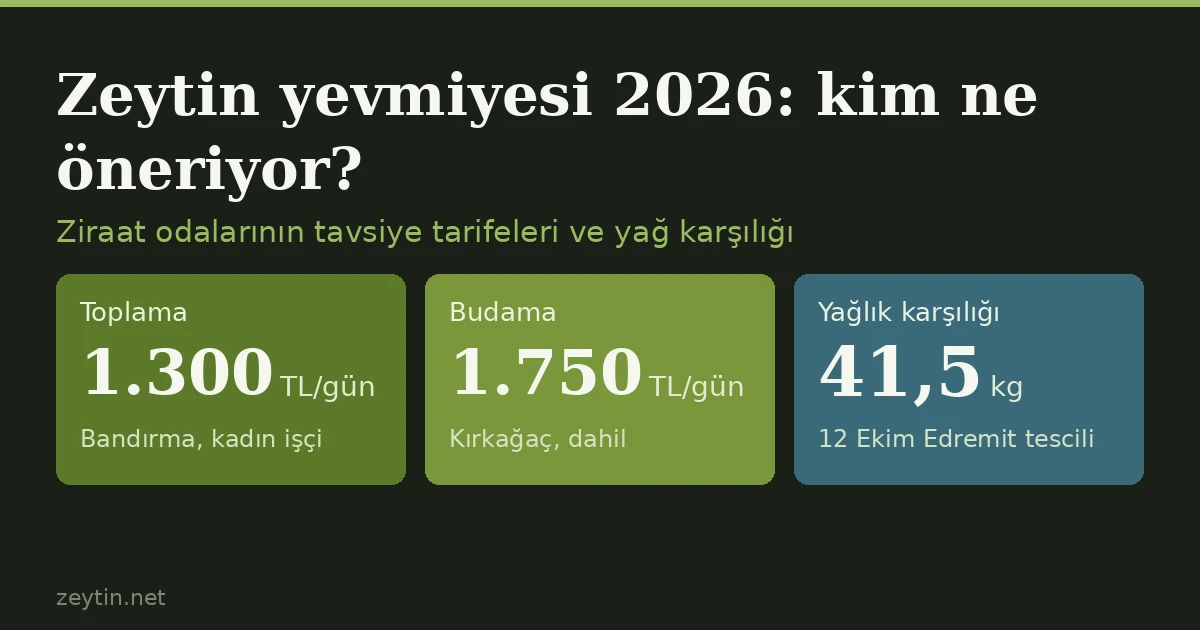
How much is the olive picking and pruning daily wage in 2026?
Turkish chambers recommend 1,200-1,500 lira a day for olive picking in 2026/27, up to 1,900 for shaking and 1,750 for pruning; none is binding.
 Article
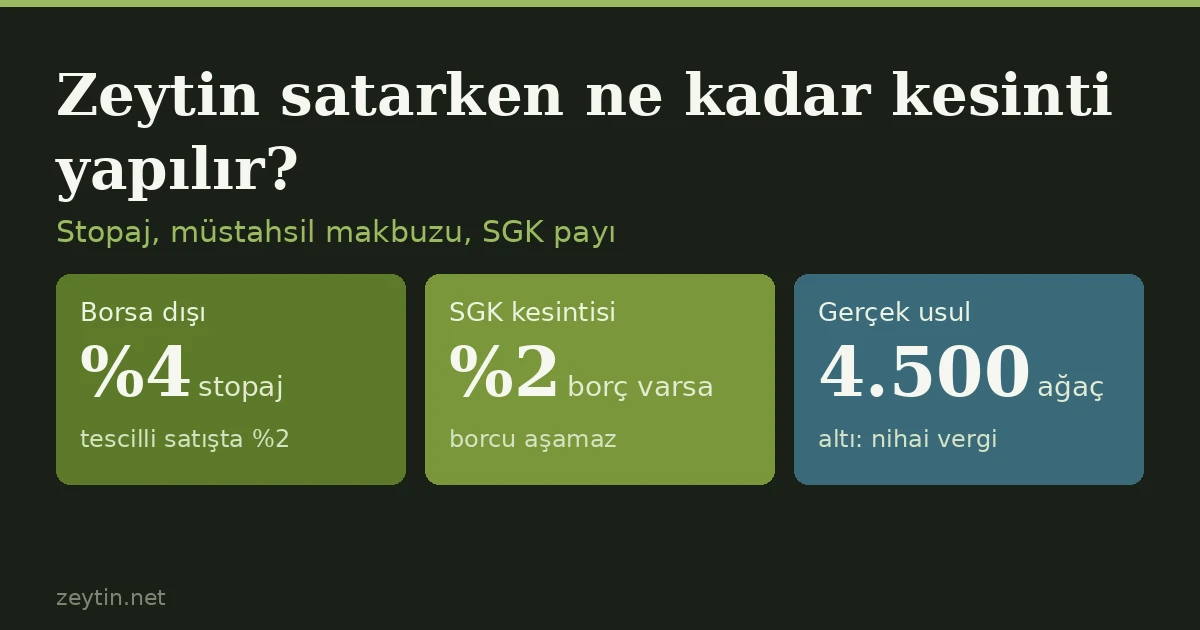
How much is deducted when you sell olives? Withholding tax, the producer receipt and the social security cut
Growers selling olives to a trader or cooperative have 4% of the price withheld as income tax, or 2% if the sale is registered on a commodity exchange; below 4,500 trees this is the final tax. Farmers with premium arrears also face a 2% social security deduction. The producer receipt, exchange fees and a worked example with Akhisar prices.
 Article
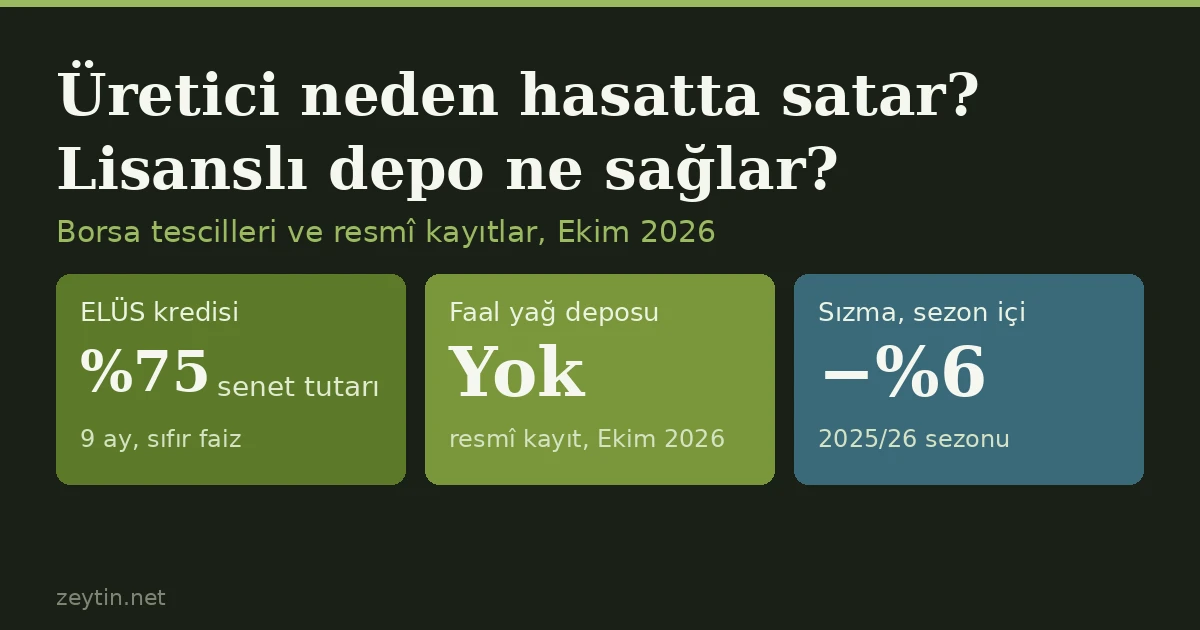
Why do small olive growers sell at harvest? What do licensed warehouses and electronic receipts offer?
Exchange records show that prices do not bottom out at harvest every year; the real issue is the cost of waiting. Licensed warehouses and electronic receipts (ELÜS) are the legal way to raise cash without selling the oil: interest-free loans up to 75% of the receipt, storage fee support and tax exemptions. But as of October 2026, official records show no licensed olive oil warehouse with an operating permit.
 Article
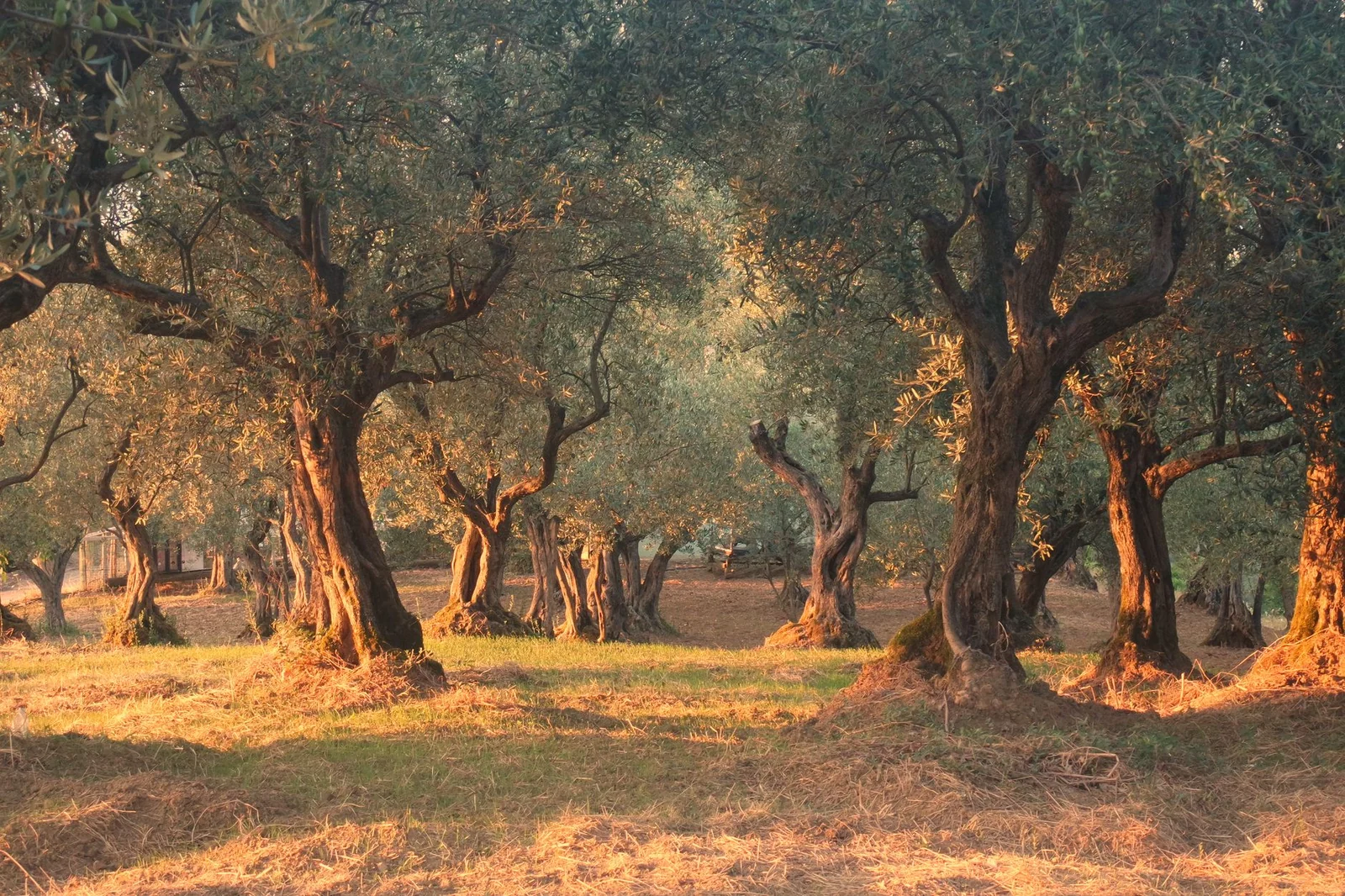
The Olive: Tree, History, Production and Future
The botany, history and uses of the olive tree; current production figures worldwide and in Turkey, provinces, varieties and the sector's future — with tables.
 Article
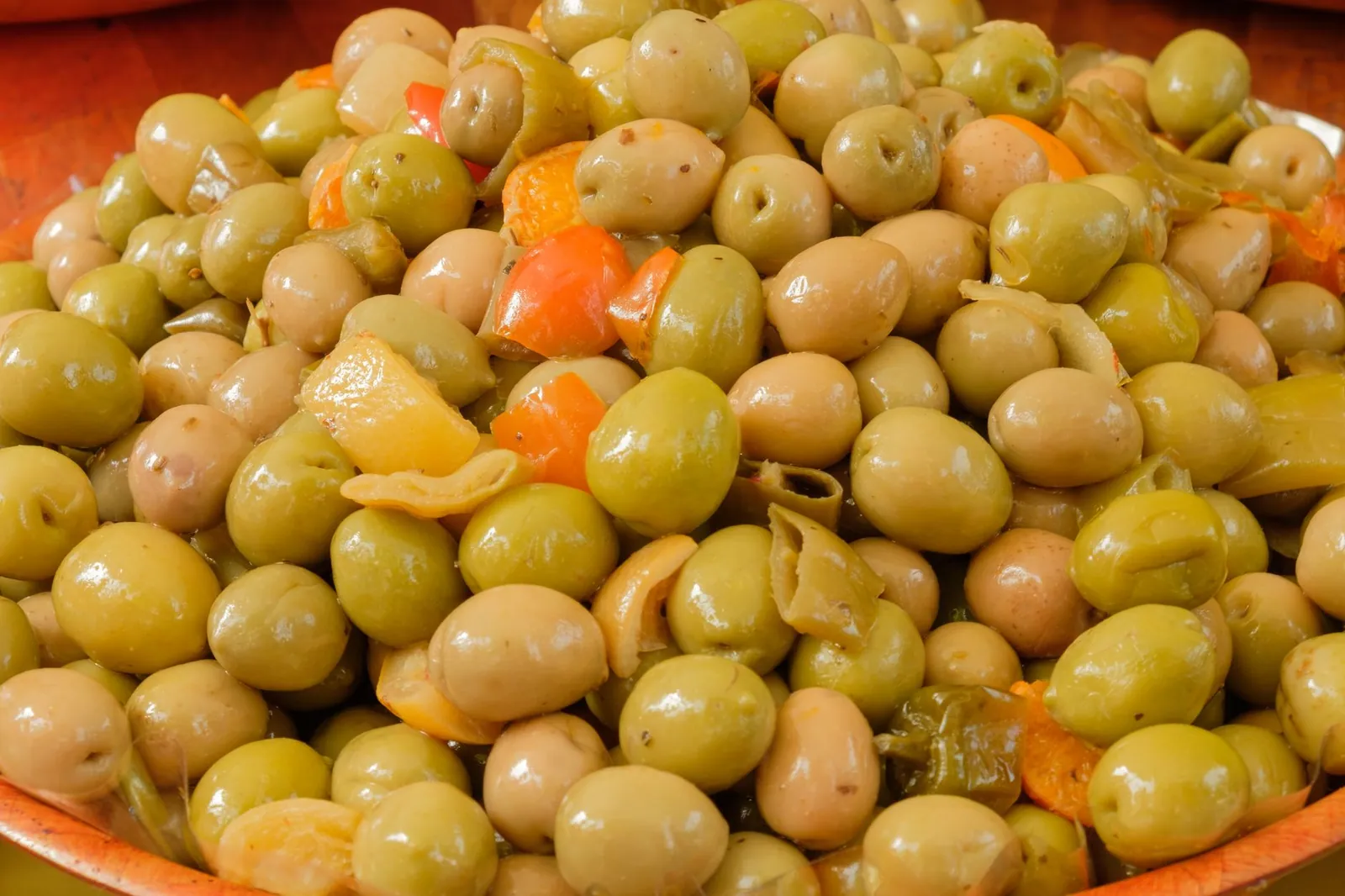
The Olive Sector in Turkey: Structure, Exports and Challenges
Production, exports, business structure and price: the Turkish olive sector in figures, and where the chain breaks.
 Article
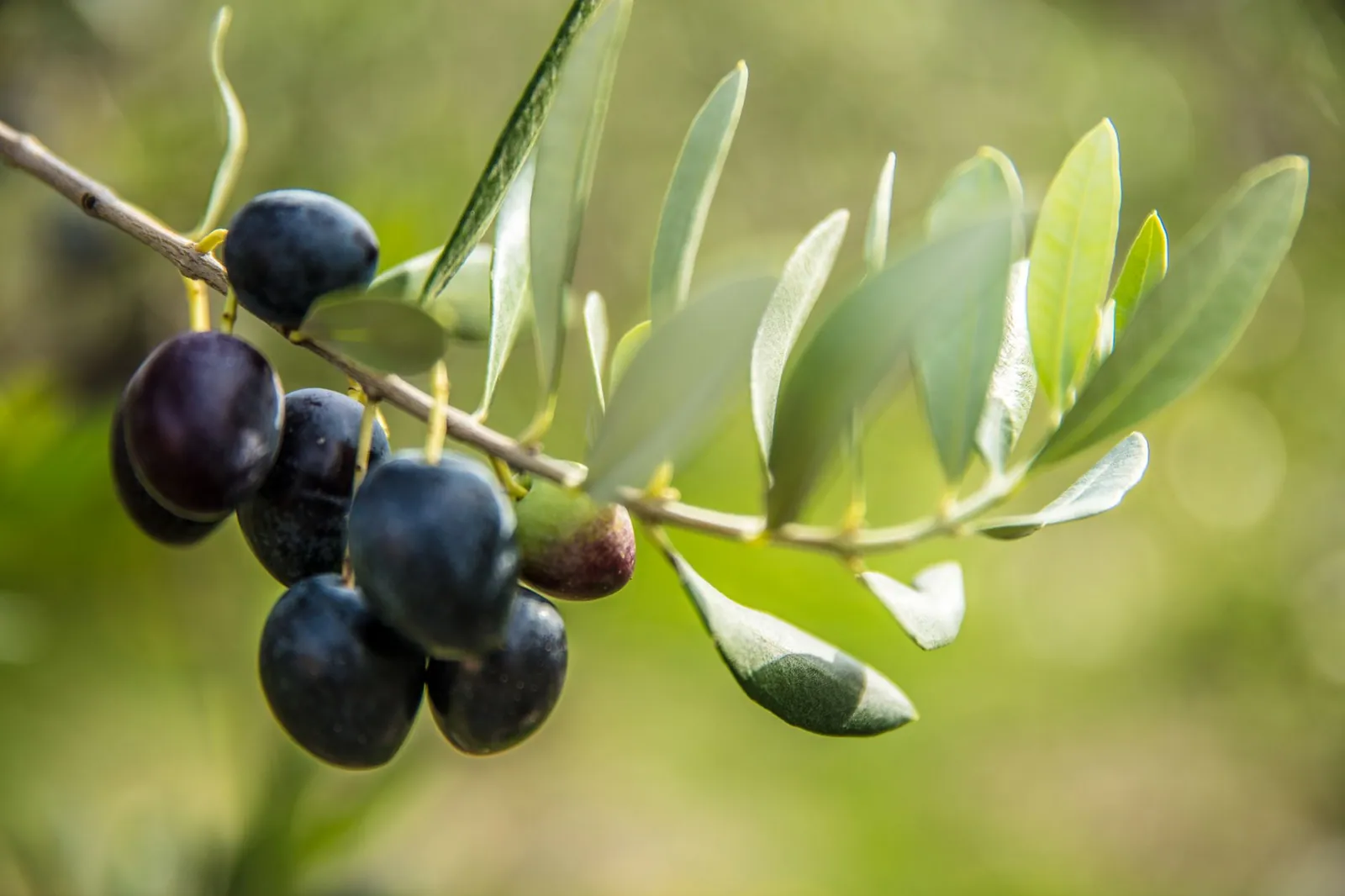
Geographical Indication Olives and Olive Oils of Turkey
Türkiye's registered olive and olive oil geographical indications: which product, which locality, under what conditions — and what registration means.
 Article
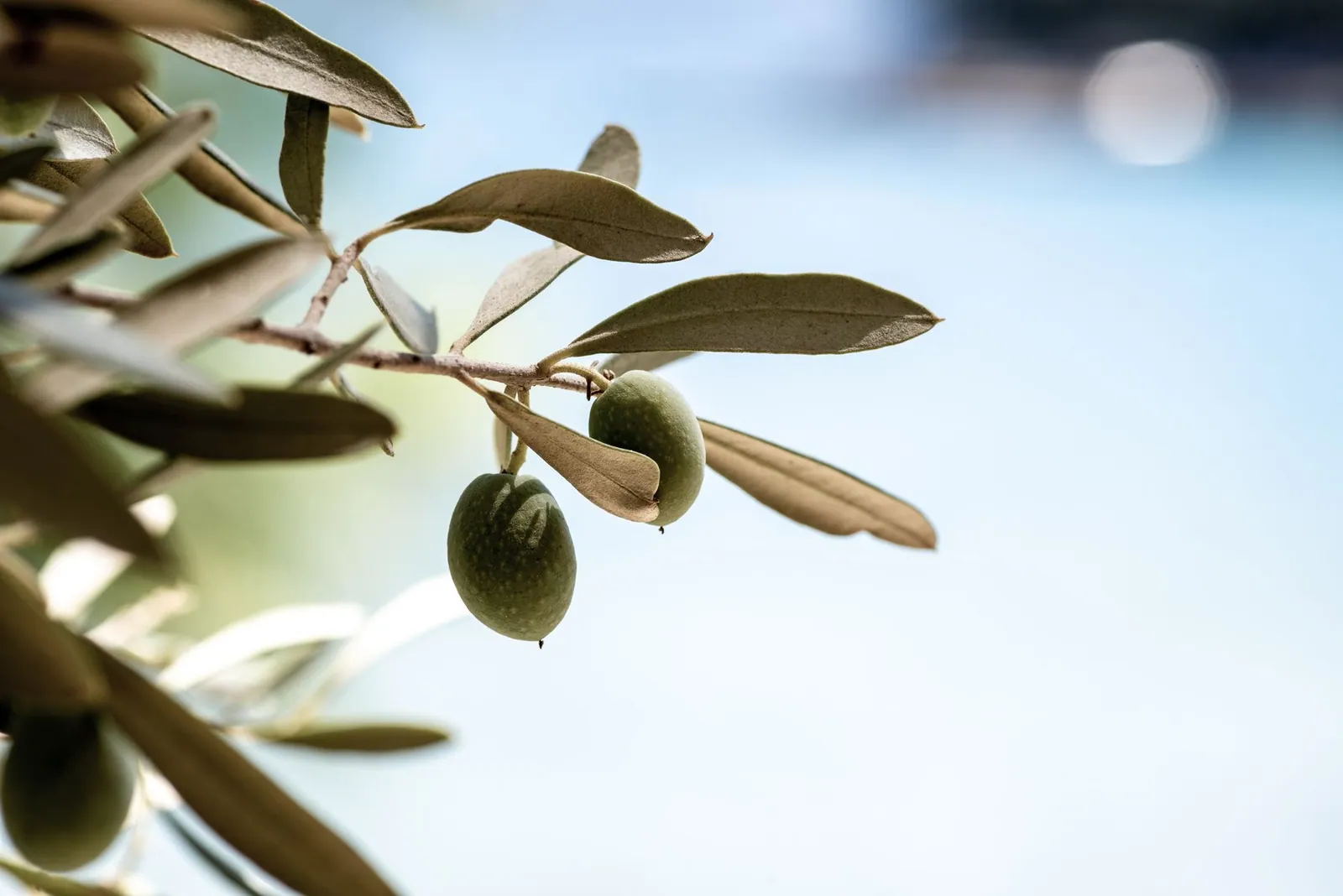
Olive Oil Fraud and Adulteration: How It Is Done and How It Is Caught
Seed oil blending, refined oil sold as extra virgin, soft deodorisation… The economics of fraud, the laboratory methods, and the home tests that do not work.
 Article
How to Read an Olive Oil Label
Grade, harvest year, acidity, origin and bottling place: which statements on a label are binding and which are just marketing — with a quick checklist.
 Article
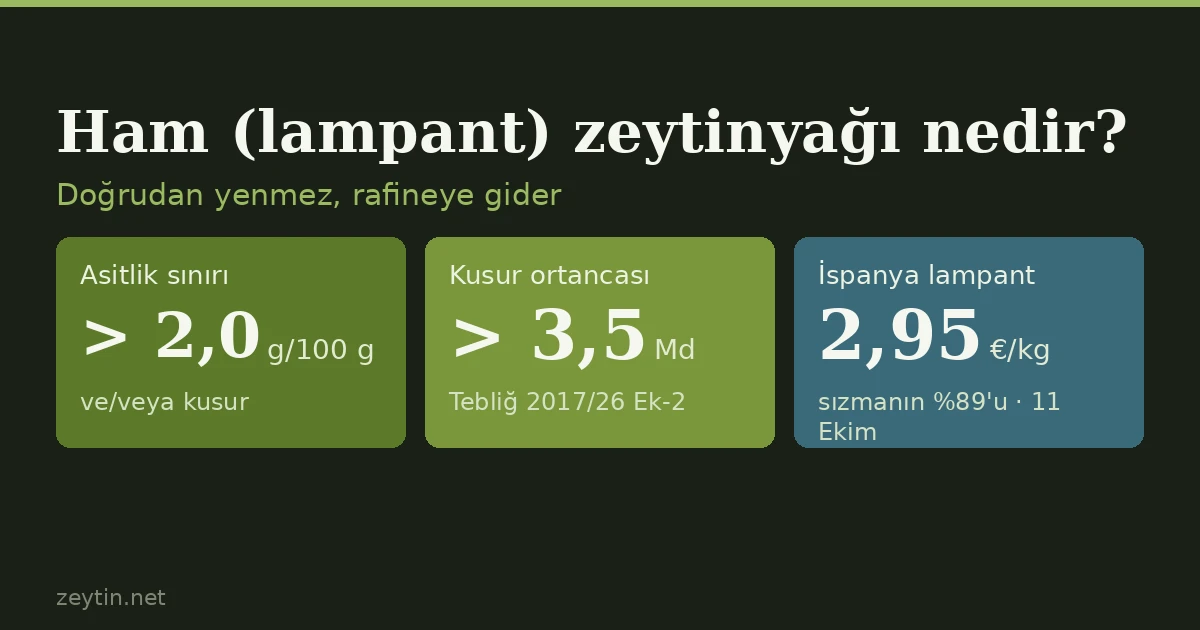
What is lampante olive oil, and why can't it be eaten as it is?
Crude olive oil — lampante, internationally — is oil obtained from olives by mechanical means alone but not considered fit for direct consumption, because its acidity exceeds 2.0 or the tasting panel's median of defects is above 3.5. At the refinery it becomes refined olive oil, and blended with virgin oil it becomes riviera. In the European Commission series for the week of 11 October, Spanish lampante stood at 2.95 €/kg, 89% of the extra virgin price; in Italy at 2.77 €, 63%.
 Article
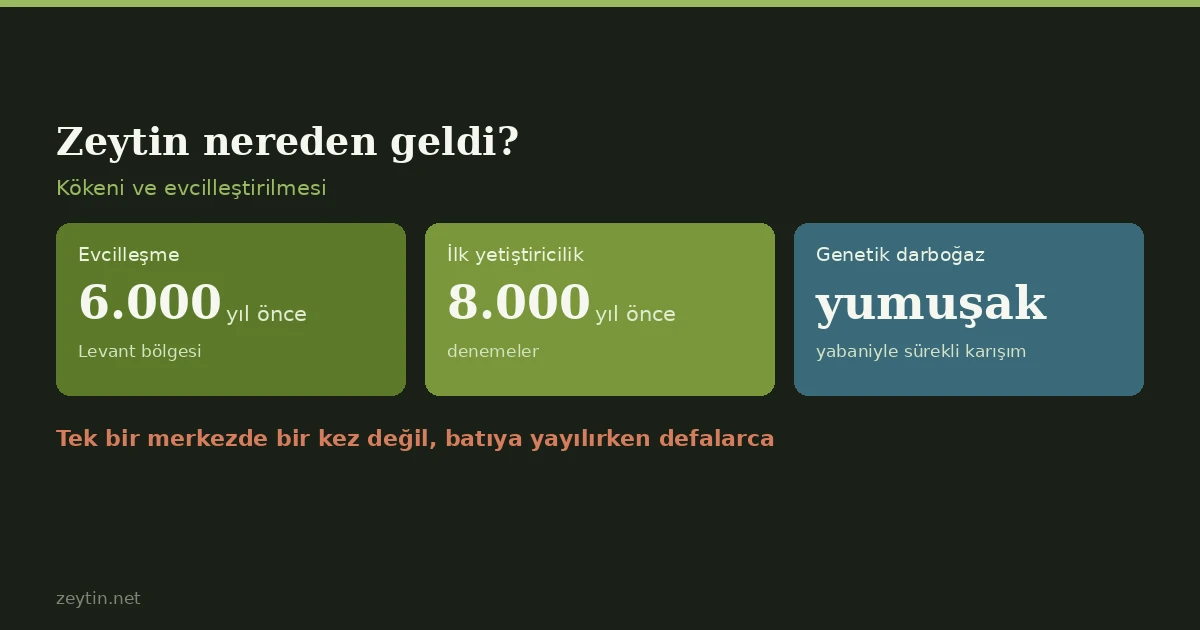
Where did olives come from? Origin and domestication
The olive was domesticated about 6,000 years ago in the Levant — but not at a single centre. Genetic work shows the cultivated olive kept mixing with the wild oleaster throughout its spread.
 Article
Gemlik-Orhangazi Olive Festival, 10-13 September: what the registration says about the name
Gemlik and Orhangazi are holding their olive festivals together for the first time, on 10-13 September 2026. Dropping “Gemlik Olive” from the name drew criticism. The registered area under record no 76 covers four districts: Gemlik, İznik, Orhangazi and Mudanya.
 Article
The oil was a medicine: two thousand years of olive oil in medicine and folk practice
For most of its history olive oil was not food but lamp fuel, soap, ointment and medicine. Rome's four grades are the ancestor of today's label — and much of what survives in folk medicine is two thousand years old.
 Recipe
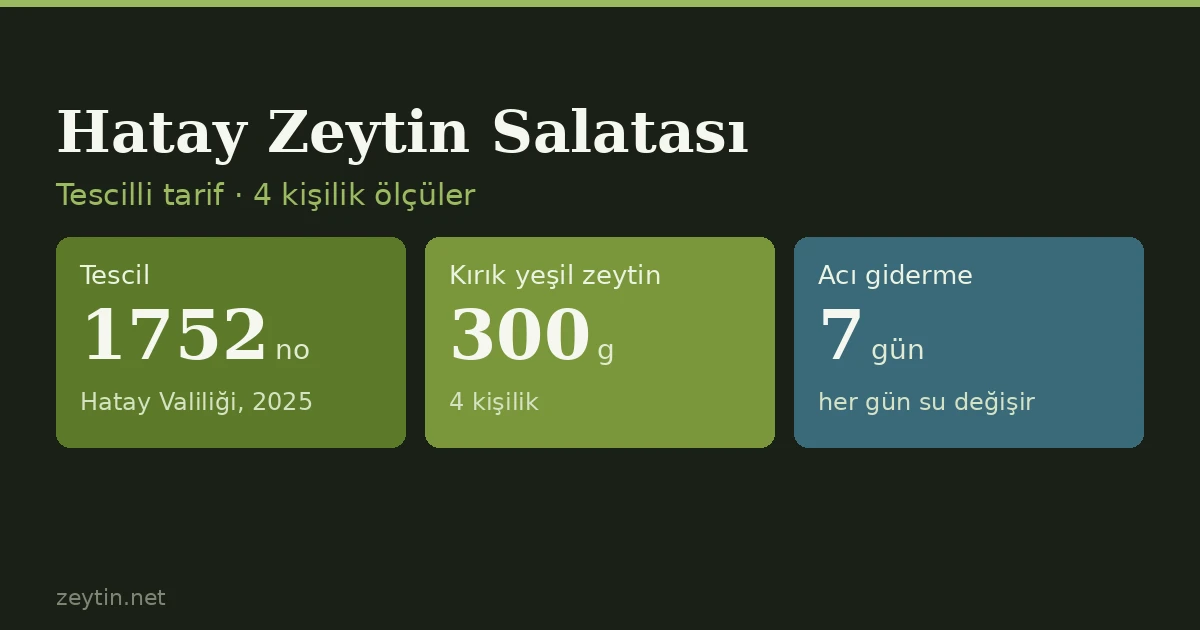
Hatay olive salad (zeytin piyazı)
Hatay's registered olive salad: cracked green olives, spring onion, tomato, red pepper, pomegranate molasses and extra virgin olive oil, for four.
 Recipe
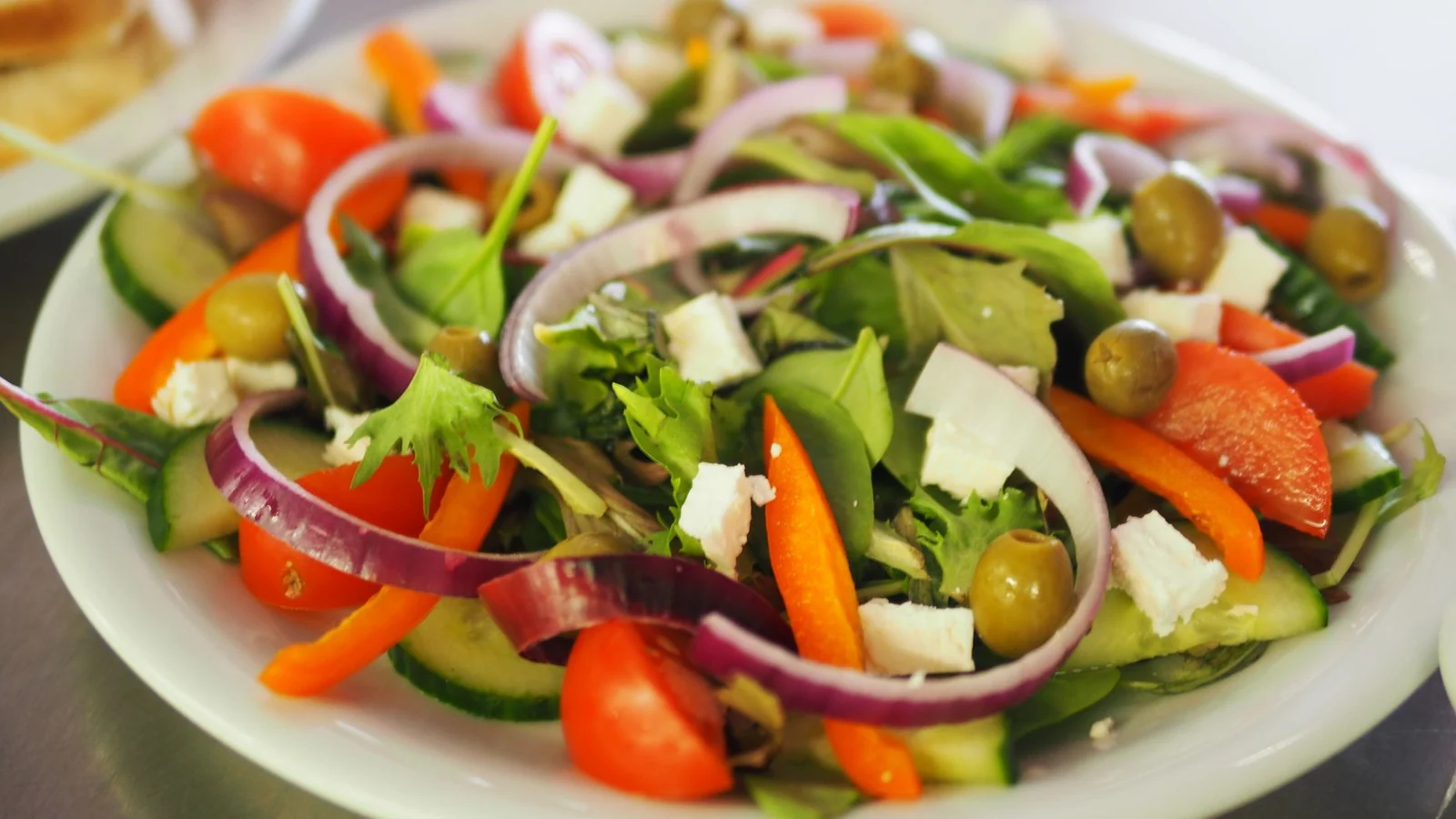
Chard in Olive Oil
Spinach's lesser-known relative: the stems and the leaves cook separately, and that separation defines the recipe.
 Recipe
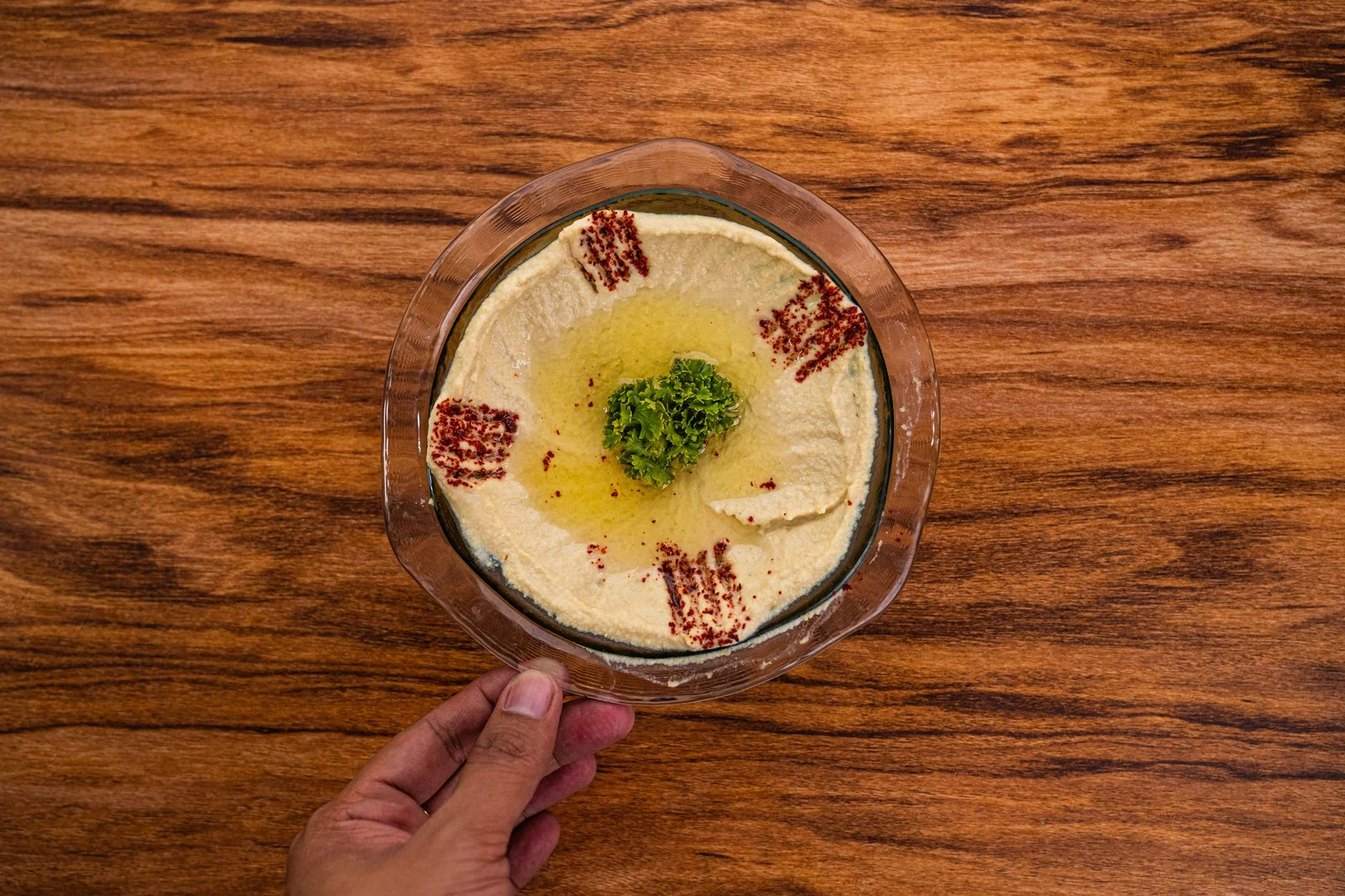
Chickpeas in Olive Oil
The Mediterranean's meatless protein pairing in one pot: chickpeas and olive oil, with tomato and lemon, served cold.
 Article
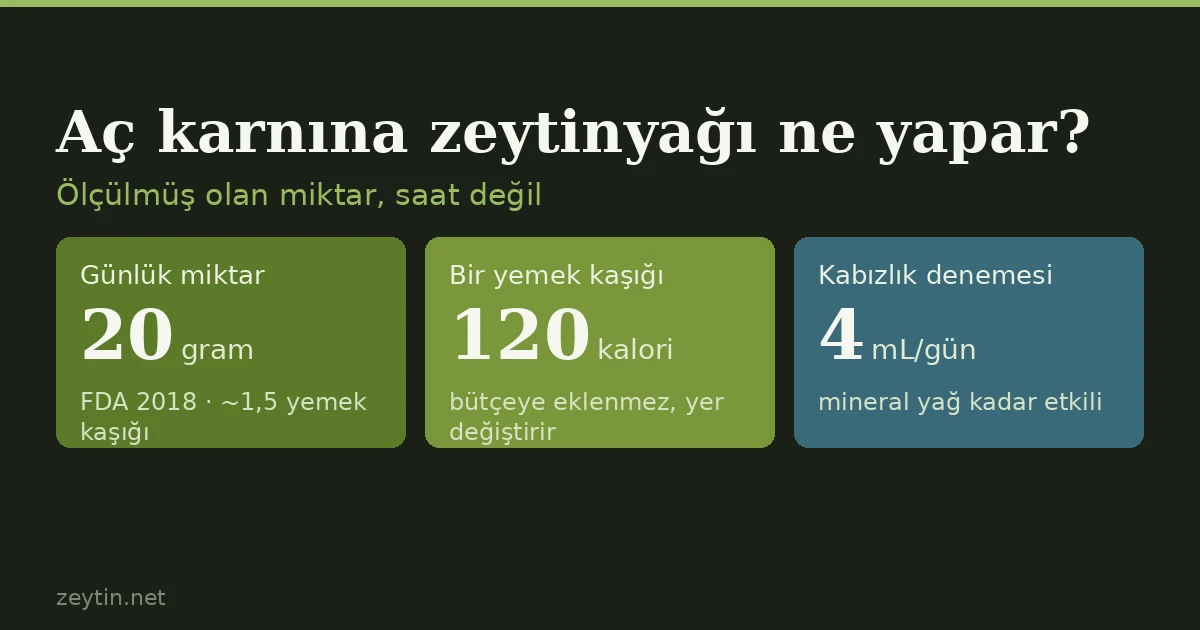
What does drinking olive oil on an empty stomach actually do?
A spoonful of olive oil in the morning is a common habit, but there is no proven separate benefit to taking it on an empty stomach. What actually happens in the body, which claims have been measured and which are myth: the gallbladder, constipation, the calorie arithmetic and the truth about "liver flush" stones.
 Article
When can babies have olive oil?
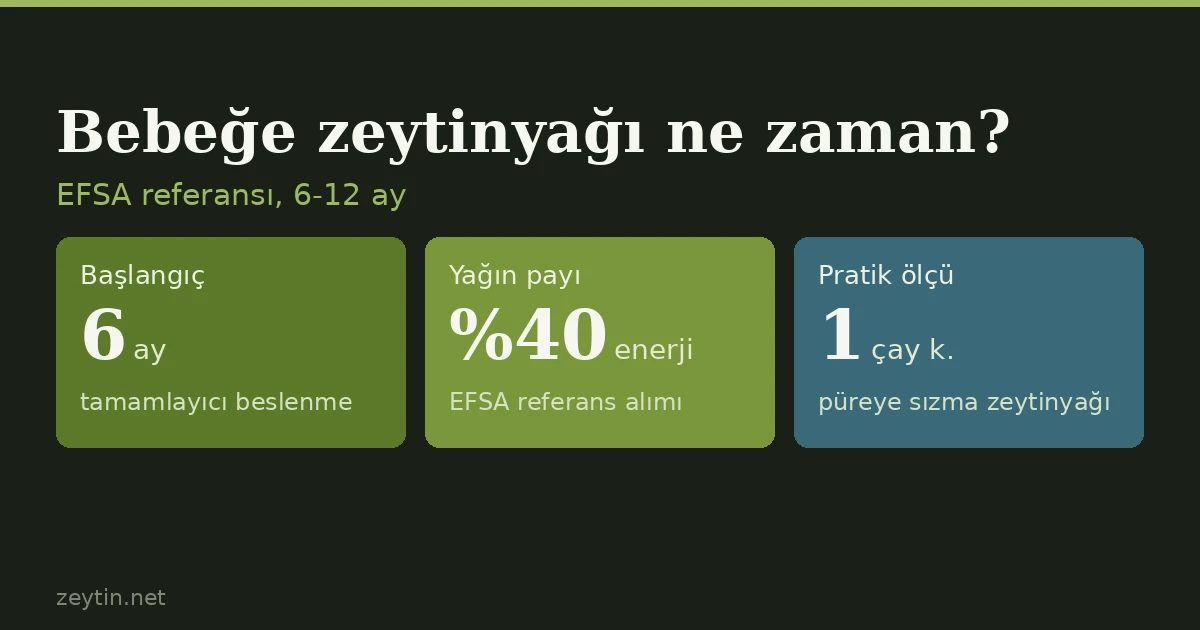
Complementary feeding starts at the end of the sixth month, and olive oil has a place at that table — because a substantial share of an infant's energy has to come from fat. EFSA's reference intake for 6-12 months is 40% of energy. But two separate questions get mixed up: adding oil to a purée is not the same as giving olive oil for constipation, and a table olive is not olive oil as far as a baby is concerned.
 Article
Can people with diabetes eat olives and olive oil?
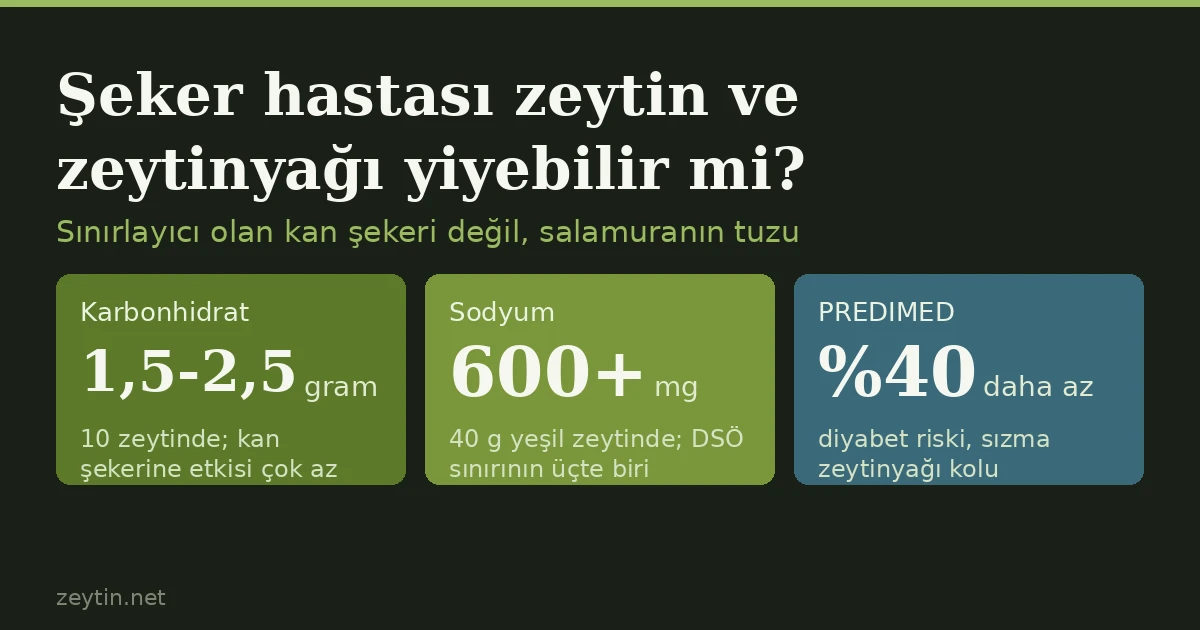
It looks like one question but contains two: table olives and olive oil. Neither is off limits in type 2 diabetes; olives carry too little carbohydrate to measure a glycaemic index for, and oil carries none. The real limiting factor is not blood sugar but the salt in the brine.
 Article
Lichen and moss on olive trees: harmful, or just a symptom?
The grey-green crusts and cushions of green on an olive trunk are not a disease: lichen is epiphytic, never enters living tissue and takes no water or nutrients from the tree. The real risk is the scale insects sheltering beneath it. Turkey's official olive IPM manual does not list lichen or moss as pests at all; the answer is not scraping but pruning the canopy open and restoring tree vigour.
 Article
How many days after the last spray can olives be harvested? Pre-harvest interval and residues
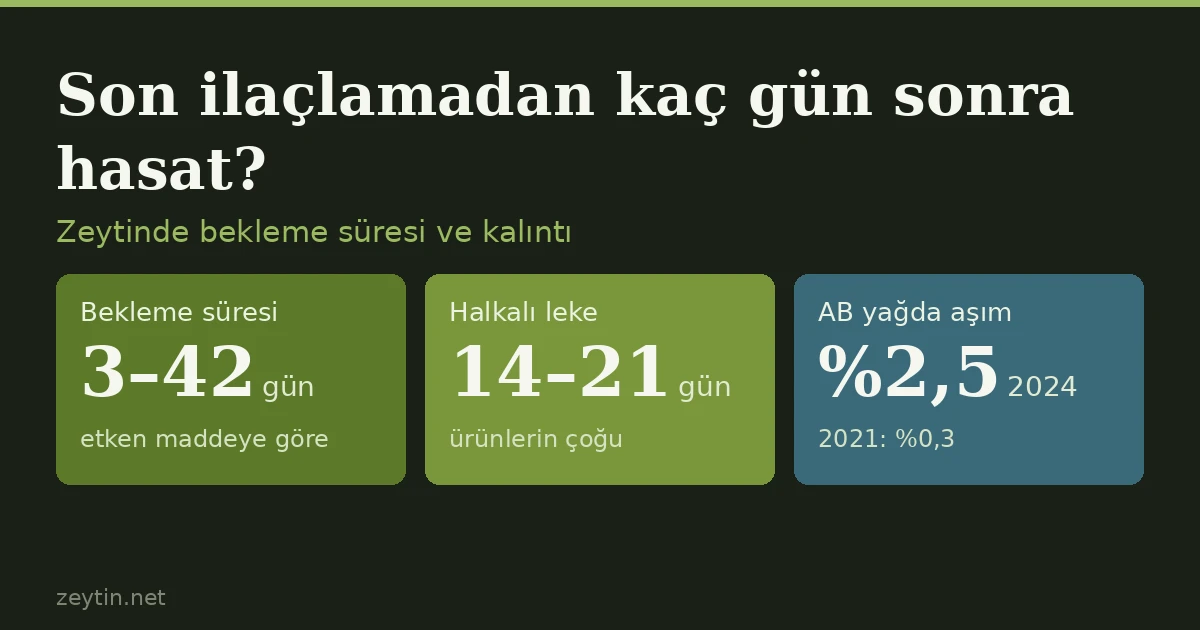
The interval between the last spray and harvest in olives ranges from 3 to 42 days depending on the active substance; most peacock spot products carry 14–21 days. Fat-soluble residues concentrate in the oil at pressing; EU exceedances in virgin olive oil rose to 2.5% in 2024. 2026/27 is Turkey's first harvest with spraying and harvest recorded plot by plot under B-Reçete.
 Article
The olive pest calendar and intervention thresholds
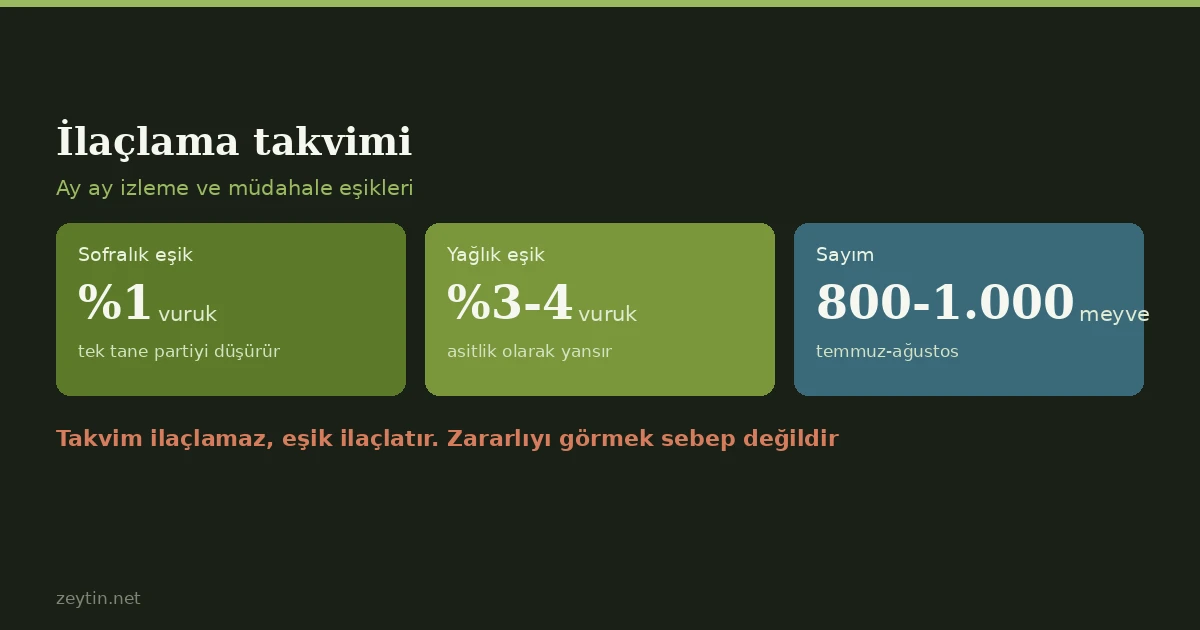
Month by month: which pest is at which stage, and when to count. Fly infestation thresholds, black scale shoot counts, and the three regional programmes for peacock spot.
 Article
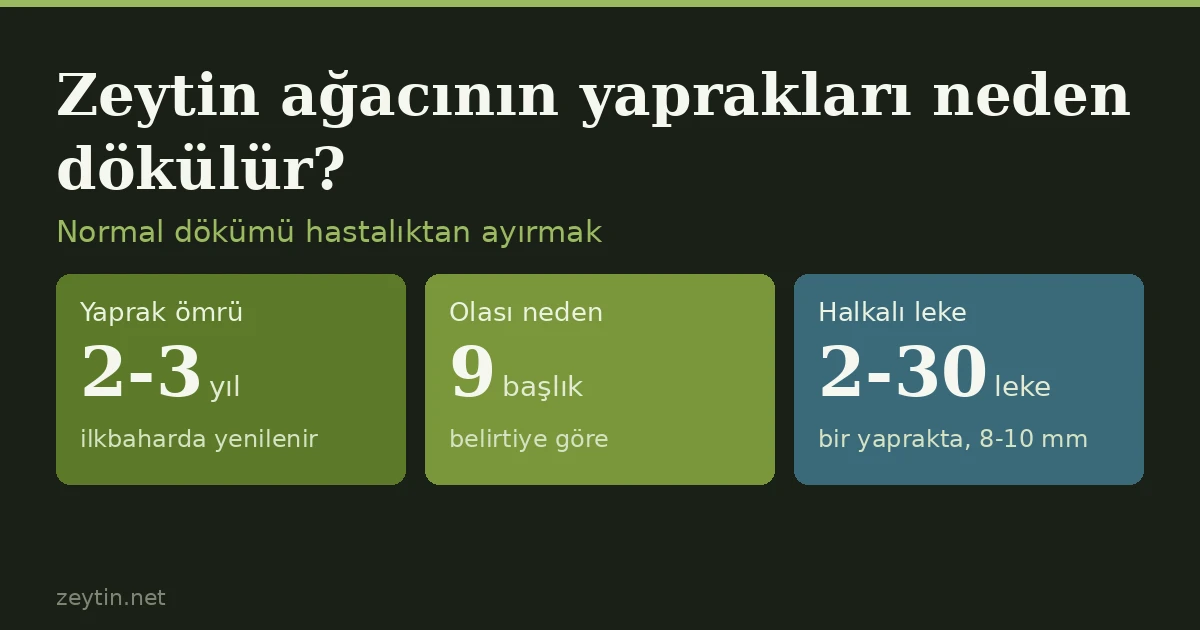
Why is my olive tree dropping its leaves?
An olive leaf lives two to three years and falls in spring along with the new growth; that is normal. The worrying drop is the one whose season, location or amount does not fit. Rings on the upper surface point to peacock spot, grey patches underneath to Cercospora leaf spot, dieback on one branch to Verticillium, one-sided yellowing to root rot. Water, nutrient deficiencies, scale insects, frost and lack of light also make olives shed leaves. How to tell them apart, and what to do.
 Article
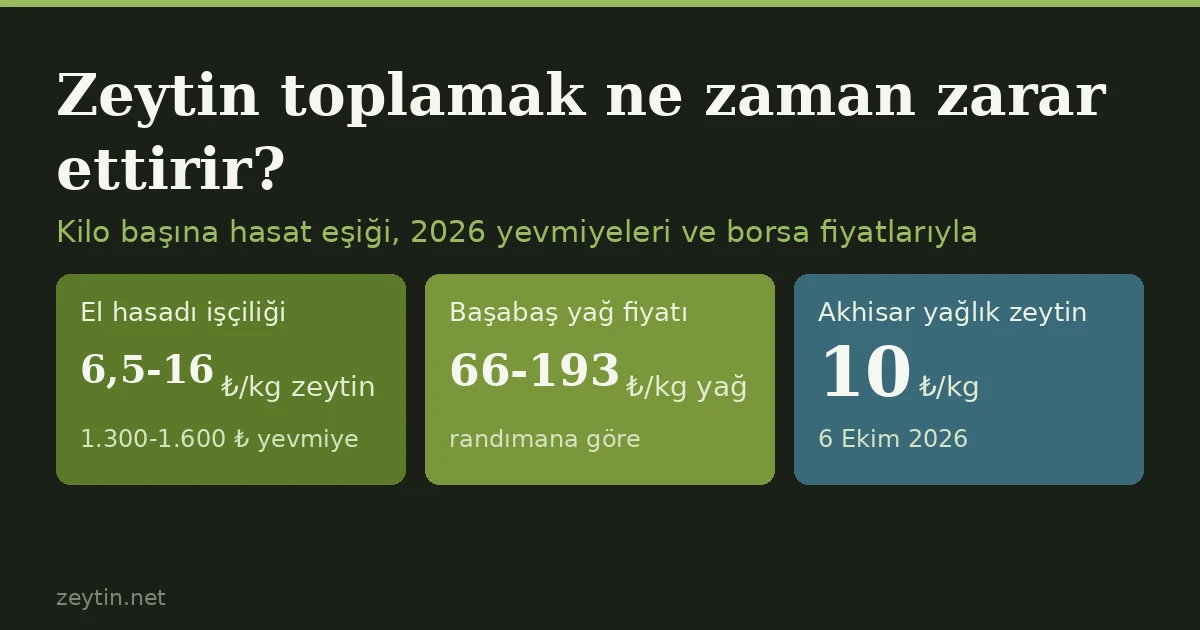
When does picking olives lose money? The per-kilo harvest threshold
Hand-picking labour now costs 6.5-16 TL per kilo of olives. That band is the threshold for growers who sell the fruit; for those who press, break-even oil is 66-193 TL/kg. Built from 2026 wages, milling fees and exchange registrations, with the cost of leaving fruit on the tree.
 Article
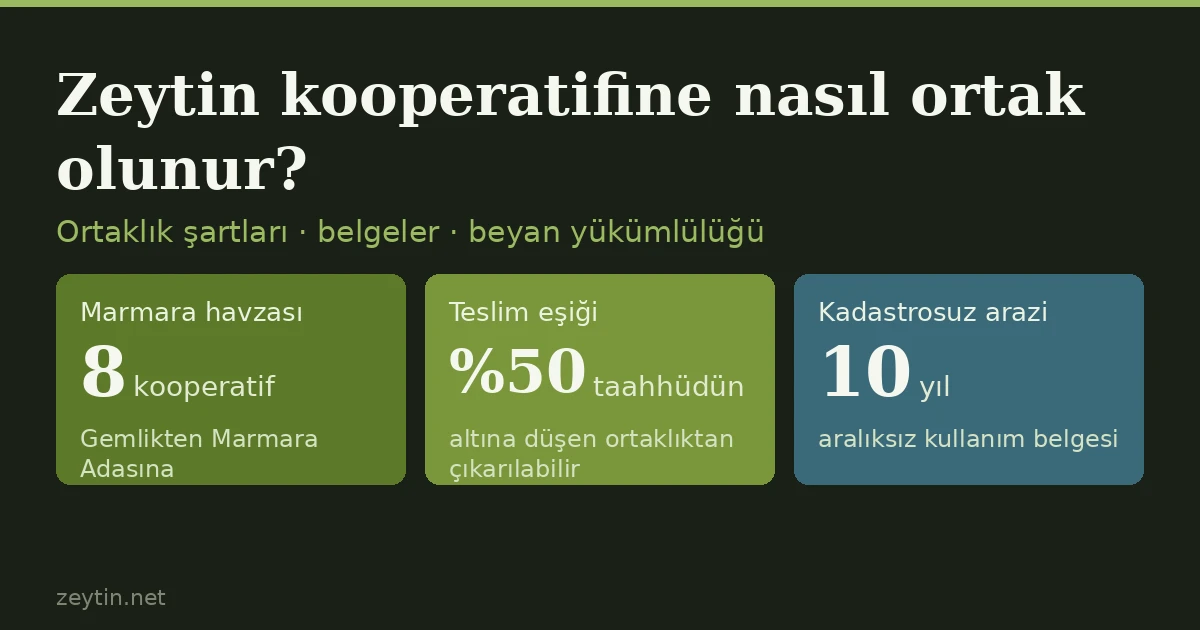
How do you become a member of an olive cooperative?
Joining an agricultural sales cooperative is one of the most asked questions of the harvest season. The conditions are written into the bylaws: you must be a grower, you must not trade in the same products, and you cannot belong to another cooperative in the same region. The real obligation, though, is the crop declaration — because that document is a delivery commitment.
 Article
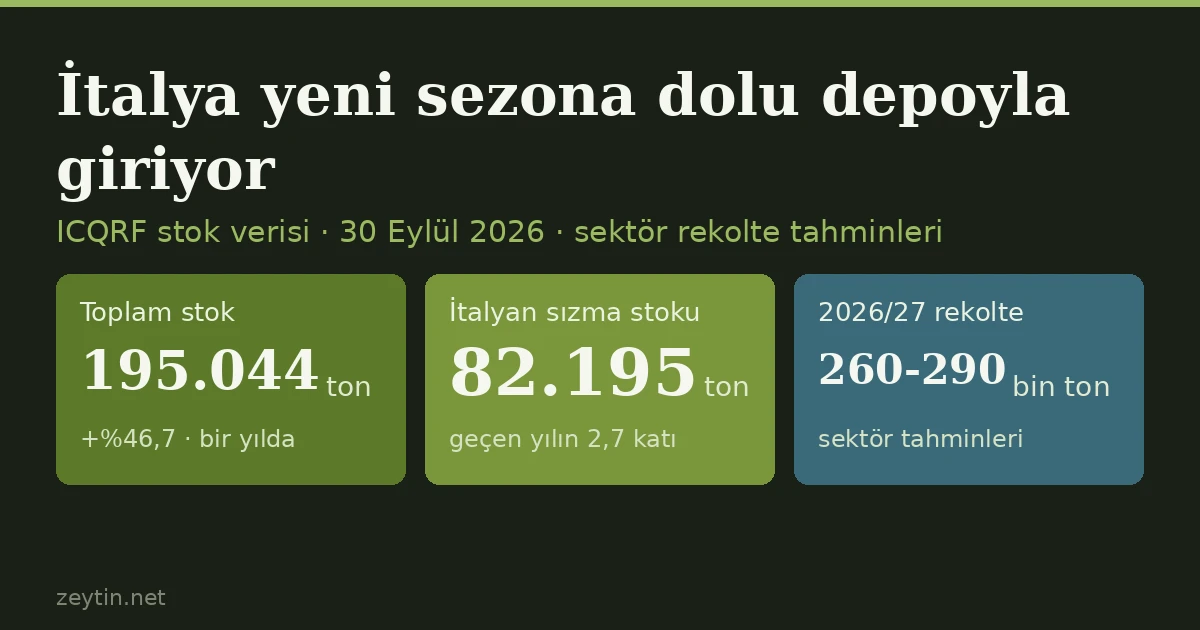
Italy enters the new season with full tanks: 195,000 tonnes in stock, a 260,000-290,000 tonne crop expected
ICQRF's Frantoio Italia register shows 195,044 tonnes of olive oil in Italian storage on 30 September 2026, up 46.7% in a year; Italian extra virgin stocks of 82,195 tonnes are 2.7 times last year's. Sector estimates put the 2026/27 crop at 260,000-290,000 tonnes, 11-20% below Ismea's 325,000. With stocks added, though, the supply of Italian oil is not shrinking: in the European Commission series Italian extra virgin fell from €9.26 to €4.37 a kilo in a year, and the gap with Spain narrowed from €5 to €1.
 Article
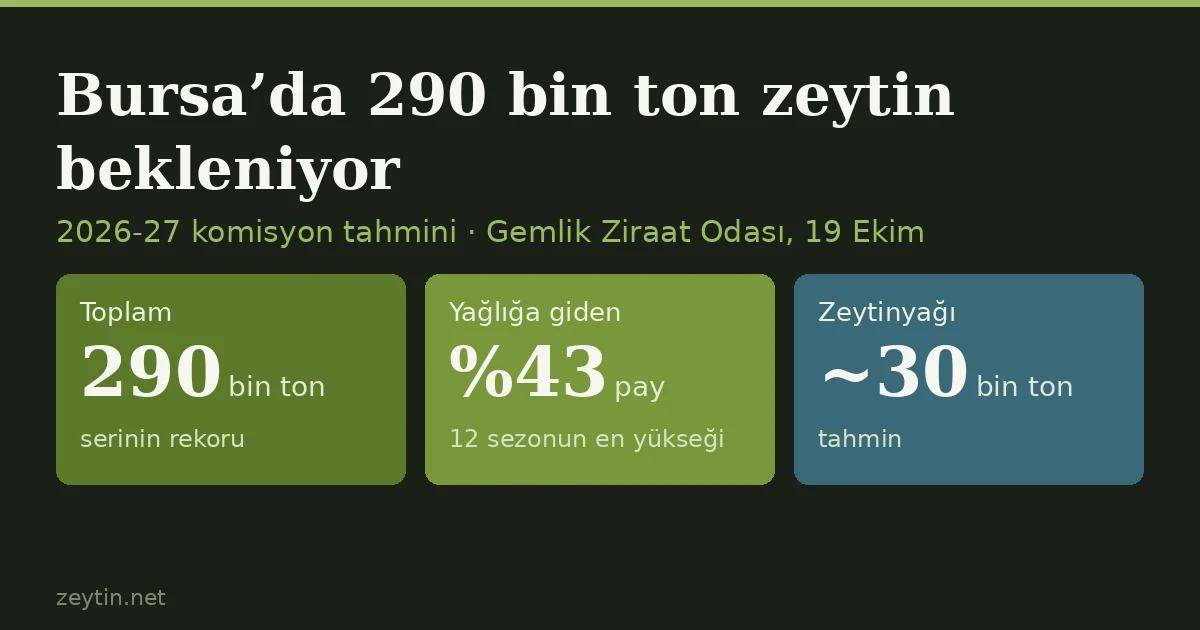
Bursa expects 290,000 tonnes of olives, with the biggest share going to oil in 12 seasons
According to a provincial commission estimate shared by the Gemlik Chamber of Agriculture on 19 October, Bursa expects 290,000 tonnes of olives this season: 165,000 tonnes of table olives, 125,000 tonnes of oil olives and about 30,000 tonnes of olive oil. The crop is a record for the series, and the 43 percent share going to oil is the highest in 12 seasons. Early-harvest olives are fetching 45-60 lira per kilo.
 Article
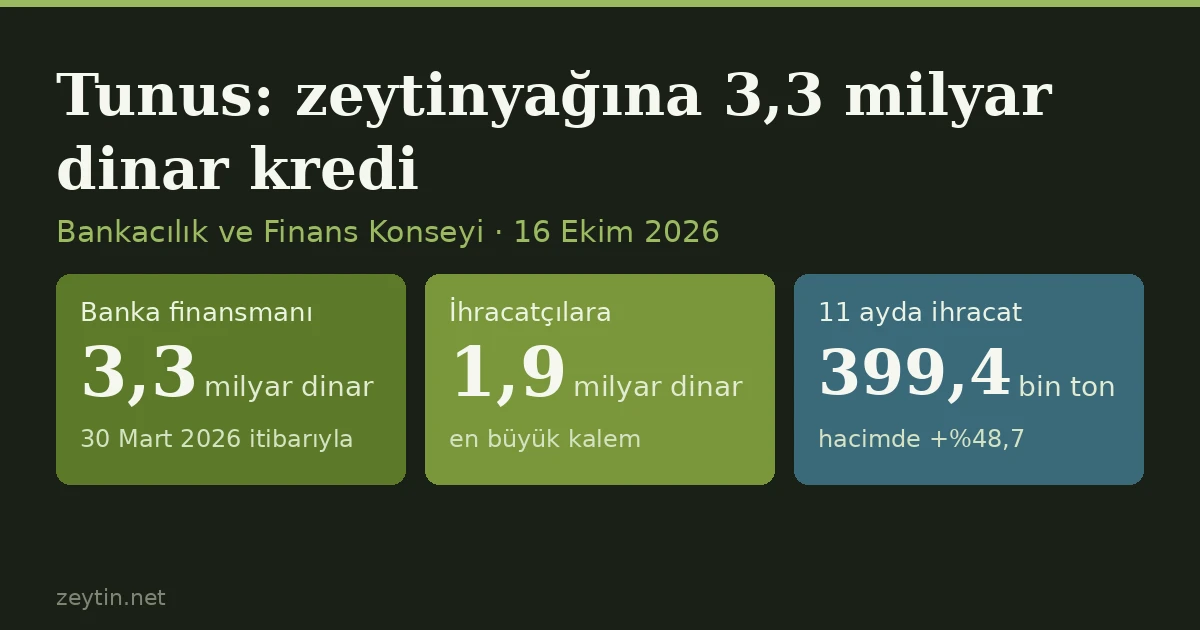
Tunisian banks lent 3.3 billion dinars to the olive oil season; the 2027 draft budget earmarks bulk export duties for a sector fund
According to Néji Ghandri, president of the Tunisian Banking and Financial Council, banks extended 3.2-3.3 billion dinars to the 2025/26 olive oil season by 30 March, up from 2.2 billion the season before; 1.9 billion went to exporters. Tunisia exported 399,400 tonnes in eleven months. The 2027 draft budget opens a 100-million-dinar credit line for small growers and earmarks 10 per cent of bulk export duty revenue for a sector fund; it is not a new tax.
We use cookies to remember your preferences and, with your consent, to count visits (Google Analytics) and show ads. Until you choose, nothing is sent to third parties. Cookie policy · Privacy