The Gemlik olive: small fruit, six times the flesh
Turkey s only olive cultivar with a geographical indication: 3.7 g fruit, a 6.4 flesh-to-pit ratio, 29-30% oil. Self-fertility measurements, chilling requirement, and why it is still picked by hand.
In Turkey, the taste most people mean by "olive" is Gemlik. It is the dominant cultivar in the black brine olives of the breakfast table, and as the only olive cultivar in Turkey with a geographical indication, the protected name covers only fruit grown within the boundaries of Gemlik, Orhangazi and İznik.
This page gathers the cultivar's measured characteristics: fruit size, oil content, flesh-to-pit ratio, chilling requirement and — usually skipped elsewhere — its self-fertility behaviour. Where sources disagree, the disagreement is shown.
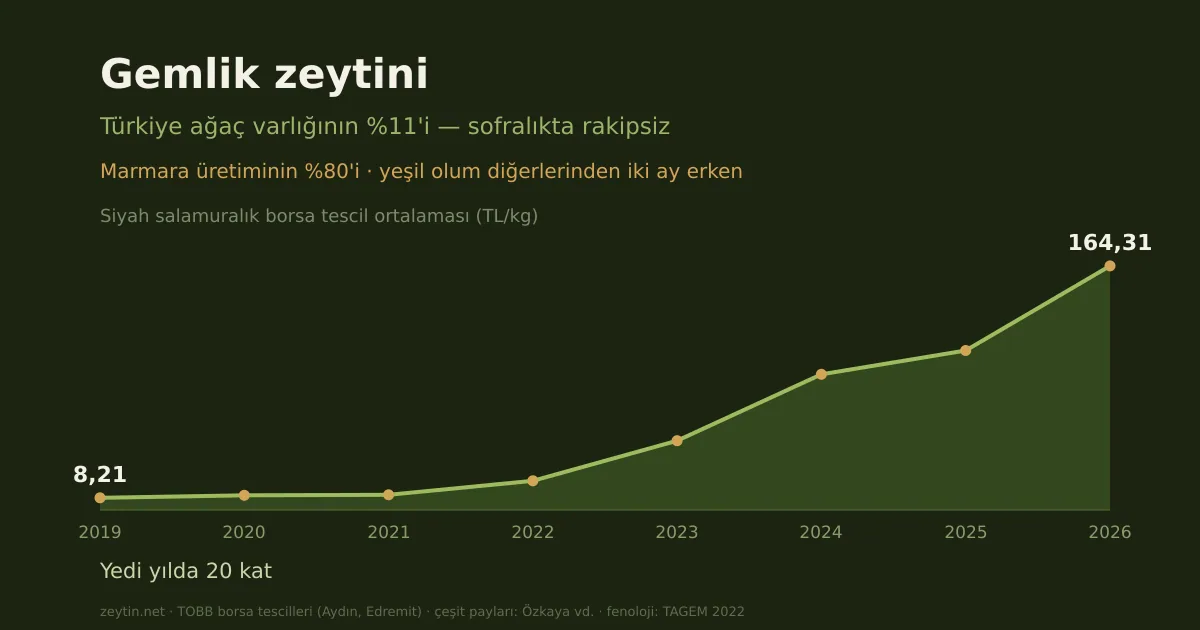
Gemlik in numbers
| Property | Value | Note |
|---|---|---|
| Fruit weight | ≈ 3.7 g | 201-410 fruits per kilo; medium size |
| Oil content | 29-30% | Measured at black maturity |
| Flesh / pit ratio | 6.4 | Sources give 6:1 to 7:1 |
| Chilling requirement | ≈ 600 hours | 25 days · among the low-requirement cultivars |
| Self-fertility | partial | Index 0.29 — sets fruit alone, but less |
| Harvest | Nov-Jan | Traditionally picked one by one, by hand |
| Geographical indication | yes | Gemlik · Orhangazi · İznik |
Why small fruit is an advantage here
Gemlik's fruit weighs 3.7 grams — less than half of Domat's 7.96 g. In table-olive growing larger fruit is usually worth more; Gemlik is the exception, because it does a different job.
What decides it is the flesh-to-pit ratio: 6.4. The flesh weighs more than six times the pit. A small, elliptical pit combined with thick flesh gives an olive that holds together in black brine while the flesh separates cleanly from the stone. That is the defining property of salma Gemlik — bite it and the flesh releases the pit.
The thin skin belongs to the same equation: it lets the brine reach the flesh quickly without shrivelling the fruit.
Oil or table — both
Gemlik resists a single category. At 29-30% oil it sits in the range of oil cultivars; yet most of the crop goes to the table.
That dual use gives the grower flexibility but complicates the pricing decision: fruit from the same orchard is valued completely differently depending on which channel it enters. How far the table-versus-oil price gap has opened is calculated separately: the same olive, six times the price.
⚠ The oil figure holds at black maturity. Fruit picked green measures markedly lower — a difference caused by harvest timing, not by the cultivar.
Self-fertility: what "partial" means
Most sources say Gemlik is "self-fertile" and leave it there. Measurement gives a more detailed picture.
In a self-pollination and open-pollination trial on five cultivars in the GAP region, Gemlik came out partially self-fertile, with a self-fertility index of 0.29. Fruit set was as follows:
| Treatment | Fruit set |
|---|---|
| Open pollination | 17.23% |
| Self-pollination | 8.25% |
So Gemlik planted alone does bear — but at half the rate. Adding a pollinator is not about making the cultivar work; it is about doubling the yield. In the same trial Yuvarlak Halhalı was self-sterile, Delice and Nizip Yağlık self-fertile, and Domat partial like Gemlik.
The distinction is money in an orchard plan: in a self-sterile cultivar a pollinator is compulsory; in Gemlik it is a cost-benefit calculation.
Chilling: the opposite of Domat
Gemlik's winter chilling requirement measures around 600 hours (25 days), placing it in the low-requirement group alongside Adana Topağı, Çilli and Mavi.
The contrast is striking: Ayvalık is reported to need at least 1000 hours (40-45 days), and Domat 552 hours but at a much higher chill-unit value. Gemlik sits at the mild end of that scale.
In practice this means that as winters warm and high-requirement cultivars struggle to complete flowering, Gemlik can still do so across a wider geography. Marmara's mild winter and Gemlik's low requirement fit each other — one of the reasons the cultivar settled there.
Detail: chilling requirement in olives.
The geographical indication and the "real Gemlik" question
Gemlik is the only olive cultivar in Turkey carrying a geographical indication. The registration covers fruit grown and processed in the Gemlik-Orhangazi-İznik triangle.
But as a cultivar, Gemlik saplings have been planted all over Turkey. There are Gemlik trees in the Aegean, the Mediterranean, even the southeast. The words "Gemlik olive" on a shelf usually describe the cultivar, not the place — legally two different things.
On what a geographical indication actually does, and Turkey's 25 olive registrations: 25 registrations, fourth in the world.
Harvest: why still by hand
Gemlik is harvested in November, December and January, traditionally picked one by one or milked from the branch. The reason is not romance: table fruit must not be bruised. Bruised fruit darkens in brine, softens, and is graded out.
Fruit going to oil carries no such concern — there, shaking and mechanical harvesting are options. So harvest method within the same orchard depends on where the crop is headed; and the cost of hand-picking is one reason table prices sit above oil prices.
A second source: the IOC catalogue
The values above come from Turkish sources. The table below is taken from the International Olive Council's world catalogue — the same variety as recorded internationally. We keep the two tables apart because some of the figures do not agree.
| Use | Black table olives and oil |
| Fruits per kilo | 270 |
| Flesh-to-pit ratio | 6.14 |
| Oil content | 29-30% |
| Total phenols | 244-491 mg CAE/kg |
| α-tocopherol | 207-261 mg/kg |
| Sensory profile | Medium fruitiness, delicate bitterness, medium pungency |
| Ripening | Mid to late October |
| Entry into production | Early |
| Tendency to alternate | Low |
| Self-fertility | Partial — pollinators Ayvalık, Edincik Su, Şam, Samanlı |
| Cold adaptation | High |
| Drought | Sensitive |
| Rooting from cuttings | Easy |
Source: International Olive Council (IOC), World Catalogue of Olive Varieties.
Four lines explain why Gemlik spread so fast: it comes into bearing early, its tendency to alternate is low (so it crops every year), its cold adaptation is high, and it roots easily from cuttings. The last is decisive in the nursery trade — a variety that is easy to propagate is the one that travels.
Its one real constraint is sensitivity to drought; where there is no irrigation, Memecik is the safer choice.
On its share of the national tree stock the sources diverge: the Turkish figure used on this page and the catalogue figure differ. Comparison and discussion: olive varieties of Türkiye.
In short
Despite its small fruit, Gemlik is Turkey's best-known table cultivar — because what decides the matter is not size but the flesh-to-pit ratio (6.4) and the clean release of flesh from stone. At 29-30% oil it can go to the mill, its low chilling requirement lets it grow across a wide geography, and it is partially self-fertile — a pollinator is optional but doubles the yield.
The question to settle before planting is simple: table or oil? The answer sets the harvest date, the harvest method and the price together.
Registered names built on this variety
The registration covers the product of a defined area — not this variety wherever it is grown.
- Gemlik Olive designation of origin · reg. no 76 · Gemlik · İznik · Orhangazi · Mudanya
Where it stands among measured varieties
Zeytin Kitabı — Efe, Soykan, Cürebal, Sönmez (2016), Kitabevi Yay. s.37-80
Zeytin Kitabı — Efe, Soykan, Cürebal, Sönmez (2016), Kitabevi Yay. s.37-80
Zeytin Kitabı — Efe, Soykan, Cürebal, Sönmez (2016), Kitabevi Yay. s.37-80
Zeytin Kitabı — Efe, Soykan, Cürebal, Sönmez (2016), Kitabevi Yay. s.37-80
karşılaştırma tablosunda 4,13 g olarak da geçiyor
Values are those published on each variety's own page; the comparison covers only varieties with a measured figure, so it is a comparison of what is known — not of every Turkish variety. See the full ranking and how it is built →
One rating per visitor; you can change yours at any time. Ratings are real reader votes — no seeded or default scores.
Related
 Article
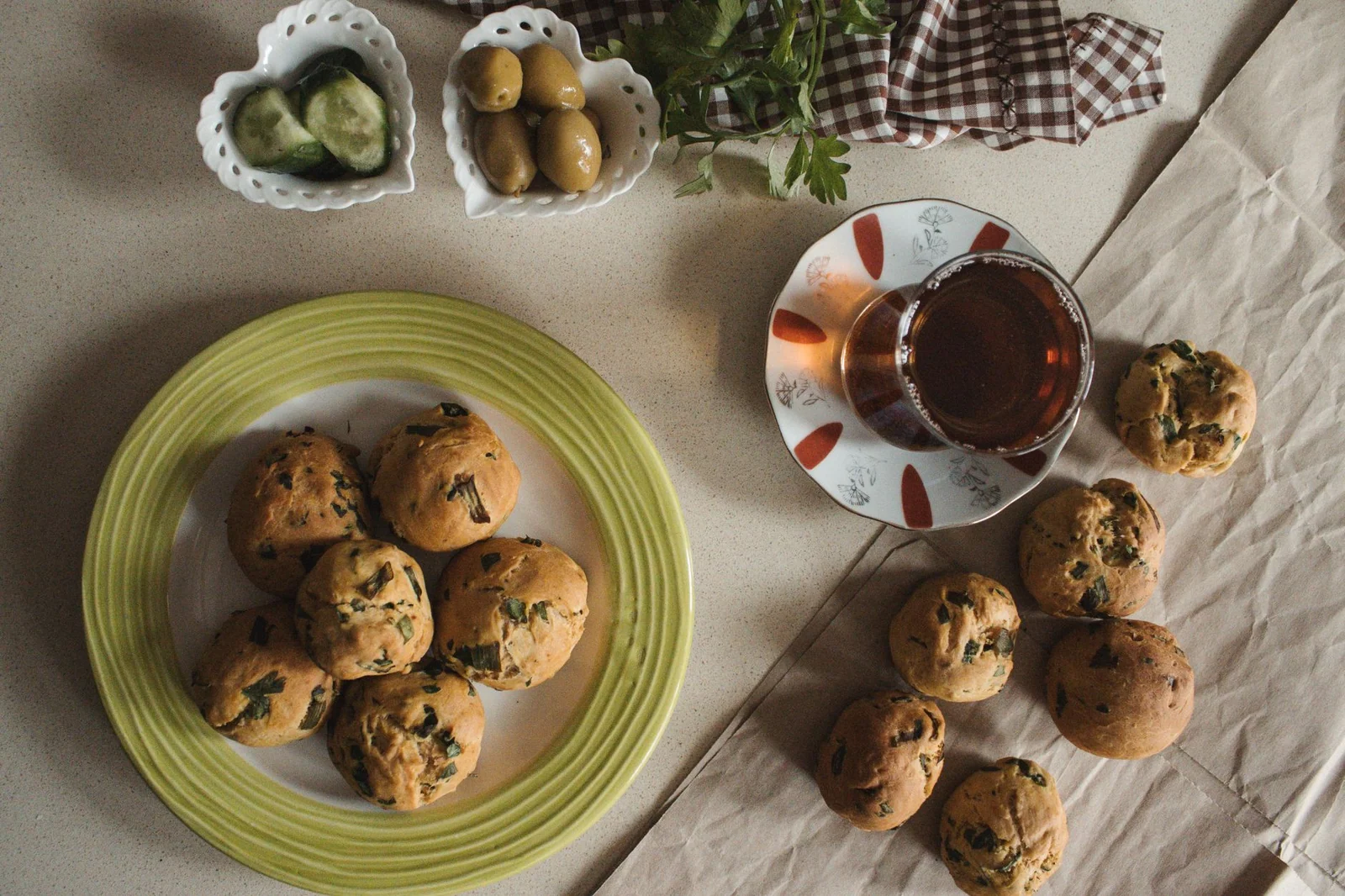
Gaziantep Green Olive Pastry: a registration that turns a recipe into a rule
The only prepared dish among olive geographical indications. The document binds the half-moon shape, the 14-15 cm diameter, the filling gram by gram, the sheep breed, and inspection twice a year. The olives used are oil-type, not table.
Article
Gaziantep Green Olive Pastry: a registration that turns a recipe into a rule
The only prepared dish among olive geographical indications. The document binds the half-moon shape, the 14-15 cm diameter, the filling gram by gram, the sheep breed, and inspection twice a year. The olives used are oil-type, not table.
 Article
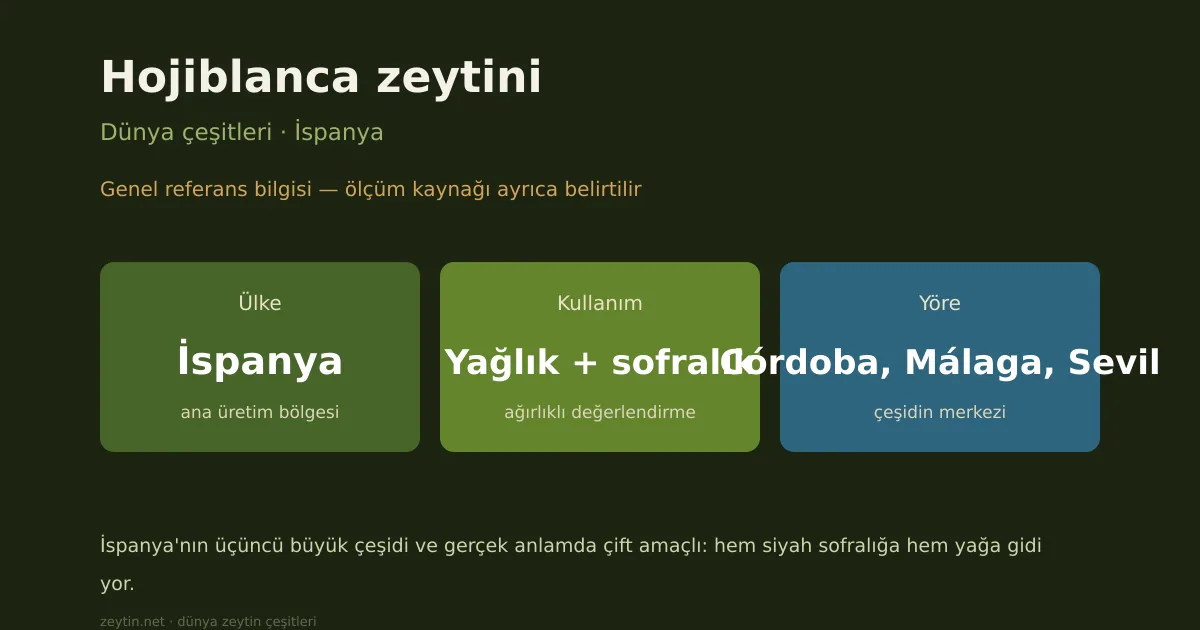
Hojiblanca olive: Spain's oil and table variety
Spain's third-largest variety and genuinely dual-purpose: it goes to black table olives and to oil alike.
Article
Hojiblanca olive: Spain's oil and table variety
Spain's third-largest variety and genuinely dual-purpose: it goes to black table olives and to oil alike.
 Article
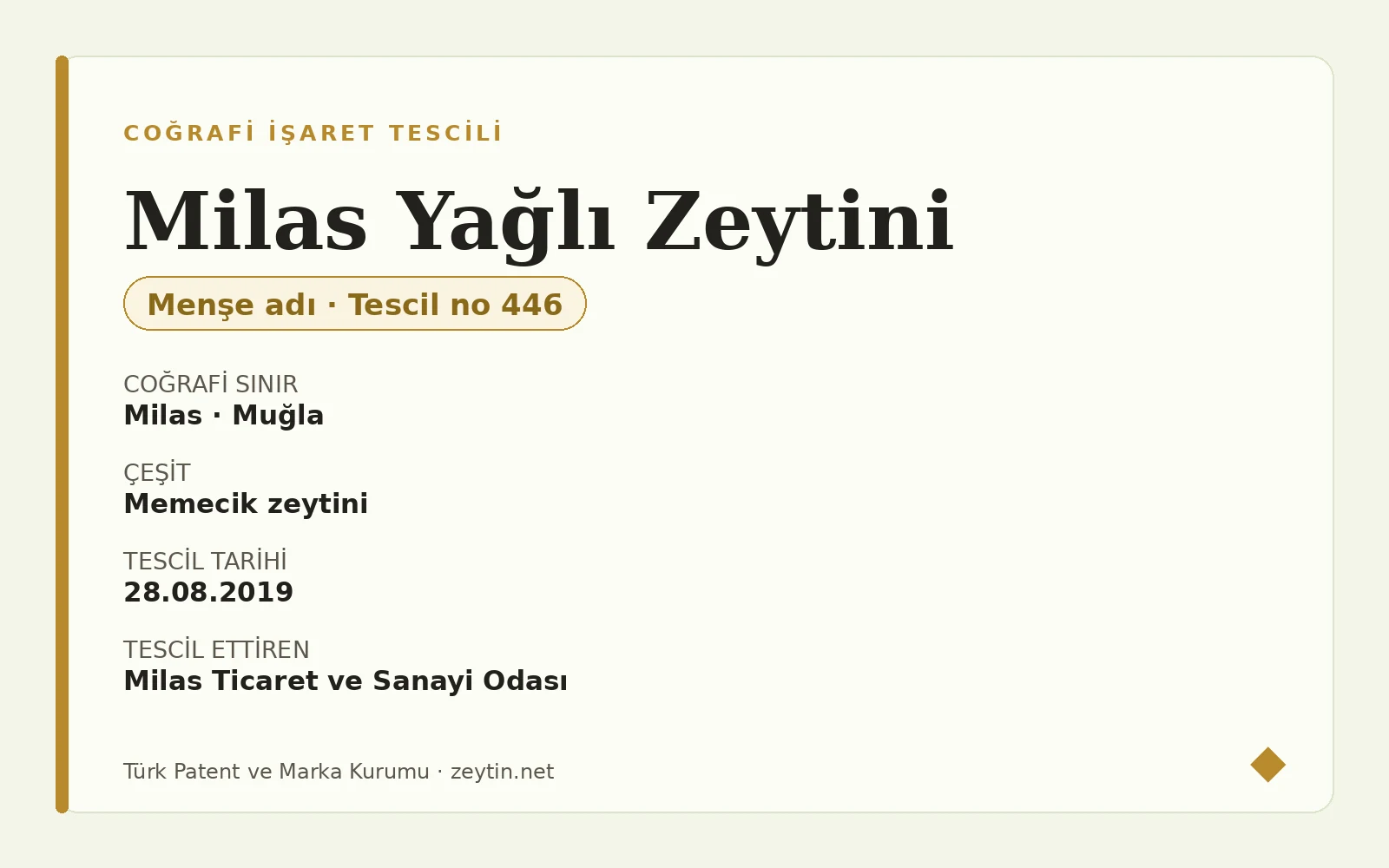
Milas Oil-Cured Olive: the one table-olive registration with measurements
Five of the six registrations are olive oils. This is the one table olive, and its certificate gives fruit dimensions, flesh-to-stone ratio and flesh firmness in figures.
Article
Milas Oil-Cured Olive: the one table-olive registration with measurements
Five of the six registrations are olive oils. This is the one table olive, and its certificate gives fruit dimensions, flesh-to-stone ratio and flesh firmness in figures.
 Article
The Olive: Tree, History, Production and Future
The botany, history and uses of the olive tree; current production figures worldwide and in Turkey, provinces, varieties and the sector's future — with tables.
Article
The Olive: Tree, History, Production and Future
The botany, history and uses of the olive tree; current production figures worldwide and in Turkey, provinces, varieties and the sector's future — with tables.