Zoncuk olive
Zoncuk is a recorded variety of south-eastern Anatolia. No measured pomological data published.
Zoncuk is one of the recorded olive varieties of south-eastern Anatolia.
Characteristics
Large-fruited, used as a table olive.

Where it grows
Zoncuk is recorded in south-eastern Anatolia. The provinces where olive production concentrates in this region: Gaziantep, Kilis, Şanlıurfa, Adıyaman, Mardin.
Regional conditions, varietal spread and output: olive growing in south-eastern Anatolia
Measured values
Among the eight local cultivars measured in Derik, Zoncuk has the smallest fruit.
| Property | Value |
|---|---|
| Fruit weight | 1.52 g |
| Fruit length × width | 16.26 × 12.12 mm |
| Fruit shape index | 1.34 |
| Stone weight | 0.50 g |
| Flesh ratio | 67.1% |
At 1.52 g it falls in the "light" class; Mavi, at 7.10 g, is almost five times heavier.
Small fruit raises the stone's share: the flesh ratio of 67.1% is the lowest of the eight. A third of the fruit is stone — which limits its value as a table olive without ruling out its use for oil.
Other varieties of the region
Belluti · Eğriburun · Hursuki · Kalem Bezi · Kan Çelebi · Kilis Yağlık
Locally
Zoncuk is also known locally as Zonciki and is one of the traditional varieties of the Derik district of Mardin. Derik is the homeland of Halhalı, and olives there are still largely grown by traditional methods.
In neighbouring Şırnak, the measured Kumçatı, Kızılsu and Cizre genotypes showed that the unnamed varieties of this basin can compete with Ayvalık and Gemlik.
More: olive growing in Mardin
Where it stands among measured varieties
çeşit sayfası
çeşit sayfası
çeşit sayfası
çeşit sayfası
Values are those published on each variety's own page; the comparison covers only varieties with a measured figure, so it is a comparison of what is known — not of every Turkish variety. See the full ranking and how it is built →
One rating per visitor; you can change yours at any time. Ratings are real reader votes — no seeded or default scores.
Related
 Article
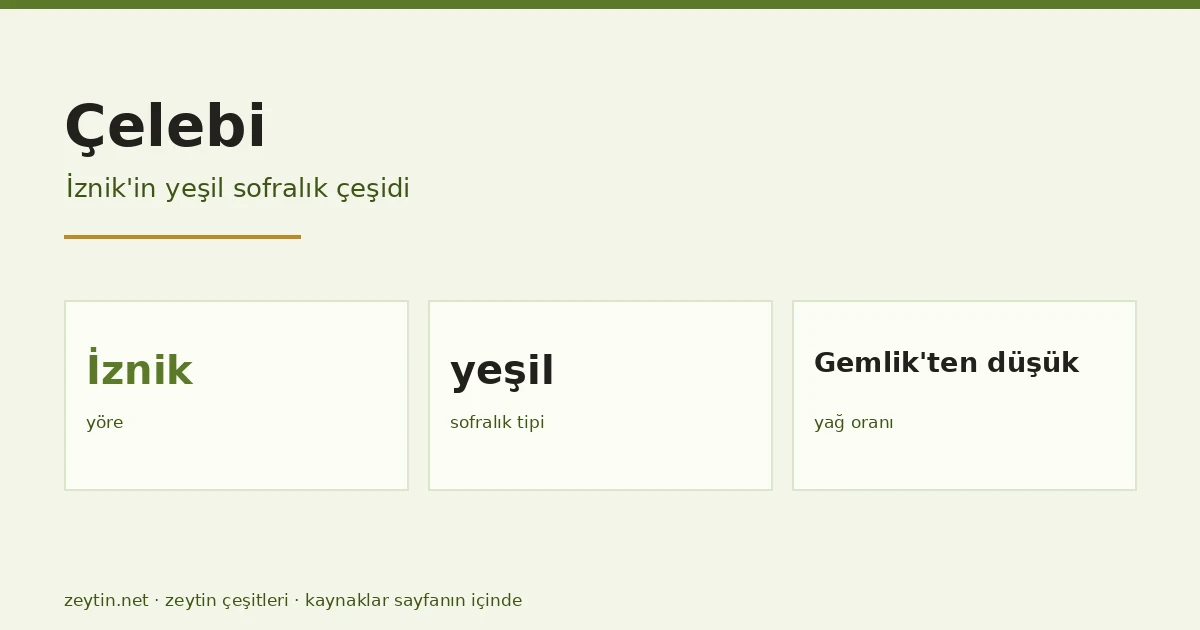
The Çelebi olive: the green table cultivar of İznik
Grown around İznik in Bursa, Çelebi is a green table cultivar. Its oil content is lower than Gemlik's — which is no drawback for a table olive.
 Article
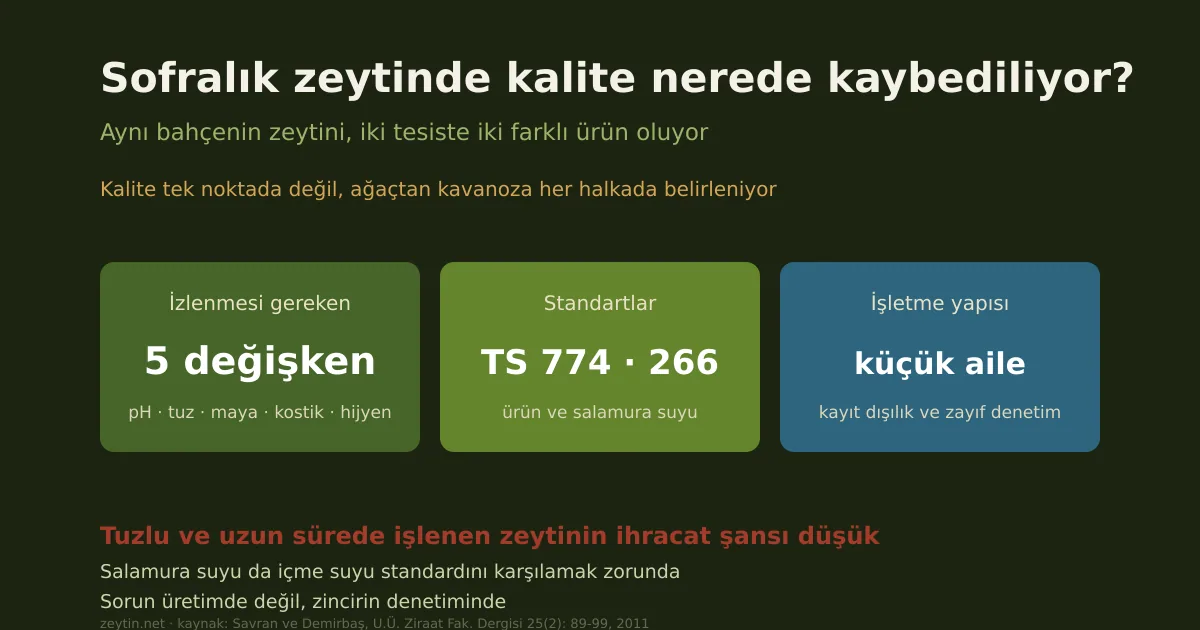
Where is quality lost in table olives?
Variety choice, harvest technique, fermentation control, sterilisation and the pre-packing check are each a separate point of loss. The structural problem is scale and inspection.
 Article
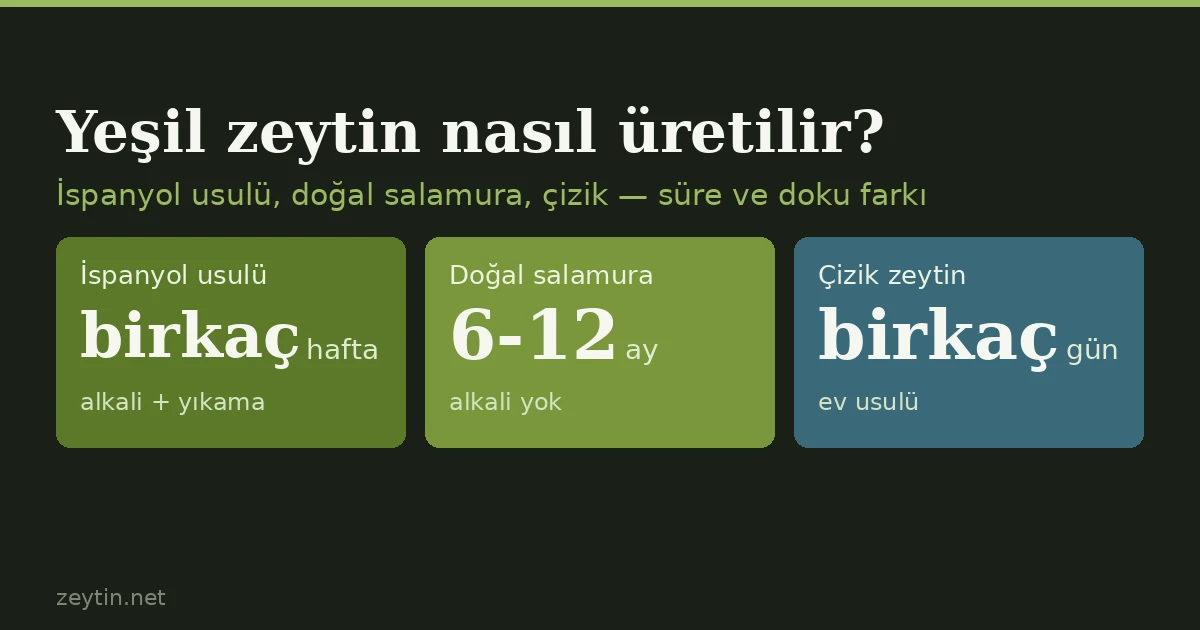
How are green table olives made? Three methods, three results
Green olives cannot be eaten off the tree; the bitterness must be removed. The difference between Spanish-style, natural brine and scored methods sets time, texture and taste.
 Article
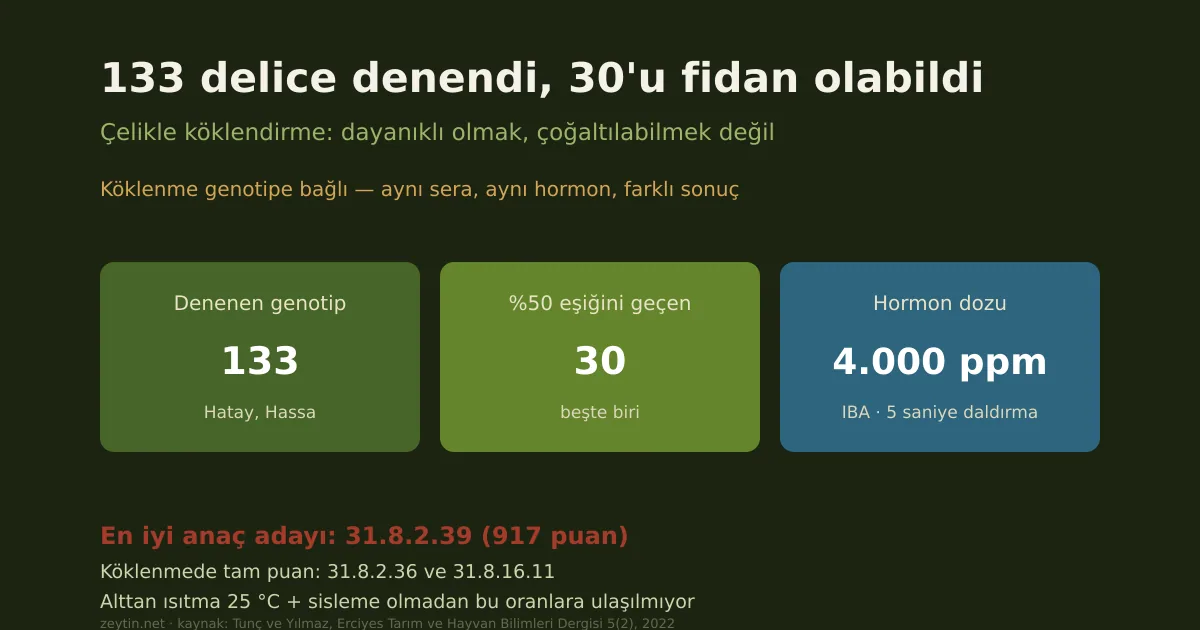
Rooting olive cuttings: 30 of 133 wild olives made it
In Hassa, Hatay, 133 wild olive genotypes were rooted from cuttings and only 30 cleared the 50% threshold. Rooting depends on the genotype, not the technique.