Olive Oil Fraud and Adulteration: How It Is Done and How It Is Caught
Seed oil blending, refined oil sold as extra virgin, soft deodorisation… The economics of fraud, the laboratory methods, and the home tests that do not work.
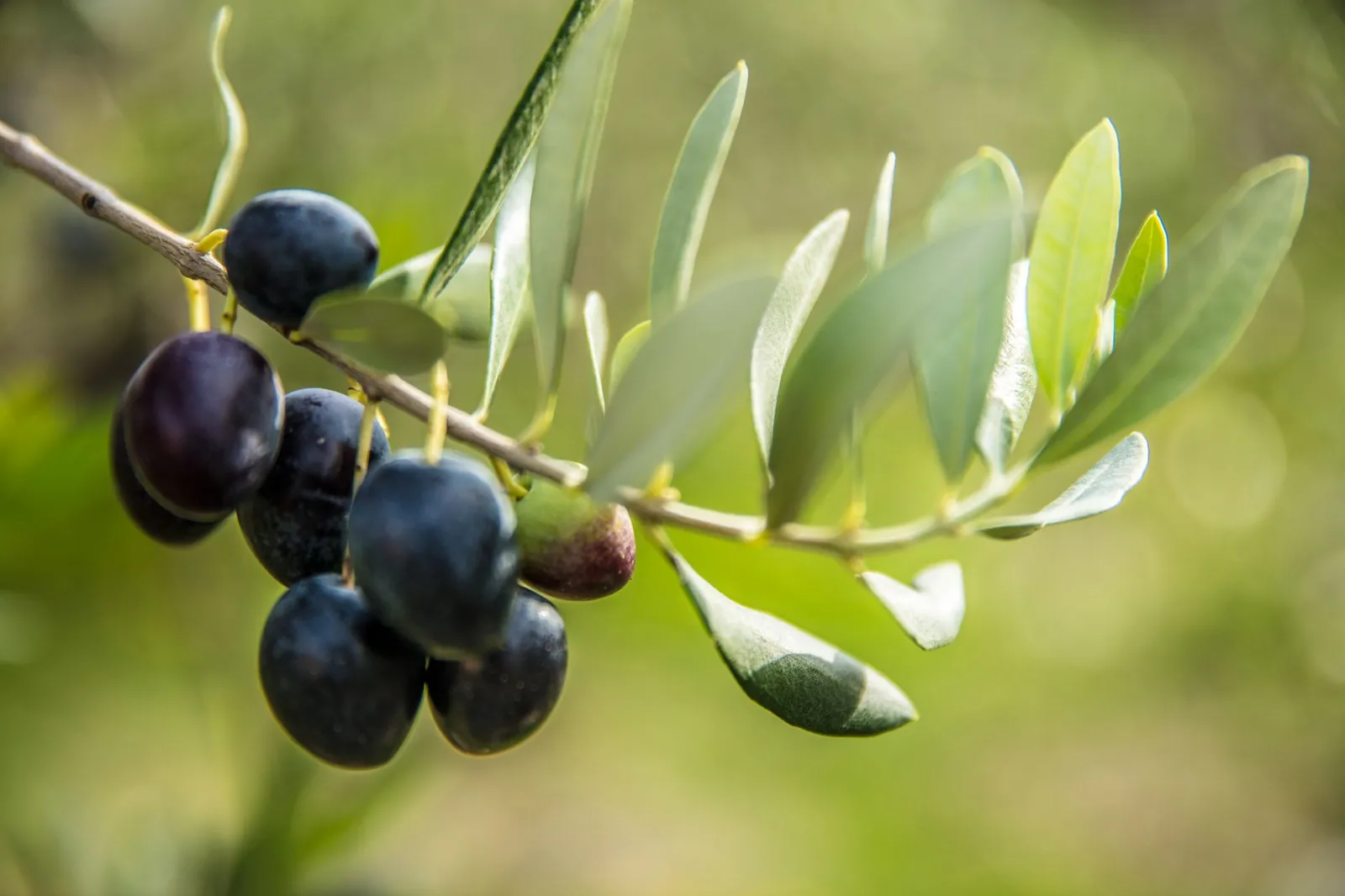
Olive oil is one of the most adulterated foods in the world. The reason is not complicated: the price gap between grades is large, while detecting fraud requires a laboratory. This page explains how the fraud is done, how it is detected, and what a buyer can actually do — including the useless "home tests" that circulate widely.
Why it happens: look at the numbers
The motive shows up in a single figure. According to the exchange prices on our own market page, at the same exchange:
| Product | Price (TL/kg) |
|---|---|
| Extra virgin olive oil | 300.00 |
| Olive oil (cooking grade) | 225.00 |
| Crude olive oil | 158.40 |
The gap is straight profit. Selling cheap oil under an expensive label means more than a hundred lira per kilo. Bring seed oils such as sunflower or soy into the calculation and the gap widens further.
There is another calculation. Roughly five to six kilos of olives make one kilo of oil. With olives for oil at 38.00 TL/kg on the same exchange, the raw material alone costs 190-230 TL per kilo. Milling, storage, bottle, label, transport and margin come on top.
If a litre of "extra virgin" on the shelf sits well below that total, the arithmetic does not work. ⚠ That alone is not proof of fraud — it could be a promotion, stock clearance or an old harvest. But it is the first question to ask.
Types of fraud
Blending in seed oil. Sunflower, soy, rapeseed or hazelnut oil added to olive oil. The most common and crudest fraud; caught by fatty acid composition analysis.
Selling refined oil as extra virgin. Defective or high-acidity oil is refined, blended with a little virgin oil and labelled extra virgin. Acidity comes out low, but there are no polyphenols and no aroma.
Adding pomace oil. Oil extracted with solvents from the pulp is not olive oil in the strict sense; it must be declared separately on the label.
Passing lampante off as virgin. Virgin oil with sensory defects, unfit for direct consumption, moved up a grade.
Soft deodorisation. A gentle low-temperature refining removes the oil's defective smell without leaving the usual traces of refining. It is the hardest fraud to detect; diacylglycerol (DAG) and pyropheophytin (PPP) measurements were developed for exactly this.
Origin fraud. Imported oil presented as domestic, or oil from elsewhere sold as the product of a protected region. Geographical indications exist precisely against this.
How the laboratory catches it
Olive oil grading rests not on taste alone but on measurable values. The main measurements defined by the International Olive Council and the Turkish Food Codex:
| Measurement | What it shows |
|---|---|
| Free fatty acid (acidity) | Degree of breakdown; at most 0.8% for extra virgin |
| Peroxide value | How far oxidation has gone |
| K232 / K270 | UV absorbance; refining and oxidation products |
| Fatty acid composition | Reveals seed oil blending |
| Sterol profile · stigmastadiene | Strong indicator of refined oil |
| ECN42 difference | Quantifies seed oil addition |
| DAG · PPP | Freshness and soft deodorisation |
| Sensory panel | MANDATORY for extra virgin; any defect drops the grade |
One point deserves attention: low acidity alone is not proof of quality. A refined oil can be brought down to 0.2% by chemical treatment, its polyphenols and aroma long gone. See what acidity means.
⚠ Home tests that do not work
None of the tests circulating online detects adulteration. Worse, they give false confidence.
The fridge test ("real olive oil solidifies"). Wrong. Olive oil clouds in the cold and forms waxy sediment; this is natural but varies with filtration, variety and temperature. Refined oil can also solidify, and a good extra virgin may not cloud. The result tells you nothing.
The burn test ("real oil lights a lamp"). Wrong. Almost any vegetable oil will burn on a wick.
The paper test ("leaves no mark"). Wrong. Every liquid oil leaves a greasy mark on paper.
The colour test ("dark green is better"). Wrong — professional tasting glasses are deliberately coloured, precisely because colour says nothing about quality and must not mislead the taster. Colour depends on variety and harvest timing.
Adulteration is laboratory work. No kitchen method gives a reliable answer.
What a buyer can actually do
1. Check the ministry's official list. Turkey's Ministry of Agriculture and Forestry publishes products found to be counterfeit or adulterated, naming the company and brand: <a href="https://guvenilirgida.tarimorman.gov.tr" target="_blank" rel="noopener">guvenilirgida.tarimorman.gov.tr</a>. It is updated regularly and includes seed oil findings in olive oil.
2. Read the label. The grade (is it "extra virgin", or merely "olive oil"?), harvest year, best-before date, place of bottling and origin. A product that does not state its grade plainly is not extra virgin.
3. Test the price against the arithmetic. Using the raw material calculation above: a shelf price below the cost of the fruit itself calls for an explanation.
4. Taste it. A good extra virgin leaves a slight sting at the back of the throat and smells of fresh grass or green apple. Flat taste and no smell means either a refined blend or an oil past its best. Not proof, but the most meaningful clue — see how to tell good olive oil.
5. Prefer oil whose source is known. Registered geographical indications, producer sales, bottles that state the harvest date.
6. Report suspicions. In Turkey, food complaints can be made through the ALO 174 food line.
Regulation
In Turkey, food safety and adulteration fall under Law no. 5996 on Veterinary Services, Plant Health, Food and Feed. The grades of olive oil and the analytical methods are defined in the olive oil communiqué of the Turkish Food Codex, aligned with International Olive Council standards.
Products found adulterated attract administrative fines and the firm is named publicly — the list above is the result of that obligation.
Sources
- <a href="https://guvenilirgida.tarimorman.gov.tr" target="_blank" rel="noopener">Ministry of Agriculture and Forestry — Reliable Food / counterfeit and adulteration list</a>
- <a href="https://www.internationaloliveoil.org" target="_blank" rel="noopener">International Olive Council — grade standards and methods of analysis</a>
- Price comparison: our own market page (TOBB registered exchange prices)
⚠ This page makes no allegation about any firm or brand; it directs the reader to the official source.
One rating per visitor; you can change yours at any time. Ratings are real reader votes — no seeded or default scores.
Related
 Article
Olive Oil
The difference between extra virgin, virgin, refined and riviera; what acidity means, how cold pressing works and how to store oil.
Article
Olive Oil
The difference between extra virgin, virgin, refined and riviera; what acidity means, how cold pressing works and how to store oil.
 Article
What is a malaxer? The tank where olive paste is kneaded, and the 27 °C limit
A malaxer is the stainless steel kneading tank where crushed olive paste is slowly mixed so that oil droplets can merge. Time and temperature decide both yield and aroma, and this is also where the limit for "cold extraction" is drawn.
Article
What is a malaxer? The tank where olive paste is kneaded, and the 27 °C limit
A malaxer is the stainless steel kneading tank where crushed olive paste is slowly mixed so that oil droplets can merge. Time and temperature decide both yield and aroma, and this is also where the limit for "cold extraction" is drawn.
 Article
Soma Olive Oil: how a cooler climate lifts yield in a lignite basin
Registered in 2023. Mean temperature 15.3 °C; the certificate ties that relative coolness to yields reaching 796 kg/da. Free acidity 0.18-0.55.
Article
Soma Olive Oil: how a cooler climate lifts yield in a lignite basin
Registered in 2023. Mean temperature 15.3 °C; the certificate ties that relative coolness to yields reaching 796 kg/da. Free acidity 0.18-0.55.
 Article
Nizip Olive Oil: a registration that sets a floor for its raw material
Registered in 2011. The certificate sets conditions on the fruit, not just the oil: 15-17 mm wide, 19-20 mm long, at least 25% oil. Fruit outside that cannot be used.
Article
Nizip Olive Oil: a registration that sets a floor for its raw material
Registered in 2011. The certificate sets conditions on the fruit, not just the oil: 15-17 mm wide, 19-20 mm long, at least 25% oil. Fruit outside that cannot be used.