Hojiblanca olive: Spain's oil and table variety
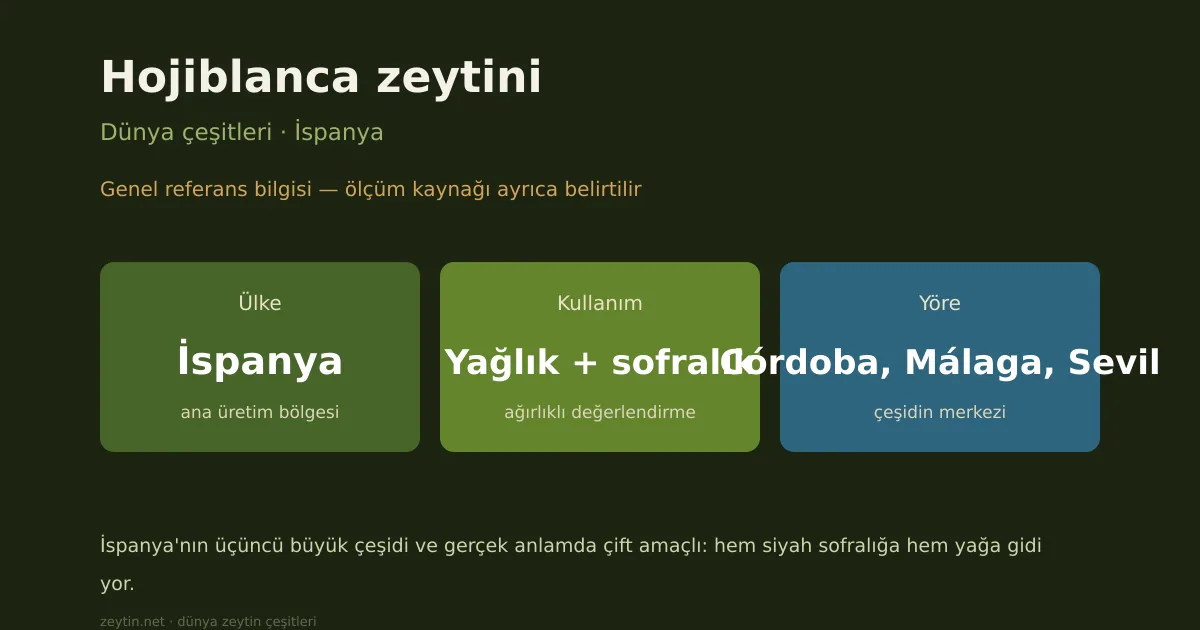
Spain's third-largest variety and genuinely dual-purpose: it goes to black table olives and to oil alike.
Most olive varieties go either to oil or to the table. Hojiblanca genuinely does both — and is common enough to be Spain's third-largest variety.
Named for its leaf
Hojiblanca means "white-leaved". The underside of the leaf is markedly pale, and in the wind the grove looks silver.
What does dual-purpose mean?
For one variety to serve both uses it has to combine traits that pull against each other:
- For the table: large, even fruit, firm flesh, tough skin, a high flesh ratio.
- For oil: sufficient oil content and a good fatty acid composition.
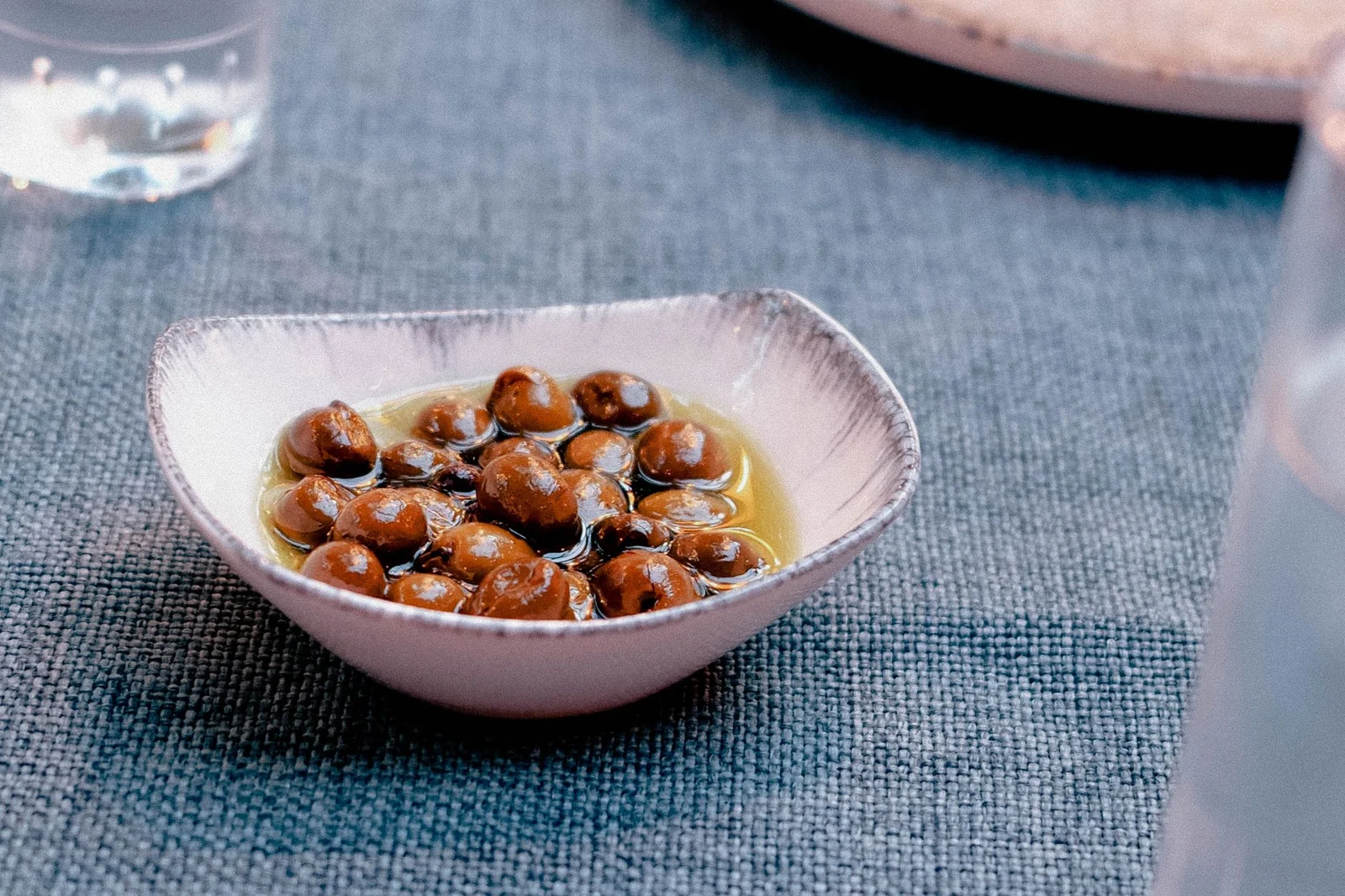
Hojiblanca meets both. Processed as black table olives it feeds Spain's aceituna negra market; pressed, it gives a soft, sweet oil with almond notes.
The price of that is being best at neither. Its oil content does not match Picual's, and its fruit is not as large as Gordal's. What the grower gains is flexibility — whichever price is better, the crop can go there.
The Turkish equivalent
Turkish varieties carry the same flexibility:
- Saurani — 29% oil with 87% flesh, Hatay
- Nizip Yağlık — 27% oil, also used for the table locally
- Memecik — the country's most widespread variety, both oil and table
Dual purpose is in fact the classic form of Mediterranean olive growing; single-purpose specialisation is a modern, industrial choice.
Harvest timing decides
With Hojiblanca, which product the crop becomes is decided by when it is picked: at green maturity it goes to the table, at black maturity to oil. The same tree, the same season, two different products.
That is the same question as the effect of harvest timing on oil: is early harvest expensive or valuable?
Hojiblanca in numbers
| Fruit weight | 4.47 g |
| Flesh-to-stone ratio | 8.98 |
| Oil content | 17-19% |
| Ripening | Late |
| Productivity | High but alternating |
| Self-fertility | Self-compatible, pollen of medium quality |
| Oil stability | Low |
| Tolerant to | Chalky soils, drought, winter cold |
| Susceptible to | Leaf spot, olive knot, Verticillium |
| Pitting | Difficult — flesh clings to the stone |
Source: International Olive Council (IOC), World Catalogue of Olive Varieties. It covers more than 265,000 hectares in Spain and is the country's third largest variety by area: Córdoba 43%, Málaga 30%, Seville 17%, Granada 10%.
The table also shows the price of that dual-purpose flexibility. Oil content is 17-19%, clearly below Picual, and oil stability is low, meaning a shorter shelf life. On the table side it carries one real defect: the flesh clings to the stone, which is why the pitted-and-stuffed line is built on Manzanilla instead.
Hojiblanca's job, then, is not to be the best oil or the best table olive, but to sit between the two and switch according to price.
Related pages
Where it stands among measured varieties
et/çekirdek oranı 8,98'ten türetildi — kaynak: IOC Dünya Zeytin Çeşitleri Kataloğu — Avustralya denemesi 19
çeşit sayfası
IOC Dünya Zeytin Çeşitleri Kataloğu — Avustralya denemesi 1998-2004 (Tablo 4)
IOC Dünya Zeytin Çeşitleri Kataloğu — Avustralya denemesi 1998-2004 (Tablo 4)
Values are those published on each variety's own page; the comparison covers only varieties with a measured figure, so it is a comparison of what is known — not of every Turkish variety. See the full ranking and how it is built →
One rating per visitor; you can change yours at any time. Ratings are real reader votes — no seeded or default scores.
Related
 Article
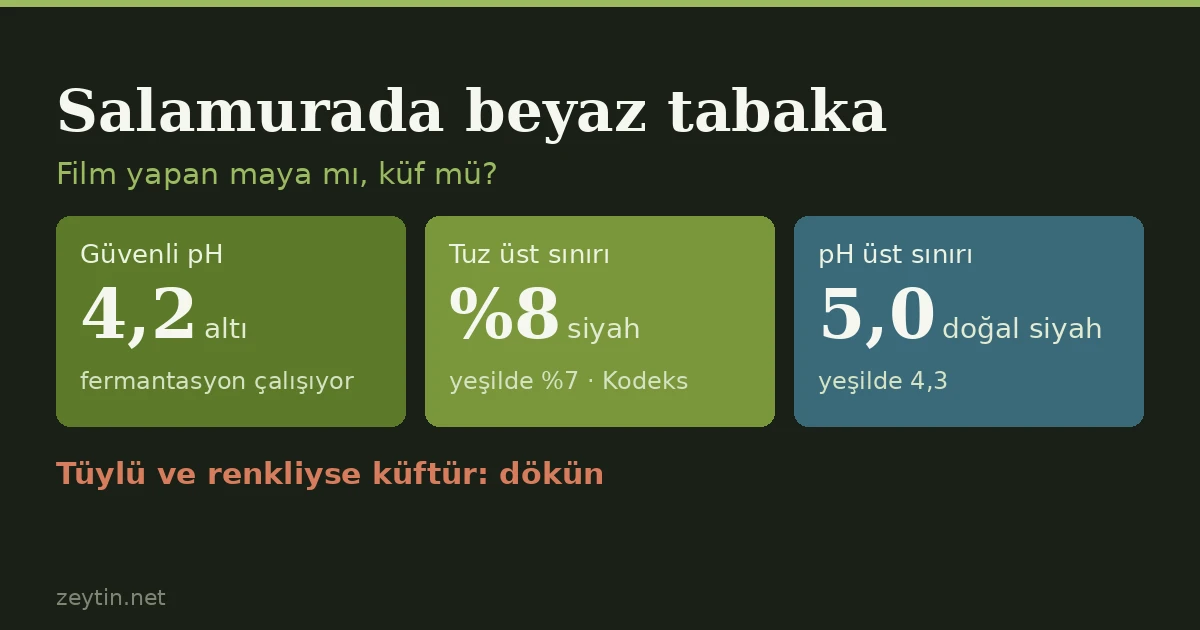
That white film on your olive brine: mould or yeast?
The white layer that forms on home-brined olives is usually not mould but a film-forming yeast — though that does not make it harmless. There are visible criteria for telling them apart. Together with the pH and salt ceilings the Turkish Food Codex sets for brine, here is what can be saved and what has to be thrown out.
Article
That white film on your olive brine: mould or yeast?
The white layer that forms on home-brined olives is usually not mould but a film-forming yeast — though that does not make it harmless. There are visible criteria for telling them apart. Together with the pH and salt ceilings the Turkish Food Codex sets for brine, here is what can be saved and what has to be thrown out.
 Article
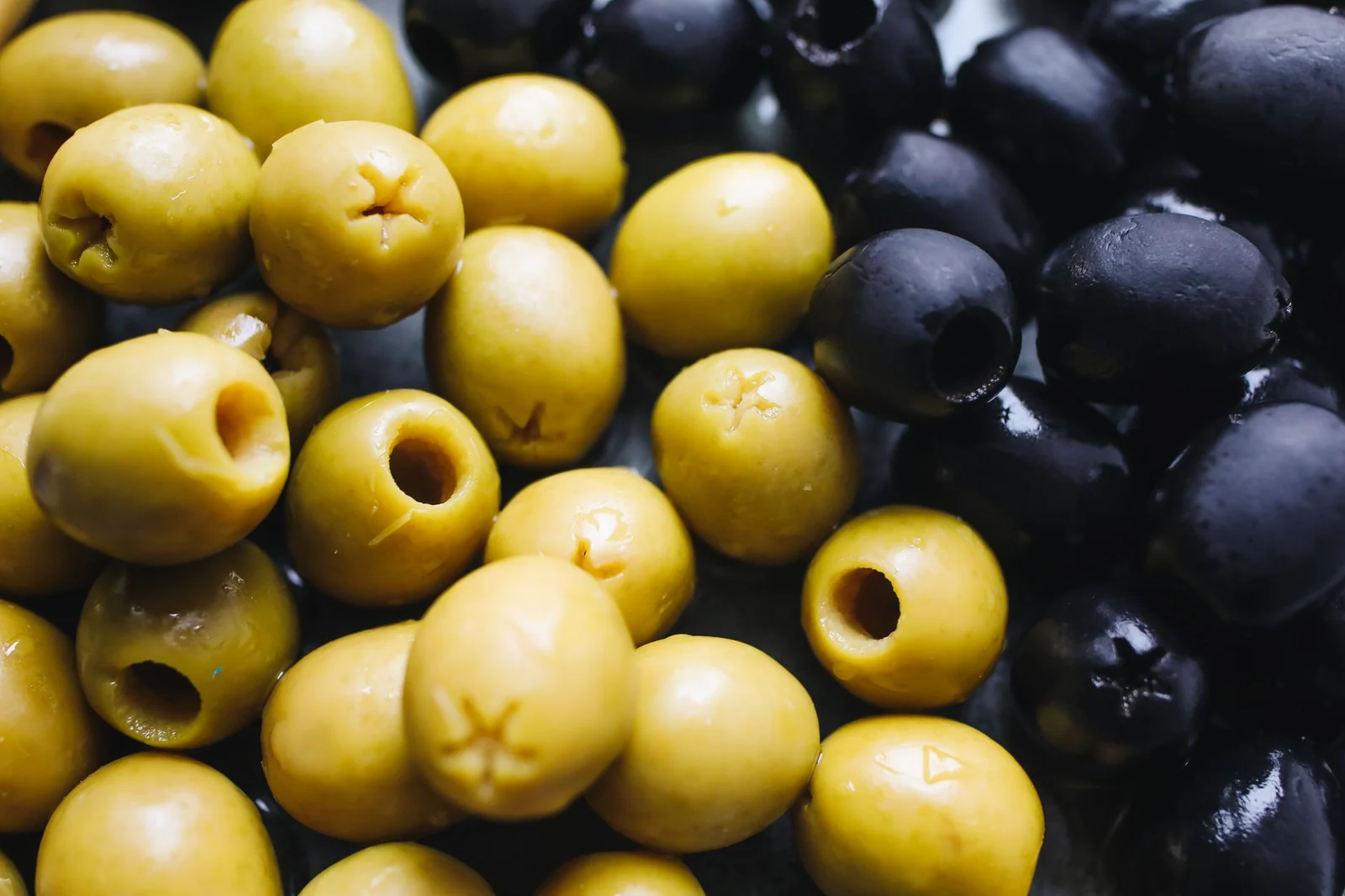
Which type of olive is better?
Table or oil, green or black — choosing a variety by purpose, with a short regional map.
Article
Which type of olive is better?
Table or oil, green or black — choosing a variety by purpose, with a short regional map.
 Article
Marantelli olive
Marantelli is a recorded variety of the Black Sea. Described in the source.
Article
Marantelli olive
Marantelli is a recorded variety of the Black Sea. Described in the source.
 Article
Which table olive variety is best?
The leading varieties for black and green table olives, measured fruit weights, and how curing affects quality.
Article
Which table olive variety is best?
The leading varieties for black and green table olives, measured fruit weights, and how curing affects quality.