💚 Health
Olives, Olive Oil and Health
Why is olive oil associated with heart health, what is the nutritional profile of olives, and what is the Mediterranean diet? Sourced nutrition information, without overstatement.
The link between olive oil and health is not a fashion; studies of eating habits around the Mediterranean have pointed at the same feature for half a century. That does not make olive oil a medicine.
This section covers the relationship between olive oil and heart health, the nutritional profile and salt content of olives, what polyphenols actually do, and what the Mediterranean diet really describes. Only verifiable information is published here; unauthorised health claims are not.
The content here is general information and does not replace medical advice.
 Article
When can babies have olive oil?
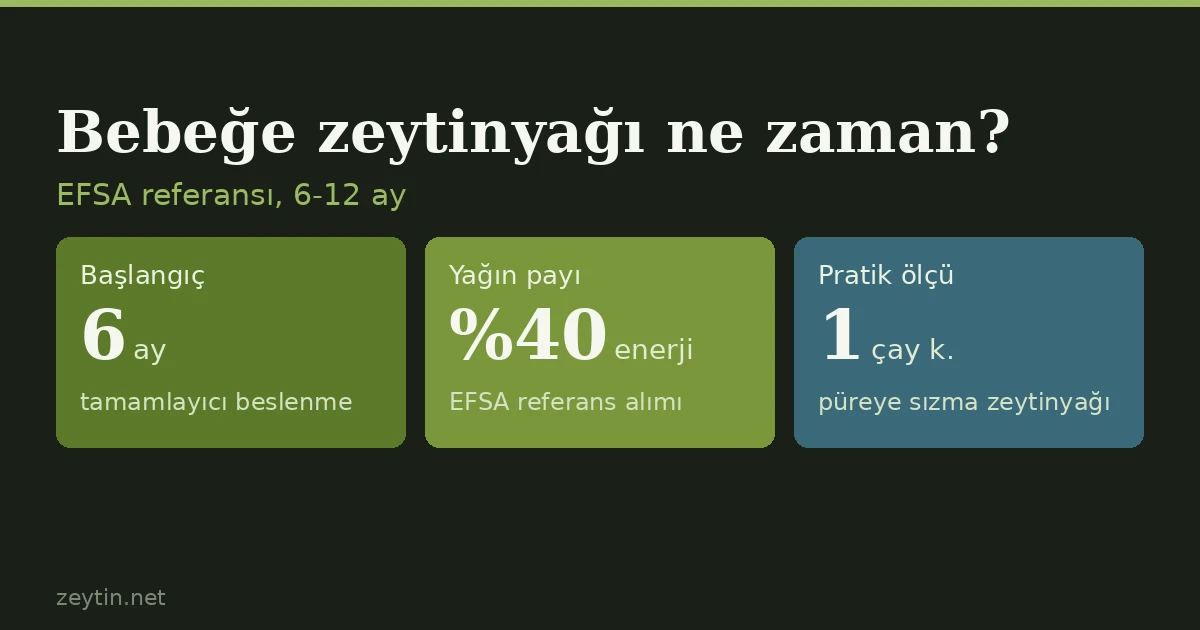
Complementary feeding starts at the end of the sixth month, and olive oil has a place at that table — because a substantial share of an infant's energy has to come from fat. EFSA's reference intake for 6-12 months is 40% of energy. But two separate questions get mixed up: adding oil to a purée is not the same as giving olive oil for constipation, and a table olive is not olive oil as far as a baby is concerned.
Article
When can babies have olive oil?
Complementary feeding starts at the end of the sixth month, and olive oil has a place at that table — because a substantial share of an infant's energy has to come from fat. EFSA's reference intake for 6-12 months is 40% of energy. But two separate questions get mixed up: adding oil to a purée is not the same as giving olive oil for constipation, and a table olive is not olive oil as far as a baby is concerned.
 Article
Can people with diabetes eat olives and olive oil?
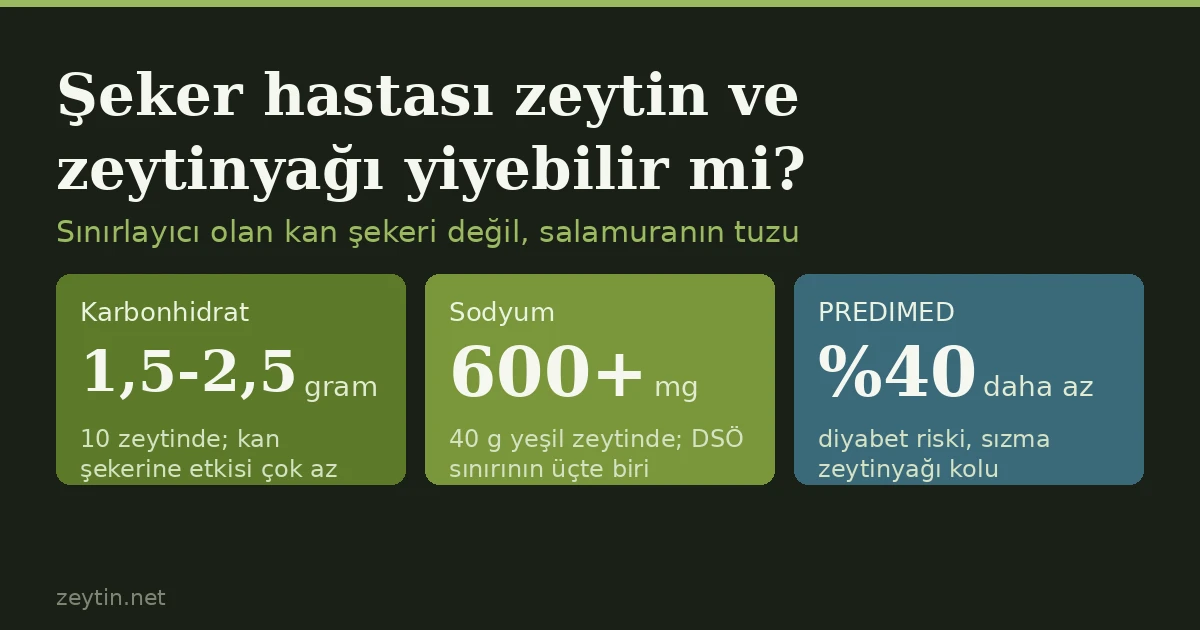
It looks like one question but contains two: table olives and olive oil. Neither is off limits in type 2 diabetes; olives carry too little carbohydrate to measure a glycaemic index for, and oil carries none. The real limiting factor is not blood sugar but the salt in the brine.
Article
Can people with diabetes eat olives and olive oil?
It looks like one question but contains two: table olives and olive oil. Neither is off limits in type 2 diabetes; olives carry too little carbohydrate to measure a glycaemic index for, and oil carries none. The real limiting factor is not blood sugar but the salt in the brine.
 Article
Does olive oil raise cholesterol? Cholesterol content, LDL and the "clears arteries" claim
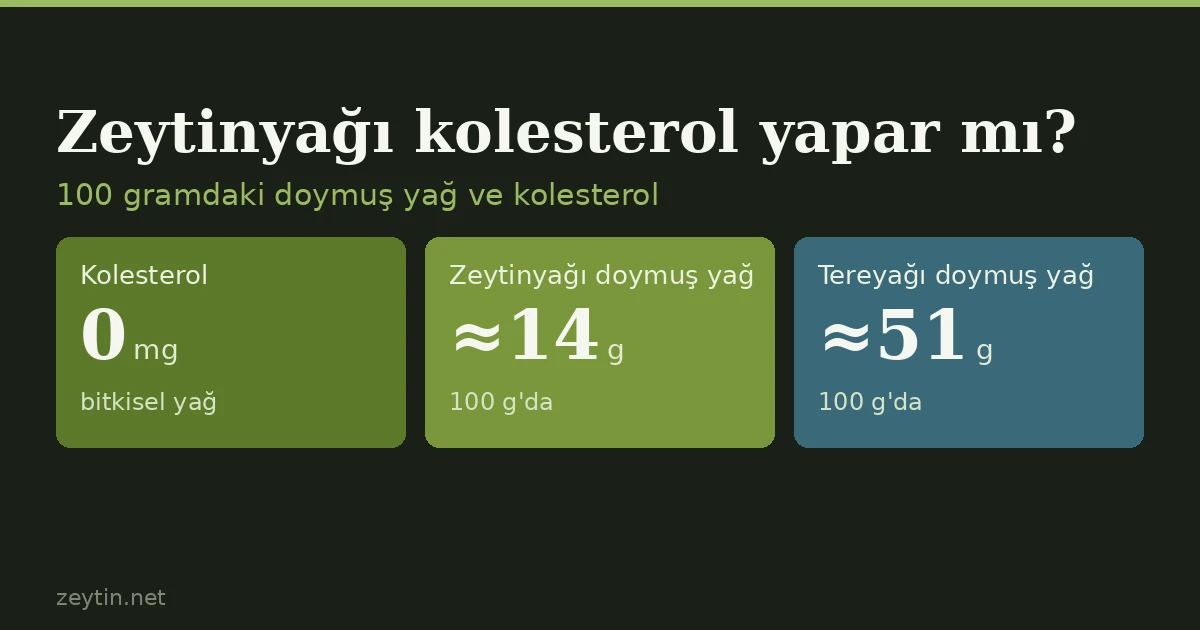
Olive oil contains no cholesterol, and when it replaces saturated fat it helps maintain normal blood cholesterol levels. But every spoonful added to a diet also brings calories, and there is no evidence that olive oil clears arteries. A saturated fat table and the authorised health claims.
Article
Does olive oil raise cholesterol? Cholesterol content, LDL and the "clears arteries" claim
Olive oil contains no cholesterol, and when it replaces saturated fat it helps maintain normal blood cholesterol levels. But every spoonful added to a diet also brings calories, and there is no evidence that olive oil clears arteries. A saturated fat table and the authorised health claims.
 Article
Does olive oil have downsides? Calories, the gallbladder, old oil and fraud
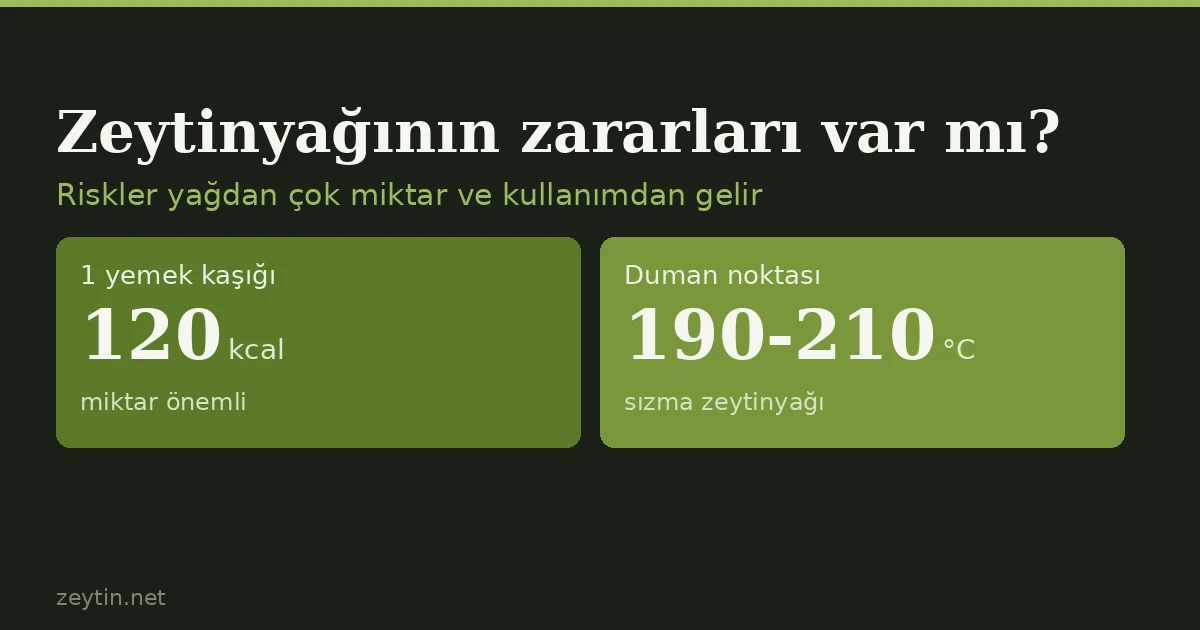
In normal kitchen amounts olive oil is a safe food; its downsides mostly come not from the oil itself but from quantity, misuse and poor products. High calories, discomfort after fatty meals in people with gallstones, the habit of drinking it on an empty stomach as a "cure", repeatedly reused frying oil and adulterated products are the main risks.
Article
Does olive oil have downsides? Calories, the gallbladder, old oil and fraud
In normal kitchen amounts olive oil is a safe food; its downsides mostly come not from the oil itself but from quantity, misuse and poor products. High calories, discomfort after fatty meals in people with gallstones, the habit of drinking it on an empty stomach as a "cure", repeatedly reused frying oil and adulterated products are the main risks.
 Article
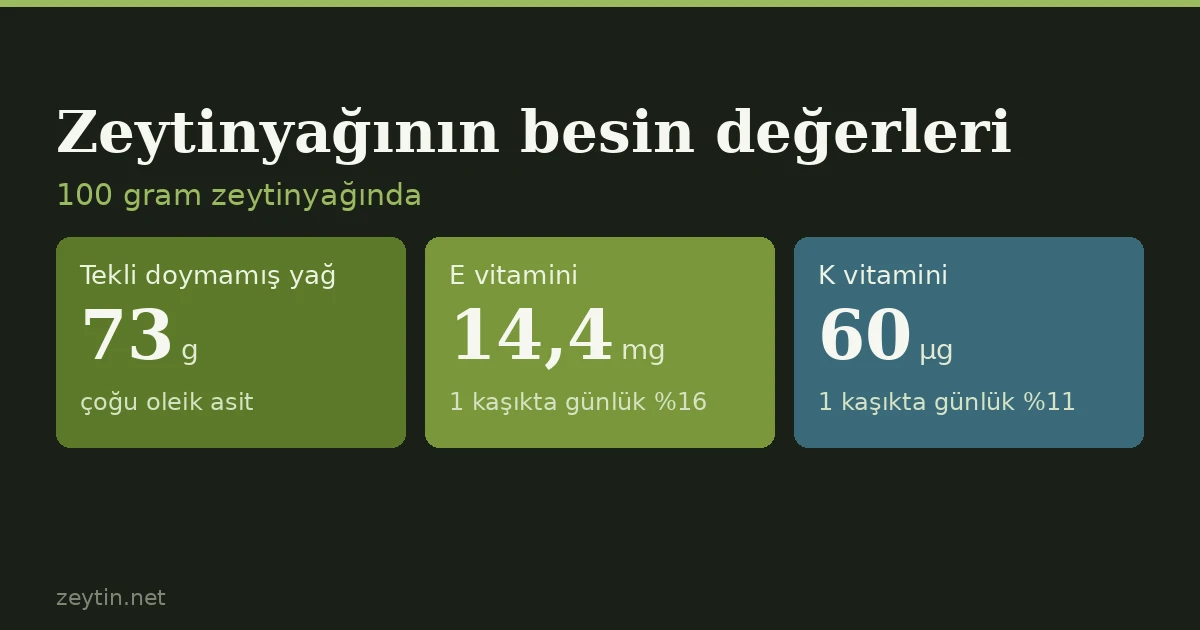
The nutritional profile of olive oil: fatty acids, vitamins E and K, polyphenols
100 grams of olive oil contain 73 grams of monounsaturated fat, 14 mg of vitamin E and 60 micrograms of vitamin K, with no protein, carbohydrate or cholesterol. A per-tablespoon table, and why polyphenols do not appear on the label.
Article
The nutritional profile of olive oil: fatty acids, vitamins E and K, polyphenols
100 grams of olive oil contain 73 grams of monounsaturated fat, 14 mg of vitamin E and 60 micrograms of vitamin K, with no protein, carbohydrate or cholesterol. A per-tablespoon table, and why polyphenols do not appear on the label.
 Article
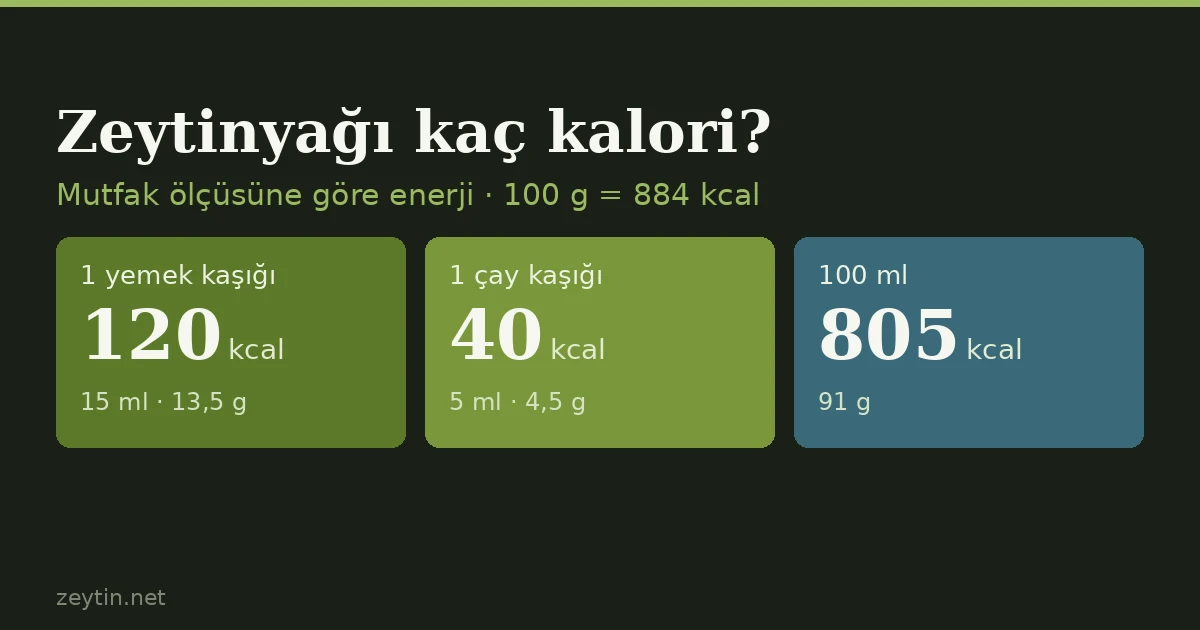
How many calories are in olive oil? Tablespoon, teaspoon and 100 ml
One tablespoon of olive oil has about 120 calories and one teaspoon about 40. Extra virgin, refined blends and sunflower oil carry almost the same energy. A measure table, plus how to count it in salads and cooked dishes.
Article
How many calories are in olive oil? Tablespoon, teaspoon and 100 ml
One tablespoon of olive oil has about 120 calories and one teaspoon about 40. Extra virgin, refined blends and sunflower oil carry almost the same energy. A measure table, plus how to count it in salads and cooked dishes.
 Article
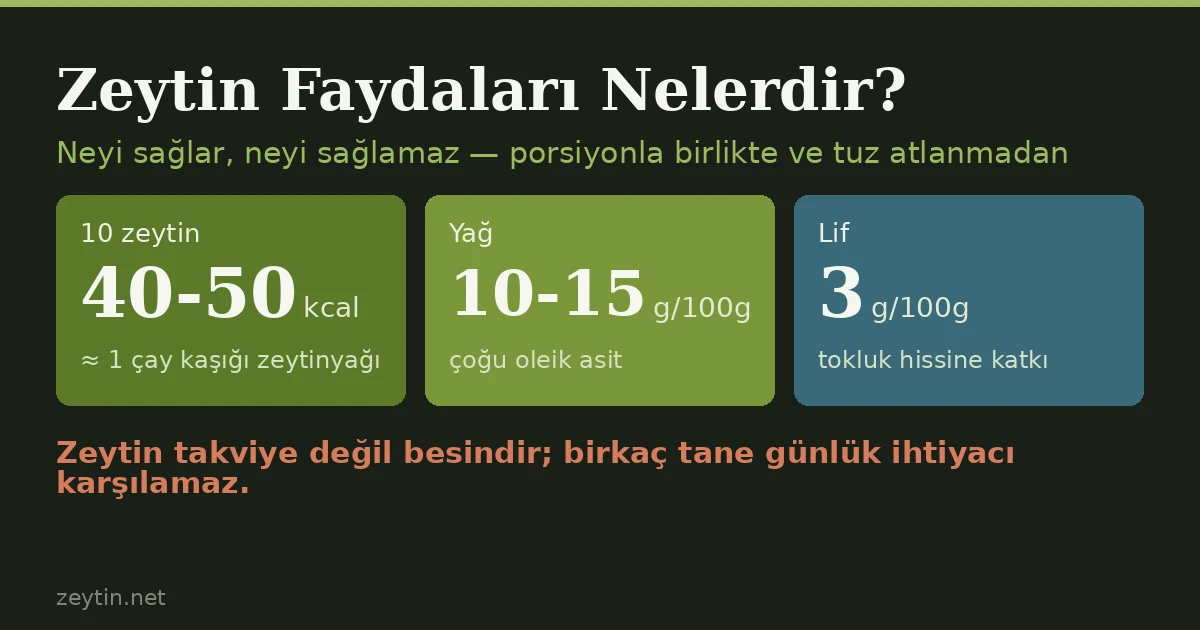
What Are the Benefits of Olives? What Do They Actually Provide?
What olives do and do not provide. Fat, fibre, vitamin E, iron and polyphenols — without overstatement, with portions, and without skipping salt.
Article
What Are the Benefits of Olives? What Do They Actually Provide?
What olives do and do not provide. Fat, fibre, vitamin E, iron and polyphenols — without overstatement, with portions, and without skipping salt.
 Article
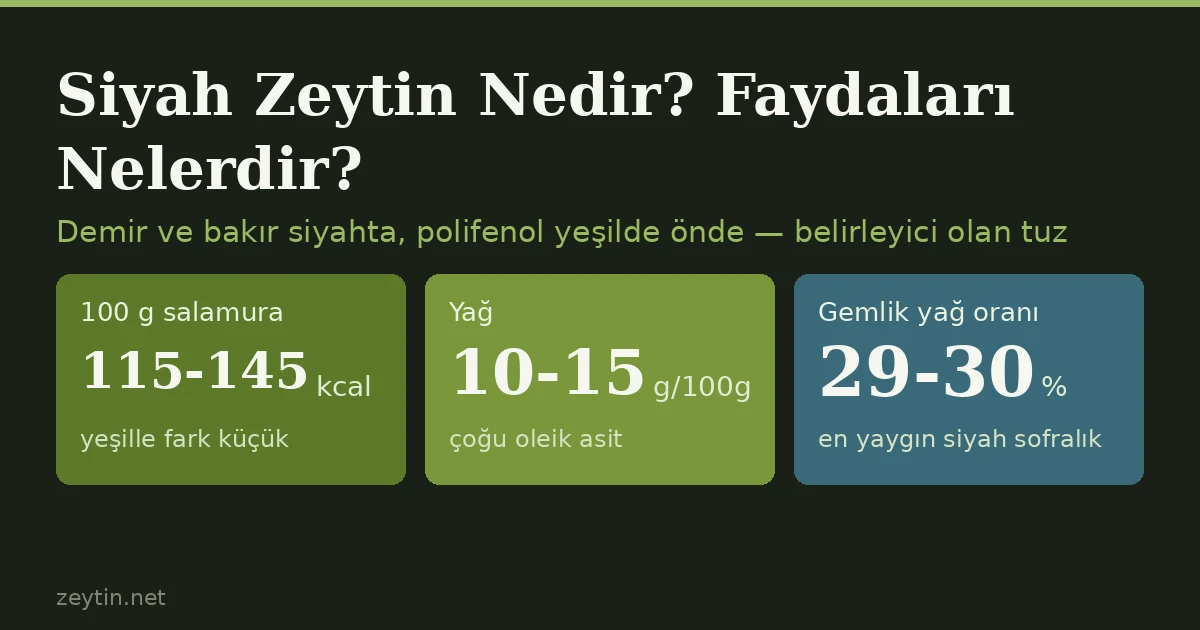
What Are Black Olives? What Are Their Benefits?
What black olives are, how they differ from green, and how many calories. Iron and copper, the polyphenol difference, and the two different black olives on the shelf.
Article
What Are Black Olives? What Are Their Benefits?
What black olives are, how they differ from green, and how many calories. Iron and copper, the polyphenol difference, and the two different black olives on the shelf.
 Article
What Are Green Olives? What Are Their Benefits?
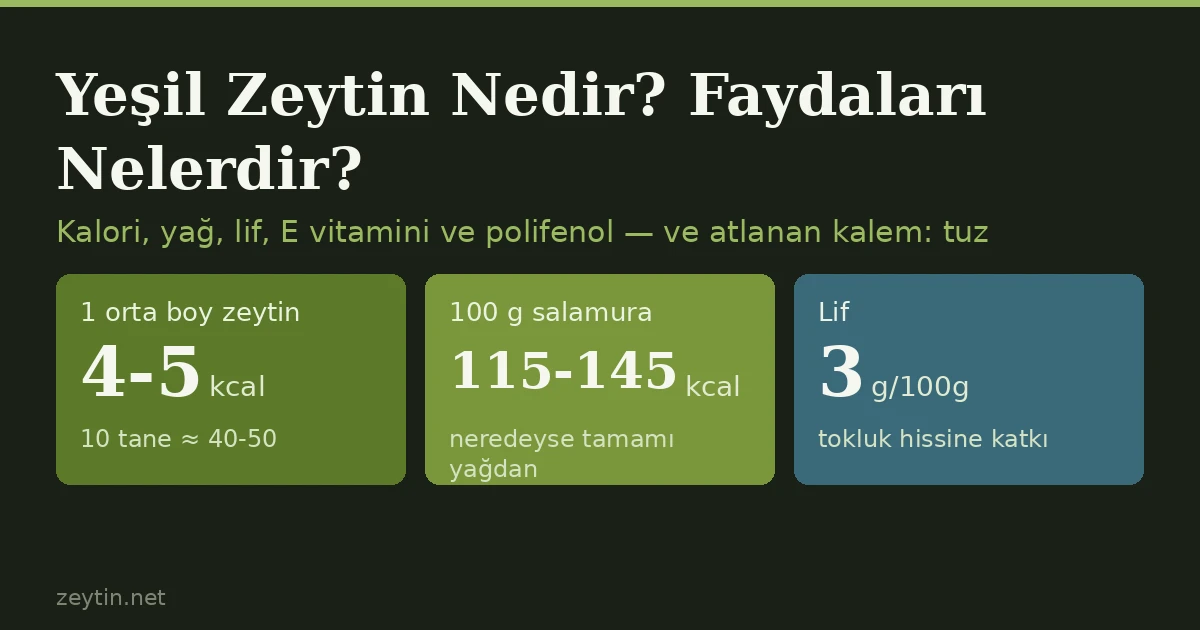
What green olives are, what they contain and how many calories. Fat, fibre, vitamin E and polyphenols — and the salt that portion talk must not skip.
Article
What Are Green Olives? What Are Their Benefits?
What green olives are, what they contain and how many calories. Fat, fibre, vitamin E and polyphenols — and the salt that portion talk must not skip.
 Article
Olive leaf tea: how to make it and what the evidence says
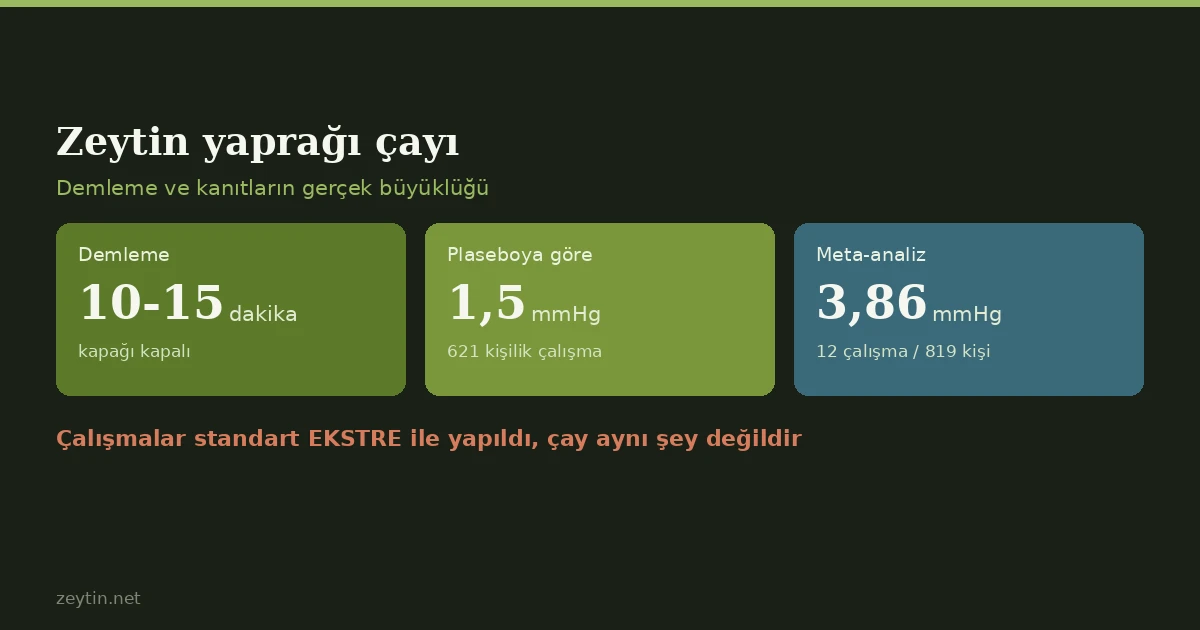
The leaf carries oleuropein and other phenolics. Blood pressure trials show a modest effect, but all used standardised extracts — tea is not the same thing. Steeping, drying and cautions.
Article
Olive leaf tea: how to make it and what the evidence says
The leaf carries oleuropein and other phenolics. Blood pressure trials show a modest effect, but all used standardised extracts — tea is not the same thing. Steeping, drying and cautions.
 Article
Olive oil and brain health: what a 92,000-person study and the randomised evidence say
The headlines about olive oil and the brain are bold; the evidence is more measured. In a 92,383-person cohort followed for 28 years, more than 7 g a day was associated with a 28% lower risk of dementia-related death. The randomised PREDIMED trial points the same way.
Article
Olive oil and brain health: what a 92,000-person study and the randomised evidence say
The headlines about olive oil and the brain are bold; the evidence is more measured. In a 92,383-person cohort followed for 28 years, more than 7 g a day was associated with a 28% lower risk of dementia-related death. The randomised PREDIMED trial points the same way.
 Article
How many calories are in an olive? By piece, portion and variety
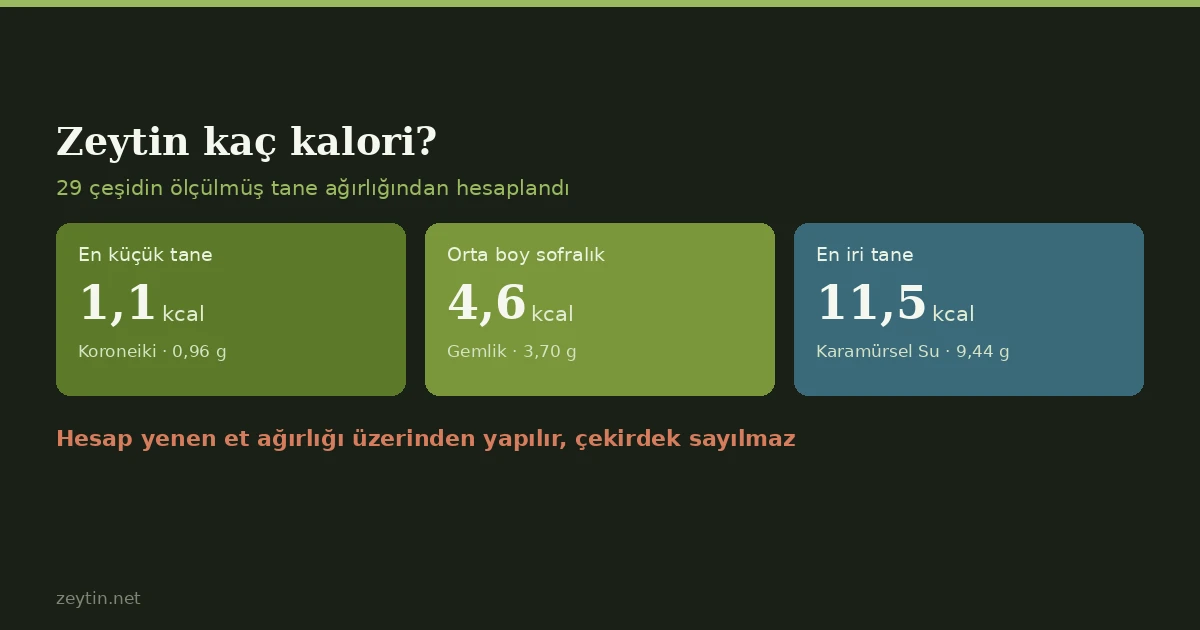
A single olive contains between 1 and 12 calories depending on variety. A table calculated from the measured fruit weight and flesh ratio of 29 varieties, portion equivalents and the calories in olive oil.
Article
How many calories are in an olive? By piece, portion and variety
A single olive contains between 1 and 12 calories depending on variety. A table calculated from the measured fruit weight and flesh ratio of 29 varieties, portion equivalents and the calories in olive oil.
 Article
Olive oil or butter? What a 221,000-person study actually found
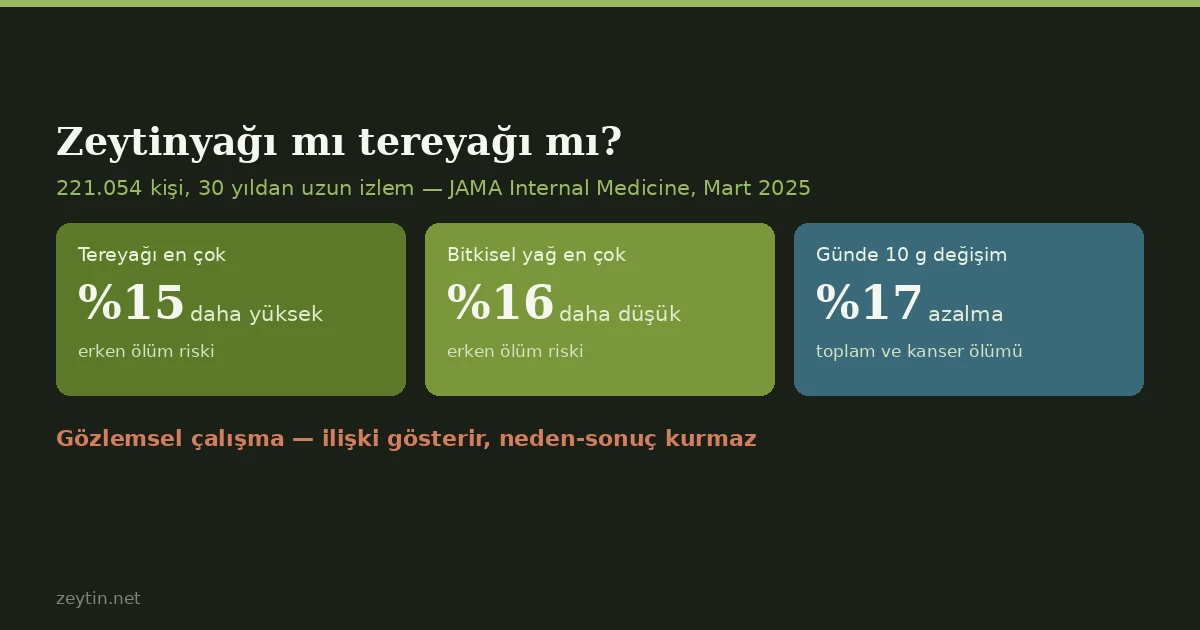
A Harvard-led study followed 221,054 people for over 30 years. Highest butter intake carried 15% higher mortality; highest plant-oil intake 16% lower. We look at what the numbers say — and what they do not.
Article
Olive oil or butter? What a 221,000-person study actually found
A Harvard-led study followed 221,054 people for over 30 years. Highest butter intake carried 15% higher mortality; highest plant-oil intake 16% lower. We look at what the numbers say — and what they do not.
 Article
What are the benefits of olive oil?
Authorised claims, topics still under research and unproven claims kept apart — including the EFSA claim and PREDIMED.
Article
What are the benefits of olive oil?
Authorised claims, topics still under research and unproven claims kept apart — including the EFSA claim and PREDIMED.
 Article
Which olive is healthiest?
In olives the health difference comes from curing and salt, not the variety: nutrition, salt content and green vs black.
Article
Which olive is healthiest?
In olives the health difference comes from curing and salt, not the variety: nutrition, salt content and green vs black.
 Article
Olive pollen allergy: the quiet cause of May to July
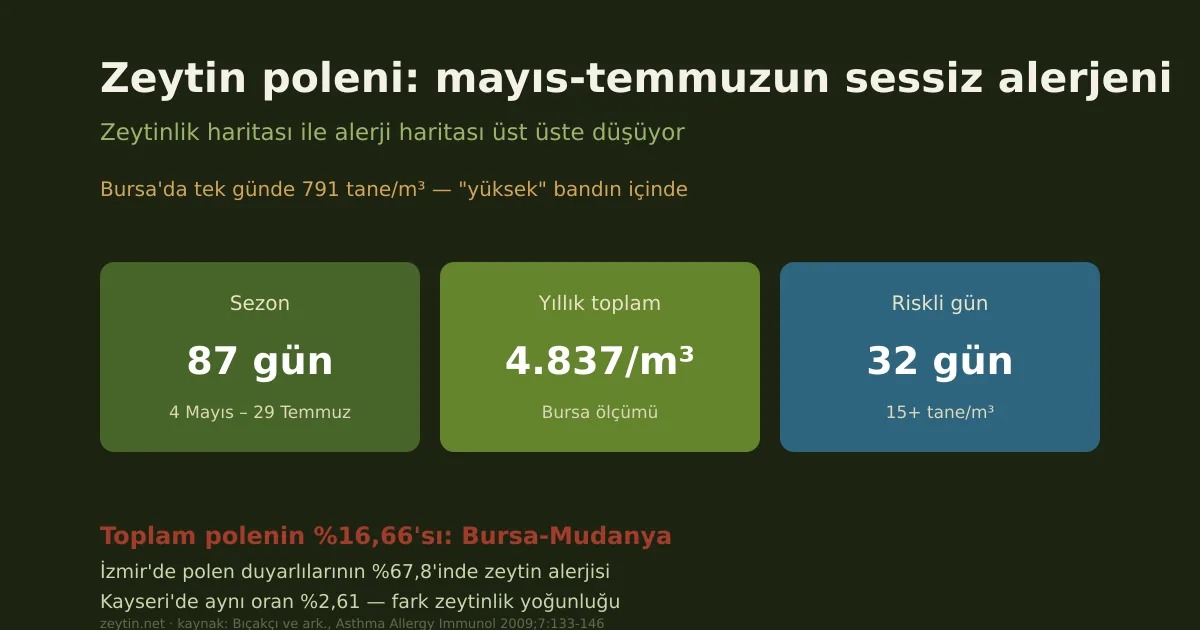
Olive pollen fills the air across western Türkiye from May to July. Bursa recorded 791 grains/m³ in one day over an 87-day season; 67.8% of pollen-sensitised patients in İzmir react to it.
Article
Olive pollen allergy: the quiet cause of May to July
Olive pollen fills the air across western Türkiye from May to July. Bursa recorded 791 grains/m³ in one day over an 87-day season; 67.8% of pollen-sensitised patients in İzmir react to it.
 Article
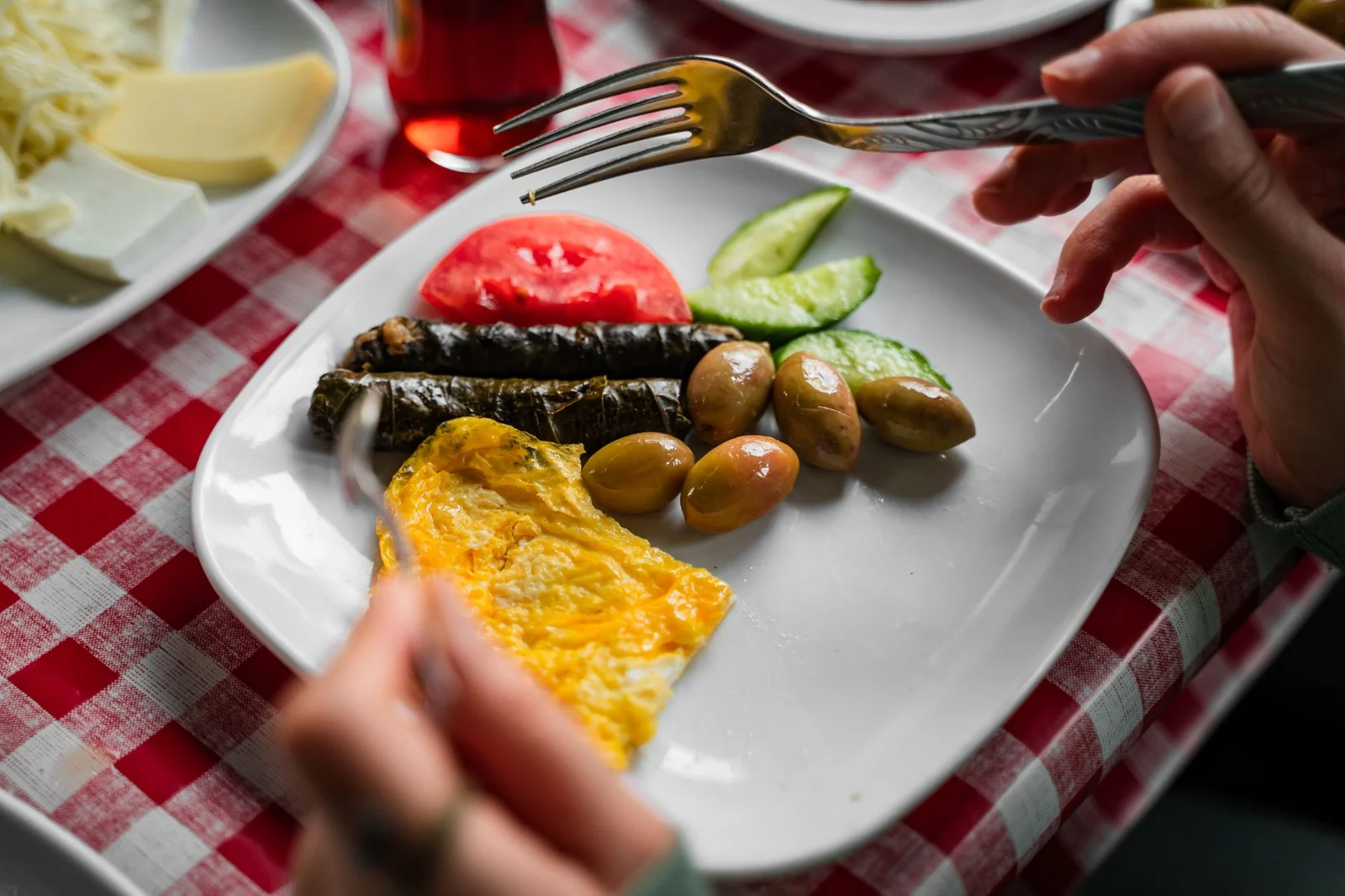
How many olives should you eat a day? Portions, salt and common questions
Calories, fat and salt in olives: what is a sensible daily amount? Based on nutrition data, without unauthorised health claims.
Article
How many olives should you eat a day? Portions, salt and common questions
Calories, fat and salt in olives: what is a sensible daily amount? Based on nutrition data, without unauthorised health claims.
 Article
How Much Olive Oil a Day?
Olive oil being healthy does not make it unlimited. A practical look at portions, calories and the logic of replacement.
Article
How Much Olive Oil a Day?
Olive oil being healthy does not make it unlimited. A practical look at portions, calories and the logic of replacement.
 Article
Is Olive Oil Suitable for Frying?
The most argued kitchen question. Smoke point is not the only measure; what really matters is how well the oil resists oxidation.
Article
Is Olive Oil Suitable for Frying?
The most argued kitchen question. Smoke point is not the only measure; what really matters is how well the oil resists oxidation.
 Article
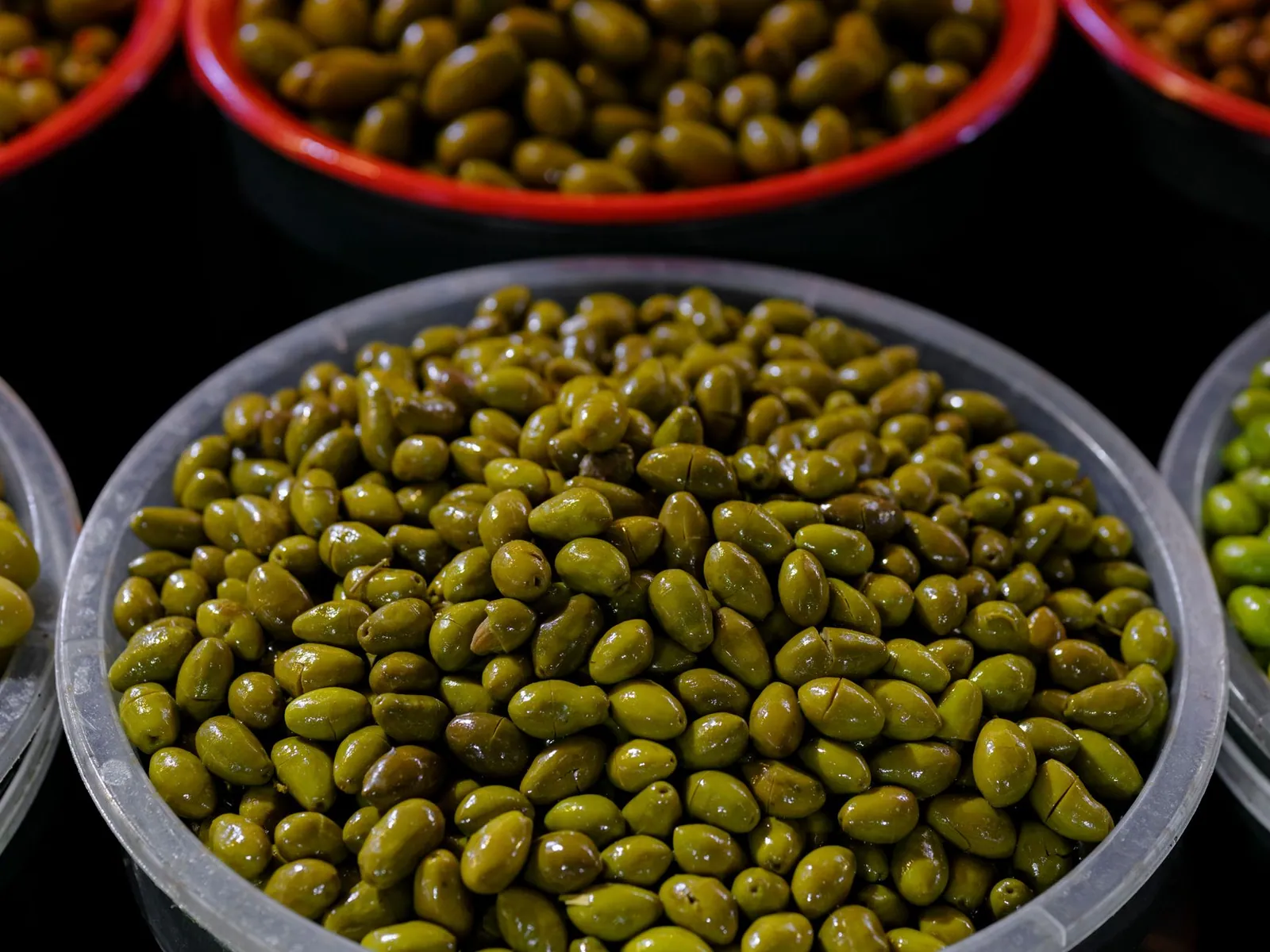
Oleocanthal and Polyphenols
Why does a good extra virgin oil sting the throat? That sensation is not a flaw but the mark of a measurable compound.
Article
Oleocanthal and Polyphenols
Why does a good extra virgin oil sting the throat? That sensation is not a flaw but the mark of a measurable compound.
 Article
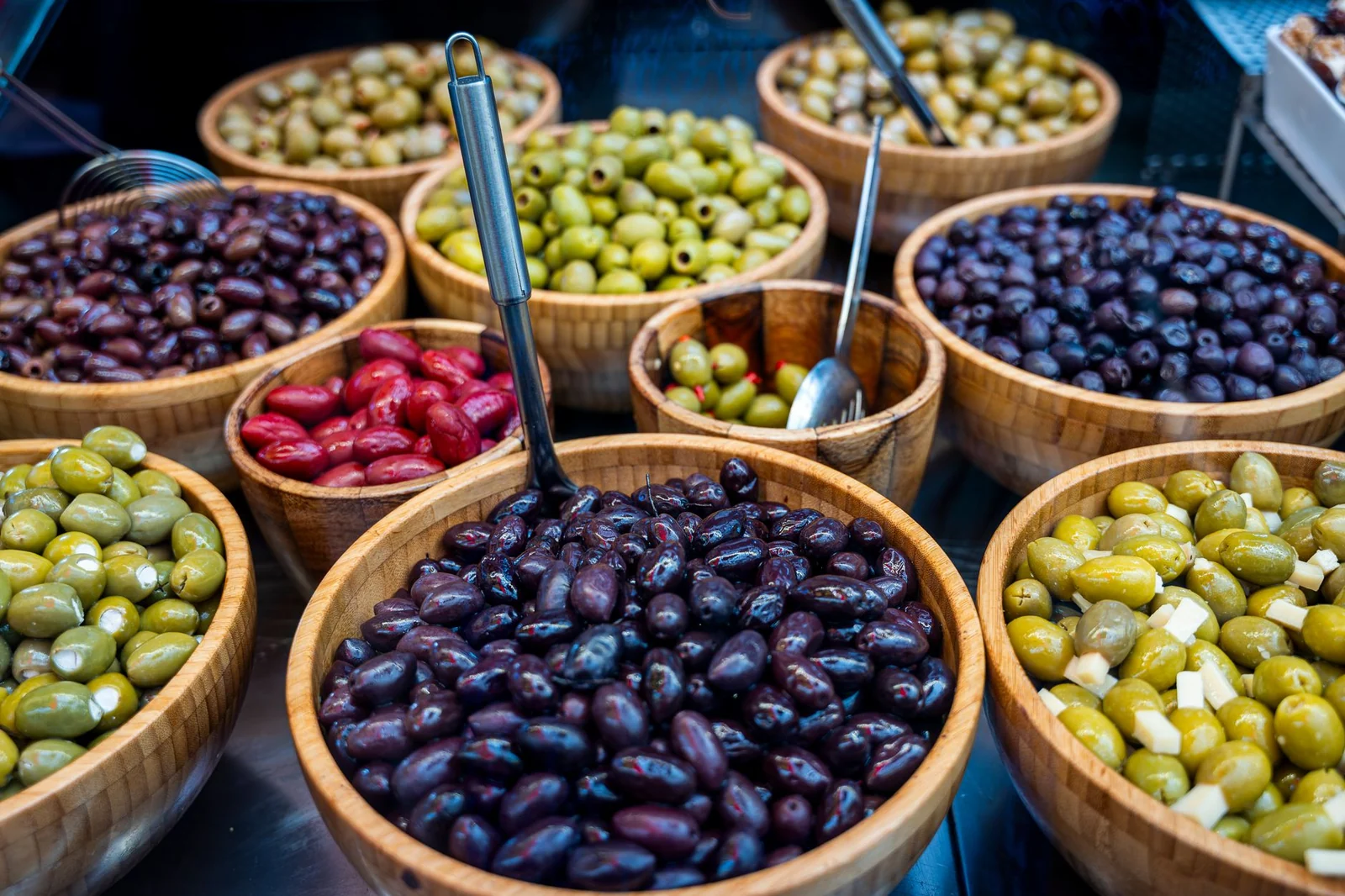
How many calories are in olives? Nutrition and portion table
What is actually in an olive? Fat, fibre, iron, vitamin E — and the salt you should not ignore.
Article
How many calories are in olives? Nutrition and portion table
What is actually in an olive? Fat, fibre, iron, vitamin E — and the salt you should not ignore.
 Article
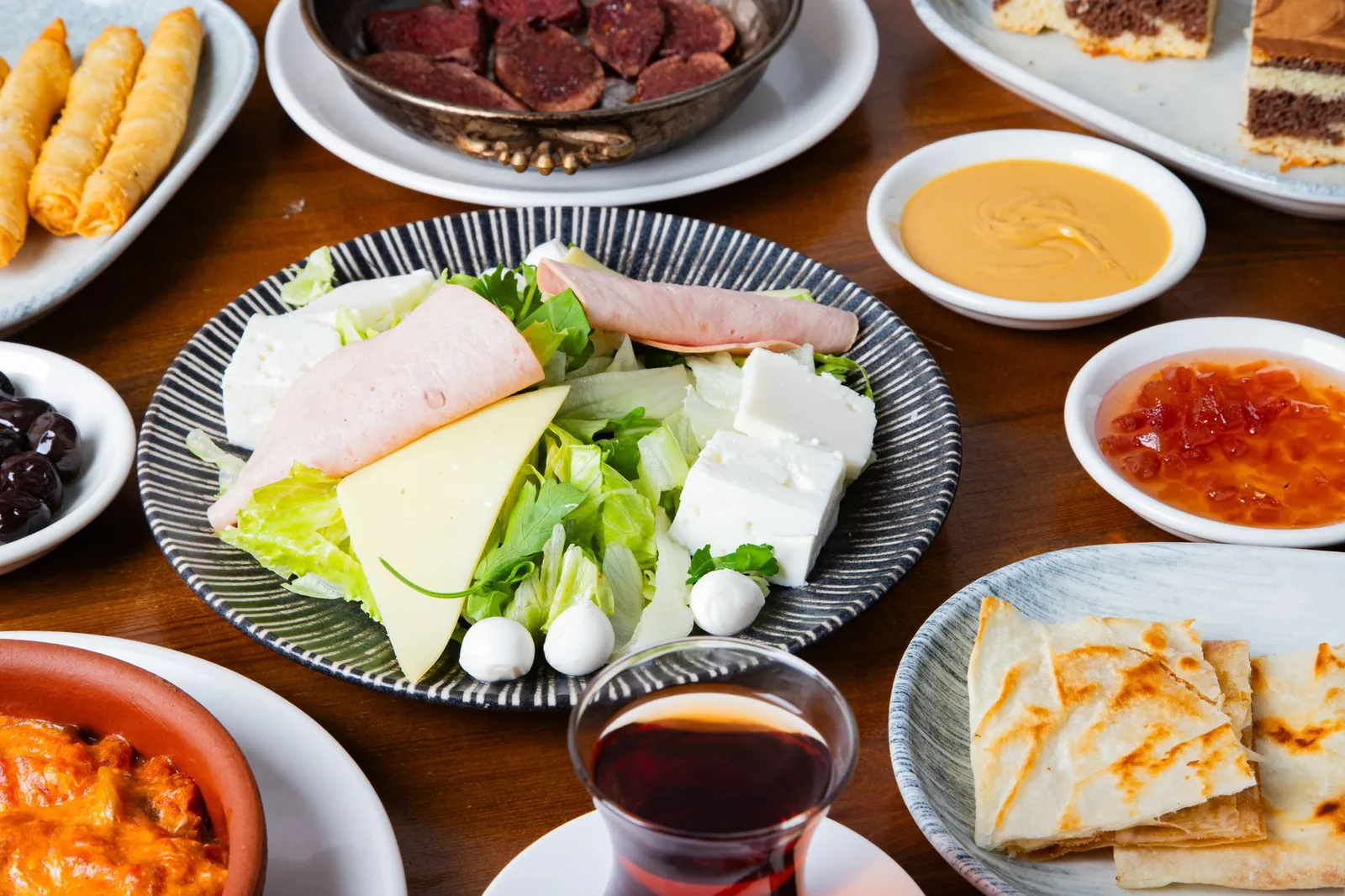
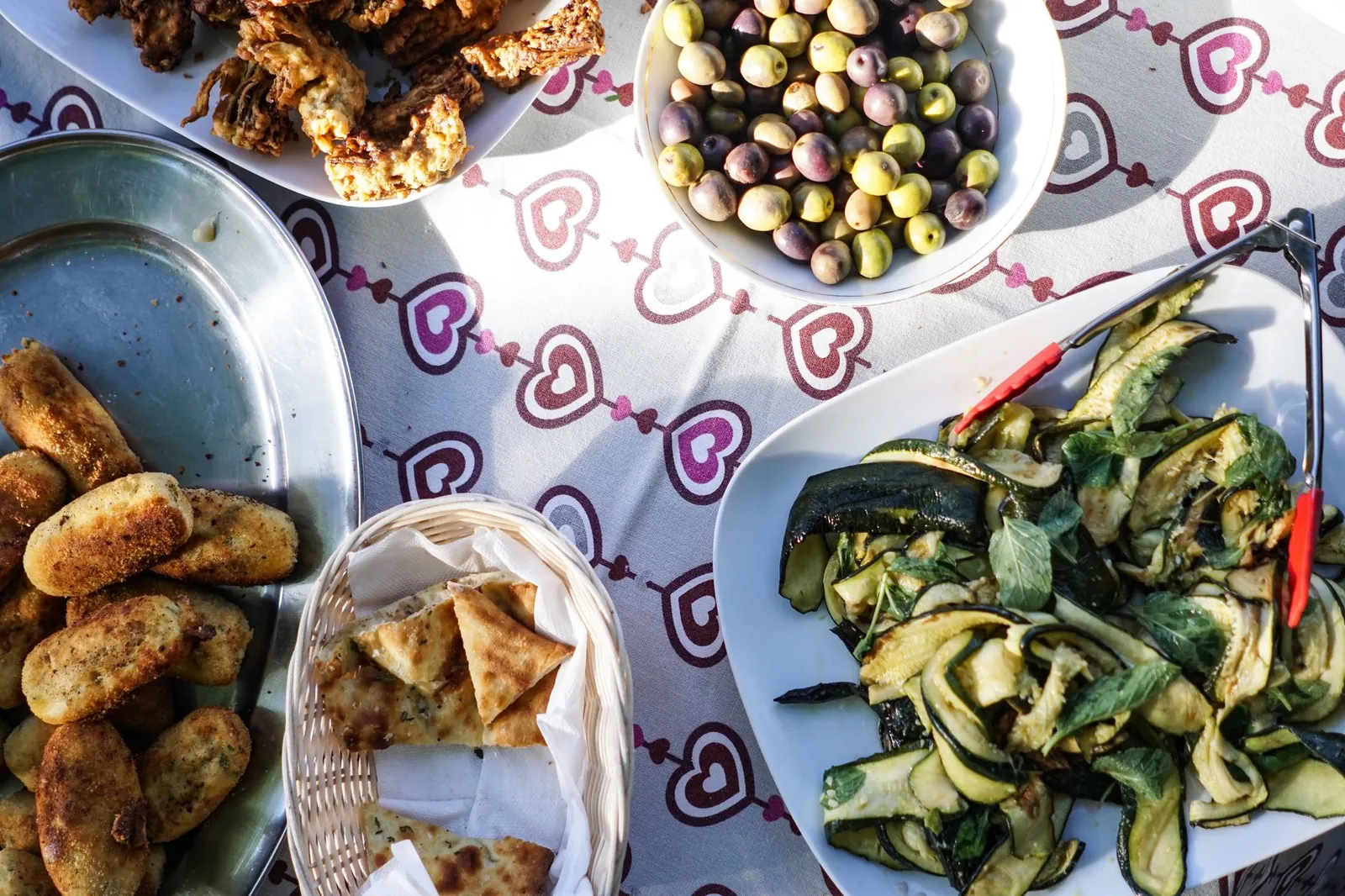
What Is the Mediterranean Diet?
Not a weight-loss plan but a pattern of eating. The basics of the Mediterranean way of eating, recognised by UNESCO, and where olive oil sits within it.
Article
What Is the Mediterranean Diet?
Not a weight-loss plan but a pattern of eating. The basics of the Mediterranean way of eating, recognised by UNESCO, and where olive oil sits within it.
 Article
Olive Oil and Heart Health
Why is Mediterranean cooking so often linked with cardiovascular health? Unsaturated fats, polyphenols, and replacing saturated fat.
Article
Olive Oil and Heart Health
Why is Mediterranean cooking so often linked with cardiovascular health? Unsaturated fats, polyphenols, and replacing saturated fat.
 Article
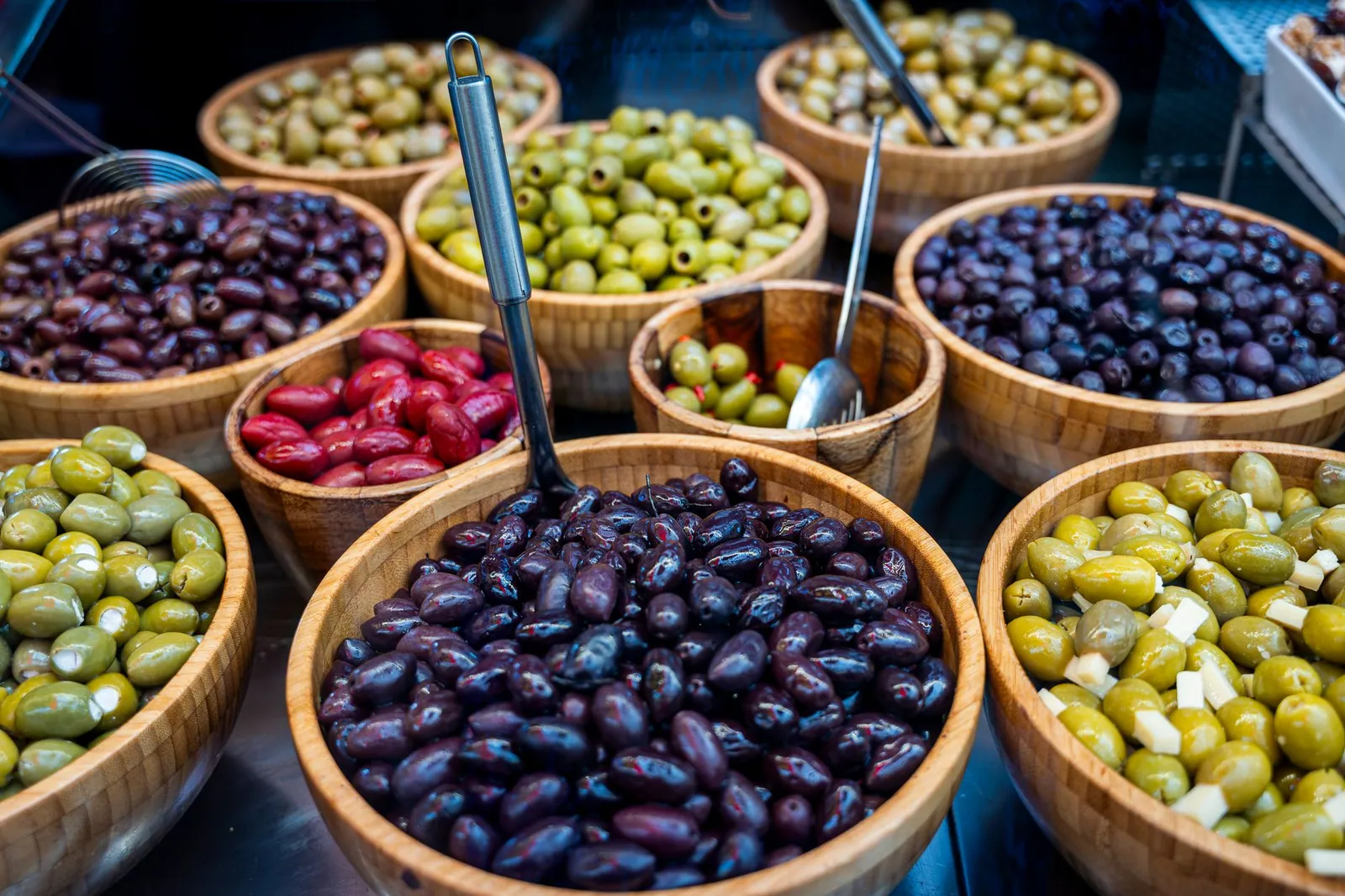
Benefits of Olive
The nutritional profile of olives, polyphenols and salt content. No unauthorised health claims — only verifiable information, with sources.
Article
Benefits of Olive
The nutritional profile of olives, polyphenols and salt content. No unauthorised health claims — only verifiable information, with sources.