What Are Black Olives? What Are Their Benefits?
What black olives are, how they differ from green, and how many calories. Iron and copper, the polyphenol difference, and the two different black olives on the shelf.
Black olives are olives that ripened on the tree and turned colour. They are the same fruit as green; the difference is when they are picked. But two different products carry the words "black olives" on the shelf, and that needs separating before any nutrition talk.
What are black olives?
As the fruit stays on the tree, chlorophyll declines and purple-black anthocyanins accumulate, the colour moving inward from the skin. In natural ripening the pit stays pale. At this stage oil content has risen, texture softened and bitterness rounded.
The second product is fruit picked green and blackened by oxidation; lawful, but it must be labelled as blackened. We cover how both are made in a separate article.
How many calories?
| Portion | Calories |
|---|---|
| 1 medium olive | ~4-5 kcal |
| 10 olives | ~40-50 kcal |
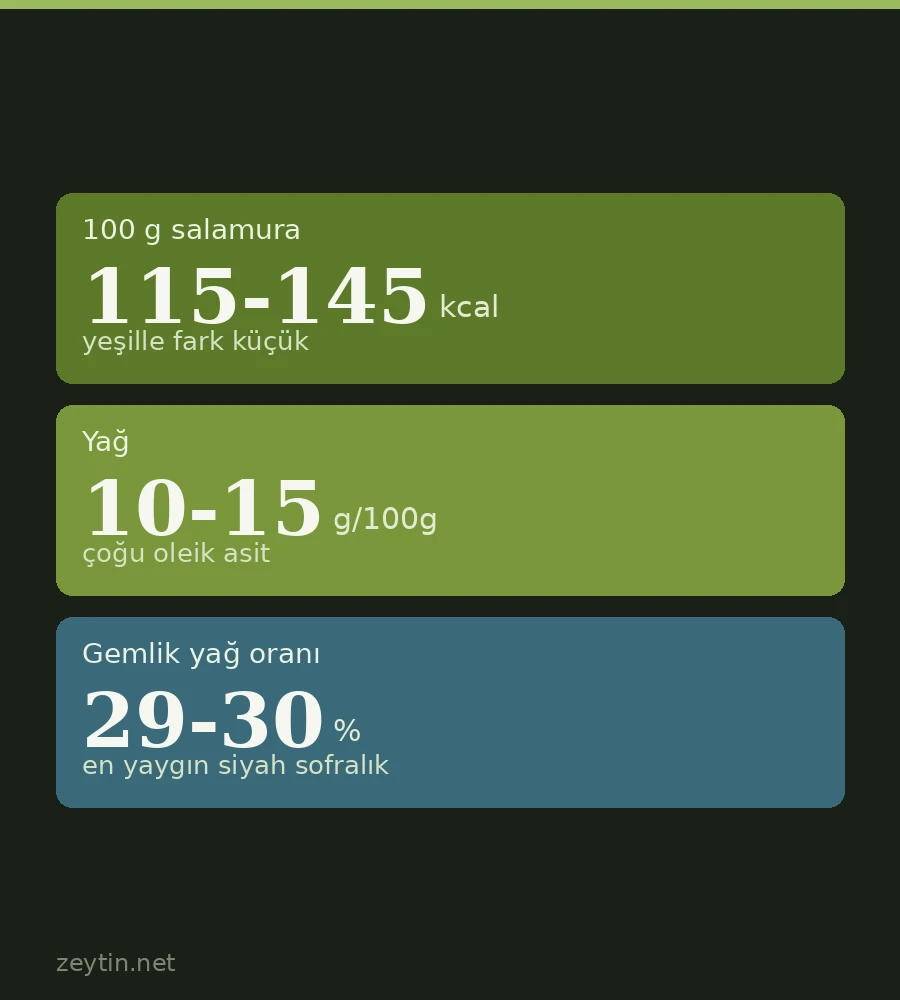
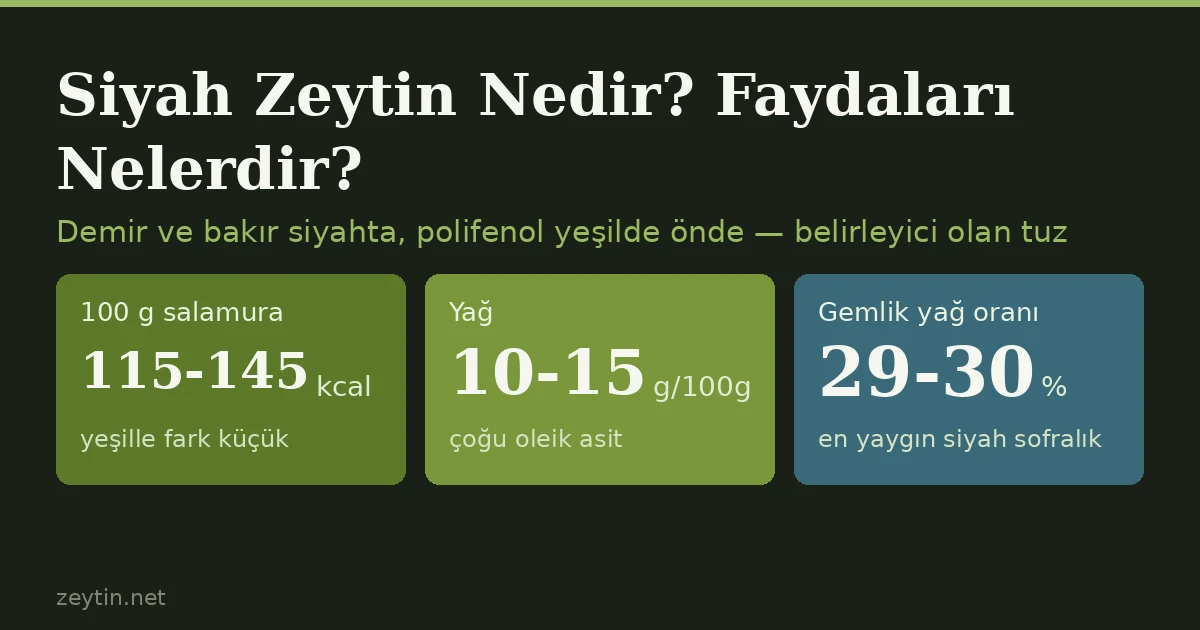
| 100 g brined olives | 115-145 kcal |
It is widely believed black olives are markedly higher in calories than green, but the gap is small. Size and brining method decide more; a large green olive carries more than a small black one.
What are the benefits?
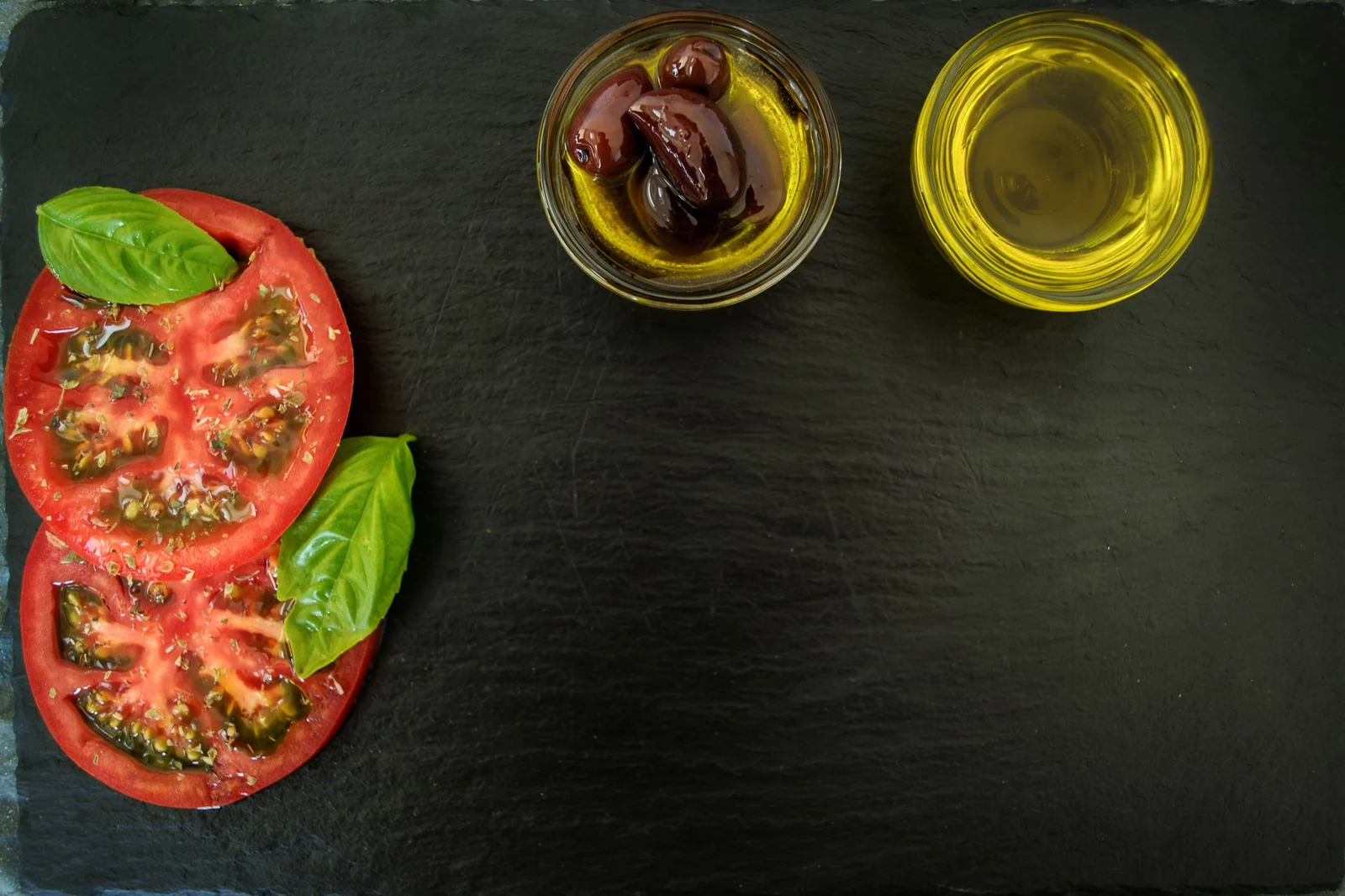
Iron and copper. Both are more evident in black olives. Iron contributes to normal oxygen transport in the blood, and absorption of plant-source iron improves alongside vitamin C — eating olives with tomato at breakfast has a logic beyond habit.
Monounsaturated fat. 10-15 grams per 100, mostly oleic acid. Replacing saturated with monounsaturated fat contributes to maintaining normal blood cholesterol. Oil content rises with ripening, so black is a step ahead here.
Vitamin E and fibre. Alpha-tocopherol contributes to protecting cells from oxidative damage; about 3 grams of fibre per 100 contributes to satiety.
Polyphenols: green leads here
Polyphenols fall as ripening advances, so black olives typically hold less than green. Brining time lowers them further. There is no single answer to "which is better": black leads on minerals and fat, green on polyphenols.
Salt is the real variable
Salt is the most critical line for both. Brining method and time change sodium far more than colour does. Dry-cured olives sit at the high end — the price of that concentrated taste is salt.
One rating per visitor; you can change yours at any time. Ratings are real reader votes — no seeded or default scores.
Related
 Article
How many olives should you eat a day? Portions, salt and common questions
Calories, fat and salt in olives: what is a sensible daily amount? Based on nutrition data, without unauthorised health claims.
Article
How many olives should you eat a day? Portions, salt and common questions
Calories, fat and salt in olives: what is a sensible daily amount? Based on nutrition data, without unauthorised health claims.
 Article
Can people with diabetes eat olives and olive oil?
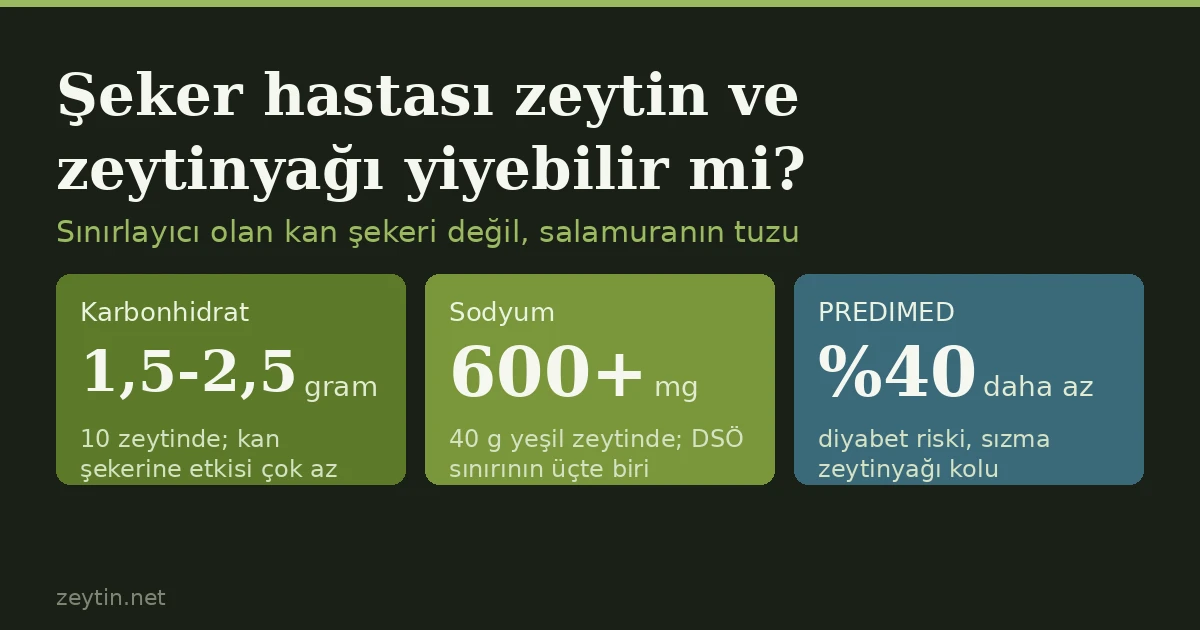
It looks like one question but contains two: table olives and olive oil. Neither is off limits in type 2 diabetes; olives carry too little carbohydrate to measure a glycaemic index for, and oil carries none. The real limiting factor is not blood sugar but the salt in the brine.
Article
Can people with diabetes eat olives and olive oil?
It looks like one question but contains two: table olives and olive oil. Neither is off limits in type 2 diabetes; olives carry too little carbohydrate to measure a glycaemic index for, and oil carries none. The real limiting factor is not blood sugar but the salt in the brine.
 Article
Does olive oil have downsides? Calories, the gallbladder, old oil and fraud
In normal kitchen amounts olive oil is a safe food; its downsides mostly come not from the oil itself but from quantity, misuse and poor products. High calories, discomfort after fatty meals in people with gallstones, the habit of drinking it on an empty stomach as a "cure", repeatedly reused frying oil and adulterated products are the main risks.
Article
Does olive oil have downsides? Calories, the gallbladder, old oil and fraud
In normal kitchen amounts olive oil is a safe food; its downsides mostly come not from the oil itself but from quantity, misuse and poor products. High calories, discomfort after fatty meals in people with gallstones, the habit of drinking it on an empty stomach as a "cure", repeatedly reused frying oil and adulterated products are the main risks.
 Article
Olive oil and brain health: what a 92,000-person study and the randomised evidence say
The headlines about olive oil and the brain are bold; the evidence is more measured. In a 92,383-person cohort followed for 28 years, more than 7 g a day was associated with a 28% lower risk of dementia-related death. The randomised PREDIMED trial points the same way.
Article
Olive oil and brain health: what a 92,000-person study and the randomised evidence say
The headlines about olive oil and the brain are bold; the evidence is more measured. In a 92,383-person cohort followed for 28 years, more than 7 g a day was associated with a 28% lower risk of dementia-related death. The randomised PREDIMED trial points the same way.