Is olive oil good for earwax? Can you put it in your ear?
The NHS suggests 2-3 drops of olive oil, 3-4 times a day for 3-5 days, to soften earwax; a Cochrane review could not show drops beat plain water. The evidence, guidelines, the eardrum warning, cotton buds and ear candles.

Short answer: when earwax builds up and blocks the ear, putting olive oil drops in is one of the home methods the UK's National Health Service (NHS) suggests trying. The scientific footing is weaker than most people assume, though: a 2018 Cochrane review could not show that ear drops beat plain water or saline at clearing wax. Olive oil is used as a harmless softener that helps wax fall out on its own; it is not a miracle cure. If you have a hole in your eardrum, do not put drops in, and if there is severe pain or discharge, get examined rather than experimenting.
Below we set out what the institutions say, what the trials found, and what to avoid.

First, what is earwax?
Earwax (cerumen) is not a defect; it is part of the ear's self-cleaning system. The Cochrane review notes that wax is normally expelled from the canal on its own, and that problems begin when this mechanism fails and wax is retained and blocks the canal. The NHS likewise says wax usually falls out by itself, and stresses that it is there to protect the ears, so it cannot be "prevented".
A blockage can cause hearing loss, a feeling of fullness or earache, ringing in the ears (tinnitus) and vertigo. The NHS lists narrow or damaged ear canals, a lot of hair in the canals, skin conditions affecting the scalp or the area around the ear, and inflammation of the outer ear canal (swimmer's ear) among the causes of build-up.
What does the NHS recommend at home?
The NHS page on earwax build-up gives these steps:
1. Lie on your side with the affected ear facing up.
2. Put 2 to 3 drops of olive or almond oil in the ear. Do not use almond oil if you are allergic to almonds.
3. Stay on your side for 5 to 10 minutes after putting the oil in.
4. Repeat 3 to 4 times a day for 3 to 5 days.
According to the page, over about two weeks lumps of wax should fall out and symptoms should improve. A pharmacist can also suggest medicines that dissolve wax, in which case the wax is expected to fall out or dissolve after about a week. The NHS does not say which kind of olive oil (extra-virgin or refined); it simply says "olive oil".
How strong is the evidence?
The 2018 Cochrane Database of Systematic Reviews review "Ear drops for the removal of ear wax" examined 10 randomised trials with 623 participants (900 ears). Nine of the trials were more than 15 years old. The oil-based treatments it lists are triethanolamine polypeptide, almond oil, benzocaine and chlorobutanol; olive oil is not named separately in the abstract.
| Comparison | Result | Certainty |
|---|---|---|
| Active drops vs no treatment | Ears fully cleared after five days: 22% vs 5% (RR 4.09; 95% CI 1.00-16.80); one study, 117 ears | Low |
| Active drops vs water or saline | No difference shown (RR 1.47; 0.79-2.75); three studies, 213 participants | Low |
| Oil-based vs non-oil-based drops | No difference shown | — |
| Adverse effects | Mild; reported in fewer than 30 people across seven studies; no serious events | Low |
So there is one weak sign that using drops is better than doing nothing, but no advantage was shown between different drops, or between drops and plain water. The review rates this evidence as low certainty and notes that nine of the trials were over 15 years old. The practical meaning: you cannot claim olive oil works on this data, and you cannot claim it fails either. It is a cheap option that tries to soften wax and has not been reported to cause harm.
What does the American guideline say?
The 2017 clinical practice guideline of the American Academy of Otolaryngology-Head and Neck Surgery Foundation (Schwartz et al., Otolaryngology-Head and Neck Surgery) defines cerumen impaction as wax that causes symptoms or prevents the ear from being examined, and recommends:
- Wax should not be treated routinely in someone with no symptoms whose ears can be adequately examined.
- When treatment is needed, the options are wax-dissolving agents (including water or saline), irrigation, or manual removal with instruments.
- The guideline explicitly recommends against ear candling.
That water or saline appears on the guideline's list of wax-dissolving options fits the Cochrane finding: no expensive or special product has been proven necessary.
What to avoid
- Cotton buds, fingers or any other object. The NHS says these push the wax further in and make things worse.
- Ear candles and ear vacuums. The NHS says there is no evidence they remove wax; the American guideline recommends against ear candling.
- Drops when the eardrum has a hole. The NHS says not to use drops if you have a perforated eardrum. Because discharge can be a sign of a perforation, if fluid is coming from the ear, or you do not know whether your eardrum is intact, it makes sense to be examined before putting anything in.
When to see a doctor
According to the NHS, if symptoms have not cleared after five days, or your ear is so blocked that you cannot hear anything (infection can develop if it is not cleared), you should see a nurse or doctor. In the clinic wax can be flushed out with water, sucked out by microsuction or removed with a very small instrument; these treatments are usually painless. For people whose wax keeps building up, the NHS says that regularly using ear drops, or olive or almond oil, helps soften the wax so it falls out by itself and should stop the ears getting blocked.
Who should be examined first?
The American guideline names the situations that change management: anticoagulant use, a condition that suppresses the immune system, diabetes, radiation to the head and neck, a narrowed canal or bony growths, and an eardrum that is not intact. It also states that its recommendations do not apply to people with skin disease of the ear canal, recurrent outer ear infections, or earlier surgery affecting the ear canal. If you are in one of these groups, ask a doctor instead of trying oil at home.
Children have a separate warning: the guideline asks that obstructing wax be promptly considered in young children and in people who cannot express their symptoms. If you suspect a blockage in a child, have them examined rather than trying oil.
Another principle from the guideline: if there are no symptoms and the ear can be examined adequately, no treatment is needed. So there is no basis for putting oil in a healthy ear "to keep it clean"; the NHS suggestion of regular drops is better read as an option for people whose wax builds up often.
For evidence on olive oil and the skin, see can you put olive oil on your skin.
Summary
Olive oil drops are a cheap, usually harmless method the NHS suggests for softening earwax so it falls out by itself: 2 to 3 drops, 3 to 4 times a day, for 3 to 5 days. But there is no good evidence that ear drops beat plain water, and with no symptoms no treatment is needed. Keep away from cotton buds and ear candles, and see a doctor if you suspect a hole in the eardrum, or if there is pain or discharge.
t; This article is general information; consult your doctor for diagnosis and treatment.
One rating per visitor; you can change yours at any time. Ratings are real reader votes — no seeded or default scores.
Related
 Article
Is olive oil good for fatty liver? What the trials and guidelines say
Olive oil does not cure fatty liver on its own, but trials show it can lower the degree of liver fat when it replaces other fats. European guidelines recommend a Mediterranean-style diet and 5-10% weight loss; adding spoonfuls on top can backfire because of the calories.
 Article
Olive leaf tea: how to make it and what the evidence says
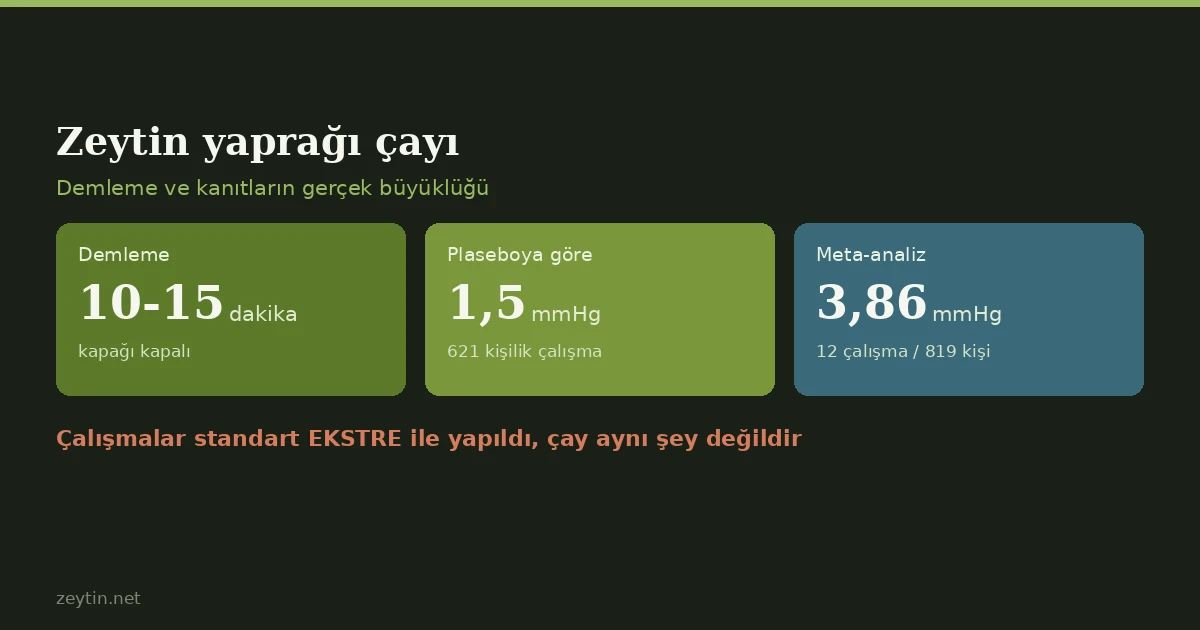
The leaf carries oleuropein and other phenolics. Blood pressure trials show a modest effect, but all used standardised extracts — tea is not the same thing. Steeping, drying and cautions.
 Article
Oleocanthal and Polyphenols
Why does a good extra virgin oil sting the throat? That sensation is not a flaw but the mark of a measurable compound.
 Article
What Are Black Olives? What Are Their Benefits?
What black olives are, how they differ from green, and how many calories. Iron and copper, the polyphenol difference, and the two different black olives on the shelf.