Does olive oil help bone health? Fracture risk and bone markers
In an observational analysis of 870 people in Spain, the highest extra-virgin olive oil intake went with 51% lower fracture risk; the randomised groups showed no difference. What the osteocalcin study, the vitamin-enriched oil trial and animal experiments do and do not show.
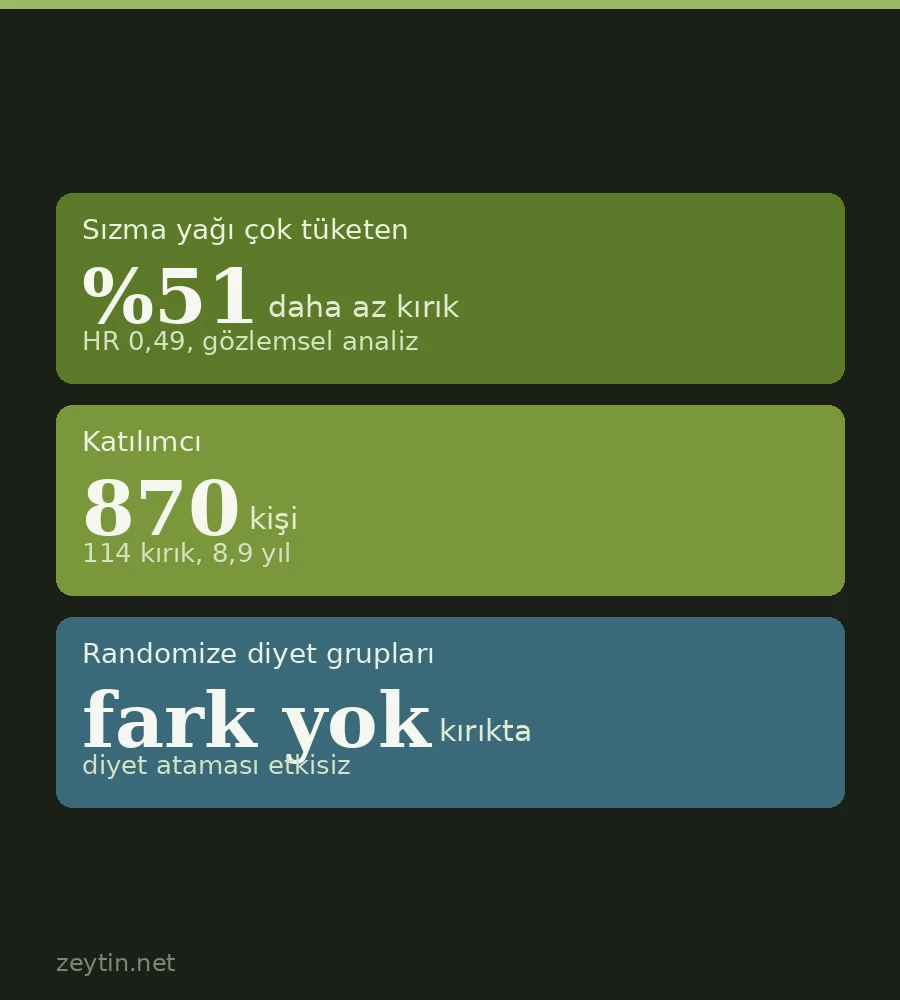
Short answer: a Spanish study found fewer bone fractures among people who ate the most extra-virgin olive oil, but it is an observational finding based on 870 people and 114 fractures, and the trial's own randomised diet groups showed no difference in fractures. There is also a small study reporting better bone-formation markers (osteocalcin) and some animal experiments. None of this is enough to say "olive oil protects the bones", and it does not replace osteoporosis treatment. What can be said today: there is a promising association, and the evidence is still weak.
Below we set out what each study measured, why caution is needed, and what it means in everyday life.
The figures
| Study | Type and participants | Finding |
|---|---|---|
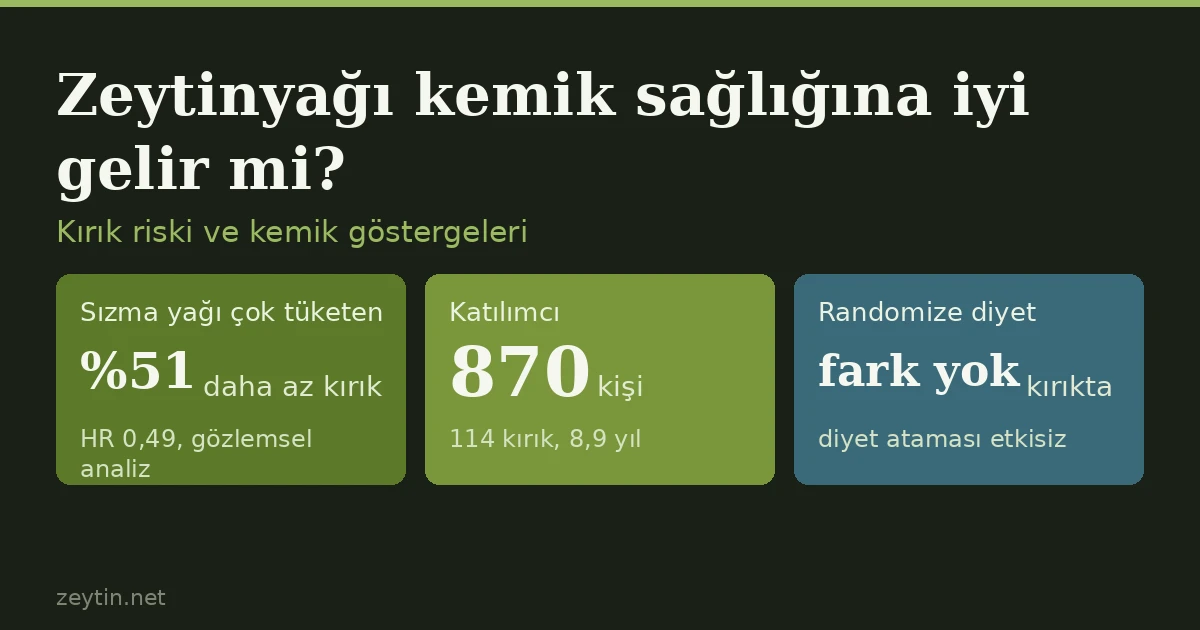
| García-Gavilán et al. 2018, Clinical Nutrition | PREDIMED Reus centre, 870 people, median 8.9 years; observational analysis | Highest extra-virgin olive oil tertile: 51% lower fracture risk (HR 0.49; 0.29-0.81) |
| Fernández-Real et al. 2012, J Clin Endocrinol Metab | 127 older men, 2 years, randomised diets | Total osteocalcin and P1NP rose on the olive oil Mediterranean diet |
| Mazzanti et al. 2015, Endocrine | 60 postmenopausal women, 1 year; vitamin-enriched oil vs plain olive oil | Bone markers and T-score improved on the vitamin-enriched oil |
| Animal and cell experiments (2004, 2017, 2019) | Rats and laboratory cell culture | Favourable changes in bone density and osteoblast gene expression |
Fracture risk: PREDIMED Reus
PREDIMED was a large nutrition trial in Spain among people aged 55 to 80 at high cardiovascular risk. García-Gavilán and colleagues, in Clinical Nutrition in 2018, examined the 870 participants of the Reus centre. They had been assigned to a Mediterranean diet supplemented with extra-virgin olive oil, a Mediterranean diet supplemented with nuts, or a low-fat diet. Over a median follow-up of 8.9 years, a review of medical records identified 114 osteoporosis-related fractures.
The first important detail: the diet group people were assigned to had no effect on fracture risk. In other words, the randomised part showed no difference. The authors' analysis was an observational cohort analysis nested in the trial: olive oil intake, taken from yearly dietary questionnaires, was split into thirds. Those in the highest third of extra-virgin olive oil consumption had a fracture risk 51% lower than those in the lowest third (hazard ratio 0.49; 95% CI 0.29-0.81; p for trend 0.004). Total olive oil or "common" olive oil consumption was not associated with fracture risk.
That distinction matters: the association was seen only for extra-virgin olive oil. For the difference between extra-virgin and ordinary olive oil, see how to tell good olive oil. But an observational analysis cannot prove cause and effect: people who eat a lot of extra-virgin olive oil may differ in other habits too, and although the authors say they adjusted for potential confounders, unmeasured differences cannot be ruled out. The authors report the result for a middle-aged and older Mediterranean population at high cardiovascular risk; transferring it to other groups would need separate testing.
Bone markers: osteocalcin
Fernández-Real and colleagues, in the Journal of Clinical Endocrinology & Metabolism in 2012, followed 127 older male participants of the same trial for two years: 34 on the low-fat control diet, 51 on the nut-enriched diet and 42 on the olive oil Mediterranean diet. Total osteocalcin (a protein involved in bone formation) rose markedly only in the olive oil group (p = 0.007), as did the bone-formation marker P1NP (p = 0.01). The nut and control groups showed no significant change. Table olive consumption was also positively related to osteocalcin at the start and after two years (r = 0.23 and 0.21).
The authors say this suggests a protective effect on bone. But what was measured was blood markers, not fractures or bone density. This study does not establish the link between the marker and actual fracture risk, and the sample is small.
Vitamin-enriched oil: the oil or the vitamins?
Mazzanti and colleagues followed 60 postmenopausal women for a year in Endocrine in 2015. One group received extra-virgin olive oil enriched with vitamins D3, K1 and B6; the other received plain extra-virgin olive oil as the placebo. After a year, the vitamin-enriched group had a lower marker of bone vitamin K status and a bone mineral density T-score that rose relative to the placebo group. The authors suggest that vitamin-enriched oil could be a suitable tool for bone protection in postmenopausal women.
This study has to be read carefully: olive oil itself was the placebo in the comparison. So the difference observed is a difference made by the added vitamins, not by the oil. It should be read as a finding about vitamin-enriched products, not as evidence that olive oil benefits bone.
Animal and cell experiments
Laboratory findings are promising but are not human evidence:
- Ageing rats (2017, International Journal of Molecular Sciences): male rats were fed diets based on virgin olive oil or sunflower oil for 6 or 24 months. In old age, the olive oil group had higher femoral bone mineral density than the sunflower oil group; the sunflower oil group also had the highest oxidative stress marker.
- Ovariectomised rats (2004, British Journal of Nutrition): for three months the animals were fed olive oil or the main olive polyphenol, oleuropein. In rats with induced inflammation, both olive oil and oleuropein prevented bone loss. Markers of bone formation and breakdown did not differ.
- Cell culture (2019, Nutrients): phenolic compounds found in extra-virgin olive oil, such as ferulic acid, caffeic acid, coumaric acid, apigenin and luteolin, were applied for 24 hours to the MG63 osteoblast cell line. Expression of many genes linked to bone formation increased.
None of these experiments measured outcomes in human bone. What is seen in a rat or a petri dish cannot be assumed to occur to the same extent with a spoonful of oil at the table. We explain what polyphenols are in oleocanthal and polyphenols.
So what should you do?
- Do not treat olive oil as a replacement for treating or preventing osteoporosis. Anyone diagnosed with bone loss, or at risk, should set the treatment plan with their doctor.
- Rather than thinking of the oil as a drug, consider it within the whole diet. What changed in PREDIMED was not one food but a Mediterranean-style pattern; for detail, see what is the Mediterranean diet.
- The association that showed a benefit was with extra-virgin olive oil. Read the label and make sure the oil is extra-virgin; for amounts, see how much olive oil a day.
- Before trusting a product sold as "strengthening the bones", or a vitamin-enriched oil, ask whether any benefit comes from the oil or from the added vitamins.
- For findings in other areas of health, see olive oil and heart health and olive oil and brain health.
Summary
There is an interesting link between olive oil and bone health: in one Spanish analysis, those who ate the most extra-virgin olive oil had fewer fractures, and bone-formation markers rose on an olive oil diet. But these findings come from observational or small studies, the vitamin-enriched oil study shows the effect of the vitamins rather than the oil, and the animal and cell experiments have not been confirmed in people. Use olive oil as part of a healthy diet, and for bone loss follow your doctor's plan.
t; This article is general information; consult your doctor for diagnosis and treatment.
One rating per visitor; you can change yours at any time. Ratings are real reader votes — no seeded or default scores.
Related
 Article
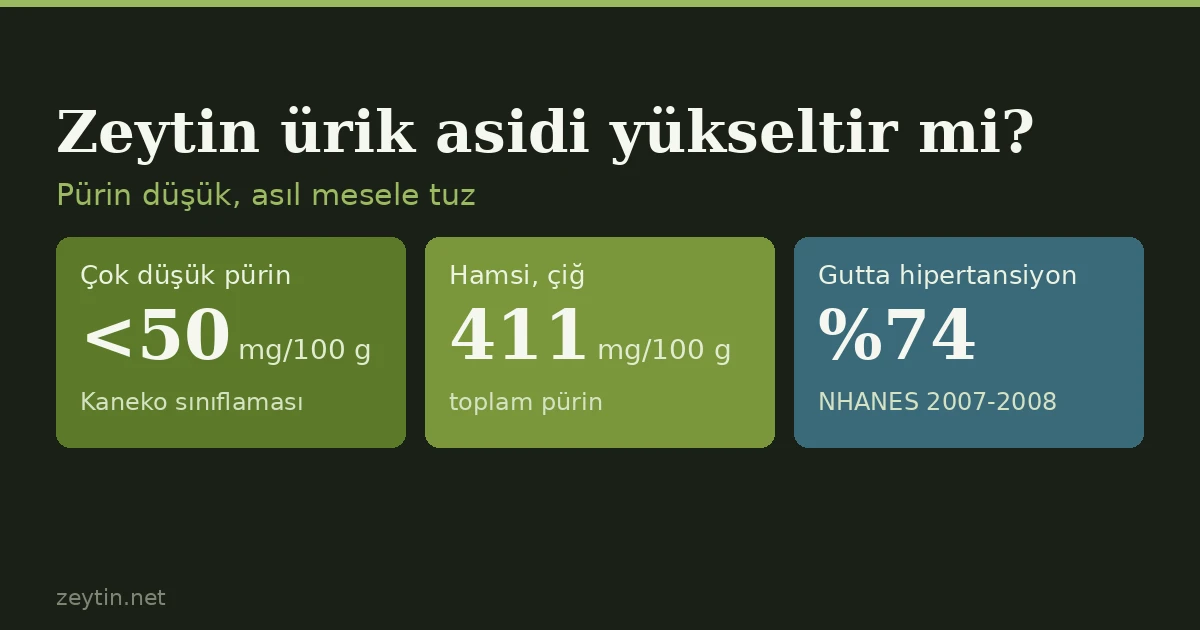
Do olives raise uric acid? Can you eat olives with gout?
No. Olives are low in purines and olive oil has none to speak of, so people with gout can eat both. The real limit is salt, for blood pressure.
 Article
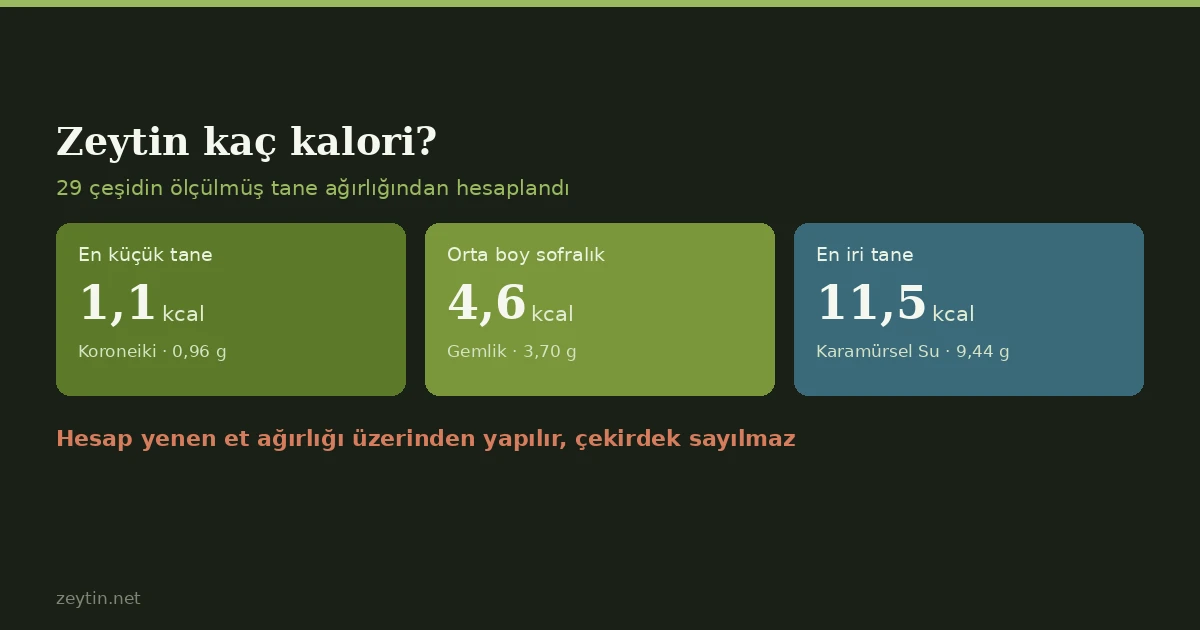
How many calories are in an olive? By piece, portion and variety
A single olive contains between 1 and 12 calories depending on variety. A table calculated from the measured fruit weight and flesh ratio of 29 varieties, portion equivalents and the calories in olive oil.
 Article
What Is the Mediterranean Diet?
Not a weight-loss plan but a pattern of eating. The basics of the Mediterranean way of eating, recognised by UNESCO, and where olive oil sits within it.
 Article
Olive oil or butter? What a 221,000-person study actually found
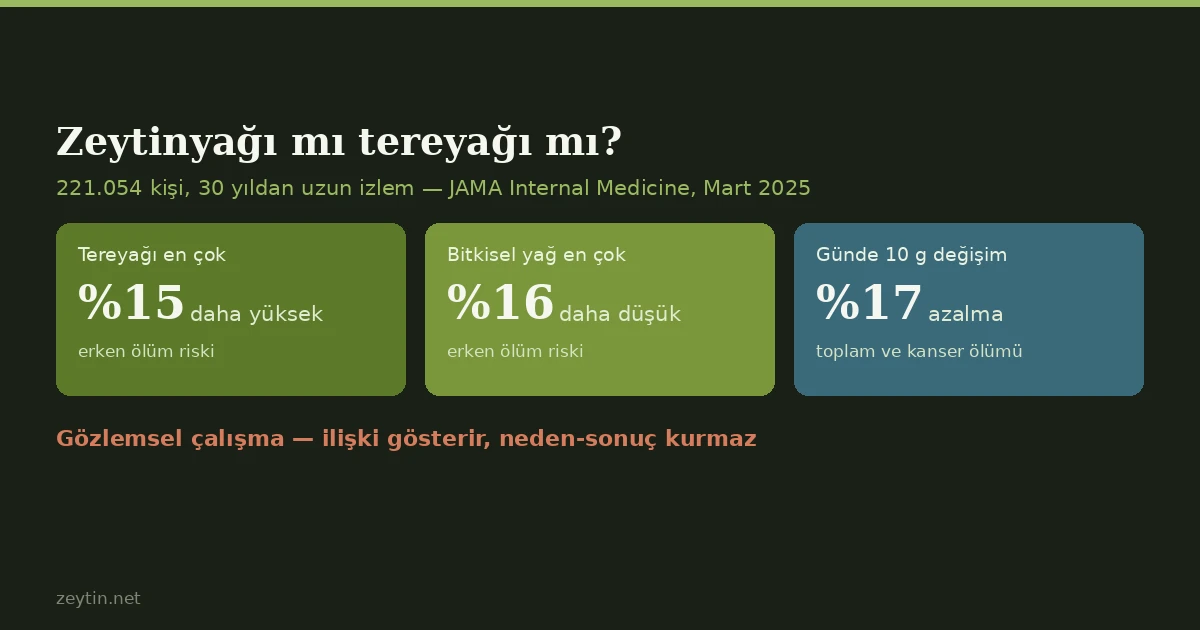
A Harvard-led study followed 221,054 people for over 30 years. Highest butter intake carried 15% higher mortality; highest plant-oil intake 16% lower. We look at what the numbers say — and what they do not.