Marmarabirlik announces 2026/27 purchase prices: oil olives down from 53 to 40 lira, table-olive floor from 55 to 50
In Marmarabirlik's list reported on 16 November 2026, oil olives are 40 lira (53 last season), the table-olive floor 50 lira (55) and the ceiling 160 lira (unchanged). Oil olives fell 24.5 percent and equal 68.8 percent of the Gemlik Chamber of Agriculture's 58.14-lira cost estimate. Half is paid up front, with the first payment on 27 November.
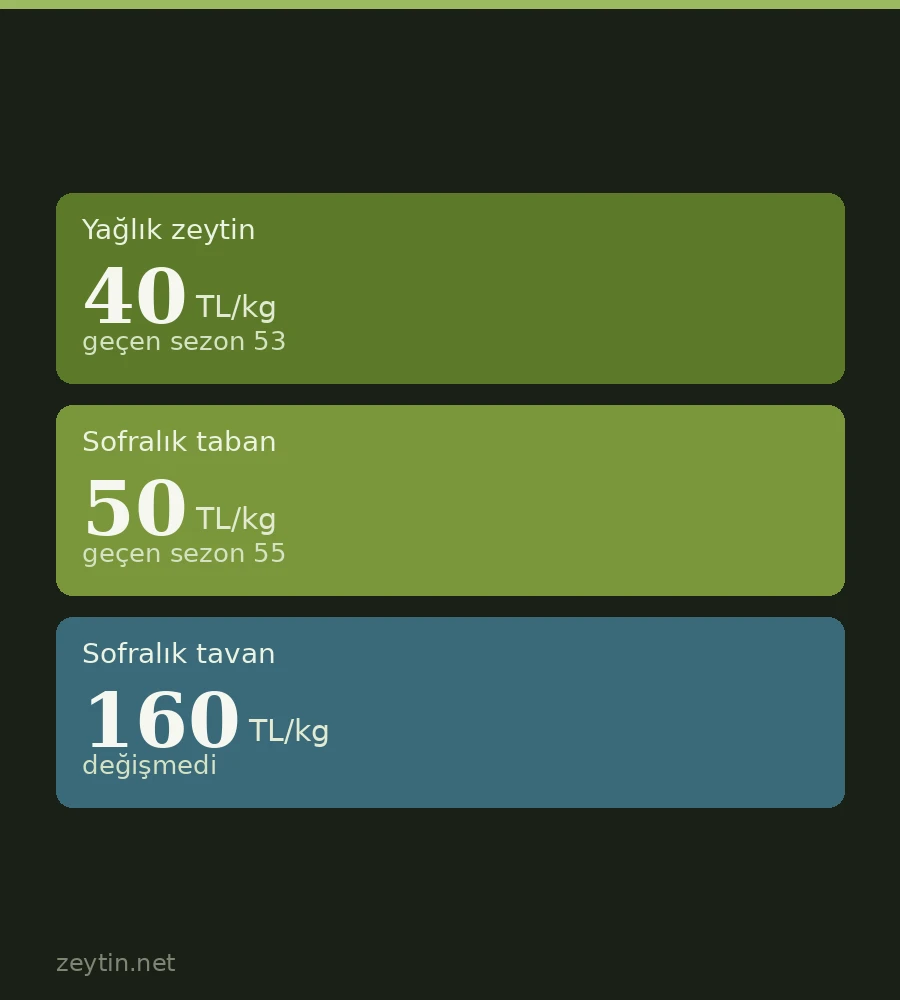
Marmara Olive Agricultural Sales Cooperatives Union (Marmarabirlik) has announced its purchase prices for the 2026/27 olive season. In the list reported on 16 November 2026, oil olives are bought at 40 lira per kilogram, table olives at a ceiling of 160 lira and a floor of 50 lira. Compared with last season, oil olives are down 13 lira and the table-olive floor is down 5 lira; the ceiling price is unchanged.
The list, next to last season
| Item | 2025/26 | 2026/27 | Change |
|---|---|---|---|
| Table olive ceiling (180 fruits per kilogram) | 160 | 160 | unchanged |
| Table olive floor (410 fruits per kilogram) | 55 | 50 | -5 lira, 9.1 percent |
| Oil olives | 53 | 40 | -13 lira, 24.5 percent |
The percentage changes are our own calculation. In this year's report the table-olive grades are given as the number of fruits per kilogram, that is 180 and 410; on our purchase prices page the same two grades for last season are written as 18 and 41. The prices are identical (160 and 55 lira), so the two notations appear to describe the same grades, although the union itself did not spell out that match.
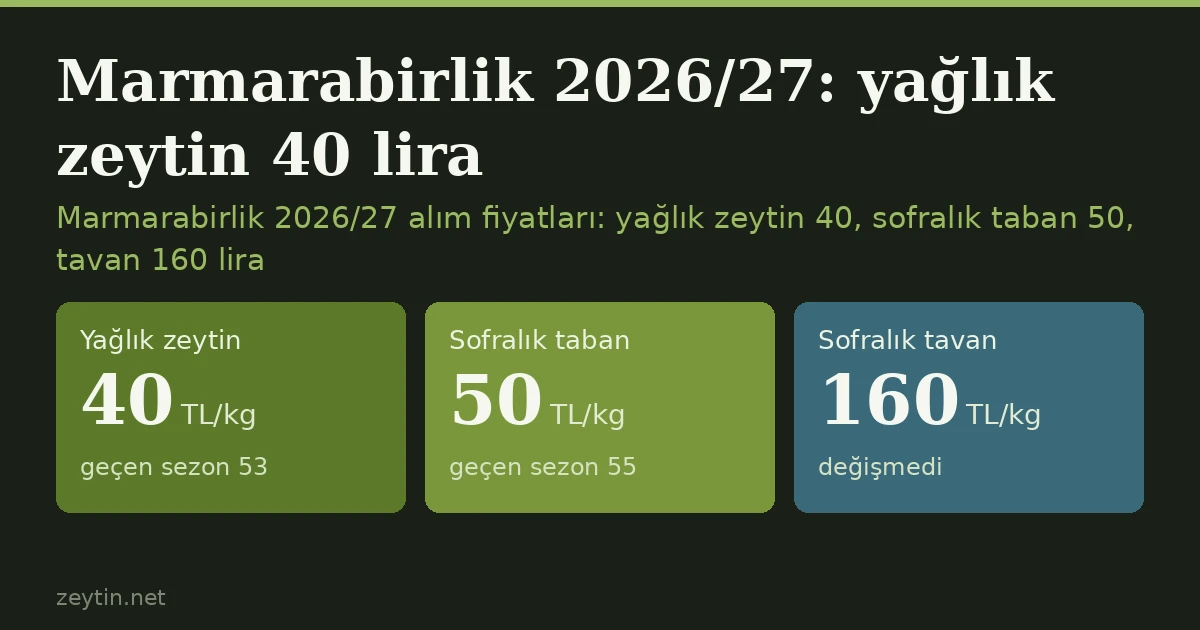
The drop is steeper for oil olives
Oil olives fell 24.5 percent while the table-olive floor fell 9.1 percent and the ceiling did not move at all. That has two consequences. First, the gap between large and small table olives has widened: the ratio of the ceiling to the floor rose from 2.9 to 3.2. Second, last season the oil-olive price was only 2 lira below the price of the smallest table olive (53 against 55); this season the gap is 10 lira (40 against 50). In other words, the union is now pricing small table olives clearly above oil olives.
Set against production costs
The Gemlik Chamber of Agriculture had calculated the cost of a kilogram of oil olives for the 2026 harvest at 58.14 lira. The announced 40 lira is 68.8 percent of that figure, which leaves 18.14 lira per kilogram uncovered. The limits of this comparison are plain: the chamber's calculation is a worked example for a grower in Gemlik, based on a yield of 759 kilograms per decare, and not every orchard will come out at the same cost. Even so, the gap between the price of the institution that serves as the reference point in Marmara and the cost estimate of the region's own chamber of agriculture shows why the argument has grown so heated.
On 13-14 November the Gemlik City Council and producer cooperatives had called on Marmarabirlik to announce its prices. Council chair Sedat Akkuş said oil olives had fetched around 50 lira last year and that 25-30 lira was being talked about this year, and the producers' demand was reported as at least 50 lira. The announced 40 lira is above the 25-30 lira that was circulating and 10 lira below the 50 lira that was demanded.
Payment: half up front
Half of the value of the crop will be paid up front, and the schedule for the remaining half will be set at the end of the purchase campaign. The first payments will be made on 27 November 2026. For oil olives that means half of the 40 lira, or 20 lira per kilogram, in the first instalment; when the other 20 lira will arrive is not yet known. Last season's announcement also used a 50 percent up-front arrangement, so the only thing that has changed this year is the numbers.
What the union's chairman said
Board chairman Ali Yıldız said that difficulty in accessing finance, which affects every sector, is also hurting the olive sector. According to Yıldız, regardless of how low oil-olive prices in the market currently are, even selling the crop and collecting payment for it has become very difficult, and in such a period the union has met its responsibility and stood by its producers. The statement does not set out a cost or stock calculation explaining why prices were set at this level.
The union's share is limited, its influence wide
For 2026/27 the union is targeting purchases of 64 thousand tonnes, while production in its working region is expected at 430 thousand tonnes. The target equals about 14.9 percent of regional output (our calculation). The remaining share of roughly 85 percent is left to merchants, private processors and direct sales; even so, the union's price is treated as a reference point by growers in the region. Buying before a price was announced had drawn a reaction in Gemlik; the list closes that uncertainty but does not close the argument over the price.
A one-tonne example
According to the list, a tonne of oil olives is worth 40 thousand lira, of which 20 thousand will be paid in the first instalment. At last season's price the same tonne would have been worth 53 thousand lira, a difference of 13 thousand lira per tonne. This is a pure price difference: changes in fertiliser, diesel and labour costs are not part of this calculation.
What the announcement leaves out
The report gives no separate price step for the small fruit that the union said, when it opened the campaign, it would buy down to grade 41, and it gives no prices for the intermediate grades between the ceiling and the floor. The amount of the price-difference support promised to members hit by hail in Erdek was also not announced. A grower who falls between the ceiling and the floor therefore cannot read from this list what he or she will actually receive.
The background to the prices is clear, though. This season the union's members declared 105 thousand tonnes, the highest crop declaration since the union was founded, and Turkey as a whole is expecting 4.03 million tonnes of olives; according to the national olive council's chairman, Mustafa Tan, olive oil costs 240-280 lira to produce while the buying price stays at 170-200 lira. In a season where the cooperatives set their own purchase calendars, whether the union's price will also pull up merchant purchases in the region will become clear over the coming weeks.
One rating per visitor; you can change yours at any time. Ratings are real reader votes — no seeded or default scores.
Related
 Article
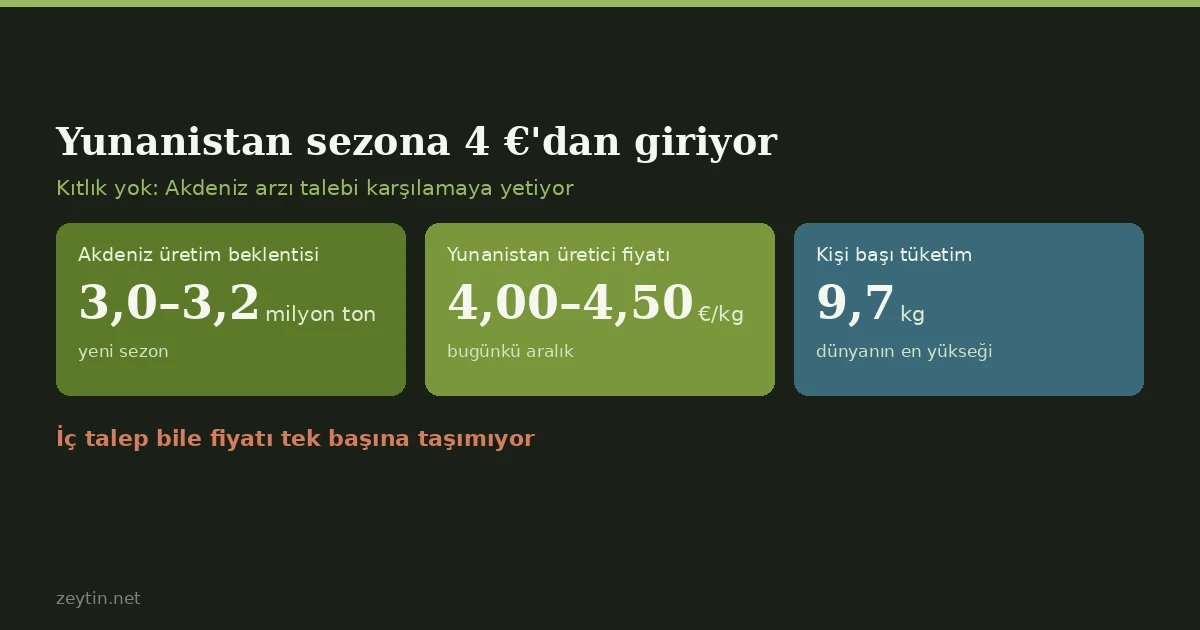
Greece opens the season at €4: no scarcity in the Mediterranean, but pressure on price
Manolis Giannoulis, president of the National Interprofessional Olive Oil Organization, expects the season to open at around €4 per kilogram. Mediterranean output is forecast at 3–3.2 million tonnes: no record, but enough to meet demand. The market is quiet, buyers are few, and costs plus North African imports keep the pressure on.
 Article
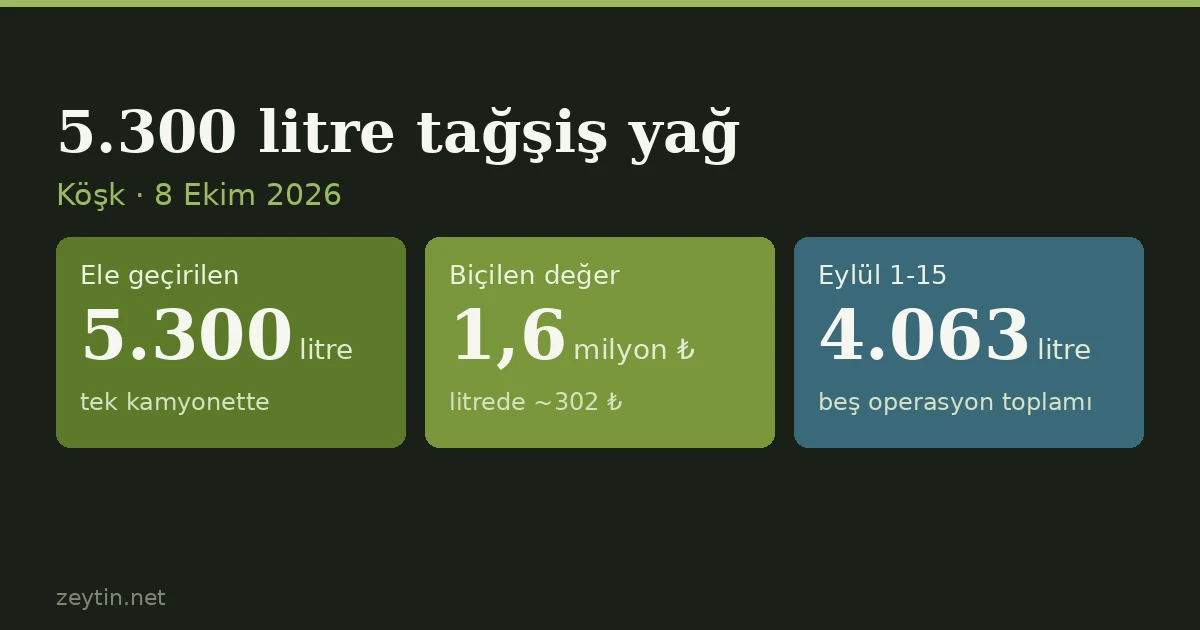
5,300 litres of adulterated oil in one van at Köşk — more than all of September
A van stopped on the Aydın-Denizli highway was found to be carrying 5,300 litres of counterfeit and adulterated olive oil, valued at 1.6 million lira; two people face proceedings. The single shipment exceeds the 4,063 litres seized across five operations in the province in the first half of September.
 Article
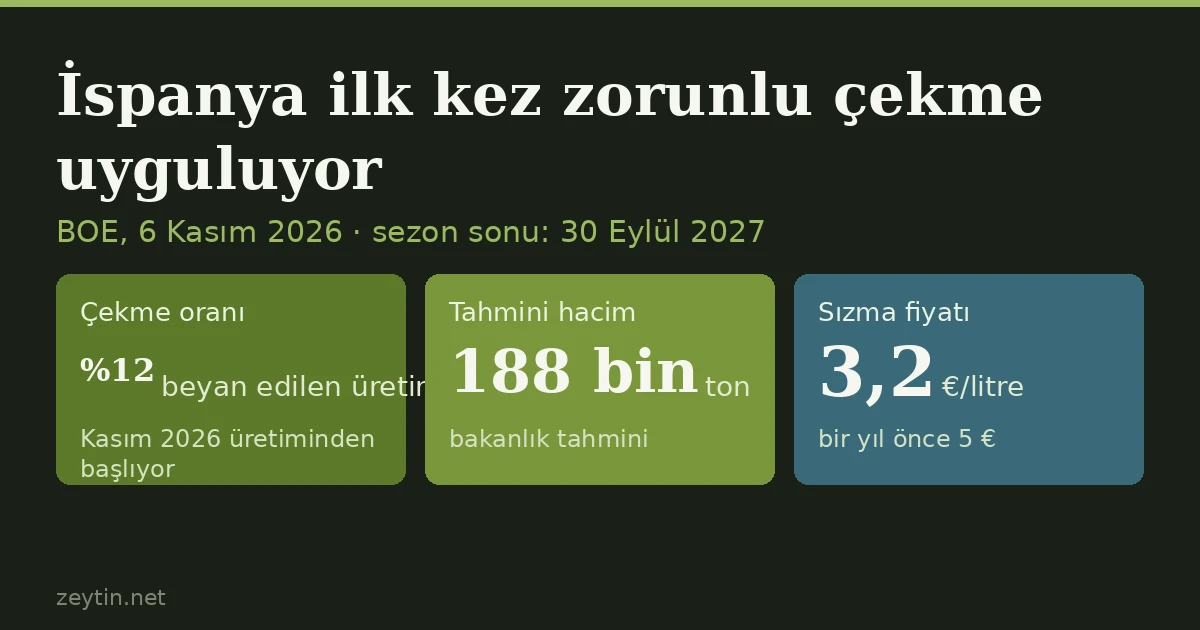
Spain activates mandatory olive oil withdrawal for the first time: 12% of output, about 188,000 tonnes held until September 2027
Spain's agriculture ministry published its decision in the BOE on 6 November: from November, mills must keep 12% of declared output in storage until 30 September 2027. The ministry estimates about 188,000 tonnes will be withdrawn; October early-harvest oils are exempt and mills receive no compensation.
 Article
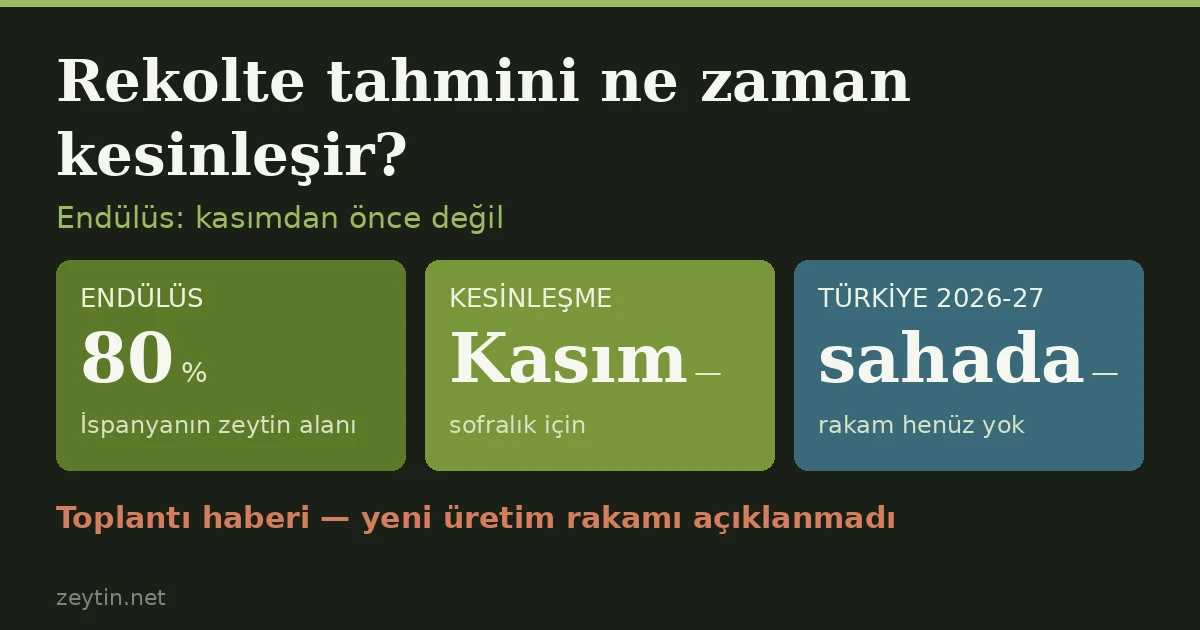
"Not definitive until November": Andalusian growers push back on the crop estimate
Andalusia's agriculture ministry called its first crop estimate "high production"; cooperatives and COAG in Seville objected: recent heat will affect the crop and the estimate is not definitive until November. Türkiye is making its 2026-27 estimate in the field the same week — the same caution applies here.