Do olives and olive oil contain gluten? What a coeliac can eat and where the risk begins
An olive is a fruit and olive oil is its oil, while gluten is a protein of cereals such as wheat, barley and rye, so plain olives and pure olive oil are naturally gluten-free. The risk begins with stuffed, spiced, loose and flavoured products and with shared use. The article reads the Turkish Food Codex gluten-free notification and the 20 mg/kg dry-matter threshold.
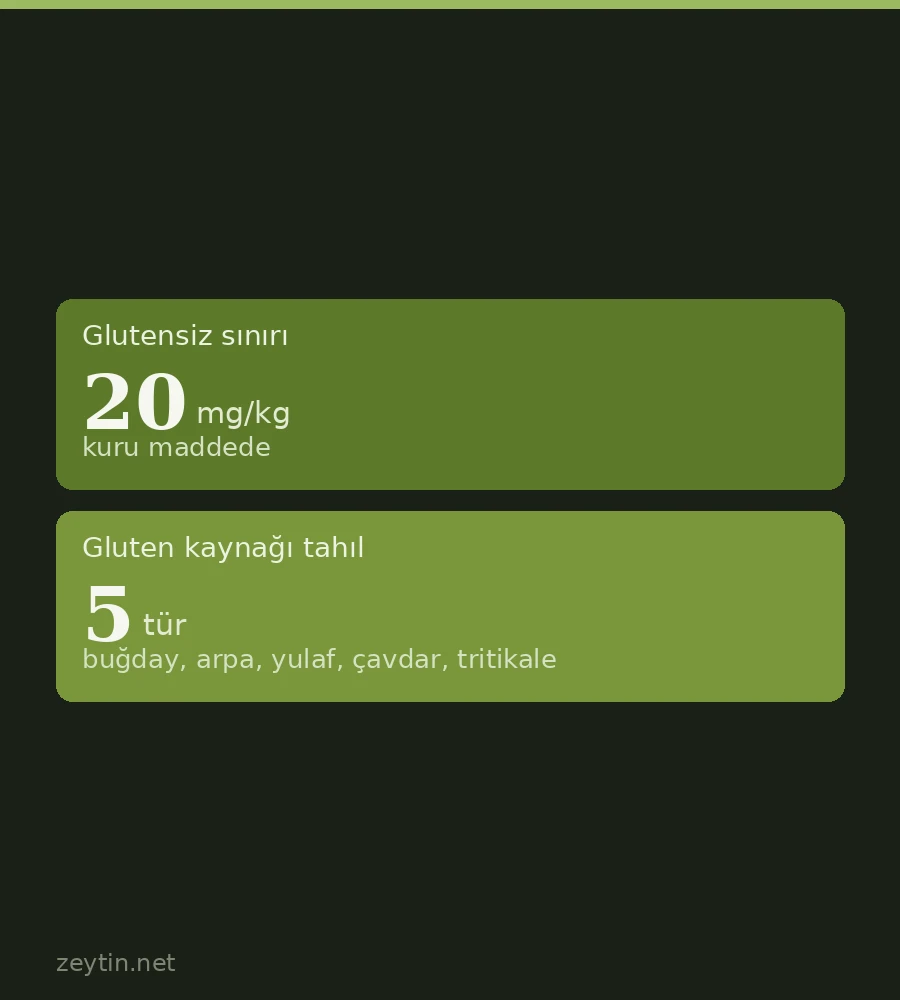
Short answer: No. An olive is a fruit and olive oil is the oil of that fruit, while gluten is a protein of cereals such as wheat, barley and rye. In their natural state neither olives nor pure olive oil carry gluten. The risk begins not in the olive itself but in what is added afterwards and in cross-contact on the production line: stuffed and spiced olives, flavoured oils, loose counters, shared containers. This article rests on the text of the Turkish Food Codex gluten-free notification and the international 20 mg/kg threshold; it is not medical advice.
What is gluten and where does it come from?
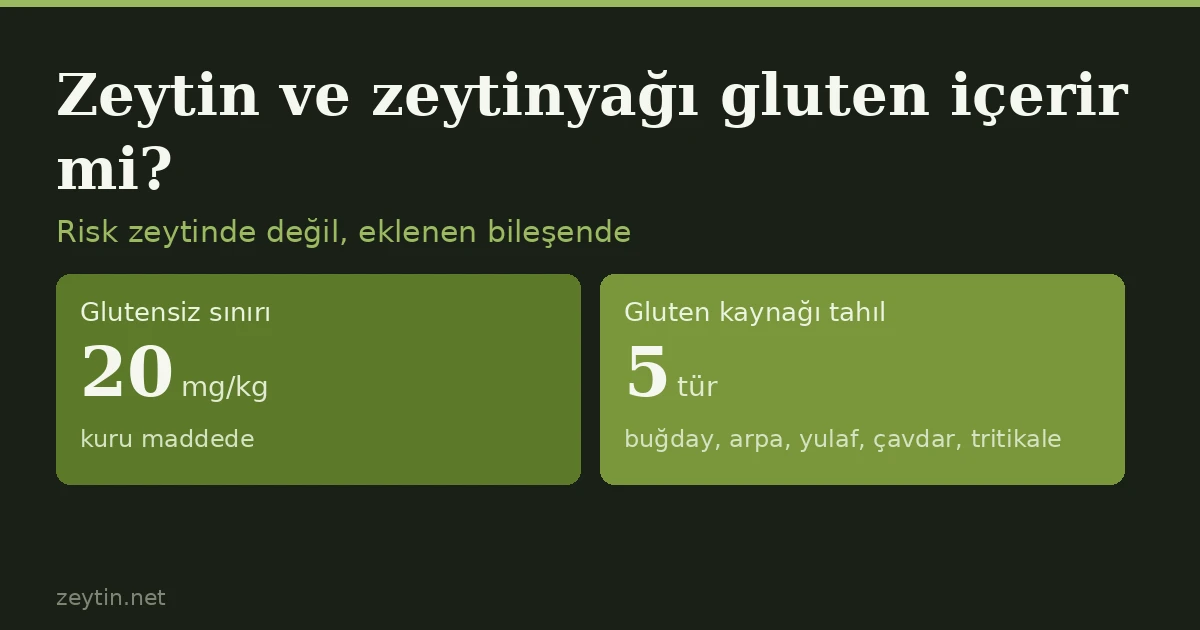
The 2003 Turkish Food Codex Notification on Gluten-Free Foods (Official Gazette 27.09.2003, issue 25242, notification no. 2003/33) defines gluten as the protein fraction found in wheat, barley, oats, rye, triticale or their crosses and derivatives that is insoluble in water and in 0.5 M sodium chloride. Olives are not on that list, olive oil is not on it, and neither is any other fruit or vegetable: the source is cereal. For a person with coeliac disease the only treatment is to avoid gluten-containing cereals for life, so the question to ask is whether a product contains a cereal or has touched one.
Why is olive oil naturally gluten-free?
There is no cereal anywhere in the production chain. Olives are washed, crushed and malaxed, and the oil is separated from the water phase; we described the steps in our cold-pressing article. Refined oil and pomace oil come from the same fruit (see our article on the pomace oil communique). Oils that may be mixed into adulterated olive oil are usually other vegetable oils such as sunflower or maize (our adulteration article); what creates a gluten problem is not that blend but contact with a cereal product. Cereal-derived oils (wheat germ oil, for example) are a different matter, but they are not olive oil.
The scope article of the notification follows the same logic: it covers gluten-free and reduced-gluten foods produced for special dietary purposes and leaves out foods that "naturally contain no gluten". The practical consequence is that not seeing a "gluten-free" statement on a bottle of pure olive oil does not mean the product contains gluten. The absence of a statement is not the same as the presence of gluten.
Are table olives safe?
Brined olives consist of olives, water and salt; their bitterness is removed by fermentation or by soaking in water (how olives are cured). In green olives the bitterness is removed with a sodium hydroxide solution (how green table olives are made); this is a chemical treatment and not a source of gluten. A plain black or green olive whose ingredient list ends at "olives, water, salt" is therefore low risk as far as gluten is concerned.
Where does the risk begin?
The situations below carry a genuine chance of cross-contact or of added gluten; none of them is a property of the olive, each is a property of what was added:
- Stuffed olives: with cheese, almond, pepper paste or garlic, the filling's own ingredient list should be read separately. The filling may contain a thickener, a flavouring or a cereal-based ingredient.
- Marinated and spiced olives: where a spice blend, sauce or vinegar has been added, the list grows. Malt vinegar, for example, is made from barley; if such an ingredient is listed, the product contains gluten.
- Olive paste and ready-made salads: thickeners, fillers and flavourings can make the ingredient list far from simple.
- Flavoured (infused) oils: if herbs, spices or flavourings have been added to the oil, the source of the flavouring should be asked about.
- Loose olive counters: one spoon or one container used for stuffed, sauced or bread-contaminated products is a route for cross-contact. Packaged products are more predictable in this respect.
- Shared fryers: if breaded or floured food has been fried in the same olive oil, the oil has already been in contact. We cover frying suitability in a separate article; for gluten what matters is what the oil has been used with.
What to look for on the label
Start with the ingredient list and the allergen statement: cereals containing gluten are highlighted as allergens. Then, if there is a "gluten-free" statement, it helps to know the limit. According to the notification text, gluten in a gluten-free food may not exceed 20 mg/kg on a dry-matter basis; for a reduced-gluten food the limit is 200 mg/kg. The notification also requires measures to prevent contamination on the production line. Notification 2003/33 was later replaced by notification 2012/4 (Official Gazette 04.01.2012, issue 28163); the 20 mg/kg gluten-free threshold is the same in international rules. In the United States the Food and Drug Administration (FDA) rule likewise requires fewer than 20 parts per million (ppm) for a "gluten-free" label, the lowest level that can be reliably detected by measurement. For general label-reading habits see our olive oil label article.
What to do in practice
1. Prefer single-ingredient products. A short list such as "olives, water, salt" or "extra virgin olive oil" largely removes the question of extra ingredients.
2. Buy packaged, avoid loose. The shared-spoon risk at a loose counter cannot be measured.
3. Read the list of stuffed and spiced products line by line. Ask the producer about any ingredient you are unsure of.
4. Flavour the oil yourself. Adding a spice you know to plain oil is more predictable than the unknown ingredient of a ready-made flavoured product.
5. Watch shared containers and oil in the kitchen. Oil that has been in contact with bread or flour counts as contaminated, even if it is olive oil.
Frequently asked questions
Are olive-oil dishes gluten-free? Even if the oil is gluten-free, the other ingredients of the dish decide. Stuffed vine leaves with bulgur, rice with vermicelli or a dish eaten with bread contain cereal regardless of the olive oil used; bulgur and vermicelli are wheat products. A vegetable- or legume-based olive-oil dish with no flour or cereal added carries no gluten in its ingredients, though a shared pot or spoon in the kitchen can still be a route for contact.
Why does the notification list oats separately? The notification's definition of gluten names oats alongside wheat, barley, rye and triticale. A ready-made olive mix that contains an oat product is, by that definition, a source of gluten.
A note on reading
This article reads the legal text and general food knowledge; it does not measure the gluten level of any brand or batch. For someone diagnosed with coeliac disease, a physician or dietitian decides which product is suitable. Legislation can change over time; the statement on the label and the producer's declaration should be the reference.
Summary
- An olive is a fruit and olive oil a fruit oil; gluten is a cereal protein (wheat, barley, oats, rye, triticale).
- Plain olives and pure olive oil are naturally gluten-free; the risk lies in added ingredients and in cross-contact.
- The limit behind a "gluten-free" statement is 20 mg/kg on a dry-matter basis.
- With stuffed, spiced, loose and flavoured products, question the label and the production route.
One rating per visitor; you can change yours at any time. Ratings are real reader votes — no seeded or default scores.
Related
 Article
Can you put olive oil on your skin? What the evidence says
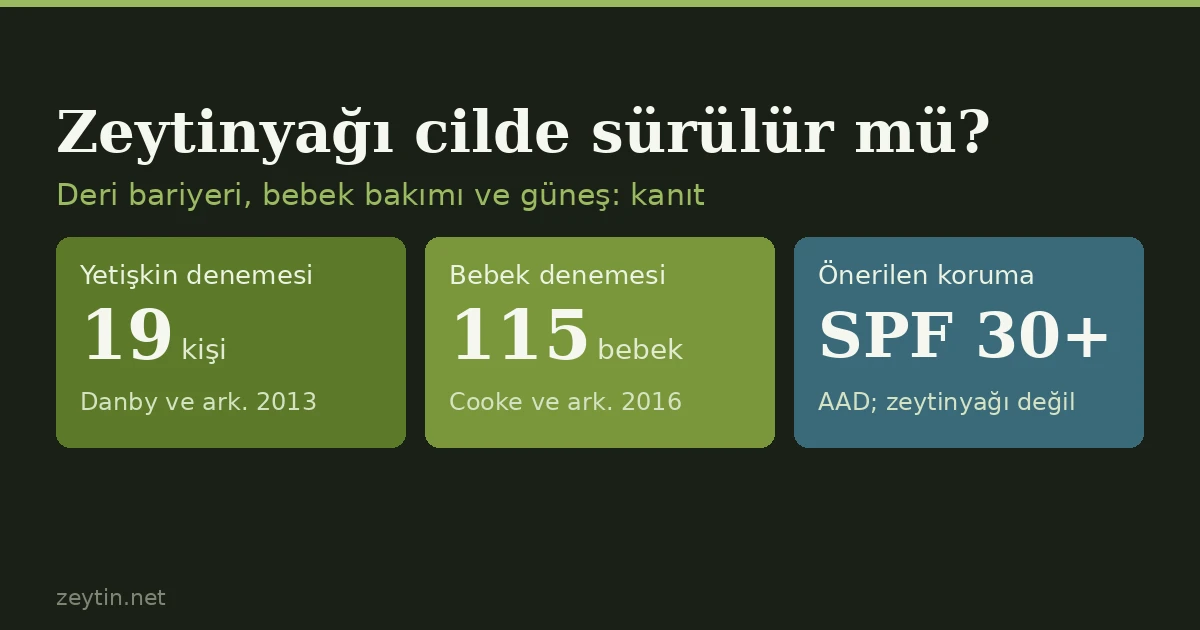
You can, but studies suggest regular use may weaken the skin barrier; it is not advised for eczema or babies and gives no sun protection.
 Article
Is olive oil good for earwax? Can you put it in your ear?
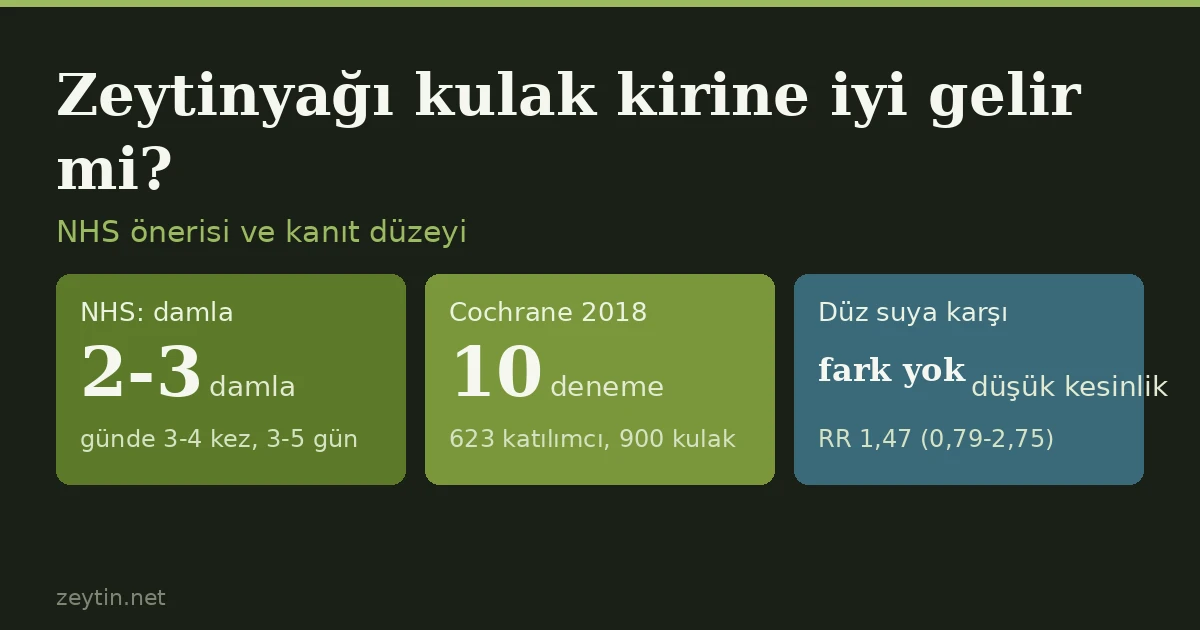
The NHS suggests 2-3 drops of olive oil, 3-4 times a day for 3-5 days, to soften earwax; a Cochrane review could not show drops beat plain water. The evidence, guidelines, the eardrum warning, cotton buds and ear candles.
 Article
Oleocanthal and Polyphenols
Why does a good extra virgin oil sting the throat? That sensation is not a flaw but the mark of a measurable compound.
 Article
Which olive is healthiest?
In olives the health difference comes from curing and salt, not the variety: nutrition, salt content and green vs black.