Is there acrylamide in black olives? 208-773 micrograms per kilogram in black table olives, 24 or less in unheated naturally black ones
Acrylamide forms in olives during sterilisation: 208-773 micrograms per kilogram were measured in black table olives and 24 or less in unheated green and naturally black ones. The article reads the published measurements, the EU benchmark list and the ways producers can reduce it.
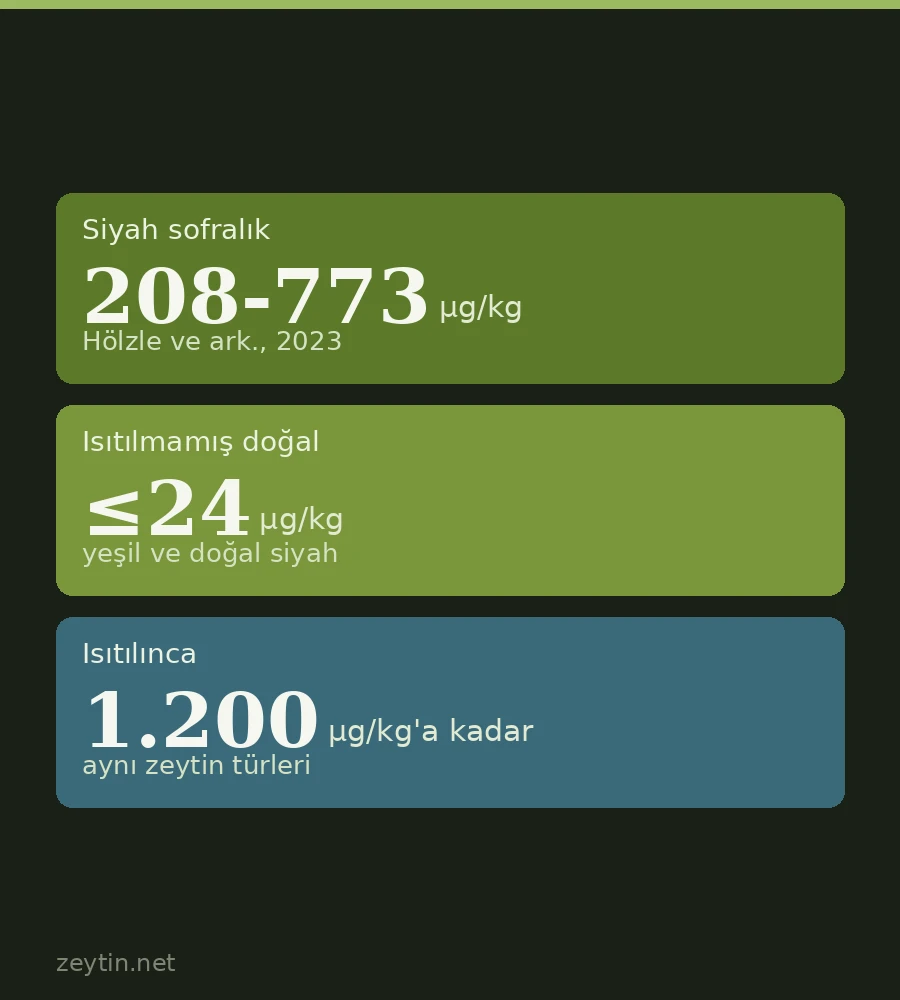
Short answer: Yes, but not in every black olive. Acrylamide is a heat-formed compound, and in olives it has been measured mainly after sterilisation, above all in "Californian-style" products that are darkened with alkali and then heat-treated in cans or jars. A 2023 study found 208-773 micrograms per kilogram in black table olives; unheated green and naturally black olives came in at 24 micrograms or less. This article reads published measurements; it is not medical advice.
What is acrylamide and how does it get into an olive?
Acrylamide forms on its own when starchy or protein-rich foods are cooked at high temperature. Olives are neither fried nor baked, yet black olives show up in the data because this product counts as a "low-acid canned food" and has to be sterilised to be safe. The 2026 study by Brenes-Álvarez and colleagues says exactly that: black ripe olives are a low-acid canned food, they must be sterilised, and acrylamide forms during that heat treatment. In Casado and Montaño's 2008 study the sterilisation was 30 minutes at 121 °C.
The chemistry in olives is not simple either. The classic route to acrylamide in food is the reaction of the amino acid asparagine with sugars, but in the 2023 study by Hölzle and colleagues the asparagine and 3-aminopropionamide in the olives were not enough to explain the acrylamide measured. A 2026 study by Hidalgo and colleagues points elsewhere: a compound called 2,4-decadienal accounted for 34-69% of the predicted acrylamide in table olives. So olives may produce acrylamide by a different mechanism from bread or potatoes, and this is still being researched.
What was measured
| Study | Product | Acrylamide (µg/kg) |
|---|---|---|
| Casado and Montaño, 2008 | Commercial black ripe olives | 176-1,578 (per pulp) |
| Charoenprasert and Mitchell, 2014 | Californian-style black | about 410-512 |
| Charoenprasert and Mitchell, 2014 | Californian-style green ripe | about 44-106 |
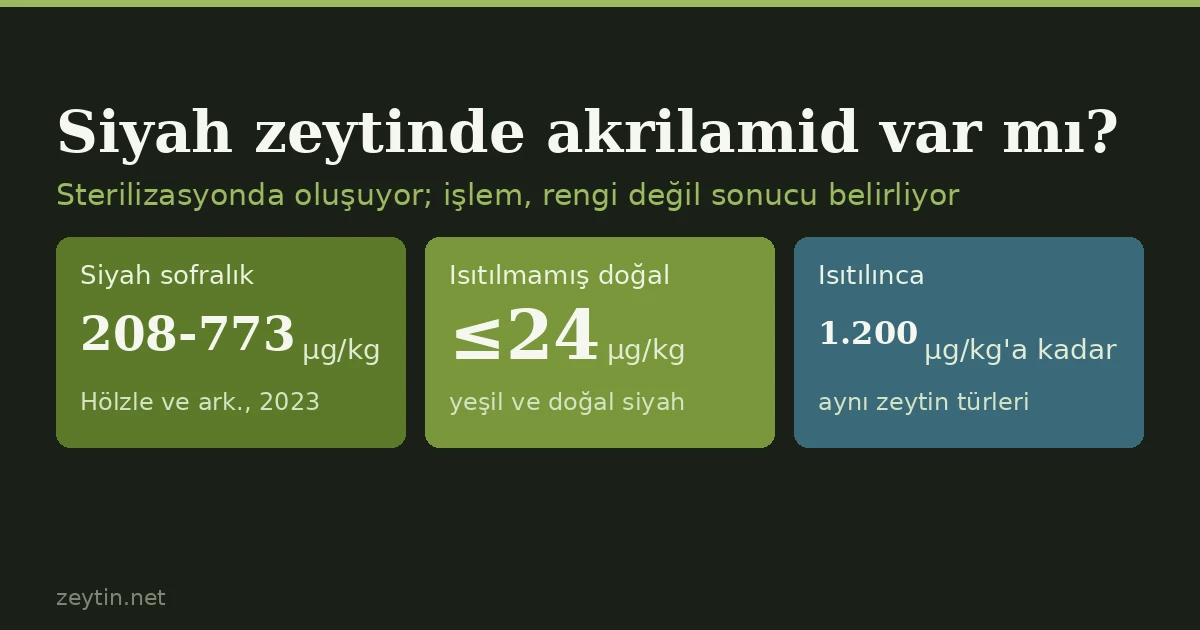
| Hölzle et al., 2023 | Black table olives | 208-773 |
| Hölzle et al., 2023 | Green and naturally black, before heating | 24 or less |
| Hölzle et al., 2023 | Green and naturally black, after heating | up to 1,200 |
Three things follow from the table. First, even within one product type values can spread nearly ten-fold (176 to 1,578). Second, what decides the result is the process rather than the colour: unheated naturally black olives were low, and the same kinds of olive rose to as much as 1,200 micrograms once heated. Third, according to Casado and Montaño the darkening method and the cultivar changed the result most, and acrylamide did not change significantly over six months of storage, so shelf time neither adds to it nor removes it.
Charoenprasert and Mitchell also asked which step of the process raises acrylamide. Air contact (oxidation) during the lye treatment and neutralising the olives before sterilisation raised it significantly, and calcium ions in the pre-brine raised it too. In other words, even at the same sterilisation temperature the design of the line changes the result.
How much is that on the plate?
Let us work it out with an assumption of our own: a 30-gram serving. With Hölzle's 208-773 range that is 6.2-23.2 micrograms; with Casado's wider range, 5.3-47.3 micrograms; for unheated naturally black olives, under 1 microgram (24 × 0.03 = 0.72).
For scale, take a Turkish estimate. Başaran's 2024 study put the total daily acrylamide exposure of people aged 15 and over at 58 micrograms in a good scenario and 196 micrograms in a bad one; the largest share came from brewed black tea (29%) in the good scenario and from French fries (50%) in the bad one. We do not know whether that study treats black table olives separately; the comparison below is ours. One serving a day of sterilised black olives would add 11-40% to the 58-microgram floor and 3-12% to the 196-microgram ceiling. This is not a measurement, only arithmetic that gives a sense of scale.
Is that amount a concern?
In its 2015 opinion the European Food Safety Authority (EFSA) concluded that acrylamide in food potentially increases the risk of cancer in all age groups; the conclusion rests on the genotoxic and carcinogenic effect seen in animal studies, while, in EFSA's wording, the evidence from human studies is limited and inconclusive. On a body-weight basis children are the most exposed age group. The main sources named are fried potato products, coffee, biscuits, crackers, crisp bread and soft bread; olives are not singled out on that list. This conclusion covers all foods together; olives have not received a separate ruling.
There is also a gap on the regulatory side. EU Regulation 2017/2158 sets mitigation measures and benchmark levels for acrylamide (for example 500 µg/kg for French fries and 400 µg/kg for roast coffee). We scanned the text of the annex and olives are not listed as a separate item. These are also not legal maximum limits; they are benchmarks used to monitor whether mitigation measures work.
How producers can reduce it
Researchers know about the problem and are looking for fixes. In the 2020 study by Martín-Vertedor and colleagues, washing olives in 25 °C water before the lye treatment cut acrylamide by 25% after 45 minutes and by 45% after 2 hours. Olives with stones had 21-26% more than pitted ones and 42-50% more than sliced ones. Olives picked at the yellow-green stage gave more acrylamide than those picked green. Brenes-Álvarez's 2026 study reported that raising the pH of the fruit above 7 before packing lowered acrylamide by 20-30%, that sodium bicarbonate lowered it by up to 35% but softened the olives badly, and that packing under a carbon dioxide atmosphere increased it. The same study suggests that precursors in the stone matter. In short, solutions exist, but none removes the problem entirely.
What a consumer can do
- Look for the process on the label. Plain brined or dry-salted naturally black olives (how they are made) are more likely to be unheated than olives darkened by oxidation and sterilised. The label does not always say which method was used; you can ask the producer.
- Ask about heat treatment. The clearest finding is that heated olives showed higher values, so the words "pasteurised" or "sterilised" carry meaning.
- Keep portions moderate. For how many olives a day, see our separate article; for green olives, see how green table olives are made.
- The measurements are for table olives. We do not report an acrylamide measurement for olive oil; this article covers black and green table olives only.
A note on reading
The article reports published measurements and does not give the value of any particular brand. The studies sampled from different countries and production lines; none of the measurements quoted here is of commercial products in Türkiye. The conclusions on cancer rest on animal experiments and do not show the individual risk from a single food. Anyone with a health condition, or planning a child's diet, should consult a physician or dietitian.
Summary
- Acrylamide forms in olives during sterilisation; the highest values are in alkali-darkened, heat-treated products.
- Measurements range from 176 to 1,578 µg/kg; unheated green and naturally black olives were at 24 or less.
- A 30-gram serving on its own adds roughly 5-47 micrograms; that figure is our own calculation.
- Olives are not on the EU benchmark list; washing, pH adjustment and pitting can reduce acrylamide in production.
One rating per visitor; you can change yours at any time. Ratings are real reader votes — no seeded or default scores.
Related
 Article
Benefits of Olive
The nutritional profile of olives, polyphenols and salt content. No unauthorised health claims — only verifiable information, with sources.
 Article
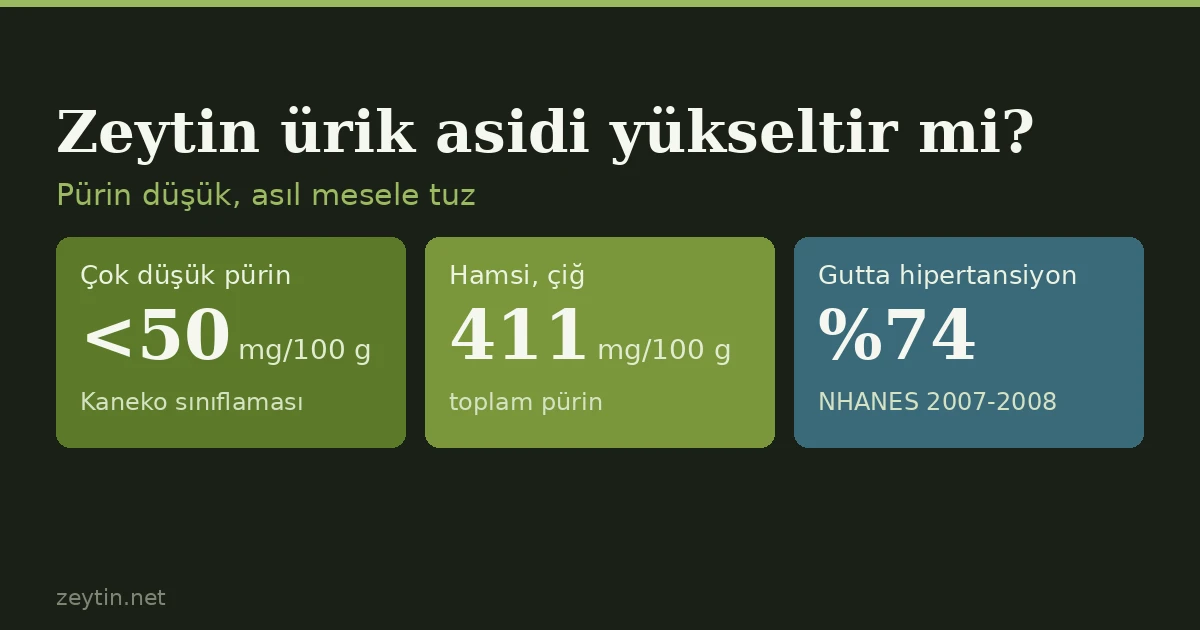
Do olives raise uric acid? Can you eat olives with gout?
No. Olives are low in purines and olive oil has none to speak of, so people with gout can eat both. The real limit is salt, for blood pressure.
 Article
Olive leaf tea: how to make it and what the evidence says
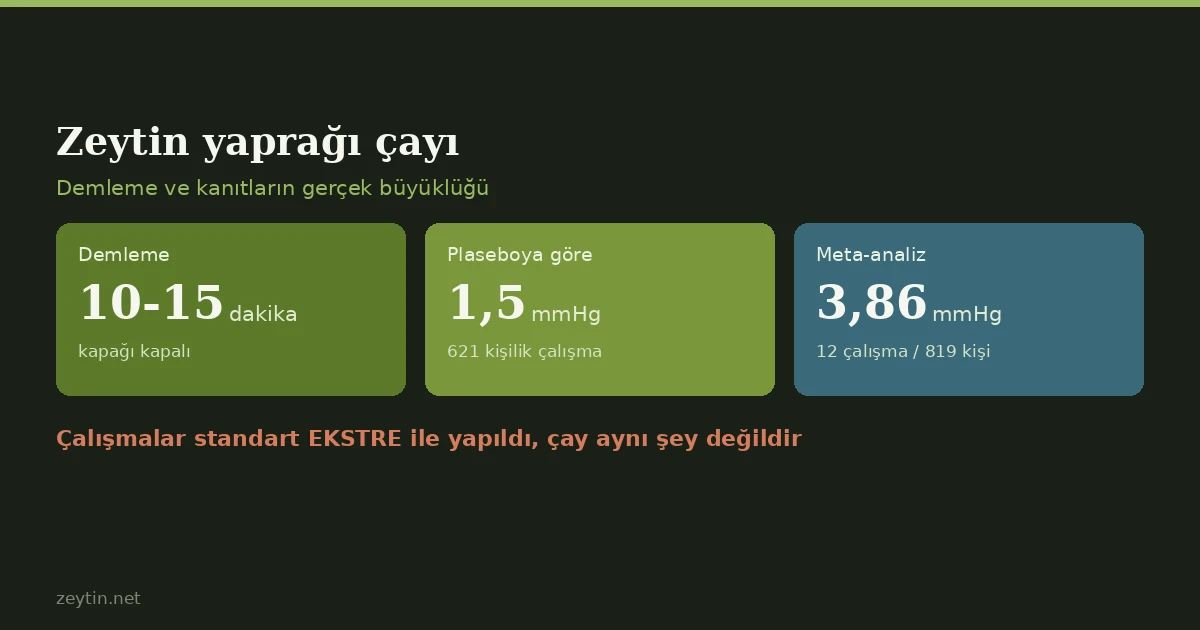
The leaf carries oleuropein and other phenolics. Blood pressure trials show a modest effect, but all used standardised extracts — tea is not the same thing. Steeping, drying and cautions.
 Article
Is olive oil good for fatty liver? What the trials and guidelines say
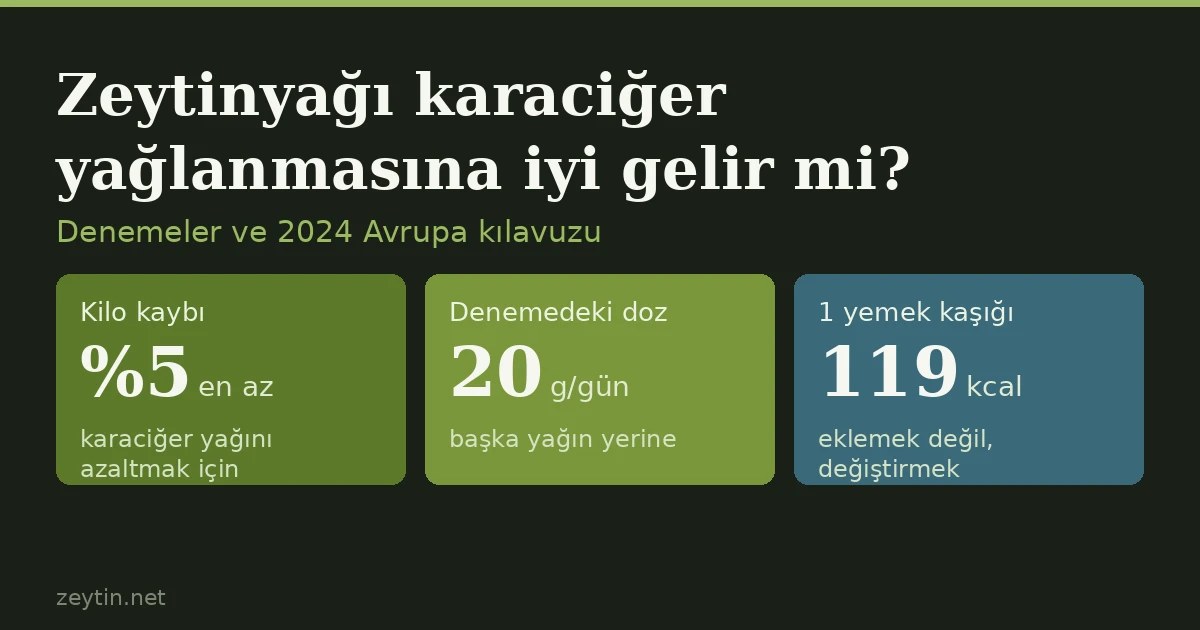
Olive oil does not cure fatty liver on its own, but trials show it can lower the degree of liver fat when it replaces other fats. European guidelines recommend a Mediterranean-style diet and 5-10% weight loss; adding spoonfuls on top can backfire because of the calories.