The Ayvalık (Edremit) olive: one variety, two names
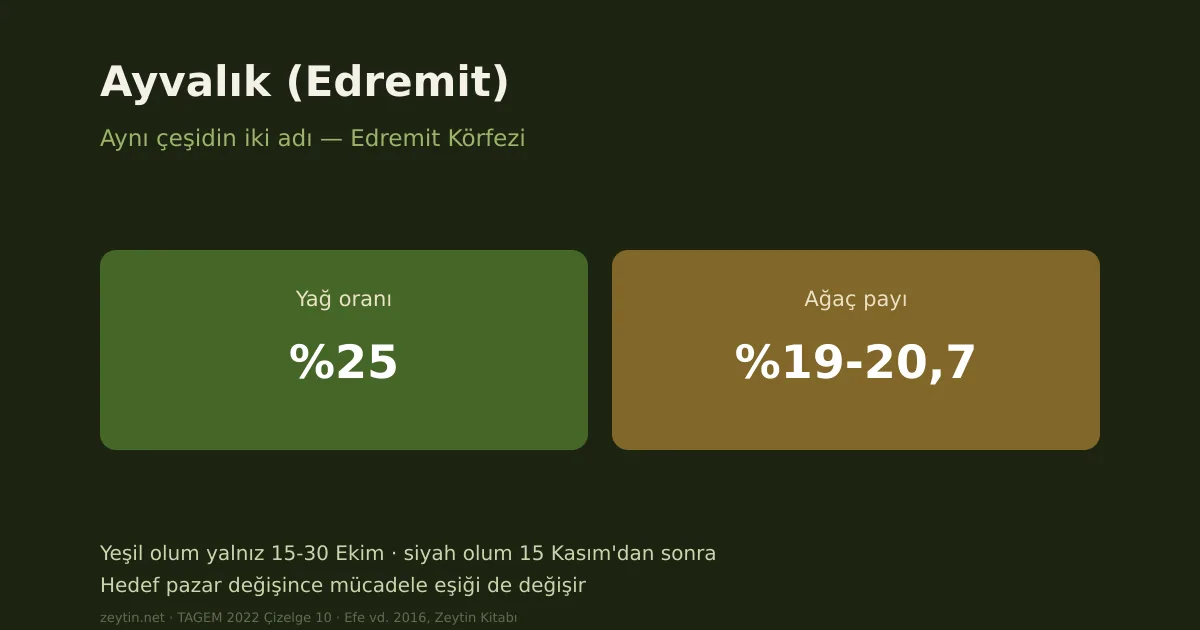
19-20.66% of the tree stock, second after Memecik. 25% oil. Green maturity only between 15 and 30 October; black maturity after 15 November, among the latest.
Türkiye's best-known olive oil region is the Gulf of Edremit, and its variety is Ayvalık — which the literature also calls Edremit. Its share of the tree stock is given as 19-20.66%, second after Memecik.
Identity
| Property | Value |
|---|---|
| Oil content | 23-26% |
| Use | Oil + table |
| Region | Gulf of Edremit, Ayvalık, Burhaniye, Havran |
One variety, two names. "Ayvalık" is the commercial and common name; "Edremit" is the regional one. Both describe the same variety — you will see either on a shelf.
Ripening calendar
| Stage | Dates |
|---|---|
| Flowering | 16 May - 9 June |
| Fruit set | 20 May - 15 June |
| Green maturity | 15-30 October |
| Black maturity | after 15 November |
The phrase "after 15 November" is worth noting — no upper limit is given. Ayvalık is among the latest varieties in the table to reach black maturity.
That green maturity is squeezed into a narrow 15-30 October window matters for the table trade: if green table olives are to be picked, those two weeks cannot be missed.
Processed four ways
Ayvalık is, with Memecik, one of only two varieties that can be handled in four different ways:
- Green table olives
- Pink scored
- Black table olives
- Oil
In practice, though, the weight is on oil. Along the northern Aegean line — Edremit, Ayvalık, Burhaniye, Havran — production goes largely to the mill.
Why the region matters
The Gulf of Edremit is where olive oil is most closely identified with a geographical identity in Türkiye. The region sits at the centre of the olive belt that begins at Çanakkale in the northern Aegean.
The variety has spread beyond its home region too: in the eastern Mediterranean it is grown alongside Sarı Ulak, Büyük Topak Ulak, Halhalı and Gemlik.
There is also a separate literature on the monumental olive trees of the Edremit district — trees centuries old that are still in production.
The olive fly and Ayvalık
The variety plays a part in olive fruit fly control. The technical instruction notes that the fly prefers large, glossy fruit that has begun to accumulate oil — and that in humid, temperate regions damage starts with the brining varieties Gemlik and Manzanilla and the oil variety Ladoelies.
When Ayvalık is destined for oil the sting threshold is 3-4%; if it is going to the table the threshold drops to 1%. So within the same grove and the same variety, two different thresholds can apply depending on the target market.
Summary
- Ayvalık and Edremit are two names for the same variety.
- Share of the tree stock 19-20.66%, second after Memecik.
- Oil content 25%.
- Green maturity 15-30 October (a narrow window), black maturity after 15 November — among the latest.
- Can be processed four ways, but the weight is on oil.
- Its region is the Gulf of Edremit, Ayvalık, Burhaniye and Havran; it has spread to the eastern Mediterranean.
- Change the target market and the control threshold changes too: 3-4% stings for oil, 1% for the table.
Sources
t; Republic of Türkiye, Ministry of Agriculture and Forestry, TAGEM. Olive Integrated Pest Management Technical Instruction. Ankara, 2022, Table 10. — Phenological stages and control thresholds
t; Efe, R., Soykan, A., Cürebal, İ. and Sönmez, S. (2016). Characteristics and Geographical Distribution of Olive Varieties Grown in Türkiye. In: Zeytin Kitabı (E. Naskali, ed.), Kitabevi, pp. 37-80. — Composition, distribution and processing forms
Related reading: Olive varieties · The Memecik olive · The Gemlik olive · Olive fruit fly control
Registered names built on this variety
The registration covers the product of a defined area — not this variety wherever it is grown.
- Ayvalık Olive Oil designation of origin · reg. no 88 · Ayvalık
- Edremit Körfezi Yeşil Çizik Zeytini designation of origin · reg. no 189
- Edremit Zeytinyağı designation of origin · reg. no 273
- North Aegean Olive Oils geographical indication · reg. no 392
Where it stands among measured varieties
Türkpatent Coğrafi İşaret Tescil Belgesi No 88 (Ayvalık Zeytinyağı)
çeşit sayfası
Mardin ve Şırnak İllerinde Yetiştiriciliği Yapılan Zeytin Genotipleri (akademik ölçüm)
Mardin ve Şırnak İllerinde Yetiştiriciliği Yapılan Zeytin Genotipleri (akademik ölçüm)
Mardin/Şırnak çalışması: 100 meyve ağırlığı 498,44 g
Values are those published on each variety's own page; the comparison covers only varieties with a measured figure, so it is a comparison of what is known — not of every Turkish variety. See the full ranking and how it is built →
One rating per visitor; you can change yours at any time. Ratings are real reader votes — no seeded or default scores.
Related
 Article
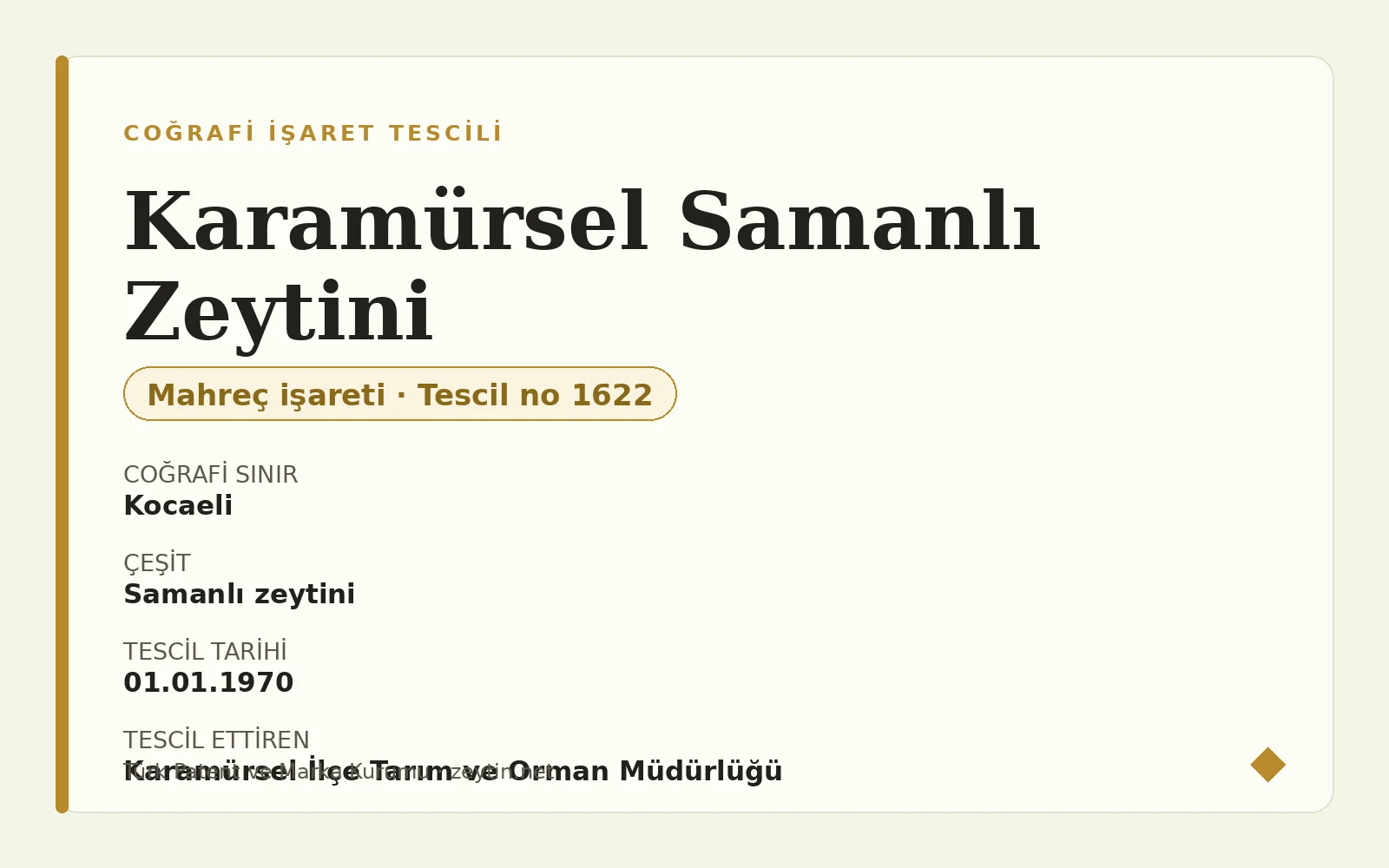
Karamürsel Samanlı Olive: low bitterness earns it the name “sweet olive”
Registered in 2024. Its oleuropein content of 6-8% is low, so it debitters quickly and is locally called the sweet olive. Its skin is 0.2-0.4 mm.
Article
Karamürsel Samanlı Olive: low bitterness earns it the name “sweet olive”
Registered in 2024. Its oleuropein content of 6-8% is low, so it debitters quickly and is locally called the sweet olive. Its skin is 0.2-0.4 mm.
 Article
Olives and Olive Oil: Frequently Asked Questions
Does the fridge test work, what separates extra virgin from riviera, can you fry with olive oil? The 18 most common questions, answered briefly.
Article
Olives and Olive Oil: Frequently Asked Questions
Does the fridge test work, what separates extra virgin from riviera, can you fry with olive oil? The 18 most common questions, answered briefly.
 Article
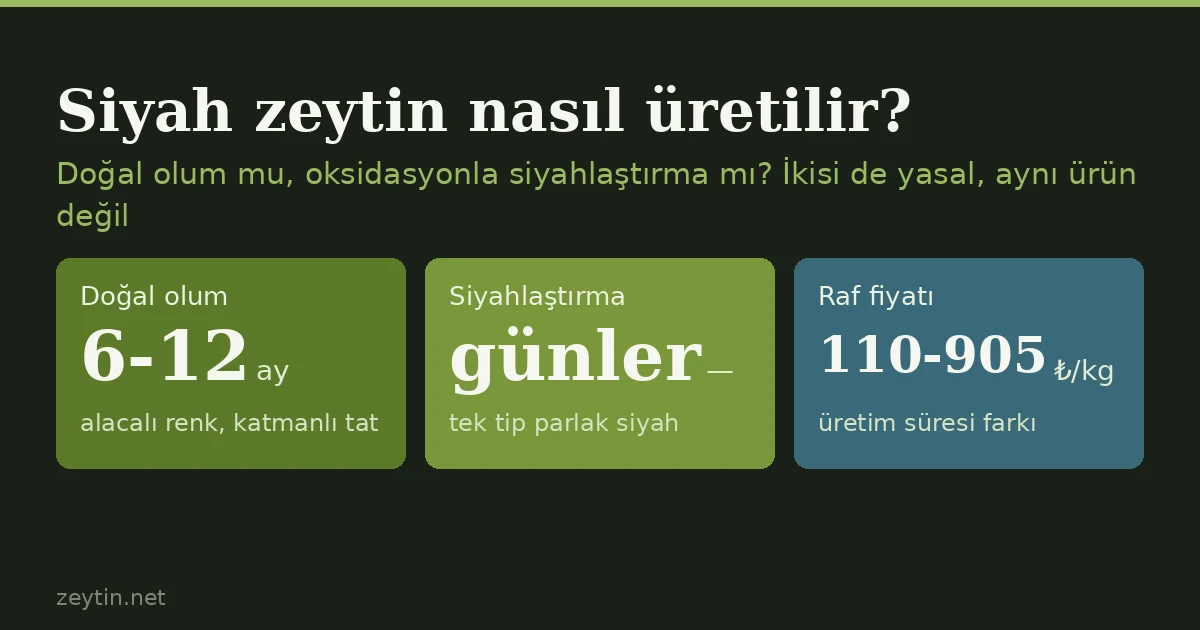
How are black table olives made? Natural ripening versus blackening
Two different black olives sit on the shelf: ripened on the tree and brined, or picked green and blackened by oxidation. Both lawful, but not the same product.
Article
How are black table olives made? Natural ripening versus blackening
Two different black olives sit on the shelf: ripened on the tree and brined, or picked green and blackened by oxidation. Both lawful, but not the same product.
 Article
Olive varieties: seventeen Turkish varieties in numbers
Gemlik, Ayvalık, Memecik, Domat and the rest: Türkiye's olive varieties with oil content, fruit size, flesh ratio, region and ripening calendar.
Article
Olive varieties: seventeen Turkish varieties in numbers
Gemlik, Ayvalık, Memecik, Domat and the rest: Türkiye's olive varieties with oil content, fruit size, flesh ratio, region and ripening calendar.