Olive Oil Prices: Week 47 of 2026
Week 47 of 2026: Turkish exchange prices, European producer prices and exchange rates side by side.
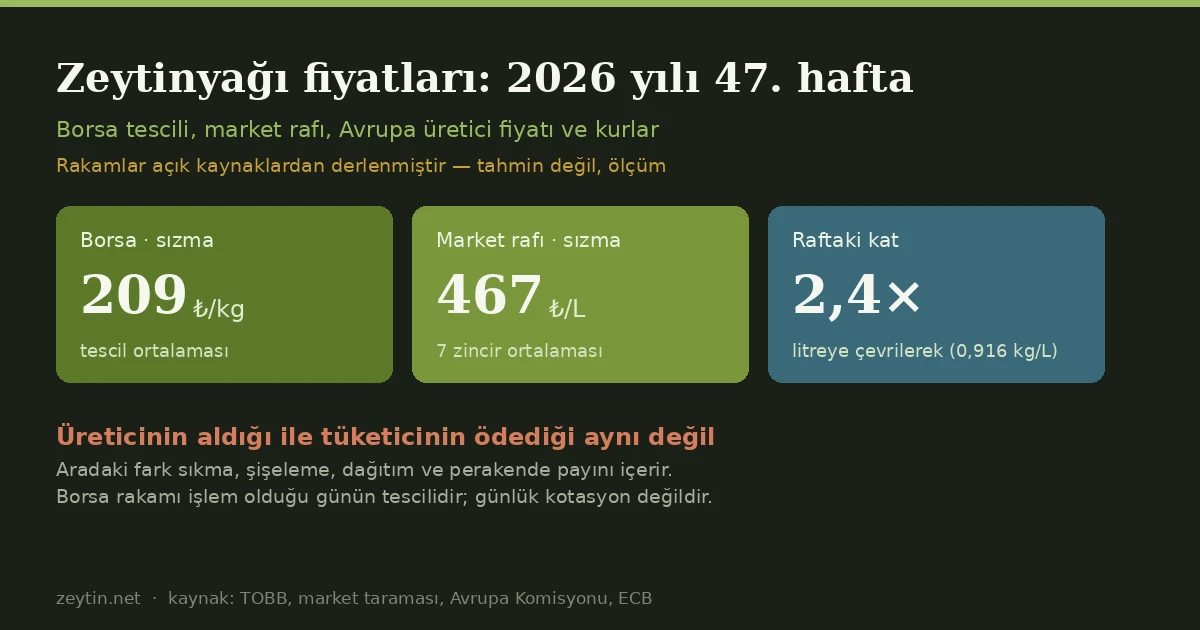
This bulletin brings together current prices from four open sources: trades registered at Turkish commodity exchanges (TOBB), retail prices on Turkish supermarket shelves, weekly producer prices in Europe (European Commission) and exchange rates (European Central Bank). The figures below are those available when the bulletin was prepared.
Turkey: registered exchange prices
| Product | Exchange | Average TL/kg | Trade date |
|---|---|---|---|
| Extra virgin olive oil | Aydın | 220,00 | 22.09.2026 |
| Extra virgin olive oil | Edremit | 245,30 | 13.11.2026 |
| Extra virgin olive oil | Nazilli | 163,13 | 11.11.2026 |
| Crude olive oil | Aydın | 178,00 | 12.11.2026 |
| Crude olive oil | Edremit | 150,00 | 03.11.2026 |
| Crude olive oil | Gaziantep | 189,75 | 20.10.2026 |
| Crude olive oil | Nazilli | 232,88 | 27.10.2026 |
| Olive oil (cooking) | Edremit | 225,00 | 22.10.2026 |
| Black olives, extra-extra | Edremit | 270,00 | 19.06.2026 |
| Green olives, special | Aydın | 70,00 | 14.05.2026 |
| Green olives, special | Edremit | 60,00 | 11.11.2026 |
| Olives for oil | Edremit | 20,41 | 04.11.2026 |
| Black olives, brined | Aydın | 97,84 | 06.04.2026 |
| Black olives, brined | Edremit | 213,33 | 20.10.2026 |
⚠ These are not daily quotations but prices registered on the day that product actually traded; dates differ because the olive is seasonal.
Turkey: supermarket shelf
| Product | Unit | Lowest | Average | Highest | Chains |
|---|---|---|---|---|---|
| Black table olives | ₺/kg | 124,50 | 347,85 | 912,74 | 6 |
| Extra virgin olive oil | ₺/L | 249,00 | 467,48 | 1239,90 | 6 |
| Green table olives | ₺/kg | 140,00 | 393,33 | 943,17 | 6 |
| Riviera olive oil (refined blend) | ₺/L | 199,00 | 360,98 | 879,80 | 5 |
| Olive paste | ₺/kg | 224,95 | 488,50 | 1078,68 | 3 |
Prices are stripped of package size and shown per unit: oils by the litre, table olives and paste by the kilogram. Surveyed on 15.11.2026. The exchange price is what the producer receives; this is what the shopper pays, and the gap covers milling, bottling, distribution and retail margin.
Europe: weekly producer prices (extra virgin)
| Country | €/kg | Weekly change | Week ending |
|---|---|---|---|
| Spain | 3,17 | ▼ %2,3 | 01.11.2026 |
| Italy | 5,18 | ▲ %8,4 | 01.11.2026 |
| Portugal | 3,47 | ▼ %2,2 | 01.11.2026 |
| Croatia | 9,02 | ▼ %25,0 | 01.11.2026 |
Exchange rates (13.11.2026)
- 1 EUR = 55,6667 TRY
- 1 EUR = 1,1052 USD
- 1 USD = 50,3680 TRY (cross rate)
What stands out this week
Extra virgin registrations fell in Edremit and Nazilli compared with the previous bulletin. In Edremit the latest registration for extra virgin olive oil went from 273.92 TRY/kg on 6 November to 245.30 TRY/kg on 13 November (−10.4%); against 304.73 TRY/kg on 26 October the fall is about 19.5%. In Nazilli it went from 195.07 TRY/kg on 2 November to 163.13 TRY/kg on 11 November (−16.4%). The bulletin shows only the latest registration; there may have been other trades on days in between, and each line is the price of a single registration, not an average. Aydın's extra virgin line is still at 220.00 TRY/kg from 22 September; we see no new extra virgin registration from Aydın.
The differences in the crude oil and "yeşil hususi" lines are not moves that happened "this week". In Aydın crude olive oil rose from 169.92 on 22 September to 178.00 TRY/kg on 12 November (+4.8%), but there are about seven weeks between the two registrations. In Edremit "yeşil hususi" green olives fell from 142.86 on 12 October to 60.00 TRY/kg on 11 November (−58.0%); there is a month between the two registrations, and we cannot say from this data why it fell; a different calibre or lot is possible. The crude oil lines in Edremit and Nazilli, the crude oil line in Gaziantep and the "yemeklik" (cooking-grade) line in Edremit are the same as in the previous bulletin.
On the supermarket shelf, averages move with which products enter the basket. The average for extra virgin olive oil rose from 412.10 to 467.48 TRY/L (+13.4%); the number of supermarkets stayed at 6 and the cheapest price is unchanged (249.00). The only end that changed is the most expensive price: it had fallen from 1,239.90 to 699.80 in the previous bulletin and is back at 1,239.90 TRY/L this week. The return of the same figure suggests that the rise in the average may have more to do with which products entered the scan than with a price increase; we do not state this as certain. Basket changes appear in the other items too: for black table olives the number of supermarkets fell from 7 to 6 while the average slipped from 356.15 to 347.85 TRY/kg (−2.3%) and the highest price rose from 686.25 to 912.74. For green table olives the number of supermarkets fell from 7 to 6 and the average from 401.69 to 393.33 TRY/kg (−2.1%), with the highest price going from 1,470.29 to 943.17. For olive paste the number of supermarkets fell from 4 to 3 while the average rose from 481.76 to 488.50 TRY/kg (+1.4%). The only item where the number of supermarkets stayed the same is Riviera olive oil: 5 supermarkets, average from 346.43 to 360.98 TRY/L (+4.2%); the cheapest price stayed at 199.00 and the most expensive went from 879.60 to 879.80.
The European table was not refreshed this week; exchange rates moved slightly. The rows for the four European countries are the same as in the previous bulletin and all belong to the week of 1 November, so we offer no comment on Europe this week. The euro went from 55.9957 TRY on 6 November to 55.6667 TRY on 13 November (−0.6%); euro/dollar went from 1.1165 to 1.1052 (−1.0%) and the dollar from 50.1529 to 50.3680 TRY (+0.4%). Any link between the exchange-rate move and the lira prices above cannot be drawn from this data.
A note on comparison
The Turkish and European figures are not directly comparable: the European data is a weekly average producer price, the Turkish data the price of individual registered trades. Anyone comparing them must also account for the exchange rate and the difference in dates.
For current tables see the market page.
One rating per visitor; you can change yours at any time. Ratings are real reader votes — no seeded or default scores.
Related
 Article
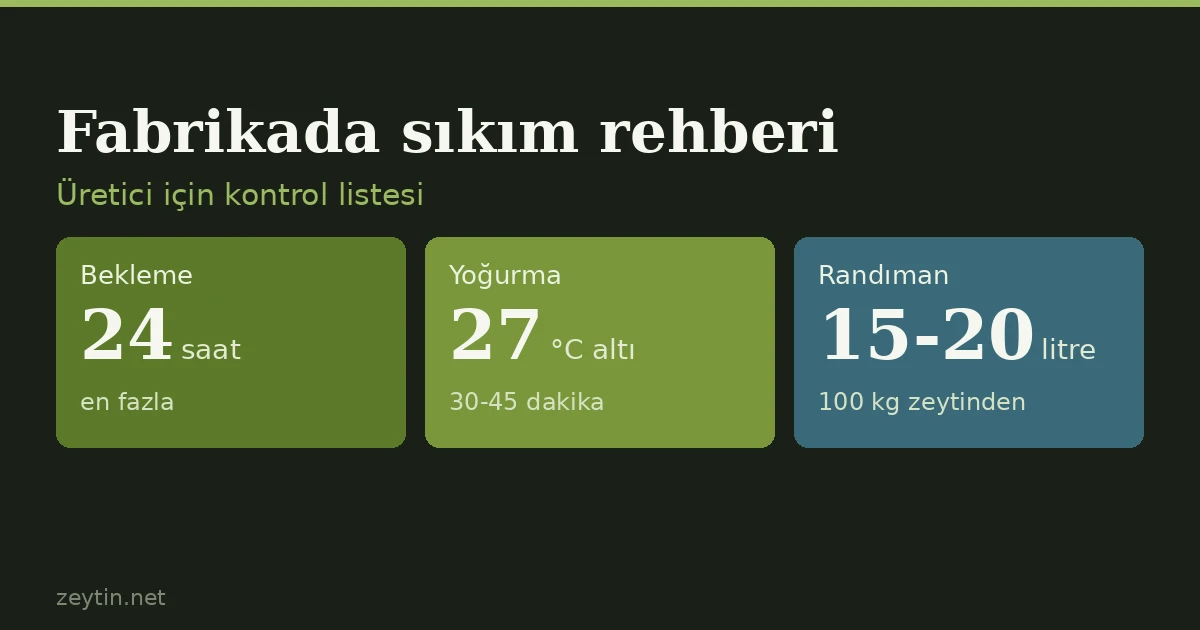
What to check when having your olives pressed at a mill: a grower's checklist
The same olives can give a very different oil when pressed at a different mill under different conditions. From what to do before bringing olives in to two-phase versus three-phase systems, kneading temperature, yield, milling fees and the questions to ask when collecting the oil, here is what a grower having olives pressed needs to know.
 Article
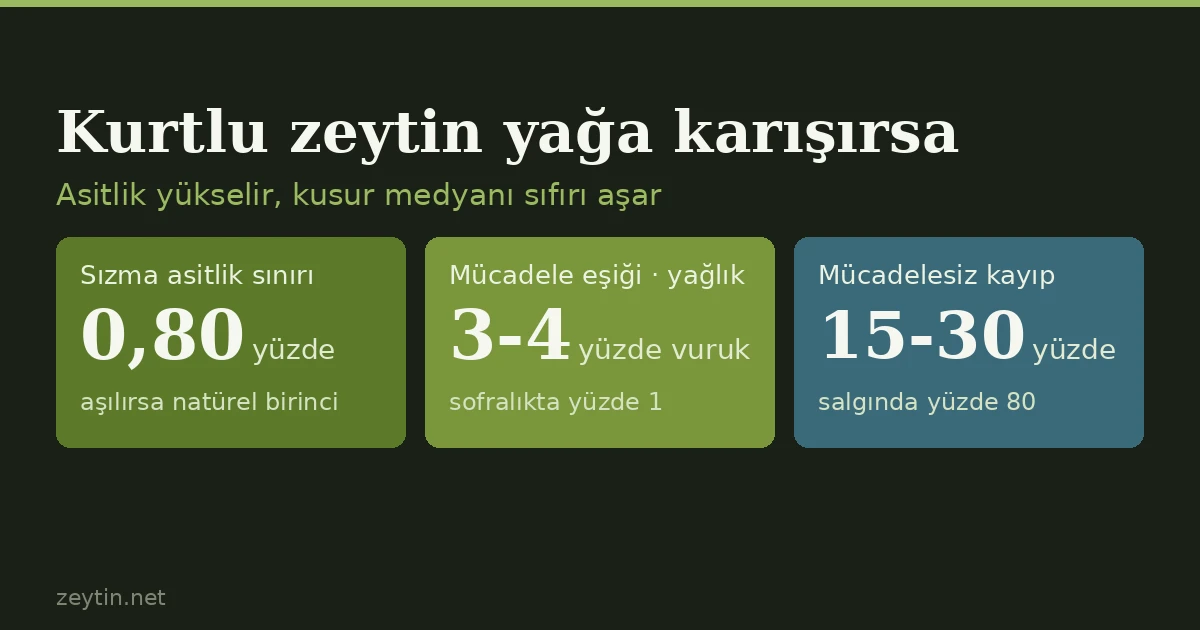
What happens if fly-damaged olives go into the oil?
If fly-struck olives reach the mill, the oil drops a grade: free acidity and peroxide rise, phenolics fall, and sensory analysis turns up fermentative defects plus the "grubby" attribute. Turkey's official integrated pest management instruction sets the action threshold at 3-4 percent of 800-1,000 fruits for oil olives and 1 percent for brining olives. Infested fruit cannot be sorted out at the mill; the decision is made in the grove and in the timing. This article explains exactly what fly damage changes in the oil, what share is manageable, and why an infested batch should be milled separately.
 Article
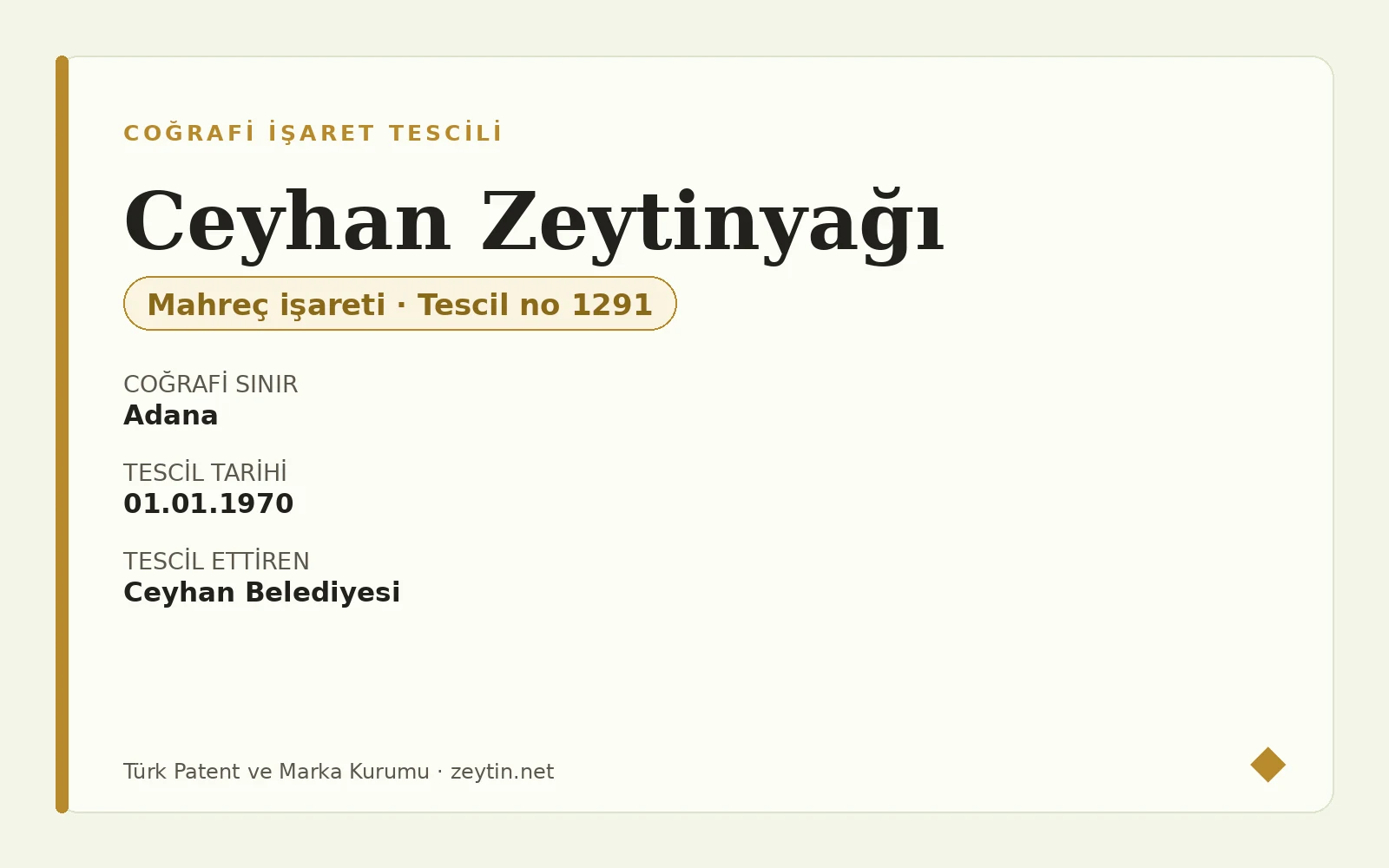
Ceyhan Olive Oil: harvest defined as “no green fruit left on the tree”
Registered in 2022. The certificate defines harvest not by calendar but by the state of the tree: when no green fruit remains and oil content peaks.
 Article
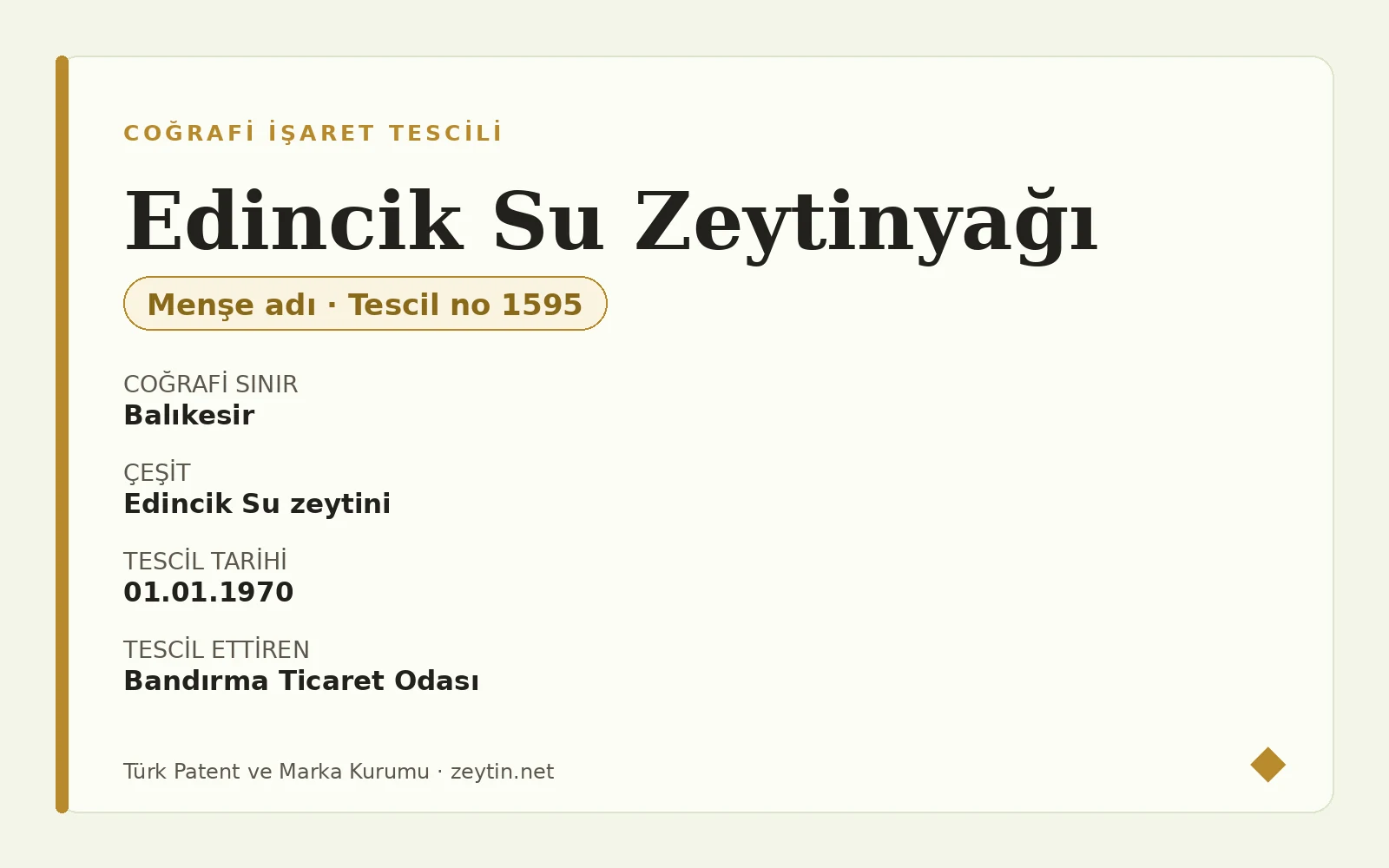
Edincik Su Olive Oil: ripening slowed by the sea
Registered in 2024. The certificate attributes aroma intensity to one cause: near the Erdek gulf the olives develop slowly and ripen late.