Fatty acid composition of olive oil: what share should oleic, linoleic and palmitic acid have, and how does warm weather change it?
The Codex standard requires oleic acid at 55.0-83.0 percent of total fatty acids, palmitic at 7.5-20.0 and linoleic at 3.5-21.0. Two 2026 studies report that warmer conditions lower oleic and raise linoleic acid; this article reads the table and the limits of those studies.

Short answer: Most of the fatty acids in olive oil are oleic acid. In the Codex Alimentarius standard for olive oils (CXS 33-1981), oleic acid must make up 55.0-83.0 percent of total fatty acids, palmitic acid 7.5-20.0 percent and linoleic acid 3.5-21.0 percent. The ranges are wide because cultivar, growing region and year all move the composition: two studies published in 2026 report that warmer conditions lower oleic acid and raise linoleic acid. This article reads the standard's table and the abstracts of those studies; we have no fatty acid data of our own.
Percent of what?
Fatty acid composition is not a percentage of the oil's weight; it is a percentage of total fatty acids, measured by gas chromatography, and the standard's table is headed that way. The "acidity" on labels and lab reports is a different thing: it shows free fatty acidity and is expressed as oleic acid. In the standard the limit for extra virgin olive oil is 0.8 grams per 100 grams. Because the two ideas share a word they are often confused; we cover what acidity tells you in our acidity article.
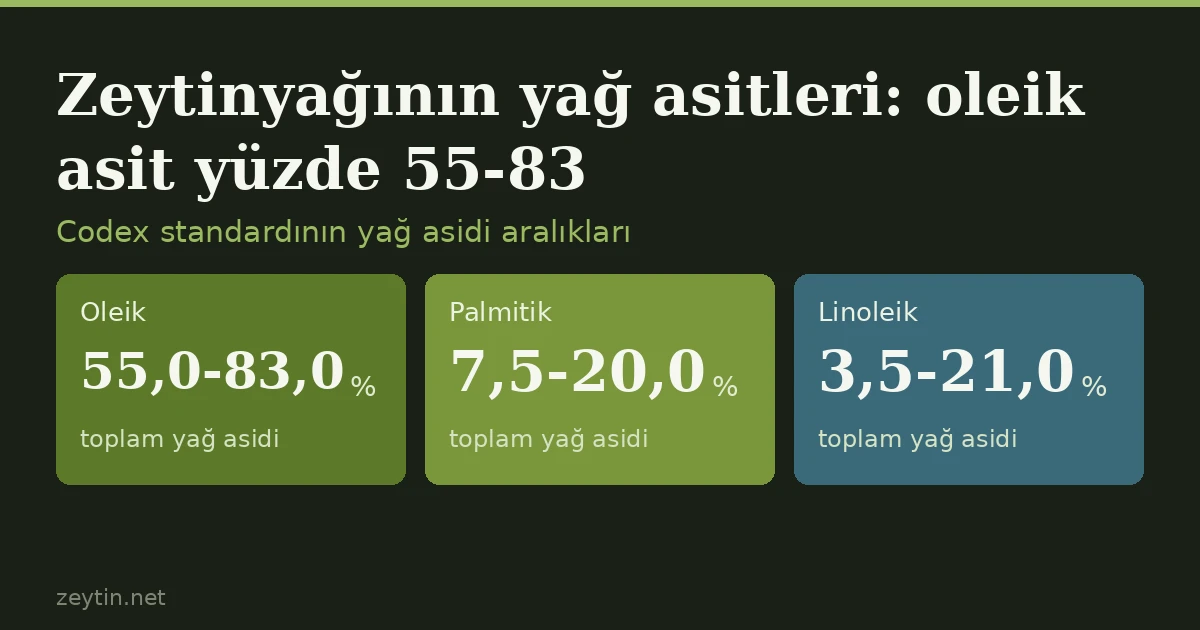
The standard's table
From the Codex table, the permitted range for each fatty acid (as a percentage of total fatty acids):
| Fatty acid | Code | Range (%) |
|---|---|---|
| Palmitic | C16:0 | 7.5 - 20.0 |
| Palmitoleic | C16:1 | 0.3 - 3.5 |
| Stearic | C18:0 | 0.5 - 5.0 |
| Oleic | C18:1 | 55.0 - 83.0 |
| Linoleic | C18:2 | 3.5 - 21.0 |
| Arachidic | C20:0 | 0.0 - 0.6 |
| Eicosenoic | C20:1 | 0.0 - 0.4 |
| Behenic | C22:0 | 0.0 - 0.2 |
| Lignoceric | C24:0 | 0.0 - 0.2 |
The table also has a row for linolenic acid (C18:3), but we could not read its limit from the text we used, so we left it out. The standard gives these ranges identically for virgin olive oil, refined olive oil and olive-pomace oil; the one difference is behenic acid, where the upper limit for pomace oil is 0.3.
For trans fatty acids the product groups separate. The upper limit for the trans form of oleic acid is 0.05 in virgin oils, 0.20 in refined olive oil and 0.40 in pomace oil; for the sum of the trans forms of linoleic and linolenic acid it is 0.05, 0.30 and 0.35 respectively. The standard does not give a reason for the difference. That refining involves heat treatment is one explanation that comes to mind, but that is our own interpretation. We explain the difference between refined and virgin oil in our riviera olive oil article.
Why is the range so wide?
A review published in Food Chemistry in 2026 (Lechhab and Lechhab) compares the fatty acid composition of olive oils from the northern and southern hemispheres. Reported oleic acid values vary from roughly 47 to 83 percent, palmitic acid from roughly 8 to 22 percent and linoleic acid from roughly 1 to 23 percent, and the differences are tied to cultivar and growing region. According to the review, cooler climates, often at higher latitudes, give higher oleic acid, and temperature influences the genes involved in fatty acid synthesis.
One thing to watch: the ends the review reports spill outside the Codex table. The lower end for oleic is 47 (Codex: 55), the lower end for linoleic is 1 (Codex: 3.5) and its upper end 23 (Codex: 21), and the upper end for palmitic is 22 (Codex: 20). The abstract does not explain why; we do not know which samples the review covers or whether all of them are oils as defined in the standard. So rather than reading these figures as a "natural range", it is more accurate to read them as a sign of how large the differences between regions can be.
A 27-year series from Slovenia
A study in Food Chemistry the same year (Bonciani and colleagues) examines the fatty acid composition of Slovenian extra virgin olive oils from 1993 to 2019. The finding is plain: temperature significantly affects fatty acid composition, with higher temperatures going together with lower oleic acid and higher linoleic and palmitoleic acid. The abstract does not say how many points of change per degree, so we do not write a number either.
The study does not stop there. The authors also measured stable isotope ratios in the oils for selected harvest years (2006-2008 and 2019) and compared Croatian, Italian, Spanish and Montenegrin samples for isotopes. The Spanish samples, with the highest average annual temperature and the lowest rainfall, showed significantly higher isotope values. This part is not about fatty acids but about tracing the oil's geographic origin. In the introduction the authors mention, as a possibility, that climate variability could change fatty acid amounts and affect an oil's compliance with standards; that is the study's motivation, not its finding. We cover climate's wider effect on olive growing in our climate change and the olive article.
Can even irrigation water move the composition?
An Algerian study in Scientific Reports in 2025 (Benguennouna and colleagues) compares three irrigation water sources on the Chemlal cultivar near Mostaganem: treated wastewater, spring water and ordinary water, with 50 trees per group. Oil from trees irrigated with treated wastewater was found to have lower acidity and peroxide value and higher oleic acid. Oil from spring-water trees had higher acidity, peroxide value and linoleic acid, and oil from ordinary-water trees had higher linolenic acid. The abstract gives oleic acid as "62.6 mg/kg"; since that is not a suitable unit for a fatty acid share, we do not pass that figure on.
The inference is limited: one cultivar, one region, a semi-arid coast. That is not enough to say "irrigation water determines the fatty acid profile"; it shows only that the water source can go together with a difference in composition. It should not be read as a recommendation to irrigate with wastewater either.
Why does composition matter?
Oleic acid carries one double bond and linoleic acid two; the more double bonds, the more prone a fat is to oxidation. That is why the oleic/linoleic balance is the first indicator that comes to mind for an oil's durability. But it is not the only determinant: a study published in Antioxidants in 2023 (Olmo-Cunillera and colleagues) writes that the oxidative stability of extra virgin oil depends primarily on phenolic compounds and tocopherols, with carotenoids, squalene and fatty acids also contributing. In the same study, an increase in oleacein and oleocanthal improved stability even though other antioxidants fell. You can find the role of polyphenols in our oleocanthal and polyphenols article and the practical side of heat resistance in our frying article.
You cannot learn the fatty acid composition from a consumer label; what gives the values is a laboratory analysis. We explain the other measurements in a lab report in our lab report article.
Limits of the studies
- We read the two 2026 studies and the Algerian study only from their published abstracts; we did not reach the full texts. That is why we cannot give details such as sample sizes and per-degree effects.
- The Slovenian series comes from a cool region at the northern edge of olive growing. It is not a direct measurement for regions in Türkiye.
- The review sweeps different hemispheres and cultivars together; the abstract does not make clear which sample is which grade of oil.
- The Algerian study is limited to one cultivar and one region, and is read from an abstract with inconsistent units.
- We could not read the linolenic acid limit from the Codex table; do not use our table as a complete reference.
Summary
- Most of olive oil's fatty acids are oleic acid; its Codex range is 55.0-83.0 percent. Palmitic is 7.5-20.0 and linoleic 3.5-21.0.
- These percentages are of total fatty acids, not of the oil; they should not be confused with "acidity".
- Warmer conditions went together with lower oleic and higher linoleic acid in the Slovenian series.
- One study reports composition differences by irrigation water type, but for a single cultivar and region.
- An oil's durability is not set by fatty acids alone; phenols and tocopherols matter too.
Related articles: What does acidity mean in olive oil? · How to read an olive oil lab report · Does olive oil raise cholesterol?
One rating per visitor; you can change yours at any time. Ratings are real reader votes — no seeded or default scores.
Related
 Article
What is flavoured olive oil, and what should you look for on the label?
Flavoured olive oil is not a separate grade but an existing grade with spices, plants, fruit or vegetables added. The Turkish Food Codex requires the flavour name to be printed as large as the product name; yet the same communiqué does not apply sensory criteria to flavoured oils, meaning defects are not officially measured. Production methods, the botulism risk with fresh garlic, shelf life, and what to ask when buying.
 Article
Burhaniye Olive Oil: two thousand years attested by the Adramytteion excavations
Registered in 2021. The certificate grounds two thousand years of olive growing in the excavation of an ancient city, and sets separate sensory thresholds for early and ripe harvest.
 Article
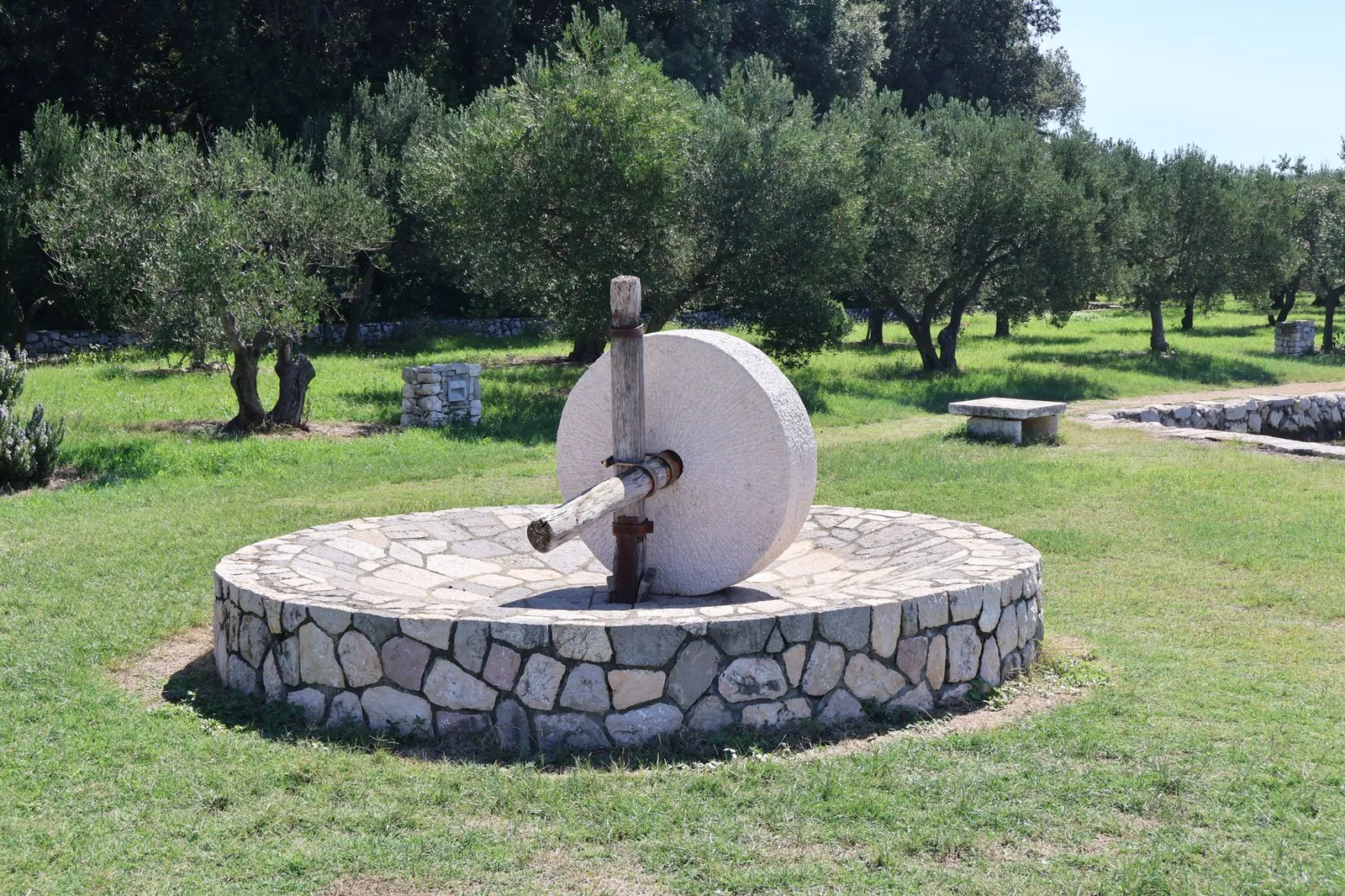
How Cold-Pressed Olive Oil Is Made
From tree to bottle: washing, crushing, malaxation and separation. Why the temperature must stay below 27°C.
 Article
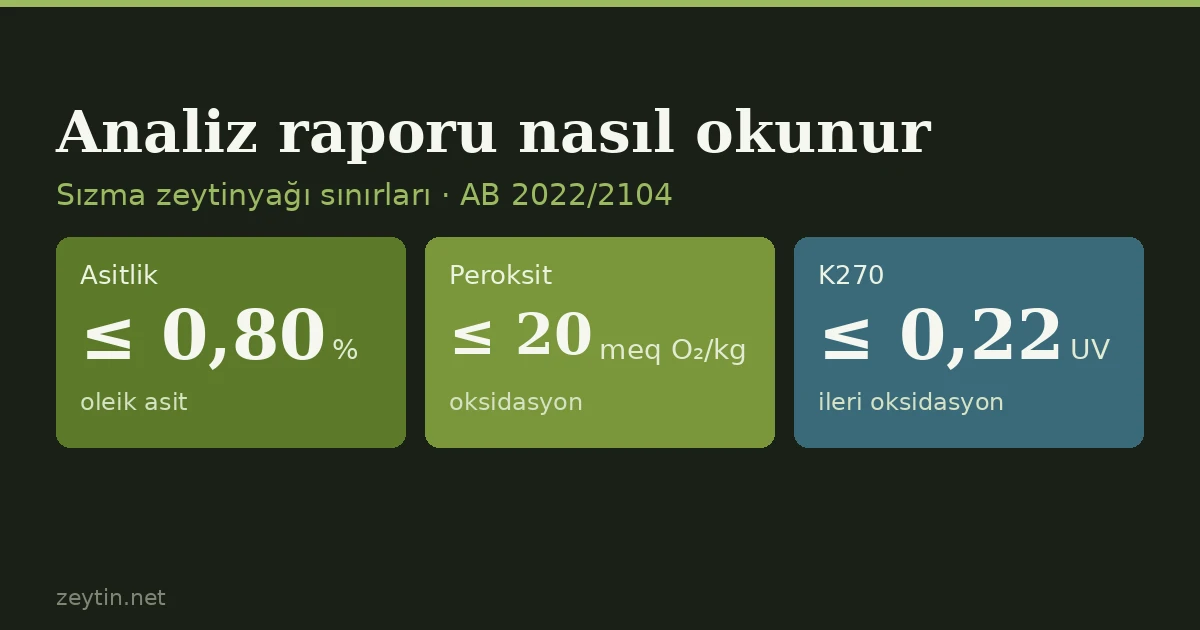
How to read an olive oil lab report: acidity, peroxide, K232, K270 and ΔK
The rows of figures on an olive oil lab report look cryptic at first. What do free acidity, peroxide value, K232, K270, ΔK, ethyl esters and sensory analysis measure, what are the limits for extra virgin and virgin grades, and how do you interpret a report using a worked example?