Belluti olive
Belluti is a recorded variety of south-eastern Anatolia. No measured pomological data published.
Belluti is one of the recorded olive varieties of south-eastern Anatolia.
Characteristics
Used both for the table and for oil. Highly susceptible to Verticillium wilt.

Where it grows
Belluti is recorded in south-eastern Anatolia. The provinces where olive production concentrates in this region: Gaziantep, Kilis, Şanlıurfa, Adıyaman, Mardin.
Regional conditions, varietal spread and output: olive growing in south-eastern Anatolia
Measured values
The eight local cultivars of Derik were measured across 2016-2017. Belluti has the heaviest stone of the eight.
| Property | Value |
|---|---|
| Fruit weight | 4.52 g |
| Fruit length × width | 28.20 × 16.06 mm |
| Fruit shape index | 1.75 |
| Stone weight | 1.05 g |
| Flesh ratio | 76.8% |
The fruit is "large" at 4.52 g, but the stone weighs 1.05 g — the only one of the eight classed as "very heavy". The consequence is a flesh ratio held to 76.8%, where Melkabazi, of similar size, reaches 83.7%.
Its fruit shape index is 1.75 — the length three-quarters again the width, distinctly elongated. The stone follows the same form at 21.90 mm, the longest of the eight.
Other varieties of the region
Eğriburun · Kalem Bezi · Kilis Yağlık · Nizip Yağlık · Yağ Çelebi
Locally
Belluti is among the varieties grown by traditional methods in the Derik district of Mardin. The same locality holds Halhalı, Zonciki, Güleki, Mavi, Kejik, Mazı, Gürseki and Melkabazi.
Most of these names appear in no national variety catalogue. That is the heart of the question of the Southeast's unnamed genotypes: a pool unknown because unmeasured, and competitive with standard varieties once measured.
More: olive growing in Mardin
Source
- Sakar, E. et al. (2023) — Phenological, morphological and physicochemical characteristics of some local olive varieties grown in Mardin (Derik), International Journal of Agriculture, Environment and Food Sciences 7(2), pp. 448-457
- Efe, R., Soykan, A., Cürebal, İ. & Sönmez, S. (2016) — Characteristics and Geographical Distribution of Olive Varieties Grown in Turkey, Zeytin Kitabı, pp. 37-80
- Olive map of Turkey
Where it stands among measured varieties
çeşit sayfası
çeşit sayfası
çeşit sayfası
çeşit sayfası
Values are those published on each variety's own page; the comparison covers only varieties with a measured figure, so it is a comparison of what is known — not of every Turkish variety. See the full ranking and how it is built →
One rating per visitor; you can change yours at any time. Ratings are real reader votes — no seeded or default scores.
Related
 Article
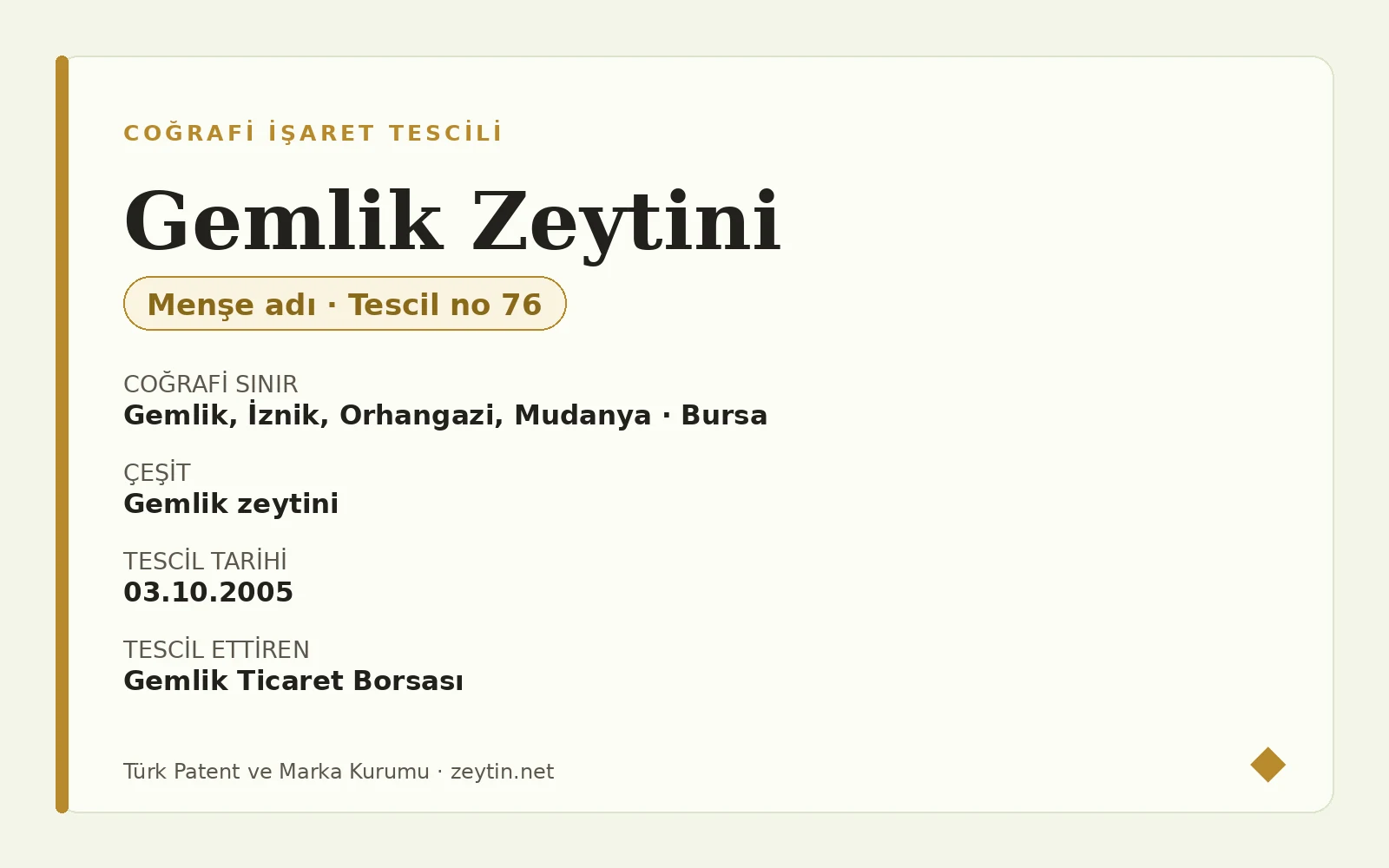
The Gemlik Olive designation of origin: what the certificate says
Turkey's first registered olive (2005, no 76). The certificate defines four districts, three cultivars, four curing methods and seven size grades — all of them binding.
Article
The Gemlik Olive designation of origin: what the certificate says
Turkey's first registered olive (2005, no 76). The certificate defines four districts, three cultivars, four curing methods and seven size grades — all of them binding.
 Article
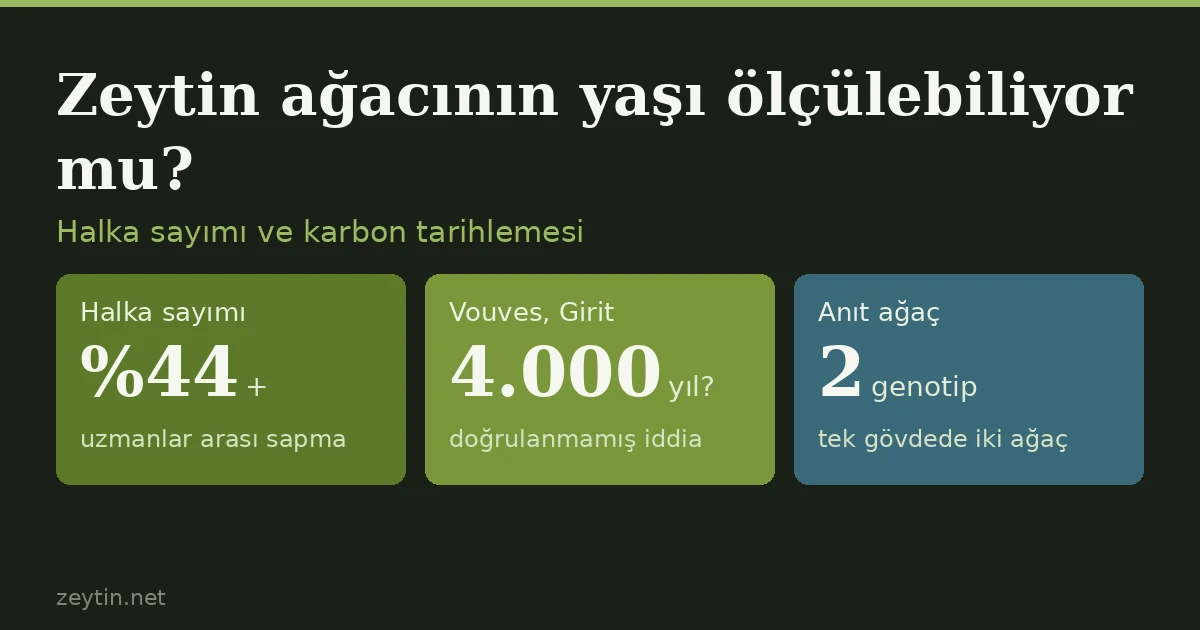
How long does an olive tree live?
There are plenty of "thousand-year-old olive" signs and almost no measurements. Counting annual rings does not work on olive: when ten experts in five laboratories were given the same samples, their ring counts differed by more than 44%. Radiocarbon dating carries its own trap. So does the tree have a real age limit — and what does it mean that Crete's famous monumental olive turns out to consist of two different genotypes?
Article
How long does an olive tree live?
There are plenty of "thousand-year-old olive" signs and almost no measurements. Counting annual rings does not work on olive: when ten experts in five laboratories were given the same samples, their ring counts differed by more than 44%. Radiocarbon dating carries its own trap. So does the tree have a real age limit — and what does it mean that Crete's famous monumental olive turns out to consist of two different genotypes?
 Article
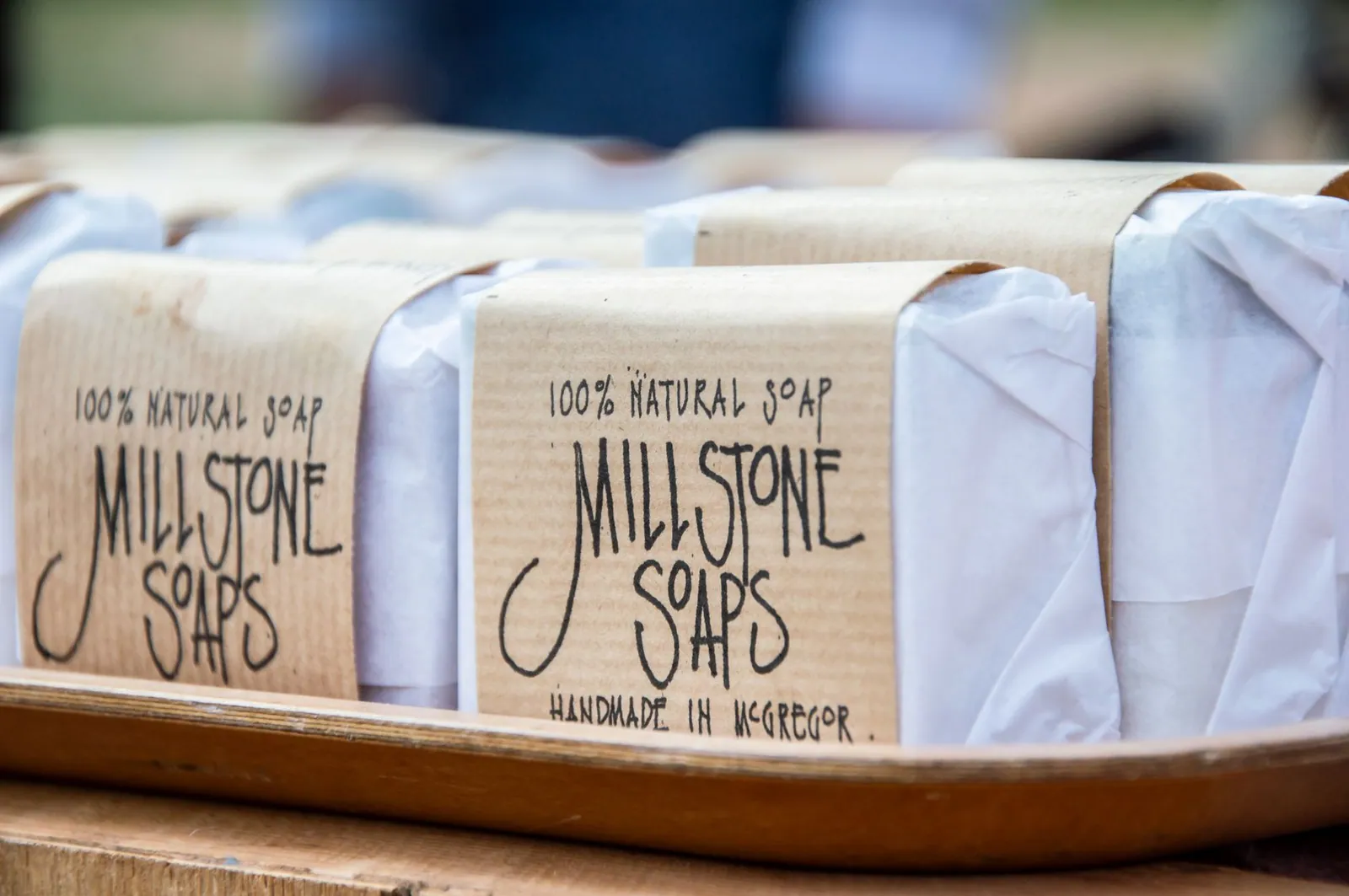
Products from Olive
Table olives, oil, pomace, leaf and soap: what is made from each part of the tree, and what each is good for.
Article
Products from Olive
Table olives, oil, pomace, leaf and soap: what is made from each part of the tree, and what each is good for.
 Article
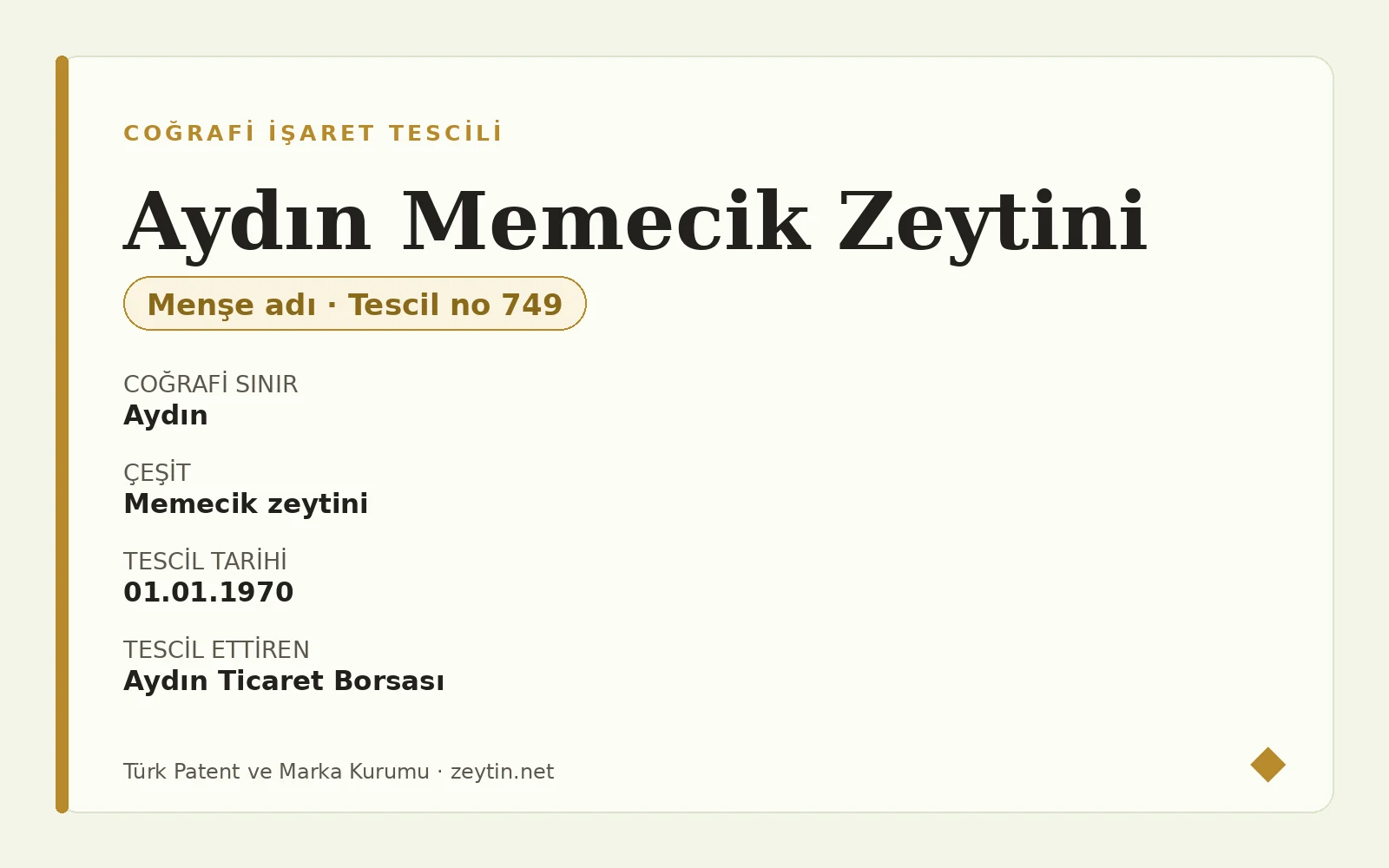
Aydın Memecik Olive: grafted on wild rootstock, a tree that yields for a century
Registered in 2021. The certificate ties the cultivar's key trait to longevity: grafted on wild rootstock, Memecik yields economically for 80-100 years and can then be rejuvenated.
Article
Aydın Memecik Olive: grafted on wild rootstock, a tree that yields for a century
Registered in 2021. The certificate ties the cultivar's key trait to longevity: grafted on wild rootstock, Memecik yields economically for 80-100 years and can then be rejuvenated.