When does the olive harvest begin?
The harvest starts in late September and runs into February. Erkence is earliest, Memecik hangs into mid-December, and Mission's table and oil harvests are two months apart.

Short answer: the olive harvest in Turkey begins in late September and runs into February. But there is no single date: three things decide it — the variety, what you are harvesting for, and the region.
Harvest calendar by variety
Ripening and harvest times recorded on our variety pages:

| Variety | Timing | Used for |
|---|---|---|
| Erkence | earliest | oil |
| Uslu | early October | oil, black table |
| Domat | September-November, ripe mid-October | table |
| Ayvalık (Edremit) | October-November | oil, cracked and black table |
| Gemlik | November-January, ripe mid to late October | black table, oil |
| Memecik | mid-November to mid-December | oil, table |
The spread reaches three months. Erkence is named for its early ripening; Memecik can hang on the tree into mid-December. Two varieties in one grove mean two separate harvests.
Table olives or oil?
Even the same variety is picked at different times depending on its purpose. Mission is the clearest example:
- Table harvest: late October to November
- Oil harvest: mid-December to February
More than two months apart. The reason is simple: table olives must stay firm so they do not break down in brine, while oil olives need to ripen and fill with oil.
The general rule runs like this:
- Green table olives are picked earliest. The fruit is still firm, green and bitter.
- Oil olives are picked at colour change, when oil content has risen but the fruit is not overripe.
- Black table olives are left longest, until the fruit is fully black and softened.
Early or late: the yield-quality trade
Harvest date goes straight to the bottom line, and there is a trade-off:
- Early harvest means the fruit has not filled with oil. The same weight of olives gives less oil, so yield is low. In exchange the oil is higher in polyphenols and aroma and lower in acidity.
- Late harvest raises yield; the same tree gives more oil. But as the fruit ripens the oil loses its bitter, peppery character and its shelf life shortens.
Early harvest gives less but better oil; late harvest gives more but more ordinary oil. For the numbers behind this calculation: Early harvest: expensive or valuable?
How to read colour change
Looking at the fruit beats following a calendar. Ripening proceeds in this order:
1. Dark green — growth incomplete, oil content low
2. Yellow-green — growth finished, oil beginning to fill
3. Spotted — purple flecks on the skin; a common point for oil harvest
4. Purple-black skin, green flesh — oil content close to its peak
5. Fully black, soft flesh — suitable for black table olives; oil quality starts to fall
Cutting open a few fruits taken at random from several trees tells you more than any date.
Regional difference
The same variety ripens earlier in the south and later in the north and at altitude. A harvest that starts in early October on the Mediterranean coast reaches November inland in Marmara. Every 100 metres of elevation delays ripening by several days.
So "in our village the harvest starts on 15 November" may not hold in the neighbouring province. For regional production and variety distribution: Where do olives grow in Turkey?
The cost of harvesting late
Delay carries three concrete risks:
- Fruit drop. Overripe fruit loses its grip and falls. Olives gathered from the ground have been in contact with soil and give oil with higher acidity.
- Olive fruit fly. Damage increases as autumn advances; the larvae feed inside the fruit.
- Rain. A wet harvest is both harder and leaves the fruit open to rot.
The clock keeps running after picking: olives left waiting ferment and acidity rises.
Harvest method affects timing too
Hand picking can be staged; the grove is walked several times and ripe fruit taken. Mechanical and pole harvesting take everything at once, which makes the date more critical — too early and the fruit will not release, too late and it drops.
Variety details are compiled from the measurements recorded on our variety pages.
One rating per visitor; you can change yours at any time. Ratings are real reader votes — no seeded or default scores.
Related
 Article
Frost damage in olive trees: signs, risk factors and what to do after a frost
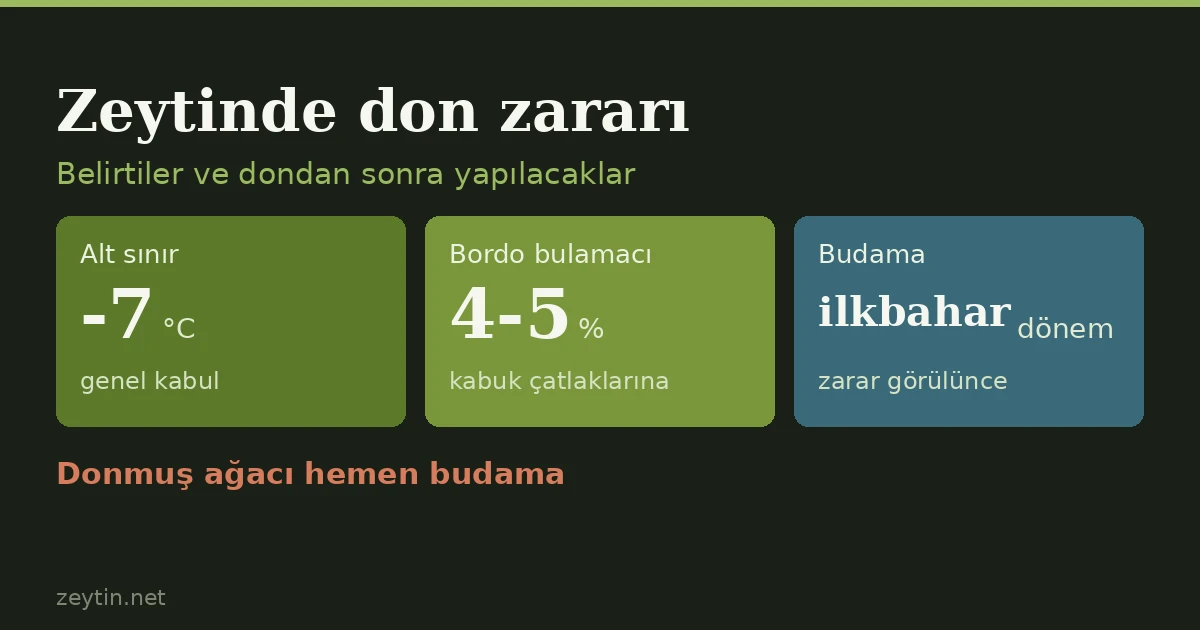
The generally accepted lower limit for olives is around -7 °C, but damage does not depend on the thermometer alone: how long the cold lasts, sudden drops, humidity, tree age and nutrition all matter. Here are the signs of frost damage on leaves, shoots, bark and fruit, ways to reduce the risk and which job to do when after a frost.
Article
Frost damage in olive trees: signs, risk factors and what to do after a frost
The generally accepted lower limit for olives is around -7 °C, but damage does not depend on the thermometer alone: how long the cold lasts, sudden drops, humidity, tree age and nutrition all matter. Here are the signs of frost damage on leaves, shoots, bark and fruit, ways to reduce the risk and which job to do when after a frost.
 Article
Grafting Olives: Changing Cultivar and Improving Wild Trees
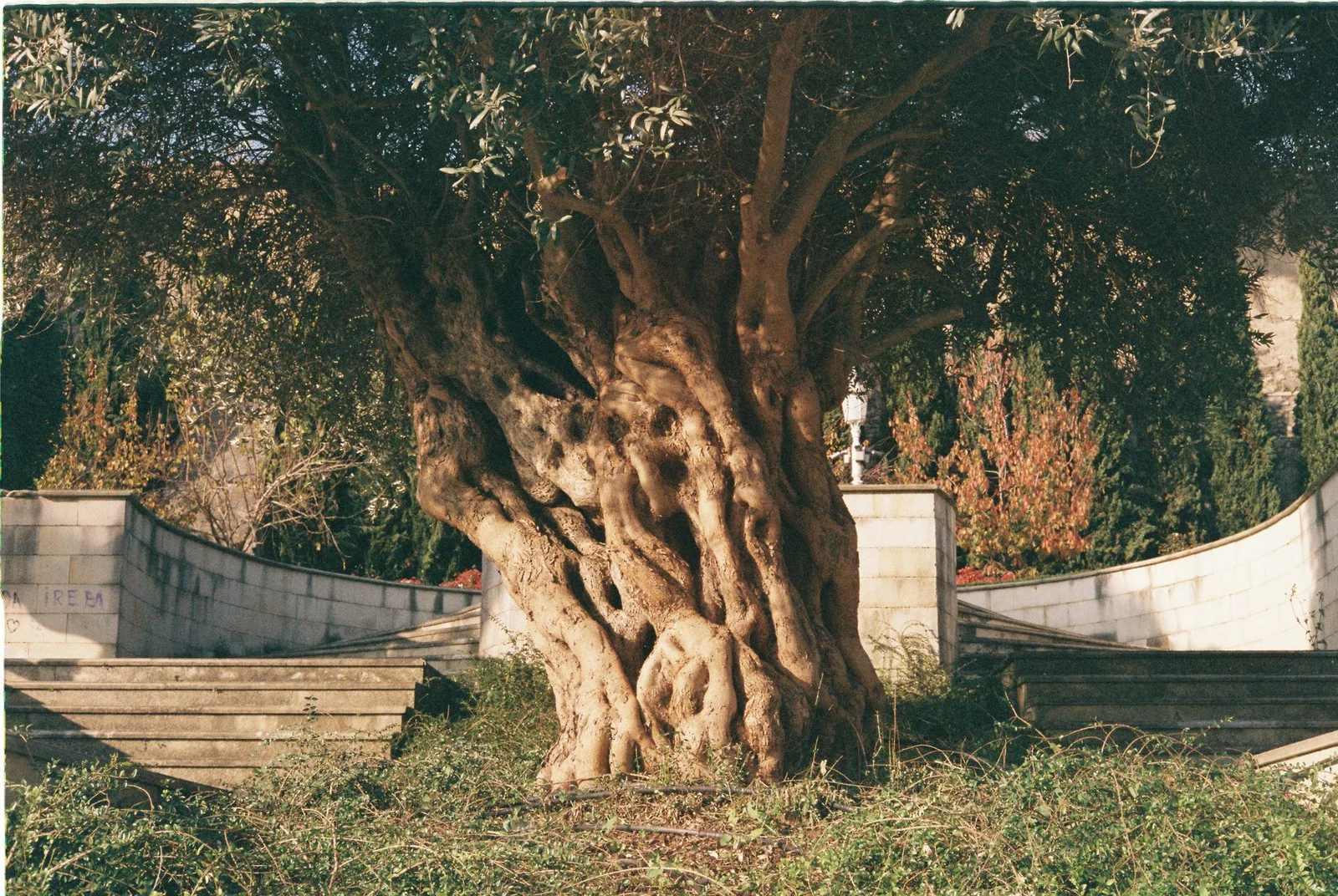
When grafting is needed, taking scion wood, bud and cleft methods, topworking and aftercare.
Article
Grafting Olives: Changing Cultivar and Improving Wild Trees
When grafting is needed, taking scion wood, bud and cleft methods, topworking and aftercare.
 Article
Organic olive growing: what a four-year trial found
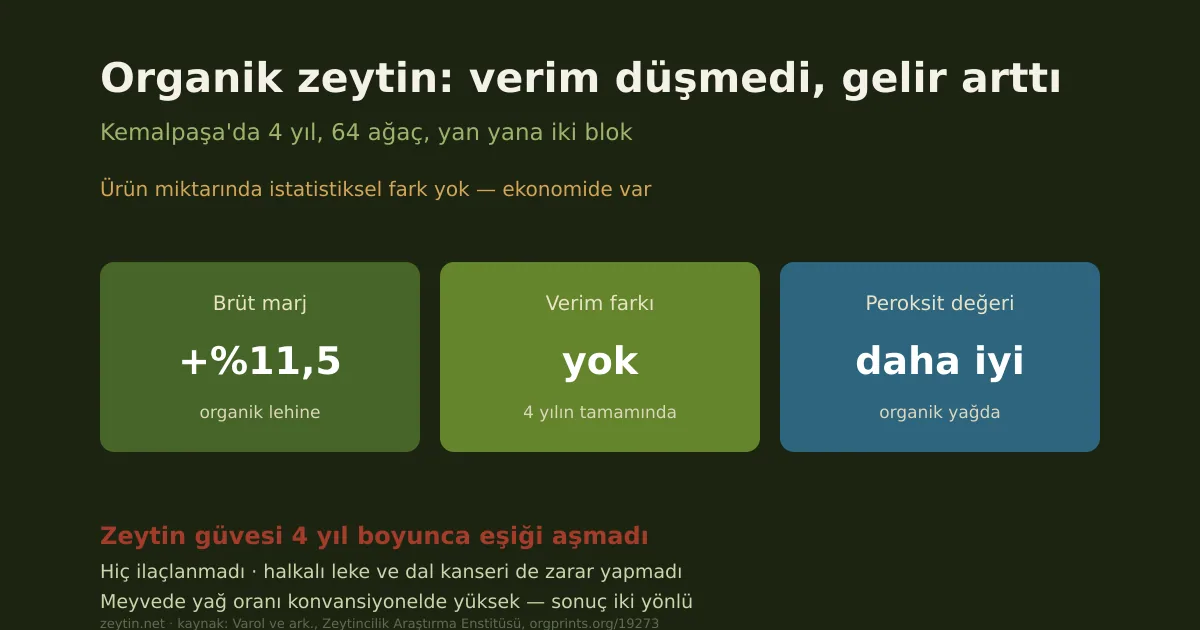
A four-year organic vs conventional trial at Kemalpaşa: no yield difference, 11.5% higher gross margin for organic, lower peroxide value, but higher fruit oil content under conventional management.
Article
Organic olive growing: what a four-year trial found
A four-year organic vs conventional trial at Kemalpaşa: no yield difference, 11.5% higher gross margin for organic, lower peroxide value, but higher fruit oil content under conventional management.
 Article
Arbequina IRTA-i18: the clone behind super-high-density olive groves
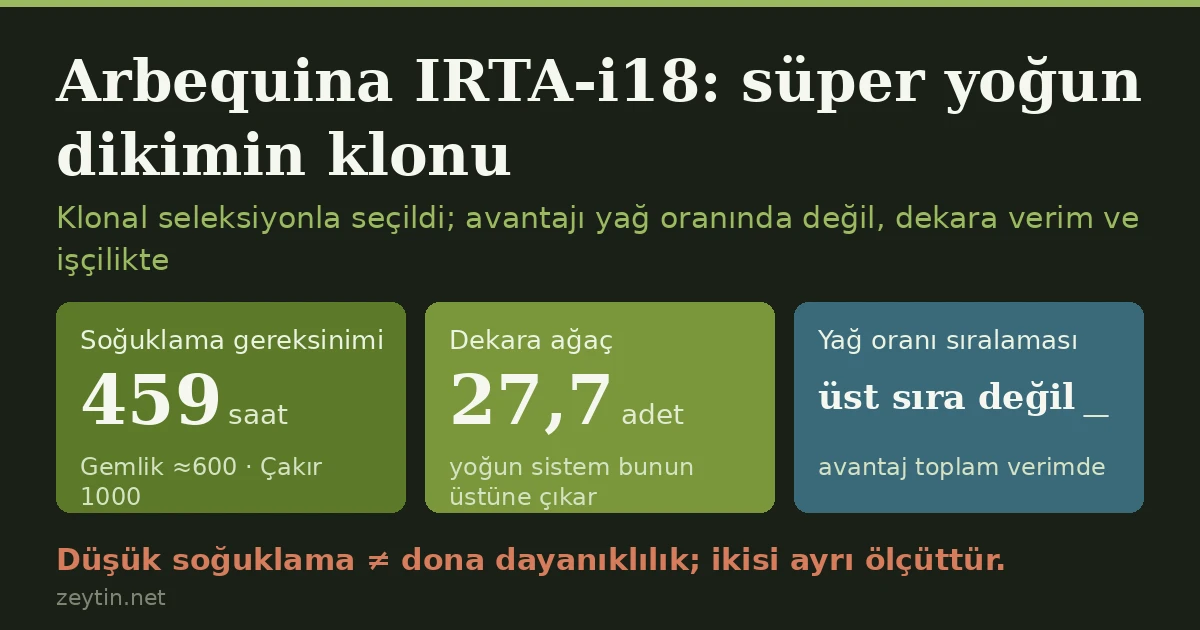
IRTA-i18, developed from Arbequina by clonal selection, was chosen for super-high-density groves. What early bearing, mechanical harvest and a low 459-hour chilling requirement actually mean.
Article
Arbequina IRTA-i18: the clone behind super-high-density olive groves
IRTA-i18, developed from Arbequina by clonal selection, was chosen for super-high-density groves. What early bearing, mechanical harvest and a low 459-hour chilling requirement actually mean.