Olive Oil Soap: How It Is Made, Its Types and How to Choose
How saponification works, why curing takes months, and how to recognise genuine olive oil soap.
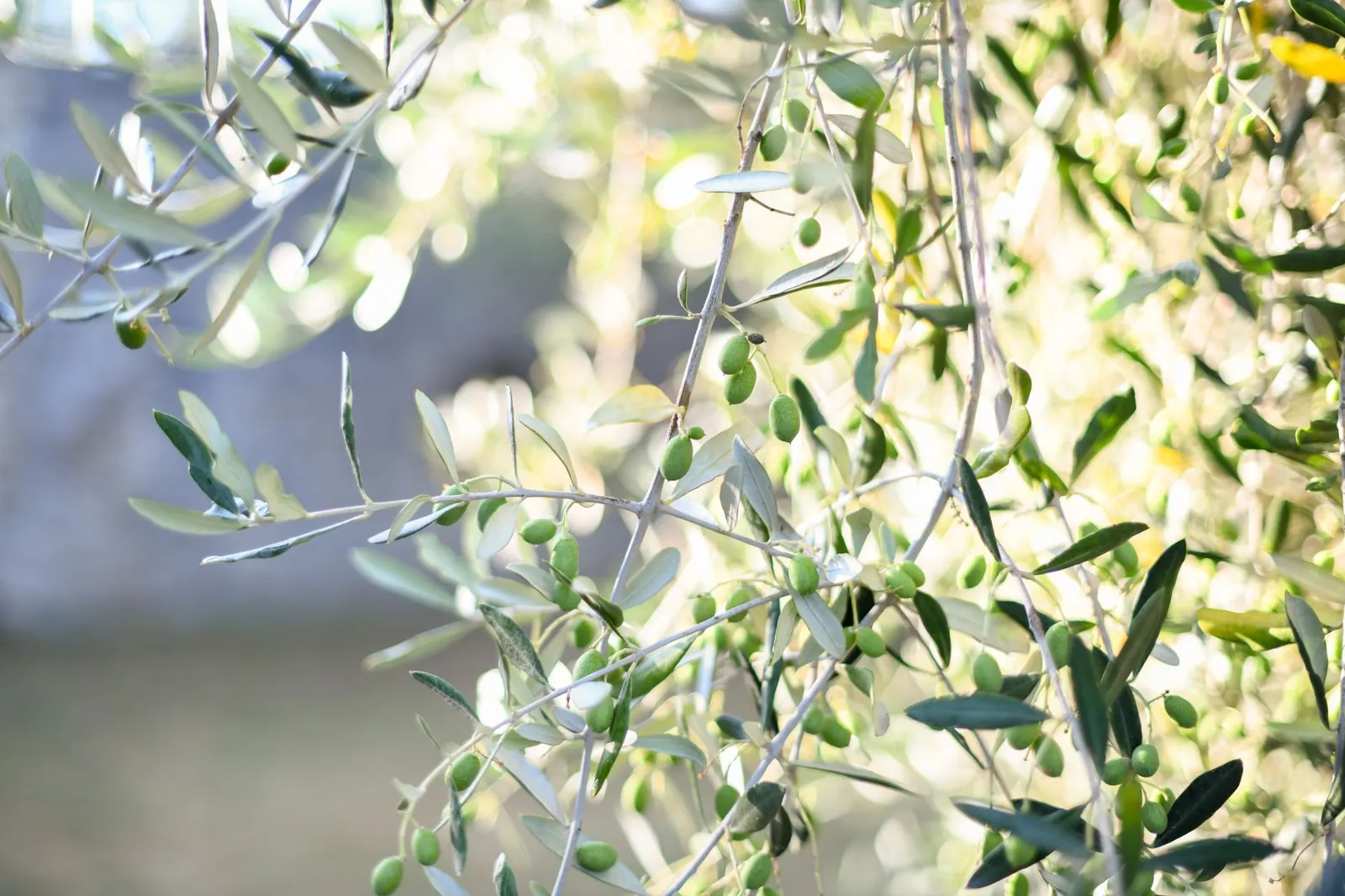
Soap is born from the reaction of a fat with an alkali — saponification. Around the Mediterranean the abundant fat was olive oil and the alkali came from the ash of coastal plants, which is why soap became a product of this basin. For the history see the history of olive oil soap.
How it is made
The outline of the traditional method has not changed:
1. Olive oil is heated in a large cauldron with an alkaline solution
2. The mixture boils for hours, sometimes days, until saponification is complete
3. It is washed with brine to separate out excess alkali and glycerine
4. The hot paste is poured onto the floor or into moulds and left to cool
5. Once set it is cut and stamped
6. It is left to cure
⚠ Curing time decides the quality. The blocks sit in the air for months, losing water, hardening and dropping in pH. Soap hurried through stays soft and melts away quickly. Aleppo soap cures for anything from six months to two years.
Types
| Type | Character |
|---|---|
| Pure olive oil soap | Olive oil only; mild, low-lathering, not drying to the skin |
| Aleppo soap | Olive oil plus laurel (ghar) oil; the more laurel, the more prized |
| Castile soap | White soap from olive oil alone; named for the Spanish region |
| Marseille soap | Vegetable-oil soap whose composition was fixed by a 1688 regulation |
| Pomace soap | Made with oil from the pressing residue; a lower grade |
How to recognise genuine olive oil soap
The ingredients list. Sodium olivate (saponified olive oil) should come first. If sodium palmate or sodium tallowate leads, the soap is mostly palm or animal fat.
The lather. Pure olive oil soap lathers little. Abundant, lasting foam usually signals other oils or foaming additives. Low lather is not a defect.
The cut face. Split an Aleppo block and the outside is pale beige while the inside is green — the classic sign of curing.
Weight. Well-cured soap is heavy and does not dissolve quickly in water.
⚠ "Handmade", "natural", "village style" have no definition in regulation and tell you less than the ingredients list.
Use and storage
- The dish should drain; soap left standing in water dissolves
- Keep unused blocks somewhere airy — they harden with time and last longer
- Olive oil soap serves for washing both body and laundry; it is favoured for sensitive skin because it carries no additives
⚠ Anyone with a skin condition or allergy should discuss a change of product with their doctor. This page is general information.
One rating per visitor; you can change yours at any time. Ratings are real reader votes — no seeded or default scores.
Related
 Article
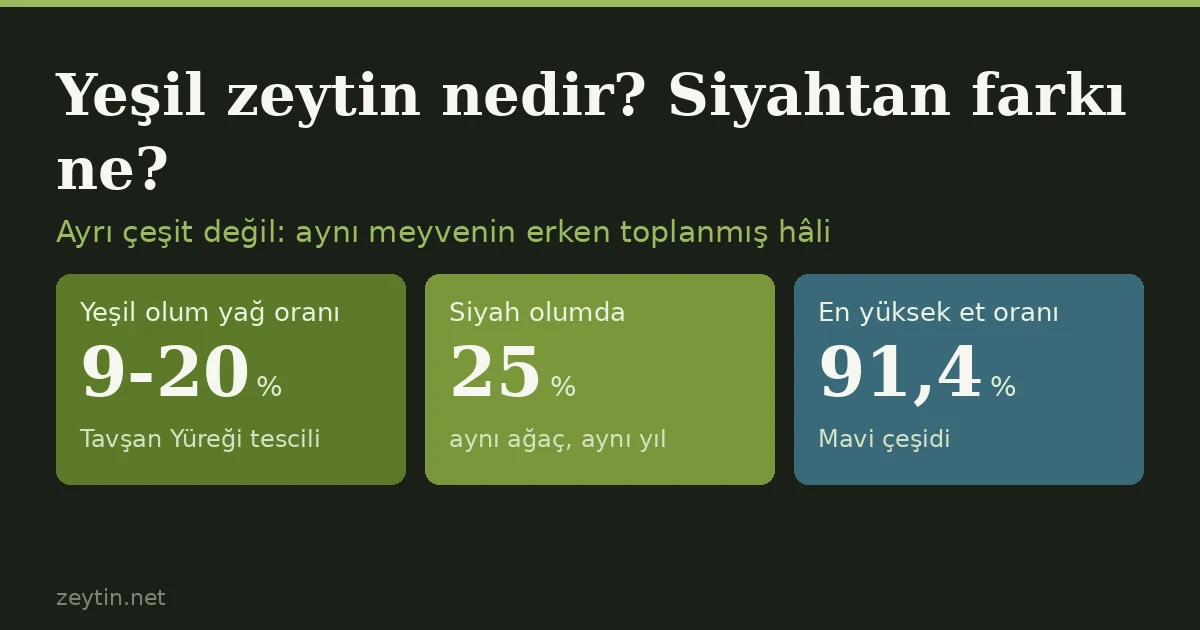
What are green olives, and how do they differ from black?
Green olives are not a separate variety but the same fruit picked early. What sets the colour, why pick green, and where the difference from black begins.
Article
What are green olives, and how do they differ from black?
Green olives are not a separate variety but the same fruit picked early. What sets the colour, why pick green, and where the difference from black begins.
 Article
The Olive Sector in Turkey: Structure, Exports and Challenges
Production, exports, business structure and price: the Turkish olive sector in figures, and where the chain breaks.
Article
The Olive Sector in Turkey: Structure, Exports and Challenges
Production, exports, business structure and price: the Turkish olive sector in figures, and where the chain breaks.
 Article
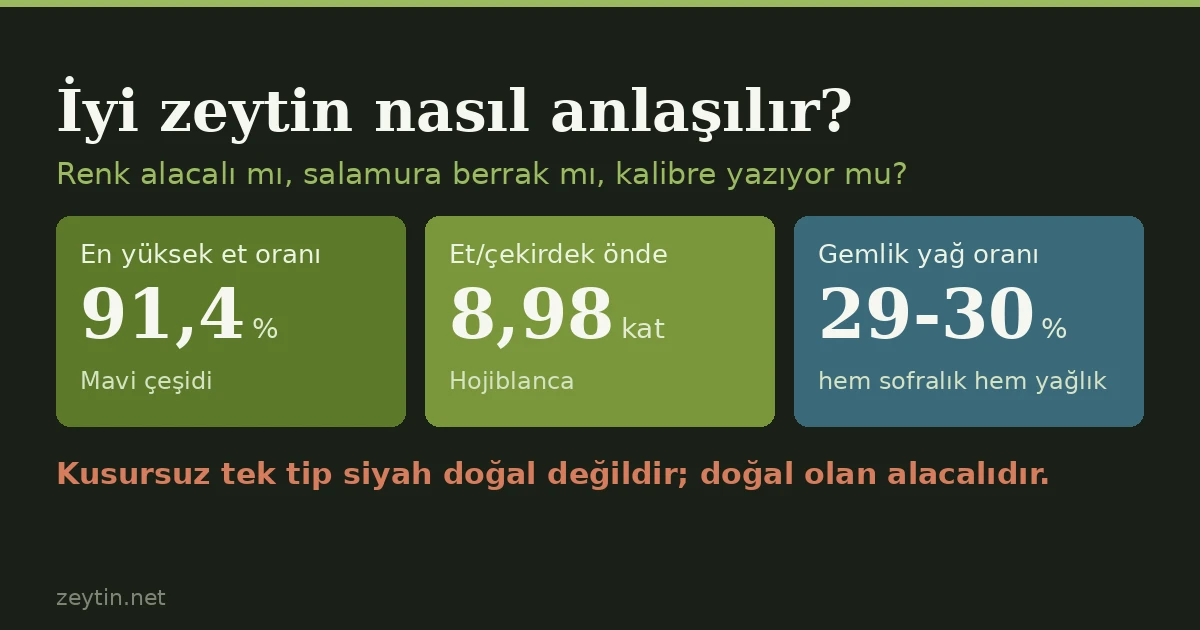
How to recognise a good table olive — and what to check when buying
Is the colour mottled, the brine clear, the calibre stated? Concrete checks for buying table olives, whether Gemlik is an oil or table variety, and how to store them at home.
Article
How to recognise a good table olive — and what to check when buying
Is the colour mottled, the brine clear, the calibre stated? Concrete checks for buying table olives, whether Gemlik is an oil or table variety, and how to store them at home.
 Article
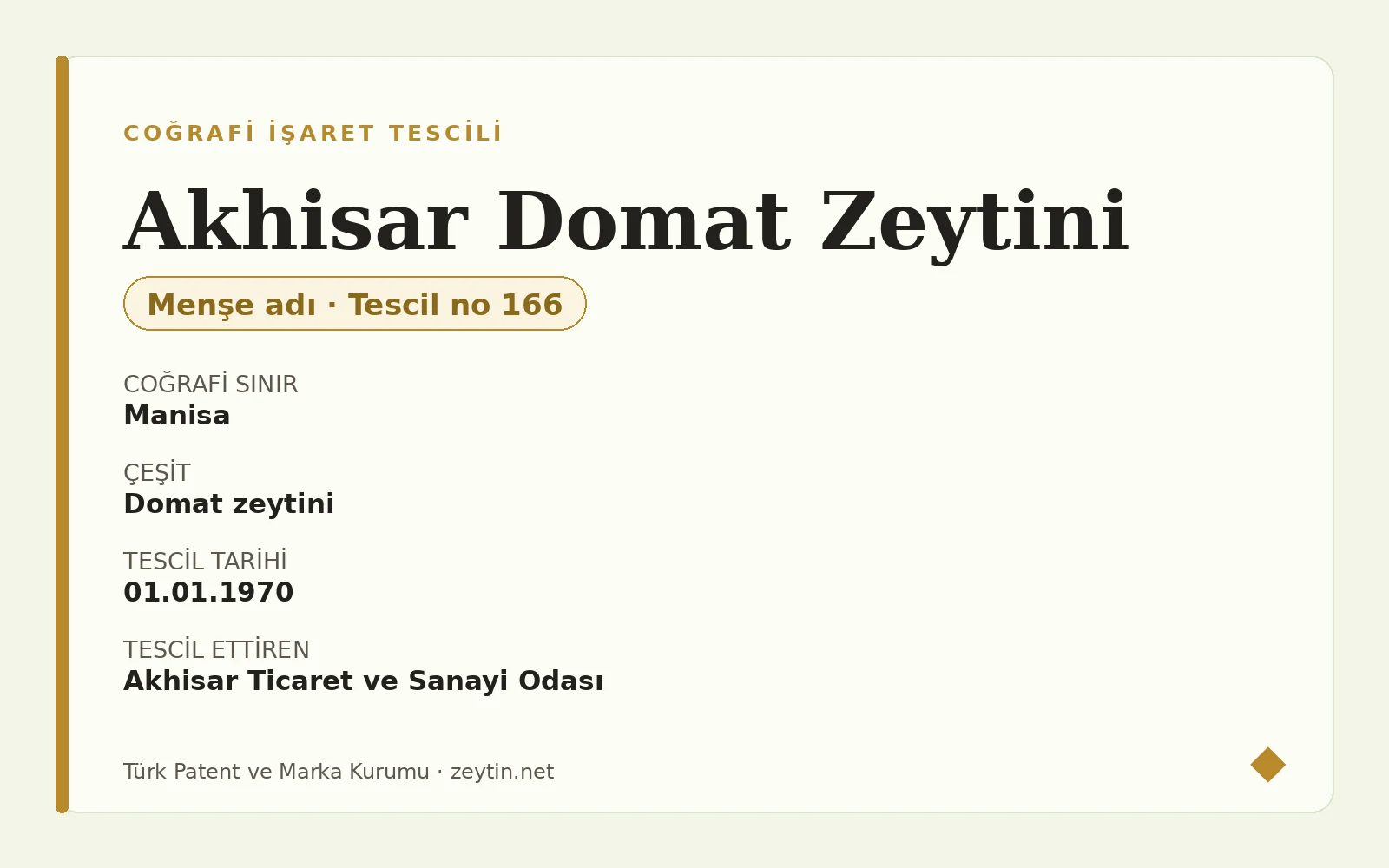
Akhisar Domat Olive: the specification behind stuffed olives
Registered in 2010. The certificate sets calibre separately for each product form — 170-290 for stuffed, 110-260 for cocktail. One cultivar, different sizes.
Article
Akhisar Domat Olive: the specification behind stuffed olives
Registered in 2010. The certificate sets calibre separately for each product form — 170-290 for stuffed, 110-260 for cocktail. One cultivar, different sizes.