Olive and Olive Oil Glossary
Oleuropein, lampante, pomace, malaxation, designation of origin… Short, verifiable definitions of olive and olive oil terms.
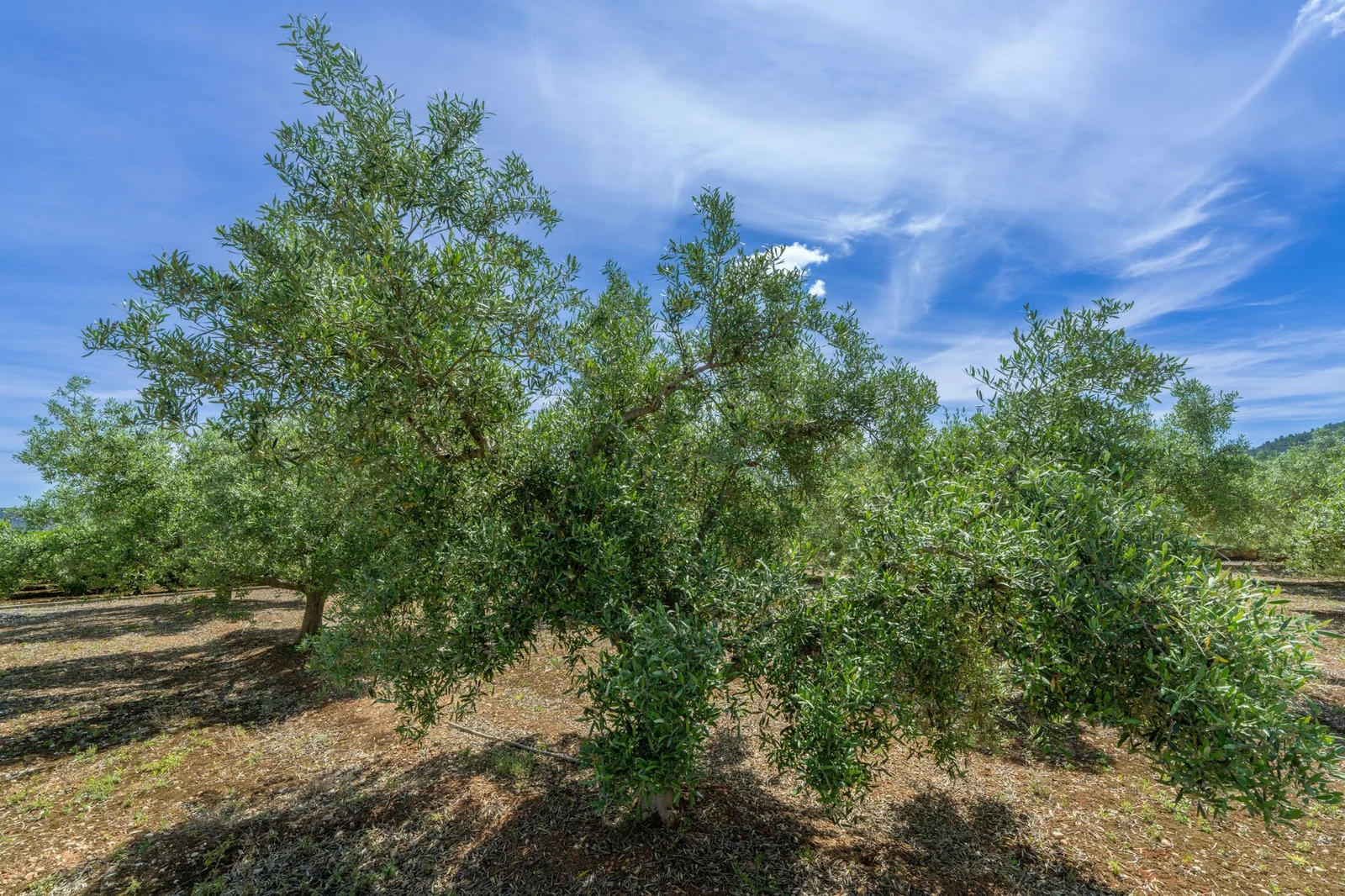
Definitions of the terms that recur in writing about olives and olive oil. Kept short; links point to fuller treatments.
- Olea europaea
- The botanical name of the olive; an evergreen of the *Oleaceae* family.
- Oleaster
- The wild olive (*Olea europaea* var. *sylvestris*), ancestor of the cultivated tree; small-fruited with little flesh.
- Drupe
- A stone fruit. Botanically the olive is a drupe, in the same class as plum and cherry.
- Alternate bearing
- The olive's habit of following a heavy crop year with a light one; it makes reading a trend from a single year misleading.
- Biennial bearing
- Another name for alternate bearing — see Alternate bearing. Turkish sources call it alternans or periyodisite.
- Invaiatura / veraison
- The ripening stage at which the fruit turns from green to purple and then black; for many growers the ideal harvest window.
- Chill requirement
- The period of winter cool the olive needs in order to flower; in climates without winter the tree lives but sets no fruit.
- Sucker / water shoot
- A vigorous, non-fruiting shoot from the base or trunk; it draws the tree's strength and is removed year-round.
- Oleuropein
- The polyphenol that gives raw olives their sharp bitterness; the tree's own defence, removable by curing because it is water-soluble.
- Curing / brining
- The whole process of removing an olive's bitterness in water, brine, dry salt or lye.
- Dry-salt cured olives
- Ripe black olives cured in layers of rock salt in perforated baskets; wrinkled and intensely flavoured.
- Cracked olives
- Olives scored or cracked so the bitterness leaches faster; quicker to cure but softer in texture.
- Ferrous gluconate (E579)
- The additive used to darken green olives chemically. Declaring it is mandatory; the ingredients list is the surest way to tell it from naturally ripened black olives.
- Extra virgin
- The grade extracted by mechanical means only, with free acidity at most 0.8% and no defect in the sensory panel.
- Virgin
- Also mechanically extracted, with acidity up to 2% and slight sensory defects tolerated.
- Lampante
- Virgin oil with sensory defects or high acidity, unfit for direct consumption; it goes to refining. The name recalls its old use as lamp fuel.
- Refined
- The grade produced by treating defective or high-acidity oil with heat and chemicals; acidity falls but most aroma, flavour and polyphenols are lost.
- Olive oil (riviera)
- Refined oil blended with a little virgin oil; usually labelled simply "olive oil".
- Pomace
- The pulp left after pressing — skin, stone and flesh residue — used as fuel, fodder and the raw material for pomace oil.
- Pomace oil
- Oil extracted from pomace with solvents. It is not olive oil in the strict sense; labelling it as pomace oil is mandatory.
- Vegetation water
- The heavily organic waste liquid released from the fruit during pressing; polluting to soil and water if left untreated.
- Free fatty acid
- The measure of breakdown in the oil, expressed as a percentage of oleic acid; this is what "acidity" means. It has nothing to do with sour taste.
- Peroxide value
- A measure of how far the oil has oxidised; read alongside acidity, which is not sufficient on its own.
- K232 / K270
- Ultraviolet absorbance measurements that reveal refining and oxidation products.
- Sensory panel
- The official method by which trained tasters assess an oil for defects and positive attributes; the extra virgin grade requires zero defects.
- Fruity
- The fresh aroma and taste from sound fruit; one of the positive attributes in tasting.
- Bitterness
- A positive attribute linked to polyphenols and green fruit — not a defect.
- Pungency
- The sharpness felt at the back of the throat on swallowing; linked to oleocanthal and a sign of freshness.
- Oleocanthal
- The polyphenol responsible for throat pungency; identified in 2005, it stimulates the same nerve endings as ibuprofen.
- Hydroxytyrosol
- The principal olive oil polyphenol; the health claim authorised by the European Food Safety Authority rests on it.
- Polyphenol
- The family of compounds giving oil its bitterness, pungency and resistance to oxidation; largely lost in refining.
- Tocopherol
- The chemical name for vitamin E, one of olive oil's natural antioxidants.
- Oleic acid
- The monounsaturated fatty acid making up roughly 70-80% of olive oil.
- Cold pressing
- Production in which the paste is not taken above 27 °C, limiting the loss of aroma and polyphenols.
- Malaxation
- The stage in which the crushed paste is slowly stirred so oil droplets coalesce; time and temperature directly affect quality.
- Decanter
- The centrifugal machine that separates oil from water and solids in a continuous system; it has replaced the classic press.
- Filtration
- Straining out suspended particles; unfiltered oil is cloudier and, because it settles sediment, can spoil sooner.
- Geographical indication
- The registration granted when a product's name is identified with its place of origin; in Turkey granted by TÜRKPATENT.
- Designation of origin
- The type of geographical indication requiring ALL stages of production to take place in the stated area.
- Geographical indication (mahreç)
- The more flexible type, requiring only that AT LEAST ONE stage of production takes place in the stated area.
- IOC
- The International Olive Council, which sets olive oil grade standards and publishes world production and consumption statistics.
Where to go next
- Grades and labels: extra virgin, virgin, riviera · acidity · how to tell good olive oil
- Production: cold pressing · the harvest · curing
- Compounds: oleocanthal and polyphenols · nutrition
- Registration: geographical indications
Rate this article
★★★☆☆
3.0
1 rating
One rating per visitor; you can change yours at any time. Ratings are real reader votes — no seeded or default scores.
Related
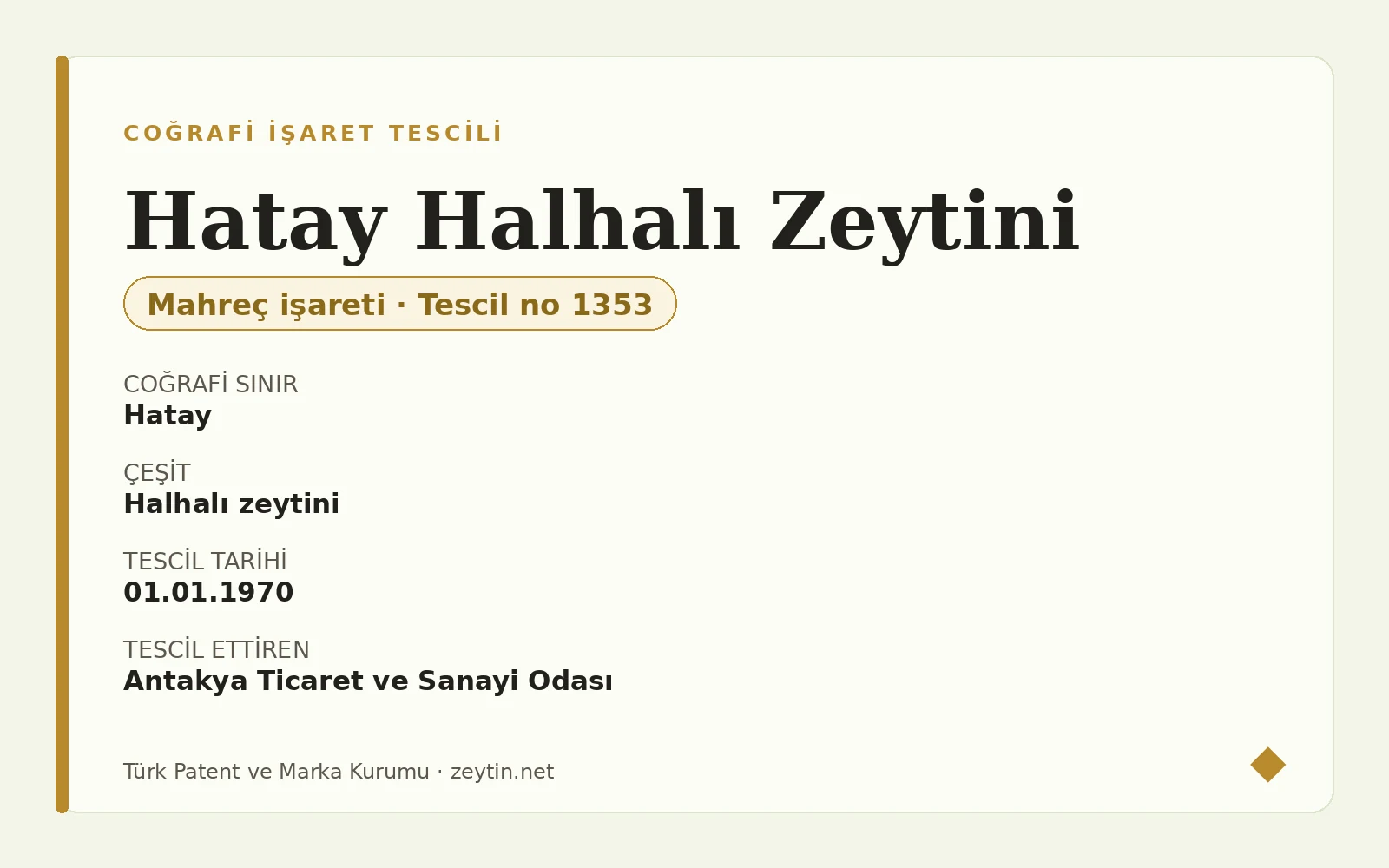 Article
Hatay Halhalı Olive: what long sunshine hours do to phenol content
Registered in 2023. The certificate ties the high phenol content (322-525 mg/kg) directly to long sunshine hours, and defines two separate debittering methods.
Article
Hatay Halhalı Olive: what long sunshine hours do to phenol content
Registered in 2023. The certificate ties the high phenol content (322-525 mg/kg) directly to long sunshine hours, and defines two separate debittering methods.
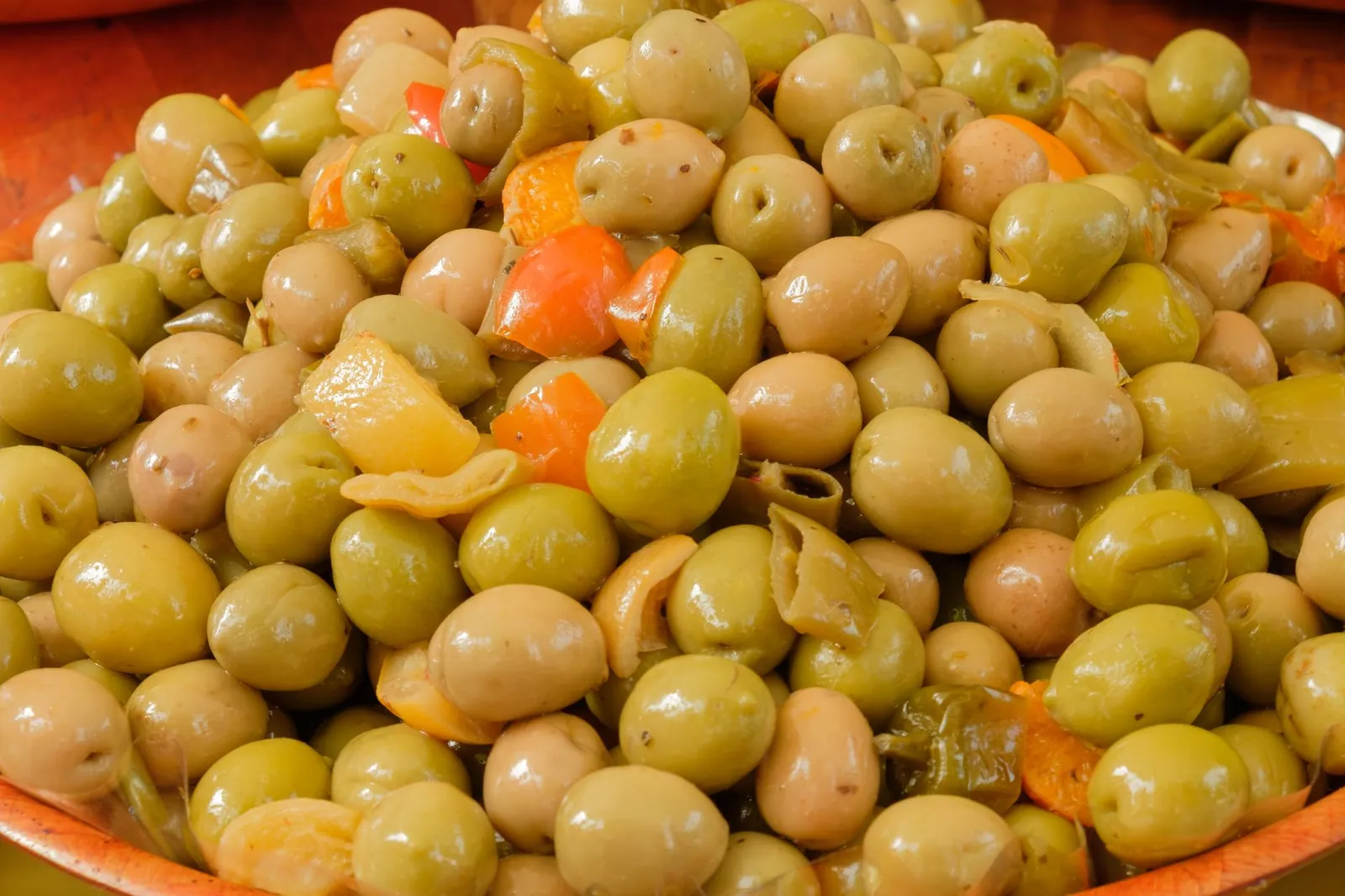 Article
Geographical Indication Olives and Olive Oils of Turkey
Türkiye's registered olive and olive oil geographical indications: which product, which locality, under what conditions — and what registration means.
Article
Geographical Indication Olives and Olive Oils of Turkey
Türkiye's registered olive and olive oil geographical indications: which product, which locality, under what conditions — and what registration means.
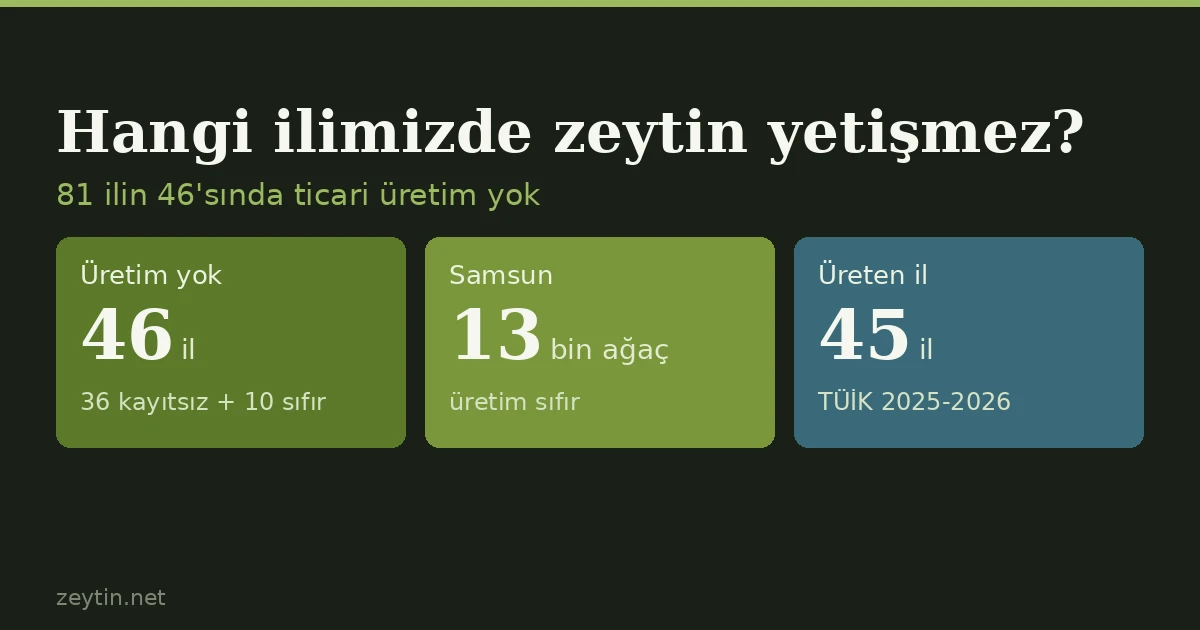 Article
Which provinces in Turkey grow no olives?
Forty-six of Turkey's 81 provinces have no commercial olive production: 36 absent from the statistics, ten reporting zero. Samsun has 13,000 trees and no crop.
Article
Which provinces in Turkey grow no olives?
Forty-six of Turkey's 81 provinces have no commercial olive production: 36 absent from the statistics, ten reporting zero. Samsun has 13,000 trees and no crop.
 Article
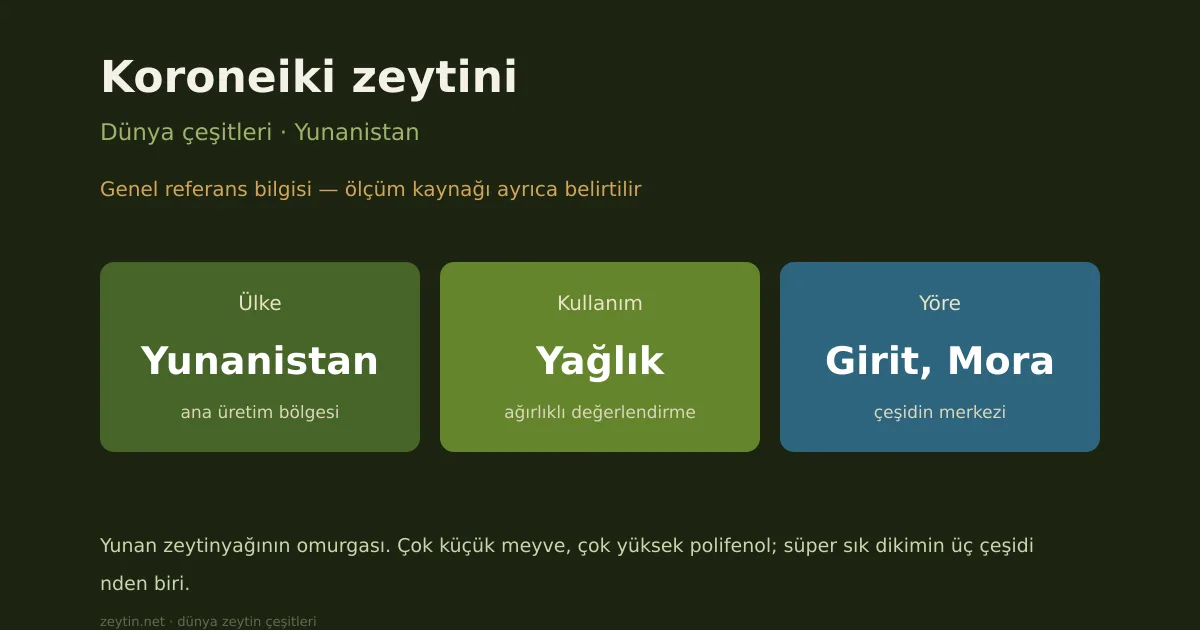
Koroneiki olive: Greece's oil variety
The backbone of Greek olive oil. Very small fruit, very high polyphenol content, and one of the three super-high-density varieties.
Article
Koroneiki olive: Greece's oil variety
The backbone of Greek olive oil. Very small fruit, very high polyphenol content, and one of the three super-high-density varieties.