Does olive oil help gastritis and Helicobacter pylori? The gap between the lab and human trials
In the lab, the phenolic compounds of olive oil killed Helicobacter pylori even under stomach-acid conditions; but in two small pilot studies in people, 30 grams of olive oil a day for 14 days cleared the bacterium in some participants and not in most. The article explains the two stages, the limits of the results and what to watch for with olive oil in gastritis.
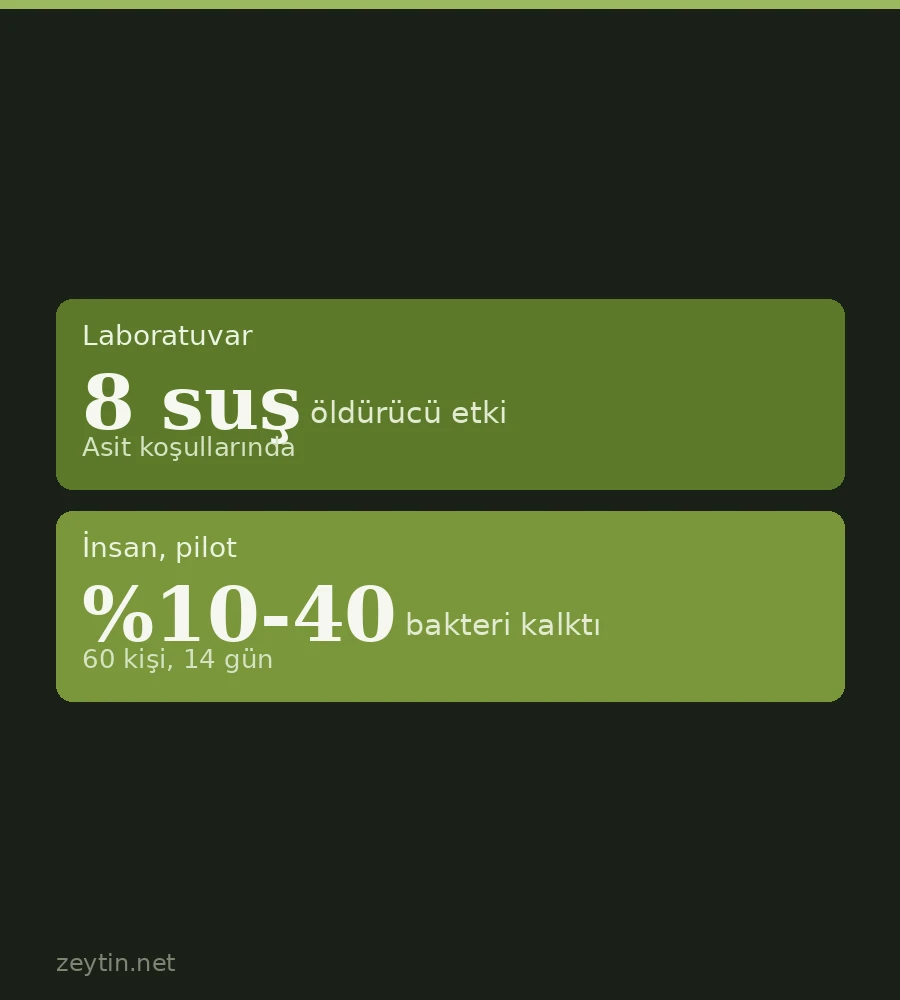
Gastritis is inflammation of the stomach lining. Its main causes include infection with the Helicobacter pylori bacterium, pain-relief drugs (especially non-steroidal anti-inflammatories) and heavy alcohol use. Behind claims circulating online that "olive oil heals the stomach" or "kills H. pylori" there is real research; but that research is not strong enough to carry the claim. In this article we separate two stages: the lab and people.
What was found in the lab
An in vitro study, that is, in a culture rather than in a living body, examined the effect of the phenolic compounds of extra virgin olive oil on H. pylori. The results are summarised like this:
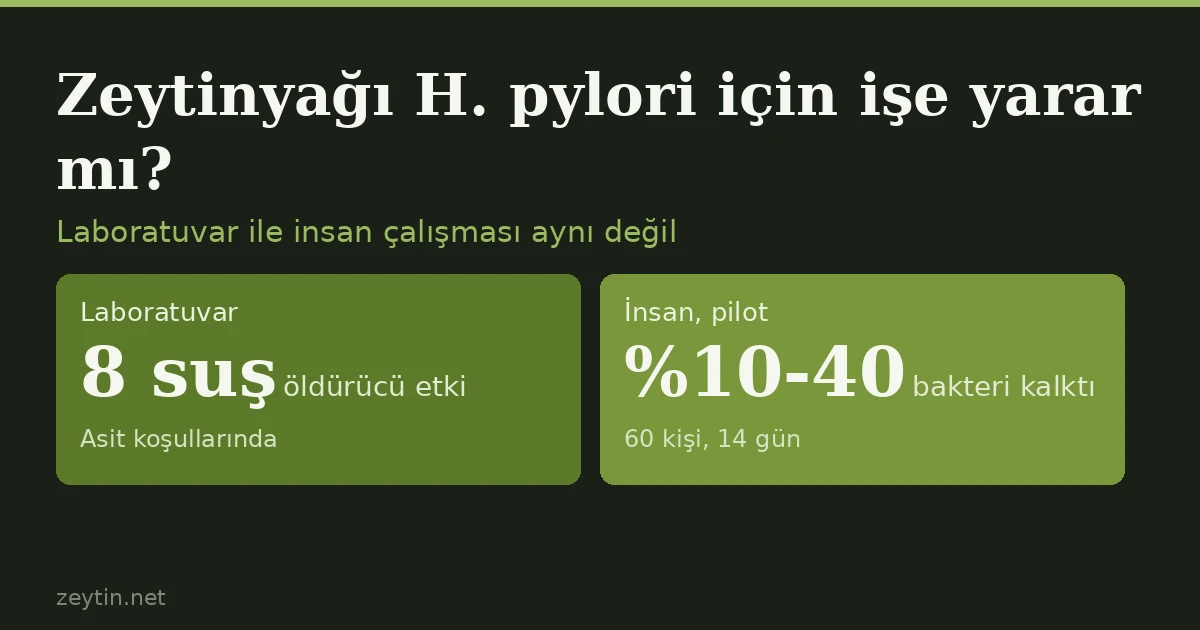
- The olive oil phenols stayed stable for hours under conditions imitating stomach acid.
- They were effective against eight H. pylori strains, three of which were resistant to some antibiotics.
- The strongest killing effect came from the dialdehydic form of decarboxymethyl ligstroside aglycon; the effect was seen at a concentration as low as 1.3 micrograms per millilitre.
That is enough to say "there is something in olive oil" but not to say "olive oil treats H. pylori". Bacteria in a tube and bacteria settled in the mucus layer of a stomach are not in the same conditions; the phenol concentration in the stomach cannot be compared one to one with the concentration in the tube.
What was found in people
Two pilot studies were run along the same line of research, with 60 adults infected with H. pylori in total. In the first, 30 people took 30 grams a day for 14 days of washed olive oil (with its phenols reduced); a month later the same people took unwashed olive oil for another 14 days. In the second, 30 people took the same amount of another olive oil for 14 days.
According to summaries of the studies, at the check 4-6 weeks after the first intervention the bacterium had gone in 8 of 30 people (about 27 per cent; our calculation). In the other regimens the rates ranged from 10 to 40 per cent. The researchers described the result as "moderately effective" and said longer studies testing different conditions of use and different types of olive oil are needed.
| Level | What was done | Result |
|---|---|---|
| Laboratory | Effect of the phenols on 8 strains, under acid conditions | Strong killing effect, including on antibiotic-resistant strains |
| People, pilot | 60 people, 30 g a day, 14 days | The bacterium cleared in 10-40 per cent; "moderate" effect |
What this means for gastritis
- Clearing the bacterium is not the same as the gastritis going away. The summaries of the studies report whether the bacterium cleared; they report no result on gastritis symptoms such as pain, burning or nausea.
- It does not replace treatment. The standard treatment of H. pylori is a regimen of several drugs prescribed by a doctor. A 10-40 per cent rate in a pilot study does not justify putting olive oil in its place.
- Limited sample. Sixty people in total and a pilot design; the researchers themselves say longer and wider studies are needed.
How to think about olive oil when you have gastritis
Olive oil is not a forbidden food for people with gastritis; but fat intake affects how fast the stomach empties and the release of bile, and in some people fatty meals can increase burning and bloating. Which amount suits whom differs from person to person. We explain what drinking oil by the spoonful on an empty stomach does in what olive oil does on an empty stomach and its link with reflux in do olives cause acid reflux. For what phenols are, see oleocanthal and polyphenols. The phenol content differs greatly from one olive oil to another; we have written separately on how to tell a good olive oil.
Practical summary
- In the lab olive oil phenols killed H. pylori; in two small pilot studies in people, 30 grams a day for 14 days cleared the bacterium in 10-40 per cent.
- This data does not show that olive oil treats gastritis; nor is it yet proven as a supportive dietary choice.
- If there is stomach burning, bloody stool, unexplained weight loss or constant pain, the cause should be investigated with a doctor; treating yourself at home with oil can delay that.
One rating per visitor; you can change yours at any time. Ratings are real reader votes — no seeded or default scores.
Related
 Article
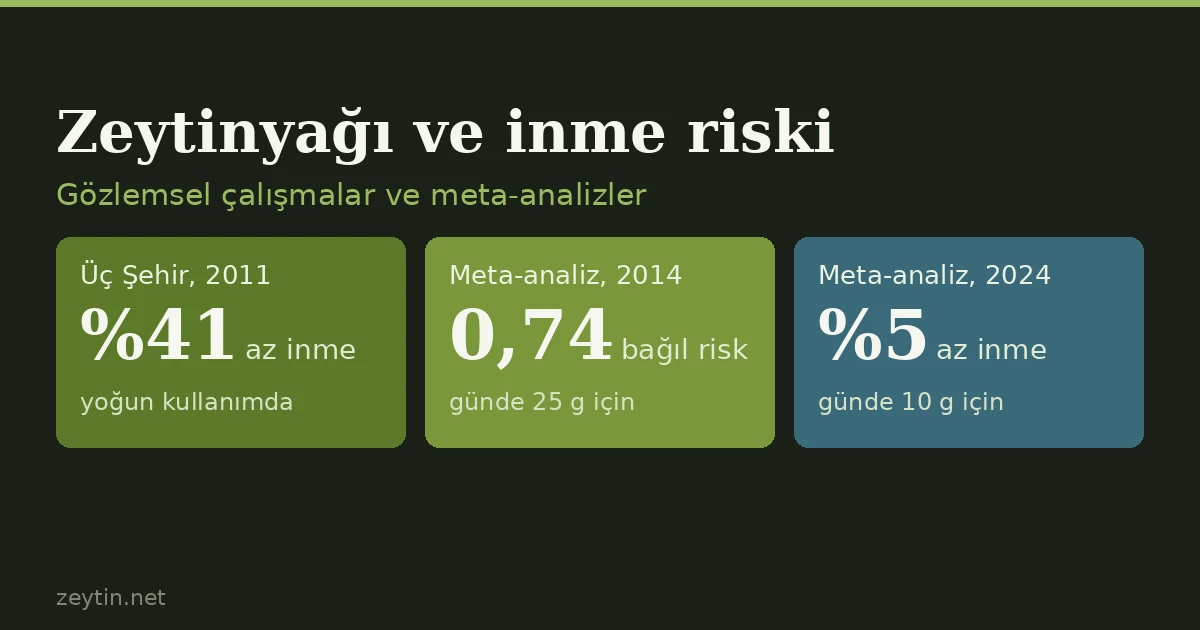
Does olive oil lower the risk of stroke? What the observational studies and meta-analyses show
The Three-City Study found 41% lower stroke risk with intensive olive oil use, a 2014 meta-analysis 26% lower per 25 g a day, and a 2024 review 5% lower per 10 g a day. The figures, their limits and what they mean.
 Article
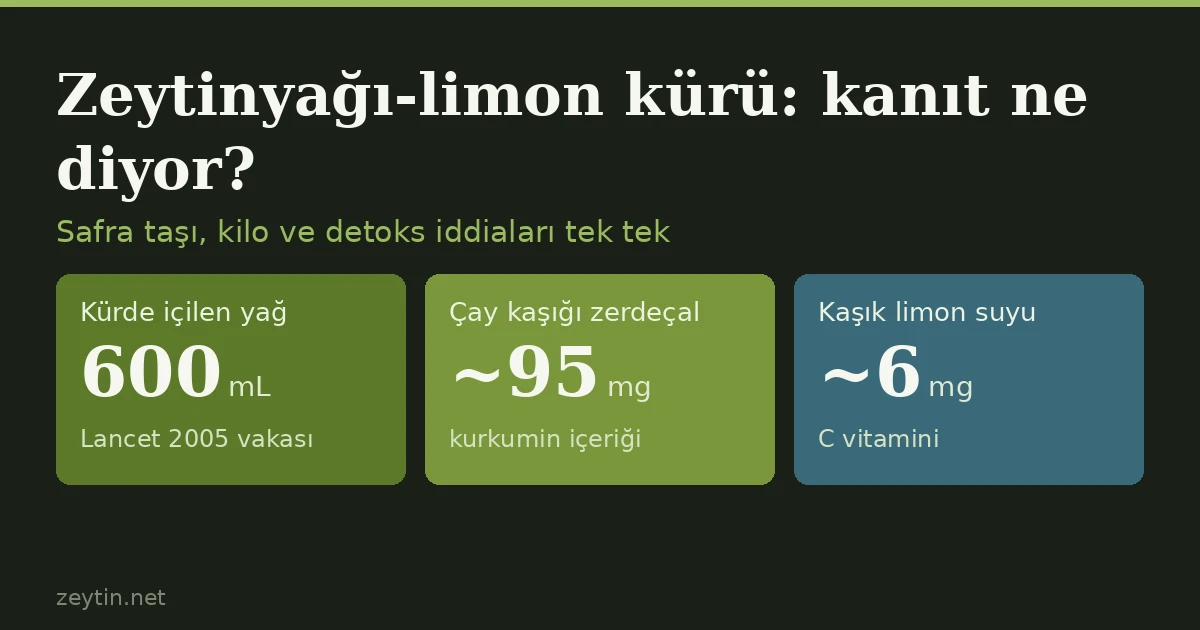
Does an olive oil and lemon cleanse work? What the evidence says
No measured benefit as a mixture: no evidence it flushes gallstones, slims or detoxes; the 'stones' after a flush are soap-like lumps of oil.
 Article
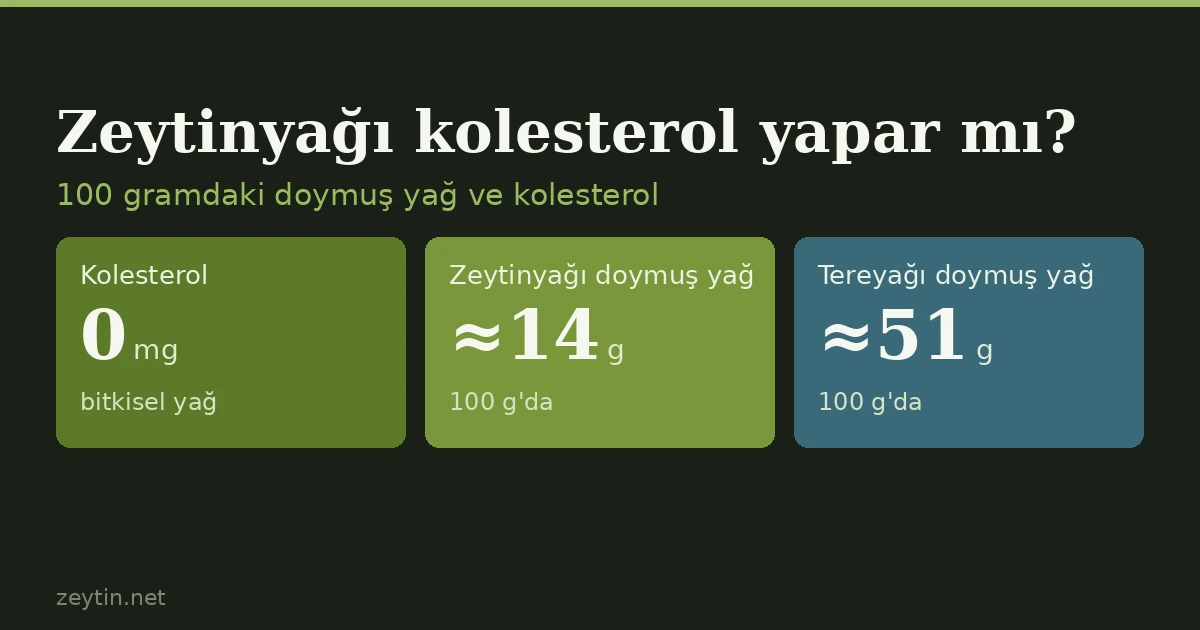
Does olive oil raise cholesterol? Cholesterol content, LDL and the "clears arteries" claim
Olive oil contains no cholesterol, and when it replaces saturated fat it helps maintain normal blood cholesterol levels. But every spoonful added to a diet also brings calories, and there is no evidence that olive oil clears arteries. A saturated fat table and the authorised health claims.
 Article
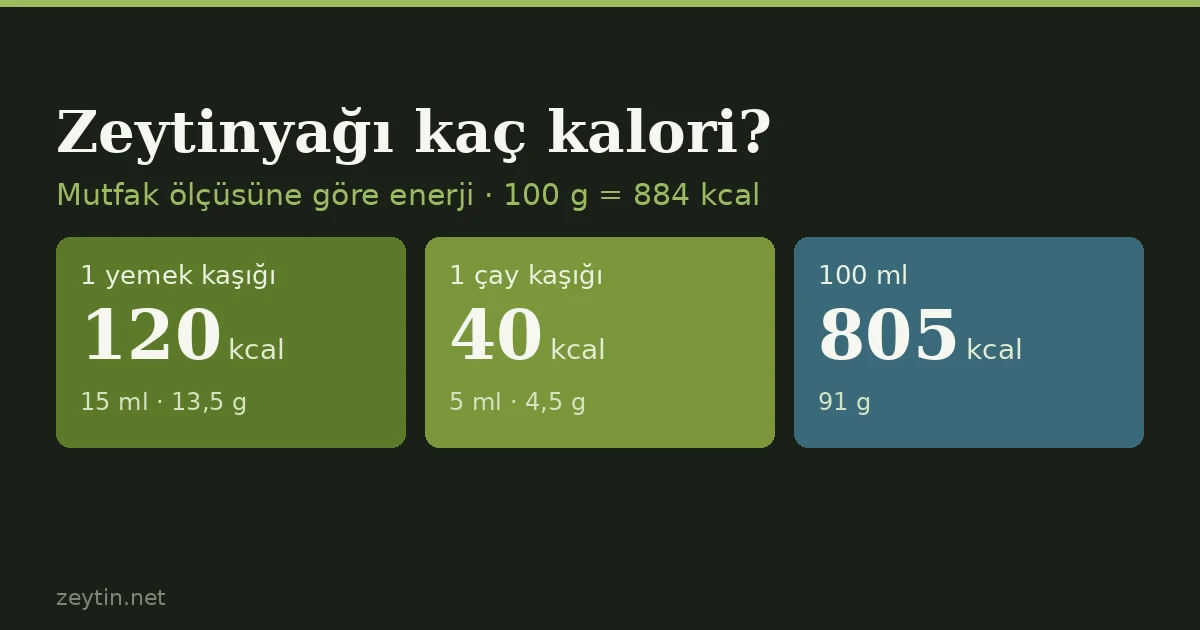
How many calories are in olive oil? Tablespoon, teaspoon and 100 ml
One tablespoon of olive oil has about 120 calories and one teaspoon about 40. Extra virgin, refined blends and sunflower oil carry almost the same energy. A measure table, plus how to count it in salads and cooked dishes.