US proposes curbs on Spanish olive oil: $836.9 million of imports caught in a port dispute
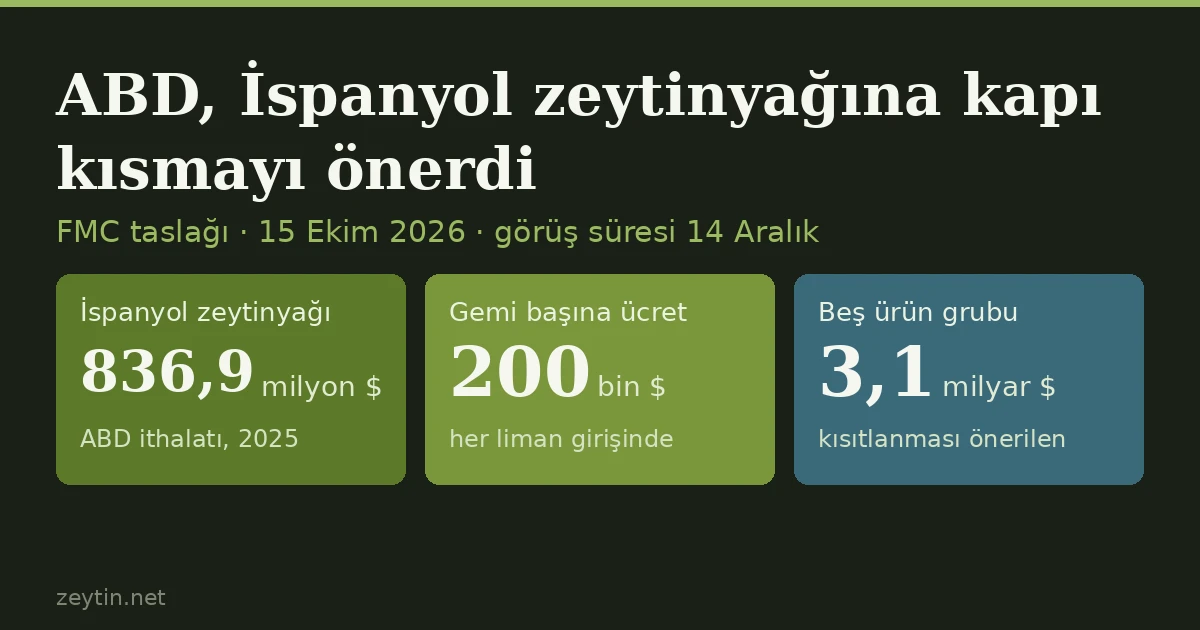
The US Federal Maritime Commission published a proposed rule on 15 October in response to Spain turning away three US-flagged ships in 2024: a $200,000 fee per entry for Spanish-flagged vessels and import limits on five product groups. One of them is the oils and fats chapter; the US bought $836.9 million of Spanish olive oil in 2025. Any ship offloading covered goods, whatever its flag, could be held in port. Comments close on 14 December.
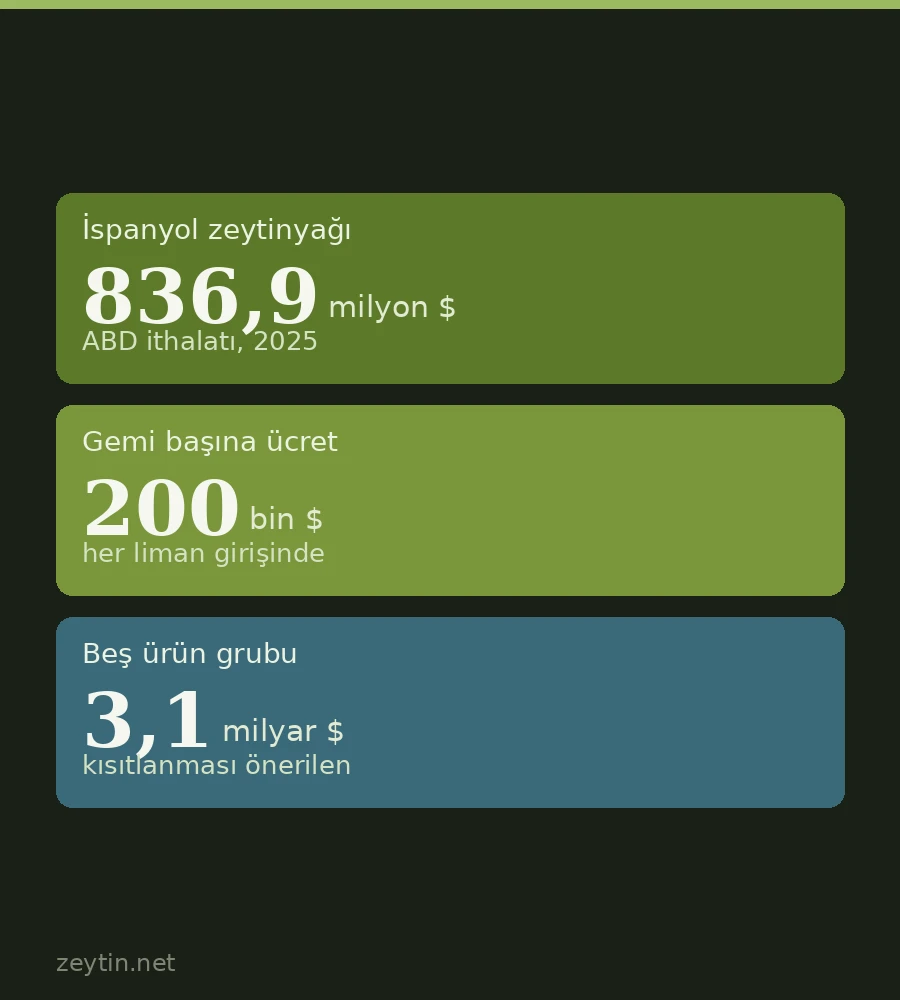
The US Federal Maritime Commission (FMC) has proposed restricting imports of five groups of Spanish goods in response to Spain's refusal to let certain US-flagged ships into its ports. One of those groups is chapter 15 of the tariff schedule, oils and fats, and the largest item in that chapter is olive oil. By the Commission's own figure, the United States bought $836.9 million worth of olive oil from Spain in 2025.
The proposal was announced on 14 October and published as a proposed rule in the Federal Register on 15 October 2026 (Docket No. 26-14). Nothing is in force yet: the comment period closes on 14 December 2026, and the Commission will decide afterwards which measures to adopt and how broadly.
What is being proposed
The draft contains two remedies.
The first is a fee of $200,000 each time a Spanish-flagged vessel enters a US port from a foreign port. The Commission explains the amount as roughly the inflation-adjusted equivalent of the $100,000 per-voyage fee it imposed on Japanese carriers in a 1997 final rule, during an earlier dispute over harbour services in Japan. That earlier case ended in a bilateral settlement, and the Commission says openly that it is reaching for the same tool in the hope of a similar outcome.
The second is a limit on imports from Spain in five tariff chapters. The values below are the 2025 import figures the FMC gives in the draft:
| HTS chapter | 2025 imports |
|---|---|
| 33 — Perfumery and cosmetics | about $940 million |
| 15 — Animal and vegetable fats and oils | $1.15 billion |
| of which 15.09 — olive oil | $836.9 million |
| 69 — Ceramics | $634.7 million |
| 68 — Articles of stone | $270.6 million |
| 17 — Sugar and confectionery | $138.8 million |
Together the five groups come to about $3.1 billion. Within the oils and fats chapter, olive oil accounts for more than 70 percent of the value, so in practice olive oil is the main target of that line. Because the chapter is listed as a whole, olive-pomace oil and the other olive oils of heading 15.10 fall inside it as well.
The Commission notes that only two Spanish product lines exceeded $1 billion in US imports at the six-digit level between 2023 and 2025 — packaged medicines and static converters — and that it deliberately left both out, citing public health and an ongoing transformer shortage in the United States. Olive oil did not get the same treatment.
Not only Spanish ships
The fee applies to Spanish-flagged vessels, but the Commission itself observes that relatively few of them call at US ports. On its own, the fee would barely touch the olive oil trade.
The provision that matters for olive oil is in the regulatory text. It does not look at the flag of the carrying ship at all. If any vessel, whatever its registry, offloads covered Spanish goods at a US port, the Commission may ask the Secretary of Homeland Security to refuse that vessel clearance until the goods are reloaded. The Commission may also ask for the vessel to be denied entry to US ports or detained. Since the fee alone would hit few ships, this clause is what would give the measure teeth for olive oil.
There is also an escalation clause. If the Commission finds that Spain has retaliated against US carriers or shippers, the fee is to be raised and further tariff chapters added to the list of covered goods.
At the same time, the Commission stresses that the five chapters are a menu of options, not a final decision. It may impose a broad limit, a narrower targeted one, restrict only some of the chapters, or combine these approaches. The draft contains no quota or volume cap figure; the final shape will depend on the comment process.
How the dispute began
According to the draft, Spain announced in May 2024 that it would deny port calls to ships carrying military cargo bound for Israel. In November 2024 two vessels enrolled in the US Maritime Security Program, the Maersk Seletar and the Maersk Denver, signalled Algeciras as their destination but did not dock in Spain; later that month a third programme vessel, the Maersk Hartford, was also not permitted to call at a Spanish port. The FMC opened its investigation in December 2024.
The Commission's vessel-tracking data shows the US-flag fleet concerned averaged 7.25 port calls a month in Spain before November 2024. Since July 2025, its calls at Algeciras have almost stopped, and the wider group of programme vessels now mostly avoids the port.
The Spanish government said it was analysing the Commission's conclusions and would defend its interests and those of its companies in coordination with the European Commission and the member states. Madrid's position is that its port decisions complied with Spanish, EU and international rules on defence and dual-use goods. Because trade policy is an exclusive competence of the European Union, any formal counter-measure would come from Brussels rather than Madrid. The FMC has also offered Spain the opportunity to request a hearing.
Bad timing for Spain
The proposal lands in the same weeks as a very large Spanish harvest. The agriculture ministry's 2026/27 estimate of 1.6 million tonnes, published on 1 October, is 23 percent above the previous season. In the European Commission's weekly price series, Spanish extra virgin stood at €3.32/kg in the week of 11 October, and the ministry is due to decide in the first half of November whether to activate, for the first time, its temporary market withdrawal mechanism. If one of the most valuable export markets for that oil narrows, the pressure on Spain's domestic market grows.
Table olives are not in this draft: in the tariff schedule they sit with prepared vegetables and fruit, not in chapter 15. Spanish ripe (black) table olives, however, have faced US anti-dumping and countervailing duties since 2018, and the EU's World Trade Organization case against those duties is still running. An arbitrator issued a decision on the EU's retaliation request in October 2025.
The view from Türkiye
On paper, Spanish oil disappearing from US shelves would open room for Tunisia, Italy, Greece and Türkiye. In practice, Turkish exporters already compete in the US market under a higher tariff than some rivals, while Tunisia has set export records this season and already sells a large share of its bulk oil to North America. Who would fill any gap depends on how wide the final measure turns out to be — and on whether it is adopted at all.
For Turkish producers facing low farm-gate prices at home this autumn, the more immediate effect may be indirect: any measure that keeps more Spanish oil inside Europe adds to the downward pressure on world bulk prices, which is the ceiling Turkish exporters sell against.
Read with care
⚠ This is a proposed rule. The FMC will decide after the comment period which measures to impose and how broadly; Spain has also been offered a hearing.
⚠ The values in the table are US import statistics in dollars, as given by the FMC. Spain's own export statistics, compiled over different periods and in euros, can produce different totals.
⚠ The statement that the indirect price effect on Türkiye would come through world bulk prices is our assessment, not a forecast by any institution.
One rating per visitor; you can change yours at any time. Ratings are real reader votes — no seeded or default scores.
Related
 Article
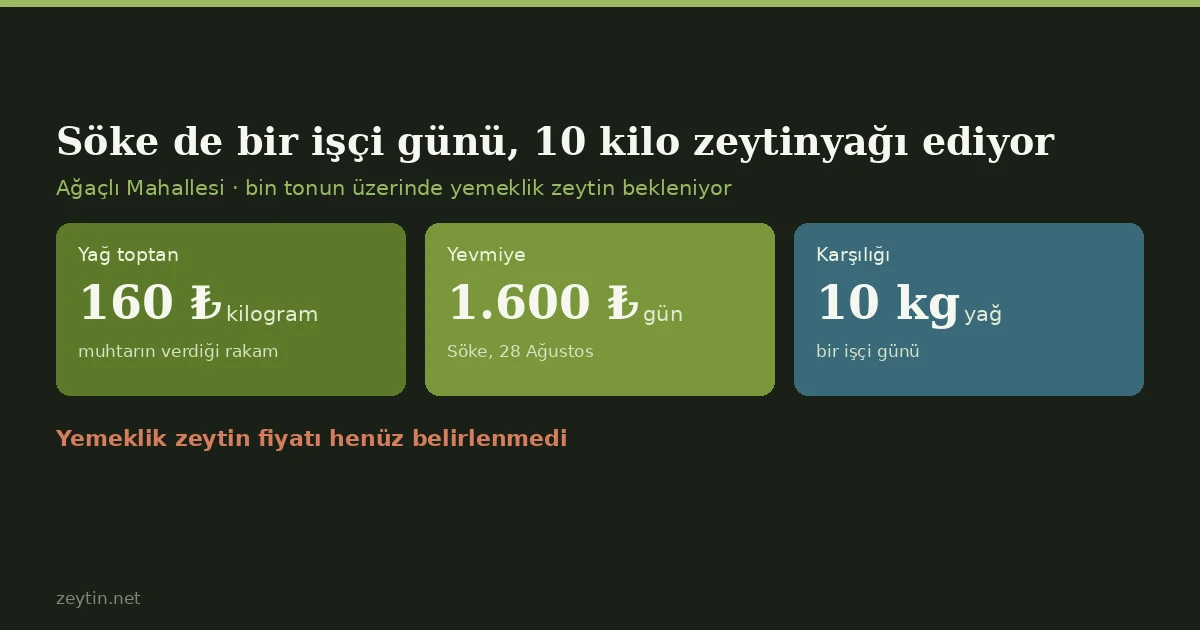
In Söke, one day's wage costs ten kilos of olive oil
Over 1,000 tonnes of table olives are expected in Söke's Ağaçlı. Two figures given by the headman sum up the season: oil at 160 lira wholesale, a day's wage at 1,600.
 Article
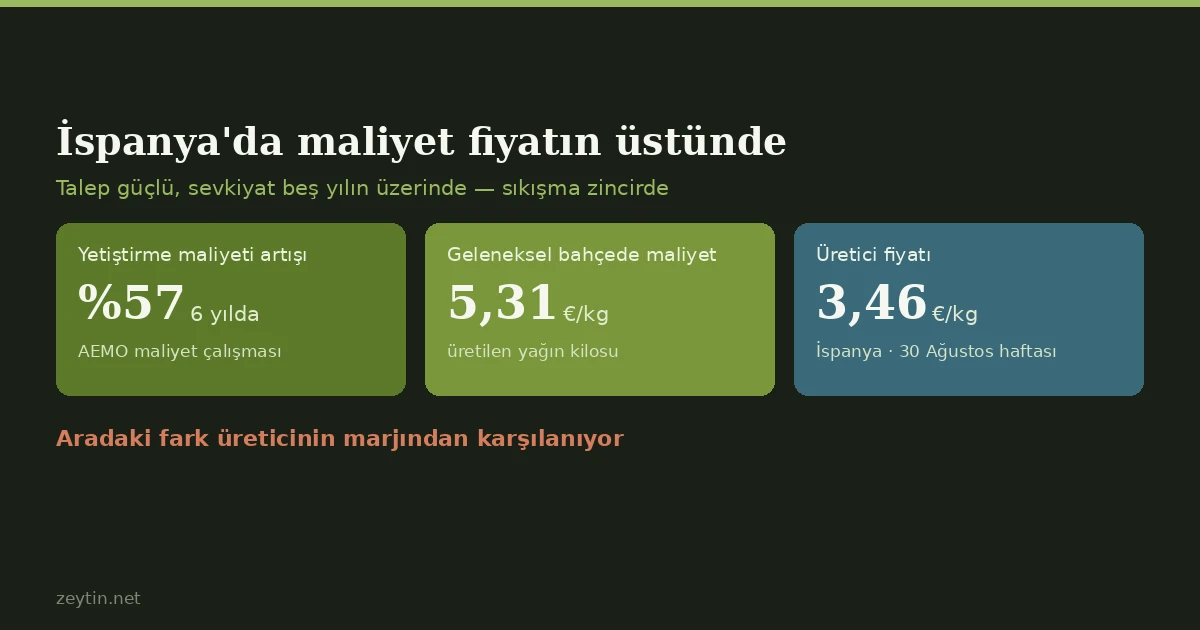
In Spain the cost sits above the price: €5.31 in a traditional grove, €3.46 at the gate
Olive cultivation costs have risen 57% in six years and reach €5.31 per kilogram in the most traditional groves, according to an AEMO study. The same week, Spain's producer price was €3.46. The Andalusian cooperative federation, with 342,000 members, is asking not for aid but for a change to the Food Chain Law.
 Article
EIA approval for a 200 t/day olive oil plant in Mudanya
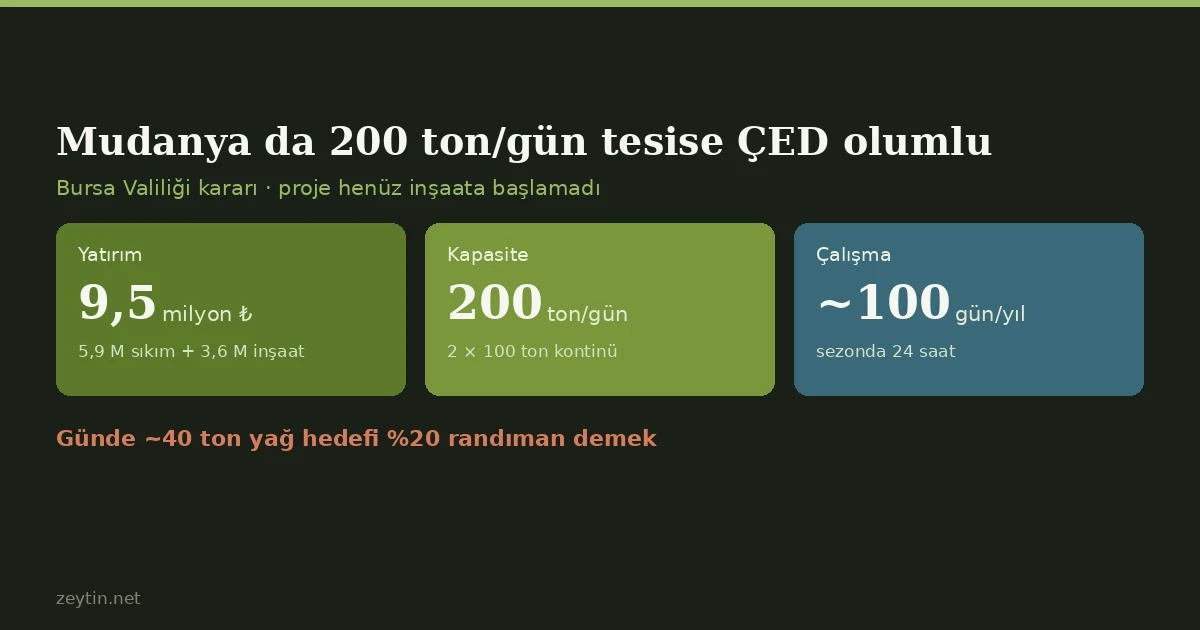
A 9.5 million lira olive oil plant planned in Mudanya, Bursa, has received a positive environmental impact decision: 200 tonnes of olives a day, around 100 operating days a season.
 Article
Concordat in Akhisar: a one-year moratorium for Baktat Zeytin
A Turkish commercial court has granted a one-year definitive moratorium to Baktat Zeytin, a table-olive processor in Akhisar. We set out what the ruling means and why it matters for the sector.