Italy to track olive oil with an electronic document: first positive response from the regions on the DAO, imported oil left out
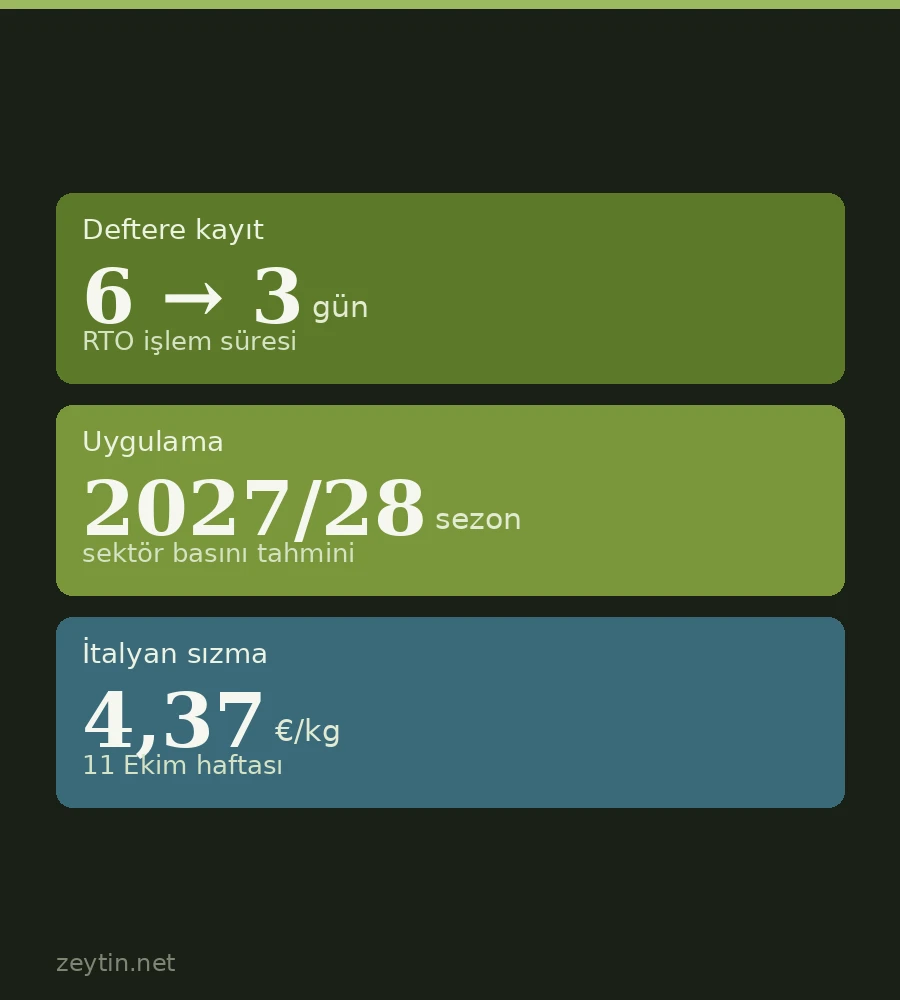
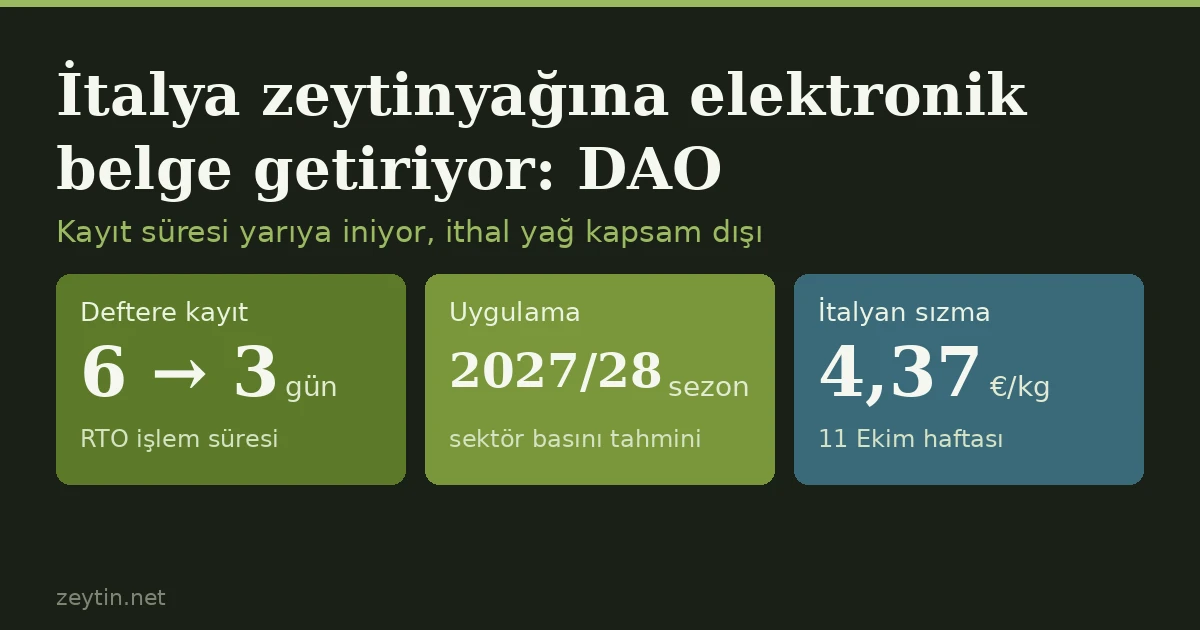
A draft decree announced on 9 October by Italian agriculture minister Lollobrigida introduces the DAO, an electronic accompanying document that links olive and olive oil movements to the SIAN and RTO systems and cuts the register deadline from six days to three. According to the growers' committee, the state-regions conference gave a first positive response on 15 October. But the document only tracks domestic oil leaving a facility; oil from other EU states and third countries will keep entering with conventional paperwork. The trade press expects it to apply from the 2027/28 season.
Italy is preparing to track the movement of olives and olive oil with an electronic document. A draft ministerial decree announced on 9 October 2026 by Francesco Lollobrigida, Minister of Agriculture, Food Sovereignty and Forests, introduces a new document called the DAO (Documento di Accompagnamento Elettronico Olivicolo — the electronic accompanying document for the olive sector). On 15 October the draft came before the conference between the national government and the regions. According to a statement issued the following morning by Orgoglio Olivicolo, the growers' committee leading the protests in Puglia, the conference gave a "first positive response" on the electronic document and on traceability.
It is the first concrete step since thousands of growers gathered in front of the prefecture in Bari. One of the protesters' four demands was exactly this: that the electronic transport document already used for wine be applied to olives and olive oil as well.
What the draft introduces
According to the ministry's announcement and to the Italian trade press that has examined the draft, the main points of the DAO are these:
- Which movements: olives, bulk olive oil and packaged olive oil. Every lot leaving a plant or a storage facility will travel with a DAO.
- Which systems it connects to: SIAN, the national agricultural information system, and RTO (Registro Telematico dell'Olio), the electronic register for olive oil. The grower's farm file is linked to both systems as well, which means the olive grower enters the traceability chain directly for the first time.
- Recording deadline: the time allowed for mills and storage facilities to enter their incoming and outgoing operations in the register falls from six days to three. The RTO will also start recording movements of olives, not just of oil.
- Cost: the system is built on existing infrastructure; according to the ministry, it places no new burden on public finances.
The draft amends a 2013 ministerial decree that set up the SIAN register. How the document is issued and recorded will be laid down in an operating manual to be published by ICQRF, the inspectorate that deals with agri-food fraud.
The reasoning behind the change is straightforward. Italian olive oil fraud cases often rest on what the trade calls "paper oil": oil that exists in the registers before it exists in a tank, built from declared olive volumes or mill yields that do not match what was actually harvested. A register that also follows olives, and that must be updated within three days rather than six, narrows the window in which such entries can be made and corrected after the fact.
What it does not cover
The most criticised aspect of the draft is its scope. Under the text, the DAO tracks the movement of domestic olives and oil. Oil arriving from other EU member states and from outside the Union will keep entering Italian plants with the conventional transport document, the DDT, exactly as it does today. Nor does the DAO replace the DDT: it is a second document added alongside it, which critics say doubles the paperwork for honest operators while leaving roadside checks dependent on whichever document the driver shows.
Critics point to Spain. There, Royal Decree 760/2021 makes it compulsory to notify bulk movements of olive oil and olive pomace oil before they leave. The accompanying document is generated through the electronic application of AICA, the Spanish food information and control agency, and travels with the oil for the whole journey. An analysis report, or an equivalent document guaranteeing the declared category, is attached to the notification as well. The Italian draft contains no analysis requirement.
The difference matters because the growers in Puglia argue that part of the price collapse comes from imported oil being sold as Italian. A system that only tracks oil leaving a facility does not record the origin of oil entering it. The protesters' case is that a blend can still be assembled inside a plant from oil that arrived under ordinary paperwork, and that the new document would only start following it once it is already labelled.
The timeline
A positive response from the conference does not mean the rules are in force. The decree must first be issued, then the software must be built into SIAN and the ICQRF manual published. Under the draft, the DAO applies from the date on which the updated manual appears on the RTO portal. The Italian trade press estimates that publication in the Official Gazette is unlikely before February 2027, with practical application from the 2027/28 season. In other words, oil from the harvest now under way will not be tracked with the new document.
The committee knows this. In its statement of 16 October it called for the decisions to be "implemented immediately" and for enough tools and funding to stop fraud. In the days before the conference it had also warned against amendments that would weaken the draft under pressure from those who prefer the current system. The same statement called for action on below-cost sales in the large supermarket chains, and for a table at European level on imports from third countries such as Tunisia, which it says produce "under unequal rules". According to the committee, many growers are considering not harvesting at all, and many mills have announced that they will not press this season. The cost of diesel, which weighs on field work, transport and milling alike, was listed as a further pressure.
The price side
According to the European Commission's weekly producer prices, Italian extra virgin olive oil stood at 4.37 €/kg in the week of 11 October, and the Bari market at 4.30 €/kg; both were down by more than five percent on the week before. Spanish extra virgin stood at 3.32 €/kg in the same week. An electronic document is not a tool that will close that gap in the short term. The measures growers are asking for — recognition of a state of crisis, a moratorium on loan repayments and withdrawing oil from the market — are still on the table. Italy's earlier answer to the liquidity squeeze, a 40-million-euro credit line for mills, dates from last season, when prices were twice as high.
Seen from Türkiye
Italy is a trading hub that exports more than it produces, and one of the buyers of Turkish bulk oil. The current draft places no new documentary burden on imported oil heading to Italy. But the direction of the debate is clear: grower organisations want tracking at the point of entry too, Spanish-style analysis reports, and stricter conditions for imported oil. If the final text moves that way, Italian buyers will ask exporters for more paperwork, and lots that cannot document their category will be harder to place.
The adulteration debate is current in Türkiye as well: the list dated 12 October contained five olive oil entries, four of them involving seed oil. We have explained the methods in a separate article.
Read with care
⚠ The official text of the conference's 15 October decision had not been published at the time of writing. The phrase "first positive response" comes from the growers' committee; details may change once the decree takes its final form.
⚠ February 2027 and the 2027/28 season are not an official timetable but a trade-press estimate based on technical lead times.
⚠ The Commission prices above are weekly national averages for producers; local transactions reported by growers in Puglia have been lower, and they are not a measured series.
One rating per visitor; you can change yours at any time. Ratings are real reader votes — no seeded or default scores.
Related
 Article
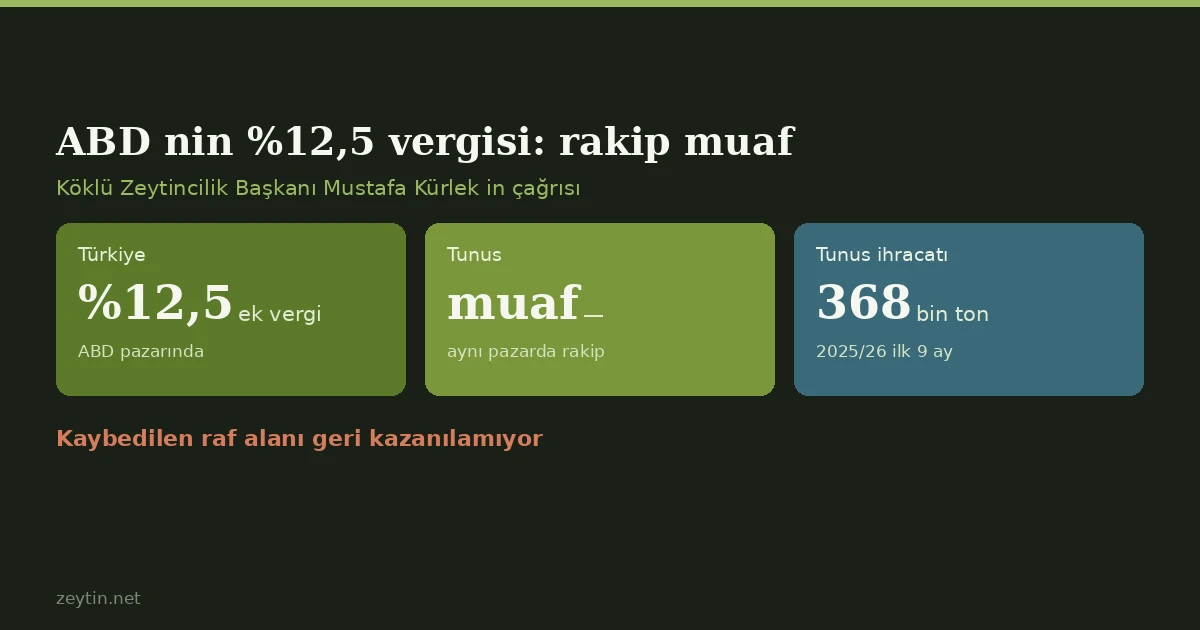
The 12.5% US tariff: the competitor is exempt, the Turkish exporter is not
Mustafa Kürlek notes the 12.5% additional US tariff on Turkish olive products is not applied to competitors such as Tunisia, and calls for DFİF and Eximbank measures.
 Article
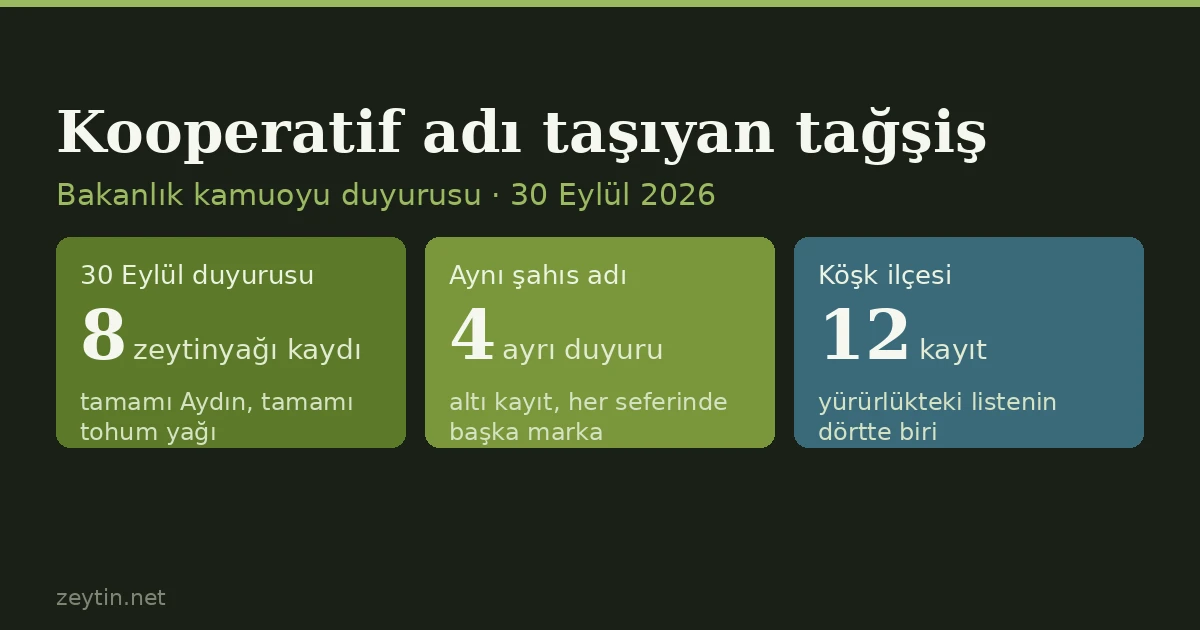
Co-op branding in the adulteration list: one name, four separate announcements
All eight olive oil entries in Turkey's 30 September 2026 food-fraud announcement come from a single province, Aydın, and all eight carry the same finding: seed oil blended into oil sold as extra virgin. The brand names tell a second story — three of them invoke a cooperative or a producers' union. Read as a time series, the live list shows one trader's name across four separate announcements, under a new brand each time.
 Article
Spain steps back from vetoing Deoleo's sale: the door opens for Italy's Coricelli
Madrid's position on the sale of the world's largest olive oil bottler has shifted: in early September a Spanish buyer was preferred, and on 18 September Italy's Coricelli was reported to be seen as the best-positioned candidate. The government's lever is a foreign investment screening regime that covers EU investors too and runs to 31 December 2026. Because Deoleo is a major bulk buyer, the outcome matters to Turkish exporters.
 Article
Opening prices in Akhisar: 60 lira for double Domat, 10 lira for milling olives
The season's first purchase prices for Domat olives have formed in Akhisar: 15 to 60 lira a kilo by size, and 10 lira for fruit sold for milling. The local chamber of agriculture says prices are below last year's and has called for a joint table. Farm input costs rose 27.6% over the same period.