The Olive Harvest: When and How
Early harvest or late? The timing of picking directly determines the oil's acidity, polyphenols and yield.
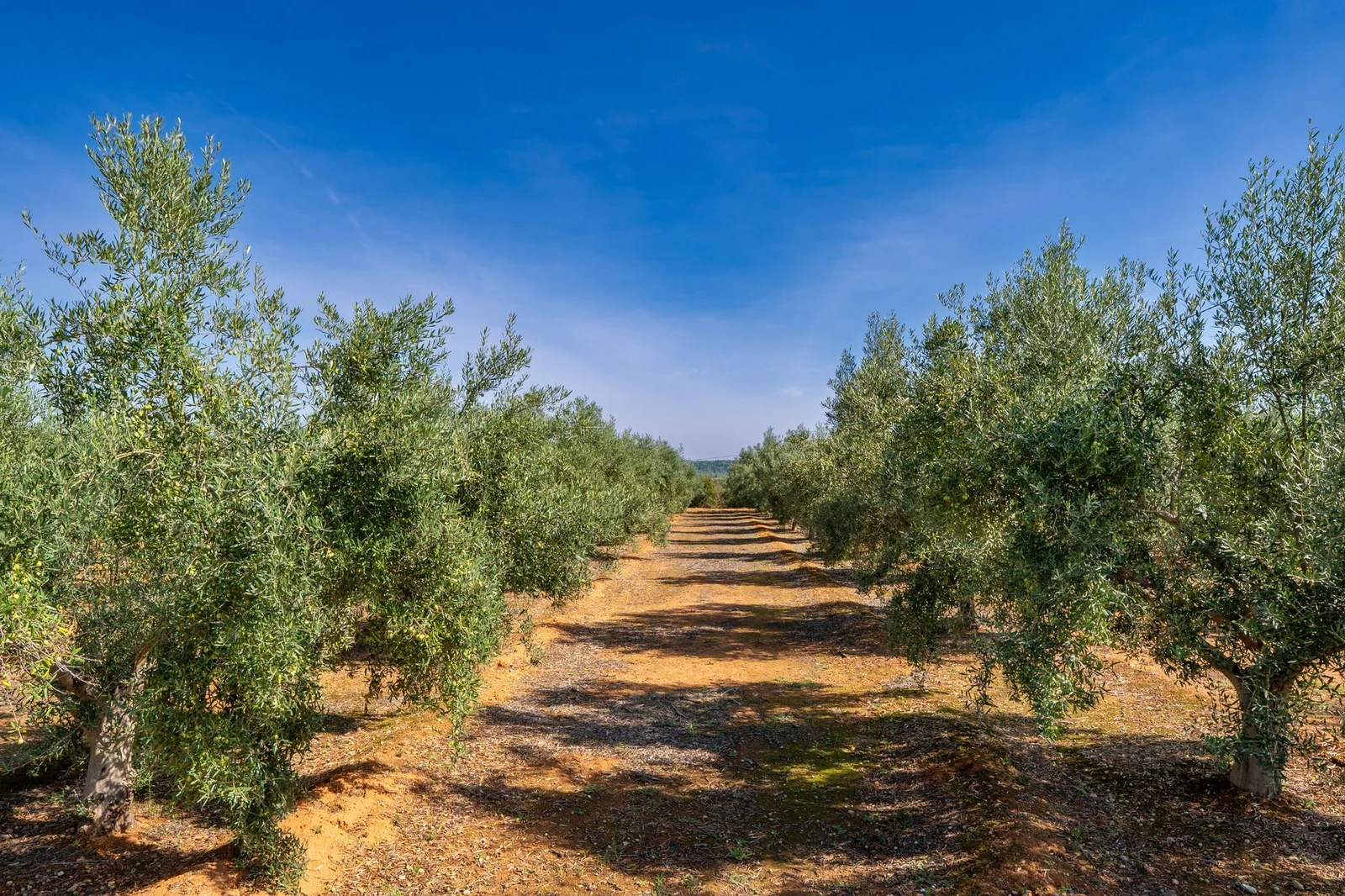
The date of the harvest is the most decisive choice of the year in a grove. Olives picked two weeks apart from the very same tree yield noticeably different oil.
Stages of ripeness
The olive follows a line of ripeness that can be read from the colour of the fruit:
- Green stage. The fruit has reached full size but is still green. Oil content is low, polyphenols high.
- *Turning stage (invaiatura).* The fruit begins to turn purple and then black. For most producers this is the ideal balance.
- Black stage. The fruit is fully ripe. Oil content is at its highest, but polyphenols and shelf stability have fallen.
What early harvest gives
Oil from early-picked green olives is more bitter, more pungent and greener in aroma; its polyphenol content is high, which also gives it a longer shelf life. The cost is yield: the same tree gives less oil. That is why early harvest oils are expensive.
What late harvest gives
Ripe olives picked late give more oil, softer and sweeter in aroma. But with fewer polyphenols the oil ages faster. And as the fruit softens, the risk of bruising and fermentation rises — which raises acidity.
Methods of picking
Hand stripping. The most laborious method, and the gentlest on the fruit. Nets are spread beneath the tree and the branches stripped by hand or with a comb.
Combs and vibrating rods. An electric comb rakes the branches and drops the fruit onto the nets. It raises output and, used properly, does not bruise the fruit.
Trunk shakers. On large estates the trunk is shaken mechanically. It is fast, but not every grove or tree age suits it.
Fruit is never gathered from the ground. Olives that have fallen and lain there are bruised, take up fungus and ferment. Oil from such fruit has raised acidity — as explained in the piece on acidity, it is the most common reason an oil falls outside the extra virgin grade.
The gap between picking and pressing
This may be the single greatest influence on quality. Picked olives should be pressed within 24 hours. While they wait, the enzymes inside the fruit keep working, free fatty acids rise and fermentation begins.
For that reason olives travel in perforated plastic crates, not sacks: in a sack the fruit cannot breathe, it heats up and spoils.
How much oil comes from one tree?
Any firm figure would mislead; it depends on variety, age, irrigation and the year's weather. The olive tree also shows alternate bearing: a heavy year is followed by a light one. Pruning and feeding soften that swing without removing it.
After the harvest comes the pressing; how it works is covered in cold pressing.
One rating per visitor; you can change yours at any time. Ratings are real reader votes — no seeded or default scores.
Related
 Article
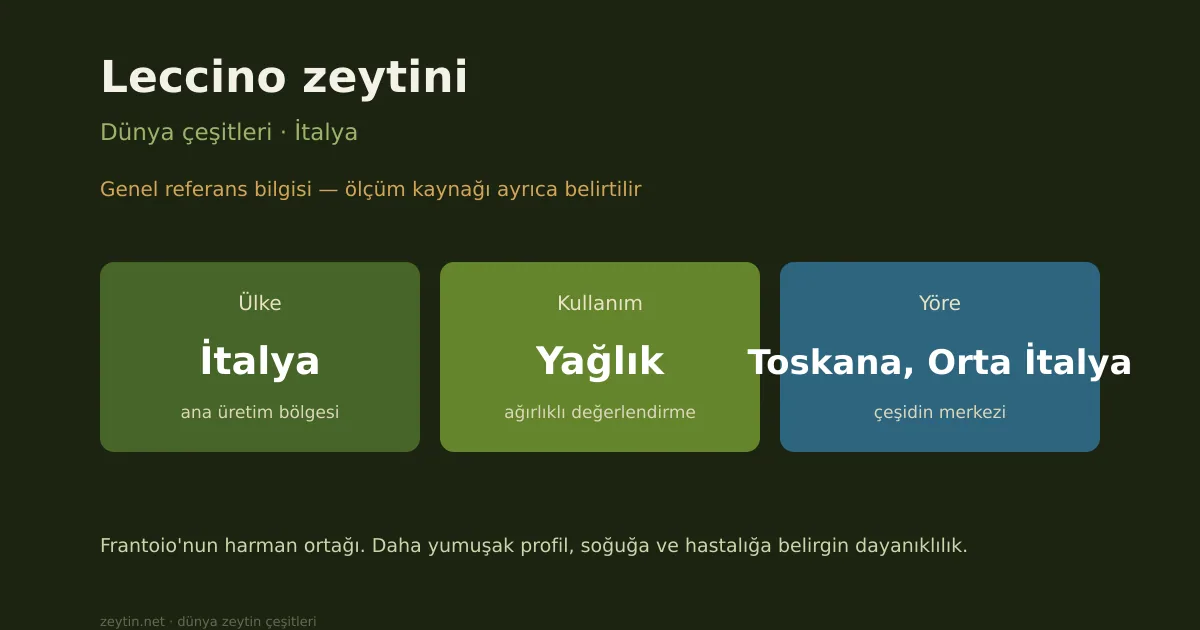
Leccino olive: Italy's oil variety
Frantoio's blending partner. A softer profile with notable cold and disease tolerance.
Article
Leccino olive: Italy's oil variety
Frantoio's blending partner. A softer profile with notable cold and disease tolerance.
 Article
Melkebazi olive
Melkebazi is a recorded variety of south-eastern Anatolia. No measured pomological data published.
Article
Melkebazi olive
Melkebazi is a recorded variety of south-eastern Anatolia. No measured pomological data published.
 Article
Butko olive
Butko is a recorded variety of the Black Sea. No measured pomological data published.
Article
Butko olive
Butko is a recorded variety of the Black Sea. No measured pomological data published.
 Article
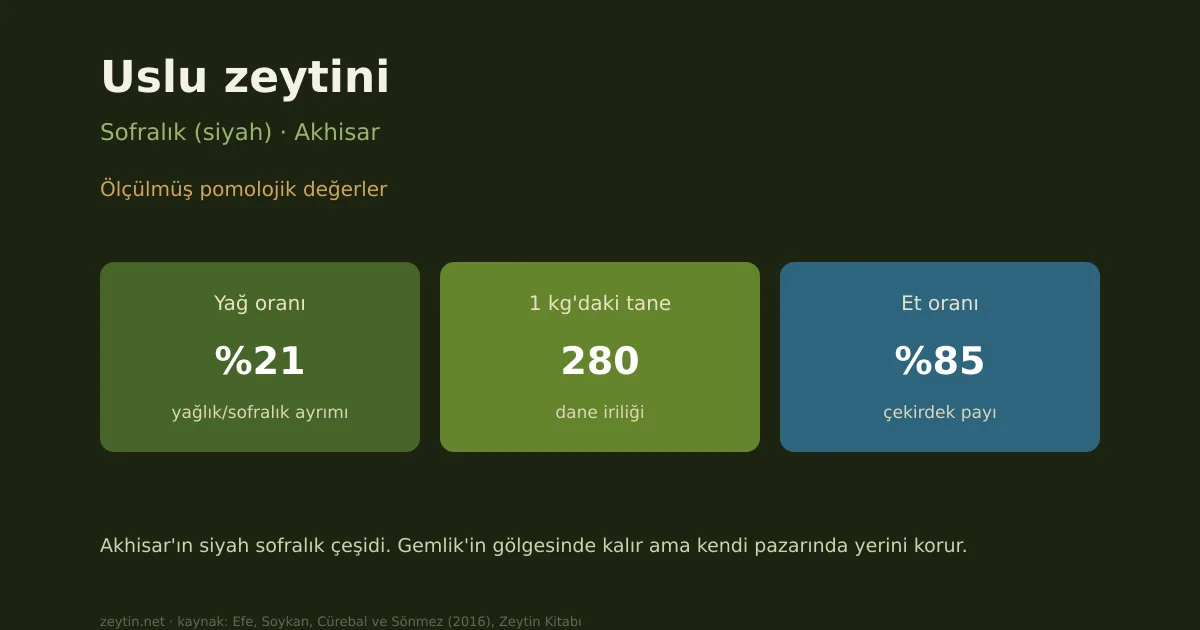
Uslu olive: characteristics, oil content and growing areas
Akhisar's black table variety. Overshadowed by Gemlik, yet holding its own market.
Article
Uslu olive: characteristics, oil content and growing areas
Akhisar's black table variety. Overshadowed by Gemlik, yet holding its own market.