Olive oil exports down 62% by value as a record harvest is expected
Olive and olive oil exports fell 34% to $260 million between 1 November 2025 and 31 May 2026. Table olives held at $172.5 million while olive oil dropped to $69 million. The target is a return to $1 billion.
Mehmet Emre Uygun, President of the Aegean Olive and Olive Oil Exporters Association, has said that one of the highest harvests in history is expected in the 2026-27 season, presenting an opportunity for the sector's exports. The figures from the season just ended, however, show the opportunity does not realise itself.
What happened last season
Olive and olive oil exports for 1 November 2025 – 31 May 2026:
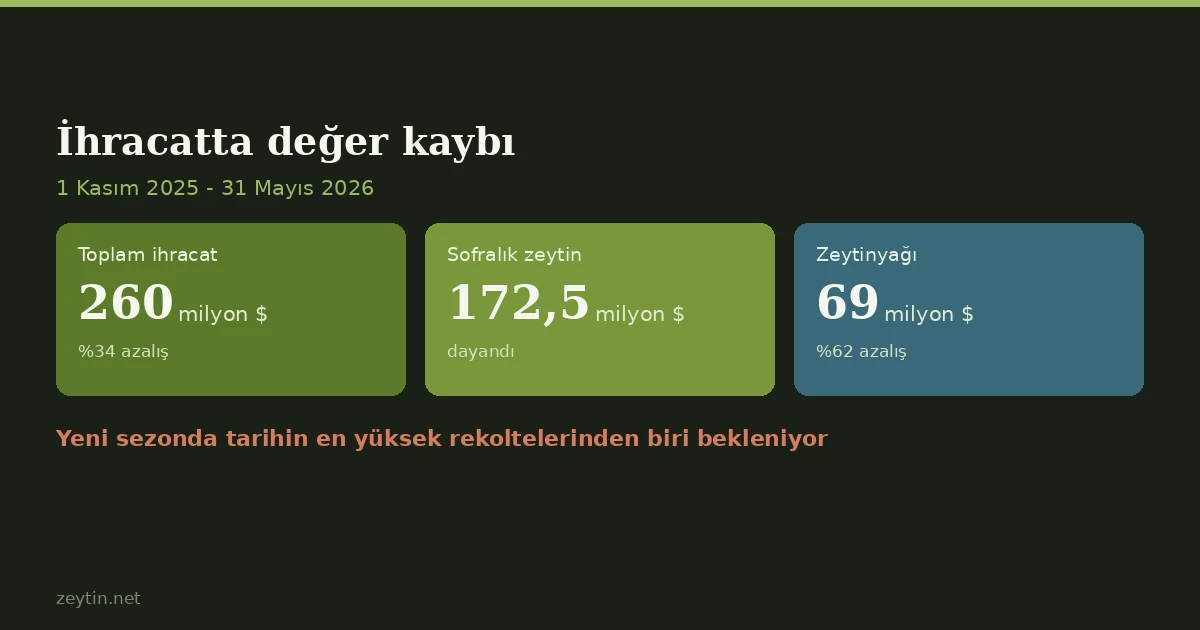
| Item | Value | Change |
|---|---|---|
| Total olives + olive oil | $260 million | down 34% |
| Table olives | $172.5 million | held up |
| Olive oil | $69 million | down 62% |
Uygun attributed the decline to falling global prices and administrative measures.
The real finding in the table is that the fall was not spread evenly across products. Table olives held their performance while olive oil lost close to two-thirds of its value. That Türkiye's export weight already sits on the table olive side was covered in two-thirds of our exports are table olives; this season the imbalance appears to have deepened.
The target: back to a billion dollars
The stated objective is to raise sector exports back to $1 billion and above. The method emphasised is not greater volume but converting production capacity into higher value-added, branded and packaged exports.
The distinction matters: bulk olive oil exports track the global price directly, and revenue evaporates when that price falls. Branded, packaged product is better insulated from price swings.
Two technical items
Digital tracking. Work is under way to establish a digital traceability system for olive oil.
The EU quota. Efforts continue to remove the 100-tonne quota the European Union applies to Türkiye — one of the structural barriers to selling Turkish olive oil into the EU market.
Why it matters
A high-yield expectation and low prices are meeting in the same season. An abundant crop only turns into revenue if unit prices hold; otherwise it means selling more oil for less. The support demands coming from growers domestically rest on the same arithmetic.
For the cost and carry-over stock position before the season opens see costs and carry-over stock before the harvest; for the picture on the competing side see Tunisia's olive oil exports.
One rating per visitor; you can change yours at any time. Ratings are real reader votes — no seeded or default scores.
Related
 Article
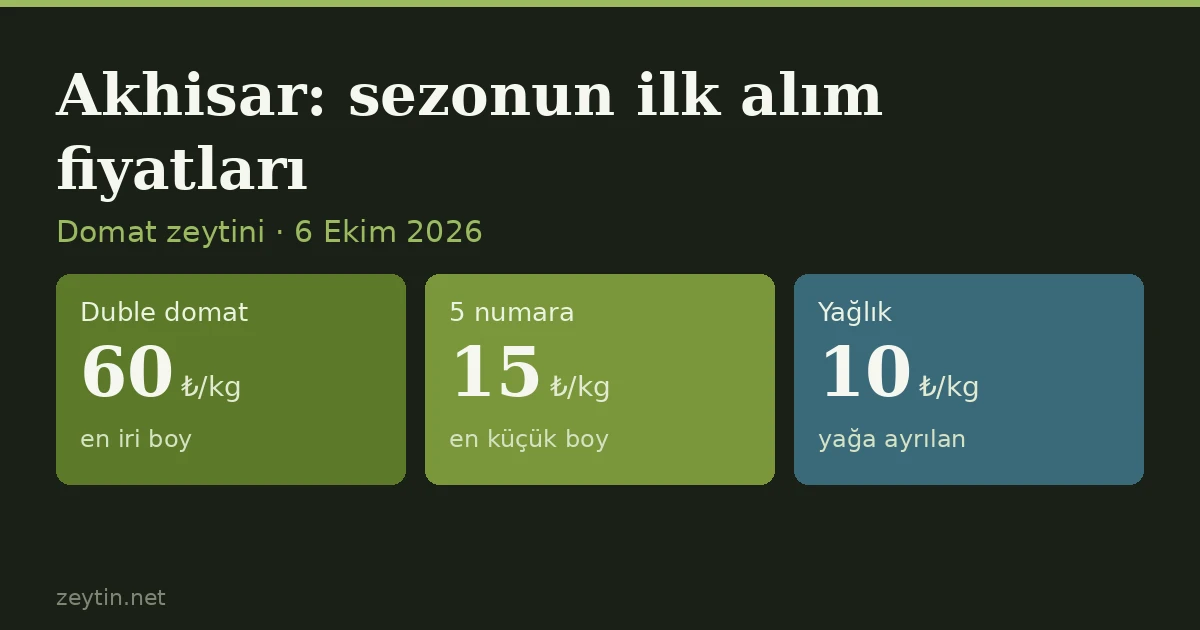
Opening prices in Akhisar: 60 lira for double Domat, 10 lira for milling olives
The season's first purchase prices for Domat olives have formed in Akhisar: 15 to 60 lira a kilo by size, and 10 lira for fruit sold for milling. The local chamber of agriculture says prices are below last year's and has called for a joint table. Farm input costs rose 27.6% over the same period.
 Article
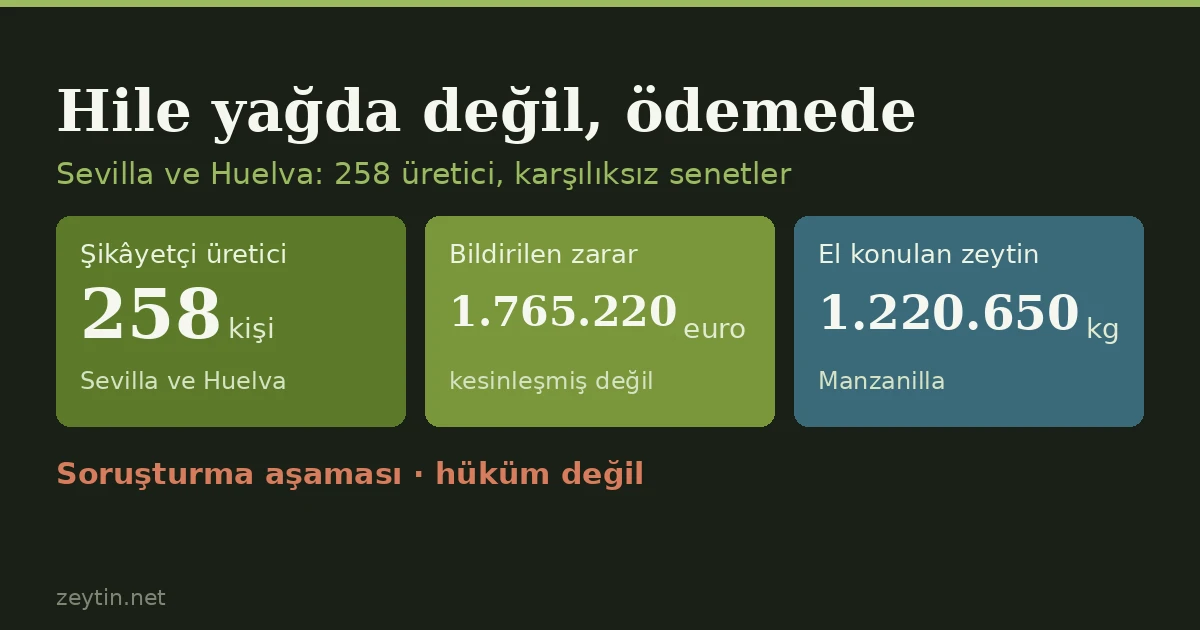
258 growers, €1.77 million: in Spain the fraud was not in the oil, it was in the payment
Spain's Guardia Civil has detained a table olive trader accused of defrauding 258 growers in Seville and Huelva of €1,765,220. The olives were real and the sales were real; the money never reached the producers. Investigators seized 1,220,650 kilos of Manzanilla olives.
 Article
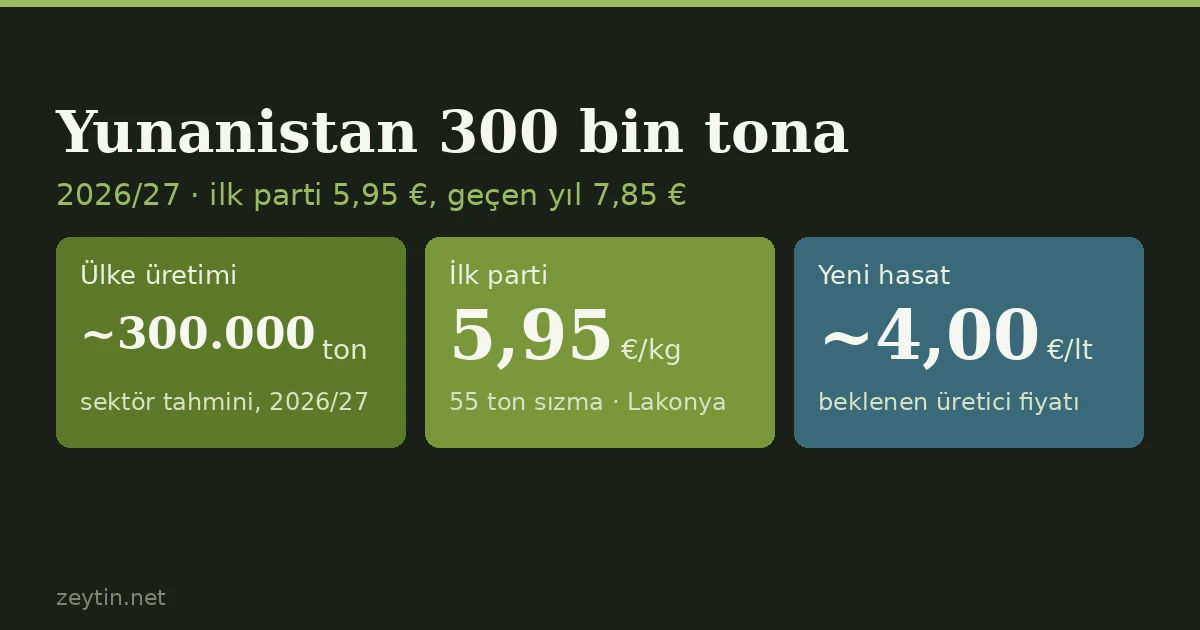
Greece heads for 300,000 tons: first lot sold at €5.95 after last year's €7.85
Greece expects its largest olive oil harvest since 2022/23 in 2026/27, with industry estimates near 300,000 tons. The season's first lot — 55 tons of extra virgin in Laconia — changed hands at €5.95 per kilo, down from €7.85 a year earlier. Carryover oil sells near €3.40 and new-crop producer prices are expected around €4. A simultaneous rebound across the three largest producers pushes down the world price Turkish exporters will meet.
 Article
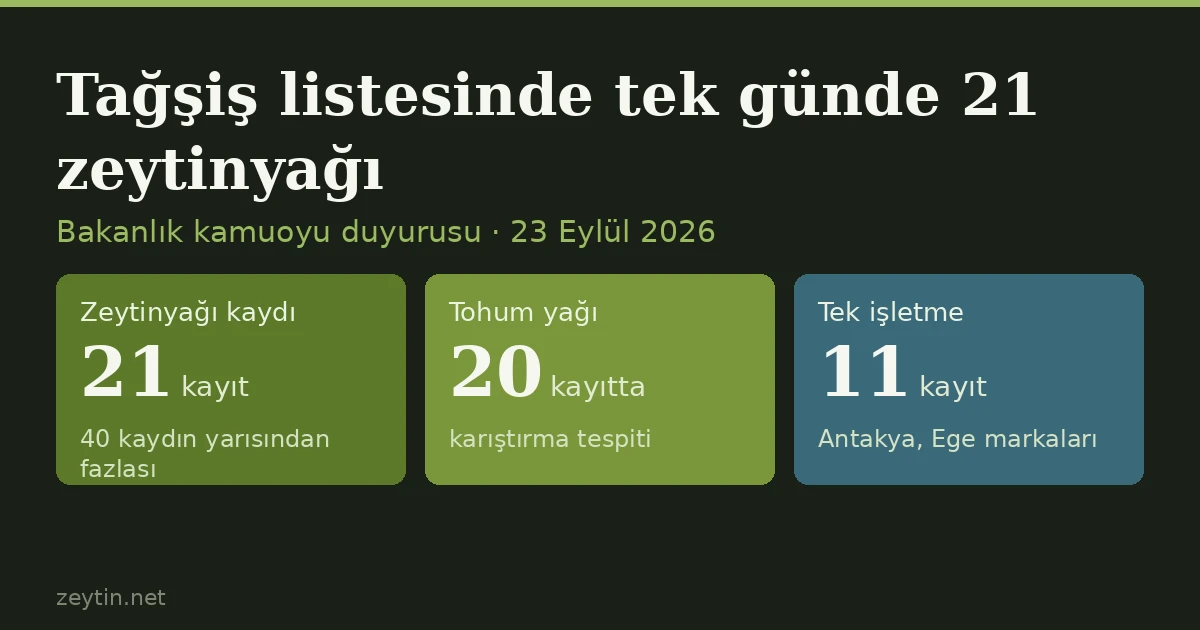
Twenty-one olive oils on the ministry's adulteration list in one day, eleven from a single Antakya business
Of the 40 records added to Turkey's counterfeit-and-adulteration list on 23 September 2026, 21 are olive oil, and 20 of those were found to contain seed oil. Eleven records belong to a single business registered in Antakya, marketing under Aegean origin names such as Ayvalık, Akçay-Altınoluk and Kazdağları. Sixteen of the containers were five litres.