Melkebazi olive
Melkebazi is a recorded variety of south-eastern Anatolia. No measured pomological data published.
Melkebazi is one of the recorded olive varieties of south-eastern Anatolia.
Characteristics
Large-fruited, used as a table olive.

Where it grows
Melkebazi is recorded in south-eastern Anatolia. The provinces where olive production concentrates in this region: Gaziantep, Kilis, Şanlıurfa, Adıyaman, Mardin.
Regional conditions, varietal spread and output: olive growing in south-eastern Anatolia
Measured values
Among the eight local cultivars of Derik, Melkabazi ranks second in oil content at 26.0% — behind only Derik Halhalı at 30.0%.
| Property | Value |
|---|---|
| Oil content | 26.0% |
| Fruit weight | 4.30 g |
| Fruit length × width | 29.74 × 15.17 mm |
| Fruit shape index | 1.96 |
| Stone weight | 0.70 g |
| Flesh ratio | 83.7% |
The fruit is "large" at 4.30 g with a flesh ratio of 83.7% — seven points above Belluti despite near-identical size, because its stone is lighter (0.70 g against 1.05 g).
With a fruit shape index of 1.96 it is the most elongated of the eight, and its stone follows at 23.36 mm. On the strength of that oil content and texture, the researchers recommend Melkabazi be grown as an oil variety.
Other varieties of the region
Belluti · Eğriburun · Hursuki · Kalem Bezi · Kan Çelebi · Kilis Yağlık
Locally
Melkebazi (locally Melkabazi) is among the varieties grown by traditional methods in the Derik district of Mardin. Across Halhalı's range — Mardin, Hatay, Gaziantep and Kahramanmaraş — there are roughly 2 million trees; Melkebazi sits on the table-olive side of that basin.
More: olive growing in Mardin
Source
- Sakar, E. et al. (2023) — Phenological, morphological and physicochemical characteristics of some local olive varieties grown in Mardin (Derik), International Journal of Agriculture, Environment and Food Sciences 7(2), pp. 448-457
- Efe, R., Soykan, A., Cürebal, İ. & Sönmez, S. (2016) — Characteristics and Geographical Distribution of Olive Varieties Grown in Turkey, Zeytin Kitabı, pp. 37-80
- Olive map of Turkey
Where it stands among measured varieties
çeşit sayfası
çeşit sayfası
çeşit sayfası
çeşit sayfası
Values are those published on each variety's own page; the comparison covers only varieties with a measured figure, so it is a comparison of what is known — not of every Turkish variety. See the full ranking and how it is built →
One rating per visitor; you can change yours at any time. Ratings are real reader votes — no seeded or default scores.
Related
 Article
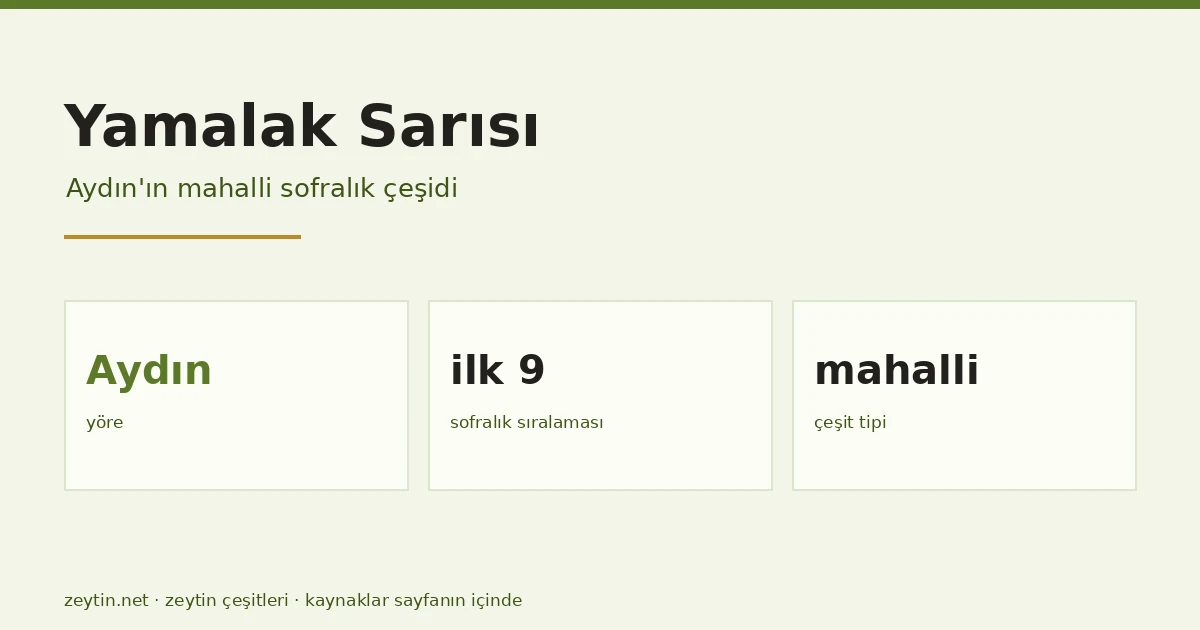
Yamalak Sarısı: the local table cultivar of Aydın
A local cultivar of Aydın counted among Turkey's most important table olives, and the subject of a phenotypic characterisation study.
Article
Yamalak Sarısı: the local table cultivar of Aydın
A local cultivar of Aydın counted among Turkey's most important table olives, and the subject of a phenotypic characterisation study.
 Article
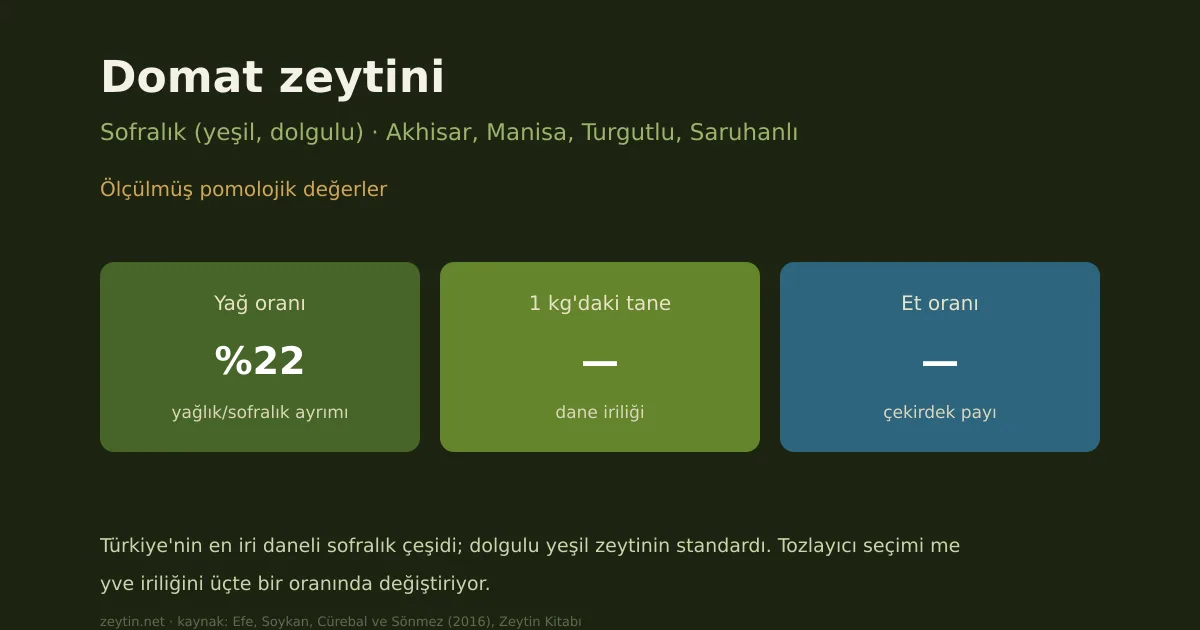
The Domat olive: the cultivar behind stuffed olives, in numbers
Domat, Turkey's largest table cultivar: 7.96 g fruit, 89% flesh, a 552-hour chilling requirement. Why stuffed olives are always made from it, the disagreement over oil content, and why it is never planted alone.
Article
The Domat olive: the cultivar behind stuffed olives, in numbers
Domat, Turkey's largest table cultivar: 7.96 g fruit, 89% flesh, a 552-hour chilling requirement. Why stuffed olives are always made from it, the disagreement over oil content, and why it is never planted alone.
 Article
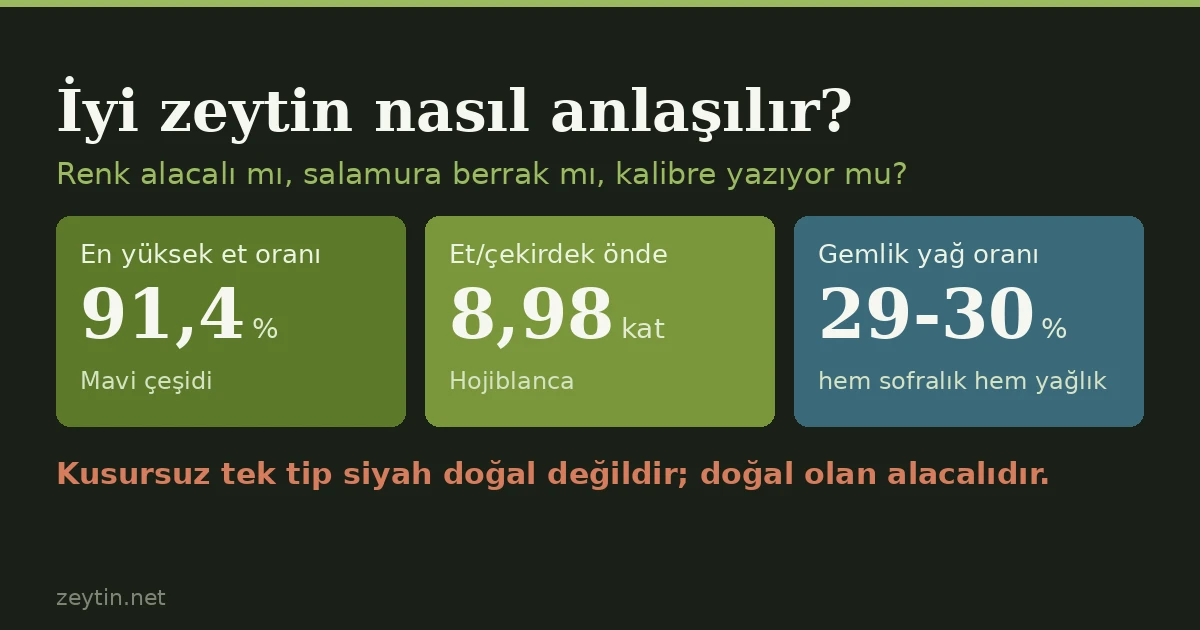
How to recognise a good table olive — and what to check when buying
Is the colour mottled, the brine clear, the calibre stated? Concrete checks for buying table olives, whether Gemlik is an oil or table variety, and how to store them at home.
Article
How to recognise a good table olive — and what to check when buying
Is the colour mottled, the brine clear, the calibre stated? Concrete checks for buying table olives, whether Gemlik is an oil or table variety, and how to store them at home.
 Article
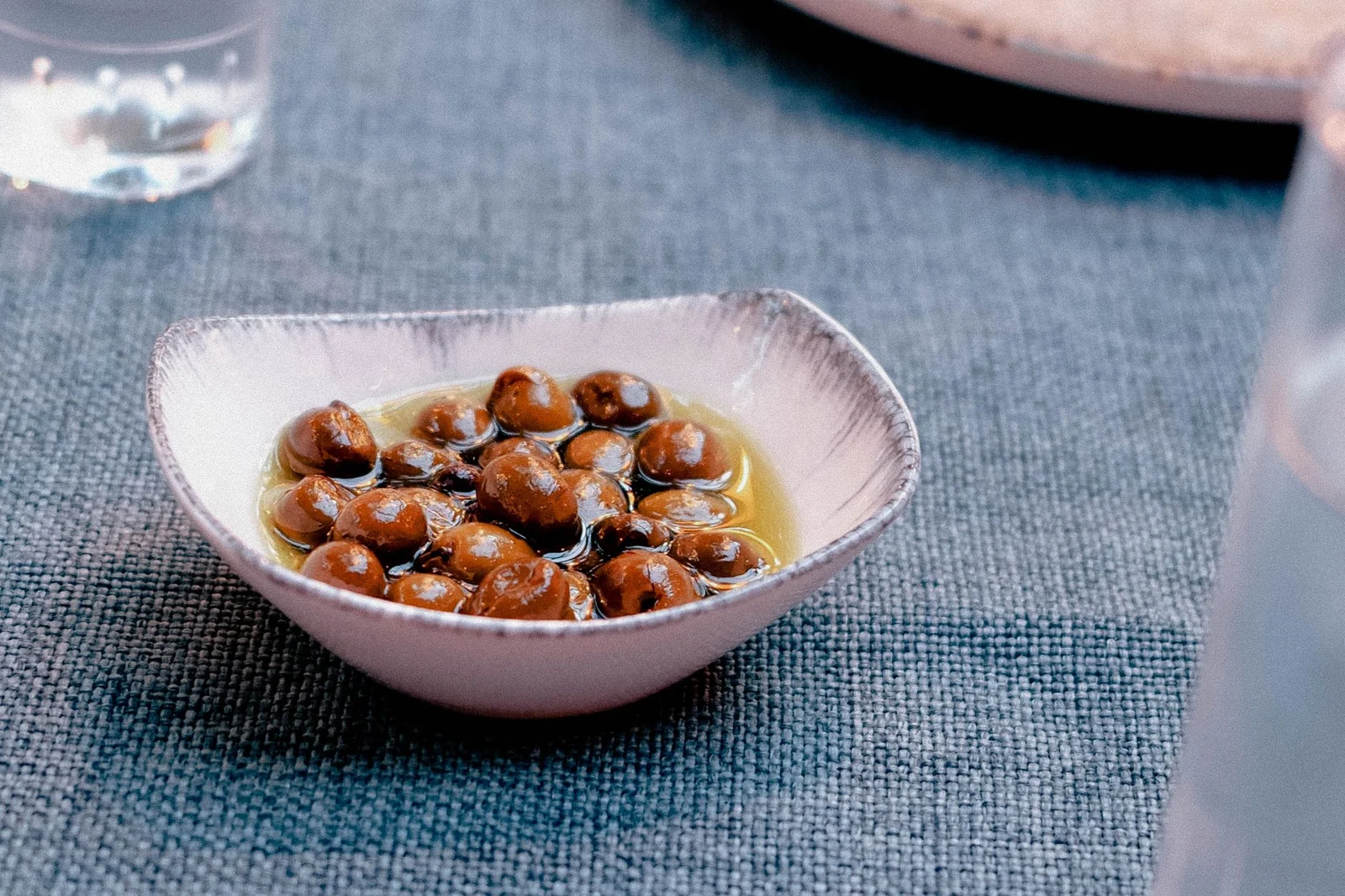
Which table olive variety is best?
The leading varieties for black and green table olives, measured fruit weights, and how curing affects quality.
Article
Which table olive variety is best?
The leading varieties for black and green table olives, measured fruit weights, and how curing affects quality.