Mavi olive
Mavi is a recorded variety of south-eastern Anatolia. No measured pomological data published.
Mavi is one of the recorded olive varieties of south-eastern Anatolia.
Characteristics
Used for both oil and the table. The fruit is large.

Where it grows
Mavi is recorded in south-eastern Anatolia. The provinces where olive production concentrates in this region: Gaziantep, Kilis, Şanlıurfa, Adıyaman, Mardin.
Regional conditions, varietal spread and output: olive growing in south-eastern Anatolia
Measured values
Eight local cultivars grown in the Derik district of Mardin were measured across 2016-2017. Mavi is both the largest-fruited and the highest in flesh ratio of the eight.
| Property | Value |
|---|---|
| Fruit weight | 7.10 g |
| Fruit length × width | 28.07 × 21.30 mm |
| Fruit shape index | 1.31 |
| Stone weight | 0.61 g |
| Flesh ratio | 91.4% |
At 7.10 g the fruit falls in the "very large" class; Zoncuk in the same study weighs 1.52 g, a fifth of it.
The striking figure is the flesh ratio: 91.4%. The stone accounts for less than a tenth of the fruit's weight — the highest of the eight measured, and what makes Mavi a table variety.
Other varieties of the region
Belluti · Eğriburun · Hursuki · Kalem Bezi · Kan Çelebi · Kilis Yağlık
Locally
Mavi is one of the traditional varieties of the Derik district of Mardin. Its name reflects local usage rather than colour; it grows alongside Zonciki, Güleki, Kejik, Belluti, Mazı, Gürseki and Melkabazi in the district that is the homeland of Halhalı.
Derik Halhalı olive oil has won awards in England and Japan; the district's varietal pool is the background to that success.
More: olive growing in Mardin
Source
- Sakar, E. et al. (2023) — Phenological, morphological and physicochemical characteristics of some local olive varieties grown in Mardin (Derik), International Journal of Agriculture, Environment and Food Sciences 7(2), pp. 448-457
- Efe, R., Soykan, A., Cürebal, İ. & Sönmez, S. (2016) — Characteristics and Geographical Distribution of Olive Varieties Grown in Turkey, Zeytin Kitabı, pp. 37-80
- Olive map of Turkey
Where it stands among measured varieties
çeşit sayfası
çeşit sayfası
çeşit sayfası
çeşit sayfası
Values are those published on each variety's own page; the comparison covers only varieties with a measured figure, so it is a comparison of what is known — not of every Turkish variety. See the full ranking and how it is built →
One rating per visitor; you can change yours at any time. Ratings are real reader votes — no seeded or default scores.
Related
 Article
Which provinces in Turkey grow no olives?
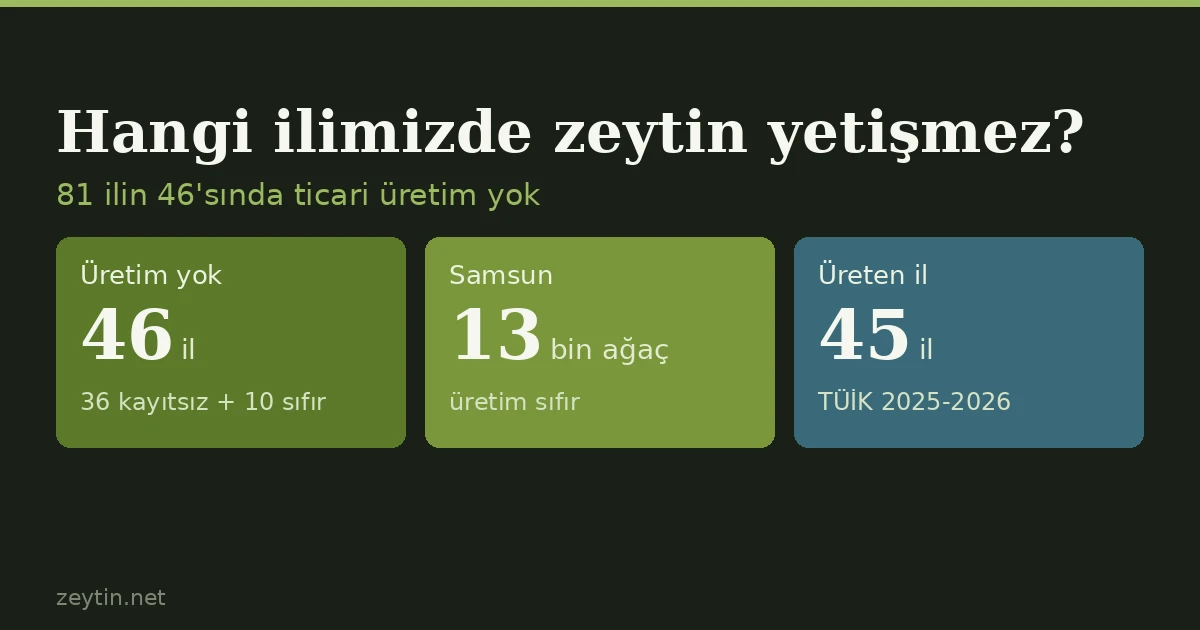
Forty-six of Turkey's 81 provinces have no commercial olive production: 36 absent from the statistics, ten reporting zero. Samsun has 13,000 trees and no crop.
Article
Which provinces in Turkey grow no olives?
Forty-six of Turkey's 81 provinces have no commercial olive production: 36 absent from the statistics, ten reporting zero. Samsun has 13,000 trees and no crop.
 Article
Antalya Tavşan Yüreği Olive: a registration named after the shape of its fruit
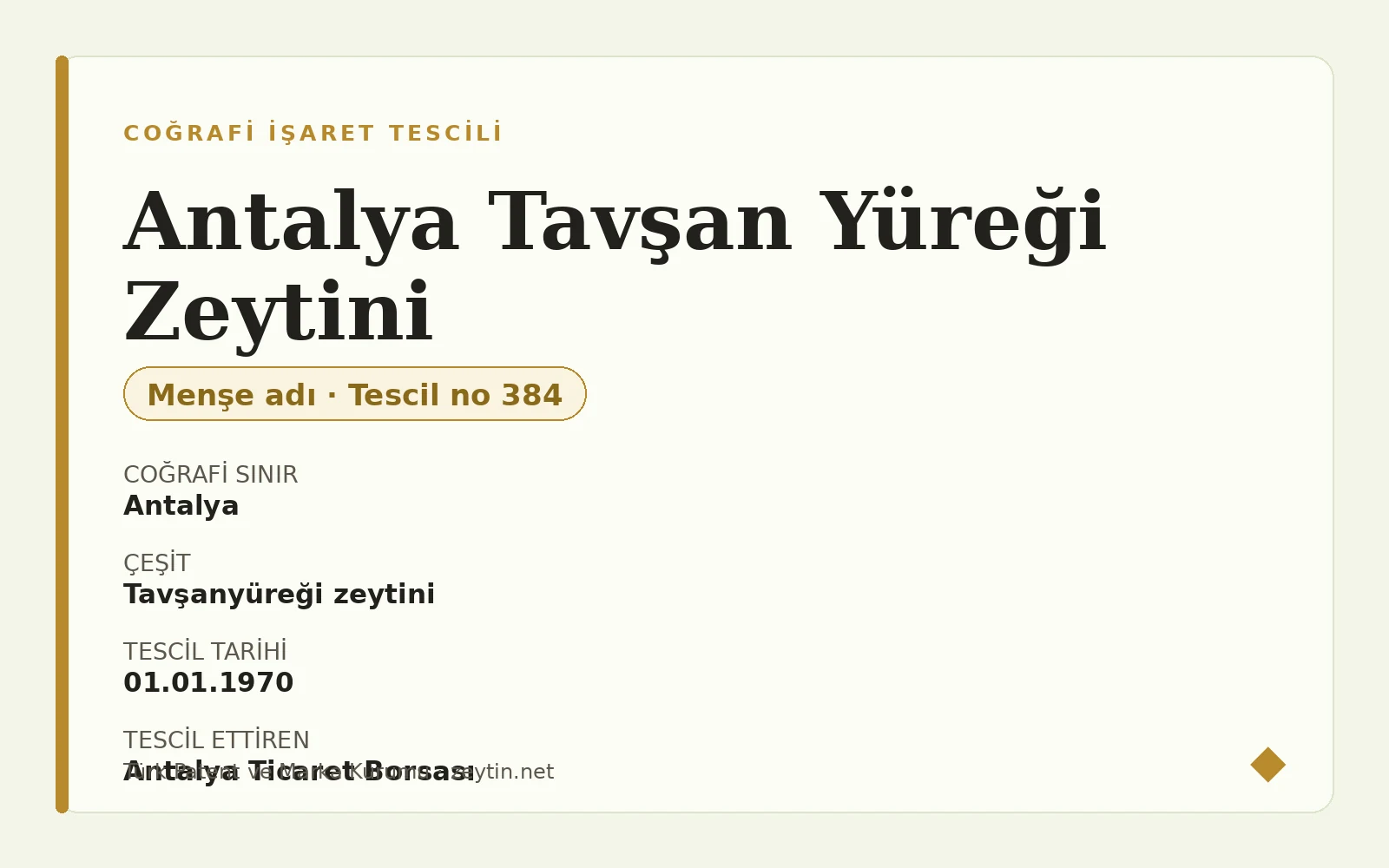
Registered in 2018. Fruit and stone are heart-shaped; picked green, its oil runs 9-20.2%, rising to 25% at black maturity.
Article
Antalya Tavşan Yüreği Olive: a registration named after the shape of its fruit
Registered in 2018. Fruit and stone are heart-shaped; picked green, its oil runs 9-20.2%, rising to 25% at black maturity.
 Article
Manzanilla olive: Spain's table variety
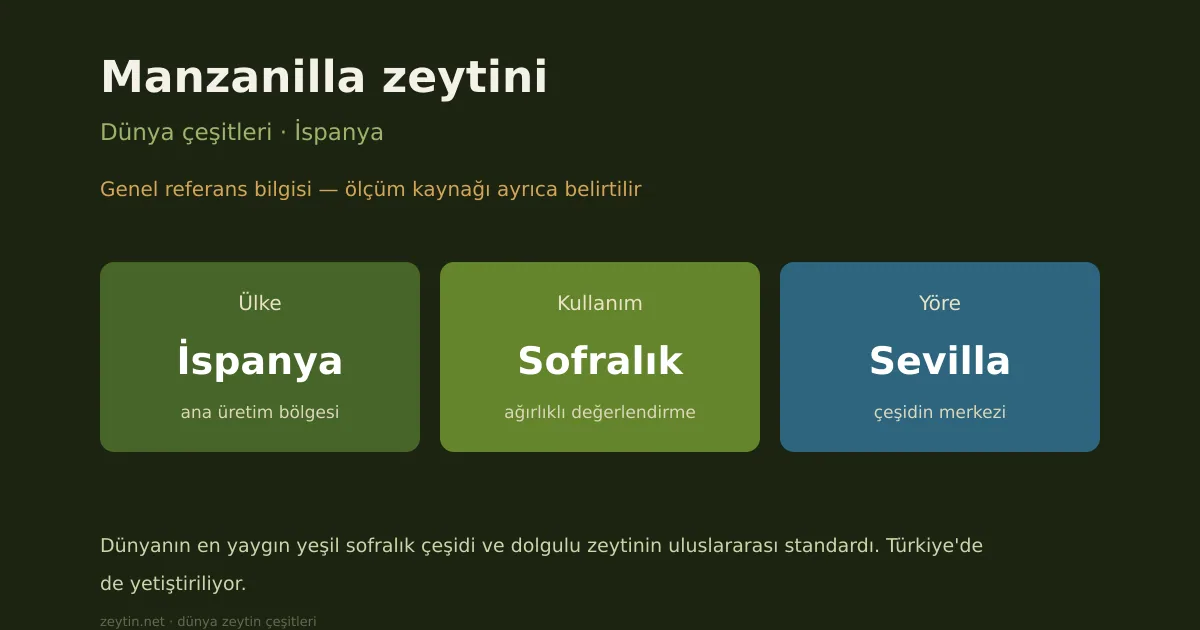
The world's most widely planted green table variety and the international standard for stuffed olives. It is grown in Türkiye too.
Article
Manzanilla olive: Spain's table variety
The world's most widely planted green table variety and the international standard for stuffed olives. It is grown in Türkiye too.
 Article
The Gemlik Olive designation of origin: what the certificate says
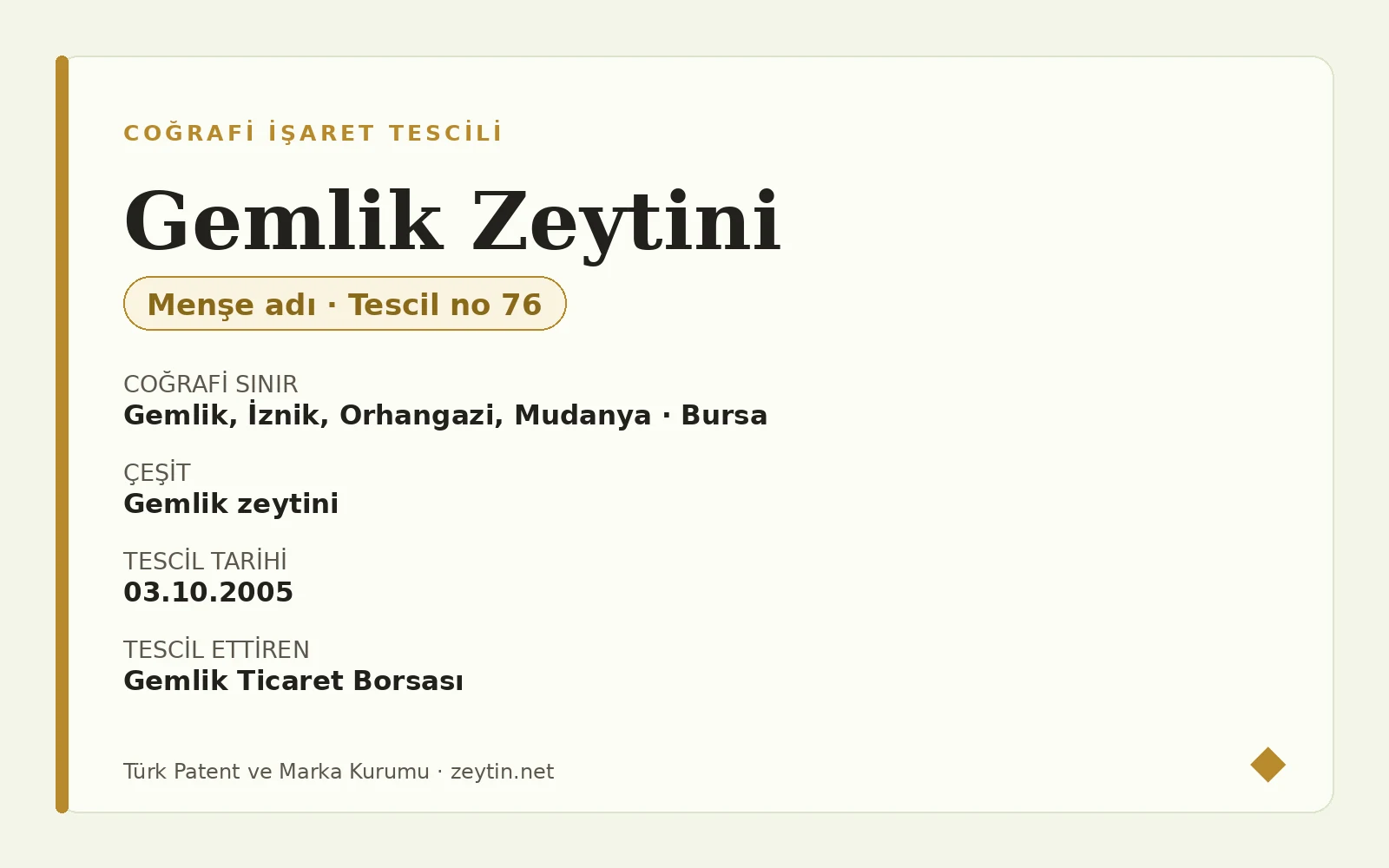
Turkey's first registered olive (2005, no 76). The certificate defines four districts, three cultivars, four curing methods and seven size grades — all of them binding.
Article
The Gemlik Olive designation of origin: what the certificate says
Turkey's first registered olive (2005, no 76). The certificate defines four districts, three cultivars, four curing methods and seven size grades — all of them binding.