Which type of olive is better?
Table or oil, green or black — choosing a variety by purpose, with a short regional map.
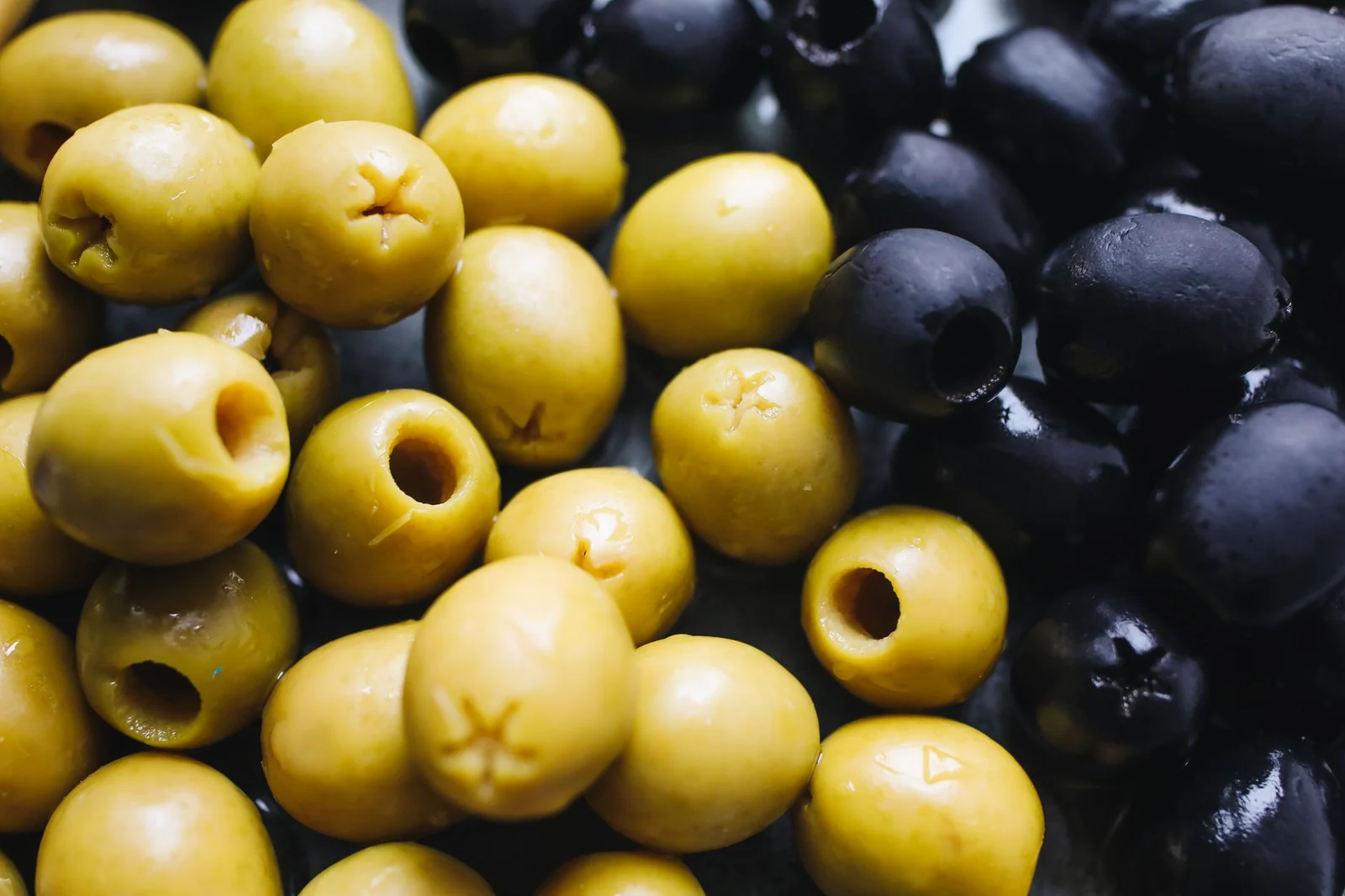
The answer to "which type of olive is better?" depends on what you are buying it for. An olive destined for the breakfast table and one destined for oil are judged on different traits; what matters in one is irrelevant in the other.
This page sets out which type serves which purpose.
First the basic split: table or oil?
Most of Turkey's production is oil varieties, but what the consumer sees is mostly table olives.
| Table | Oil | |
|---|---|---|
| Fruit wanted | large | size irrelevant |
| Oil content wanted | low to medium | high (25%+) |
| Flesh-to-stone | must be high | not decisive |
| Example variety | Domat, Gemlik | Ayvalık, Kilis Yağlık |
Some varieties are dual purpose: Memecik goes to both oil and table, and makes up 45% of Turkey's tree stock.
Choosing by use
For black olives at breakfast
Gemlik is the common choice — high flesh ratio, thin skin. Alternative: Uslu.
For green olives at breakfast
Domat or Sarı Ulak. Large fruit, firm flesh.
For stuffed olives (pepper, almond)
Domat — at 7.96 g it takes pitting and filling well.
For cooking or frying oil
The grade matters more than the variety: extra virgin or refined blend. Detail: difference between olive oil grades.
For salads and cold use
Varieties with pronounced aroma come forward: Ayvalık (Edremit) oil is preferred here.
Are green and black the same olive?
In most cases yes — the same fruit at a different ripeness:
- Green: picked early, higher in bitterness and polyphenols, firm in texture
- Black: picked fully ripe, higher in oil, milder in taste
Some varieties are mainly used one way though: Domat comes forward green, Gemlik black.
⚠ One exception: not every olive that looks black ripened naturally. Green olives can be blackened by oxidation; that product does not carry the composition of a naturally black olive.
A short regional map
- Marmara: Gemlik — black table
- Northern Aegean (Balıkesir, Çanakkale): Ayvalık — oil
- Southern Aegean (Aydın, Muğla, İzmir): Memecik — dual purpose
- Manisa/Akhisar: Domat, Uslu — table
- Southeast (Gaziantep, Kilis, Hatay): Kilis Yağlık, Nizip Yağlık, Halhalı — oil
- Mediterranean (Mersin, Adana): Sarı Ulak, Adana Topağı — table
Full list with tree-stock shares: olive varieties.
Frequently asked
Can one variety serve both oil and table?
Yes — that is exactly why Memecik is so widespread. But varieties focused on a single purpose do that job better.
Are imported varieties better?
No. Arbequina and Manzanilla are common world varieties grown in Turkey too; climate, grove and processing decide the result.
One rating per visitor; you can change yours at any time. Ratings are real reader votes — no seeded or default scores.
Related
 Article
The Edincik Su olive: the third black-table cultivar
One of the three cultivars widely processed as black table olives in Turkey, alongside Gemlik and Uslu. The cultivar of the Bandırma area.
Article
The Edincik Su olive: the third black-table cultivar
One of the three cultivars widely processed as black table olives in Turkey, alongside Gemlik and Uslu. The cultivar of the Bandırma area.
 Article
Yamalak Sarısı: the local table cultivar of Aydın
A local cultivar of Aydın counted among Turkey's most important table olives, and the subject of a phenotypic characterisation study.
Article
Yamalak Sarısı: the local table cultivar of Aydın
A local cultivar of Aydın counted among Turkey's most important table olives, and the subject of a phenotypic characterisation study.
 Article
Adana Topağı: the olive cultivar that needs the least cold
The lowest chilling requirement among cultivars tested: 346 hours, 234 chill units. Why that matters as winters warm, and its 6-gram fruit.
Article
Adana Topağı: the olive cultivar that needs the least cold
The lowest chilling requirement among cultivars tested: 346 hours, 234 chill units. Why that matters as winters warm, and its 6-gram fruit.
 Article
Kiraz olive: characteristics, oil content and growing areas
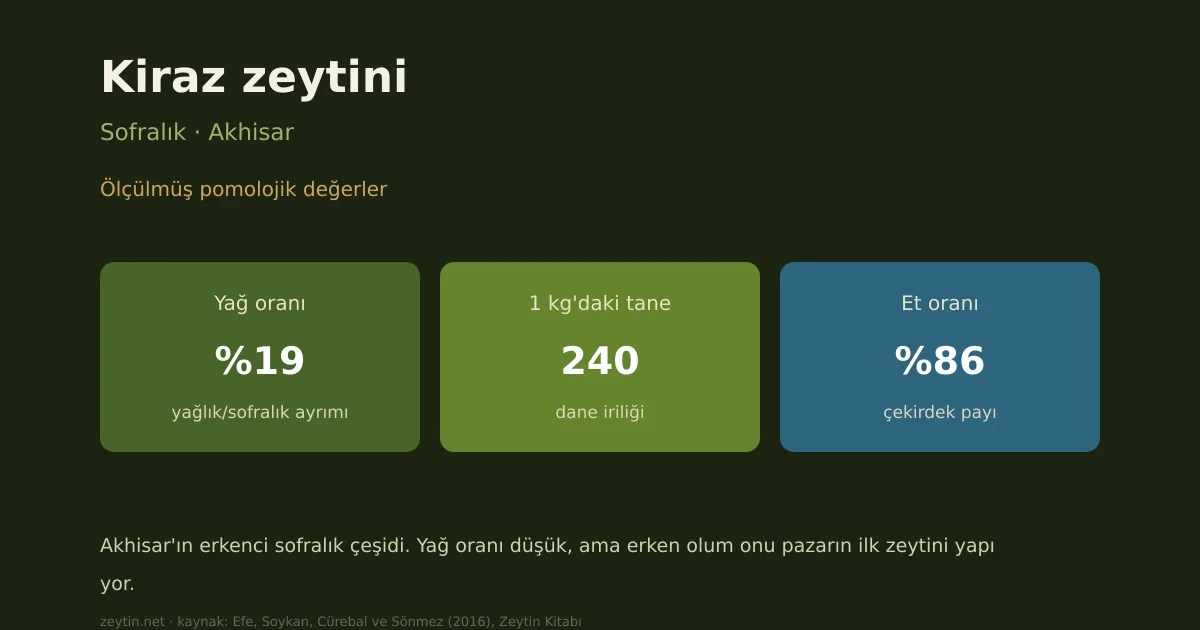
Akhisar's early table variety. Low in oil, but early maturity makes it the season's first olive to market.
Article
Kiraz olive: characteristics, oil content and growing areas
Akhisar's early table variety. Low in oil, but early maturity makes it the season's first olive to market.